

Patrice Rushen is an American keyboardist, composer, and singer who started as a sidewoman on mid-Seventies jazz albums by Alphonso Johnson, Azar Lawrence, Donald Byrd, Eddie Henderson, Harvey Mason, Jean-Luc Ponty, and Luis Gasca.
As a solo artist, she made three post-bop/jazz-funk albums (1974–77) on Prestige, then transitioned to soul-funk for a five-album run (1978–84) on Elektra. Her R&B hits include the 1979/80 singles “Hang It Up,” “Haven’t You Heard,” “Look Up,” “Let the Music Take Me,” and her 1982 crossover hit “Forget Me Nots.”
Background
She was born Patrice Louise Rushen on September 30, 1954, in Los Angeles. At age three, she started practicing piano and by age six she was giving classical recitals. As a senior at Locke High School, she marched in the Rose Bowl Parade with the Honor Band.
In 1972, Rushen won the competition at the Monterey Jazz Festival, where she was befriended by producer Quincy Jones. Taking his advise, she enrolled at the University of Southern California to study music education and piano performance. That same year, she earned her first recorded credit on an eponymous album by the free-jazz collective Msingi Workshop.
As she worked on her degree, Rushen signed to the jazz label Prestige.
Prelusion
 Patrice Rushen released her debut album, Prelusion, in 1974 on Prestige.
Prelusion presents a focused instrumental jazz set highlighting Rushen’s compositional and keyboard skills. The album blends straight-ahead post-bop with fusion references, emphasizing intricate arrangements and layered textures across both acoustic and electronic keyboards. Rushen composed and arranged all five tracks herself.
The album opens with complex, nearly orchestral originals “Shortie’s Portion” and “7/73,” followed by more rhythmically driven pieces “Haw Right Now” and “Traverse.” Side one leans on expansive post-bop structures, while side two explores funk-inflected motifs reminiscent of later Headhunters work. “Puttered Bopcorn” closes the album with tighter head-nodding phrasing.
Soloists include tenor saxophonist Joe Henderson, trombonist George Bohanon, trumpeter Oscar Brashear, and , and multi-reedist Hadley Caliman, who all offer dynamic counterpoint against the rhythmic backdrop of Leon Ndugu Chancler.
A1. “Shortie’s Portion” (8:42)
A2. “7/73” (12:42)
A3. “Haw Right Now” (8:00)
B1. “Traverse” (10:53)
B2. “Puttered Bopcorn” (4:15)
Sessions occurred in 1973–1974 at Prestige Records studios in Los Angeles with producer Reggie Andrews and engineer Eddie Harris (not to be confused with the namesake saxophonist).
Prelusion features art direction and design by Phil Carroll with photography by Bruce Talamon. Liner notes were written by Gerald Wilson.
Before the Dawn
 Patrice Rushen released her second album, Before the Dawn, in 1975 on Prestige.
Before the Dawn advances Rushen’s early fusion of jazz with R&B, pop, and rock elements. While mostly instrumental, the album demonstrates a stronger incorporation of rhythmic and textural experimentation compared with her straight-ahead debut.
Rushen composed and arranged all five tracks. “What’s the Story” features outside vocalist Josie James, while all other tracks remain instrumental. Players include guitarist Lee Ritenour, flutist Hubert Laws, and trumpeter Oscar Brashear.
Side one emphasizes interactive ensemble passages with horn and flute lines, from the percussive “Kickin’ Back” to the funk-inflected “What’s the Story” and the expansive, improvisational “Jubilation.” Side two balances rhythmic drive with contemplative melodic structures on the title track and “Razzia.”
A1. “Kickin’ Back” (7:27)
A2. “What’s the Story” (5:15)
A3. “Jubilation” (6:05)
B1. “Before the Dawn” (8:30)
B2. “Razzia” (9:41)
Sessions occurred at Fantasy Studios in Berkeley, California, in August 1975 with producer Reggie Andrews and engineer Skip Shimmin; Rushen, Andrews, and Shimmin handled remixing, and David Turner completed mastering.
Before the Dawn features art direction and design by Phil Carroll with photography by Phil Bray.
Rushen joined the backing band of Jean-Luc Ponty for the French violinist’s 1975/76 albums Upon the Wings of Music and Aurora.
Shout It Out
 Patrice Rushen released her third album, Shout It Out, in 1977 on Prestige. The album blends jazz, funk, and fusion with elements of R&B.
Rushen wrote five of the album’s eight songs, while drummer Darryl Cox co-wrote “The Hump” and “Let There Be Funk.” Keyboardist Charles Mims contributed “Stepping Stones,” and Reggie Andrews wrote “Yolon” and arranged “Sojourn.” Support players inlcude guitarist Al McKay, saxophonist Tom Scott, percussionist Bill Summers, and vocalists Josie James and Maxine Waters.
The set ranges from the steady pace of “The Hump” and “Stepping Stones” to the brisk rhythm of “Roll With the Punches.” The title track unfolds with a delayed cadence that emphasizes its funk edge, while “Let There Be Funk” strips things back to a lean rhythmic drive. Rushen delivers a testimonial centerpiece with “Sojourn” and shapes a more reflective mood on “Yolon.”
A1. “The Hump” (6:04)
A2. “Shout It Out” (6:14)
A3. “Stepping Stones” (5:00)
A4. “Let Your Heart Be Free” (3:58)
B1. “Roll With the Punches” (6:17)
B2. “Let There Be Funk” (4:16)
B3. “Yolon” (4:32)
B4. “Sojourn” (4:43)
Sessions occurred at A&M Studios in Hollywood with Patrice Rushen, Reggie Andrews, and Tommy Vicari producing. Vicari also engineered the album, assisted by Danny Vicari and Helen Silvani, with mastering by Bernie Grundman.
Shout It Out features cover design and art direction by Phil Carroll, with photography by Phil Bray.
Prestige issued “Let Your Heart Be Free” and “Sojourn” as singles.
Patrice
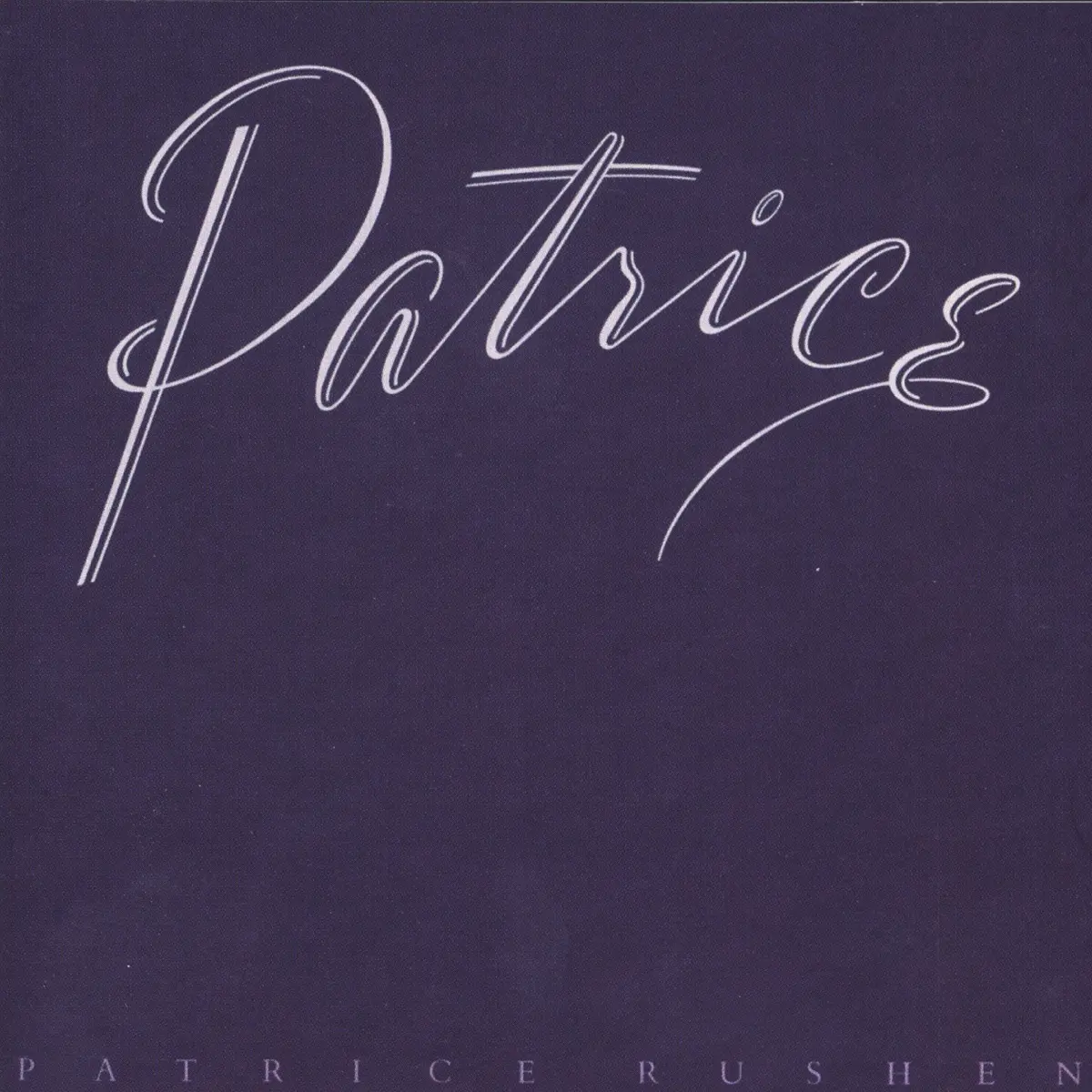 Patrice Rushen released her fourth album, Patrice, on October 17, 1978, on Elektra.
Patrice marks Rushen’s transition from fusion-oriented jazz toward R&B and funk-inflected pop, pairing lush arrangements with expressive vocals. The album balances upbeat funk numbers, Latin-tinged rhythms, and gentle ballads, demonstrating her control of keys, rhythm, and vocal phrasing.
Rushen wrote or co-wrote all ten songs. She collaborated with her sister Angela Rushen on three tracks, drummer Tony Coleman on “When I Found You,” Sheree North on “Cha-Cha,” bassist Freddie Washington on “It’s Just a Natural Thing,” Sheree Brown on “Didn’t You Know?,” and keyboardist Charles Mims Jr. on “Play!” Reggie Andrews contributed to “Let’s Sing a Song of Love.” Additional players include bassist Abraham Laboriel, drummer James Gadson, guitarists Al McKay and Marlo Henderson, and percussionists Paulinho da Costa and Bill Summers.
The set opens with “Music of the Earth,” driven by tight rhythm and layered horns, while “When I Found You” slows the pace into a ballad. “Hang It Up” builds funk momentum, contrasting with the reflective “Didn’t You Know?” and the politically edged “Changes (In Your Life).” Instrumentals surface with the percussive “Cha-Cha” and the rhythm-driven “It’s Just a Natural Thing.”
A1. “Music of the Earth” (3:58)
A2. “When I Found You” (5:20)
A3. “Changes (In Your Life)” (4:08)
A4. “Wishful Thinking” (5:08)
A5. “Let’s Sing a Song of Love” (3:43)
B1. “Hang It Up” (5:11)
B2. “Cha-Cha” (3:22)
B3. “It’s Just a Natural Thing” (3:20)
B4. “Didn’t You Know?” (5:17)
B5. “Play!” (4:36)
Sessions occurred at Conway Studios and Sound Factory in Hollywood, along with Group IV Recording in Los Angeles. Patrice Rushen, Charles Mims Jr., and Reggie Andrews produced, with engineering credited to studio staff.
Three singles emerged: “Hang It Up” backed with “It’s Just a Natural Thing” in November 1978, “When I Found You” paired with “Play!” in March 1979, and “Changes (In Your Life)” with “Music of the Earth” in May 1979. The album peaked at No. 98 on the Billboard 200, No. 27 on the Top Soul Albums chart, and No. 5 on the Top Jazz Albums chart.
Pizzazz
 Patrice Rushen released her fifth album, Pizzazz, on October 23, 1979, on Elektra.
Pizzazz continues Rushen’s shift into R&B and disco-inflected pop, blending funk-driven arrangements with polished vocals. The album features upbeat dance numbers alongside slower, soulful tracks, highlighting her skills as a keyboardist and arranger while expanding her appeal in the R&B market.
Rushen wrote or co-wrote all tracks. Collaborators include Sheree Brown (“Let the Music Take Me,” “Keepin’ Faith in Love,” “Haven’t You Heard”), Angela Rushen (“Keepin’ Faith in Love,” “Givin’ It Up Is Givin’ Up,” “Call On Me”), and Freddie Washington (“Settle for My Love,” “Haven’t You Heard”).
The record opens with “Let the Music Take Me,” which angles over contoured rhythmic patterns and brass lines. “Settle for My Love” slows into a ballad framed by strings and backing vocals, while “Keepin’ Faith in Love” and “Call on Me” carry bright mid-tempo pacing. “Haven’t You Heard,” the album’s centerpiece, builds its refrain around layered voices and shifting rhythm patterns. The closing “Reprise (Message in the Music)” brings the album full circle with a brief instrumental coda.
A1. “Let the Music Take Me” (6:51)
A2. “Keepin’ Faith in Love” (4:08)
A3. “Settle for My Love” (5:15)
A4. “Message in the Music” (3:01)
B1. “Haven’t You Heard” (6:45)
B2. “Givin’ It Up Is Givin’ Up” (4:59)
B3. “Call on Me” (6:48)
B4. “Reprise (Message in the Music)” (0:57)
Sessions occurred at Conway Studios in Hollywood. Patrice Rushen, Charles Mims Jr., and Reggie Andrews produced, with Peter Chaikin engineering. Chris Bellman mastered the record at Allen Zentz Mastering in San Clemente, California.
Pizzazz features cover photography by Norman Seeff and design by Ron Coro.
Elektra issued three singles: “Haven’t You Heard” backed with “Keepin’ Faith in Love” in October 1979, “Let the Music Take Me” paired with “Message in the Music” in February 1980, and “Givin’ It Up Is Givin’ Up” later that year.
“Haven’t You Heard” became Rushen’s breakthrough hit, reaching No. 7 on the Billboard R&B chart, No. 5 on the Dance chart, and No. 42 on the Pop chart. The album peaked at No. 39 on the Billboard 200, No. 11 on the Top Soul Albums chart, and No. 2 on the Top Jazz Albums chart.
Posh
 Patrice Rushen released her sixth album, Posh, on November 11, 1980, on Elektra.
Posh continues Rushen’s exploration of R&B and funk with elements of pop and soft rock. The album balances dance-oriented tracks with ballads, highlighting her command of keyboards and layered vocal arrangements.
Rushen wrote or co-wrote all tracks. Collaborators include Freddie Washington (“Never Gonna Give You Up,” “The Dream”), Angela Rushen (“Don’t Blame Me,” “I Need Your Love,” “Time Will Tell”), Charles Mims Jr. (“Look Up!,” “I Need Your Love”), Clarence Bell (“Don’t Blame Me”), and Freddie Brown (“The Dream”).
“Never Gonna Give You Up (Won’t Let You Be)” opens Posh with a lively, dance-oriented vibe later resumed on “Look Up!” and “The Funk Won’t Let You Down.” The ballads “Don’t Blame Me” and “I Need Your Love” provide tender counterpoints, while “Time Will Tell” introduces a subtle rock influence. String and horn arrangements accentuate both the celebratory and reflective moments, and keyboard solos occasionally recall her earlier jazz fusion work.
A1. “Never Gonna Give You Up (Won’t Let You Be)” (6:50)
A2. “Don’t Blame Me” (6:31)
A3. “Look Up!” (3:41)
A4. “I Need Your Love” (4:25)
B1. “Time Will Tell” (5:09)
B2. “The Dream” (4:54)
B3. “The Funk Won’t Let You Down” (7:35)
B4. “This Is All I Really Know” (4:41)
Sessions occurred at Conway Studios in Hollywood, the Sound Factory in Los Angeles, and the Automatt in San Francisco with producers Rushen and Mims, engineer Peter Chaikin, and remix engineer F. Byron Clark. Jeff Sanders mastered the record at Crystal Sound in Los Angeles.
Posh features artwork directed by Ron Coro and Norm Ung, with photography by Bobby Holland, Shayne Fair, and Pam Robinson.
Three singles supported the album: “Look Up!” backed with “The Dream” in October 1980, “Never Gonna Give You Up (Part I & II)” in January 1981, and “Don’t Blame Me” backed with “Time Will Tell” in April 1981.
Posh reached No. 43 on the Billboard 200 and No. 14 on the Top Soul Albums chart.
Straight From the Heart
 Patrice Rushen released her seventh album, Straight From the Heart, on April 14, 1982, on Elektra.
The album blends post-disco dance rhythms with jazz-inflected keyboards and R&B balladry. It contains “Forget Me Nots,” her signature crossover hit.
Rushen composed the intrumental “Number One” and co-wrote songs with Syreeta Wright (“If Only”), actress Fay Hauser (“(She Will) Take You Down to Love”), and backing singers Brenda Russell (“Breakout”), Karen Evans (“Remind Me”), and Roy Galloway (“All We Need”). Bassist Freddie Washington co-wrote the two side openers and “I Was Tired of Being Alone.”
The album opens with the buoyant, post-disco “Forget Me Nots,” layered with handclaps, twisting bass, and effusive electric piano. “I Was Tired of Being Alone” and “All We Need” maintain energetic dance beats with horns and guitar, while the instrumental “Number One” showcases Rushen’s piano prowess over driving percussion. Side two slows the pace with smoother tempos, including the intimate “Where There Is Love,” atmospheric “Remind Me,” and the bossa-inspired closer “(She Will) Take You Down to Love.” “Breakout!” offers contrast with funk-rock accents.
A1. “Forget Me Nots” (4:45)
A2. “I Was Tired of Being Alone” (3:52)
A3. “All We Need” (5:54)
A4. “Number One” (4:59)
B1. “Where There Is Love” (3:11)
B2. “Breakout!” (4:07)
B3. “If Only” (3:23)
B4. “Remind Me” (5:18)
B5. “(She Will) Take You Down to Love” (4:24)
Sessions occurred between October 1981 and February 1982 at Conway Studios in Hollywood with producers Rushen and Mims and engineer Peter Chaikin. F. Byron Clark handled remixing, and John Golden mastered at K-Disc in Hollywood.
Straight from the Heart features art direction by Ron Coro, with design by Coro and John Barr and photography by Bobby Holland.
Elektra promoted the initial release with “Forget Me Nots,” which reached No. 4 on the US Hot R&B chart and No, 23 on the Billboard Hot 100. Aborad, the single reached No. 8 in the UK and New Zealand. “Breakout!” and “I Was Tired of Being Alone” became followup singles.
Straight From the Heart peaked at No. 14 on the Billboard 200 and No. 4 on the Top R&B Albums chart.
Now
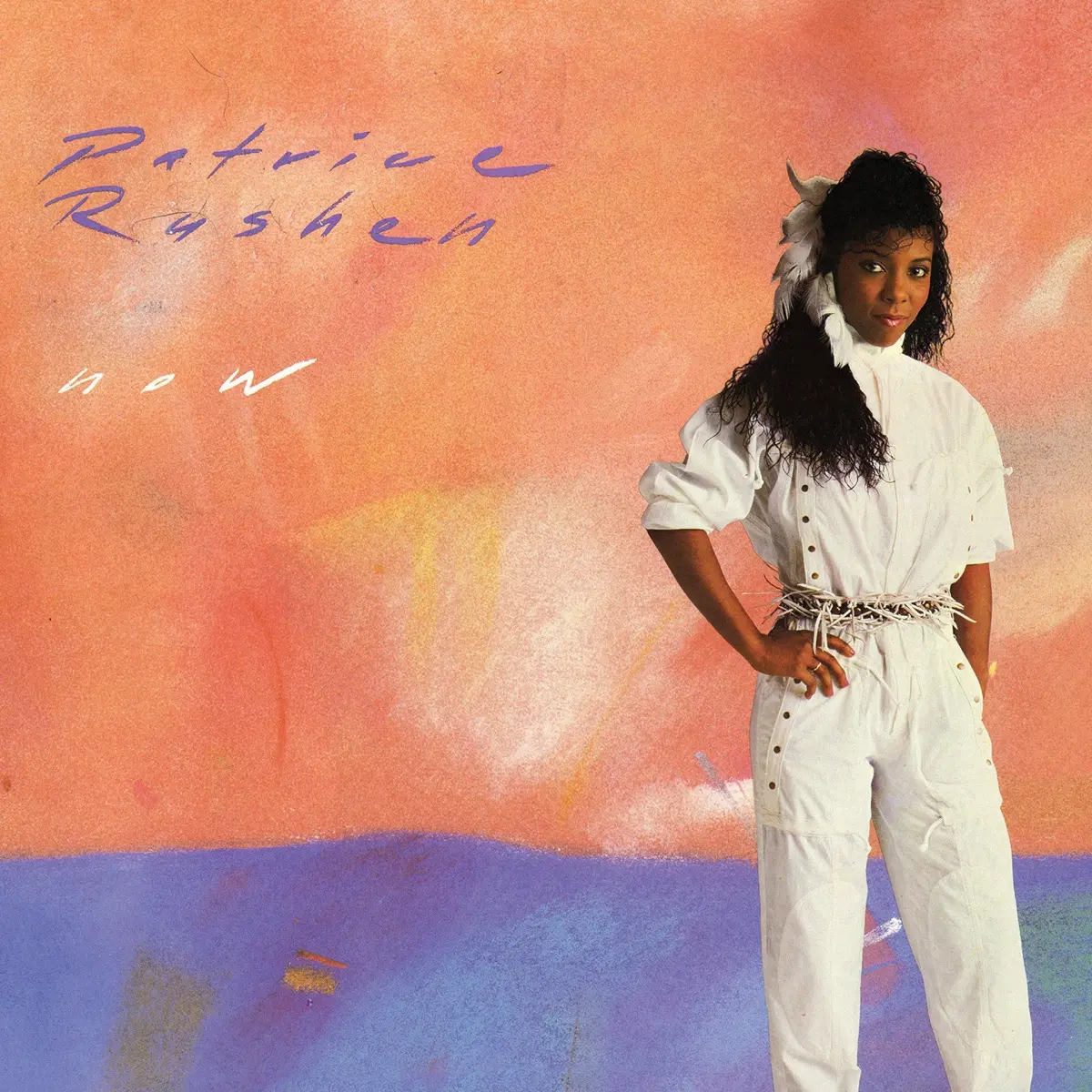 Patrice Rushen released her eighth album, Now, on May 21, 1984, on Elektra.
Now extends Rushen’s jazz-infused R&B and pop approach into dancefloor territory, integrating programmed rhythms, synthesizers, and layered instrumentation while preserving her characteristic keyboard fluency and compositional detail.
Rushen composed most tracks with Freddie Washington. Collaborators include Roy Galloway (“Gotta Find It,” “My Love’s Not Going Anywhere”), Romeo Williams (“Superstar”), Syreeta (“High in Me”), and Lynn Davis (“To Each His Own”).
Now opens with “Feels So Real (Won’t Let Go),” built on interlocking keyboards, clipped guitar, and a pulsing bassline that drives its syncopated rhythm. “Get Off (You Fascinate Me)” pushes a similar polyrhythmic pace, while “Heartache Heartbreak” slows to a reflective mid-tempo marked by airy vocals and heartbeat bass. “Gotta Find It” and “Perfect Love” balance buoyant rhythms with intimate vocal lines, while “Superstar” and “To Each His Own” highlight Rushen’s layered keyboard textures against contrasting bass tones.
A1. “Feels So Real (Won’t Let Go)” (6:48)
A2. “Gone with the Night” (4:40)
A3. “Gotta Find It” (4:26)
A4. “Superstar” (4:56)
A5. “Heartache Heartbreak” (4:10)
B1. “Get Off (You Fascinate Me)” (6:18)
B2. “My Love’s Not Going Anywhere” (4:18)
B3. “Perfect Love” (4:54)
B4. “High in Me” (4:13)
B5. “To Each His Own” (4:12)
Sessions occurred at The Crib (Los Angeles) and at Conway Studios and Larrabee Sound Studios (Hollywood, California) with Patrice Rushen and Charles Mims Jr. producing. Peter Chaikin recorded, assisted by Sabrina Buchanek, Paul Ericksen, Ross Pallone, Csaba Petocz, and Jeff Stebbins. F. Byron Clark remixed, and John Golden mastered at K Disc Mastering (Hollywood, California).
Singles include “Feels So Real (Won’t Let Go)” (b/w instrumental), “Get Off (You Fascinate Me)” (b/w instrumental), and “Heartache Heartbreak” (b/w “Gotta Find It”).
Now reached No. 7 on the Billboard Traditional Jazz Albums chart, number 4 on the Top Soul Albums chart, and No. 40 on the Billboard 200.
Watch Out!
 Patrice Rushen released her ninth album, Watch Out!, on February 20, 1987, on Arista.
The record fuses brisk dance-floor rhythms with mid-tempo R&B and ballads. Its sound balances upbeat tracks and polished slow jams, anchored by Rushen’s keyboard arrangements and vocal layering.
Rushen wrote or co-wrote eight of the ten tracks. She partnered with bassist Freddie Washington on “Breakin’ All the Rules,” “All My Love,” and “Somewhere.” Sheree Brown co-wrote the title track, while Tony Haynes contributed to “All My Love.” Rushen also co-wrote “Burnin’” with Wayne Vaughn, “Till She’s Out of Your Mind” with Clint Holmes, “Come Back to Me” with Lynn Davis, and “Tender Lovin’” with Roy Galloway.
The title track sets the pace with bright brass lines and handclaps, while “Breakin’ All the Rules” leans on clipped bass rhythms. “Somewhere” and “Till She’s Out of Your Mind” carry ballad textures with saxophone passages and piano coloring, while “Come Back to Me” stretches into a tumbling funk rhythm. “Tender Lovin’” closes with layered backing vocals and a subdued keyboard solo.
A1. “Watch Out!” (5:26)
A2. “Breakin’ All the Rules” (4:55)
A3. “Long Time Coming” (4:53) written by Antonina Armato and Richard Feldman.
A4. “All My Love” (4:47)
A5. “Somewhere” (5:09)
B1. “Anything Can Happen” (5:03) written by Alan Roy Scott, Lotti Golden, and Michael Jay.
B2. “Burnin'” (5:05)
B3. “Till She’s Out of Your Mind” (4:11)
B4. “Come Back to Me” (5:53)
B5. “Tender Lovin'” (5:03)
Watch Out! features art direction by Ria Lewerke, design by Maude Gilman and Margery Greenspan, and photography by Matthew Rolston.
Arista promoted the album with “Watch Out!” (b/w “Over the Phone”), followed by the July–November singles “Anything Can Happen” (b/w “All My Love”) and “Come Back to Me” (b/w “Somewhere”).
Watch Out! reached No. 19 on the US Billboard Top R&B Albums chart and No. 77 on the Billboard Top Pop Albums chart. The title single peaked at No. 9 on the US R&B chart and No. 22 on the Dance chart.
Discography:
- Prelusion (1974)
- Before the Dawn (1975)
- Shout It Out (1977)
- Patrice (1978)
- Pizzazz (1979)
- Posh (1980)
- Straight From the Heart (1982)
- Now (1984)
- Watch Out! (1987)
- Anything but Ordinary (1994)
- Signature (1997)
- Jazz Straight Up (2003 • Ndugu Chancler, Stanley Clarke & Patrice Rushen)
Sources:
Artist/Album Pages:
Kevin Ayers (Aug. 16, 1944 — Feb. 18, 2013) was an English singer–songwriter who co-founded Soft M...
Brian Bennett (born Feb. 9, 1940) is an English musican, composer, and producer who served as the ...
Straight from the Heart is the seventh solo album by American jazz-funk/soul musician/vocalist Patri...
The Who are an English rock band that released ten studio albums between 1965 and 1982, including th...
Googie and Tom Coppola are an American husband/wife jazz-pop duo that emerged in Herbie Mann's bac...
Status Quo was an English hard-rock/boogie band from London that initially cut three beat singles ...
Gregg Diamond was an American songwriter, producer, drummer, and keyboard player from Bryn Mawr, Pen...
Everything but the Girl was an English sophisti-pop duo formed in 1982 by Ben Watt and Tracey Thor...
A Certain Ratio are an English jazz-funk band from Manchester that emerged in the post-punk milieu...
Martha and the Vandellas were an American soul-pop trio from Detroit, signed to the Gordy division o...
The Motors were an English rock band from London, formed by Ducks Deluxe alumni Nick Garvey and A...
John Macey (November 18, 1949 — December 23, 2008) was an American jazz-rock guitarist who made th...