

Ten Wheel Drive was an American brass-rock big band from New Jersey led by singer Genya Ravan. She fronted their 1969 Polydor debut Construction #1 and the 1970/71 followups Brief Replies and Peculiar Friends. After she went solo, writer/arrangers Aram Schefrin and Michael Zager reconfigured Ten Wheel Drive with singer Ann E. Sutton for a final album on Capitol.
Members: Genya Ravan (vocals, harmonica, tambourine), Aram Schefrin (guitar, vocals, banjo, percussion), Michael Zager (organ, piano, clarinet), Annie Sutton (vocals, 1973-74)
Background
Ten Wheel Drive formed in 1968 when vocalist Genya Ravan teamed with keyboardist Michael Zager and guitarist Aram Schefrin, both songwriters.
Genya was born Genyusha Zelkovicz on April 19, 1940, in Łódź, Poland, to a Jewish family. In 1947, her family emigrated to the US, where she made her singing debut in The Escorts and formed Goldie and the Gingerbreads, an all-female garage-rock band that issued seven singles between 1964 and 1967, mostly on Decca and Atco.
The Ten Wheel Drive rhythm section consisted of veteran bassist Bill Takaz (Tal Farlow, Gerry Mulligan, Don Elliot, Judy Collins) and drummer Leon Rix, who played that year on the debut album by the Paul Winter Consort. They also employed a five-piece brass section: trombonist Dennis Parisi, saxophonist Louie Hoff, and trumpeters Jay Silva, Peter Hyde, and Richard Meisterman. Aside from Ravan, all the members could read notation, a rarity in rock that owed to their jazz backgrounds.
In 1969, they played high-profile shows at New York’s Fillmore East and the Atlanta International Pop Festival, where they played alongside Led Zeppelin, Spirit, Joe Cocker, The Staple Singers, and fellow brass-rockers Blood, Sweat and Tears and Chicago Transit Authority. Ravan caused a stir with her scantily clad, body-painted stage performances. That year, Ten Wheel Drive were among the first bands signed to the newly formed American division of Polydor Records.
Construction #1
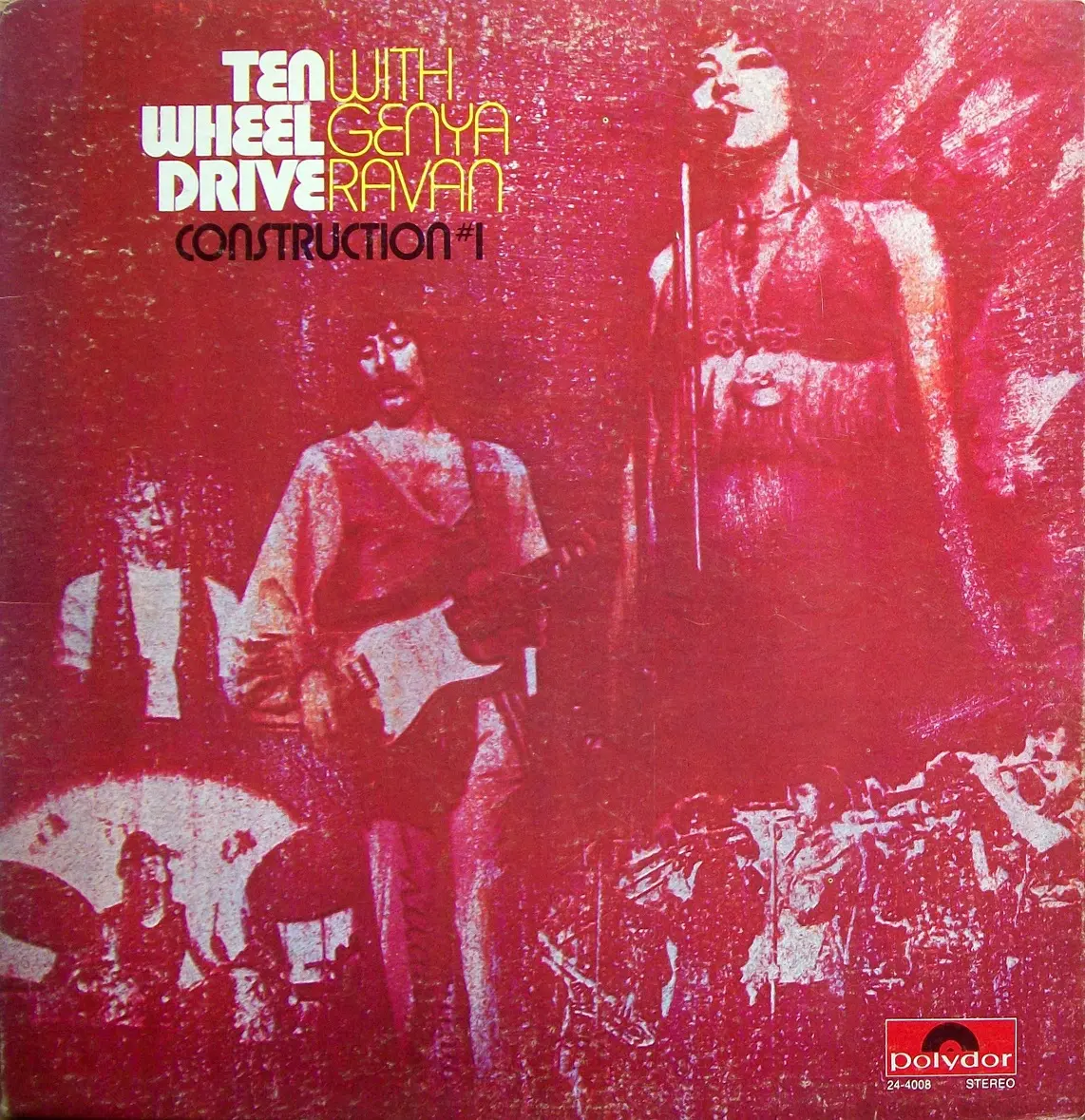 Ten Wheel Drive released their debut album, Construction #1, in October 1969 on Polydor, which billed them as “Ten Wheel Drive With Genya Ravan.”
The album features eight songs composed primarily by guitarist Aram Schefrin and keyboardist Mike Zager (organ, piano, clarinet). The ten-member lineup also includes Rix (drums, cello, percussion), Bill Takas (bass), Dennis Parisi (trombone), Richard Meisterman, Peter Hyde, and Jay Silva (trumpets, flugelhorns), and Louie Hoff (flute, baritone and tenor saxophone).
Ravan contributes lyrics to the Rix-arranged opening cut “Tightrope” and sings the nightclub jazz-blues number “Candy Man Blues,” written by Louie and offstage partner Elizabeth Hoff. The remainder of the album consists of Schefrin–Zager originals, including the tempo-shifting jazz-pop piece “Lapidary,” the expansive, dynamic “Eye of the Needle,” the swelling, melodramatic “House in Central Park,” and the brassy funk-rock closer “I Am a Want Ad.”
A1. “Tightrope” (5:10)
A2. “Lapidary” (4:32)
A3. “Eye of the Needle” (8:11)
A4. “Candy Man Blues” (4:36)
B1. “Ain’t Gonna Happen” (5:37)
B2. “Polar Bear Rug” (4:34)
B3. “House in Central Park” (4:32)
B4. “I Am a Want Ad” (4:27)
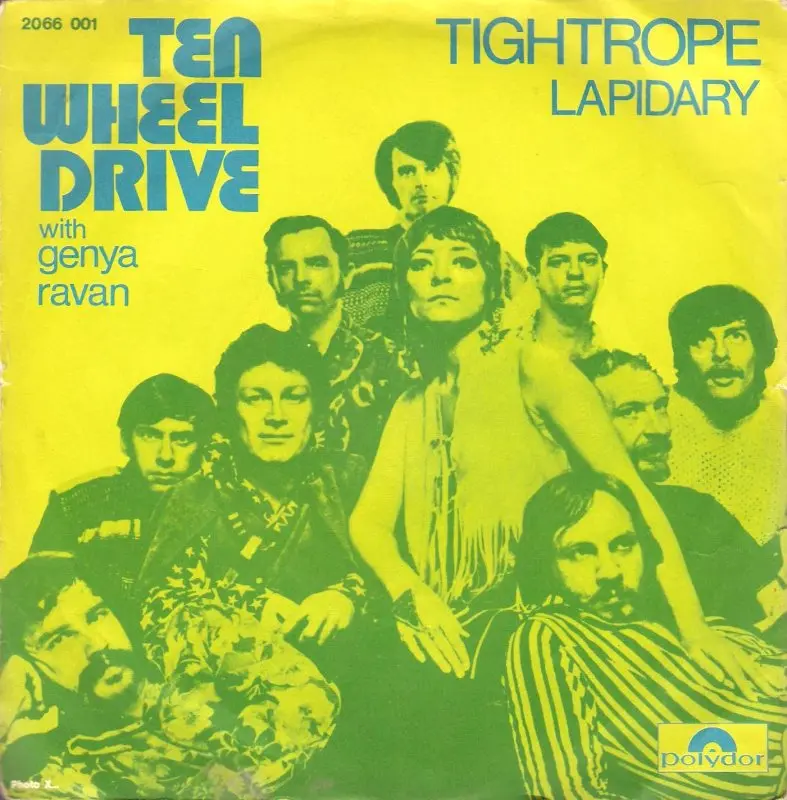 Ten Wheel Drive recorded the album at Gotham Studios in New York City with producer Walter Raim, a prior soundman for Bobby Darin, Chad Mitchell, and Judy Collins.
Construction #1 appeared in a gatefold cover with a vermilion-tinted collage of members at variable scale (front), red-lit live pics (back), and a monochrome stage shot of the ten-piece band across the inner-spread. The front-cover photographer, Robert Golden, also earned credits on 1968/69 albums by Cherry People, Janis Ian, Julie Budd, Kook & the Gang, Paul Bley, and Popcorn Blizzard.
Brief Replies
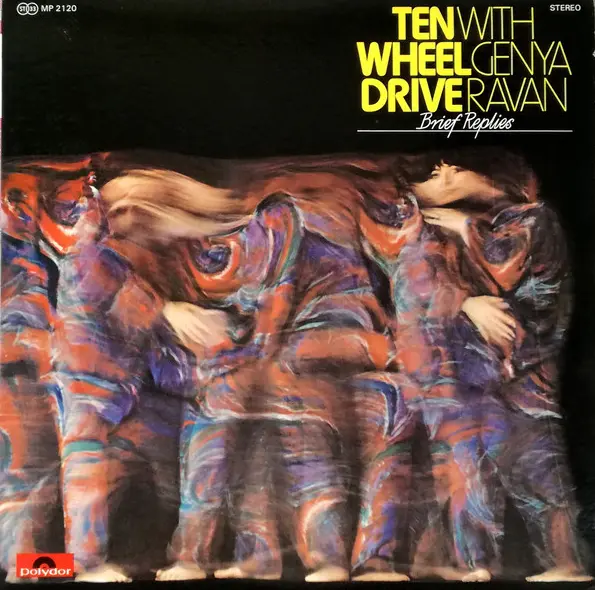 Ten Wheel Drive released their second album, Brief Replies, in 1970 on Polydor.
The lineup features holdovers Aram Schefrin (guitar, percussion, vocals, banjo), Mike Zager (keyboards), Dennis Parisi (trombone), and Genya Ravan (vocals, harmonica, percussion), along with new members Allen Herman (drums, percussion, vibraphone), Bob Piazza (bass, vocals), and three trumpeters: John Eckert, John Gatchell, and Steve Satten (also credited with cowbell and percussion). David Liebman, credited as “illustrious raisin,” contributes on soprano, tenor, and baritone saxophone, as well as flute.
The album features eight songs, six of them written by Schefrin and Zager, including the tempo-shifting “Pulse,” the brooding “How Long Before I’m Gone,” and the dynamic “Last of the Line,” which showcases Ravan’s vocal elasticity. She also co-wrote the explosive opening track “Morning Much Better,” and duets with Schefrin on the spare, voice-and-guitar ballad “Come Live With Me.” Ravan’s harp and voice front the group’s rendition of “Stay With Me,” originally written by Jerry Ragovoy and George David Weiss.
A1. “Morning Much Better” (2:36)
A2. “Brief Replies” (5:35)
A3. “Pulse” (4:21)
A4. “Come Live With Me” (5:22)
B1. “Stay With Me” (4:20)
B2. “How Long Before I’m Gone” (6:45)
B3. “Last of the Line” (5:21)
B4. “Interlude: A View of Soft” (3:53)
Ten Wheel Drive recorded Brief Replies at A&R Studios in New York City with Unifics producer Guy Draper, a prior member of the The Mayfield Singers (with Donny Hathaway and Leroy Hutson). Ambergris soundman Tony May engineers Brief Replies in sequence with 1969/70 albums by Hermeto Pascoal, Roy Ayers, Van Morrison, and Wayne Shorter. Jazz composer and arranger John Carisi conducted the band.
The album was released in a blurred-image gatefold sleeve with photography by Phillip Leonian and a back-cover quotation (“Do not sweet-talk me sweet-talker, for I am no stranger”) attributed to American journalist and short-story writer Damon Runyon.
Peculiar Friends
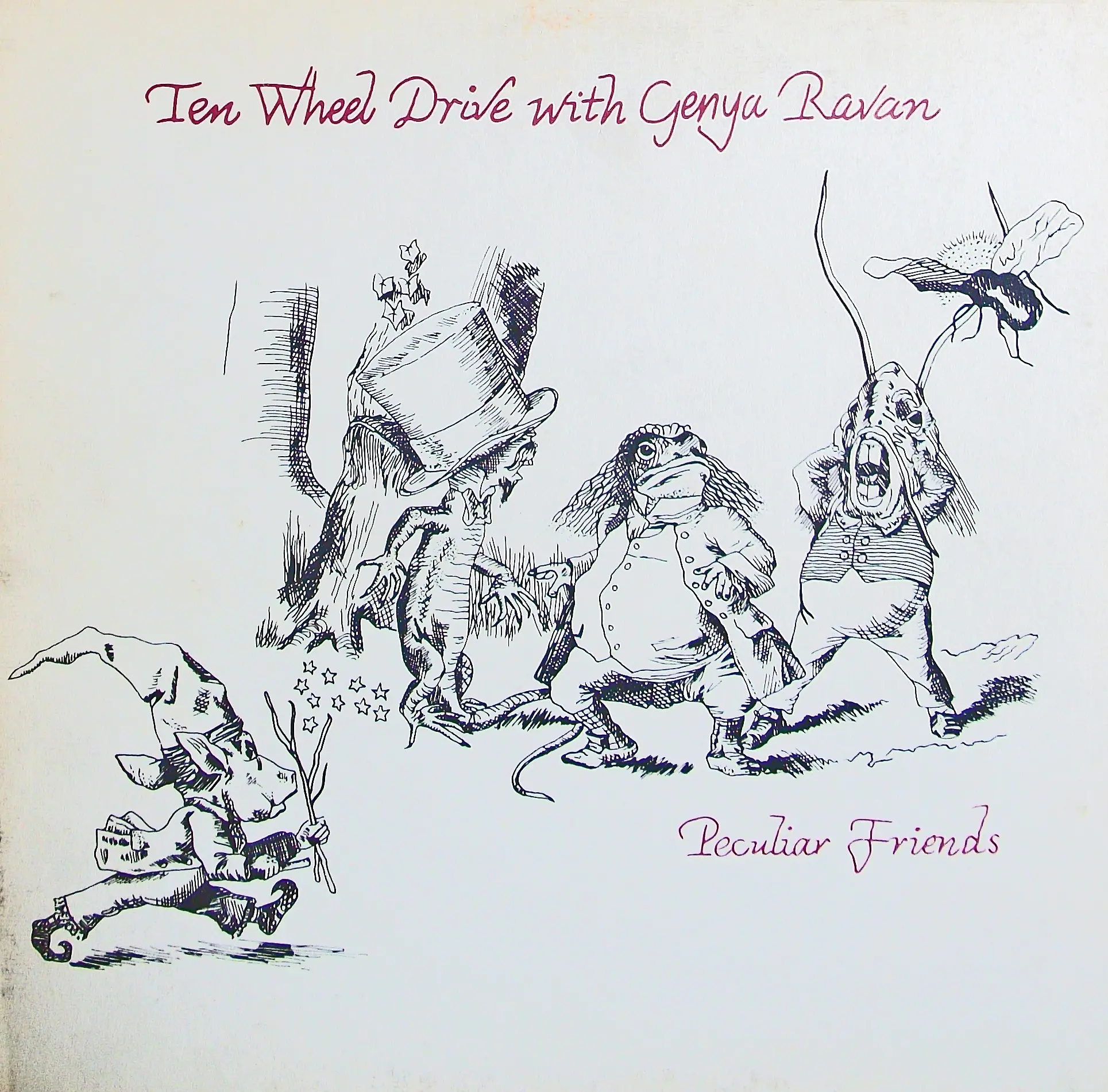 Ten Wheel Drive released their third album, Peculiar Friends, in 1971 on Polydor.
The album marked the final outing of vocalist Genya Ravan with the band before her departure and their subsequent lineup change and label shift to Capitol Records. Guitarist Aram Schefrin and keyboardist Michael Zager composed and arranged most of the material and co-produced the album, which features Blake Hines (bass), David Williams (drums), Alan Gauvin (reeds), Tom Malone (trombone), and trumpeters Danny Stiles, Dean Pratt, and Frank Frint.
Ravan co-wrote two of the album’s nine tracks, including “Down in the Cold,” a barroom-style rocker that closes the set. She also penned “The Pickpocket,” which fuses hard rock guitar with jazz inflections. The brief opening title track leads into “The Night I Got Out of Jail,” a soul-rock rave-up that blends Beatles motifs with Ike & Tina-style fervor. “Shootin’ the Breeze” applies a slick, layered brass arrangement, while “No Next Time” explores a duet-style dynamic. Other highlights include the exploratory jazz-pop number “Fourteenth Street (I Can’t Get Together)” and the dynamic ballad “I Had Him Down.”
A1. “Peculiar Friends” (0:19)
A2. “The Night I Got Out of Jail” (3:44)
A3. “Shootin’ the Breeze” (3:19)
A4. “The Pickpocket” (3:48)
A5. “No Next Time” (4:34)
B1. “Love Me” (5:05)
B2. “Fourteenth Street (I Can’t Get Together)” (5:49)
B3. “I Had Him Down” (3:52)
B4. “Down in the Cold” (6:09)
Ten Wheel Drive recorded Peculiar Friends at A&R Studios in New York City with engineer Jay Messina and mastering engineer Lee Hulko (Sterling Sound).
The album appeared in a gatefold sleeve with inside illustrations by Triano and a Dickensian front-cover illustration by David L’Heureux, a future disco artist under the alias D.C. LaRue. Photography is credited to Chuck Pulin and Lou Podover.
Carnegie Hall Event
In 1971, Ten Wheel Drive staged an ambitious rock opera at Carnegie Hall based on the Battle of the Little Big Horn and the broader history of Native North American peoples. The performance featured the American Symphony Orchestra and a full choir, arranged by the band’s composing core of Aram Schefrin and Michael Zager. Despite the project’s scope and Ravan’s praise for its brilliance, Polydor declined to record or release the material. The lack of label support contributed to her growing disillusionment with the industry and her eventual decision to leave the band.
According to Ravan, logistical and financial strains also weighed heavily: the group’s size and overhead made touring difficult, especially overseas. She cited rising costs, internal tensions, and the diminishing focus on music as reasons for her departure. Ravan parted ways with Ten Wheel Drive shortly after the Carnegie Hall performance and launched a solo career, beginning with a 1972 Columbia release co-produced by Schefrin and Zager.
Ten Wheel Drive reconfigured with Annie E. Sutton, the recent vocalist of Mike Mainieri‘s White Elephant and a guest on The Rascals 1971 double-album Peaceful World.
Ten Wheel Drive (1973)
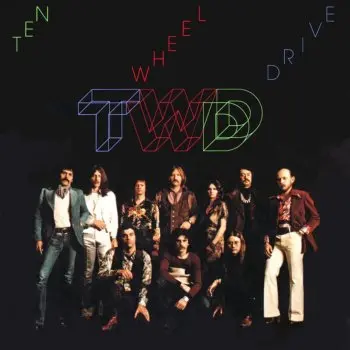 Ten Wheel Drive released their self-titled fourth album in 1973 on Capitol, marking their first and only full-length with lead vocalist Ann E. Sutton. Guitarist Aram Schefrin and keyboardist Michael Zager wrote and arranged the album’s material and co-produced the sessions.
The ten-song set includes one carryover from the band’s prior era: “Why Am I So Easy to Leave,” co-written by former vocalist Genya Ravan. Schefrin and Zager composed the remaining tracks, including the propulsive opener “Ezra” (with a trumpet solo by Dean Pratt), the jazz-rock shuffle “Monsoon Rain,” and the closing number “Close Up the Cheese.” Side B also includes the brief interlude “Song to Take Out” and the slow, melodic ballad “I Can Still See You to Love.”
Backing Sutton, the revamped lineup features Schefrin (guitar, vocals), Zager (organ, vibraphone), Barry Lazarowitz (drums), Harry Max (bass, violin), Don Grolnick (piano), Ed Xiques (reeds), Gerry Chamberlain (trombone), and returning trumpet/flügelhorn players John Gatchell and Dean Pratt. Daryl Hall, John Oates, Joey Ward, and Tom Cosgrove contribute backing vocals.
A1. “Ezra” (4:00)
A2. “Why Am I So Easy to Leave” (4:49)
A3. “Just Plain Love” (4:21)
A4. “Slain Man’s Widow” (5:55)
B1. “‘Bye Light of Day” (2:55)
B2. “Monsoon Rain” (3:33)
B3. “Tap Water” (4:24)
B4. “Song to Take Out” (1:08)
B5. “I Can Still See You to Love” (3:00)
B6. “Close Up the Cheese” (4:45)
Ten Wheel Drive recorded the album at the Record Plant in New York City with engineer Jay Messina. John Wilson remixed the tracks at Capitol Studios, where Wally Traugott also mastered the final mix.
After Ten Wheel Drive
Following the dissolution of Ten Wheel Drive, Michael Zager emerged as a prolific producer, arranger, and composer in the R&B and disco spheres. He produced albums for Street Corner Symphony (1975), Marilyn Chambers (1976), Andrea True (1977), Dee Edwards (1980), Take Five (1981), and Elusion (1981). In 1978, he scored a major dancefloor hit with “Let’s All Chant,” credited to the Michael Zager Band.
Between 1979 and 1981, Zager arranged and composed linking passages for a series of chart-topping medleys recorded by The Spinners. These included “Working My Way Back to You / Forgive Me Girl” (US #2, UK #1), “Cupid / I’ve Loved You for a Long Time” (US #4, UK #4), and “Yesterday Once More / Nothing Remains the Same” (US #52).
Genya Ravan launched her solo career in 1972 with a self-titled album, followed by They Love Me, They Love Me Not (1973) and Goldie Zelkowitz (1974). Her best-known solo albums, Urban Desire (1978) and …And I Mean It! (1979), fused gritty rock with punk-era attitude. Urban Desire reached No. 66 in Australia.
As a producer, Ravan helmed The Dead Boys’ 1977 debut Young Loud and Snotty and Ronnie Spector’s 1980 comeback Siren, on which she also sang backing vocals.
Discography:
- Construction #1 (1969 • Ten Wheel Drive With Genya Ravan)
- Brief Replies (1970)
- Peculiar Friends (1971 • Ten Wheel Drive With Genya Ravan)
- Ten Wheel Drive (1973)
Sources:
Artist/Album Pages:
Isis was an American brass-rock/funk big band from NYC, formed in 1972 by guitarist/singer Carol M...
The Red Crayola was an American psychedelic rock band from Houston that released the experimental...
Alacrán was a Spanish psych-rock trio that released a self-titled album in 1971. Members: Fernand...
Ramatam was an American hard-rock band that released two albums on Atlantic: Ramatam (1972) and In...
Malachi was a Belgian psych-rock band that released a 1971 self-titled album on Columbia (EMI). Or...
Alan Skidmore (born April 21, 1942) is an English tenor saxophonist from London who appeared on 19...
Andwellas Dream was an Irish psychedelic pop trio that released the 1969 CBS album Love and Poetry...
Coalition was an American jazz-rock band from upstate New York behind the self-released 1975 album...
Pyranha was a Swiss jam-rock/psych band from Yverdon that released a 1972 self-titled album on Eps...
Colours were an American psychedelic rock band from California that released the 1968/69 albums C...
East Coast was an American soul-funk band from N.Y.C. that released a 1973 self-titled album on En...
The Skull Snaps were an American soul-funk band from the Bronx that released a 1973 self-titled al...