

The Music Machine was an American garage-rock band that released the 1966 album (Turn On) The Music Machine on Original Sound. It spawned a Billboard Top 20 hit with “Talk Talk,” a much-comped proto-punk classic. Singer-guitarist Sean Bonniwell retained the name through a revised lineup and the 1968 Warner Bros.-Seven Arts album The Bonniwell Music Machine.
Members: Sean Bonniwell (vocals, guitar), Mark Landon (guitar, 1966-67), Ron Edgar (drums, 1966-67), Keith Olsen (bass, 1966-67), Doug Rhodes (keyboards, bass, 1966-67), Ed Jones (bass, 1967-69), Harry Garfield (organ, 1967-69), Alan Wisdom (guitar, 1967-69), Jerry Harris (drums, 1967-69)
Background
The group formed in Los Angeles in 1965 when singer-guitarist Sean Bonniwell assembled bassist Keith Olsen and drummer Ron Edgar as the Ragamuffins. Bonniwell, born Thomas Harvey Bonniwell on August 16, 1940, in San Jose, brought studio experience from the folk trio the Wayfarers and three RCA albums. Olsen previously accompanied singer Gale Garnett, while Edgar played with the Goldebriars.
Keyboardist Doug Rhodes and guitarist Mark Landon joined in early 1966, expanding the trio into a five-piece band. Bonniwell renamed the act the Music Machine and imposed black clothing with dyed black hair. Each member wore one black glove. Landon met Olsen through Adler Music Store in Los Angeles before entering the lineup, while Rhodes brought further experience from the Goldebriars.
Producer Brian Ross heard the group in the summer of 1966 and signed a production agreement. He booked RCA Hollywood for a three-hour July session that yielded “Talk Talk” and “Come On In.” Manager Gene Simmons coordinated the band’s business as Ross placed the first masters with Original Sound.
(Turn On) The Music Machine
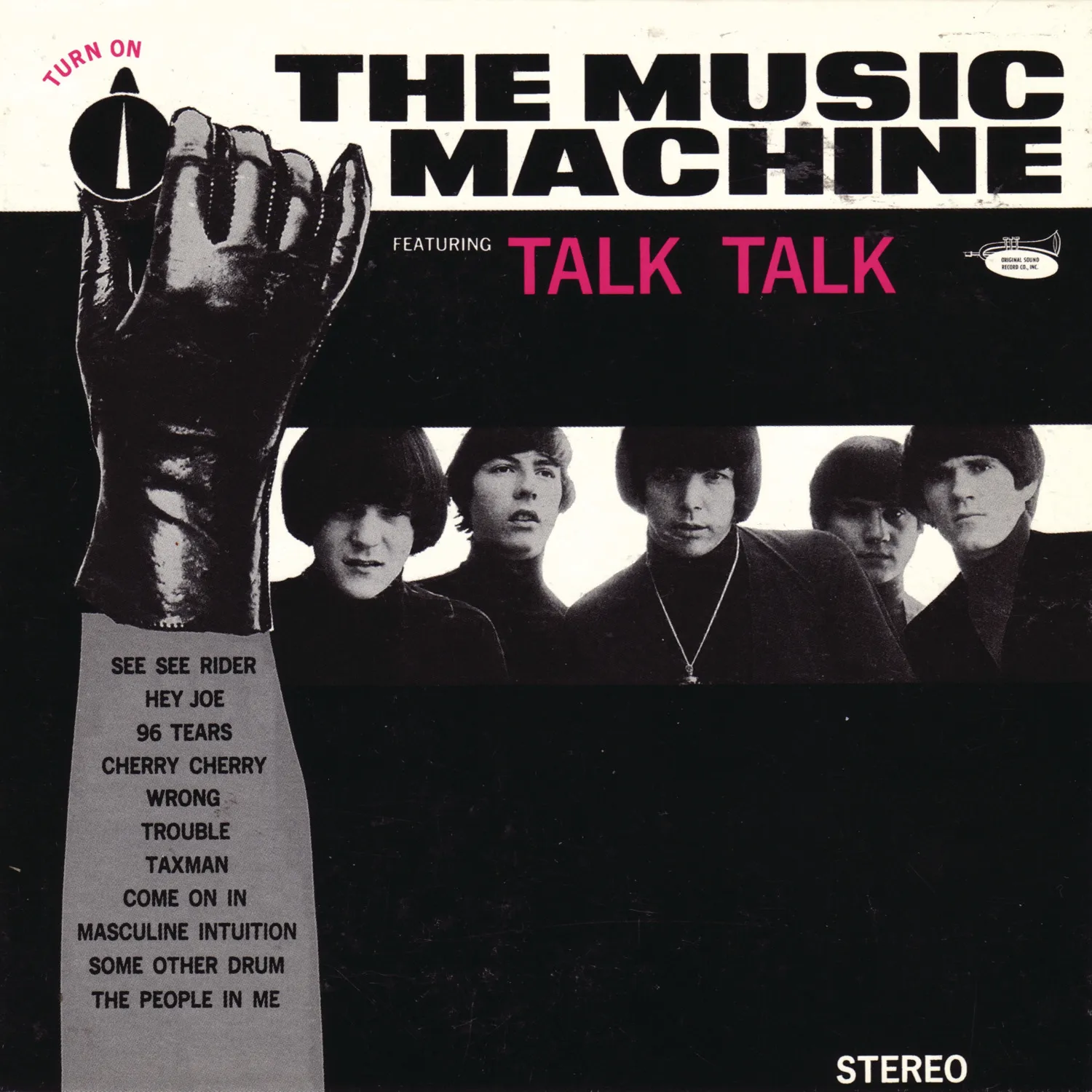 The Music Machine released their debut album, (Turn On) The Music Machine, in December 1966 on Original Sound.
Turn On contains seven Sean Bonniwell originals, including “Talk Talk,” “Come on In,” and “The People in Me.” Five covers draw from Neil Diamond (“Cherry, Cherry”), The Beatles (“Taxman”), Ma Rainey (“See See Rider”), ? and the Mysterians (“96 Tears”), and The Leaves (“Hey Joe”).
“Talk Talk” lunges from organ bursts into fuzzed bass, a terse lead flare, and agitated tambourine. “Trouble” hurtles through ominous sustained tones, abrasive distortion, and a sped-up group passage near its middle. “Cherry Cherry” saunters through a Caribbean-leaning lilt, close harmonies, and a brief flute line. “Masculine Intuition” surges from a long cymbal roll toward a hard ending accent.
“The People in Me” careens through a rapid opening before its main figure passes from guitar to a reedy line. “Wrong” churns beneath frantic lead delivery and menacing group replies. “Come On In” smolders beneath restrained crooning and a slow, moody sway. “Hey Joe” stalks through a slowed, brooding treatment coated in fuzz.
A1. “Talk Talk” (1:56) – Bonniwell
A2. “Trouble” (2:11) – Bonniwell
A3. “Cherry, Cherry” (3:12) – Diamond
A4. “Taxman” (2:33) – Harrison
A5. “Some Other Drum” (2:29) – Bonniwell
A6. “Masculine Intuition” (2:08) – Bonniwell
B1. “The People in Me” (2:53) – Bonniwell
B2. “See See Rider” (2:29) – Rainey
B3. “Wrong” (2:16) – Bonniwell
B4. “96 Tears” (2:17) – Martinez
B5. “Come On In” (2:54) – Bonniwell
B6. “Hey Joe” (4:12) – Roberts
Music Machine recorded “Talk Talk” and “Come On In” in July 1966 at RCA Hollywood, then returned there in October for “Some Other Drum” and “Masculine Intuition.” Sessions for the remaining tracks followed in October and November at Original Sound Studios in Hollywood. Brian Ross produced the album with executive producer Maurie Bercov; engineer Paul Buff operated the custom ten-track system for the Original Sound dates. Buff previously engineered the Ragamuffins demos by Bonniwell, Olsen, and Edgar, linking the LP sessions to the trio’s first rock recordings.
Sylvester Brown designed the jacket, and manager Gene Simmons supplied the photographs. The front pairs a raised black-gloved hand with a monochrome group portrait under black geometric fields. Magenta lettering identifies “Talk Talk.” Bonniwell wrote the rear-sleeve notes.
Original Sound issued “Come On In” in 1966 (b/w “Talk Talk”); radio programmers flipped the sides, and “Talk Talk” reached No. 15 on the Billboard Hot 100. The label followed in January 1967 with “The People in Me” (b/w “Masculine Intuition”), which reached No. 66 on the same chart. On the album chart, (Turn On) The Music Machine peaked at No. 76 after a sixteen-week run.
Big Beat expanded the album into the two-CD The Ultimate Turn On in 2006, combining mono and stereo LP masters with Original Sound singles, demos, rehearsals, and two television performances. Craft Recordings returned the original album to 180-gram vinyl in June 2018 from the analog masters.
Lineup Change
The 1967 tour cycle and royalty disputes fractured the original quintet. Bonniwell’s control over rehearsals added further tension. Olsen entered production work with Curt Boettcher, while Edgar and Rhodes joined the Millennium.
Bonniwell and Ross moved the recording agreement to Warner Bros.-Seven Arts and adopted the Bonniwell Music Machine name. Guitarist Alan Wisdom, keyboardist Harry Garfield, bassist Eddie Jones, and drummer Jerry Harris formed the principal replacement lineup. Session players entered later Warner dates as personnel shifted.
The Bonniwell Music Machine
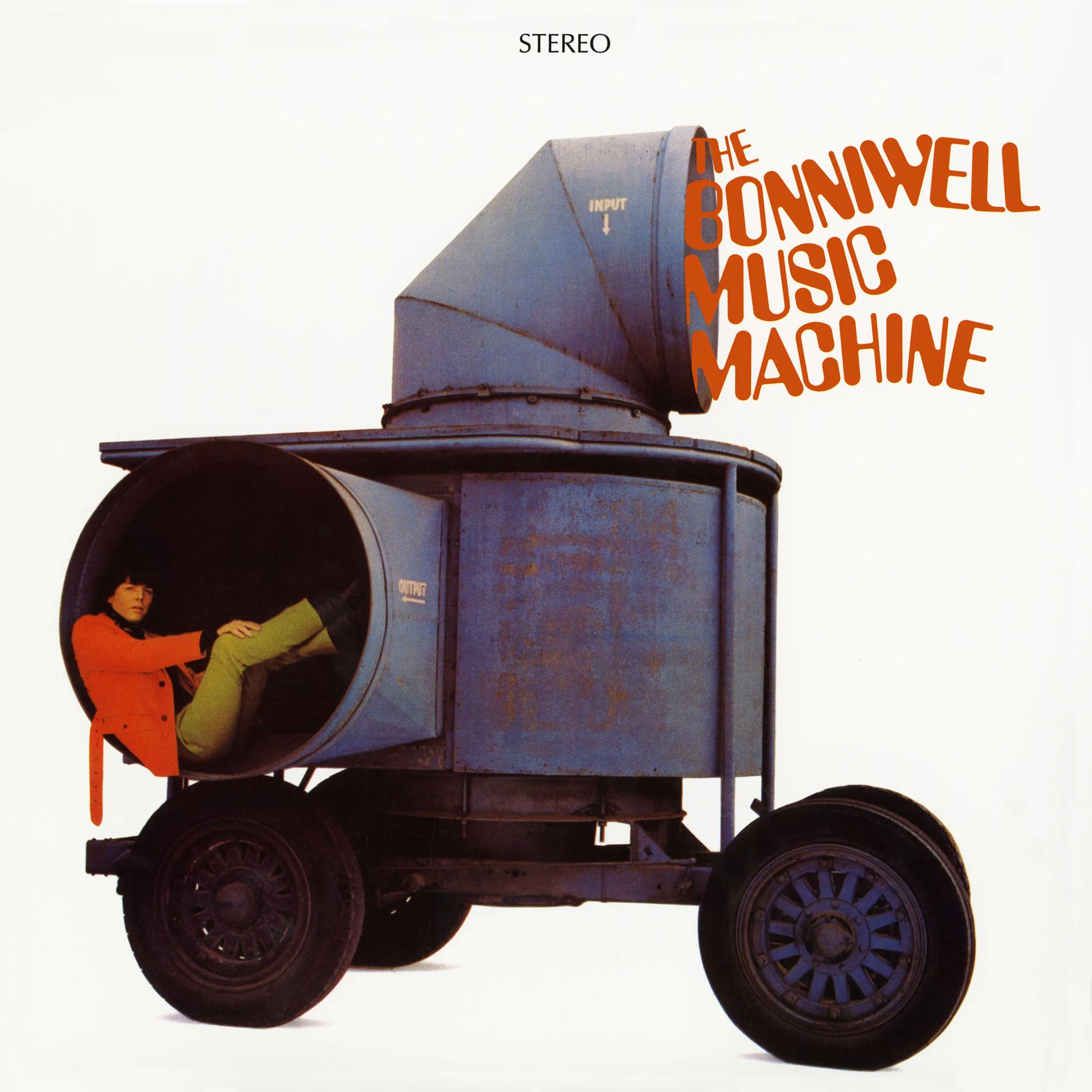 The Bonniwell Music Machine released their singular album, The Bonniwell Music Machine, in February 1968 on Warner Bros.-Seven Arts.
Warner assembled the LP from 1967 singles and unused masters by the original quintet, then added newer recordings by the replacement lineup. Bonniwell wrote thirteen tracks; “The Day Today” carries a shared credit with Keith Olsen. Horns and woodwinds enter several arrangements. Strings, acoustic guitar, and additional keyboards mark later sessions.
“Astrologically Incompatible” stings through dark fuzz and uneven brass accents. “Double Yellow Line” careens through doubled organ-and-guitar figures beneath Bonniwell’s rasped declamation. “The Day Today” drifts under tender crooning and spare accompaniment. “Absolutely Positively” surges on high keyboard arpeggios before an emphatic declaration takes over. “The Trap” creeps through harpsichord taps and close harmonies as broad verses narrow into inward responses.
“Bottom of the Soul” lurches through tempo changes before a calliope passage interrupts its fuzz riff. “The Eagle Never Hunts the Fly” looms from a foreboding opening into a sustained fuzz collapse. “Discrepancy” splits an assertive lead from contrasting backing replies.
A1. “Astrologically Incompatible” (2:35)
A2. “Double Yellow Line” (2:09)
A3. “The Day Today” (2:53) – Bonniwell, Olsen
A4. “Absolutely Positively” (2:14)
A5. “Somethin’ Hurtin’ on Me” (3:03)
A6. “The Trap” (2:34)
A7. “Soul Love” (3:38)
B1. “Bottom of the Soul” (2:00)
B2. “Talk Me Down” (1:52)
B3. “The Eagle Never Hunts the Fly” (2:46)
B4. “I’ve Loved You” (2:49)
B5. “Affirmative No” (2:08)
B6. “Discrepancy” (2:36)
B7. “Me-Myself, and I” (2:13)
Original-lineup masters came from February 1967 dates at Studio 76 in New York and Cosimo’s studio in New Orleans, followed by March and May work at RCA Hollywood and United Western Recorders. November sessions added material from the replacement lineup. Brian Ross produced the masters with executive producer Maurie Bercov. Keith Olsen took charge of the console at Cosimo’s. Ross also played keyboards on selected recordings, while Bercov supplied flute, horn, and woodwind parts.
Warner housed the album in a cover that places Bonniwell inside the horn of a wheeled blue machine beneath orange hand-lettered type.
Original Sound issued “Double Yellow Line” in April 1967 (b/w “Absolutely Positively”), which reached No. 111 on Billboard’s Bubbling Under the Hot 100 and No. 100 in Cash Box. The label followed in June with “The Eagle Never Hunts the Fly” (b/w “I’ve Loved You”). Warner Bros. paired “Bottom of the Soul” with “Astrologically Incompatible” in November, then issued “Me-Myself, and I” in January 1968 (b/w “Soul Love”).
Rhino restored the original sequence in 2010 as a digital edition. Big Beat expanded the Warner catalog into a two-CD edition in March 2014, adding later singles, outtakes, Ragamuffins demos, home recordings, and final-session material.
Final Singles and Later Activity
Warner Bros.-Seven Arts issued “To the Light” in June 1968 (b/w “You’ll Love Me Again”) and “Time Out (For a Daydream)” in September (b/w “Tin Can Beach”). Original Sound also reissued “Hey Joe” in July 1968 (b/w “Wrong”) as a catalog single. Bell closed the group’s original release sequence with “Advise and Consent” in March 1969 (b/w “Mother Nature–Father Earth”).
Bonniwell dissolved the Music Machine and signed to Capitol under the name T.S. Bonniwell. He recorded Close from May through July 1969 at Capitol Studios with producer Vic Briggs and engineer Paul Buff. Released that August, the album paired Bonniwell’s acoustic guitar with orchestrated arrangements and a softer solo presentation across 11 original songs.
Olsen reunited with Curt Boettcher after leaving the Music Machine and joined former bandmates Ron Edgar and Doug Rhodes in the Millennium. He co-produced the group’s 1968 Columbia album Begin, then established himself as an independent engineer-producer at Sound City. Olsen produced Buckingham Nicks in 1973 and later played “Frozen Love” for Mick Fleetwood at the studio, promoting Fleetwood to hire Lindsey Buckingham and Stevie Nicks as replacements for Bob Welch in Fleetwood Mac. Olsen produced their 1975 self-titled album, then extended his studio career through albums by the Grateful Dead, Pat Benatar, Rick Springfield, and other major rock acts.
Bonniwell self-published the memoir Talk Talk in 1996 and later revised the book as Beyond the Garage. He died from lung cancer on December 20, 2011, in Visalia, California.
Nuggets, Pebbles, and Garage Revival
Lenny Kaye included “Talk Talk” on the 1972 Elektra double album Nuggets: Original Artyfacts from the First Psychedelic Era, 1965–1968, placing the Music Machine within the first major retrospective of mid-Sixties American garage and psychedelic singles. Rhino retained the song for Nuggets, Vol. 1: The Hits in 1984. The label reached further into the catalog on Nuggets, Vol. 2: Punk, which included “Double Yellow Line” and “The Eagle Never Hunts the Fly.”
The Pebbles series widened the late-Seventies collector market around regional garage and psychedelic singles, though Music Machine recordings followed a stronger path through Nuggets and related compilations. Pebbles, Volume 4 included “The Fun We Had” by a California group called the Ragamuffins, but this was a separate band from Sean Bonniwell’s pre-Music Machine Raggamuffins. Germany’s Mindrocker, Volume 10 provided a deeper Music Machine survey in 1984 with “Double Yellow Line,” “Absolutely Positively,” “The Eagle Never Hunts the Fly,” and “I’ve Loved You.” Rhino reinforced that recovery the same year with the fourteen-track Best of the Music Machine. The label returned to “Talk Talk” on More Nuggets, Vol. 2 in 1987.
Musicians also carried Bonniwell’s material into successive revival cycles. The Fire Escape recorded “Talk Talk” for their 1967 album Psychotic Reaction, while Toronto group A Passing Fancy issued “People in Me” as a Columbia single that November. The Residents incorporated “Talk Talk” into their 1974-recorded “Swastikas on Parade” medley. Minneapolis revivalists the Hypstrz recorded the song live at Jay’s Longhorn in April 1979 and included the performance on the 1980 Voxx album Hypstrization!
In 1980, renditions of “Talk Talk” appeared on albums by Alice Cooper (Flush the Fashion), The Inmates (Shot in the Dark), and the debut by Canadian punk group The Demics. The Fuzztones performed a 1981 CBGB live version that appeared on a later archival release.
Discography:
- (Turn On) The Music Machine (1966)
- The Bonniwell Music Machine (1968 • The Bonniwell Music Machine)
Sources:
Artist/Album Pages:
Herbie Mann (April 16, 1930 — July 1, 2003) was an American jazz flutist, multi-reedist, bandleade...
The Idle Race was an English pop-psych band from Birmingham, best known for the 1967 single "Imposte...
Jean-Luc Ponty is a French violinist, active since the early 1960s and best known for his twelve-alb...
Marianne Faithfull (December 29, 1946 — January 30, 2025) was an English singer from Hampstead who...
The Other Half was an American garage-rock band responsible for the 1966 blues-rock classic "Mr. Pha...
The Beau Brummels were an American pop-rock band that released two 1965 albums on Autumn Records and...
Zimbo Trio was a Brazilian samba-jazz combo that released six albums between 1964 and 1969 on RGE,...
The Monks were a garage-rock band formed by American GIs stationed in Germany. In 1966, they release...
James Brown (May 3, 1933 — December 25, 2006) was an American soul singer who was active as a perf...
Harry Nilsson (1941–1994) was an American singer/songwriter who released fourteen albums between 1...
Kaleidoscope was an English pop-psych band that released two albums on Fontana: Tangerine Dream (196...
The Manhattans were an American soul group from Jersey City that released fourteen singles and tw...