

Stevie Nicks is an American singer and songwriter who first emerged in the early 1970s as one-half of the folk-pop duo Buckingham Nicks with then-boyfriend Lindsey Buckingham.
She joined Fleetwood Mac in late 1974 and helped drive the band’s most successful run on the albums Fleetwood Mac (1975), Rumours (1977), Tusk (1979), Mirage (1982), and Tango in the Night (1987). Her signature songs with the band include “Rhiannon,” “Dreams,” “Sara,” “Gypsy,” and “Seven Wonders.”
Between band commitments, Nicks built a parallel solo career with the albums Bella Donna (1981), The Wild Heart (1983), Rock a Little (1985), and The Other Side of the Mirror (1989). That solo run produced major hits with “Stop Draggin’ My Heart Around,” “Leather and Lace,” “Edge of Seventeen,” “Stand Back,” “If Anyone Falls,” “I Can’t Wait,” and “Rooms on Fire.”
Across both catalogs, Nicks established a distinct writing voice and stage image that made her one of the defining singer-songwriters of late-20th-century American rock.
Early Life
She was born Stephanie Nicks on May 26, 1948, in Phoenix, Arizona; one of two children borne to Barbara (née Neppel, 1927–2011) and Jess Nicks (1925–2005). The family lived in multiple cities (Albuquerque, El Paso, Salt Lake City, Los Angeles, San Francisco) due to Jess’s position as the Vice President of Greyhound. As a toddler, she referred to herself as “tee-dee,” hence the nickname “Stevie.”
Barbara sheltered her daughter, who spent large amounts of time indoors and developed a fascination with fairies. From age four, her grandfather taught her to sing and harmonize. For her tenth birthday, he bought her a bundle of rockabilly and country singles. “Party Doll” by the Everly Brothers became an early favorite.
Early Music Activity
On her sixteenth birthday, Stevie received a Goya acoustic guitar. She used it to write her first song, “I’ve Loved and I’ve Lost, and I’m Sad but Not Blue.” At Arcadia High School (South California), she joined her first band, the harmony-folk combo Changing Times.
As a senior at Menlo-Atherton High School (Central Cal), she met Lindsey Buckingham, a junior member of the swim team who played in psychedelic rock hopefuls Fritz. As band members drifted to college, he invited her to join the band. After a joint spell at San José State University, where Stevie enrolled as an English major, the couple left college and hit the road with Fritz, which opened shows for Janis Joplin and Jimi Hendrix.
Stevie developed her flamboyant stage persona in Fritz, which disbanded in 1972 with no contract. Meanwhile, the couple roomed in LA with Keith Olsen, a budding producer with industry contacts, including promoter Gordon Perry, whose then-fiance, Lori, befriended Stevie.
Fleetwood Mac
As a duo, Buckingham and Nicks linked with Polydor and cut a 1973 album of folk-pop originals. After the deal ended, Buckingham and Nicks came to the attention of Mick Fleetwood, who needed a new guitarist and singer for his band, Fleetwood Mac, a onetime English blues-rock act that recently settled in California with guitarist/singer Bob Welch, who left for Paris and a subsequent solo career.
Their first album with the band, 1975’s Fleetwood Mac (the English band’s tenth overall), reached No. 1 on the Billboard 200 and spawned an FM hit with Stevie’s “Rhiannon.” The 1977 followup, Rumours, spent 31 weeks at No. 1 and spawned four hits, including Stevie’s “Dreams,” an ethereal ballad that topped the Billboard Hot 100. (Lindsey reflected on their romantic split in another Rumours hit, “Go Your Own Way”).
During a mid-1978 tour break in Maui, Stevie met Sharon Celani, an LA native and soul-harmony enthusiast whose band, Dancer, performed at Lahaina’s Blue Max nightclub. Sharon impressed Stevie with a rendition of Linda Ronstadt’s recent hit “Poor Poor Pitiful Me” (Lindsey played on Warren Zevon’s 1976 original). The two women became lifelong friends.
Meanwhile, Stevie sang backing vocals on 1978/79 hits by Walter Egan (“Magnet and Steel”) and ex-Kingston Trio singer–songwriter John Stewart (“Gold”). She also befriended Kenny Loggins, the opening act on multiple Rumours tour dates. Their duet, “Whenever I Call You Friend,” became a No. 5 Billboard hit from his 1978 second solo album, Nightwatch.
Stevie reconvened with Fleetwood Mac for their 1979 double-album Tusk, an eclectic set with Stevie’s hit piano ballad “Sara.” The ensuing five-leg tour spawned a concert album, Fleetwood Mac Live. Meanwhile, Stevie stockpiled material that exceeded the band’s confines. On a break from group activity, she recorded her first solo album.
Bella Donna
 Stevie Nicks released her debut solo album, Bella Donna, on July 27, 1981, on Modern–Atco. It features seven self-penned originals, including the radio hits “Edge of Seventeen” and “Leather and Lace,” a country-ballad duet with Don Henley.
Side A contains songs co-written with E Street keyboardist Roy Bittan (“Think About It”) and Heartbreakers organist Benmont Tench (“Kind of Woman”). Heartbreakers guitarist Mike Campbell wrote the album’s biggest hit, “Stop Draggin’ My Heart Around,” a dramatic call-and-response between Stevie Nicks and Tom Petty. It features three-fifths of the Heartbreakers (Campbell, Petty, Tench, and drummer Stan Lynch), who also play on “Outside the Rain.”
Tench plays on six additional tracks, which also feature guitarists Waddy Watchel (of Linda Rondstadt’s band) and Davey Johnstone (of the Elton John Band) with three prolific LA sessionists: bassist Bob Glaub, drummer Russ Kunkel, and percussionist Bobbye Hall. “The Highwayman” features Campbell with Henley (drums) and Eagles colleague Don Felder.
Lori Perry and Sharon Celani sing backing vocals throughout this and Stevie’s subsequent albums.
A1. “Bella Donna” (5:21) features the standard band (Tench, Watchel, Kunkel, et al.) arranged by Gordon Perry with synthesist David Adelstein (a sideman of Bob Welch and fellow Mac associate Robbie Patton).
A2. “Kind of Woman” (3:12)
A3. “Stop Draggin’ My Heart Around” (4:04) brings Stevie together with Tom Petty and the Heartbreakers (minus outgoing bassist Ron Blair, deputized here by Mar-Keys/MG’s vet Donald “Duck” Dunn, a Hard Promises auxiliary heard on “A Woman in Love”).
A4. “Think About It” (3:35) features Little Feat pianist Billy Payne.
A5. “After the Glitter Fades” (3:31) features pedal steel guitarist Dan Dugmore (a sessionist for Ronstadt, Andrew Gold, John Stewart, and Karla Bonoff).
B1. “Edge of Seventeen” (5:28)
B2. “How Still My Love” (3:54)
B3. “Leather and Lace” (3:44)
B4. “Outside the Rain” (4:19) features Campbell, Tench, and Lynch with percussionist Phil Jones (ex-Crabby Appleton) and bassist Tom Moncrieff (a sideman of Walter Egan, an earlier Buckingham/Nicks associate).
B5. “The Highwayman” (4:49) features Henley, Felder, Campbell, Tench, Johnstone, and journeyman country-rock bassist Richard Bowden (Shiloh, Blue Steel).
Sessions spanned November 1980 through April 1981 at Studio 55, a Hollywood facility co-owned by producer Richard Perry (Carly Simon, Diana Ross, Leo Sayer, Manhattan Transfer), also used for 1981 albums by Pointer Sisters and The Tubes.
Steve Nicks recorded Bella Donna with Brooklyn-born producer Jimmy Iovine, a decorated Seventies soundman (Electric Light Orchestra, Kansas, Meat Loaf, Wiggy Bits) who worked on recent titles by Dire Straits (Making Movies) and Graham Parker & The Rumour (The Up Escalator). Iovine produced Bella Donna in tandem with Petty and the Heartbreakers’ fourth album, Hard Promises, which features Stevie’s backing vocals on “Insider” (with Lori) and “You Can Still Change Your Mind” (with Sharon).
Jimmy’s engineer for both albums was Shelly Yakus, a prior Return to Forever soundman with credits in the realms of hard rock (Swampgas, Ursa Major), brass rock (Ambergris, Lighthouse), art rock (Crack the Sky, Yellow Dog), and lavish pop (Raspberries, Rupert Holmes).
Stevie and her brother Christoper Nicks co-conceived the Bella Donna cover with Rumours photographer Herbert Wheeler Worthington III, who pictured her full-bodied profile holding a white cockatoo and matching gypsy gown (front) and medium profile with a tambourine and bouquet (back). Graphic artist Michael Manoogian (Ambrosia, Chick Corea) designed the Art Nouveau-style logo. The lyrical inner-sleeve pictures Stevie, Lori, and Sharon in a vintage-furnished, high-ceiling interior. The back-cover quotes the title track (“Come in out of the darkness”) with a personal note: “And once again, the music is dedicated to my Grandfather and all his children.”
Stevie first lifted “Stop Draggin’ My Heart Around” on July 8, 1981, as the album’s lead single (b/w “Kind of Woman”). In the video, Stevie and the Heartbreakers perform in a dark studio where Nicks and Petty trade sly looks up front while the camera recurrently focuses on Campbell’s fretwork. Lori and Sharon make a brief mid-song cameo. On August 1, the video became the 25th clip aired by MTV on the cable network’s first day of broadcast, which repeated the clip three times that day.
On September 5, “Stop Draggin’ My Heart Around” commenced six straight weeks at No. 3 on the Billboard Hot 100>, where it nested under No. 2’s by the Pointer Sisters (“Slow Hand”), Juice Newton (“Queen of Hearts”), Christopher Cross (“Arthur’s Theme”), and the nine-week No. 1 reign of the Lionel Richie/Diana Ross duet “Endless Love.” The song also reached No. 2 on the Billboard Mainstream Rock chart (a more crucial metric for its FM evergreen status). Abroad, “Stop Draggin’ My Heart Around” went Top 10 in South Africa (No. 4), Canada (No. 5), and Australia (No. 10).
On October 6, Stevie lifted the Don Henley duet “Leather and Lace” as the second single, backed with the Bella Donna title track (“Outside the Rain” in the UK). “Leather and Lace” reached No. 6 on the Billboard Hot 100 and No. 12 in Canada.
On February 5, 1982, Stevie lifted “Edge of Seventeen” as the albums third single, subtitled “Just Like the White Winged Dove” and backed with a live version (5:57). The song reached No. 4 on the Billboard Mainstream Rock chart and No. 11 on the Hot 100. On April 30, “After the Glitter Fades” reappeared as the fourth single (b/w “Think About It”) and reached No. 32 on the Hot 100.
Bella Donna reached No. 1 on the Billboard 200 and later certified quadruple-Platinum for sales exceeding four million units. Abroad, the album reached No. 1 in Australia, No. 2 in Canada, No. 7 in New Zealand, and No. 11 in the UK.
Stevie’s 1980/81 Studio 55 sessions spawned multiple outtakes, including the soundtrack inclusions “Blue Lamp” and “Sleeping Angel” and the later unearthed “Gold and Braid” (included on her 1998 Enchanted box set), “If You Were My Love,” “Belle Fleur,” and “The Dealer” (all included on her 2014 comp 24 Karat Gold: Songs from the Vault).
“Blue Lamp” (3:48) appears on the soundtrack to Heavy Metal, a 1981 animated adult sci-fi film by the publishers of the namesake magazine with cuts by Blue Oyster Cult, Devo, Donald Fagen, Journey, and Nazareth.
“Sleeping Angel” (4:43) appears on the two-record soundtrack to Fast Times at Ridgemont High, a 1982 teen comedy with cuts by Don Henley, Sammy Hagar, Billy Squier, Donna Summer, The Go-Go’s, Quarterflash, Oingo Boingo, and Jackson Browne’s iconic “Somebody’s Babe.”
“Gold and Braid”
“If You Were My Love”
“Belle Fleur”
“The Dealer”
Between solo albums, Stevie reconvened with Fleetwood Mac for their 1982 album Mirage, another multi-Platinum seller with three of her contributions: “That’s Alright,” “Straight Back,” and “Gypsy,” a major MTV hit with its Edwardian-themed video.
The Wild Heart
 Stevie Nicks released her second solo album, The Wild Heart, on June 10, 1983, on Modern.
Nicks wrote seven of the album’s ten tracks. Sandy Stewart shares “If Anyone Falls,” “Nightbird,” and “Nothing Ever Changes,” while Tom Petty supplied “I Will Run to You.” Keyboardist Sandy Stewart, guitarist Waddy Wachtel, pianist Roy Bittan, organist Benmont Tench, bassist Bob Glaub, percussionist Bobbye Hall, and drummer Russ Kunkel form the recurring center, then side two widens the cast with guitarist Steve Lukather and uncredited Prince on “Stand Back,” Tom Petty and the Heartbreakers on “I Will Run to You,” Mick Fleetwood on “Sable on Blond,” and Paul Buckmaster’s string arrangement on “Beauty and the Beast.” Lori Perry and Sharon Celani again carry the album’s constant harmony layer.
A1. “Wild Heart” (6:08) pairs Nicks with guitarists David Monday and Dean Parks over Roger Tausz bass, Brad Smith drums and percussion, and Sandy Stewart synthesizer.
A2. “If Anyone Falls” (4:07) reworks Stewart’s instrumental “The Last American” into one of the album’s three co-writes.
A3. “Gate and Garden” (4:05) returns to the Goodnight Dallas team with David Monday, Waddy Wachtel, Benmont Tench, Brad Smith, and Stewart.
A4. “Enchanted” (3:05) centers Wachtel, Roy Bittan, Benmont Tench, Bob Glaub, Russ Kunkel, and Bobbye Hall.
A5. “Nightbird” (4:59) brings Stewart forward as co-writer and duet partner and adds David Foster piano with Chet McCracken drum overdubs.
B1. “Stand Back” (4:18) features Wachtel, Steve Lukather, David Williams, Bobbye Hall, Ian Wallace, and synth programming credited to David Bluefield, plus uncredited Prince keyboards.
B2. “I Will Run to You” (3:21) brings in Tom Petty and the Heartbreakers with Petty on co-lead vocals.
B3. “Nothing Ever Changes” (4:09) shares writing credit with Stewart and adds Don Felder guitar with Phil Kenzie saxophone around the core band.
B4. “Sable on Blond” (4:13) brings Mick Fleetwood into the lineup.
B5. “Beauty and the Beast” (6:02) closes with Roy Bittan piano, Gene Bianco harp, John Beal bass, and a Buckmaster-conducted string section.
Stevie Nicks recorded The Wild Heart between autumn 1982 and spring 1983 at Goodnight Dallas, Record Plant in Los Angeles and New York, Studio 55 in Los Angeles, the Hit Factory in New York, and A&R Recording in New York with producers Jimmy Iovine and Gordon Perry, plus Tom Petty on “I Will Run to You,” and engineers Shelly Yakus and Tom “Gordo” Gondolf.
Stevie Nicks co-conceived the cover with Herbert W. Worthington III, who also handled photography, art direction, and design. The package uses handtinting by Nicks and Lori Perry, draws visual inspiration from Sulamith Wülfing, carries a Mike Manoogian logo, and originally appeared on LP, cassette, and 8-track with a printed inner sleeve and separate lyric sheet.
On May 19, 1983, “Stand Back” became the album’s lead single. Modern paired the 7-inch with the non-album “Garbo,” while the UK 12-inch added “Wild Heart” as a third track. Two videos followed: an unreleased first attempt and the issued clip, which places Nicks in a mirror-lined performance room with dance interludes. “Stand Back” reached No. 5 on the Billboard Hot 100, No. 2 on Top Rock Tracks, No. 10 in Canada, and No. 20 in Australia.
“Garbo” (3:31)
On September 3, 1983, Modern lifted “If Anyone Falls” as the second single, backed with “Wild Heart.” Stewart’s music began as the instrumental “The Last American.” The single reached No. 14 on the Billboard Hot 100 and No. 8 on the Mainstream Rock chart, and its video joined “Stand Back” in heavy MTV rotation.
On November 30, 1983, “Nightbird” appeared as the third single with “Gate and Garden” on the flip. Nicks later named it her favorite track on the album. The single reached No. 33 on the Hot 100, No. 32 on Mainstream Rock, and No. 39 on Adult Contemporary.
The Wild Heart reached No. 5 on the Billboard 200 and No. 3 on Billboard’s Rock Albums chart. Abroad, it reached No. 7 in Canada, No. 8 in Australia, and No. 28 in the UK. The album later earned Platinum certification in Canada, Silver in the UK, and 2× Platinum in the United States.
Stevie’s 1982–83 sessions for The Wild Heart also produced “Violet and Blue,” left off the album and later used on the 1984 soundtrack to Against All Odds. Rhino’s 2016 deluxe edition added “Violet and Blue,” an unreleased version of “I Sing for the Things,” an alternate “Sable on Blond,” the unreleased “All the Beautiful Worlds,” “Sorcerer,” “Dial the Number,” “Garbo,” “Are You Mine” (demo), and a session take of “Wild Heart.”
“Violet and Blue”
“I Sing for the Things”
“All the Beautiful Worlds”
“Sorcerer”
“Dial the Number”
“Are You Mine”
“Wild Heart” (session)
Rock a Little
 Stevie Nicks released her third solo album, Rock a Little, on November 18, 1985, on Modern.
Nicks had a hand in nine of the album’s eleven songs. Rick Nowels shares “I Can’t Wait” and “If I Were You,” Les Dudek shares “Sister Honey,” Mike Campbell shares “Imperial Hotel,” Chris Nicks shares “The Nightmare,” and Keith Olsen shares “Has Anyone Ever Written Anything for You,” while Chas Sandford supplied “Talk to Me” and David Williams, Amy Latelevision, and Peter Rafelson supplied “Some Become Strangers.”
Rick Nowels, Charles Judge, Michael Landau, George Black, Waddy Wachtel, and Sharon Celani recur across the set, while Bill Payne, Benmont Tench, Greg Phillinganes, Mike Campbell, Les Dudek, Barney Wilen, Marilyn Martin, Maria Vidal, and Carolyn Brooks widen selected tracks. Jimmy Iovine remains the central producer, with Nowels, Campbell, Sandford, and Olsen taking partial production roles across the sequence.
Sharon Celani returns as the album’s most constant harmony voice, Lori Perry-Nicks remains in the backing-vocal stack, and Marilyn Martin and Maria Vidal reappear on multiple cuts. Carolyn Brooks joins the closing track.
A1. “I Can’t Wait” (4:37) pairs Nicks, Nowels, and Eric Pressly with Nowels’ synthesizer array, Jamie Sheriff programming, Michael Landau guitar, and George Black on guitar, bass, LinnDrum programming, and backing vocals.
A2. “Rock a Little (Go Ahead Lily)” (3:39) brings in Waddy Wachtel, Kenny Edwards, Steve Jordan, and Bill Payne.
A3. “Sister Honey” (3:50) joins Nicks with Les Dudek and layers Michael Landau, George Black, Jamie Sheriff, and Marilyn Martin.
A4. “I Sing for the Things” (3:45) features Benmont Tench, Danny Kortchmar, Bob Glaub, Russ Kunkel, and Bobbye Hall.
A5. “Imperial Hotel” (2:53) carries Mike Campbell and Benmont Tench with Bob Glaub, Steve Jordan, and Marilyn Martin.
A6. “Some Become Strangers” (3:30) centers Greg Phillinganes with Bob Glaub and Steve Jordan.
B1. “Talk to Me” (4:10) gives Sandford most of the instrumental load and adds Greg Phillinganes timpani and Barney Wilen saxophone.
B2. “The Nightmare” (5:23) credits Stevie Nicks on synthesizers and George Black on drums and synth bass.
B3. “If I Were You” (4:11) keeps Nowels in the writing and production frame and adds David Kemper percussion.
B4. “No Spoken Word” (4:14) brings in Bill Cuomo, Waddy Wachtel, Mike Porcaro, and Denny Carmassi under Olsen’s production.
B5. “Has Anyone Ever Written Anything for You?” (4:38) closes with Charles Judge on acoustic piano, Michael Landau on guitar, David Kemper on percussion, and Carolyn Brooks on backing vocals.
Sessions for the album began in 1984 at Gordon Perry’s converted church studio in Dallas, where Nicks cut an earlier batch of material that included “Running Through the Garden” and “Mirror Mirror.” She scrapped that version, restarted the project in late 1984, and carried the final album through a split production map with Iovine, Nowels, Olsen, Campbell, and Sandford.
Nicks recorded Rock a Little with Jimmy Iovine at the center of the project, then spread production across Rick Nowels, Keith Olsen, Mike Campbell, and Chas Sandford on selected tracks.
The engineering roster includes Shelly Yakus, John Koverek, Gabe Veltri, Robert Feist, David Leonard, Don Smith, Gary Skardina, Brian Foraker, and Dennis Sager, with additional work by Tom “Gondo” Gondolf and Tom Swift. Barry Diament mastered the album.
Stevie’s package uses art direction and design by Michael Hodgson, front-cover photography by Tony McGee, and back-cover and inner-sleeve photography by Herbert Worthington. Nicks handtinted the back photograph, and John Reed Forsman supplied additional images.
In October 1985, Stevie lifted “Talk to Me” as the album’s lead single, backed with the non-album “One More Big Time Rock and Roll Star.” The video places her in a grand house with a long white gallery-like room, choreographed movement with Sharon Celani and Lori Perry, and a saxophone cameo by Christopher Nicks. “Talk to Me” reached No. 4 on the Billboard Hot 100, No. 1 on Billboard Mainstream Rock, No. 10 on Canada’s RPM singles chart, and No. 22 in Australia.
“One More Big Time Rock and Roll Star” later resurfaced, with a slightly truncated ending, on the 1998 box set Enchanted.
In December 1985, Stevie lifted “I Can’t Wait” as the second single in the United States and West Germany and as the lead single in Australia, the UK, and Ireland. The 7-inch paired the song with “Rock a Little (Go Ahead Lily),” while a later U.S. 12-inch issued “The Nightmare” in an extended vocal remix. Marty Callner directed the video, which includes Christopher Nicks, Sharon Celani, Lori Perry-Nicks, Brad Jeffries, and Mick Fleetwood. “I Can’t Wait” reached No. 16 on the Billboard Hot 100, No. 20 in Australia, No. 29 in Ireland, and No. 54 in the UK.
On May 12, 1986, Stevie lifted “Has Anyone Ever Written Anything for You?” as the third single, backed in the UK with “I Can’t Wait” (Dub Mix). Nicks wrote the song after Joe Walsh told her about his daughter Emma Kristen, and Olsen later helped shape the finished arrangement with a bridge and key change. The single reached No. 60 on the Billboard Hot 100.
In September 1986, “Imperial Hotel” appeared as an Australia-only fourth single with “I Can’t Wait” on the reverse. Nicks dedicated the song to Benmont Tench, and the single reached No. 99 on the Kent Music Report chart.
Rock a Little reached No. 12 on the Billboard 200 and spent 35 weeks on the chart, including 13 weeks in the Top 20. Abroad, it reached No. 5 in Australia, No. 11 in Canada, No. 14 in Sweden, No. 23 in West Germany, and No. 30 in the UK. The album later earned Platinum certification in the United States, Gold in the UK, and sales of 100,000 in Australia.
The abandoned and completed sessions around Rock a Little left a large spillover trail. “Battle of the Dragon” went to the soundtrack of American Anthem and later turned up on Enchanted; “One More Big Time Rock and Roll Star” moved to the “Talk to Me” single; “Thousand Days” fell to B-side status; “Mirror Mirror” returned during the The Other Side of the Mirror and Street Angel periods before the original 1984 version surfaced on a 1994 “Blue Denim” cassette single; “Running Through the Garden” later reached Fleetwood Mac’s Say You Will; and “Greta” with “Love Is Like a River” reappeared on Street Angel. A duet with Don Henley, “Reconsider Me,” also fell from the album.
“Battle of the Dragon” appears on the soundtrack to American Anthem, a 1986 gymnastics film.
“Mirror Mirror”
“Running Through the Garden”
“Battle of the Dragon”
“Reconsider Me”
“One More Big Time Rock and Roll Star”
“Thousand Days”
“Greta”
“Love Is Like a River”
The Other Side of the Mirror
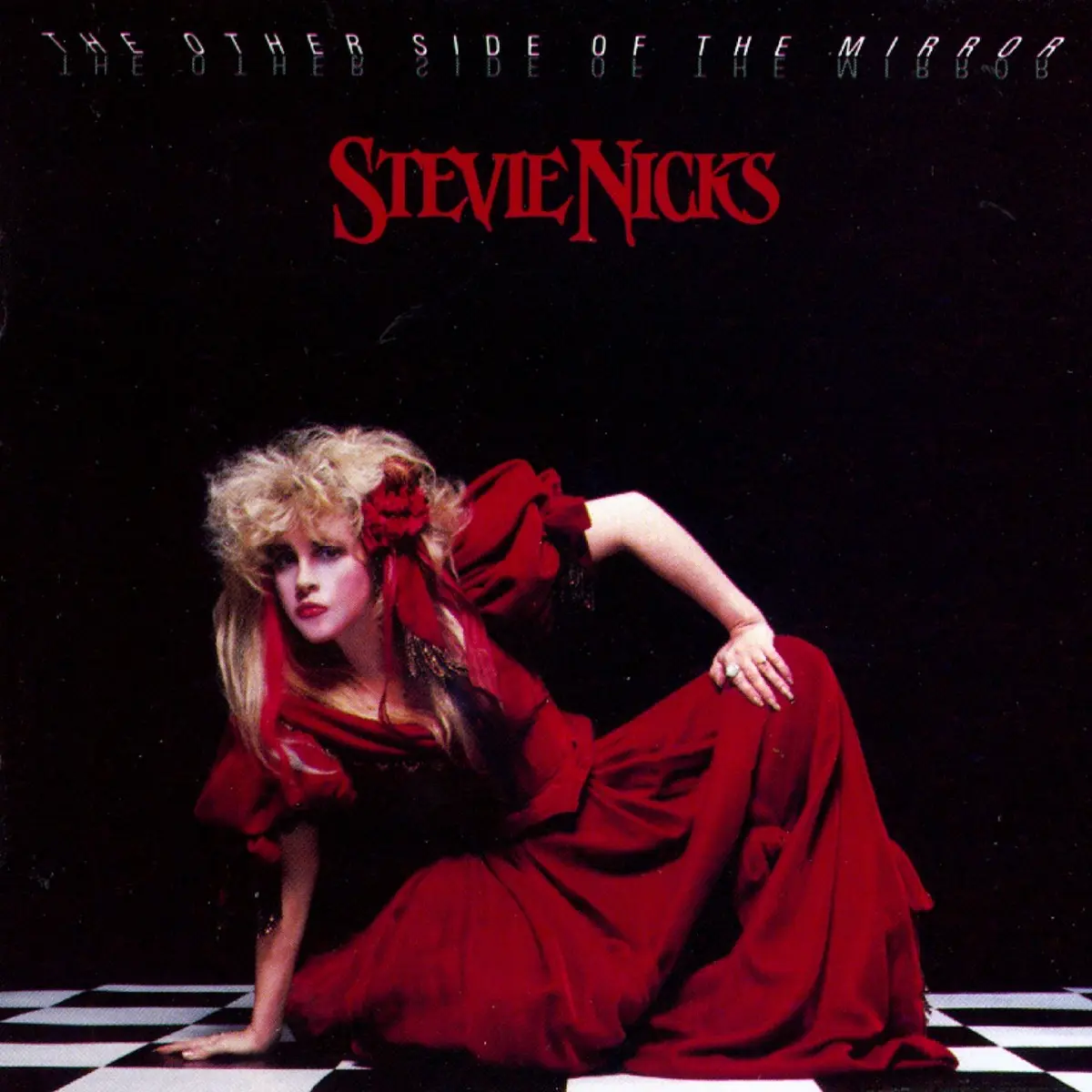 Stevie Nicks released her fourth solo album, The Other Side of the Mirror, on May 30, 1989, on Modern.
The record loosely turns on an Alice’s Adventures in Wonderland frame and closes Nicks’ 1980s solo run with Rupert Hine as sole producer and arranger.
Nicks wrote or co-wrote ten of the album’s twelve tracks. Rick Nowels shares “Rooms on Fire,” “Long Way to Go,” “Two Kinds of Love,” and “Ooh My Love”; Rupert Hine shares “Two Kinds of Love,” “Fire Burning,” and “Alice”; Mike Campbell shares “Ghosts,” “Whole Lotta Trouble,” and “Fire Burning”; Charles Judge joins “Long Way to Go”; Jude Johnstone supplied “Cry Wolf”; and Johnny Cash with Roy Cash Jr. wrote “I Still Miss Someone (Blue Eyes).”
Keyboardist Rupert Hine, guitarists Rick Nowels and Jamie West-Oram, bassists Vail Johnson and Tony Levin, and drummers Geoff Dugmore and Jerry Marotta form the album’s main frame, while guitarist Waddy Wachtel and guitarist Mike Campbell widen selected cuts, Bruce Hornsby enters on “Two Kinds of Love” and “Juliet,” and Kenny G colors “Two Kinds of Love” and “Alice.” Sharon Celani and Lori Perry-Nicks again carry the recurring harmony layer.
A1. “Rooms on Fire” (4:35) sets Rick Nowels and Jamie West-Oram over Vail Johnson bass, Geoff Dugmore drums, and Rupert Hine keyboards.
A2. “Long Way to Go” (4:06) shifts to Tony Levin stick bass and Jerry Marotta drums.
A3. “Two Kinds of Love” (with Bruce Hornsby) (4:46) brings in Hornsby’s duet vocal and Kenny G’s soprano saxophone.
A4. “Ooh My Love” (5:02) returns Nowels and West-Oram with Johnson, Marotta, and Hine.
A5. “Ghosts” (4:54) moves Mike Campbell into the guitar chair.
A6. “Whole Lotta Trouble” (4:58) expands the cast with Campbell, Wachtel, West-Oram, Tony Levin, Jerry Marotta, and the L.A. Horns.
B1. “Fire Burning” (3:16) keeps Campbell and Wachtel at the front over Johnson and Derek Murphy bass.
B2. “Cry Wolf” (4:12) is the lone outside composition, written by Jude Johnstone.
B3. “Alice” (5:50) turns on Hine’s programmed rhythm bed with Kenny G tenor saxophone.
B4. “Juliet” (4:55) adds Bruce Hornsby piano and additional vocals.
B5. “Doing the Best That I Can (Escape from Berlin)” (5:36) returns to Hine’s programmed-drum frame with Tony Levin bass.
B6. “I Still Miss Someone (Blue Eyes)” (4:08) closes with Wachtel acoustic guitar, Levin and Hine bass, and Kelly Johnston tin whistle.
Stevie Nicks recorded The Other Side of the Mirror during 1988 at Farmyard Studios in Buckinghamshire, Lion Share and the Castle in Los Angeles, Soundcastle and Ground Control in Hollywood, Smoketree Ranch in Chatsworth, and the Hit Factory in New York. Hine produced and arranged the album, Stephen W. Tayler recorded and mixed it, Tim Leitner handled additional engineering, and Arun Chakraverty mastered it at the Master Room in London.
Stevie’s package carries art direction and photography by Herbert Worthington III, design and layout by DNZ, The Design Group, and logo design by Tom Utley. The UK campaign also issued some formats with a limited holographic sticker and offered buyers a mail-order display stand, while the Japanese CD added a live “Has Anyone Ever Written Anything for You” from the Rock a Little tour.
On April 24, 1989, Stevie lifted “Rooms on Fire” as the album’s lead single. Modern paired it with “Alice,” and some territories issued a 12-inch in a poster sleeve. Marty Callner directed the video, which places Nicks with a white-clad child in a stylized performance setting. “Rooms on Fire” reached No. 16 on the Billboard Hot 100, No. 1 on Billboard Album Rock Tracks, No. 16 in the UK, No. 9 in Canada, and No. 12 in New Zealand.
In June 1989, Stevie lifted “Two Kinds of Love” as a U.S. single. Bruce Hornsby shares the vocal, Kenny G threads the interlude, and the single did not reach either the Billboard or Cash Box charts.
On July 31, 1989, Modern and EMI issued “Long Way to Go” with the non-album “Real Tears” on the reverse. The single reached No. 11 on Billboard Mainstream Rock and No. 60 in the UK.
“Real Tears” (4:40) did not appear on the album and later resurfaced on the 2023 Complete Studio Albums & Rarities box.
On October 30, 1989, Stevie lifted “Whole Lotta Trouble” as the fourth single, backed with “Ghosts.” The single reached No. 62 in the UK and No. 22 in Ireland.
The Other Side of the Mirror reached No. 10 on the Billboard 200 and No. 3 in the UK. Abroad, it also reached No. 8 in Australia and Sweden, No. 14 in Germany and New Zealand, and later earned Platinum certification in the United States and Gold in the UK.
The album’s later archival trail is thinner than the spillover around Bella Donna and The Wild Heart, but “Real Tears” remained its clearest non-album companion and returned in the 2023 box alongside the newly remastered album.
Discography:
- Buckingham Nicks (1973 • Buckingham Nicks)
- Bella Donna (1981)
- The Wild Heart (1983)
- Rock a Little (1985)
- The Other Side of the Mirror (1989)
Sources:
Artist/Album Pages:
Narada Michael Walden is an American jazz-funk/soul musician and producer who drummed in the secon...
Organ was a Finnish synthpop unit that evolved from Argon, the duo behind the 1981 album Kone Ker...
Heavy Pettin was a Scottish hard-rock/metal band behind the 1983–85 Polydor albums Lettin Loose an...
The Cyrkle was an American pop-rock band that released the 1966–67 Columbia albums Red Rubber Ball a...
Hikashu (ヒカシュ) was a Japanese new wave band that released three albums in 1980/81 on Eastworld, fo...
Spherical Objects were an English post-punk band from Manchester that released two singles and four ...
Azahar was a Spanish symphonic-rock band that released the 1977–79 Movieplay albums Elixir and Aza...
Spy was an American hard-rock band that released a 1980 self-titled album on Kirshner. Members:...
Steve Winwood (born May 12, 1948) is an English vocalist, keyboardist, and songwriter from Birming...
Didier Bocquet is a French electronic musician who released the 1977 album Eclipse on Le Kiosque D...
Steve Hackett is an English classical/rock guitarist with a career in music that dates back to 1970....
Maria Creuza (born Feb. 26, 1944) is a Brazilian samba-pop singer who released four albums on Trov...