

Lindsey Buckingham (born Oct. 3, 1949) is an American singer, songwriter, musician, and producer, best known as the guitarist and co-vocalist of Fleetwood Mac from 1975 to 1987. He joined the band with his then-girlfriend, Stevie Nicks, after they cut the album Buckingham Nicks as a duo. He made his solo debut with the 1981 Asylum release Law and Order.
Law and Order
 Lindsey Buckingham released his debut solo album, Law and Order, on October 16, 1981, on Asylum (North America) and Mercury (abroad).
Buckingham framed Law and Order as a self-contained studio project where he played nearly all instruments, shaping a tight, idiosyncratic set that extends his post-Tusk production approach with sharp contrasts between clipped rhythms, layered guitars, and dry, close-miked vocals.
Buckingham wrote nine songs and interpreted three outside titles, including Gary Paxton’s “It Was I,” versions of “September Song” by earlier pop standard vocalists, and “A Satisfied Mind,” first popularized by country singer Porter Wagoner. Mick Fleetwood appears as the lone outside player of note (drums on “Trouble”), and George Hawkins plays bass on that track.
Songs range from brisk, percussive pieces driven by clustered guitar parts (“Bwana,” “That’s How We Do It in L.A.”) to slower tracks where Buckingham stacks multiple acoustic lines at staggered intervals (“Trouble,” “Shadow of the West”). “Johnny Stew” moves at a clipped, chant-like pace over dry-strummed accents, while “Love From Here, Love From There” layers slide, Stratocaster, and Gretsch parts to mimic brass voicings. His versions of “It Was I,” “September Song,” and “A Satisfied Mind” apply close, breathy phrasing against sparse instrumental beds.
A1. “Bwana” (3:08)
A2. “Trouble” (3:56) — First appeared as a 1981 single backed with “That’s How We Do It in L.A.”
A3. “Mary Lee Jones” (3:15)
A4. “I’ll Tell You Now” (4:21)
A5. “It Was I” (2:39) — Originated as a 1959 single by Skip & Flip, written by Gary Paxton. Paxton’s version reached No. 11 on the Billboard Hot 100.
A6. “September Song” (3:17) — Introduced in the 1938 Broadway musical Knickerbocker Holiday and popularized on mid-century vocal recordings. Its lyric reflects on aging, fleeting romance, and the narrowing of time.
B1. “Shadow of the West” (3:59)
B2. “That’s How We Do It in L.A.” (2:53)
B3. “Johnny Stew” (3:09)
B4. “Love From Here, Love From There” (2:50)
B5. “A Satisfied Mind” (2:49) — First popularized by Porter Wagoner in 1955; written by Red Hayes and Jack Rhodes. Its lyric weighs material desire against lasting contentment.
Sessions occurred across 1981 at Larrabee Studios (West Hollywood) and Wally Heider (Los Angeles) with Buckingham and Richard Dashut producing and engineering alongside David Brown.
Asylum promoted Law and Order with “Trouble” (b/w “That’s How We Do It in L.A.”), which reached No. 9 on the Billboard Hot 100. “It Was I” followed in early 1982 and charted on Bubbling Under, backed with “Mary Lee Jones.” UK singles included “The Visitor (Bwana)” in March 1982 and “Mary Lee Jones” that May.
Buckingham performed “Trouble” and “Bwana” with Mick Fleetwood’s Zoo on Saturday Night Live (February 6, 1982).
Go Insane
 Lindsey Buckingham released his second solo album, Go Insane, on July 30, 1984, on Elektra.
Buckingham built Go Insane around programmed percussion and layered Fairlight textures, using tight rhythmic grids and abrupt tonal shifts that differ from his 1981 debut. He played nearly all instruments, framing the album as a one-man project shaped by his LinnDrum and Fairlight CMI patterns.
Buckingham wrote all nine songs and co-wrote “I Want You” with co-producer Gordon Fordyce.
Songs divide between taut, mid-tempo pieces with clipped vocal phrasing (“Go Insane,” “Slow Dancing”) and more fragmented or sectional works with abrupt edits (“I Must Go,” “Bang the Drum”). “Play in the Rain” forms a two-part sequence split between sides, built on repeating figures and detuned guitar tones, while “D.W. Suite” closes the album with three linked movements that shift from chamber voicings to sampled crowd textures.
A1. “I Want You” (3:18) — co-written by Fordyce; lyrics center on conflicted desire framed by alarm-like sampled accents.
A2. “Go Insane” (3:08)
A3. “Slow Dancing” (4:05)
A4. “I Must Go” (4:51)
A5. “Play in the Rain” (3:21)
B1. “Play in the Rain (Continued)” (4:14)
B2. “Loving Cup” (5:02)
B3. “Bang the Drum” (3:31)
B4. “D.W. Suite” (6:50)
Sessions occurred through 1984 at Buckingham’s home setup and Cherokee Studios in Hollywood with Buckingham and Gordon Fordyce as producers. Buckingham programmed percussion on a LinnDrum and built additional layers on the Fairlight CMI.
Elektra promoted Go Insane with the title track (b/w “Play in the Rain”) in July 1984; the single reached No. 23 on the Hot 100. “Slow Dancing” followed in November (b/w “D.W. Suite”) and reached No. 6 on the Bubbling Under chart. Videos for both singles were shot in England and used fast-cut editing and layered visual effects.
Out of the Cradle
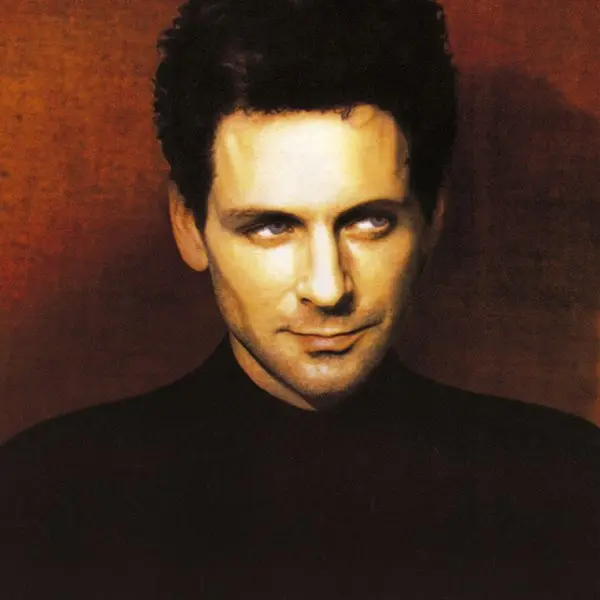 Lindsey Buckingham released his third solo album, Out of the Cradle, on June 16, 1992, on Reprise.
Buckingham shapes the album around layered acoustic and electric guitars with measured tempos and light rhythmic patterns, set in compact arrangements that favor close-miked textures and brief instrumental preludes.
Buckingham handles vocals, guitars, keyboards, synthesizers, bass, percussion and programming with selective contributions from bassist Larry Klein, percussionist Alex Acuña, bassist Buell Neidlinger, and organist Mitchell Froom. He wrote thirteen songs and co-wrote three with producer Richard Dashut, who also co-authored “Wrong.” The album contains two covers: a song popularized by the Kingston Trio (“All My Sorrows”) and a Rodgers–Hammerstein standard (“This Nearly Was Mine”). Guitarist–producer Buckingham also co-wrote “Say We’ll Meet Again” with Robert Aguirre.
Several tracks operate in measured patterns with alternating guitar figures (“Don’t Look Down,” “Countdown”), while others rely on circular, rising phrases against steady rhythms (“Soul Drifter,” “Doing What I Can”). He offsets the bright pacing of “Turn It On” and “This Is the Time” with subdued, close-voiced pieces (“Street of Dreams,” “Surrender the Rain”) and sparse codas that frame the album’s shifts in tone.
01. “Instrumental Introduction To:” (0:25)
02. “Don’t Look Down” (2:47)
03. “Wrong” (4:19)
04. “Countdown” (3:21)
05. “All My Sorrows” (4:01) — originated as a 1960 side by the Kingston Trio, written by West, Gilbert and Folk and recorded since by the Seekers and the Shadows; Buckingham alters the chords and retains the original lyric.
06. “Soul Drifter” (3:27)
07. “Instrumental Introduction To” (0:41)
08. “This Is the Time” (4:49)
09. “You Do or You Don’t” (3:37) — incorporates a brief melodic quotation from Max Steiner’s “Theme from A Summer Place.”
10. “Street of Dreams” (4:28)
11. “Spoken Introduction To” (0:46)
12. “Surrender the Rain” (3:36)
13. “Doing What I Can” (4:05)
14. “Turn It On” (3:50)
15. “This Nearly Was Mine” (1:36) — originated as a South Pacific number by Richard Rodgers and Oscar Hammerstein II.
16. “Say We’ll Meet Again” (2:28)
Sessions occurred between 1988 and 1992 at Buckingham’s home studio in Los Angeles with Buckingham and Dashut producing and Greg Droman, Kevin Killen and Eric Rudd engineering. Chris Lord-Alge mixed the album and Bob Ludwig mastered it at Masterdisk in New York.
Out of the Cradle features woodcut imagery by Walter Egan.
Reprise promoted the album with “Wrong,” issued in June 1992 with a Julien Temple–directed video. The track reached No. 23 on Billboard’s Mainstream Rock chart and No. 50 in Canada. “Countdown” appeared the following month in the UK and charted on US Mainstream Rock and Adult Contemporary listings. “Soul Drifter” followed in November 1992 and “Don’t Look Down” appeared as a fourth single in April 1993.
Discography:
- Buckingham Nicks (1973 • Buckingham Nicks)
- Law and Order (1981)
- Go Insane (1984)
- Out of the Cradle (1992)
- Under the Skin (2006)
- Gift of Screws (2008)
- Seeds We Sow (2011)
- Lindsey Buckingham Christine McVie (2017 • Lindsey Buckingham Christine McVie)
Sources:
- Discogs: Lindsey Buckingham
- RYM: Lindsey Buckingham
- 45cat: Lindsey Buckingham
- MusicBrainz: Lindsey Buckingham
Artist/Album Pages:
Lene Lovich is an American-English new wave singer, best known for the hits "Lucky Number," "Say W...
Santana are an American Latin-rock jam band from San Francisco, formed in 1966 by guitarist Carlos...
Madhouse was an American jazz-funk project conceived by Prince and saxophonist Eric Leeds as an ou...
The Beach Boys are an American pop-rock band that released 15 albums on Capitol between 1962 and ...
Michael Jackson (Aug. 29, 1958 — June 25, 2009) was an American soul-pop singer and songwriter who...
Edwin Birdsong (Aug. 22, 1941 — Jan. 21, 2019) was an American R&B-funk keyboardist from Los ...
George Duke (January 12, 1946 – August 5, 2013) was an American jazz-funk keyboardist, composer, arr...
Babylon was an American symphonic-rock band from Florida that released an eponymous album on self-...
Wildfire was an English hard-rock band behind the 1983/84 albums Brute Force and Ignorance and Sum...
Bijelo Dugme was a Yugoslav symphonic/hard-rock band from Sarajevo in modern-day Bosnia and Herzeg...
Roger Voudouris (Dec. 29, 1954 — Aug. 3, 2003) was an American vocalist and songwriter who release...
Jane Kennaway is an English new wave singer and songwriter who released four shortplayers between ...