

Industry was an American New Wave/synthpop band from NYC, formed in 1978 as Industrial Complex by ex-Cathedral drummer Mercury Caronia. The initial combo released an eponymous 1980 EP on Metro Records. After a lineup overhaul that roped-in fellow Cathedral alumnus Rudy Perrone, the band issued a second EP, Turning to Light, in 1981 on self-press Mannequin Records. Signed to Capitol, their 1983 singular album Stranger to Stranger yielded the international hit “State of the Nation.”
Perrone issued a folk-psych solo album just prior to joining Industry. Keyboardist Jon Carin became a prominent industry multi-instrumentalist, providing backup for Pete Townshend and filling Roger Waters’ vacated role in Pink Floyd during the late ’80s and ’90s.
Members: Mercury Caronia (synthesizer, percussion, drums), Andrew P. Geyer (guitar, synthesizer, vocals, 1980), Rudy Perrone (guitar, bass, vocals, 1981–84), Jon Carin (synthesizer, keyboards, vocals, 1981–84), Brian Unger (guitar, vocals, 1981–84)
Background
Industry formed in 1978 as Industrial Complex, a pioneering NYC electro-rock trio composed of drummer–keyboardist Mercury Caronia, guitarist Andrew Geyer, and bassist Sean Kelly. Caronia hailed from Cathedral, a symphonic-rock band whose recently completed album, Stained Glass Stories, later achieved cult status after its reissue on Syn-Phonic. He first collaborated with Geyer on a series of experimental recordings that involved tape loops, asymmetric meters, and manipulated sonic effects.
Industry (EP)
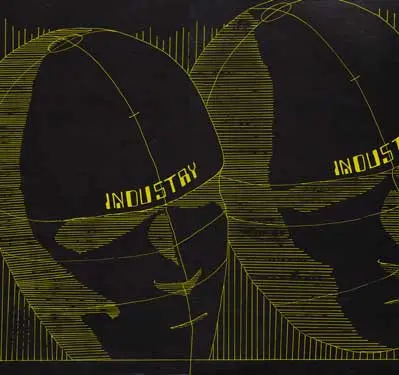 In 1980, Industry released their self-titled debut EP on Metro Records, a DIY one-off label.
The EP runs five short pieces across two plates, performed as a duo by Andrew P. Geyer (guitar, synthesizer, voice, percussion, noises, “tape control”) and Mercury Caronia (voice, synthesizer, Muson sequencer, bass).
Plate 1
A1. “Logging Time” (2:01)
A2. “Caribbean Cruise” (2:20)
A3. “Intransition” (2:04)
Plate 2
B1. “Ready For The Wave” (3:43)
B2. “Production Goes On” (2:26)
Industry produced, engineered, and mixed the EP between 1978 and 1979 at Warehouse in New York. Robert Luber supplied the title synopsis, with album graphics by Rik Kellerman and typography by Signman Studio Inc.
The sleeve frames the project in manifesto-like lines: “INDUSTRY is the catalyst between man, his material needs & wants,” “INDUSTRY indefinitely enlarges the complex dichotomy of material exchange,” and “INDUSTRY maintains the econoculture & the legend of technoevolution.”
Geyer departed after this release. Caronia reconfigured Industry with guitarist Brian Unger and guitarist–bassist Rudy Perrone, a fellow Cathedral alumnus.
Turning to Light (EP)
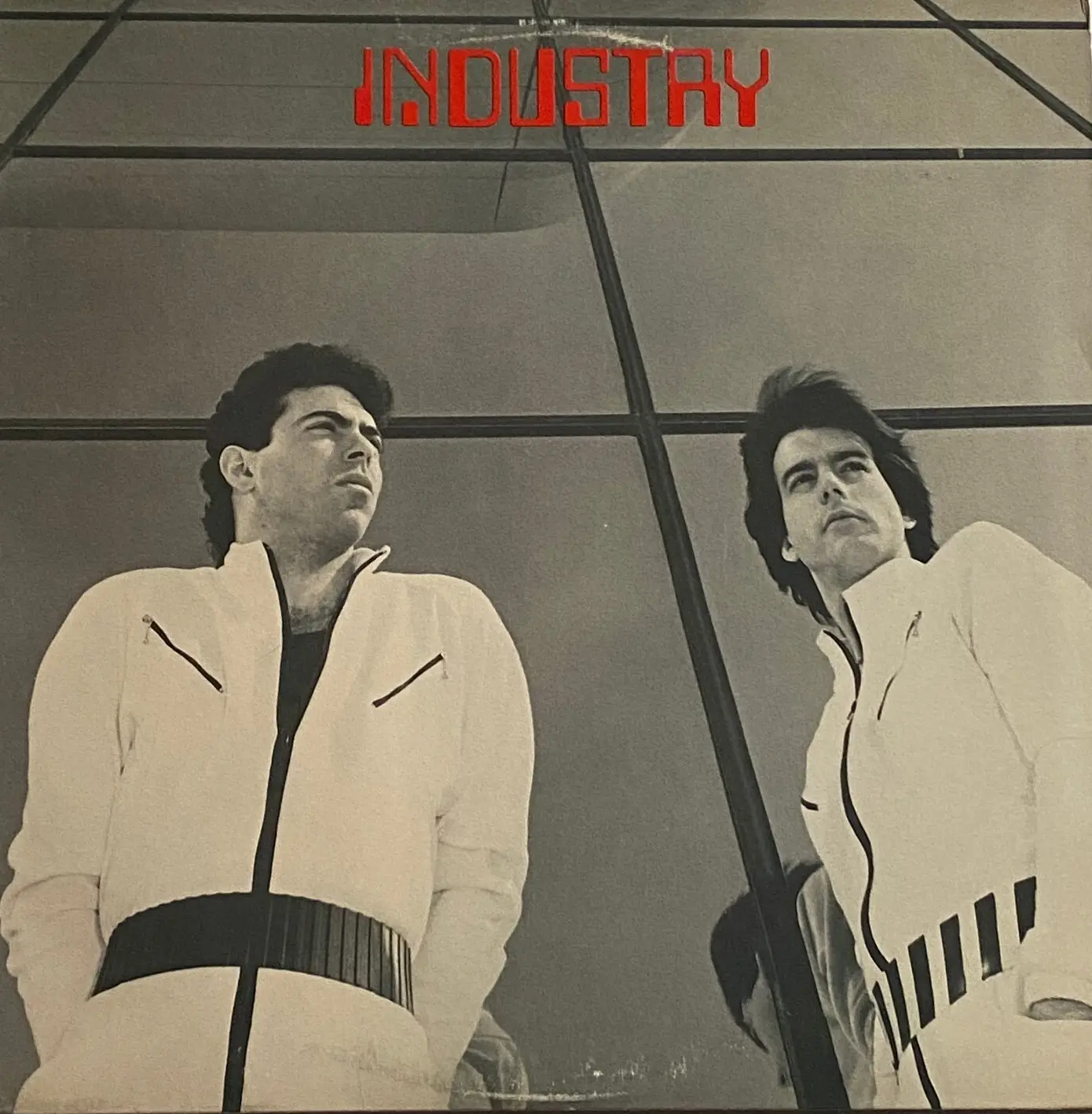 Industry released their second EP, Turning to Light, in 1981 on Mannequin Records, another one-off label.
The EP contains four tracks co-written by Mercury Caronia and Brian Unger.
A1. “D.N.A.” (2:50) – Unger, Caronia
A2. “Your Love Is Unreal” (2:50) – Unger, Caronia
B1. “Turning To Light” (3:00) – Unger, Caronia
B2. “Make Hahna Whine” (3:23) – Unger, Caronia
Sessions took place in Long Island at the Unger-owned Paris Studio, where he and Caronia co-engineered the EP with Rudy Perrone, who worked in sequence on his solo folk album Oceans of Art, released independently on Heartstring Music with Caronia’s percussive input.
Turning to Light pictures Caronia and Unger as a duo prior to Perrone’s acceptance of full membership. They subsequently became a four-piece with teenage singer Jon Carin.
“State of the Nation”
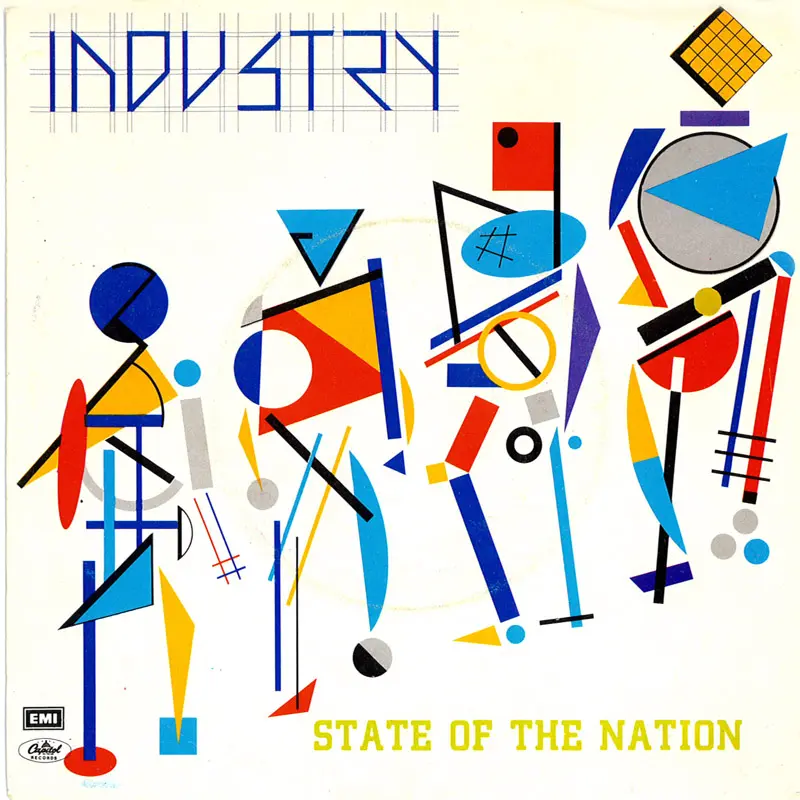 In August 1983, Industry released “State of the Nation” backed with “Communication,” issued by Capitol in two formats: standard 7″ and expanded 12″, the latter with three bonus tracks.
The single features singer Jon Carin, guitarist Brian Unger, bassist Rudy Perrone, and drummer Mercury Caronia.
A1. “Communication” (4:06) – Carin, Caronia
A2. “State of the Nation” (4:35) – Carin, Caronia
A3. “Romantic Dreams” (3:55)
B1. “Still of the Night” (4:16)
B2. “Living Alone Too Long” (4:09) – Unger, Carin, Caronia
Sessions took place at Bearsville Studios in Woodstock with Englishman Rhett Davies, a veteran Roxy Music associate with recent production credits behind Huang Chung, Talk Talk, and Orchestral Manoeuvres In the Dark.
The sleeve features Memphis/Milano-style figurines by designer Norman Moore supplied the design, whose visuals grace 1970s classics by Split Enz (Mental Notes), Easy Street (self-titled), Cafe Jacques (Round the Back), and recent titles by The Police (Synchronicity), Peter Frampton (The Art of Control), The Breaks, and Bill Summers & Summers Heat, whose London Style cover sports a similar aesthetic.
“State of the Nation” peaked at No. 3 in Italy, No. 10 in Sweden, No. 78 in Australia, and No. 81 on the U.S. Billboard Hot 100. The official video places the band on the retired aircraft carrier USS Intrepid at night, staging the performance amid uniformed naval personnel and a military band, and it shows Carin at a multi-keyboard rack, Perrone holding a Steinberger bass, Unger on a Fender Stratocaster, and Caronia on an acoustic kit augmented by Simmons hexapads; an alternate version not set on a ship also circulated.
Stranger to Stranger
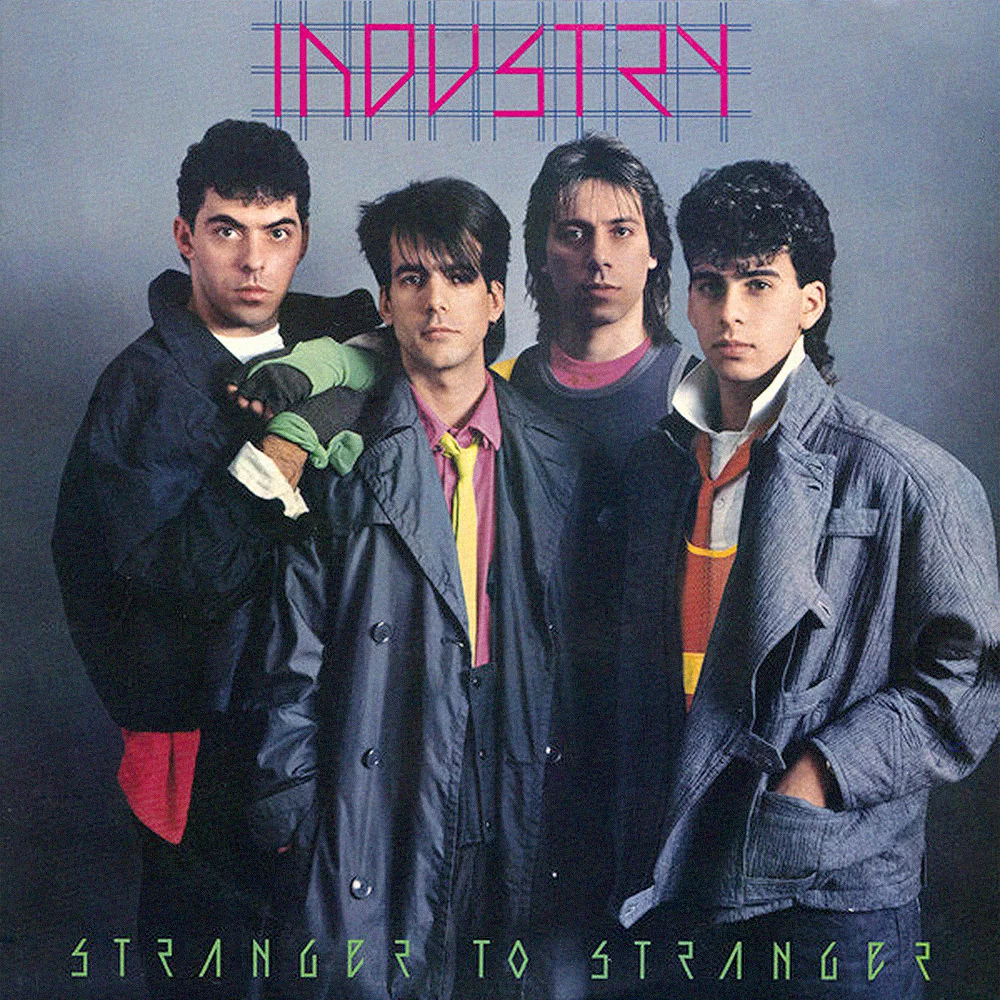 Industry released their singular album, Stranger to Stranger, in May 1984 on Capitol.
The album spans ten tracks—including all five from their 1983 “State of the Nation” EP—each centered on singer/keyboardist Jon Carin, who mans the frontline alongside guitarists Rudy Perrone and Brian Unger, collectively underpinned by Mercury Caronia. Select tracks add spotlighted parts, including Perrone’s lead vocal on “Shangri-La” and a guest tambourine credit to Vini Poncia on “What Have I Got to Lose.”
Stranger to Stranger keeps a tight, polished pace, then opens wider on the slower cuts. “State of the Nation” drives on a hard, persistent synth pulse with a clipped, forceful vocal line, while “Still of the Night” and “Shangri-La” carry the same sharp, song-centered structure with cleaner chord movement and a more open front line. “Romantic Dreams” drops the tempo and leans on dense keyboard layers, with a softer vocal set against a fuller harmonic bed, and “Until We’re Together” and “What Have I Got to Lose” keep the direct, plainspoken lyric approach within compact arrangements.
A1. “Shangri-La” (3:47)
A2. “Communication” (4:05) – Jon Carin, Mercury Caronia
A3. “All I Need Is You” (2:55) – Jon Carin, Mercury Caronia, Rudy Perrone
A4. “Stranger In a Strange Land” (5:18) – Jon Carin
A5. “Living Alone Too Long” (4:07) – Brian Unger
B1. “Still of the Night” (4:05) – Jon Carin
B2. “Until We’re Together” (3:59) – Jon Carin, Rudy Perrone
B3. “Romantic Dreams” (3:53) – Jon Carin
B4. “What Have I Got To Lose” (4:03) – Jon Carin
B5. “State of the Nation” (4:33) – Jon Carin, Mercury Caronia
Rhett Davies produced and engineered the album at Bearsville Sound. Industry added overdubs at Boogie Hotel, mixed by Dr. Bob Schaper.
Roy Kohara handled art direction with design by Hy Fujita, and some copies carry a gold promo stamp while the cover prints the side A/B tracklisting in swapped order.
Capitol lifted “What Have I Got to Lose” as a March 1984 advance single (b/w “State of the Nation”).
Discography:
- Industry (EP, 1980)
- Turning to Light (EP, 1981)
- Stranger to Stranger (1983)
Sources:
Artist/Album Pages:
Edith Nylon was a French new wave band that released the 1979/80 CBS albums Edith Nylon and Johnny...
Survivor was an American hard-rock band, best known for their hit theme songs to Rocky III ("Eye o...
Ian Anderson (born Aug. 10, 1947) is a Scottish-born singer, flutist, and composer, known internat...
Junior Murvin (circa 1946 – December 2, 2013) was a Jamaican reggae singer and songwriter who emer...
Dunn & Bruce Street were an American soul-funk duo that released the 1982 album Official Busin...
Zed was an English rock trio that made a 1981 album on Double D, followed by the 1983 Polydor rele...
Leyden Zar was a Québécois modern-rock band behind a 1981 album on A&M, followed by a second s...
Moon Martin (1945–2020) was an American songwriter and singer who released five albums between 197...
Annabel Lamb is an English singer and songwriter who emerged in the early 1980s with a literate, s...
Syreeta Wright (1946–2004) was an American R&B singer who began as a backing vocalist at Motown,...
Ratata was a Swedish synthpop band from Stockholm that released seven studio albums, starting with...
Gwen McCrae (December 21, 1943 – February 21, 2025) was an American soul singer who first perform...