

The Only Ones were an English rock band that released the 1977 single “Lovers of Today” on Vengeance Records, followed by the 1978–80 CBS albums The Only Ones, Even Serpents Shine, and Baby’s Got a Gun. Vocalist Peter Perrett hailed from England’s Glory with future-Squeeze bassist Harri Kakoulli. Drummer Mike Kellie extracted from Spooky Tooth.
Members: Peter Perrett (vocals, guitar), John Perry (guitar), Alan Mair (bass), Mike Kellie (drums)
Background
The Only Ones formed in August 1976 in London when singer–guitarist Peter Perrett teamed with guitarist John Perry.
Perrett (b. April 8, 1952; Camberwell) ran away from home at age sixteen after his expulsion from Haberdashers’ Aske’s Hatcham College.> He married his girlfriend, fashion designer Xenoulla “Zena” Kakoulli, in 1970 and teamed with her bassist brother Harri Kakoulli in England’s Glory. With drummer Jon Newey, they pressed twenty-five copies of a 1973 acetate. Harri resurfaced in 1977 as the original Squeeze bassist.
In 1975, Perrett met John Perry (b. June 4, 1952; Bristol), a former BBC Radio drama actor reared through the UK Underground scene with connections to the Pink Fairies and Hawkwind circles. Between 1972 and 1975, he played guitar in Ratbites from Hell, a festival-circuit psychedelic blues band that evolved from the remnants of Magic Muscle.
By mid-1976, they met bassist Alan Mair and drummer Mike Kellie. Mair (b. 1946) originated in The Beatstalkers, a Scottish beat group that cut three singles on Decca (1965/66) and four more on CBS (1967–69).
Kellie (March 24, 1947 – January 18, 2017) hailed from Birmingham and played in a pre-record lineup of Locomotive. In 1966, he joined The V.I.P.’s, a Carlisle mod/soul group that evolved into psychsters Art and finally Spooky Tooth. He recorded five albums with Spooky Tooth across two runs (1968–70, 1972–74) and also drummed for Parrish & Gurvitz and Three Man Army.
“Lovers of Today” / “Peter and the Pets”
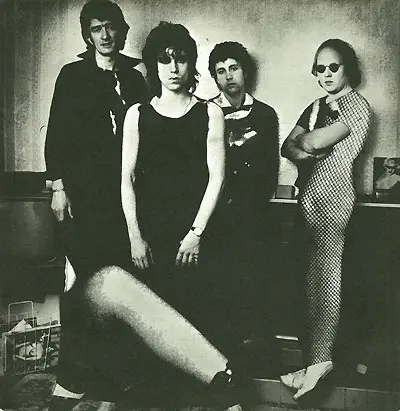 On July 9, 1977, the Only Ones released their debut single: “Lovers of Today” backed with “Peter and the Pets,” both Perrett originals on their self-run label Vengeance Records.
A. “Lovers of Today” (3:10) – Rides on a mid-uptempo strum (in A minor), propelled by locomotive drums and topped with a crashing, anthemic refrain (in E). The lyrics depict a detached and emotionally numbed relationship, where the speaker acknowledges a desire for companionship but fears the vulnerability that intimacy demands. The couplet “If we ever touched it would disturb the calm / Physical effort often causes mental harm” encapsulates the speaker’s emotional inertia—physical closeness is seen not as fulfilling, but as disruptive to a fragile inner balance. The lines suggest a withdrawn psyche, where even affection feels like an intrusion on cultivated detachment, reinforcing the theme of modern emotional disaffection.
B. “Peter and the Pets” (3:05) – Tense, clipped downstrokes (in C) underpin the nervy verses, which open into a melodic, free-flowing passage with cutting lead guitar and rolling rhythmic turns. The song addresses a failing relationship, in which the speaker recognizes that their partner no longer belongs in their life. The couplet “Rubies and pearls / The treasure of the nights” symbolizes the fleeting, possibly illusory pleasures of the past—things once cherished in moments of nocturnal intimacy, now reduced to empty tokens. The icy imagery that follows (“watching figures of ice”) suggests emotional paralysis and detachment, reinforcing the sense that whatever warmth once existed has long since frozen over.
Recorded at Island’s Basing Street Studios, the single appeared in a stark black-and-white sleeve described at the time as “kinky.”
The Only Ones
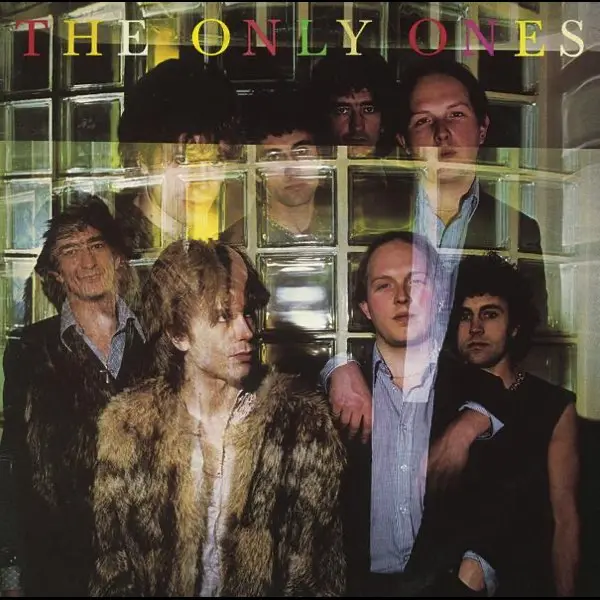 The Only Ones released their self-titled debut album on May 16, 1978, on CBS.
The album contains ten songs written by Peter Perrett, including their signature track “Another Girl, Another Planet.” Select tracks feature backing by singer Koulla Kakoulli (Xenoulla’s 16-year-old sister), Blockheads keyboardist Mick Gallagher, ex-Pretty Things keyboardist Gordon Edwards, and hornists Raphael & Friends.
The opening cut, “The Whole of the Law,” sets the tone with funereal bossa nova rhythm, sparse instrumentation, and mournful sax behind Perrett’s wearied reflections. “Another Girl, Another Planet” balances giddy pop urgency with soaring guitar lines and narcotic metaphor (“space travel’s in my blood”). Perrett’s fragile vocal turns elegiac on “Breaking Down,” a slow-building groove of jazz piano and haunting backing vocals. “City of Fun,” a leftover from England’s Glory, rides a fast, nervy tempo, while “The Beast” plays like a cautionary heroin confessional—Perrett’s most harrowing lyric, bolstered by ominous bass, pounding drums, brass flourishes, and Perry’s guitar pyrotechnics.
Side B opens with “Creature of Doom,” a mid-tempo creeper with jagged rhythm and biting satire. The delicate “It’s the Truth” explores emotional stalemate, while “Language Problem” lashes out with volatile punk noise and provocations. “No Peace for the Wicked” slips into reggae-mode as Perrett laments his inability to lead a carefree life, a theme he wraps in self-aware bitterness. The closer, “The Immortal Story,” channels vintage freakbeat with scrappy dual vocals, clattering cymbals, and raucous leadwork—a chaotic farewell to an album both vulnerable and volatile.
A1. “The Whole of the Law” (2:35)
A2. “Another Girl, Another Planet” (3:00)
A3. “Breaking Down” (4:48)
A4. “City of Fun” (3:30)
A5. “The Beast” (5:46)
B1. “Creature of Doom” (2:33)
B2. “It’s the Truth” (2:06)
B3. “Language Problem” (2:28)
B4. “No Peace for the Wicked” (2:51)
B5. “The Immortal Story” (3:55)
Sessions occurred at multiple studios (Basing Street, Escape, CBS) with multiple engineers, including Steve Lillywhite, a rising studio hand with credits on debut-era Ultravox and Siouxsie & The Banshees. The Only Ones co-produced the album with assistance from Island’s Robert Ash, a prior Eno/Quiet Sun soundman with recent credits behind John Martyn and Steve Winwood.
CBS issued “Another Girl, Another Planet” twice in 1978: first as a standard single backed with the exclusive “Special View” (CBS 6228) and again as a promo with the rare b-side “As My Wife Says” (CBS 6576).
B. “Special View”
B. “As My Wife Says”
The Only Ones performed “Another Girl, Another Planet” on the final episode of Revolver, an ITV music program hosted by Peter Cook, aired September 2, 1978, alongside The Tourists, Rich Kids, Whitesnake, and Darts. “Another Girl, Another Planet” also appears on the soundtrack to the 1979 British youth drama That Summer! and ranked No. 18 in John Peel’s all-time Festive Fifty millennium edition.
Even Serpents Shine
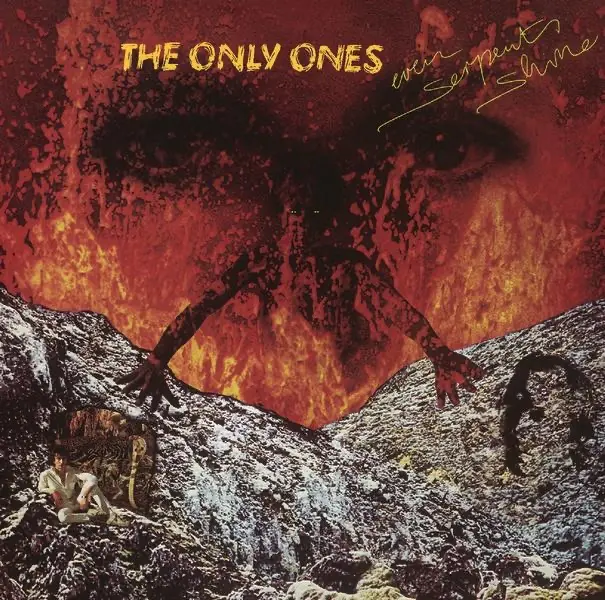 The Only Ones released their second album, Even Serpents Shine, on March 9, 1979, on CBS.
The album expands on the debut’s romantic fatalism with deeper textures and more consistent songwriting. Peter Perrett wrote all eleven tracks and co-produced the album with bassist Alan Mair. Crawler keyboardist John “Rabbit” Bundrick and sax–keyboardist Adam Maitland flesh out the arrangements, along with backing vocals by Koulla Kakoulli.
The album opens with “From Here to Eternity,” a sly rocker with serpentine guitar and resignation masked as cool. “Flaming Torch” follows with vintage freakbeat crunch, its rousing chorus laced with organ flourishes. “You’ve Got to Pay,” released as the album’s first single, channels early Who with blunt riffing and a brisk pace. “No Solution” quickens the pulse with sharp melodicism and desperate lyrics, while “Inbetweens” delivers a sweeping emotional high point—birdlike guitar textures and seascape imagery envelop Perrett’s tale of emotional entrapment (“Trapped between the good and bad / Tell me is there any escape?”). Side A closes on “Out There in the Night,” a bittersweet tune inspired by the disappearance of Perrett’s cat.
The back side begins with the stately “Curtains for You,” a swirling ballad of personal collapse. “Programme” snaps back to taut, punk-adjacent guitar rock with Perrett’s dry observational wit, while “Someone Who Cares” returns to the haunted romanticism of The Only Ones. “Miles From Nowhere” wanders through airy psychedelia and spacey lead guitar, setting the stage for the closer, ironically titled “Instrumental”—a twangy country–psych number with a final tongue-in-cheek vocal (“Hey you, you’re just instrumental”).
A1. “From Here to Eternity” (3:04)
A2. “Flaming Torch” (2:18)
A3. “You’ve Got to Pay” (2:44)
A4. “No Solution” (2:21)
A5. “Inbetweens” (3:54)
A6. “Out There In the Night” (3:00)
B1. “Curtains for You” (4:17)
B2. “Programme” (2:08)
B3. “Someone Who Cares” (3:10)
B4. “Miles From Nowhere” (3:41)
B5. “Instrumental” (4:00)
Sessions took place at Basing Street Studios with engineering by Robert Ash and assistance from Andy Lyden and Kevin Dallimore. Ash worked in sequence on the debut album by The B-52’s.
CBS issued “You’ve Got to Pay” (b/w “This Ain’t All It’s Made Out to Be”) in February, followed by “Out There In the Night” (b/w “Lovers of Today”) in April.
Even Serpents Shine peaked just outside the UK Top 40 and earned longstanding cult accolades. In the US, Epic combined material from the first two Only Ones albums on Special View, titled after (but not including) the rare 1978 b-side.
Baby’s Got a Gun
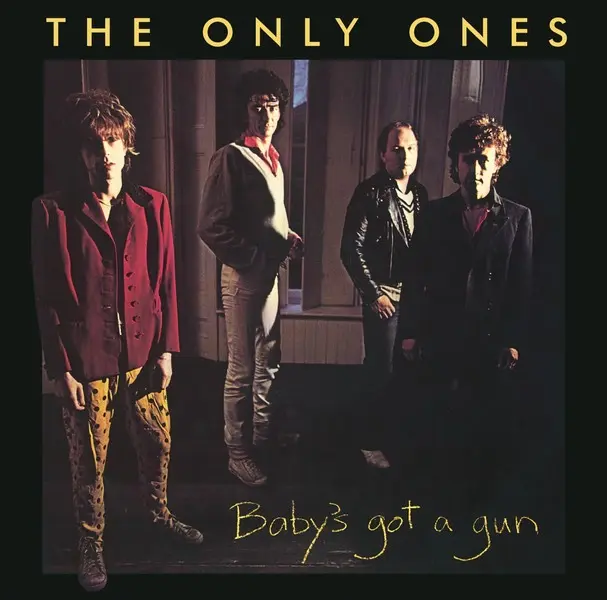 The Only Ones released their third album, Baby’s Got a Gun, in June 1980 on CBS.
The opener “The Happy Pilgrim” breezes in with light propulsion and biting irony. “Why Don’t You Kill Yourself?” delivers barbed introspection, while “Me and My Shadow” unfolds as a noir ballad with ghostly backing vocals and dramatic piano flourishes. “Deadly Nightshade” and “Strange Mouth” each offer jittery, jagged new wave rhythms, contrasted by the shadowy sprawl of “The Big Sleep,” one of Perrett’s most brooding epics.
Side B opens on a brighter note with “Oh Lucinda (Love Becomes a Habit),” a mid-tempo rocker layered with harmonies and jangling guitars. “Re-Union” hints at reconciliation through melancholic resolve, followed by “Trouble in the World,” a brisk and bittersweet single laced with anxiety. The brief, acoustic “Castle Built On Sand” leads to the whimsical country cover “Fools,” a duet with former Penetration singer Pauline Murray (who sings backup on “Me and My Shadow”). Alan Mair sings lead on the closer, “My Way Out of Here,” ending the album on a note of resignation and self-reflection.
A1. “The Happy Pilgrim” (2:31)
A2. “Why Don’t You Kill Yourself?” (2:41)
A3. “Me And My Shadow” (5:41)
A4. “Deadly Nightshade” (3:07)
A5. “Strange Mouth” (2:29)
A6. “The Big Sleep” (5:00)
B1. “Oh Lucinda (Love Becomes a Habit)” (3:08)
B2. “Re-Union” (2:57)
B3. “Trouble In the World” (3:04)
B4. “Castle Built On Sand” (1:48)
B5. “Fools” (2:22) originated as a 1972 Columbia a-side by Texan country singer Johnny Duncan.
B6. “My Way Out of Here” (3:52)
Sessions took place at Red Bus and Basing Street Studios with producer Colin Thurston, a soundman on 1979/80 albums by The Books, Cowboys International, The Human League, and Interview. Koulla Kakoulli (now 18) reprised her fifth-wheel role.
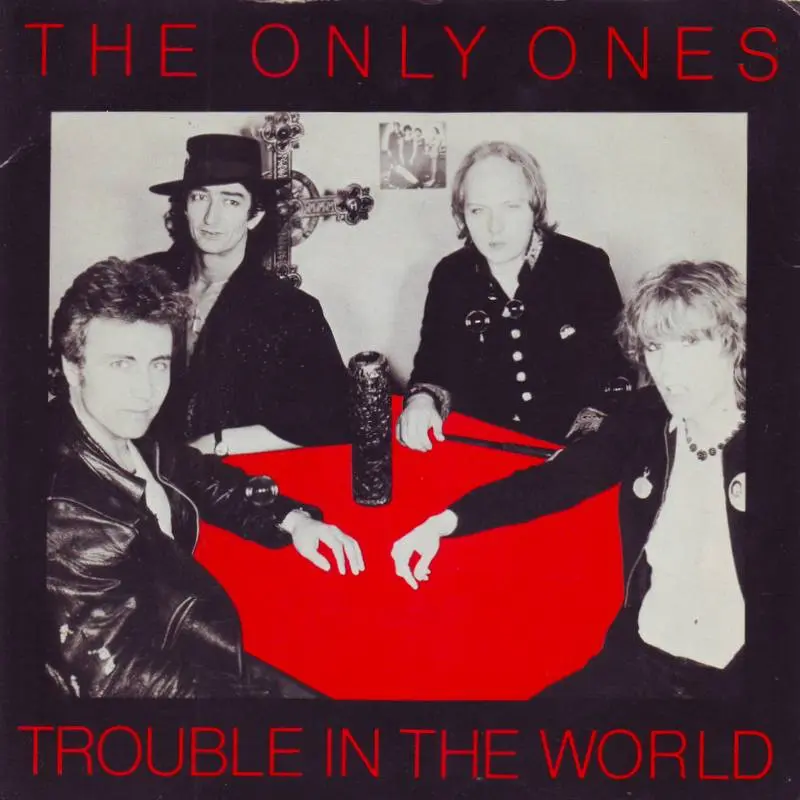 The Only Ones issued “Trouble in the World” in January 1980 with the exclusive “Your Chosen Life,” followed in May by “Fools” (b/w “Castle Built On Sand”), credited to The Only Ones featuring Peter and Pauline.
B. “Your Chosen Life”
Baby’s Got a Gun reached No. 37 on the UK Albums Chart. The 2009 Sony reissue includes three bonus tracks: “Hope Valley Blues,” “Counterfeit Woman,” and “Baby’s Got a Gun,” the original album’s missing title track.
The Only Ones supported the album with a US tour opening for The Who, but disbanded in 1982 amid commercial struggles and mounting personal difficulties.
Discography:
- “Lovers of Today” / “Peter and the Pets” (1977)
- The Only Ones (1978)
- Even Serpents Shine (1979)
- Baby’s Got a Gun (1980)
- Remains (1984)
Sources:
Artist/Album Pages:
Orexis was a German ethno-jazz/rock band that emerged with the 1977/78 Intercord titles Orexis and...
Halmens was a Japanese new wave band that released two albums in 1980/81 on Flying Dog. Members...
The Dog That Bit People was an English four-piece that released a self-titled album on Parlophone in...
Edward Reekers (May 24, 1957 – October 7, 2025) was a Dutch singer who fronted Kayak for three alb...
Chicken Shack was an English blues-rock band that released four 1968–70 albums on Blue Horizon, fo...
Brian Eno is an English art-rock/ambient musician and producer who first emerged as the original k...
MacArthur was an American hard-rock band that released a 1979 album through the Recorded Publicat...
The Spinners were an American soul group, best known for the 1970s hits “It’s a Shame,” “I’ll Be A...
Amazing Blondel was an English folk-rock trio that debuted in 1970 on Bell Records, followed by th...
Bachdenkel was an English post-psych band based in France. In 1970, they recorded Lemmings, which ...
Henk Werkhoven (1953–2013) was a Dutch guitarist and composer who self-released the 1982 album Orp...
Al Foster (Jan. 18, 1943 — May 28, 2025) was an American jazz-funk drummer who first recorded in 1...