

Stanley Clarke is an American jazz-funk bassist who gained prominence in the supergroup Return to Forever.
Amid numerous backing credits, Clarke made his solo debut with the 1973 Polydor release Children of Forever. On Nemperor, he cut the 1974–79 albums Stanley Clarke, Journey to Love, School Days, Modern Man, and I Wanna Play for You.
Clarke moved to Epic for an Eighties run that included three albums with keyboardist George Duke. Their partnership produced the 1981 crossover hit “Sweet Baby.”
Background
He was born Stanley Marvin Clarke on June 30, 1951 in Philadelphia. His mother, a church choir singer, encouraged him to take up music. He started on accordion, then played violin. However, the instrument was an awkward fit for his long fingers and tall stature.
At age 13, Clarke spotted an unused standup bass in the corner of his school’s music room. He studied the instrument for five years at Philly’s Settlement Music School, playing mostly classical music. During the late 1960s, he duplicated his mastery on the electric bass guitar. After graduating from the Philadelphia Musical Academy, he moved to New York City in 1971.
Early Credits
Clarke made one of his earliest recorded appearances on the 1971 Milestone release In Pursuit of Blackness by Joe Henderson. In 1972, Clarke’s name appeared on more than a dozen albums, including titles by Norman Connors (Dance of Magic), Pharoah Sanders (Live at the East, Black Unity), Luis Gasca (For Those Who Chant), Leon Thomas (Blues and the Soulful Truth), Bill Evans / George Russell Orchestra (Living Time), and Art Blakey & the Jazz Messengers (Child’s Dance). For the Red Lion Production series on Mainstream Records, he played on albums by Frank Foster, Pete Yellin, Buddy Terry, and Paul Jeffrey.
Return to Forever
In February 1972, keyboardist Chick Corea summoned Clarke for a two-day session with reedist Joe Farrell and the Brazilian husband/wife team of percussionist Airto Moreira and vocalist Flora Purim. The following month, Moreira cut his third solo album, Free (CTI, October 1972), with backing from the other four, plus numerous session players.
Corea’s February sessions came out that September as Return to Forever, produced by Manfred Eicher and released on ECM. Now operating as a proper five-piece under the album’s name, they recorded a followup that October. The resulting Light as a Feather appeared in January 1973 on Polydor. Between its sessions and release-date, Clarke cut his first solo album.
Children of Forever
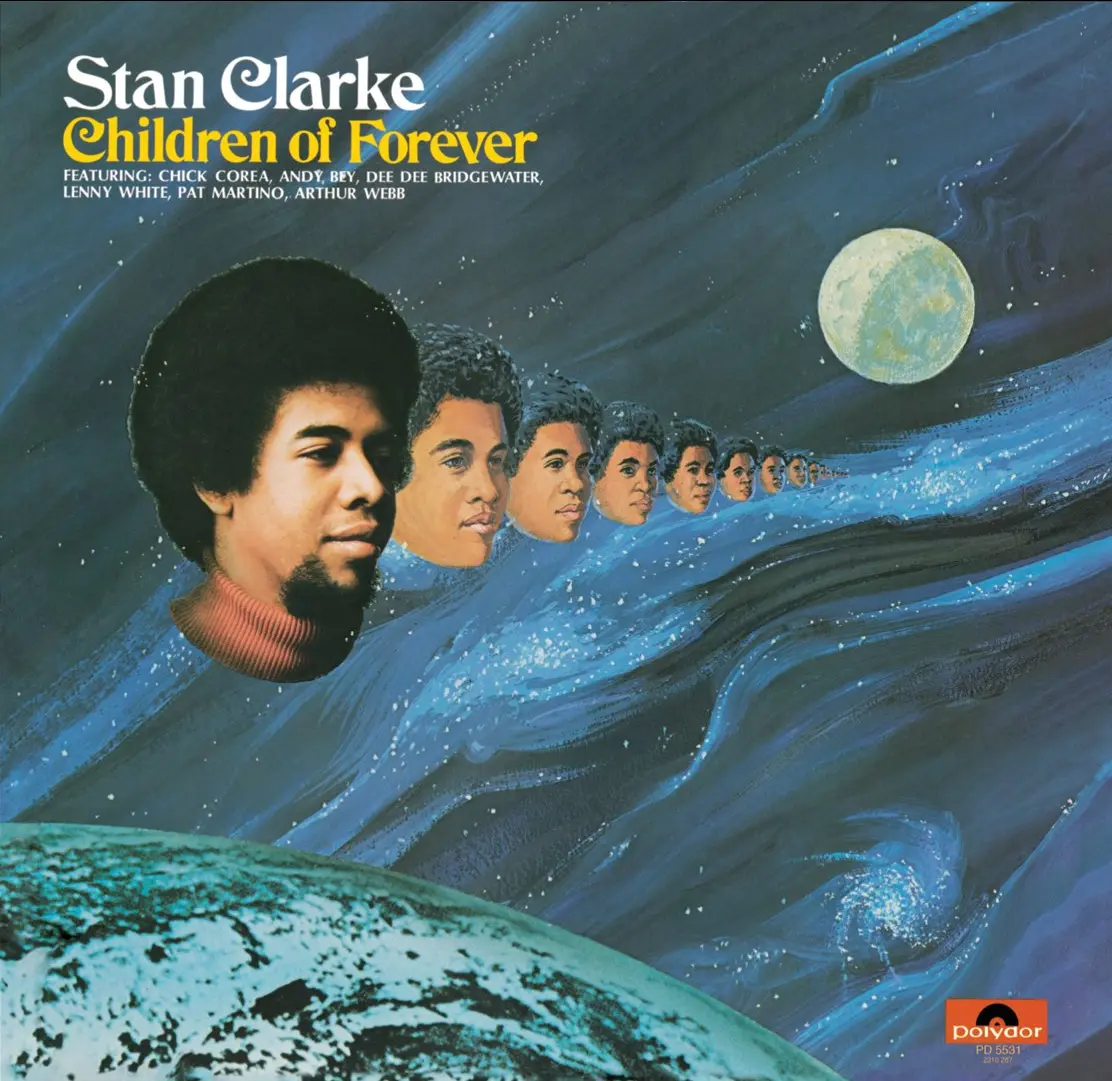 Stanley Clarke released his debut solo album, Children of Forever, in June 1973 on Polydor.
Children of Forever presents Clarke’s first statement as a bandleader. He’s backed by guitarist Pat Martino, flutist Art Webb, Return to Forever collegue Chick Corea (electric piano, clavinet), and soon-tob-be RTF drummer Lenny White. Vocalists Dee Dee Bridgewater and Andy Bey appear on select passages.
Clarke composed “Children of Forever,” “Unexpected Days,” “Butterfly Dreams,” and co-wrote “Bass Folk Song” with lyricist Neville Potter, who also worded “Sea Journey,” a Corea composition. Clarke plays electric and standup bass.
The album opens with the title track, “Children of Forever,” which merges theatrical phrasing with gospel-inflected vocals and punctuated bass lines. “Unexpected Days” features Bridgewater in the lead over a serene electric piano and flute dialogue. “Bass Folk Song” showcases Clarke’s bowed double bass processed through a wah-wah pedal, juxtaposed with Webb’s flute and Corea’s electric piano. “Butterfly Dreams” presents acoustic piano, guitar, and drums supporting Bey’s vocal phrasing. The 16-minute closer, “Sea Journey,” develops shifting motifs with alternating sections of vocal and instrumental focus, highlighting Clarke’s bass, Martino’s guitar, Webb’s flute, and Corea’s electric piano within a dynamic rhythmic framework.
A1. “Children of Forever” (10:42) – The opening suite unfolds like a stage piece, blending choral refrains with shifting instrumental episodes. Corea’s electric piano and Clarke’s bass drive passages that veer from chant-like incantations to fervent rhythmic surges, with flute weaving in and out of the texture.
A2. “Unexpected Days” (5:53) – Bridgewater’s lead vocal anchors the piece as flute and electric piano trace airy contours. The rhythm section alternates between relaxed pulses and sharper accents, creating space for instrumental interplay.
A3. “Bass Folk Song” (7:59) – Clarke pushes the double bass into experimental terrain with wah effects and extended techniques. Flute and keyboards supply angular lines over a restless pace, building to densely layered exchanges before easing back into its central motif.
B1. “Butterfly Dreams” (6:52) – A straight-ahead jazz framework lets Bey’s vocal sit warmly against acoustic piano, double bass, and cymbal-rich drumming. Martino’s guitar rises briefly to sketch quick turns before the ensemble settles back into measured swing.
B2. “Sea Journey” (16:26) – Spanning multiple sections, the closer shifts between lyrical vocal passages and extended instrumental flights. Clarke’s bowed bass, Corea’s electric piano, and White’s dynamic drumming propel the ensemble through alternating calm expanses and surging climaxes, with guitar and flute emerging in fluid counterpoint.
Sessions occurred December 26–27, 1972 at Studio A&R in New York City with Chick Corea producing, Leslie Wynn assisting, and Dixon Van Winkle engineering, assisted by Brad Davis.
Stanley Clarke
 Stanley Clarke released his self-titled second solo album in December 1974 on Nemperor.
Stanley Clarke extends the bassist’s exploration of jazz fusion outside Return to Forever. Clarke leads a group featuring guitarist Bill Connors, keyboardist Jan Hammer, drummer Tony Williams, and percussionist Airto Moreira on the closing suite, with additional brass and strings arranged by Michael Gibbs.
Clarke composed all tracks except “Spanish Phases for Strings & Bass,” written by Michael Gibbs, and co-wrote “Yesterday Princess” with Carolyn Clarke. He performs on bass guitar, double bass, guitar, piano, and vocals.
The album opens with “Vulcan Princess,” a funk-inflected remake of Return to Forever’s “Vulcan Worlds,” showcasing slapping bass, synth flourishes, and syncopated guitar and drum interplay. “Yesterday Princess” is a brief, piano- and upright-bass-led piece with Clarke on vocals. “Lopsy Lu” and “Power” highlight up-tempo fusion with agile bass lines, distorted guitar, driving drums, and Moog textures. “Spanish Phases for Strings & Bass” presents Clarke soloing on upright bass, framed by sparse orchestration. The epic “Life Suite” unfolds in four parts with shifting tempos and textures, combining acoustic guitar, electric keyboards, brass, strings, and percussion to create extended passages of interplay and dynamic contrast.
A1. “Vulcan Princess” (4:00) – A reworking of Clarke’s Return to Forever material, the opener pushes forward with quick rhythmic bursts and elastic bass lines. Guitar and synth alternate in sharp turns over Williams’ driving pace.
A2. “Yesterday Princess” (1:41) – Clarke shifts to upright bass and voice, setting a brief, lyrical interlude. Piano outlines gentle contours while the strings remain understated.
A3. “Lopsy Lu” (7:03) – The track unfolds on a propulsive bass figure, opening space for guitar and synth to trade fast lines. Williams punctuates the exchanges with crisp accents that intensify the pacing.
A4. “Power” (7:20) – Williams launches with a solo before the ensemble locks into a tightly wound rhythm. Hammer’s synth arcs with rapid phrases as Connors adds jagged textures against Clarke’s insistent foundation.
B1. “Spanish Phases for Strings & Bass” (6:26) – Clarke takes the double bass to the foreground, alternating arco passages with pizzicato runs. Gibbs’ string arrangement shades the piece without constraining its exploratory flow.
B2. “Life Suite” (13:47) – Spanning four parts, the suite moves from tense dialogue between piano and acoustic bass into brassy surges and shifting tempos. A midsection of fluid percussion and synthesizer leads into a driving close, where guitar and drums heighten the intensity before the ensemble resolves in full force.
— Part I (1:51)
— Part II (4:12)
— Part III (1:03)
— Part IV (6:41)
Sessions occurred at Electric Lady Studios, New York City, with Clarke producing, Ken Scott engineering, Dave Whitman assisting, and Brian Gardner mastering.
Journey to Love
 Stanley Clarke released his third solo album, Journey to Love, in October 1975 on Nemperor.
The album balances tight, funk-based numbers with expansive jazz fusion suites. Clarke integrates orchestral textures and collaborates with leading contemporaries in both electric and acoustic settings.
Clarke wrote the first three tracks and the epic “Concerto for Jazz/Rock Orchestra.” He collaborated with pianist Chick Corea on the two-part “Song to John,” dedicated to John Coltrane. Guitarist Jeff Beck plays on “Hello Jeff” and contributes a solo to the title track. Other participants include guitarist John McLaughlin, drummer Steve Gadd, trombonist Tom Malone, trumpeters Jon Faddis and Lew Soloff, keyboardists George Duke and David Sancious, and returning Clarke associates Corea and drummer Lenny White.
The program divides between concise funk-rock statements (“Silly Putty,” “Hello Jeff”), a vocal centerpiece (“Journey to Love”), and extended works. “Song to John” presents acoustic interplay between Clarke, Corea, and McLaughlin, while the closing “Concerto for Jazz/Rock Orchestra, Parts 1–4” expands into a 14-minute orchestral-fusion suite.
A1. “Silly Putty” (4:52) – Clarke sets a brisk, syncopated pace with a nimble bass figure, while Duke and Sancious layer sharp-edged keyboard and guitar textures. The ensemble pushes the rhythm forward with playful intensity.
A2. “Journey to Love” (4:52) – Opening with falsetto vocals and sparse accompaniment, the piece builds into a charged instrumental section. Beck’s guitar solo carves angular lines against brass punctuation and shifting keys.
A3. “Hello Jeff” (5:16) – Beck’s guitar takes center stage, moving between soaring runs and jagged chords. Clarke underpins the dialogue with thick bass voicings, while White’s drumming drives the piece with restless energy.
A4. “Song to John, Part 1” (4:22) – Corea, Clarke, and McLaughlin strip back to acoustic instruments, shaping a restrained tribute. Piano and bowed bass trace lyrical arcs as guitar threads intricate counterlines.
B1. “Song to John, Part 2” (6:09) – The trio raises the momentum, weaving agile exchanges at quick pace. Shifting between buoyant interplay and tightly drawn phrases, the performance balances intensity with clarity.
B2. “Concerto for Jazz/Rock Orchestra, Parts 1–4” (14:25) – A four-part suite moves from atmospheric openings into layered brass, surging rhythms, and electric solos. Clarke alternates between deep resonance and piercing piccolo lines as Sancious and Duke push the ensemble through expansive climaxes before it settles into a reflective close.
Sessions took place at Electric Lady Studios in New York City with Clarke producing alongside Ken Scott, who engineered the album.
School Days
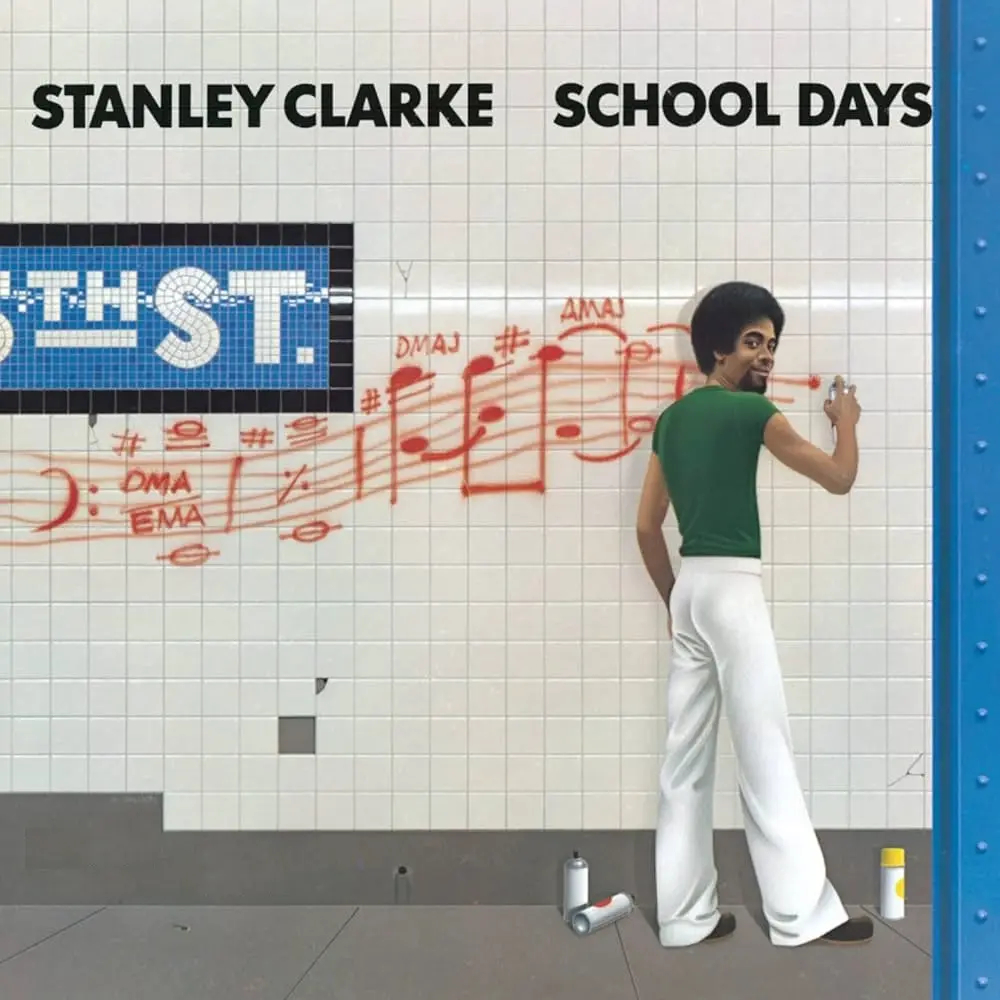 Stanley Clarke released his fourth solo album, School Days, in August 1976 on Nemperor.
The album presents Clarke at the peak of his electric bass innovations, balancing funk-driven workouts, acoustic interplay, and orchestral-fusion elements. It mixes concise rhythmic numbers with extended suites that feature an array of collaborators from both jazz and rock.
Clarke wrote all six compositions. Guitarist John McLaughlin plays on “Desert Song,” George Duke appears on keyboards for “Life Is Just a Game,” and drummer Billy Cobham joins on the same track. David Sancious plays Mini-moog and organ on Side A. Guitarist Ray Gomez appears on the odd-numbered tracks while Steve Gadd alternates drum duties with Gerry Brown.
The program opens with the eight-minute title track, a showcase for Clarke’s electric bass technique against sharp guitar accents. “Quiet Afternoon” and “The Dancer” contrast with softer lines and buoyant rhythm work, while “Desert Song” pares down to an acoustic dialogue between Clarke and McLaughlin. “Hot Fun” injects brisk funk with orchestral color, and “Life Is Just a Game” closes with large-scale interplay between bass, drums, keyboards, and full ensemble.
A1. “School Days” (7:51) – Clarke drives the opener with chordal bass figures that expand into a long, athletic solo, shifting from percussive pops to sustained cries while Sancious’ synth and Gomez’s sharp guitar sketch bold accents.
A2. “Quiet Afternoon” (5:09) – Piccolo bass carries a light, contoured lead over Clarke’s piano foundation, with Gadd’s restrained pulse and Sancious’ Moog lines adding shape to the piece’s calm surface.
A3. “The Dancer” (5:27) – Built on a propulsive, dance-like rhythm, the track layers percussion, guitar, and keyboards in repeating figures, creating a festive atmosphere threaded with quick instrumental exchanges.
B1. “Desert Song” (6:56) – Clarke and McLaughlin engage in an acoustic duet, moving between bowed bass resonance and swift fingerwork against intricate guitar phrasing, with sparse percussion heightening its meditative intensity.
B2. “Hot Fun” (2:55) – A brief, fast-tempo piece, it sets funk-inflected bass and drums against bright brass and string bursts, propelling the ensemble in concentrated flashes of energy.
B3. “Life Is Just a Game” (9:00) – Expansive in scope, the closer combines orchestral passages with electric interplay. Clarke alternates bass registers, Cobham pushes the rhythm into high gear, and Duke and Johnson add sharp turns of harmony and tone before the finale lands with full ensemble force.
Sessions occurred in June 1976 at Electric Lady Studios in New York and A&M Studios in Hollywood with Clarke producing alongside Ken Scott, who engineered and remixed the album.
School Days reached No. 34 on the Billboard 200 and No. 2 on the Jazz Albums chart.
Modern Man
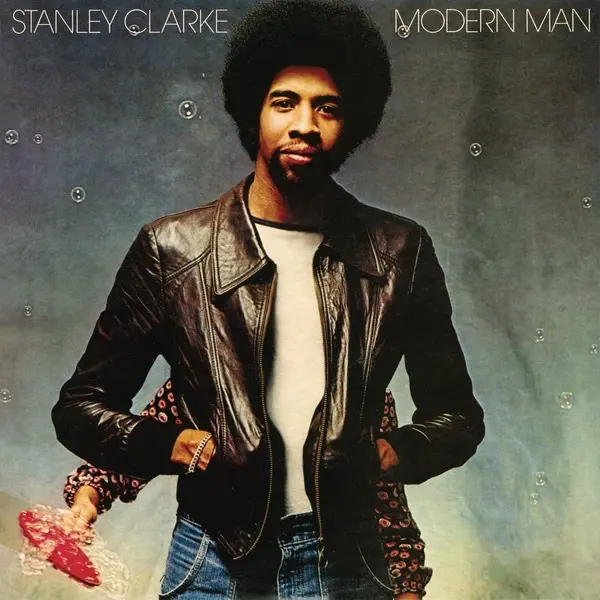 Stanley Clarke released his fifth solo album, Modern Man, in 1978 on Nemperor.
The album combines short interludes, funk-driven pieces, and orchestrated jazz fusion. Clarke presents compact statements rather than extended suites, with contributions from guitarists Jeff Beck, Jeff “Skunk” Baxter, and Raymond Gomez, plus drummers Jeff Porcaro, Gerry Brown, Carmine Appice, and Steve Gadd. Select passages feature vocals by Dee Dee Bridgewater and the Waters sisters.
Clarke composed every track except “Got to Find My Own Place,” which he co-wrote with keyboardist Mike Garson, guitarist Raymond Gomez, and drummer Gerry Brown. He re-recorded “Dayride” from Return to Forever’s No Mystery and wrote “More Hot Fun” as a sequel to “Hot Fun” from School Days. Jeff Beck plays guitar on “Rock ’n Roll Jelly,” and Jeff Baxter appears on “He Lives On (Story About the Last Journey of a Warrior).”
The set alternates between orchestrated miniatures (“Opening (Statement),” “Closing (Statement)”), funk workouts (“More Hot Fun,” “Rock ’n Roll Jelly”), and orchestrated showcases (“He Lives On,” “Modern Man”). “Dayride” provides a new electric take on Clarke’s earlier fusion theme, while “Got to Find My Own Place” brings layered ensemble playing into focus.
A1. “Opening (Statement)” (4:22)
A2. “He Lives On (Story About the Last Journey of a Warrior)” (4:24)
A3. “More Hot Fun” (4:31)
A4. “Slow Dance” (3:16)
A5. “Interlude: A Serious Occasion” (0:21)
A6. “Got to Find My Own Place” (3:17)
B1. “Dayride” (4:22)
B2. “Interlude: It’s What She Didn’t Say” (0:24)
B3. “Modern Man” (4:31)
B4. “Interlude: A Relaxed Occasion” (0:16)
B5. “Rock ’n Roll Jelly” (3:21)
B6. “Closing (Statement)” (3:17)
Sessions occurred at Electric Lady Studios in New York, Chateau Recorders and Group IV Recorders in Hollywood, and A&M Studios in Los Angeles with Clarke producing and Ed Thacker engineering.
Modern Man features photography by Norman Seeff.
I Wanna Play for You
 Stanley Clarke released his sixth solo album, the two-record I Wanna Play for You, in June 1979 on Nemperor.
The album splits between studio material and live performances, presenting Clarke in funk-driven settings, orchestrated pieces, and acoustic tributes. His touring ensemble contributes to extended renditions of earlier compositions, while guest players expand the studio half with guitar, brass, and vocal features.
Clarke composed ten of the album’s twelve tracks. Keyboardist Mike Garson wrote “Together Again,” which features flugelhorn by Freddie Hubbard. Clarke also re-recorded “School Days” and “Quiet Afternoon” in concert form and included the short “Strange Weather,” which he co-created with Bayeté Todd Cochran. Jeff Beck plays guitar on “Jamaican Boy,” George Duke appears on the title track, and Stan Getz contributes tenor saxophone to “The Streets of Philadelphia.”
The studio material ranges from compact funk workouts (“Rock ’n’ Roll Jelly,” “All About”) to vocal-centered pieces (“I Wanna Play for You,” “Just a Feeling”). Clarke dedicates “The Streets of Philadelphia” to Carolyn with featured vocals and saxophone by Getz, while “Blues for Mingus” offers an acoustic bass tribute to Charles Mingus. The live half includes extended reworkings of Clarke staples “School Days” and “Quiet Afternoon,” recorded with a nine-piece band that adds brass textures and expanded rhythm.
A1. “Rock ’n’ Roll Jelly” (2:35)
A2. “All About” (5:15)
A3. “Jamaican Boy” (3:27)
A4. “Christopher Ivanhoe” (3:22)
A5. “My Greatest Hits” (6:28)
B1. “Strange Weather” (1:45)
B2. “I Wanna Play for You” (6:20)
B3. “Just a Feeling” (6:02)
B4. “The Streets of Philadelphia” (5:55)
C1. “School Days” (10:43)
C2. “Quiet Afternoon” (9:00)
D1. “Together Again” (5:40)
D2. “Blues for Mingus” (2:18)
D3. “Off the Planet” (3:10)
D4. “Hot Fun–Closing” (7:50)
Sessions occurred at Chateau Recorders and Devonshire Sound Studios in Hollywood with Clarke producing. Additional live recordings were captured at the Calderone Theater, the Greek Theater, and the Roxy Theater, then mixed at Chateau Recorders and Electric Lady Studios. Ed Thacker and David Leonard engineered the sessions.
I Wanna Play for You features cover photography by Bob Seidemann and concert photography by Norman Seeff, Andy Freeberg, Darryl Pitt, and Helen Cabot.
Epic issued “I Wanna Play for You” as a single, backed with “Together Again.”
Rocks, Pebbles and Sand
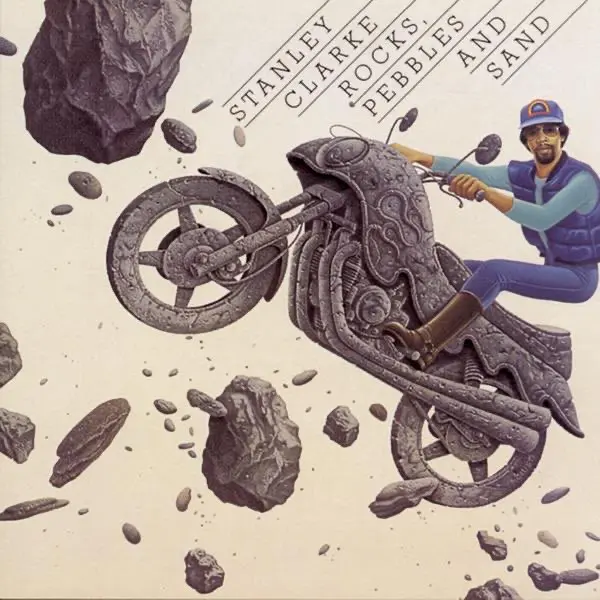 Stanley Clarke released his seventh solo album, Rocks, Pebbles and Sand, in 1980 on Epic.
The album shifts between heavy rock instrumentals, funk-driven vocal numbers, and orchestrated passages. Clarke uses tenor bass for the first time and balances his fusion background with harder rhythms and soul elements.
Clarke wrote six of the album’s seven tracks. Guitarist Louis Johnson co-wrote “We Supply” and contributes guitar, bass, and vocals. Chick Corea plays keyboards on select numbers, while Greg Phillinganes, Steve Bach, and Raymond Gomez join on additional keyboards and guitar. The lineup also includes drummers Simon Phillips and John Robinson, vibraphonist Victor Feldman, and brass and string players arranged around Clarke’s compositions.
The album divides into two halves: the first side emphasizes Clarke’s rock-oriented instrumentals with “Danger Street,” “All Hell Broke Loose,” and the title track, while “Underestimation” brings a funk-soul blend. Side two opens with the vocal-centered “You/Me Together” and the funk-driven “We Supply,” then closes with the three-part suite “The Story of a Man and a Woman,” which moves from fast fusion interplay to subdued soul and back into jazz-rock territory.
A1. “Danger Street” (4:51)
A2. “All Hell Broke Loose” (5:03)
A3. “Rocks, Pebbles and Sand” (4:13)
A4. “Underestimation” (3:43)
B1. “You/Me Together” (4:05)
B2. “We Supply” (4:21)
B3. “The Story of a Man and a Woman (11:13)
– Part 1: She Thought I Was Stanley Clarke
– Part 2: A Fool Again
– Part 3: I Nearly Went Crazy (Until I Realized What Had Occurred)
Sessions occurred at Legend Studios in Lynden, Washington, Chateau Recorders in North Hollywood, and A&M Studios in Hollywood with Clarke producing and Dennis MacKay engineering.
Rocks, Pebbles and Sand features cover illustration by Robert Giusti with design by Nancy Donald and photography by Henry Diltz.
The Clarke/Duke Project
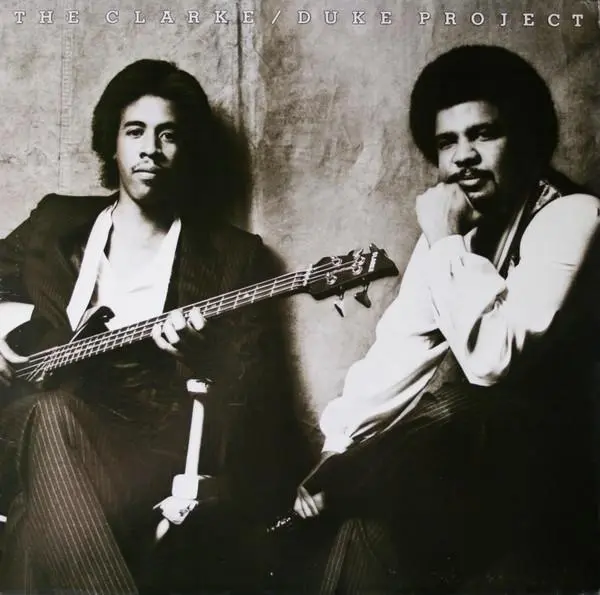 In April 1981, Epic issued The Clarke/Duke Project, a collaborative album between Stanley Clarke and keyboardist George Duke.
The album blends jazz fusion with R&B, funk, and balladry, highlighting both players’ instrumental interplay and their shared interest in vocal-oriented songs. Clarke’s tenor bass, piccolo bass, and electric sitar join Duke’s keyboards and string arrangements across a set that balances short vignettes, upbeat dance numbers, and extended orchestrations.
Clarke and Duke co-wrote three numbers and alternated lead writing on the remainder. Clarke composed “I Just Want to Love You,” “Never Judge a Cover by Its Book,” and “Winners,” while Duke wrote “Sweet Baby” and “Finding My Way.” Together, they co-wrote “Wild Dog,” “Let’s Get Started,” and “Touch and Go.” The album also contains a cover of Richard Berry’s 1957 song “Louie Louie,” popularized by The Kingsmen in 1963.
The program opens with the brisk funk of “Wild Dog” and the retooled “Louie Louie.” “Sweet Baby” provides the central ballad, scored with electric sitar and strings. Clarke’s “I Just Want to Love You” and “Winners” lean on dance-paced rhythm work, while “Never Judge a Cover by Its Book” serves as a brief interlude. The co-written “Touch and Go” layers strings against a slow, rising vocal, and Duke closes with the expansive “Finding My Way.”
A1. “Wild Dog” (3:29)
A2. “Louie, Louie” (5:05)
A3. “Sweet Baby” (3:45)
A4. “I Just Want to Love You” (3:50)
A5. “Never Judge a Cover by Its Book” (1:42)
B1. “Let’s Get Started” (3:56)
B2. “Winners” (4:01)
B3. “Touch and Go” (4:36)
B4. “Finding My Way” (5:36)
Sessions occurred at Fantasy Studios in Berkeley, California, with additional work at Le Gonks West, Westlake, and A&M Studios in Hollywood. Clarke and Duke co-produced with Dennis MacKay engineering.
Epic lifted “Sweet Baby” as the lead single, backed with “Never Judge a Cover by Its Book.” The single reached No. 19 on the Billboard Hot 100, No. 16 on Adult Contemporary, and No. 6 on the R&B chart.
Al Jarreau and Lalah Hathaway later covered “Sweet Baby” on the 2014 tribute album My Old Friend: Celebrating George Duke.
Let Me Know You
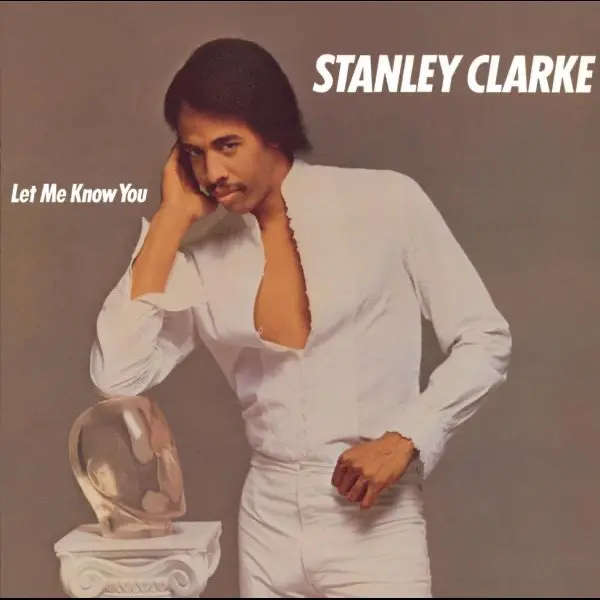 Stanley Clarke released his eighth solo album, Let Me Know You, on April 13, 1982, on Epic.
The album blends fusion technique with crossover jazz and R&B production, highlighting Clarke’s focus on orchestrated textures and vocal arrangements alongside his signature bass work.
Clarke wrote seven of the eight tracks and produced the album. Keyboardist Todd Cochran composed “Secret to My Heart,” and June Christopher supplied lyrics to “You Are the One for Me.” Guitarist Michael Sembello played on three tracks, while Carlos Santana added solos on “Straight to the Top” and “I Just Want to Be Your Brother.” Clarke sang lead vocals on multiple songs and contributed bass, piccolo bass, tenor bass, guitar, sitar, and synthesizer.
The set divides between R&B-infused vocal tracks such as “You Are the One for Me” and “The Force of Love,” brief instrumental showcases like “Play the Bass,” and extended orchestrated numbers such as “Secret to My Heart” and “New York City,” both arranged with strings and brass.
A1. “Straight to the Top” (4:03)
A2. “Let Me Know You” (4:39)
A3. “You Are the One for Me” (4:50)
A4. “I Just Want to Be Your Brother” (3:13)
B1. “The Force of Love” (5:49)
B2. “Play the Bass” (1:14)
B3. “Secret to My Heart” (5:05)
B4. “New York City” (5:44)
Sessions occurred at Larrabee Sound Studios in Los Angeles with Clarke producing and Erik Zobler engineering and mixing. George Horn mastered the album.
Let Me Know You reached No. 114 on the Billboard 200 and No. 25 on the R&B chart.
The Griffith Park Collection
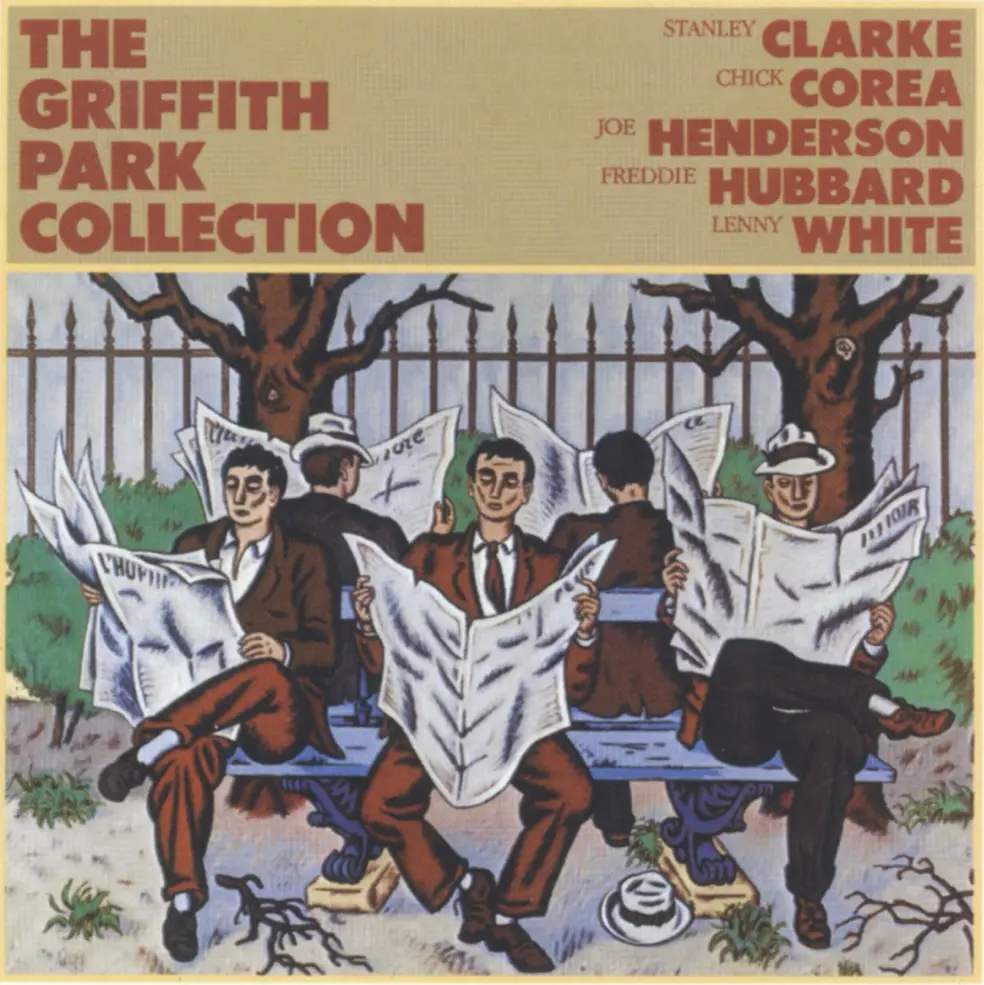 In July 1982, Elektra Musician issued The Griffith Park Collection, a super-quintet recording co-billed (in order) to Stanley Clarke, Chick Corea, Joe Henderson, Freddie Hubbard, and Lenny White.
The album captures five leading figures of fusion and post-bop in an acoustic setting, balancing fiery ensemble playing with lyrical balladry.
Drummer Lenny White produced the sessions and contributed two pieces, “L’s Bop” and “Guernica.” Clarke supplied “Why Wait,” Corea wrote “October Ballade,” and Hubbard offered “Happy Times.” The quintet also interpreted Steve Swallow’s composition “Remember.” The lineup featured Clarke on upright bass, White on drums, Corea on piano, Henderson on tenor saxophone, and Hubbard on trumpet and flugelhorn.
The set opens with uptempo modal interplay on “L’s Bop” and closes with the extended, suite-like “Guernica.” Corea’s “October Ballade” offers a reflective contrast, while Hubbard’s “Happy Times” and Clarke’s “Why Wait” emphasize rhythmic drive and thematic expansion. Swallow’s “Remember” provides a chamber-like interlude.
A1. “L’s Bop” (5:14)
A2. “Why Wait” (8:09)
A3. “October Ballade” (5:33)
B1. “Happy Times” (7:10)
B2. “Remember” (4:09)
B3. “Guernica” (9:35)
Sessions occurred at Mad Hatter Studios in Los Angeles with White producing and Bernie Kirsh engineering. Mastering took place at Sterling Sound.
The Griffith Park Collection features cover art by French painter Jean Hélion.
The Clarke/Duke Project II
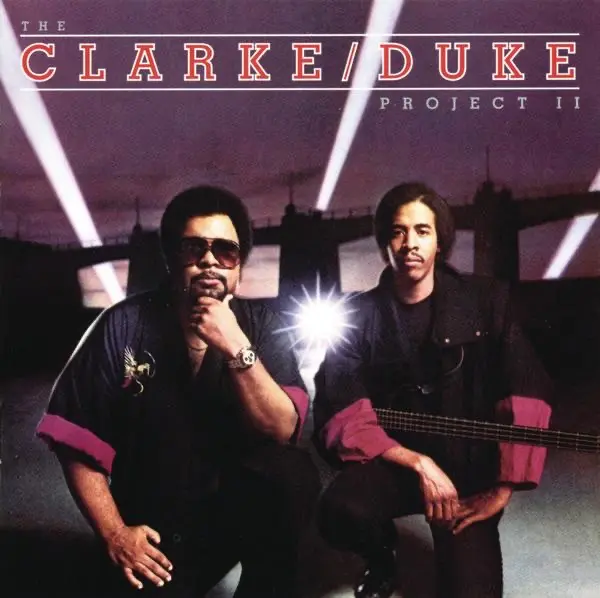 In 1983, Epic issued The Clarke/Duke Project II, the second collaborative album by Stanley Clarke and George Duke.
The album continues their partnership with a mix of bass-driven funk, electric jazz, and R&B-influenced vocal numbers. Clarke played basses, guitar, and co-produced, while Duke handled keyboards, vocals, and co-production.
Clarke and Duke composed the album’s nine tracks. Clarke provided lead bass work and occasional guitar, while Duke alternated between synthesizers, piano, and vocals. Outside contributors included Narada Michael Walden and Billy Cobham on drums, Paulinho Da Costa on percussion, and George Del Barrio, who arranged strings on two tracks. Vocal contributions came from Howard Hewett, Jeffrey Osborne, and Lynn Davis on “Every Reason to Smile,” and a large backing chorus on “Trip You in Love.” William Criss added oboe to “Try Me Baby.”
The set alternates between vocal-driven R&B songs such as “Put It on the Line” and “Every Reason to Smile,” instrumental showcases like “Great Danes” and “Atlanta,” and string-textured ballads including “Try Me Baby.” The uptempo “Heroes” and rhythm-focused “The Good Times” reflect the duo’s funk-jazz leanings, while “Trip You in Love” closes the first side with layered backing vocals.
A1. “Put It on the Line” (4:22)
A2. “Heroes” (4:52)
A3. “Try Me Baby” (3:40)
A4. “Every Reason to Smile” (4:20)
A5. “Great Danes” (3:48)
B1. “The Good Times” (4:38)
B2. “You’re Gonna Love It” (5:01)
B3. “Trip You in Love” (3:26)
B4. “Atlanta” (4:06)
Sessions occurred in Los Angeles with Clarke and Duke producing and John Robinson, Narada Michael Walden, and Billy Cobham alternating on drums across tracks. George Del Barrio arranged strings on “Try Me Baby” and “Atlanta,” both recorded with a full section of violinists, cellists, and violists.
The Clarke/Duke Project II reached No. 146 on the Billboard 200 and No. 44 on the R&B albums chart.
Time Exposure
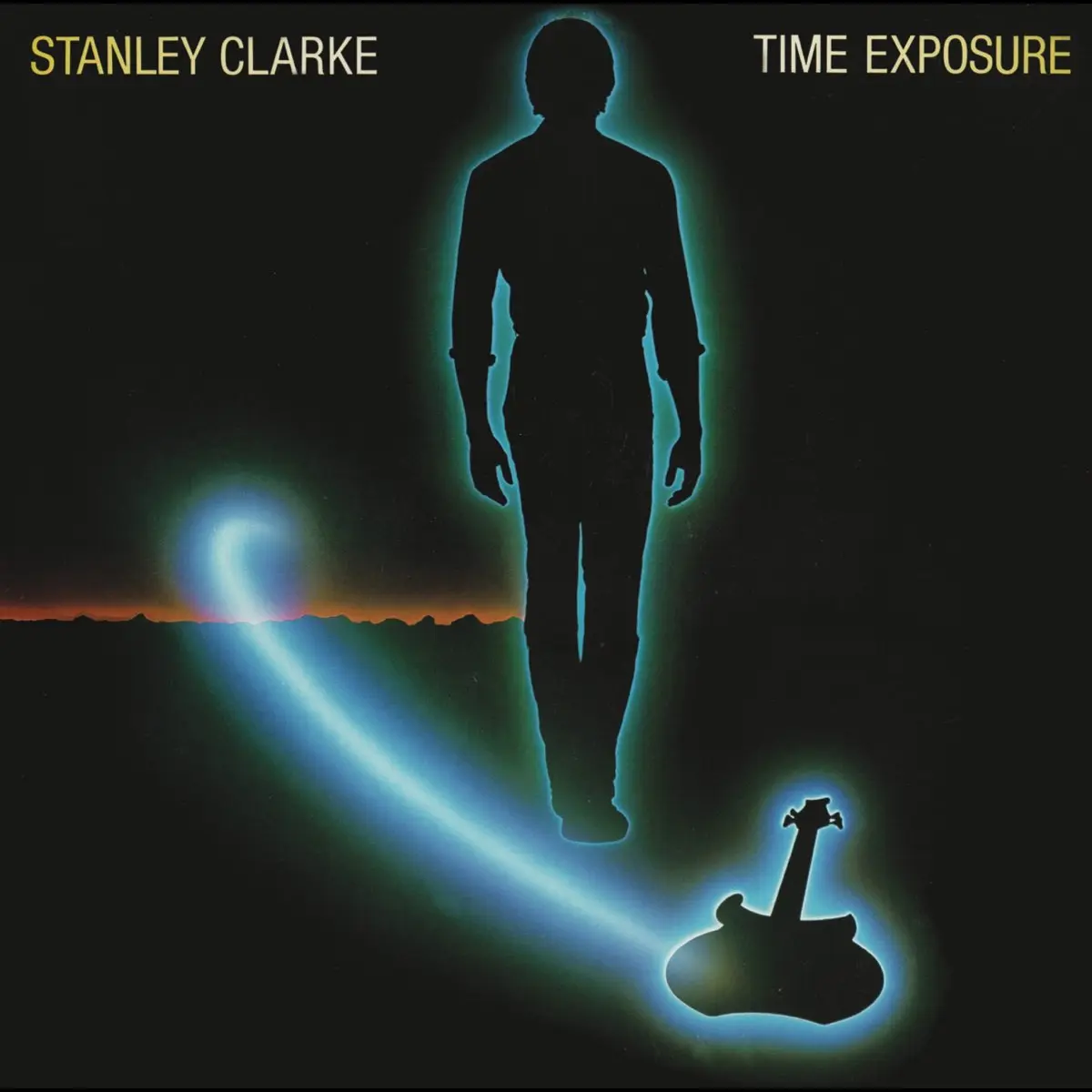 Stanley Clarke released his ninth solo album, Time Exposure, on August 28, 1984, on Epic.
The album emphasizes electronic textures, mixing Clarke’s bass innovations with digital synthesizers and programmed rhythm elements. Guest appearances by Jeff Beck, George Duke, Howard Hewett, Ernie Watts, and Louis Johnson reinforce its crossover between fusion, funk, and R&B.
Clarke composed four songs alone and co-wrote the remainder with outside contributors. Keyboardist Denzil Miller collaborated on “Are You Ready (For the Future)” and co-wrote “Heaven Sent You” with vocalist Howard Hewett. Clarke teamed with Darryl Phinnessee and Howard Smith on “Future Shock,” and with Johnson on “Future.” Duke contributed Prophet-5 keyboards, while Jeff Beck played guitar and guitar synthesizer on select tracks.
The album moves from brief instrumental workouts such as “Play the Bass 103” and “Speedball” to extended vocal-centered tracks like “Heaven Sent You” and “I Know Just How You Feel.” “Future Shock” and “Future” explore rhythmically dense, synth-heavy arrangements, while the title track and “Spacerunner” balance Clarke’s piccolo bass lines with layered keyboards.
A1. “Play the Bass 103” (0:46)
A2. “Are You Ready (For the Future)” (3:15)
A3. “Speedball” (3:12)
A4. “Heaven Sent You” (6:00)
A5. “Time Exposure” (4:48)
B1. “Future Shock” (4:31)
B2. “Future” (4:03)
B3. “Spacerunner” (3:14)
B4. “I Know Just How You Feel” (5:57)
Sessions occurred at Larrabee Studios in West Hollywood with Clarke producing and Erik Zobler engineering. Brian Gardner mastered the album.
Time Exposure features cover artwork by David Coleman with photography by Randee Saint Nicholas.
Epic lifted three singles: “Are You Ready (For the Future)” backed with “Speedball,” “Heaven Sent You,” and “Future” backed with “Spacerunner.”
The album reached No. 34 on the Swedish Albums chart.
Discography:
- Children of Forever (1973 • Stan Clarke)
- Stanley Clarke (1974)
- Journey to Love (1975)
- School Days (1976)
- Modern Man (1978)
- I Wanna Play for You (1979)
- Rocks, Pebbles and Sand (1980)
- Let Me Know You (1982)
- The Griffith Park Collection (1982 • Stanley Clarke, Chick Corea, Joe Henderson, Freddie Hubbard & Lenny White)
- Time Exposure (1984)
- Find Out! (1985)
- Hideaway (1986)
- Shieldstone (1987 • Stanley Clarke & Bill Shields)
- If This Bass Could Only Talk (1988)
Sources:
- Discogs: Stanley Clarke
- 45worlds: Stanley Clarke
- 45cat: Stanley Clarke
- MusicBrainz: Stanley Clarke
- NPR: “Jazz Bassist Stanley Clarke” (July 5, 2005)
Artist/Album Pages:
West Bruce & Laing were an English-American super-trio comprised of ex-Cream bassist-singer Jack...
Joe Cocker (May 20, 1944 — Dec. 22, 2014) was an English soul-rock singer from Sheffield who relea...
ABBA was a Swedish male/female pop-vocal quartet that released eight albums between 1973 and 1981 ...
Ashra was the solo vehicle of German electronic musician and Ash Ra Tempel mastermind Manuel Götts...
Manuel Göttsching is a German guitarist who rose to prominence as the mastermind behind Ash Ra Tem...
Harry Chapin (Dec. 7, 1942 — July 16, 1981) was an American singer-songwriter and guitarist from B...
Buccaneer was an American hard-rock band from Indiana that released a 1980 self-titled album on th...
The National Head Band was an English blues-psych band that released the album Albert 1 on Warner...
One the Juggler was an English rock band from London that made six singles and the 1983–85 albums...
Náttúra was an Icelandic psych-rock band led by guitarist Björgvin Gíslason through several lineup...
Alan Sorrenti (born Dec 9, 1950) is an Italian vocalist who emerged with the experimental 1972/73 ...
The Landress / Hart Group were an American jazz-rock band from Van Nuys, Calif., that released th...