

Bobby Hutcherson (January 27, 1941 – August 15, 2016) was an American vibraphonist who started as a sideman for Les McCann, Eric Dolphy, and Grant Green. Between 1963 and 1977, he recorded twenty-one albums for Blue Note.
Background
He was born Robert Hutcherson on January 27, 1941, in Los Angeles. His earliest exposure to jazz came from his brother, Teddy, a fan of drummer/bandleader Art Blakey and a friend of saxophonist Dexter Gordon. Hutcherson’s sister, Peggy, sang in Gerald Wilson’s orchestra and rubbed shoulders with saxist Billy Mitchell and multi-reedist Eric Dolphy, who she dated. She introduced all three to her brother, who would later work with Wilson.
Hutcherson took up vibraphone at age 12, inspired by vibist Milt Jackson, particularly his work with Miles Davis and Thelonious Monk on the track “Bemsha Swing” (Miles Davis All Stars, Volume 2, 1954).
Early Activity
By his late teens, Hutcherson entered the LA jazz scene as a backing player to saxophonist Charles Lloyd and trumpeter Carmell Jones. He made his first (uncredited) appearance on a 1960 Pacific Jazz 7″ by pianist Les McCann.
In 1961, Hutcherson played on the Pacific Jazz hard-bop release Groovin’ Blue by Curtis Amy and Frank Butler. His involvement with their touring sextet brought him to New York City, where he settled into the Bronx and worked part-time as a taxi driver.
During 1962, Hutcherson played on titles by Billy Mitchell (This Is Billy Mitchell, Smash Records) and Ron Jefferson (Love Lifted Me, Pacific Jazz). His backing stint with trombonist Al Grey yielded the 1962/63 Argo albums Snap Your Fingers, Night Song (both featuring Mitchell), and Having a Ball. As Robert Hutcherson, he played on the track “Jitterbug Waltz” on Dolphy’s 1963 FM release Conversations.
On April 30, 1963, Hutcherson played on his first Blue Note session, One Step Beyond by saxist Jackie McLean (released in 1964). That November, Hutcherson played on the Blue Note classic Idle Moments by guitarist Grant Green (released in 1965).
The Kicker
 On December 29, 1963, Hutcherson assembled the Idle Moments lineup — Green, pianist Duke Pearson, tenor saxophonist Joe Henderson, double-bassist Bob Cranshaw, and drummer Al Harewood — for his first album as a bandleader, The Kicker (released in 1999).
The six-song hard-bop set features two interpretations from outside sources, “If Ever I Would Leave You” (Lerner/Loewe) and “Mirrors” (Joe Chambers), and three Hutcherson originals: “For Duke P,” “The Kicker,” and the 14-minute “Step Lightly.” The Kicker concludes with Pearson’s “Bedouin.” Horace Silver recorded the title-track for his popular 1965 release Song for My Father.
1. “If Ever I Would Leave You” (10:33) is a showtune from the 1960 musical Camelot, about the legend of King Arthur.
2. “Mirrors” (6:52)
3. “For Duke P.” (7:54)
4. “The Kicker” (6:07)
5. “Step Lightly” (14:18)
6. “Bedouin” (8:11)
With his album in the vaults, Hutcherson played on 1964 Blue Note releases by drummer Anthony Williams (Life Time), pianist Andrew Hill (Judgment!), trombonist Grachan Moncur III (Evolution), and second titles with Dolphy (Out to Lunch!) and McLean (Destination… Out!), plus the Vanguard release Warming Up! by trumpeter Dave Burns. That year, readers of Down Beat magazine voted him “Talent Deserving of Wider Recognition” in their annual poll.
Dialogue
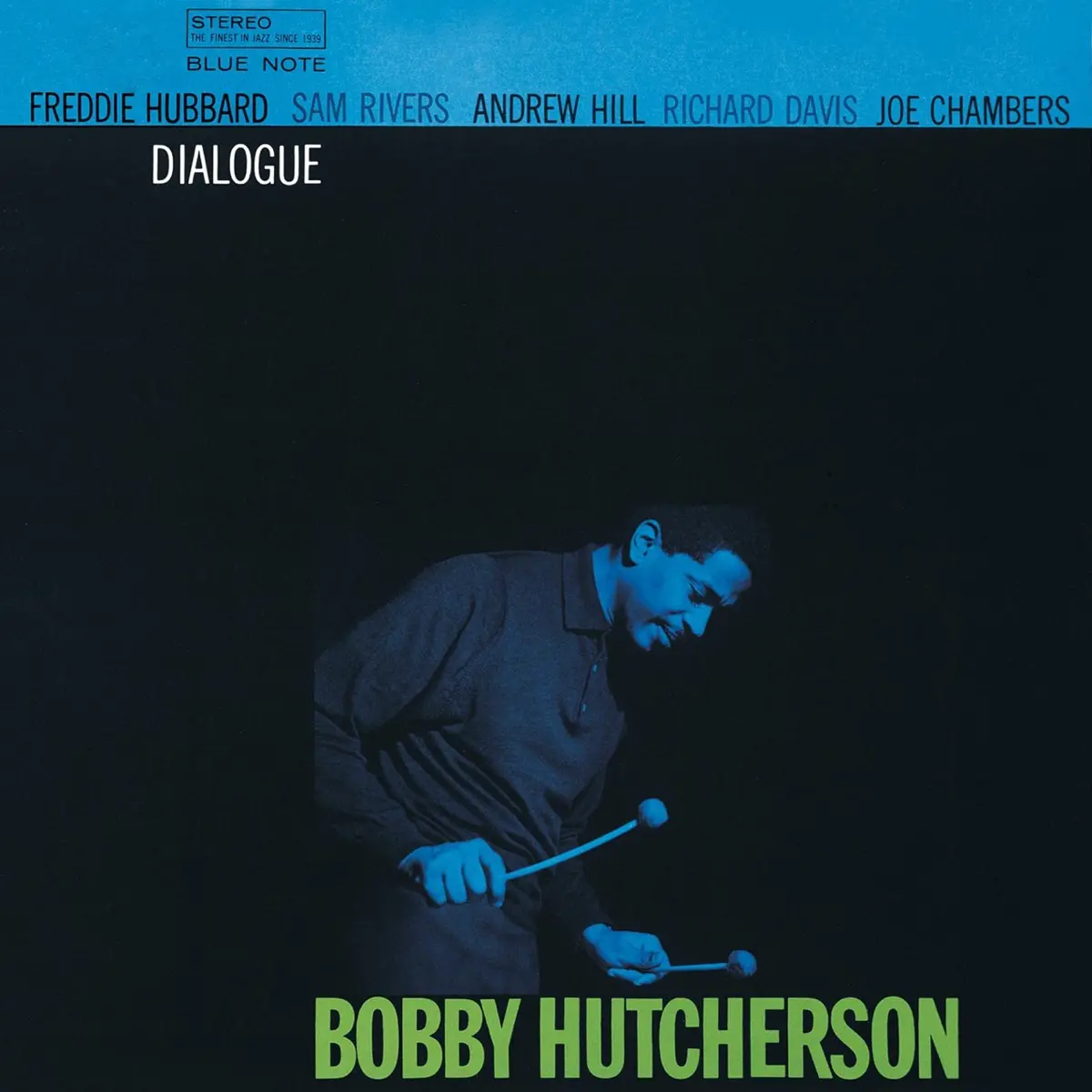 Bobby Hutcherson released his second album, Dialogue, in September 1965 on Blue Note.
The album contains three compositions by pianist Andrew Hill and two by drummer Joe Chambers. Hutcherson plays vibraphone throughout and marimba on “Les Noirs Marchant” and the title track. He leads a sextet rounded by double-bassist Richard Davis, trumpeter Freddie Hubbard, and reedist Sam Rivers, who flute, saxophone, and clarinet.
Musically, Dialogue moves between structured themes and open passages, balancing stark contrasts with shifting interplay. Its pieces range from tightly wound balladry to turbulent ensemble exchanges and rhythmically driven marches. The closing blues reframes the set’s exploratory energy within a firmer tonal center.
A1. “Catta” (7:19) is a descarga built on clave rhythm from drummer Joe Chambers. The theme moves quickly into open improvisation. Sam Rivers takes the first solo, shifting abruptly between tonal passages and near-atonal bursts. Freddie Hubbard follows with a trumpet line that remains inside hard-bop form, drawing contrast with Rivers. Hutcherson’s vibraphone bridges both worlds, his solo angular but firmly inside the rhythmic pull of Latin jazz. Hill maintains a vamp throughout, anchoring the piece against Chambers’s layered percussion.
A2. “Idle While” (6:37) offers the set’s ballad form. Sam Rivers introduces the melody on flute, paired with Hubbard’s trumpet. Hubbard leads the improvisation with a sharply contoured solo that stays close to the composition’s frame. Hutcherson’s vibraphone expands the harmonic space, his lines casting an airy tension. Richard Davis’s bass work alternates support with a solo that weaves against the theme, while Hill sits out, leaving the piece centered on the winds and Hutcherson.
A3. “Les Noirs Marchant” [“The Blacks Marching”] (6:41) moves into darker terrain. Built on a marching pulse, the piece layers brass, reeds, and vibes in fragmented lines that rise into collective dissonance. Hubbard and Rivers trade sharp interjections while Hill threads jagged piano figures. Davis carves out a cutting pizzicato solo before the ensemble returns in overlapping textures. The march rhythm presses forward until the theme re-emerges, closing the track with a tense resolution.
B1. “Dialogue” (9:59) is another extended work for ensemble improvisation. Hutcherson switches between vibraphone and marimba, adding sharp, percussive accents against Hill’s dense piano clusters. The ensemble plays in a call-and-response format that fractures into freer passages, with Hubbard and Rivers delivering bristling upper-register cries. The piece unfolds as an unsettled conversation among instruments, sometimes cohesive, sometimes fractured, until it dissipates at the close.
B2. “Ghetto Lights” (6:16) brings the set back to a blues structure. Hubbard delivers a trumpet solo that presses into the melody with force, while Rivers contributes on clarinet with a reedy, almost vocal tone. Chambers holds a steady pulse and Davis moves between walking lines and pointed figures. The ensemble balances restraint and intensity, grounding the freer language of earlier tracks in a more familiar frame.
Sessions occurred on April 3, 1965, at Van Gelder Studio in Englewood Cliffs, NJ, with producer Alfred Lion and engineer Rudy Van Gelder. Later CD issues contains a bonus sixth track, “Jasper,” another Hill composition.
6. “Jasper” (8:29) is a hard bop theme with blues inflection. Hutcherson pushes forward with a swinging vibraphone solo, followed by Hill’s piano comping in short, clipped figures. Hubbard and Rivers deliver brisk solos, contrasting with the looser interplay of the original album tracks.
Components
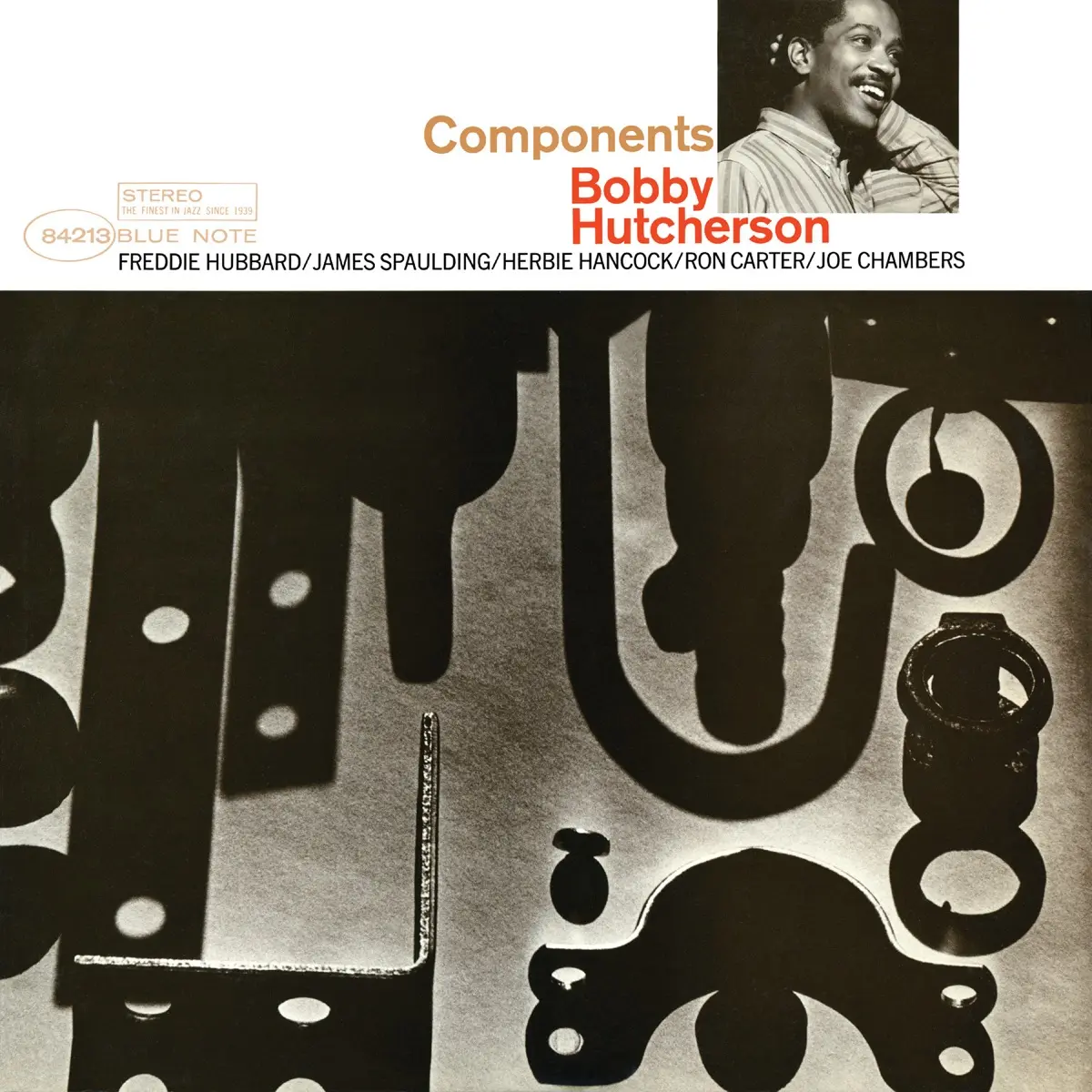 Bobby Hutcherson released his third album, Components, in November 1966 on Blue Note.
The album contains four compositions each by Huchterson (Side A) and drummer Joe Chambers (Side B). They retain Freddie Hubbard in a reconfigured sextet with keyboardist Herbie Hancock, bassist Ron Carter, and reedist James Spaulding (alto saxophone, flute).
Components divides cleanly between two conceptions. Hutcherson’s first side works within post-bop frames, from the bustling title track to the pared-back lyricism of “Tranquility” and the lilting motion of “Little B’s Poem.” Side B pushes into freer territory: “Movement” and “Air” move with disjunct, often fractured energy, while “Juba Dance” layers odd rhythmic interplay and “Pastoral” closes with a brief, restrained coda.
A1. “Components” (6:25)
A2. “Tranquillity” (5:03)
A3. “Little B’s Poem” (5:11)
A4. “West 22nd Street Theme” (4:42)
B1. “Movement” (7:31)
B2. “Juba Dance” (5:23)
B3. “Air” (4:48)
B4. “Pastoral” (2:02)
Sessions occurred on June 10, 1965, at Van Gelder with Rudy and Alfred Lion.
Happenings
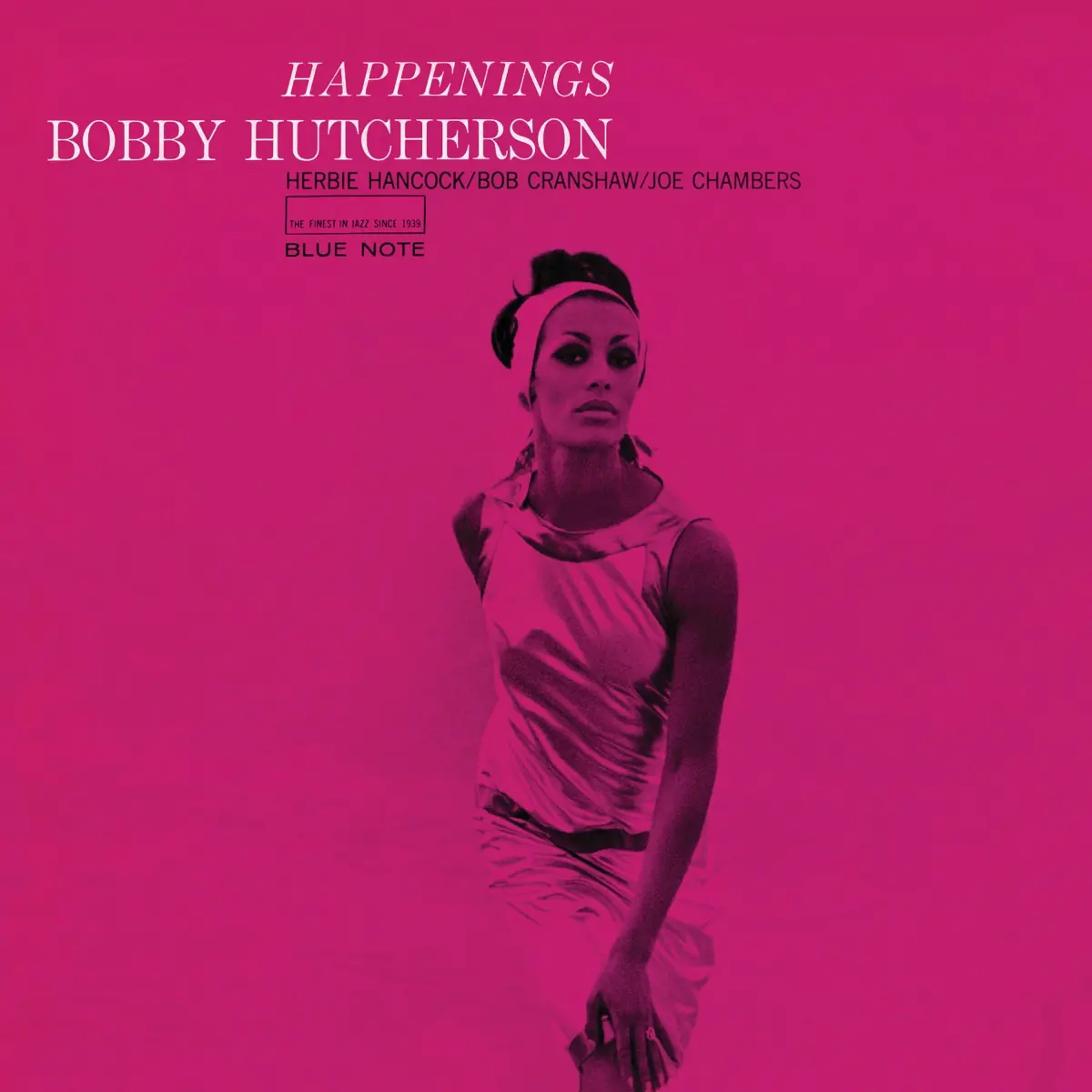 Bobby Hutcherson released his fourth album, Happenings, in January 1967 on Blue Note.
The album contains six Hutcherson originals and “Maiden Voyage,” a recent Herbie Hancock composition that soon became a jazz standard. They recorded Happenings as a quartet with bassist Bob Cranshaw and drummer Joe Chambers. On “The Omen,” Hutcherson and Chambers trade instruments while Hancock plays a “box full of rocks.”
Happenings balances lyricism, rhythmic urgency, and open-ended passages. “Aquarian Moon” and “Head Start” trace sharp post-bop structures, while “Bouquet” and “When You Are Near” move inward with subdued phrasing. “Rojo” pushes a Latin pulse, and the group reshapes Hancock’s “Maiden Voyage” with tighter contours. The closer, “The Omen,” loosens form and extends space, setting it apart from the album’s otherwise restrained focus.
A1. “Aquarian Moon” (7:45)
A2. “Bouquet” (8:10)
A3. “Rojo” (6:03)
B1. “Maiden Voyage” (5:49)
B2. “Head Start” (5:16)
B3. “When You Are Near” (3:51)
B4. “The Omen” (6:59)
Sessions occurred on February 8, 1966, at Van Gelder with Rudy and Alfred Lion. Blue Note photographer Reid Miles photographed the cover: a magenta monochrome image of a fashion model posed in a light form-fitting dress.
Stick-Up!
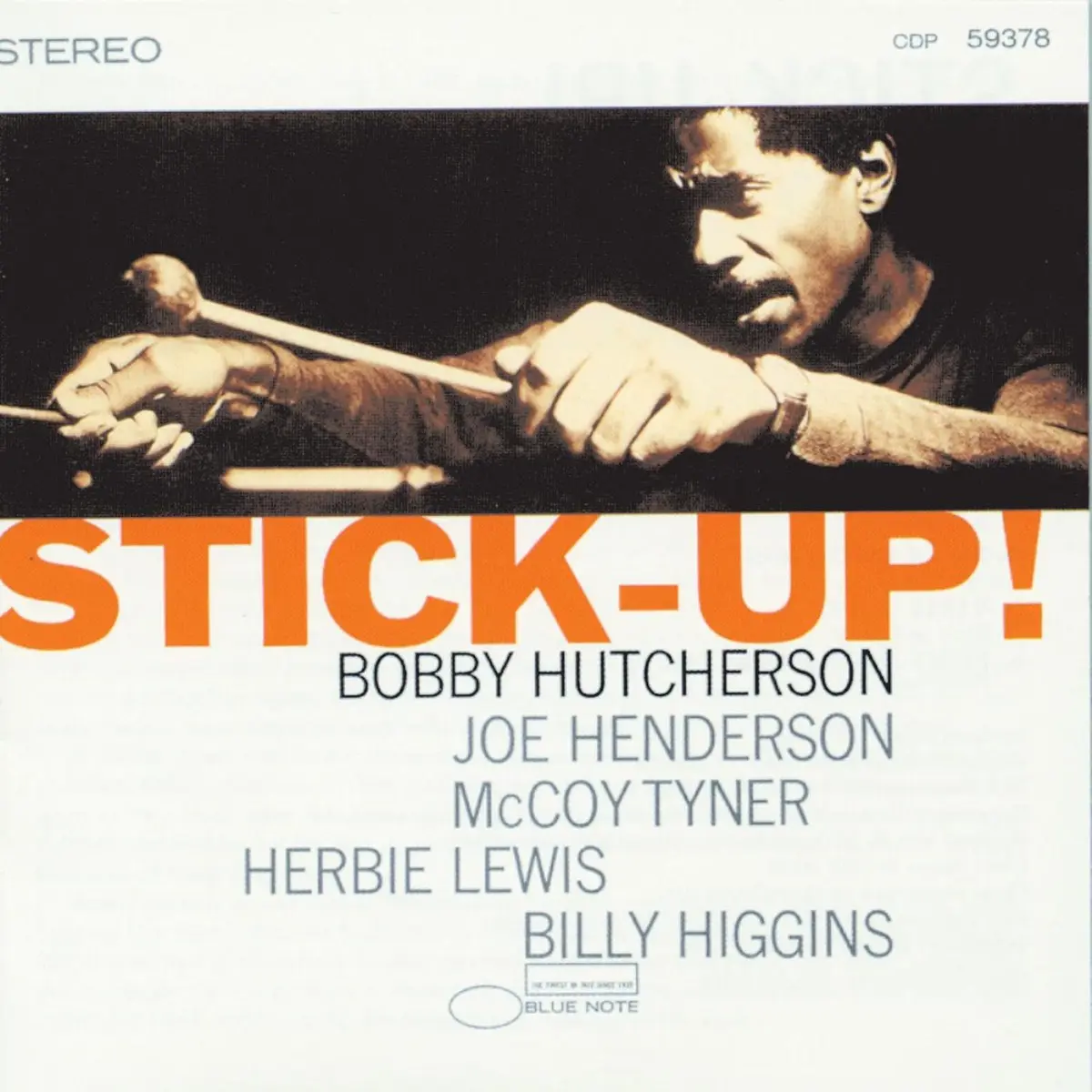 Bobby Hutcherson released his fifth album, Stick-Up!, in March 1968 on Blue Note.
The album opens with a rendition of the Ornette Coleman piece “Una Muy Bonita,” followed by five Hutcherson originals. Hutcherson recorded Stick-Up! with pianist McCoy Tyner, bassist Herbie Lewis, and drummer Billy Higgins. Tenor saxophonist Joe Henderson returns on five tracks (barring “Summer Nights”).
Stick Up moves between reinterpretation, modal frameworks, and freer post-bop language. “Una Muy Bonita” blends Hutcherson’s vibes with Henderson’s blues-inflected tenor and Tyner’s block-chord phrasing. “8/4 Beat” pushes hard tempo with tight solos and a relentless swing undercurrent, while “Summer Night” pares back into a slow ballad colored by vibraphone–piano interplay. “Black Circle” shifts toward fragmented post-bop lines, with Henderson and Tyner contrasting direct momentum against freer stretches before Higgins’s percussive feature. “Verse” rides a modal bass ostinato, giving space for searching vibraphone, Coltrane-shaped tenor phrasing, and Tyner’s clustered harmonies. The set closes with “Blues Mind Matter,” a brief bebop figure framed by compact statements from Henderson and Hutcherson.
A1. “Una Muy Bonita” (6:25) transforms Coleman’s composition into a Latin-tinged bop statement. Hutcherson opens with vibraphone lines that trace angular turns before Henderson adds blues-inflected tenor phrases. Tyner punctuates with block chords and a solo balancing single-note clarity and harmonic density, while Higgins and Lewis maintain a steady, propulsive pace.
A2. “8/4 Beat” (6:55) drives forward with brisk tempo and sharp rhythmic articulation. Henderson’s tenor solo propels the energy with rapid runs, followed by Hutcherson’s vibraphone shaping contours against the ensemble. The rhythm section maintains momentum, accenting each phrase with precise dynamics and pulse.
A3. “Summer Nights” (6:55) slows the set into a reflective, intimate mood. Hutcherson’s vibraphone states a lyrical theme over delicate piano support, with interplay that emphasizes sustain, silence, and expressive spacing. The texture remains understated yet finely detailed throughout the ballad.
B1. “Black Circle” (7:00) centers on a fractured, angular theme that blends post-bop clarity with freer textures. Henderson’s lines accelerate through the form, while Tyner explores harmonic space with dispersed clusters. Higgins adds percussive commentary that intersects with the ensemble, weaving rhythmic complexity into the piece.
B2. “Verse” (9:25) rests on a modal framework with a steady bass ostinato. Hutcherson’s vibraphone navigates searching lines, followed by Henderson’s tenor echoing Coltrane’s modal phrasing. Tyner punctuates with block chords before his own solo, emphasizing linear and harmonic tension within the modal structure.
B3. “Blues Mind Matter” (3:30) concludes with a brief, blues-rooted statement. Henderson delivers concise tenor phrases shaped by Coltrane’s influence, and Hutcherson responds with compact, articulate vibraphone lines, resolving the album with concentrated energy and clarity.
Sessions occurred on July 14, 1966, at Van Gelder with Rudy and Alfred Lion.
Total Eclipse
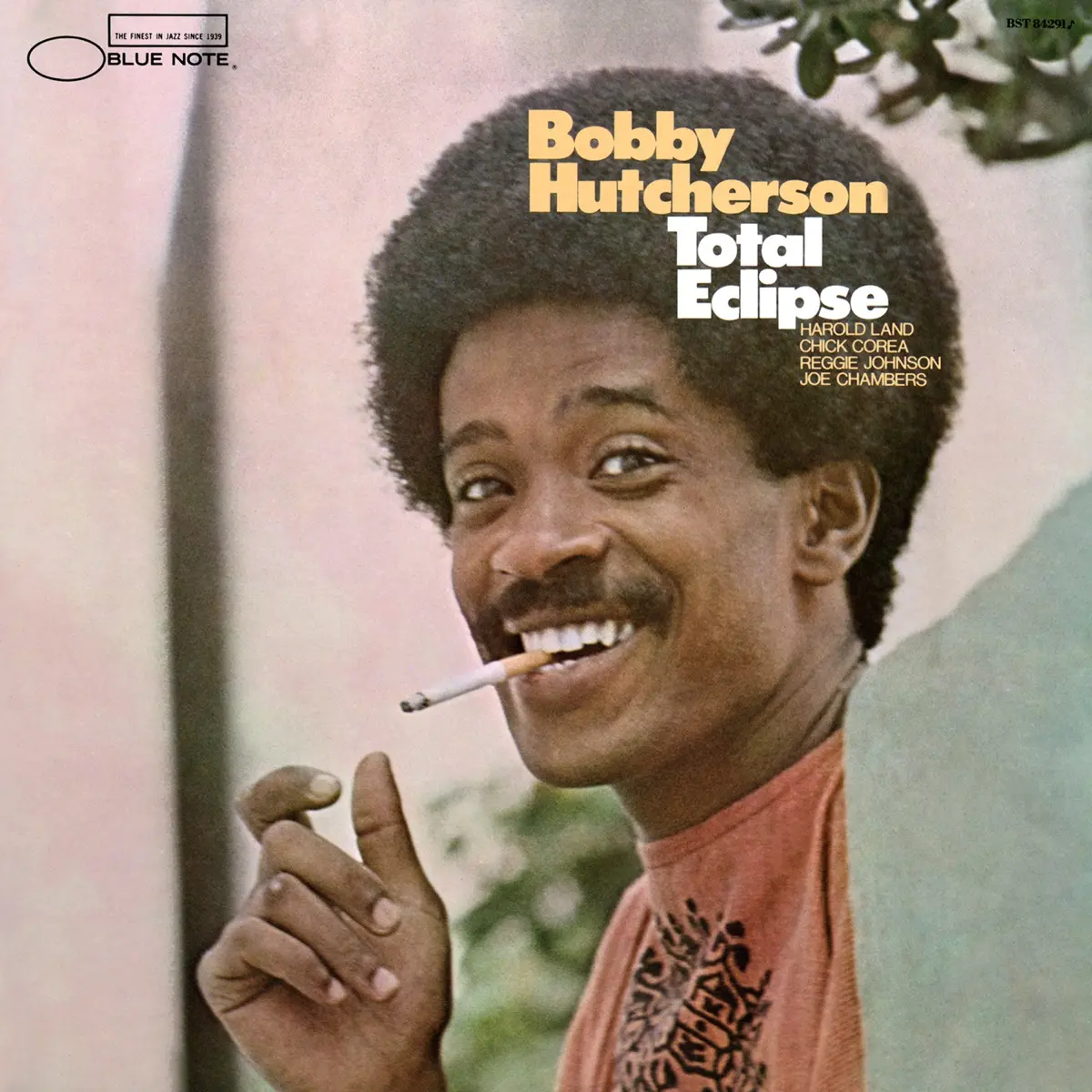 Bobby Hutcherson released his sixth album, Total Eclipse, in February 1969 on Blue Note.
The album contains four Hutcherson compositions and one (“Matrix”) by pianist Chick Corea. They recorded Total Eclipse as a quintet with bassist Reggie Johnson, drummer Joe Chambers, and reedist Harold Land (tenor saxophone, flute).
Total Eclipse moves between intricate ensemble interplay and spacious, contemplative passages. Tracks range from layered, interwoven motifs to percussively driven statements, with Hutcherson’s vibraphone threading through each piece. The album balances thematic development, dynamic variation, and carefully articulated instrumental dialogue.
A1. “Herzog” (6:36) opens with intertwining lines from Land and Corea, setting a layered texture. Hutcherson’s vibraphone solo weaves subtly with the ensemble, while Land’s tenor adds echoing phrases. The rhythm section holds a steady, forward-moving pulse that supports the dense harmonic interplay.
A2. “Total Eclipse” (8:54) slows the pace into a reflective space. Land’s tenor articulates long, contoured phrases as Hutcherson centers the vibraphone in the foreground. Bass and drums maintain a subdued, deliberate underpinning that emphasizes tonal color over propulsion.
A3. “Matrix” (6:44) begins with Corea’s piano and Land’s sax fragmenting the theme into angular motifs. Hutcherson’s solo rises smoothly through the harmonic shifts, while the ensemble navigates dynamic variations that alternate tension and release.
B1. “Same Shame” (9:28) opens percussively, with piano and rhythm building layered, kinetic energy. Land returns to the central theme with extended tenor lines as Hutcherson interjects brief, pointed vibraphone phrases. The piece progresses through rhythmic complexity toward a climactic convergence.
B2. “Pompeian” (8:50) closes the album with a pensive, spacious texture. Land plays flute against Hutcherson’s delicate, shimmering vibraphone, while bass punctuates subtle syncopations. The piece resolves with a sense of compositional balance and restrained release.
Sessions occurred on July 12, 1968, at Plaza Sound Studios in New York City, where Duke Pearson co-produced the album with Blue Note executive Francis Wolff.
For the cover, Hutcherson posed with a cigarette for Fred Seligo, whose photography also graces 1967/68 albums by Della Reese, The Pleasure Fair, Wes Montgomery, and the Dr. West’s Medicine Show and Junk Band.
Now!
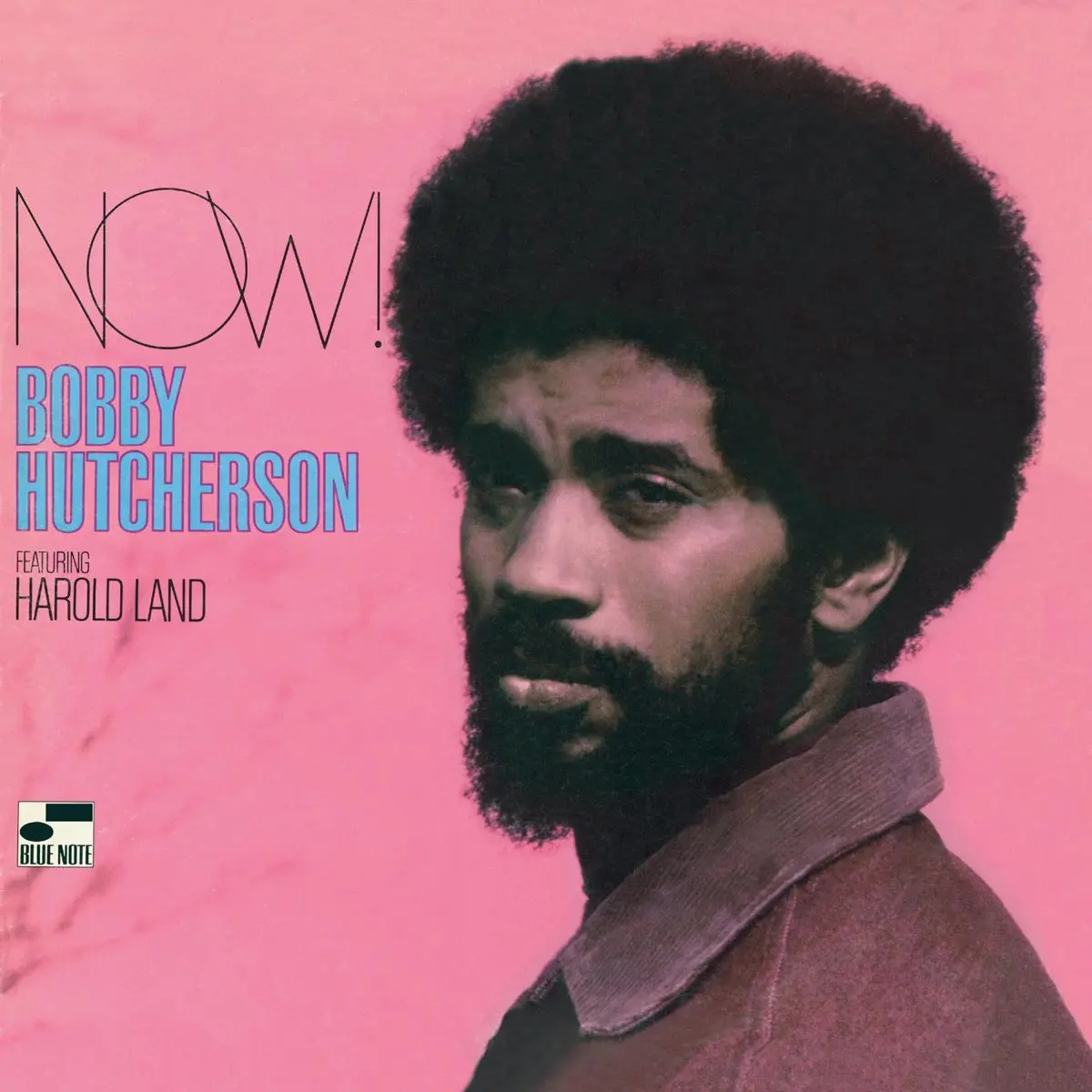 Bobby Hutcherson released his seventh album, Now!, in June 1970 on Blue Note.
Now! marked Hutcherson’s first foray into vocal jazz, performed with singer Eugene McDaniels, who co-wrote all of Side A. The albums also contains compositions by bassist Herbie Lewis (“The Creators”) and tenor saxist Harold Land (“Black Heroes”). The album also features pianist Kenny Barron, guitarist Wally Richardson ,and conguero Candido Camero. “Slow Change” and Side B feature pianist Stanley Cowell in lieu of Barron.
Now! alternates between introspective ballads and assertive, rhythmically driven pieces. Vocal and instrumental lines intertwine, highlighting Hutcherson’s vibraphone against layered ensemble textures. Extended tracks explore dense, shifting motifs, while shorter numbers maintain direct, energetic momentum. This was Hutcherson’s final recording with drummer Joe Chambers, who composed “Hello to the Wind.”
A1. “Slow Change” (7:17) unfolds over a relaxed, soulful pulse, with vocals supported by electric piano and a measured rhythm. Hutcherson’s vibraphone and the ensemble trade lyrical lines that emphasize contour and phrasing.
A2. “Hello to the Wind” (5:59) moves with a gentle, sustained pace, blending vocals with interwoven saxophone and vibraphone lines. Chambers’ subtle, propulsive drumming underpins the shifting textures.
A3. “Now” (2:46) drives forward on a bold, assertive rhythm, anchored by walking bass and electric piano. Hutcherson and Land deliver concise solos that navigate angular motifs within the uptempo framework.
B1. “The Creators” (12:35) unfolds a shadowy, dense texture. Wally Richardson’s fuzz guitar colors the backdrop while Hutcherson and Land build solos with increasing intensity and angular phrasing.
B2. “Black Heroes” (7:06) advances with a brisk, Latin-inflected rhythm, punctuated by nimble instrumental lines and percussive textures. Vocals float above the ensemble as solos interlock with congas and rhythmic accents.
Sessions for “Hello to the Wind” and “Now” occurred on October 3, 1969, at A&R Studios in New York City, where they cut the remaining tracks on November 5 with producer Duke Pearson. Both sessions post-date an August 1969 Van Gelder sessions that remained vaulted until the 1980 Blue Note release Medina.
San Francisco
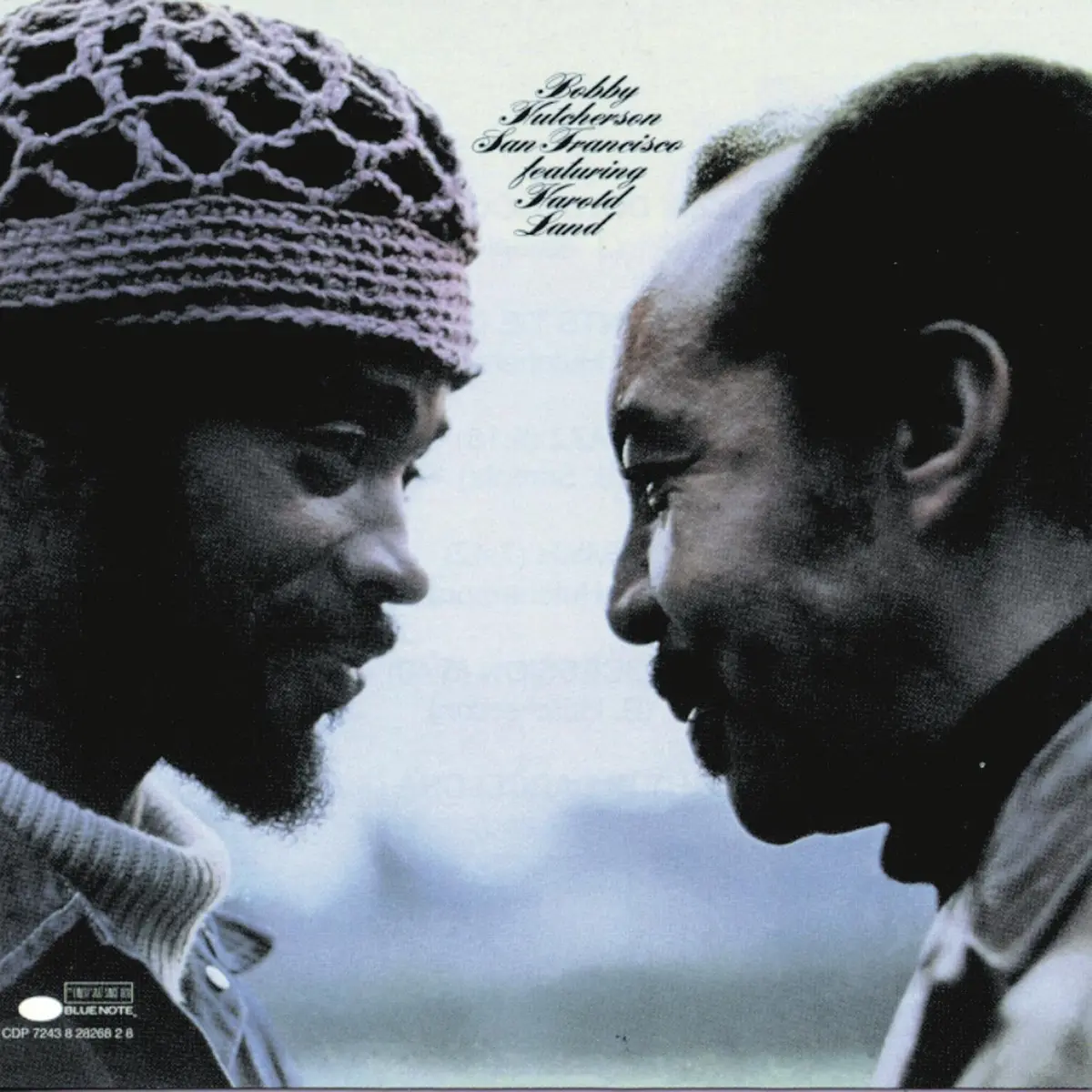 Bobby Hutcherson released his eighth album, San Francisco, in May 1971 on Blue Note.
Hutcherson assembled a new quintet with bassist John Williams, drummer Mickey Roker, Crusaders keyboardist Joe Sample, and ongoing reedist Harold Land, who plays tenor sax, flute, and oboe. Land composed “A Night in Barcelona” while Sample submitted “Goin’ Down South” and “Jazz.”
Musically, San Francisco sees Hutcherson’s picot from post-bop to jazz-funk with Sample and Williams on acoustic and electric models of their respective instruments.
A1. “Goin’ Down South” (7:10)
A2. “Prints Tie” (7:29)
A3. “Jazz” (5:26)
B1. “Ummh” (7:49)
B2. “Procession” (5:46)
B3. “A Night in Barcelona” (7:23)
Sessions occurred on July 15, 1970, at United Artists Studios, Los Angeles, where Duke Pearson co-produced the album with Michael Cuscuna.
Head On
 Bobby Hutcherson released his eighth album, Head On, in November 1971 on Blue Note.
The album contains one Hutcherson composition (“Mtume”) and four by pianist Todd Cochran, including the three-part “At the Source.” They recorded Head On with trumpeter Oscar Brashear, piccolo flutist Fred Jackson, electric pianist William Henderson, and ongoing reedist Harold Land. Total Eclipse bassist Reggie Johnson rotates with James Leary, a recent Hadley Caliman sideman.
A1. “At the Source” (8:20)
— a. “Ashes & Rust” (1:42)
— b. “Eucalyptus” (3:41)
— c. “Obsidian” (2:55)
A2. “Many Thousands Gone” (11:16)
B1. “Mtume” (8:24)
B2. “Clockwork of the Spirits” (7:16)
Sessions spanned July 1–3, 1971, at Poppi Recording Studios in Los Angeles with producer George Butler. Poppi staffer Rik Pekkonen engineered Head On after titles by Booker T & the MG’s and the 3rd Avenue Blues Band. Later CD issues contains three additional Poppi tracks: two by Cochran and one (“Hey Harold”) by Hutcherson.
5. “Togo Land” (15:42)
6. “Jonathan” (9:53)
7. “Hey Harold” (17:40)
Cochran recorded two albums in 1972 on Prestige Records under the mononym Bayeté.
Natural Illusions
Bobby Hutcherson released his ninth album, Natural Illusions, in 1972 on Blue Note.
Cirrus
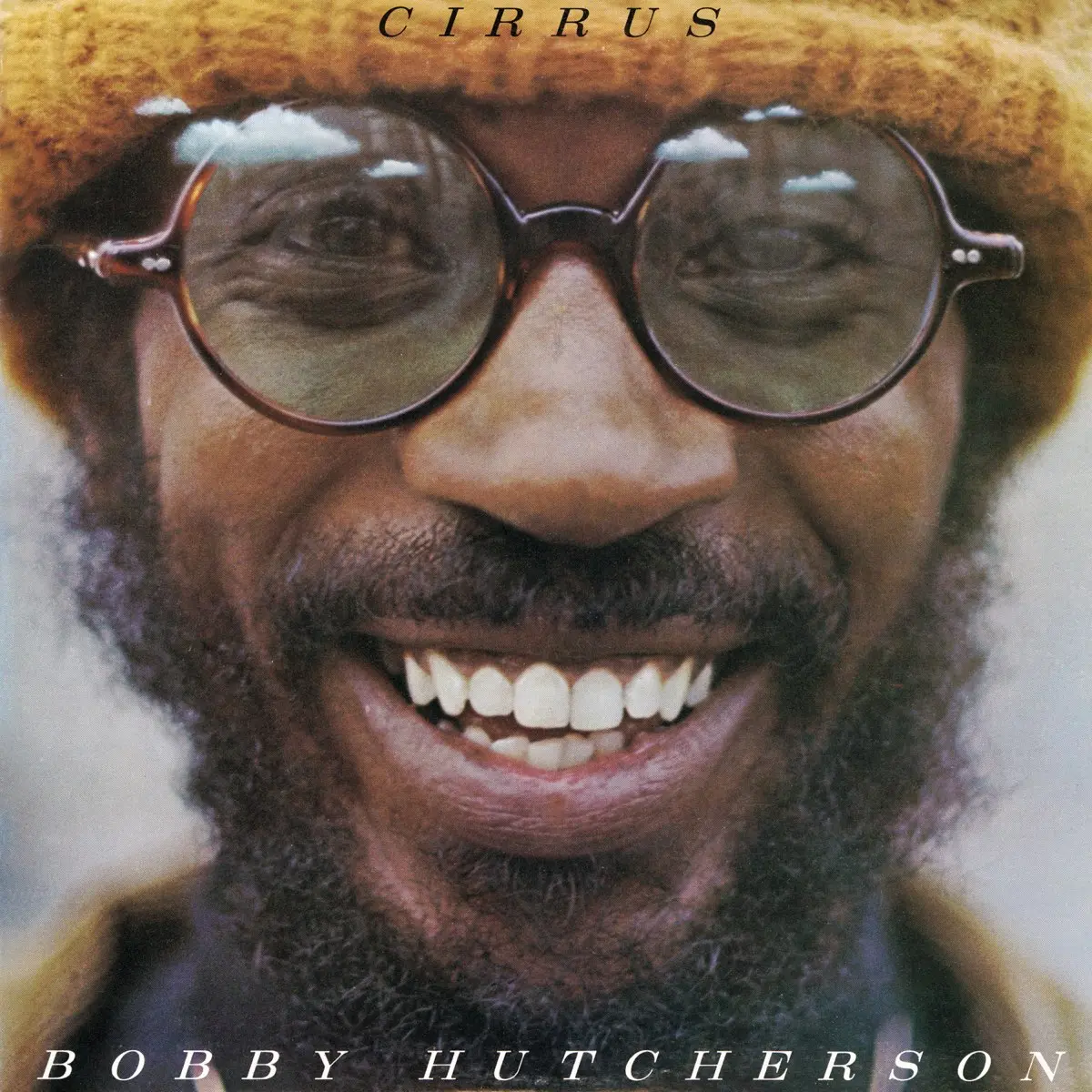 Bobby Hutcherson released his tenth album, Cirrus, in September 1974 on Blue Note.
The album contains four Hutcherson originals and one track (“Rosewood”) by trumpeter Woody Shaw. They recorded Cirrus with keyboardist William Henderson, bassist Ray Drummond, drummer, Larry Hancock, percussionist Kenneth Nash, and reedists Emanuel Boyd and Harold Land.
A1. “Rosewood” (7:35)
A2. “Even Later” (9:55)
A3. “Wrong or Right” (7:29)
B1. “Zuri Dance” (8:20)
B2. “Cirrus” (7:16)
Sessions occurred on April 17 and 18, 1974, at Wally Heider Recording Studio in Los Angeles with producer George Butler. This was Hutcherson’s final studio recording with Land, who joined Blue Mitchell‘s backing band.
Live at Montreux
In 1974, Blue Note issued Bobby Hutcherson Live at Montreux, a document of his July 5, 1973, set in Switzerland as part of the seventh annual Montreux Jazz Festival.
Live at the Festival (Recorded Live at Ljubljana) (1974)
Linger Lane
 Bobby Hutcherson released his eleventh studio album, Linger Lane, in March 1975 on Blue Note.
Montara
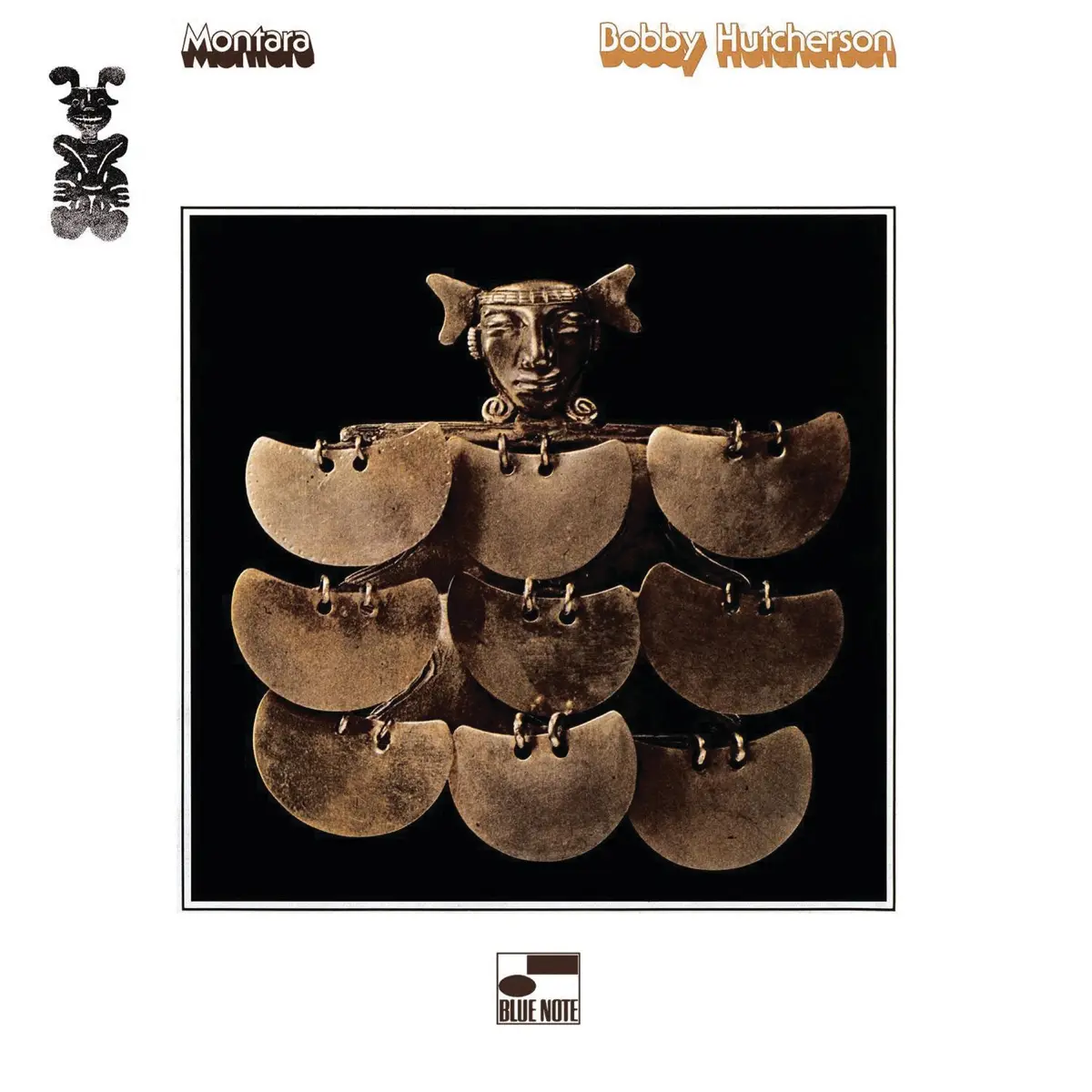 Bobby Hutcherson released his twelfth studio album, Montara, in October 1975 on Blue Note.
Waiting
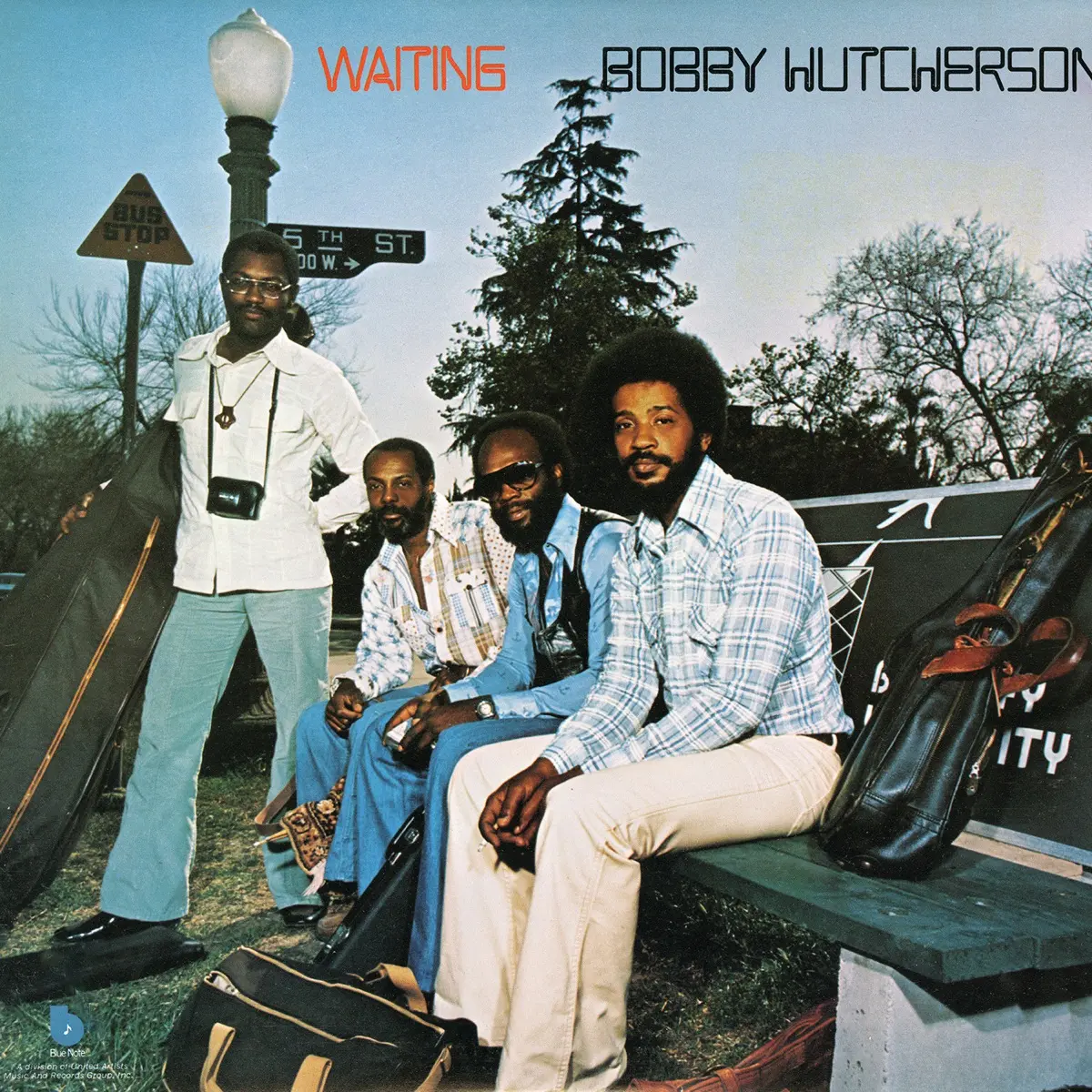 Bobby Hutcherson released his thirteenth studio album, Waiting, in July 1976 on Blue Note.
The View From the Inside
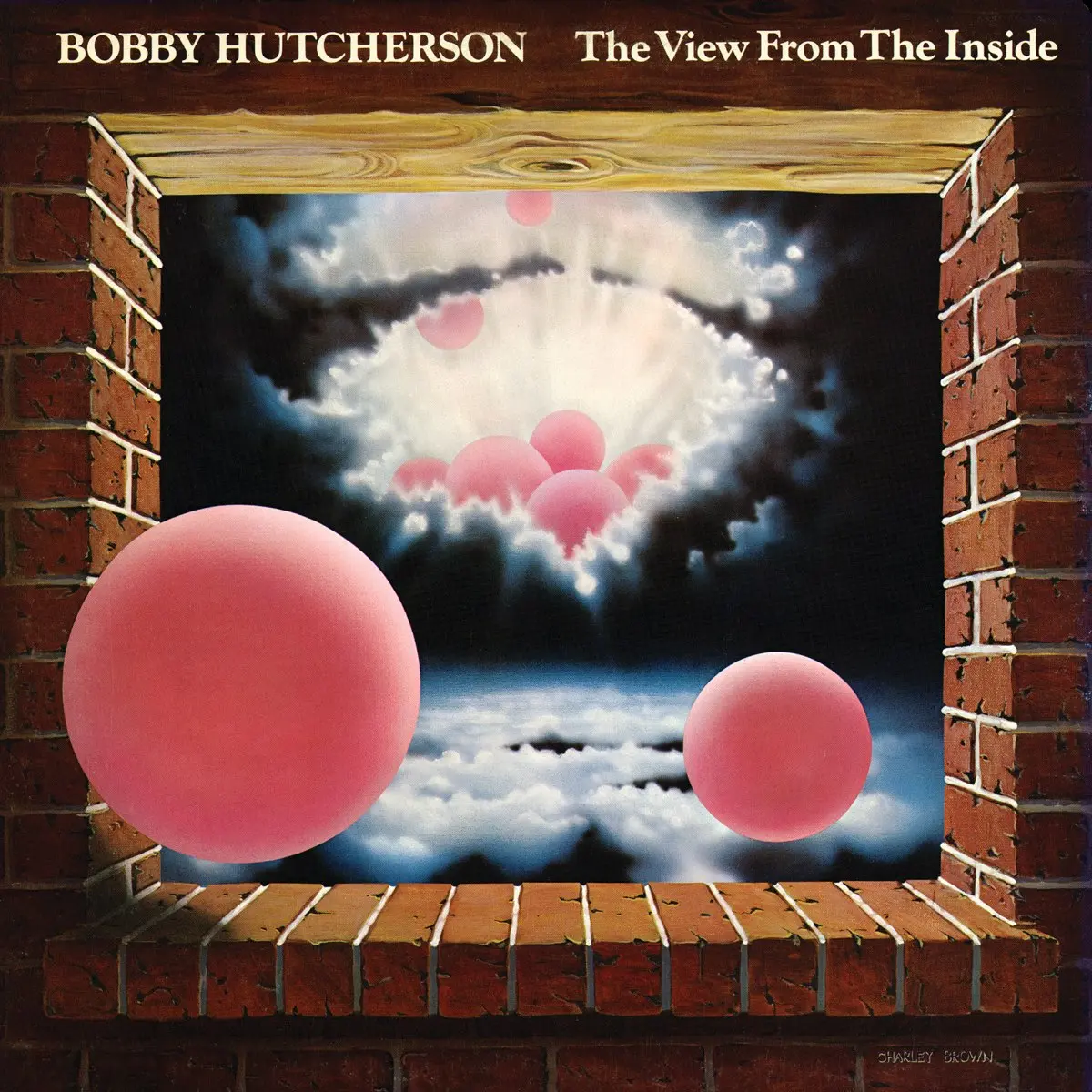 Bobby Hutcherson released his fourteenth studio album, The View From the Inside, in early 1977 on Blue Note.
Knucklebean
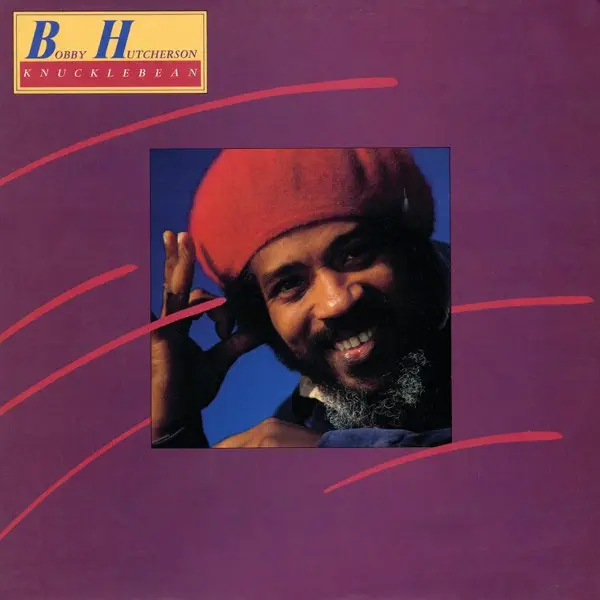 Bobby Hutcherson released his fifteenth studio album, Knucklebean, in October 1977 on Blue Note.
Highway One
Bobby Hutcherson released his sixteenth studio album, Highway One, in 1978 on Columbia.
Oblique [archival]
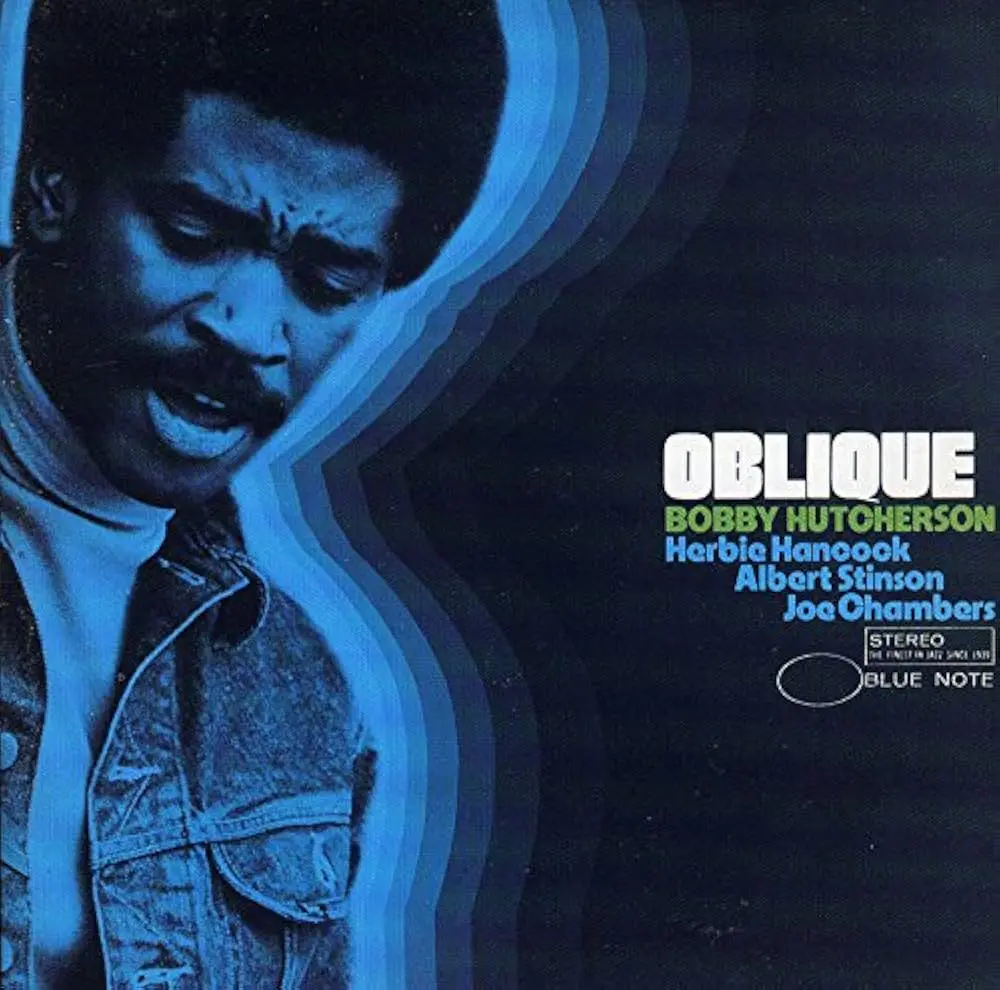 In 1979, Blue Note Japan issued Oblique, an unearthed Hutcherson set from July 21, 1967, at Van Gelder.
Conception: The Gift of Love (1979)
Spiral [archival] (1979)
Inner Glow (1980)
Medina [archival] (1980)
Un Poco Loco
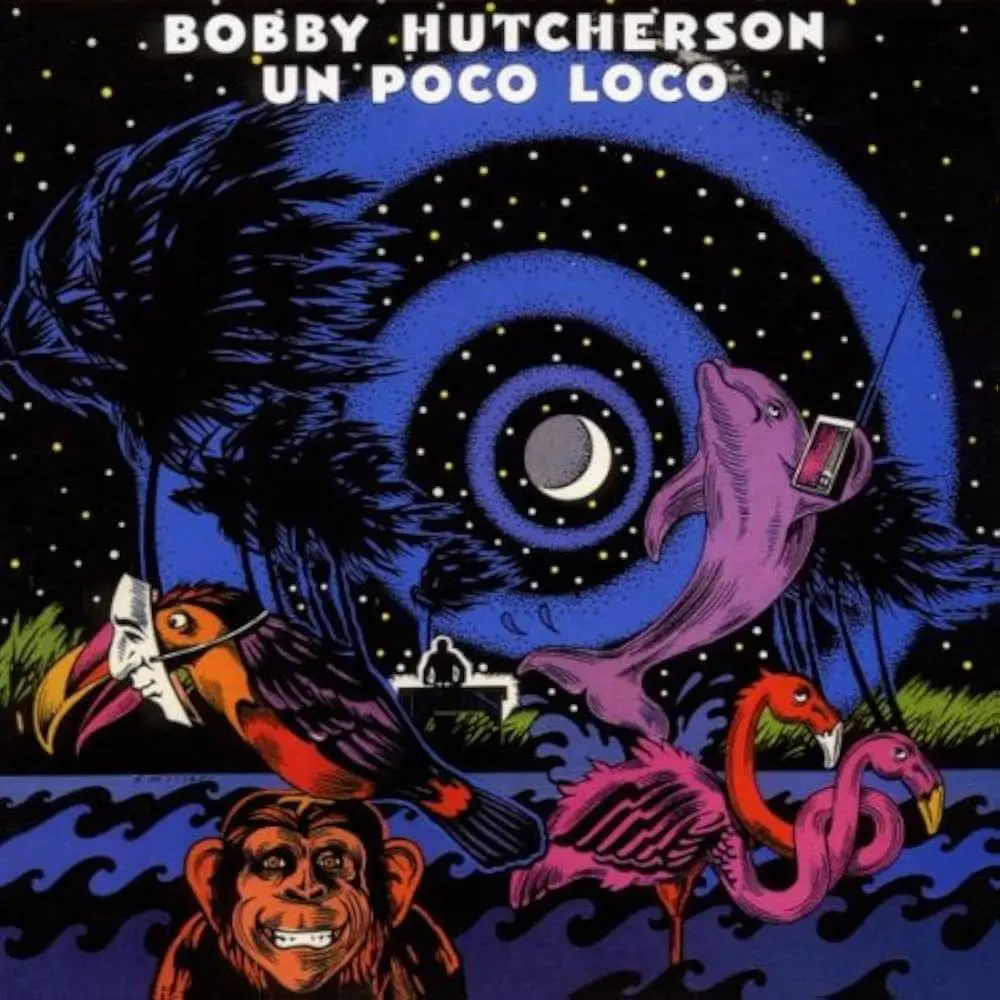 Bobby Hutcherson released his eighteenth studio album, Un Poco Loco, in April 1980 on Columbia.
Patterns
 In May 1980, Blue Note issued Patterns, an unearthed Bobby Hutcherson set from March 14, 1968, at Van Gelder.
Discography:
- Dialogue (1965)
- Components (1966)
- Happenings (1967)
- Stick-Up! (1968)
- Total Eclipse (1969)
- Now! (1970)
- San Francisco (1971)
- Head On (1971)
- Natural Illusions (1972)
- Cirrus (1974)
- Live at Montreux [Cookin’ With Blue Note at Montreux Series] (1974)
- Live at the Festival (Recorded Live at Ljubljana) (1974)
- Linger Lane (1975)
- Montara (1975)
- Waiting (1976)
- The View From the Inside (1977)
- Knucklebean (1977)
- Highway One (1978)
- Oblique [archival] (1979)
- Conception: The Gift of Love (1979)
- Spiral [archival] (1979)
- Inner Glow (1980)
- Medina [archival] (1980)
- Un Poco Loco (1980)
- Patterns [archival] (1980)
- Solo/Quartet (1982)
- Four Seasons (1985)
- Good Bait (1985)
- Color Schemes (1986)
- Cruisin’ the ‘Bird (1988)
- Ambos Mundos (1989)
- Mirage (1991)
- Manhattan Moods (1994 • McCoy Tyner & Bobby Hutcherson)
- Acoustic Masters II (1994 • Bobby Hutcherson, Craig Handy, Lenny White, Jerry Gonzalez)
- Skyline (1999)
- The Kicker [archival] (1999)
Sources:
- Discogs: Bobby Hutcherson
- JazzMusicArchives: Bobby Hutcherson
- RYM: Bobby Hutcherson
- MusicBrainz: Bobby Hutcherson
Artist/Album Pages:
Libby Titus (1947–2024) was an American singer from Woodstock, NY, who released a self-titled albu...
Blossom Toes were an English psych-rock band that released the 1967–69 albums We Are Ever So Clean a...
Chain was an Australian revolving-door blues-rock band that released two live and two studio album...
Etna was an Italian jazz-rock band that evolved from symphonic/hard-rockers Flea, releasing a self...
Itoiz was a Spanish symphonic-folk band from the Basque coastal towns of Mutriku and Ondarroa that...
Om was a Swiss avant-jazz quartet that debuted with a 1975 half-live/half-studio album on Indian R...
Ométaxalia et Bucchi were a French avant-garde/chanson duo that released the 1977 double-album Let...
Larsen-Feiten Band were an American jazz-pop band that released a self-titled album on Warner Bros...
Yumi Matsutoya — 松任谷由実 (born Jan. 19, 1954) — is a Japanese art-pop singer/songwriter who released...
Quantum Jump was an English supergroup that fused jazz-funk and space-rock on their 1976–77 albums Q...
The Motors were an English rock band from London, formed by Ducks Deluxe alumni Nick Garvey and A...
Freeport was a German jazz-rock band behind the 1980–83 albums Duanelessness and Alternating Curre...