

You was the German electro/space-rock band behind the 1980 album Electric Day, followed by the 1982–84 Rock City titles Time Code and Wonders From the Genetic Factory. Their final album, Laserscape, appeared in 1986 on Racket.
Members: Ulrich Weber (guitar, gongs), Udo Hanten (synthesizer, loops), Albin Meskes (synthesizer, sequencer, Mellotron), Lhan Gopal [Harald Grosskopf] (drums, percussion, synthesizer)
Inception
You formed in Krefeld in 1978 during sessions for the intended debut solo album of synthesist Udo Hanten, who hired guitarist Ulrich Weber for the project and decided to make it a band effort. They recorded their first album with drummer Lhan Gopal, better known as Harald Grosskopf, an original Wallenstein member and recent Klaus Schulze sideman and Ashra auxiliary.
Electric Day
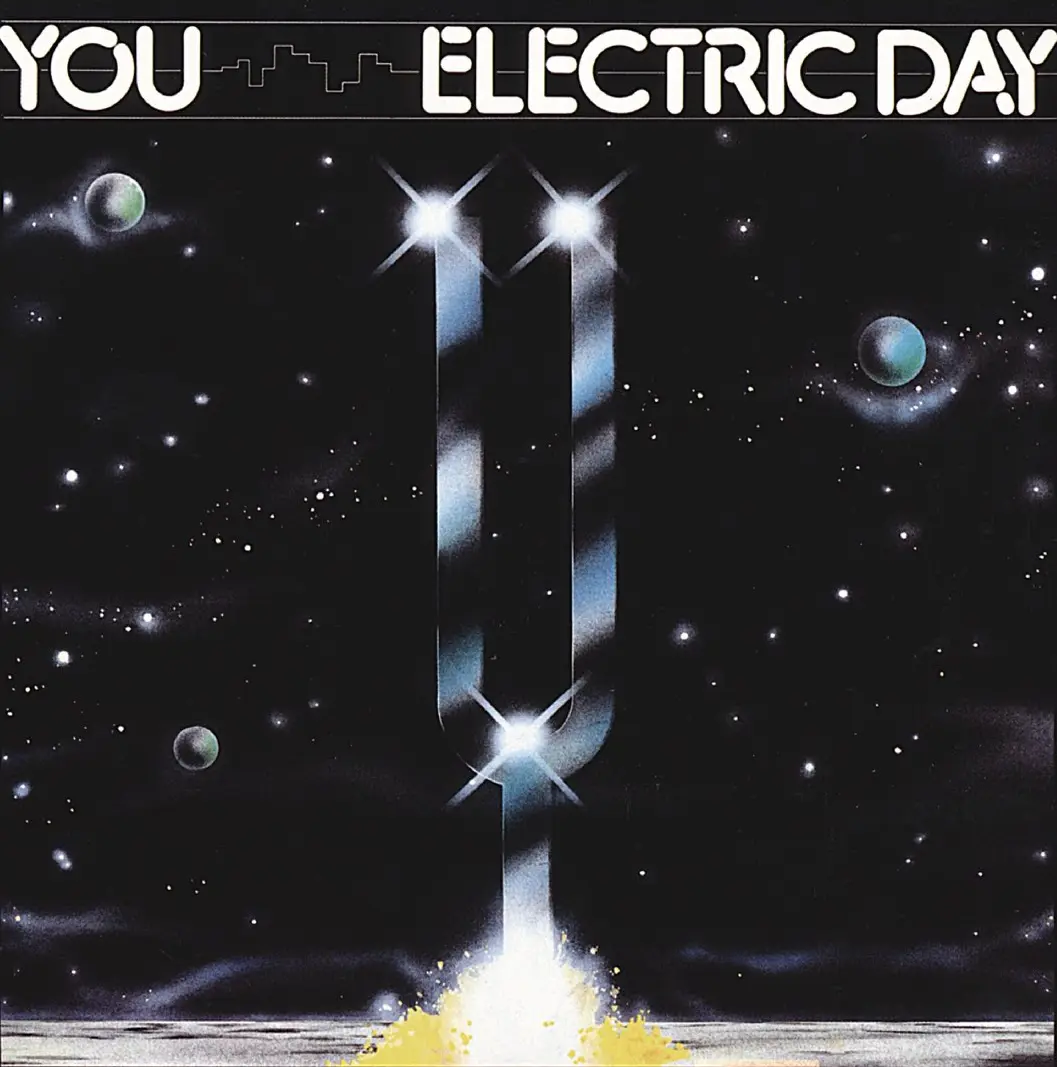 You released their debut album, Electric Day, in May 1980 on Cain Records.
The album centers on tightly sequenced synthesizer patterns and interwoven electronic layers guided by the loopboards of Udo Hanten and sequencer arrangements of Albin Meskes. Guitarist Ulrich Weber contributes distorted lines and electronic treatments that interlock with the percussive overlays and synthetic timbres of Lhan Gopal, who anchors the material with cyclical drum figures and auxiliary textures. Meskes and Hanten trade synthetic foregrounds in active contrast while Gopal and Weber shape the underpinning momentum across the longer pieces.
Electric Day runs on locked sequencer cycles that shift in density while cymbal flashes, synthetic gusts, and treated tones widen the stereo field. “Electric Day” sets the template with a rapid, almost breathless loop rate over a drifting backdrop, then “Magooba” pivots to harsher guitar intrusions—short, hit-and-run bursts that keep scraping the surface even as the phrasing loosens after the two-minute mark. “Son of a True Star” slows the attack into a more repetitive forward push, with the drums reinforcing the pulse while mournful synth layers swell into the upper register.
The two “Sequential Spectrums” fragments suspend the motion into low-speed drone space, which makes “Slow Go” land harder: warm Mellotron haze arrives early, then yields to a longer build where acoustic drumming and sequencers take over the momentum before guitar starts cutting across the texture late in the piece. “Zero-Eighty-Four” closes in a more experimental frame—spacey, strange sonorities at the start, a beat snapping into place, then guitar noise and added low-end depth stacking more and more moving parts into the final stretch.
A1. “Electric Day” (5:51)
A2. “Magooba” (6:30)
A3. “Son of a True Star” (5:03)
A4. “Sequential Spectrums Part 1” (2:01)
B1. “Sequential Spectrums Part 2” (0:45)
B2. “Slow Go” (11:56)
B3. “Zero-Eighty-Four” (8:36)
Sessions took place at Spiegeltraum Studio and Panne-Paulsen Studios with engineer Eberhard Panne. Hanten co-mixed the album with Grosskopf and fellow members Gopal and Meskes at Panne-Paulsen in Frankfurt. Cain issued the album through Deutsche Austrophon and pressed it via Pallas. Procom-Musik published the material.
“Scanner”
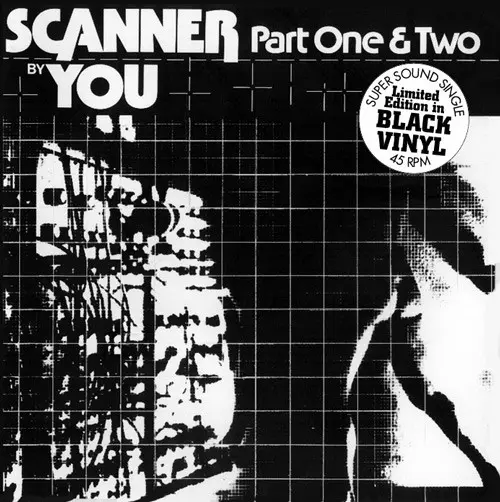 In 1981, You released a 12″ standalone single featuring the two-part composition “Scanner.” Both segments unfold over four-minute runtimes, built from compact sequencer loops and layered synth textures by Albin Meskes and Udo Hanten.
Lhan Gopal anchors the pulse with live drums as Ulrich Weber overlays treated guitar.
A. “Scanner Part 1” (4:04)
B. “Scanner Part 2” (4:02)
Sessions took place at AVC-Studio in Ratingen with engineering by Helmut Brüker and distribution via Sound-Service Bellaphon International.
Time Code
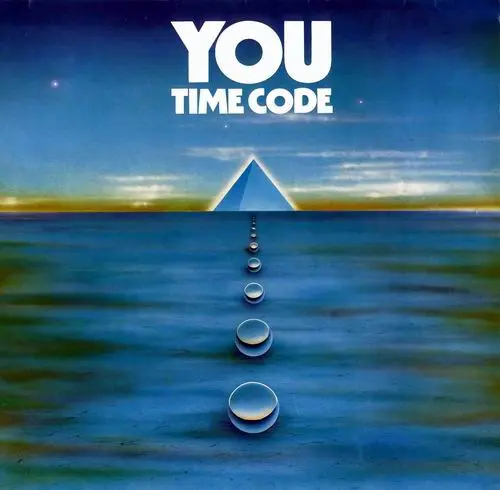 You released their second album, Time Code, in May 1982 on Rock City.
The album expands on the group’s layered sequencer aesthetic with denser modulation and rapid alternations between analog textures and digital programming. Albin Meskes operates Prophet and Moog systems in contrapuntal exchanges with loopboard manipulator Udo Hanten, while guitarist Ulrich Weber overlays sustained lines and metallic voicings in dialog with the electronic circuitry. Their interaction flows across synthetic waves and rhythmic pulses drawn from modular sync patterns.
“Time Code” and “Future/Past” run on clipped, synthetic rhythms and rigid patterns that keep the surface cool and mechanical, then letting the second track drift into a softer, dreamy fade. “20/11/28” and “Deep Range” slow the motion into wider, suspended passages, favoring spaced-out tones and meditative pacing, while “Taurus-Fantasia” pivots into oriental-leaning phrasing built from older-sounding electronic colors. Side B moves between calm reset points and accelerated sequencer surges, peaking with “Live Line,” which stretches the format into a multi-section piece with clear shifts in density and intensity. The Bureau B edition’s closer “Zone Black” ends in hushed, shadowed ambience, keeping the final minutes sparse, mysterious, and spatial.
A1. “Time Code” (3:19)
A2. “Future/Past” (5:30)
A3. “20/11/28” (6:22)
A4. “Deep Range” (3:11)
A5. “Taurus-Fantasia” (2:34)
B1. “Metallique” (3:38)
B2. “Live Line” (9:04)
B3. “Bluewater Dream” (2:11)
B4. “Mission: Possible” (5:13)
Sessions took place in 1982 at YOU-Studios with mixing completed in February 1983 at MTK by Hanten, Meskes, and engineer Bardo Kox. The duo employed a full analog-digital rig including Memorymoog, Prophet-5, Prophet-10, Minimoog, Micromoog, Moog Model 15, Novatron 400 SM, ARP Sequencer, Spacemaster systems, and SRV 66 vocoder. Deutsche Austrophon handled distribution.
Later CD editions on CUE Records (1996) and Bureau B (2011) added two bonus tracks from the same period: “Controlled Demolition” (4:06) and “Zone Black” (6:03).
Wonders From the Genetic Factory
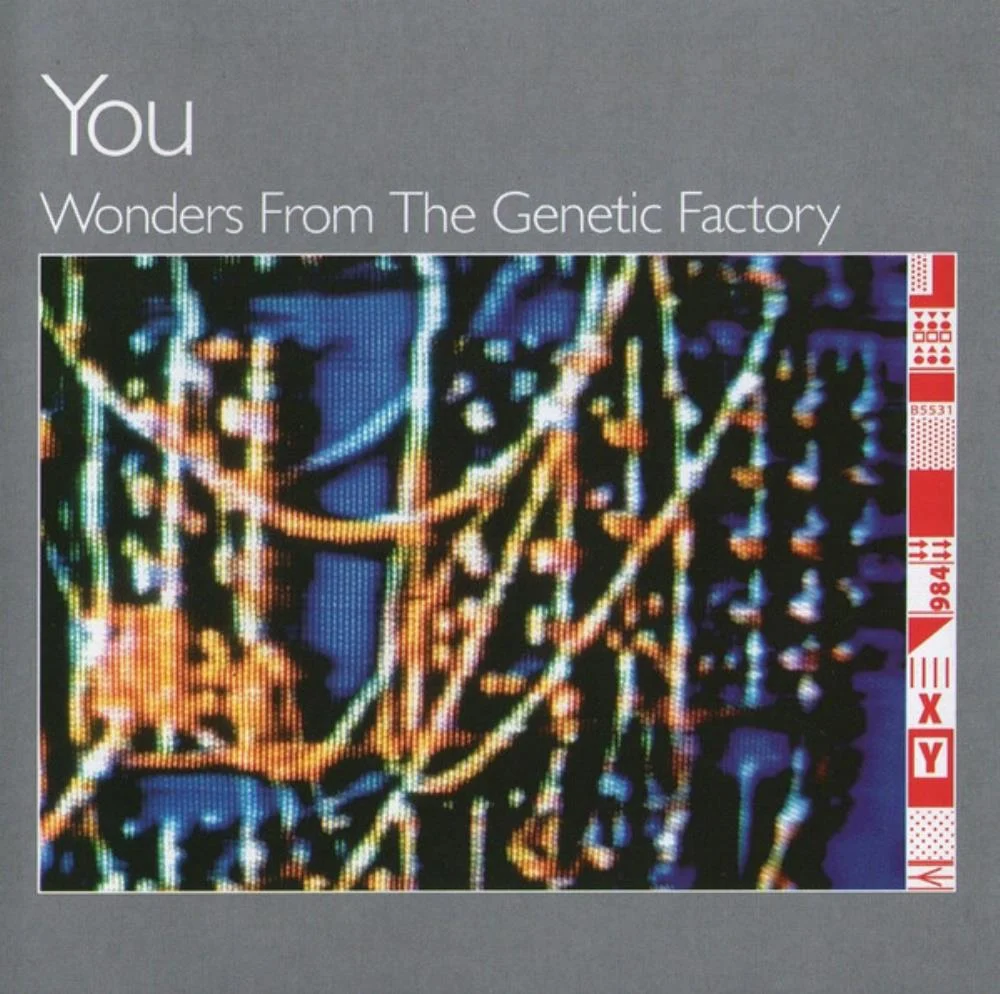 You released their third album, Wonders From the Genetic Factory, in 1984 on Rock City.
The album intensifies their synthetic architecture with digital samplers and rhythm computer sequences woven into shifting modular layers. Synthesist Albin Meskes drives structural dynamics with Prophet and Oberheim systems, reacting in real time to loop and event manipulations by Udo Hanten. Guest guitarist Michael Dommers injects distorted phrasing on “Isotopic Moments,” sparring with layered oscillator swells. Electronic pulses generated by the Böhm rhythm computer and MFB 601 form the programmatic underpin from which all motifs expand.
Musically, Wonders From the Genetic Factory alternates between tight sequence-driven sections and broader, multi-part structures. “Axis” opens with clipped pacing and synthetic stabs; “Isotopic Moments” slows the frame, layering guitar phrases over steady signal patterns. “Europe Transfer” pairs clean pulse arrays with sustained tonal washes, while “Future Generation” narrows into rigid, machine-paced repetition. The 24-minute “Yourovision” shifts between sparse stretches and denser, loop-based passages, combining slow-rising textures, rhythm resets, and intermittent Mellotron voicings that reappear at transitional points.
A1. “Axis” (6:02)
A2. “Isotopic Moments” (5:52)
A3. “Europe Transfer” (4:29)
A4. “Future Generation” (3:16)
A5. “Sampling Dance” (2:16)
B. “Yourovision” (24:15)
Sessions ran from December 1983 to January 1984 at YOU Studio. Hanten and Meskes composed, arranged, programmed, produced, and engineered the material using a battery of analog and digital hardware including the Memorymoog, SCI Prophet-5, Minimoog, Oberheim Xpander, ARP Sequencer, Böhm SynLab and Digital Drums, Spacemaster modular and event systems, Novatron 400, Doepfer Sound Sampler, Aphex Aural Exciter, and Quantec QRS reverb processor.
Eberhard Panne handled the final mix and digital mastering. Udo Hanten supplied video graphics, Christine Otto contributed the back cover photograph, and Albin Meskes handled tinting.
Also in 1984, Udo Hanten mixed and performed on Zenamon, the debut album by Bolivian new age musician Jaime M. Zenamon.
Laserscape
 You released their fourth album, Laserscape, in 1986 on Racket.
The album emphasizes longer-form abstraction, pairing shifting modular pulses with acoustic overlays and atmospheric spatial design. Albin Meskes and Udo Hanten handle synth duties with overlapping sequences and timbral alternation, while guest multi-instrumentalist Jaime M. Zenamon injects acoustic guitar and keyboard textures in tandem with Klaus Gertken’s tonal piano voicings. Synth-generated rhythms, fed through Böhm digital patterns and triggered pulse events, form a circulating anchor beneath the unfolding layers.
Laserscape moves through suspended tones, low-motion patterns, and intermittent surges shaped for open-air performance. “Passing Landscapes” opens with soft pressure and layered sustain, while “Can You Tell Me Where I Am” uses a rigid sequencer line with sharp turns and anchored drum pulses that push against a drifting upper register. “Travelling Hologram” stretches out with distant string phrases and slow dynamic shifts, and “Scanned Noises” contrasts fine acoustic picking with underlying synthetic unease. “Curious Phenomena” unfolds in two sections, the first centered on static pulse figures, the second on long-spaced timbres that dissolve without resolution.
A1. “Passing Landscapes” (6:17)
A2. “Can You Tell Me Where I Am” (5:22)
A3. “Changing Rooms” (13:07)
B1. “Travelling Hologram” (9:22)
B2. “Scanned Noises” (6:37)
B3. “Curious Phenomena Part I” (5:30)
B4. “Curious Phenomena Part II” (4:48)
Meskes and Hanten recorded and mixed the album between November 1985 and February 1986 at YOU Studio and ACA. They produced, engineered, and performed all primary electronic parts using Prophet, Moog, Spacemaster, ARP, Novatron, and Böhm systems, enhanced by Aphex and Quantec processors. Schallplattenfabrik Pallas pressed the vinyl for Deutsche Austrophon. Albin Meskes designed the sleeve and handled color tinting, with back cover photography by Christine Otto.
Discography:
- Electric Day (1980)
- “Scanner (Part One)” / “Scanner (Part Two)” (12″, 1981)
- Time Code (1982)
- Wonders From the Genetic Factory (1984)
- Laserscape (1986)
Sources:
Artist/Album Pages:
Nirgal Vallis was a Mexican symphonic-rock band that partook in a 1984 split album with electronic...
The Blue Nile was a Scottish art-pop/sophisti-pop trio that released four albums at lengthy interv...
Swingers were a Kiwi new wave band that released the 1981 album Practical Jokers. Their single “Coun...
Takayuki Inoue — 井上堯之 (March 15, 1941 — May 2, 2018) — was a Japanese guitarist who emerged in the...
Kayak was a Dutch art-pop band that released eight albums between 1973 and 1981 on EMI and Vertigo...
The Slits were an all-female English post-punk combo that made the 1979 album Cut on Island/Antill...
Harmonia was a German Krautrock trio that released the 1974–75 albums Musik von Harmonia and Deluxe ...
Michael Henderson (July 7, 1951 – July 19, 2022) was an American R&B bassist, vocalist, songwr...
Anna Själv Tredje was a Swedish electronic duo that released the popular album Tussilago Fanfara o...
Kamæleon was a Danish jazz-rock band behind the 1978–80 Amar albums Kamiæleon and Svajende Siv. ...
Hambi & the Dance were an English new wave band from Liverpool behind the 1982 Virgin album He...
Abissi Infiniti was an Italian symphonic-rock band behind the 1981 album Tunnel on Knights Records...