

Tasavallan Presidentti was a Finnish psychedelic jazz-rock band that released four albums and a collaborative work on Love and Sonet between 1969 and 1974.
Members: Jukka Tolonen (guitar, piano), Frank Robson (vocals, keyboards, 1969-72, 1983-present), Vesa Aaltonen (drums, percussion), Måns Groundstroem (bass, keyboards, 1969-72, 1983-2002), Juhani Aaltonen (saxophone, flute, 1969-70, 1983-present), Pekka Pöyry (saxophone, flute, piano, 1970-74), Eero Raittinen (vocals, 1972-74, 1995, 2000), Heikki Virtanen (bass, 1972-74, 2002-present), Esa Kotilainen (keyboards, 1974, 1990, 1995)
Background
Tasavallan Presidentti formed in 1969 when guitarist Jukka Tolonen and drummer Vesa Aaltonen teamed with singer Frank Robson and bassist Måns Groundstroem.
Tololen (b. 1952) first recorded with beatsters Arto Sotavalta and the Rogues, which cut three singles on Scandia in 1967. Aaltonen (b. 1950) was in the pop combo Caj Incorporated, which cut a 1968 single on Sonet.
Groundstroem (b. 1949) hailed from Blues Section, which released a self-titled album on Love Records in 1967. After their original singer Jim Pembroke left to form Wigwam, Blues Section cut a 1968 single with his replacement, Robson (b. 1946).
The original lineup of Tasavallan Presidentti was completed by veteran saxophonist Juhani Aaltonen (b. 1935), most recently of the R&B band Soulset.
Tasavallan Presidentti (1969)
 Tasavallan Presidentti released their self-titled debut album in December 1969 on Love Records.
The album blends early progressive rock structures with jazz-informed textures and blues-inflected songwriting. Keyboardist Frank Robson handles vocals on nine tracks and plays piano, organ, and electric piano. Guitarist Jukka Tolonen alternates between electric and acoustic guitars and plays grand piano on select pieces. Juhani “Junnu” Aaltonen contributes flute, soprano, and tenor saxophones across both ensemble and solo passages. Måns Groundstroem plays bass on every track and adds electric piano and organ in key arrangements. Drummer Vesa Aaltonen rounds out the lineup with dynamic rhythmic phrasing and a variety of percussion.
Robson wrote most of the lyrics and composed four songs outright, including the swinging “Who’s Free,” the laid-back “Drinking,” and the closing pair “Woman of the World” and “Roll Over Yourself.” He also co-wrote the opening suite “Introduction / You’ll Be Back for More,” which begins with a Groundstroem instrumental overture before shifting into vocal territory. Groundstroem composed three additional instrumentals: “Crazy Thing No. 1,” “Wutu-Banale,” and the Bach-referencing miniature “Crazy Thing No. 2.” Tolonen’s instrumental “Thinking Back” concludes the album with clean electric lines and melodic arpeggios. “Obsolete Machine” and “Driving Through” appear as full band compositions.
Tasavallan Presidentti shifts between jagged, riff-driven rockers, fragmented instrumental sketches, and ballads with slow pulse and sparse voicing. “You’ll Be Back for More” sets the tone with a compact, angular riff under Frank Robson’s blues-inflected vocals, offset by flute and organ ornamentation. “Obsolete Machine” and “Who’s Free” sustain a tense, syncopated drive with hard-blues phrasing and modal flute leads. “I Love You Teddy Bear” interrupts the pacing with a soft, slow ballad scored with wistful flute and sustained electric piano. “Drinking” returns to mid-tempo rock, shaped by brash lyrical declarations and spotlight turns from flute and guitar.
Both “Crazy Thing No. 1” and “No. 2” function as dissonant interludes, splitting the album into suites. “Driving Through” locks into a straight-ahead rhythm built around percussive bass, brisk organ stabs, and rising dynamics. “Ancient Mariner” veers into spoken-word narration over sparse, atonal textures, before the album resolves with “Wutu-Banale,” a sustained, contemplative instrumental that builds gently from flute and cymbal wash into a hovering, delayed electric guitar figure. The closing “Thinking Back” contrasts entirely with what precedes it—Tolonen’s solo piano piece, steeped in romantic voicing and naturalistic ambient sounds, breaks the pattern with subdued finality.
A1. “Introduction / You’ll Be Back for More” (6:17)
A2. “Obsolete Machine” (3:54)
A3. “Who’s Free” (3:29)
A4. “I Love You Teddy Bear” (3:40)
A5. “Crazy Thing, No. 1” (0:45)
A6. “Drinking” (3:15)
B1. “Crazy Thing, No. 2” (0:15)
B2. “Driving Through” (4:32)
B3. “Ancient Mariner” (3:26)
B4. “Wutu-Banale” (6:38)
B5. “Woman of the World” (2:54)
B6. “Roll Over Yourself” (2:27)
B7. “Thinking Back” (3:02)
The album favors spontaneous transitions and abrupt tonal shifts, with few reprises or structural arcs, but its strongest material uses rhythmic force and layered counterpoint to offset the more uneven or experimental detours.
Sessions took place in October 1969 at Finnvox Studios in Helsinki with engineering by Erkki Hyvönen. Production was jointly handled by Otto Donner and Måns Groundstroem, the latter assuming key creative duties due to Donner’s limited availability. Album artwork features a painted front cover by Ulla Groundstroem and back-cover photography by Veikko Vatanen.
The single “Time Alone with You” backed with “Obsolete Machine” appeared in November 1969, concurrent with the album’s promotion. The band issued a second single, “Solitary” backed with “Deep Thinker,” in early 1970. Both were later appended to various CD and vinyl reissues, including the 1990 and 2003 editions. Saxophonist/flutist Junnu Aaltonen left the group shortly after the album’s release and was replaced by Pekka Pöyry. Tasavallan Presidentti performed at the inaugural Ruisrock festival in August 1970.
Magneettimiehen Kuolema
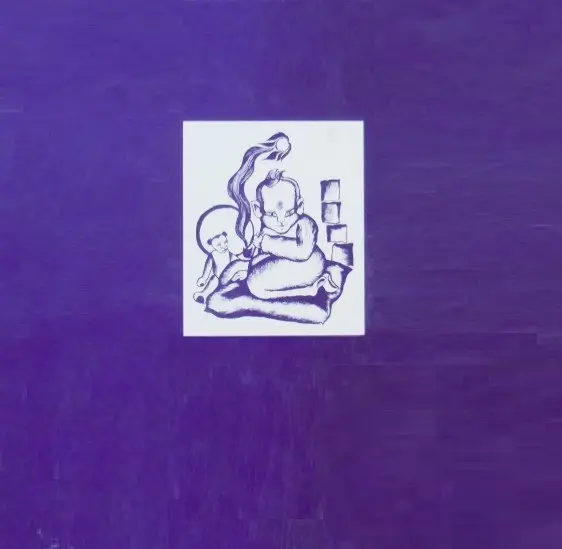 Tasavallan Presidentti collaborated with singer/songwriter Pekka Streng on Magneettimiehen Kuolema, released in December 1970 on Love.
Streng handles all vocals and plays acoustic guitar throughout the album. Guitarist Jukka Tolonen alternates between electric guitar and piano, while bandleader Måns Groundstroem contributes bass and piano. Pekka Pöyry performs tenor saxophone and flute. Esko Rosnell and Vesa Aaltonen split drumming duties and add auxiliary percussion including bongos and tabla. Károly Garam plays cello on selected tracks.
Streng composed all music and lyrics except “Laulu hyönteisestä joka nukahti ruusun vuoteeseen,” a Finnish adaptation of a text by Eeva-Liisa Manner. Side A combines concise surrealist vignettes and symbolic narratives. “Gilgames” adapts the Mesopotamian epic, while “Kylmä kaupunki,” “Olen erilainen,” and “Pitkä kieli” feature abstract meditations on identity and language. “Makea Sandra” presents a whimsical character sketch, followed by a brief tone poem based on Manner’s verse. Side B begins with the modal ebb and flow of “Takaisin virtaan” and continues with animal-persona musings in “Olen eläin” and “Ahnehtiva kud.” “Olen väsynyt” is a short lament, leading into the album’s best-known piece, “Sisältäni portin löysin,” which features echo-processed vocals and internal metaphysical imagery.
A1. “Gilgames” [Gilgamesh] (1:58)
A2. “Kylmä kaupunki” [Cold City] (3:07)
A3. “Olen erilainen” [I Am Different] (3:43)
A4. “Pitkä kieli” [Long Tongue] (4:26)
A5. “Makea Sandra” [Sweet Sandra] (3:18)
A6. “Laulu hyönteisestä joka nukahti ruusun vuoteeseen” [Song of the Insect That Fell Asleep on a Rose Bed] (1:48)
B1. “Takaisin virtaan” [Back to the Stream] (7:07)
B2. “Olen eläin” [I Am an Animal] (3:04)
B3. “Ahnehtiva kud” [Greedy Kud] (2:49)
B4. “Olen väsynyt” [I Am Tired] (2:00)
B5. “Sisältäni portin löysin” [I Found a Gate Inside Me] (5:06)
Sessions took place at Finnvox Studios in 1970 with engineering by Erkki Hyvönen. Måns Groundstroem produced the album. The cover painting was done by Streng’s sister Sonja. A 2003 CD reissue on Love Records included three bonus tracks, including early demo versions and recordings from a 1969 Yleisradio broadcast arranged by Soulset.
Although issued with little fanfare and receiving limited attention at the time, Magneettimiehen kuolema later acquired historical significance for its lyrical introspection, minimal jazz–folk arrangements, and its association with Streng’s terminal illness, which he temporarily outlived. Later covers of “Sisältäni portin löysin” appeared by Tasavallan Presidentti (with Eero Raittinen), Matti Salminen, and Vesa-Matti Loiri. The album was reissued on vinyl multiple times, including a 2019 numbered pressing by Ainoa Productions.
Tasavallan Presidentti (1971)
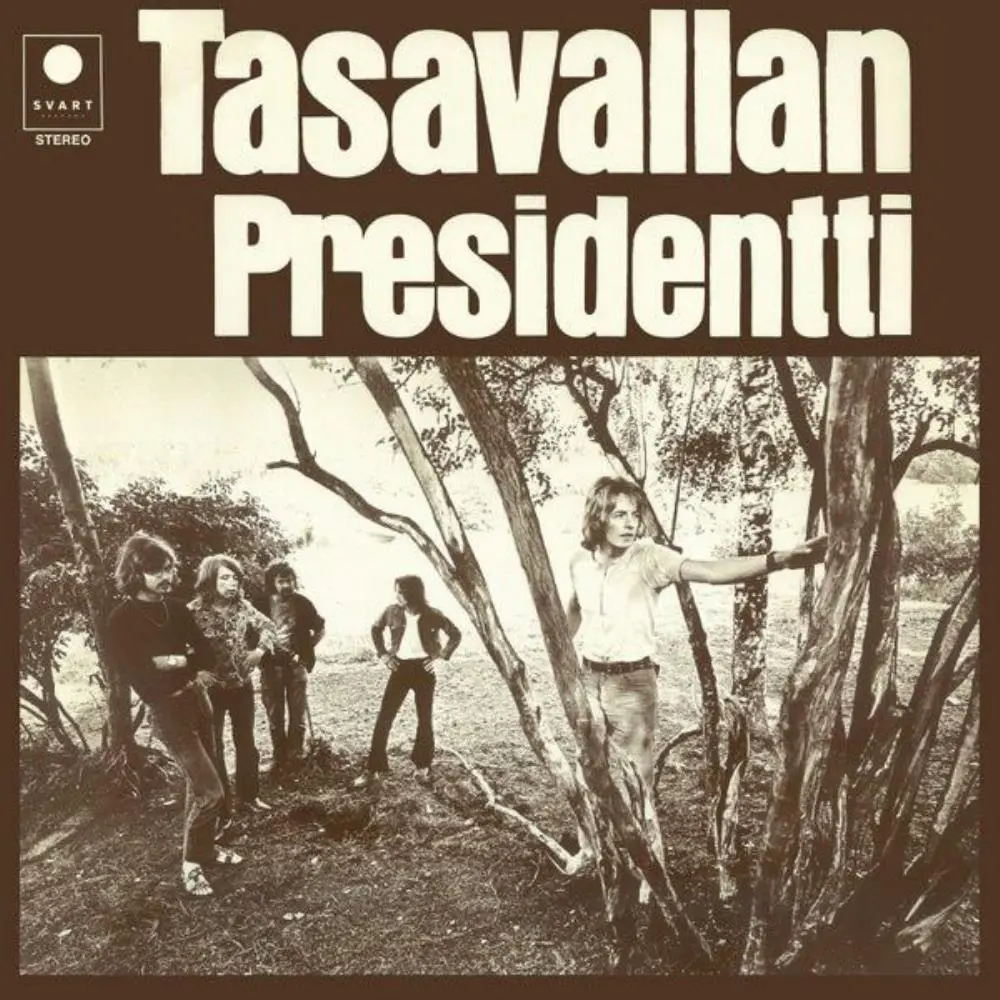 Tasavallan Presidentti released their self-titled third album in May 1971 on EMI. To distinguish from their eponymous 1969 debut, this album is colloquially referred to as Tasavallan Presidentti II.
The album introduces the quintet’s revised lineup with reedist Pekka Pöyry (saxophone, flute), who joins singer/organist Frank Robson, guitarist Jukka Tolonen, bassist Måns Groundstroem, and drummer Vesa Aaltonen.
The material draws from individual and collective authorship. “Introduction,” “Sinking,” and “Tell Me More” are full-band compositions with longform instrumental sections. “Deep Thinker” and “Struggling for Freedom” derive from Tolonen–Groundstroem frameworks with Robson lyrics. “I Love You Teddy Bear” appears here in a shorter remake of the earlier version, driven by Groundstroem’s melodic motifs. “Tis Me Tis You” and “Weather Brightly” are compact vocal tracks with lyrical introspection. “I’m Going Home Once Again” sets Robson’s reflections to a Groundstroem arrangement.
Tasavallan Presidentti II pivots between brisk, riff-centered instrumentals, flute-inflected passages, and vocal tracks that alternate between punchy rock motion and slower, balladic drift. “Introduction” bursts in with taut rhythmic drive, shifting meters, and fast-cut saxophone and guitar phrases that signal the band’s tight interplay. “Deep Thinker” follows with staggered pacing, organ swells, and flute lines that trail the vocal melody before spiraling out in the instrumental breaks. “Tease Me, Tease Me” moves at an unsettled mid-tempo, pushed forward by percussion flares and abrupt vocal phrasing. “Sinking” stretches to seven minutes with flattened tempo and open phrasing—flute, hand percussion, and modal guitar outlines give it a suspended, raga-like atmosphere.
“Weather Brightly” pivots between clipped unisons and looser phrasing, layering brass and guitar against offset vocals. “Struggling for Freedom” slows the pace further, its ballad form punctuated by layered horns and delayed electric guitar lines. The two slowest songs—“I Love You Teddy Bear” and “I’m Going Home Once Again”—shift to subdued pulse, with sparse accompaniment, stepwise melodies, and chord cycles that lean toward sentimental phrasing. The album closes on “Tell Me More,” which restarts the forward momentum with descending riff patterns, sax stabs, and phrasing that breaks the beat with syncopated bursts. The album alternates restraint and urgency but never settles into repetition, often breaking flow in favor of tonal and dynamic contrast.
A1. “Introduction” (4:00)
A2. “Deep Thinker” (2:30)
A3. “I Love You Teddy Bear” (2:50)
A4. “Struggling for Freedom” (4:40)
A5. “Tis Me Tis You” (1:54)
B1. “Weather Brightly” (3:15)
B2. “Sinking” (6:58)
B3. “I’m Going Home Once Again” (3:58)
B4. “Tell Me More” (3:47)
Sessions occurred in August 1970 at Metronome Studios in Stockholm, engineered by Swedish staff and produced by Bob Azzam. The sessions were arranged through Barclay Records after Azzam discovered the band performing in Helsinki. He selected “I Love You Teddy Bear” as the focal track and facilitated the group’s deal with Swedish EMI. Despite international ambitions, the album was delayed several months and received limited promotion. Domestic reception was minimal, but the band leveraged the album’s release to gain access to the Scandinavian live circuit via the EMA Telstar agency.
Following the release, Tasavallan Presidentti toured Sweden in summer 1971 and appeared at the Ruisrock Festival, where they shared the stage with Jeff Beck. The album’s sessions also marked the first studio work by Tolonen to attract interest abroad; he would release his first solo album, Tolonen!, later that same year.
Lambertland
 Tasavallan Presidentti released their fourth album, Lambertland, in 1972 on Love (Finland) and Sonet.
It marked the band’s first release with vocalist Eero Raittinen, who replaced Frank Robson in March 1972. He joined recent addition Pekka Pöyry and mainstays Jukka Tolonen, Måns Groundstroem, and Vesa Aaltonen.
Pöyry contributed one instrumental, while Tolonen composed the remaining material. Former Wigwam bassist Mats Huldén authored all lyrics and created the surreal cover artwork.
Lambertland opens with the multi-sectional “Lounge,” which snaps into motion with tangled guitar and saxophone interplay over shifting meters, its vocal phrasing tight and rhythmic before falling away to give room for extended instrumental crossfire. The title track begins in restraint, suspended on echoing guitar pulses and hi-hat tick before gradually escalating into clustered unisons and dynamic bursts that flow directly into Pöyry’s “Celebration of the Saved Nine,” where fast, staccato sax figures and darting guitar runs lock into a dense, polyrhythmic matrix.
“The Bargain” rides a steady pulse with clipped, chant-like vocals and layered counterpoint that coalesces mid-track into a brief ascending climax before shifting back into low-register patterns. “Dance” launches with nimble guitar, pulsing bass, and flute lines that coil around the rhythm section in tightly stacked motifs, breaking twice into extended guitar passages that flash before returning to cadence. “Last Quarters” stretches across sections of rising and falling tension—staggered rhythms, tremolo flute, and offset vocals punctuate its open structure.
A1. “Lounge” (8:25)
A2. “Lambertland” (6:59)
A3. “Celebration of the Saved Nine” (3:33)
B1. “The Bargain” (7:17)
B2. “Dance” (5:57)
B3. “Last Quarters” (8:14)
Throughout the album, Tolonen and Pöyry orbit one another in interlocking motifs while the rhythm section rotates through compound meters and sudden tempo collapses. Raittinen’s voice cuts across the complex phrasing with phrased declarations and extended vowel lines, threading through the band’s tightly knotted architecture without softening it.
They recorded the backing tracks in April 1972 at Finnvox Studios, Helsinki, then added vocals the following month at Europafilm Studios in Stockholm. American producer Sam Charters oversaw the sessions. Love Records issued the Finnish release, while Sonet handled distribution in Sweden, the UK, and West Germany.
Following the album’s release, Lambertland entered Finland’s official album chart and peaked at No. 7 in August 1972. It marked the band’s commercial breakthrough and received praise from both Finnish and British press. They later remixed “Dance” in extended form for a 1981 Sonet reissue.
Tasavallan Presidentti embarked on a second UK tour in November, performing at Ronnie Scott’s and the Marquee Club. The band also completed a Nordic tour and issued their only Finnish-language single in October: “Sisältäni portin löysin” backed with “Selvä näkijä.”
Interim
Following the release of Lambertland, Tasavallan Presidentti embarked on their second UK tour in November–December 1972. The three-week tour included approximately twenty shows across clubs and university auditoriums and was advertised in Melody Maker with half-page spreads. The first appearance occurred at a University of Swansea masquerade event, opening for American band Spirit. They returned to London’s Marquee Club—this time supported by a then-unknown Average White Band—and performed at Liverpool’s Cavern Club shortly before its demolition. The band also played select shows in the Netherlands, opening for Focus, and held a weeklong residency at Ronnie Scott’s Jazz Club in London.
Despite strong reception and press coverage, internal tensions grew. The newest material, often structured around complex arrangements and Mats Huldén’s metaphor-heavy lyrics, posed challenges for vocalist Eero Raittinen. Bassist Måns Groundstroem resigned in December 1972, citing creative imbalance and exhaustion. He expressed frustration with Jukka Tolonen’s increasing dominance and departed to focus on family life and a production role at Love Records. Heikki Virtanen, Tolonen’s cousin and former bandmate from Help, assumed the bass role without incident and was coached into the set by Groundstroem.
In 1973, the reconfigured lineup played again at Ruisrock and performed a shortened set at the rain-disrupted Keimola rock festival. They also toured extensively across Sweden, where their following had grown, and played open-air venues on a national parks tour. A scheduled Roskilde Festival appearance was cancelled when Vesa Aaltonen sustained a back injury while waterskiing. The year’s highlight was their set at the Reading Rock Festival in August, which drew 250,000 attendees and was filmed by Finnish broadcaster Yleisradio. A fourth UK tour followed in November 1973.
By year’s end, Tasavallan Presidentti was voted Finland’s top band by both Musa and Suosikki magazines, with Tolonen again selected as the nation’s top musician.
Milky Way Moses
 Tasavallan Presidentti released their fifth album, Milky Way Moses, in April 1974 on Love (Finland), Brain (Germany), Sonet (UK), and Janus (US).
The lineup features Eero Raittinen on vocals, Jukka Tolonen on electric guitar and electric organ, Pekka Pöyry on saxophone, flute, and piano, Heikki Virtanen on bass guitar, and Vesa Aaltonen on drums and percussion. This was the band’s first album without founding bassist Måns Groundstroem and the last with woodwind player Pekka Pöyry. Vocalist Jim Pembroke (Wigwam) contributed all lyrics.
Tolonen composed the opener “Milky Way Moses,” a multi-part suite with vocal and instrumental passages, and the syncopated mid-tempo track “Confusing the Issue.” Pöyry wrote the two closing tracks, including the 13-minute “How to Start a Day,” which builds gradually across shifting motifs and mood changes. “Jelly” was composed collectively and consists of free-form interplay driven by drums and electric keys. “Caught From the Air” adapts Eero Koivistoinen’s “Lennosta kii” with English lyrics by Pembroke and serves as the album’s extended centerpiece.
Milky Way Moses widens Tasavallan Presidentti’s phrasing with lengthened instrumental passages, tighter unison lines, and more confrontational rhythmic motion. The title track opens with clipped chord stabs and driving cymbal patterns, cycling through wah-saturated guitar bursts and alto sax flurries. The chorus lands in suspended phrasing, then breaks into layered exchanges between voice, horn, and guitar that shift in intensity but keep a straight, assertive tempo. “Caught from the Air” stretches over eleven minutes, moving between clustered sax runs, stammered electric piano figures, and sudden breakdowns into minimal motifs before climbing into an overdriven ensemble peak, with vocals interspersed between loosely tethered instrumental sections.
“Jelly” delivers a compact, high-speed instrumental framed by tight bass patterns and staggered accents, allowing rapid thematic turns without settling into repetition. “Confusing the Issue” introduces angular phrasing with sudden voice interjections and fragmented instrumental interludes; guitar lines emerge and collapse around rhythmic distortions. “How to Start a Day” opens with a sparse, hovering introduction before locking into a circular bass line and flute-driven passages that rise into a jagged, percussion-heavy central section. The closing “Piece of Mind” pares things back to a moderate tempo and open spacing, emphasizing contour over density. While each track sustains its own structural logic, the album hinges on rhythmic variation, delayed resolutions, and unexpected shifts between solo-driven sections and block-unit ensemble phrasing.
A1. “Milky Way Moses” (8:19)
A2. “Caught From the Air” (11:44)
A3. “Jelly” (3:34)
B1. “Confusing the Issue” (5:43)
B2. “How to Start a Day” (13:46)
B3. “Piece of Mind” (4:00)
Sessions occurred in August and September 1973 at De Lane Lea Studios in London with British producer Peter Eden. The album’s release was delayed until spring 1974. Criticism centered on Pembroke’s translated lyrics, which Eden offered to rewrite—a suggestion the band declined. Despite muted reception in the UK, the album reached No. 12 on Finland’s national album chart.
The band toured the UK in April–May 1974 on a joint outing with Wigwam, including a second appearance on The Old Grey Whistle Test. For this tour, keyboardist Esa Kotilainen replaced Pöyry, who had withdrawn due to health issues. The tour was marked by low attendance, logistical problems, and internal strain. The group disbanded after participating in the Nordic Så i Norden tour in August 1974, having lost momentum and cohesion. Plans for a potential US tour were abandoned. Raittinen later cited the increasing solo success of Tolonen—and the absence of both Tolonen and Pöyry—as key reasons for ending the band.
Postlude
After Tasavallan Presidentti disbanded in 1974, Jukka Tolonen shifted his focus to a solo career and was joined by Pekka Pöyry, Esa Kotilainen, and Heikki Virtanen in his band. Tolonen went on to establish an international reputation as a jazz‑rock guitarist. Vesa Aaltonen worked briefly outside music before becoming a regular member of Hector’s backing band and later played with Made in Sweden and the Pekka Pohjola Group. Eero Raittinen struggled financially and professionally through the late 1970s, a period he later associated with negative domestic press coverage of British criticism. Pöyry remained active as a studio and ensemble musician across multiple projects before his death in 1980.
Tasavallan Presidentti reunited briefly in summer 1983 in their original lineup. The initiative came from former roadie Hande Mertanen, prompted by renewed interest from younger musicians. The group performed three concerts: on 22 July at Tampere University Hall, two days later at a large outdoor Helsinki Festival concert in Kaivopuisto, and a final show in early August at Tavastia Club in Helsinki.
Discography:
- Tasavallan Presidentti (1969)
- Magneettimiehen kuolema (1970 • Pekka Streng & Tasavallan Presidentti)
- Tasavallan Presidentti (1971)
- Lambertland (1972)
- Milky Way Moses (1974)
- Six Complete (2006)
Sources:
- Discogs: Tasavallan Presidentti
- ProgArchives: Tasavallan Presidentti
- MusicBrainz: Tasavallan Presidentti
- RYM: Tasavallan Presidentti
Artist/Album Pages:
Tasavallan Presidentti is the debut album by the namesake Finnish jazz-rock/pop quintet, released in...
Esa Helasvuo is a Finnish jazz pianist, composer, and arranger who played with The Sounds and debu...
The Middle-Earth Band was a Finnish jazz-rock band behind the 1980 EMI album The Thoughtful Bride....
Wasama Quartet was a Finnish jazz-rock band headed by rhythm brothers Olli-Pekka and Jukka Wasama....
The Group was a Finnish jazz-rock super-band behind a 1978 self-titled album on Dig It. They feat...
Nova was a Finnish symphonic-rock band from Helsinki that released a 1975 standalone single and t...
Pepe & Paradise were a Finnish jazz-pop combo behind ten singles and three albums between 1970...
Haikara was a Finnish symphonic/jazz-rock band that made the 1972–74 albums Haikara and Geafar, fo...
Kalevala was a Finnish art-rock/psych band from Helsinki that made the 1972 Finnlevy album People ...
Tabula Rasa was a Finnish symphonic-folk band that released two albums and a standalone single bet...
Jukka Hauru is a Finnish guitarist, composer, producer, and music columnist for Helsingin Sanomat....
Jukka Tolonen (born April 16, 1952) is a Finnish jazz-rock guitarist, pianist, composer, and bandl...