

Haikara was a Finnish symphonic/jazz-rock band that made the 1972–74 albums Haikara and Geafar, followed by the 1975 release Iso Lintu. They reunited in the late-Nineties for two further albums.
Members: Vesa Lattunen (vocals, guitar, bass, keyboards), Vesa Lehtinen (vocals, percussion), Harri Pystynen (flute, saxophone), Timo Vuorinen (bass), Markus Heikkerö (drums, percussion), Auli Lattunen (vocals), Eljas Holm (bassoon), Jorma Nikulainen (bass), Hannu Rontu (drums)
Background
Haikara formed in 1971 in Lahti, Finland, by singer–guitarist–pianist Vesa Lattunen, drummer Markus Heikkerö, and bassist Timo Vuorinen.
Lattunen brought experience from local beat groups (Roundbeats, The Wanderers, The Lords) and later served as a music educator and regional artist. Heikkerö, also active as a visual artist, had played with the experimental outfit Sperm.
Soon after forming, Haikara recorded a demo for Finnish radio, which caught the attention of Finnlevy. However, producer Jukka Hauru declined to sign them due to the band’s lack of studio experience. Discophon stepped in and offered Haikara a recording deal, setting the stage for their debut release.
Haikara
 Haikara released their self-titled debut album in 1972 on RCA Victor.
At this stage, the band had expanded to a five-piece with the additions of flutist–saxophonist Harri Pystynen and vocalist–percussionist Vesa Lehtinen, formerly of Charlies. The album features extended compositions that combine heavy rock structures with brass and woodwind instrumentation, alternating instrumental passages and theatrical vocal sections. Vesa Lattunen composed the music and handled arrangements; Lehtinen contributed all lyrics.
Vesa Lattunen plays electric and acoustic guitar, piano, organ, and bass, and also shares vocals. Vesa Lehtinen handles lead vocals, tambourine, cowbell, and Eberhard Faber 1146 No 2 percussion. Harri Pystynen performs on flute and tenor saxophone. Timo Vuorinen plays electric bass. Markus Heikkerö plays drums, tubular bells, and triangle. Additional contributions come from Matti Tuhkanen, Seppo Peltola, Kaj Bäcklund, Stan Mircea, and Markku Johansson.
Haikara opens with “Köyhän Pojan Kerjäys,” a brisk brass-led march that pairs folk-revival vocal phrasing with syncopated snare patterns and abrupt saxophone accents, operating as a tongue-in-cheek prologue before the album’s darker thematic pivot. “Luoja kutsuu” slows the pace to near-funereal, layering flute and organ over tolling bell strikes before escalating into tense, alternating sections of mournful vocal declamation and shrill saxophone outbursts, held together by a rigid, funereal pulse. “Yksi Maa & Yksi Kansa” builds slowly from clean guitar and woodwinds into increasingly turbulent episodes of distorted guitar and explosive drum–sax exchanges, breaking midway into a trance-like ostinato before collapsing and rebuilding in overlapping waves.
“Jälleen on Meidän” pushes toward a freer structure, with the bassline setting a loose framework for extended vamping by guitar, saxophone, and trumpet, pulling into a subdued passage of sustained chords and ambient decay before its final rise. “Manala” closes the album with a long-form descent from fragile flute and fingerpicked guitar into a slow-rising surge of distorted riffs, angular saxophone lines, and ritualistic chanting, culminating in two opposing guitar chords held in unstable tension above a flattened rhythmic ground. The album’s sequencing gradually displaces structure in favor of eruption, and its use of woodwinds and brass intensifies as the arrangements shift from compressed to volatile.
A1. “Köyhän pojan kerjäys” [The Beggings of a Poor Boy] (5:41)
A2. “Luoja kutsuu” [The Lord Asks for You] (7:45)
A3. “Yksi maa & yksi kansa” [One Land & One Nation] (9:33)
B1. “Jälleen on meidän” [It’s Ours Again] (10:56)
B2. “Manala” [Underworld] (10:37)
Sessions took place in 1972 with engineer Jouko Ahera under producer Heikki Virtanen. Markus Heikkerö painted the front cover artwork titled “II katoava metsästys.” Heikkerö and Harri Hietala designed the layout; Hietala also contributed photographs. The album was issued on LP by RCA Victor and marked Haikara’s only release for the label.
Geafar
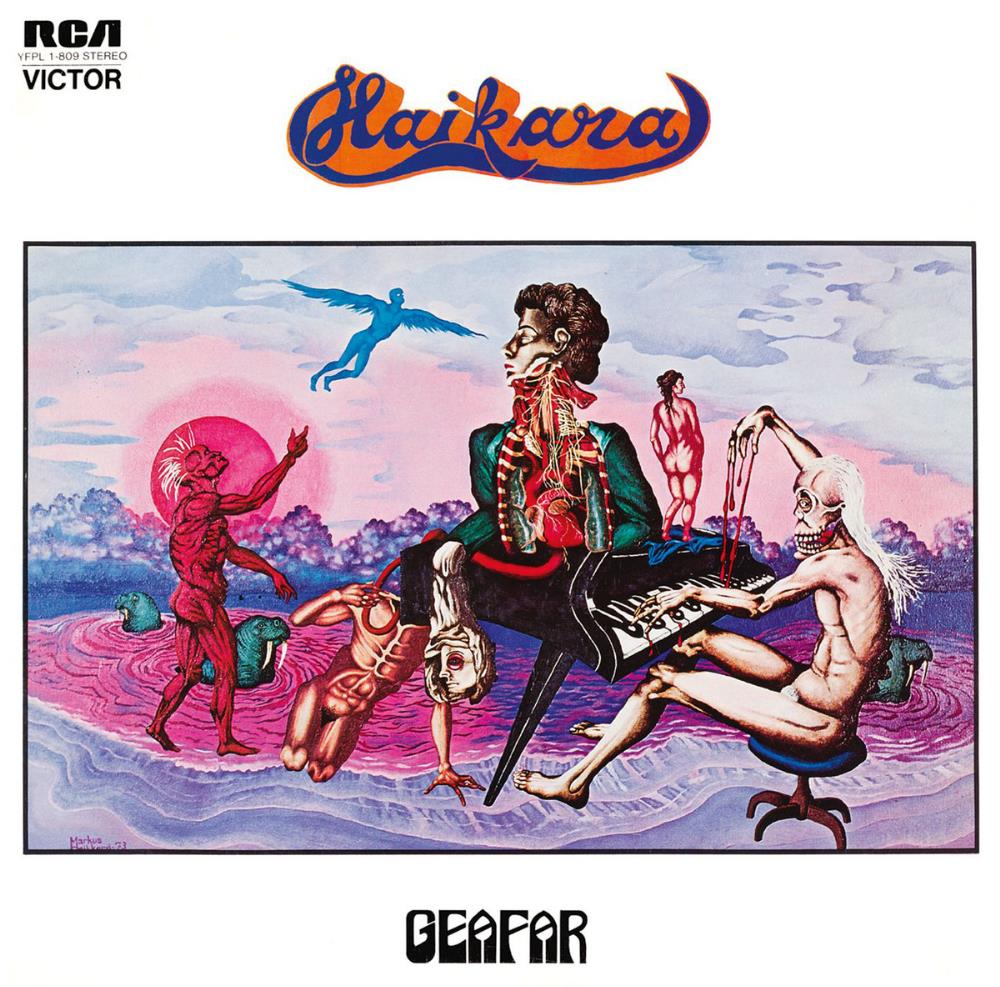 Haikara released their second album, Geafar, in 1974 on on RCA Victor.
Following the departure of Vesa Lehtinen, the group recruited Auli Lattunen—sister of guitarist–keyboardist Vesa Lattunen—as co-lead vocalist. The album retained Haikara’s expansive, multi-sectional approach while introducing slower tempos and increased vocal interplay. Despite the ongoing popularity of Finnish progressive rock, Geafar failed to meet RCA’s sales expectations. The label urged Haikara toward a more commercial direction; when the band declined, their recording contract was terminated.
Vesa Lattunen plays multiple instruments (guitar, piano, clavinet, tambourine, triangle, cowbell) and shares vocals with Auli Lattunen, complemented by reedist Harri Pystynen (flute, saxophone), bassist Timo Vuorinen, and drummer Markus Heikkerö, who juggles timpani, maracas, triangle, and assorted percussion.
Geafar shifts the band’s weight toward longer instrumental spans and softer internal contrasts, favoring gradual accumulation over the stark confrontations of the debut. “Change” opens at a brisk pace with fuzz-saturated guitar and insistent drumming, cycling through repeated figures while saxophone and voice alternate brief foreground roles. “Kun Menet Tarpeeksi Kauas Tulevaisuuteen, Huomaat Olevasi Menneisyydessä” stretches outward from a loose, pulse-driven opening into a more forceful middle section where guitar pressure increases, then recedes into a suspended passage built around flute lines and wordless female vocals.
“Kantaatti” compresses its ideas into a short, piano-led form, with cello and voice entering sparingly to shape a chamber-like contour, while “Laulu surullisesta pilvestä” maintains a subdued dynamic, layering restrained rhythm with soft vocal phrasing and light woodwind color. The title piece “Geafar” unfolds in successive phases—dark piano figures, steady drum entry, expanding sax statements, then strings and distorted guitar—breaking repeatedly into quieter pools before surging back with heavier textures, closing on a final rise where fuzz guitar and voice reassert tension rather than resolve it.
A1. “Change” (8:10)
A2. “Kun menet tarpeeksi kauas tulevaisuuteen, huomaat olevasi menneisyydessä” [When You Go Far Enough Into the Future, You’ll Find Yourself in the Past] (8:09)
A3. “Kantaatti” [Cantata] (2:32)
B1. “Laulu surullisesta pilvestä” [Song of a Sad Cloud] (3:57)
B2. “Geafar” (13:57)
Sessions took place in 1973 under producer Heikki Virtanen. RCA Victor released Geafar on LP that year. A CD reissue on Ektro Records added four bonus tracks: “Picnic” (2:27), “Oman onnen seppä” [Smith of Your Own Fortune] (3:09), “Pilven poika” [Son of the Cloud] (2:57), and “Jumbo” (3:30).
Iso Lintu
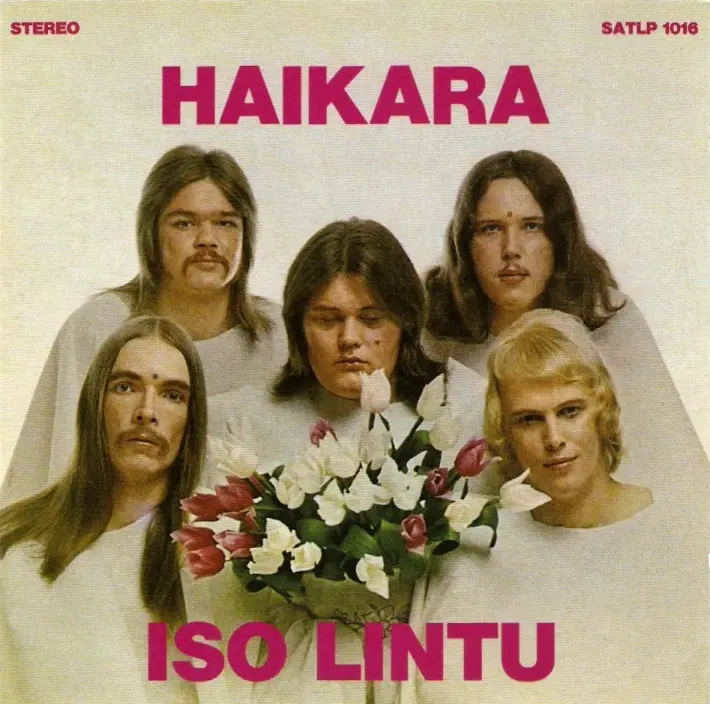 Haikara released their third album, Iso Lintu, in 1975 on Satsanga Records, a label founded by singer Jukka Kuoppamäki.
The album featured a streamlined sound with shorter, more direct rock-oriented tracks, diverging from the extended suites of the prior releases. Despite the shift in style, Iso lintu received mixed reception and failed to improve on the sales of Geafar. Limited promotion by Satsanga contributed to its muted impact. Soon after the album’s release, Haikara disbanded due to artistic disagreements.
Vesa Lattunen performs guitar, keyboards, and contributes arrangements. Matti Heinänen joins as lead vocalist. Harri Pystynen plays flute and saxophone. Timo Vuorinen handles bass. Markus Heikkerö plays drums and percussion. Guest contributions include backing vocals by Auli Lattunen, woodwinds by Igor Sidorow (real name Erkki Summala), and players from the Lahti City Orchestra on strings and winds.
Iso Lintu condenses the band’s language into shorter forms, alternating abrupt, riff-driven pieces with quieter, more carefully shaded episodes. “Hotellinainen” pushes forward with a blunt, insistent pace, emphasizing raw guitar and intrusive reeds rather than development, while “Kuinka ollakaan” stretches furthest, inserting brief orchestral color, flute figures, and a compact instrumental surge that sharpens its otherwise direct outline.
“Romanssi” withdraws into a nocturnal frame, shaping a slow, measured flow where wind instruments carry long, contoured lines over restrained accompaniment. “Für Hanna” pares the sound to near-minimalism, centering delicate flute gestures and sparse percussion, and “Aamu” opens its texture gradually, balancing calm vocal phrasing with gently expanding instrumental layers. The closing “Jäähyväiset” folds these approaches together, combining concise song structure with art-music inflections, ending the album in a reflective register rather than escalation.
A1. “Hotellinainen” [The Hotel Woman] (3:12)
A2. “Kuinka ollakaan” [As It Happened] (4:38)
A3. “Romanssi” [Romance] (4:12)
A4. “2 + 2 = 5” (2:31)
B1. “Leppäkerttu” [Ladybug] (2:57)
B2. “Golgata” [Golgotha] (3:06)
B3. “Für Hanna” (2:14)
B4. “Aamu” [Morning] (4:20)
B5. “Jäähyväiset” [Farewell] (2:27)
Sessions took place at Microvox Studios in Lahti and concluded in March 1975. The opportunity arose through Vesa Lattunen’s arrangement work on Kuoppamäki’s Väinämöinen album.
The original LP appeared on the Satsanga/Hi-Hat imprint in 1975. Rocket Records reissued Iso lintu on CD in September 2013.
Final Activity
Haikara issued the single “Pilven poika” / “Jumbo” in early 1976 on Hi-Hat Records.
Following the group’s 1975 dissolution, Vesa Lattunen and Harri Pystynen revived Haikara with a new lineup and a stylistic shift toward funk-influenced material. The single marked a sharp departure from their earlier symphonic and jazz-inflected sound. Around the same time, Haikara contributed the track “American Look” to the Hi-Hat label compilation Hatrock 2. While critics responded favorably to the band’s stylistic reinvention, commercial reception remained limited. Activity soon tapered off as members moved on to other projects.
The 1976 lineup featured Lattunen and Pystynen as core members, though the full personnel for the sessions remains undocumented. These recordings marked Haikara’s final output before a long hiatus, which ended with their 1998 comeback album Domino.
Discography:
- Haikara (1972)
- Geafar (1974)
- Iso lintu (1975)
- “Pilven poika” / “Jumbo” (1976)
- Haikara IV: Domino (1998)
- Tuhkamaa (2001)
Sources:
Artist/Album Pages:
Khan was an English space-rock band that released the album Space Shanty on Deram in 1972. This wa...
Ophiucus was a French folk/psych band that released two albums and three singles between 1971 and ...
Sunrise was an American art-rock/pop band behind a 1977 self-titled album on Buddah, produced by ...
The Rich Kids were an English rock band that made the 1978 EMI album Ghosts of Princes in Towers. ...
Hammer was an American hard-rock band from San Francisco that released a 1971 self-titled album o...
Gregory Isaacs (July 15, 1951 – October 25, 2010) was a Jamaican reggae singer and songwriter who ...
Al Kooper (born Feb. 5, 1944) is an American musician, producer, and composer from Brooklyn who emer...
Persona was a Brazilian folk-psych band that self-released the 1975 ten-inch album Som. Members:...
Crooked Oak was an English folk-rock band that released the 1976 album From Little Acorns Grow on ...
Space Project was a Québécois electro-funk studio team that released the 1978 album Conquest of th...
Péloquin Sauvageau was a Québécois electro-psych duo that released the 1972 Polydor album Laissez-...
The Allman Brothers Band were an American blues-rock band that formed in Jacksonville, Fla., in 19...