

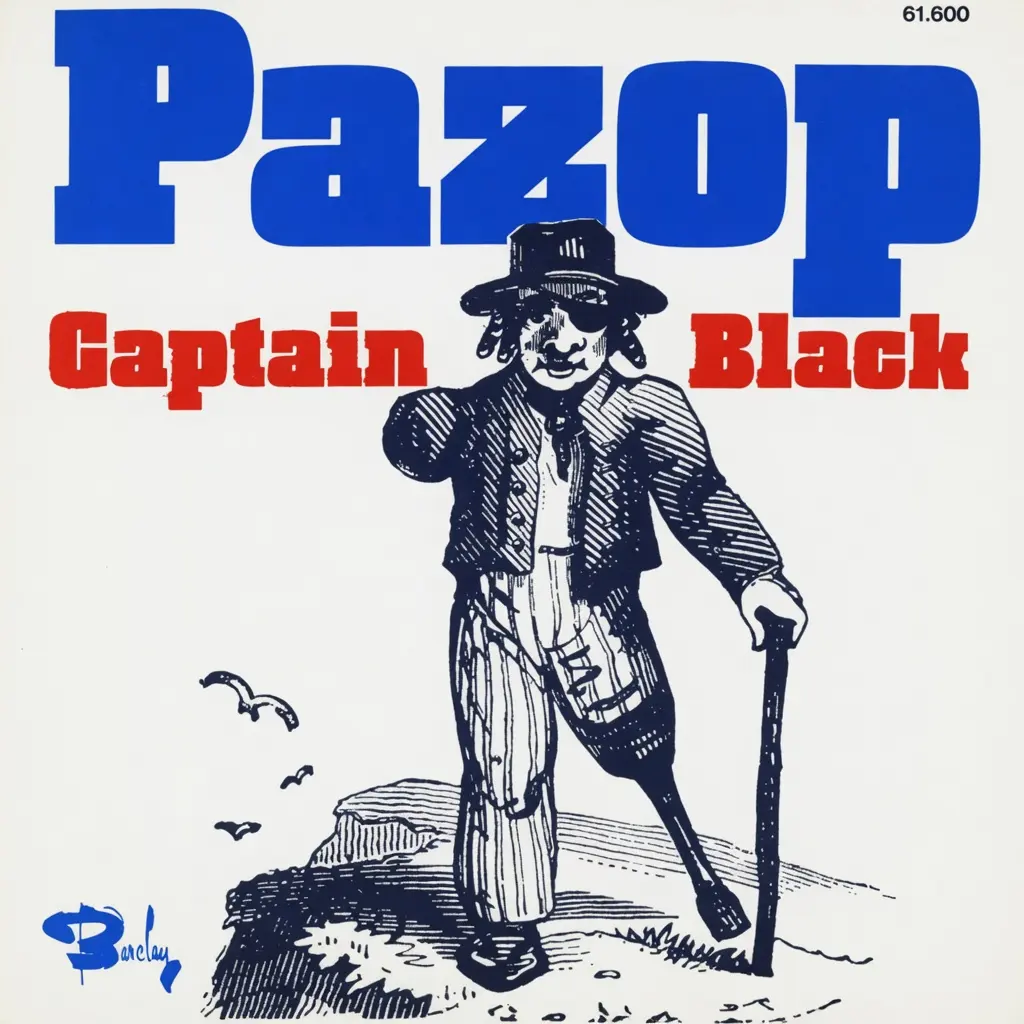
Pazop was a Belgian avant jazz-rock band that made the 1972 single “Captain Black” / “Morning” on the French Barclay label. That same year, they recorded an album that remained vaulted until 1996 when Musea issued the archival CD Psychillis of a Lunatic Genius.
In 1973, the members of Pazop masqueraded as the Modern Classic Quintet for the classical parody album Opéra Pop, issued on Carabine.
Members: Dirk Bogaert (vocals, flute), Frank Wuyts (keyboards), Kuba Szczepanski (violin), Patrick Cogneaux (bass), Jacky Mauer (drums)
Background
Pazop formed in Brussels at the end of 1971 when keyboardist-vocalist Frank Wuyts and violinist Kuba Szczepanski teamed with vocalist-flautist Dirk Bogaert, bassist Patrick Cogneaux, and drummer Jacky Mauer.
Wuyts and Szczepanski came from Wallace Collection, the Belgian baroque-psych group that scored a Continental hit with “Daydream.” Szczepanski was a Polish-born classical musician who played in the Brussels Opera Philharmonic Orchestra before his 1970 entry in Wallace Collection. Wuyts had also worked with Bogaert, Cogneaux, and Mauer in Waterloo. Cogneaux had played in Arkham, an unsigned early band of drummer Daniel Denis, the later architect of Univers Zero.
 The quintet first worked under the name Pas Op, from the Flemish phrase for “watch out,” before it altered the spelling to Pazop. The group approached EMI, Wallace Collection’s former label, and EMI personnel allowed a two-day demo session without signing the band. Szczepanski and Mauer carried the four-song demo to Paris during an unsuccessful label search. Producer Luigi Oglival signed Pazop in March 1972 and connected the group with CBS and Barclay.
Oglival sent Pazop to Hérouville Studio in France that July for the sessions intended to produce Psychillis of a Lunatic Genius. Barclay personnel rejected the LP and used earlier demo material for the 1972 single “Captain Black” (b/w “Morning”). The a-side is a terse chamber-pop number about the 18th-century rivalry between Jolly Roger and Captain Jack Sparrow.
Psychillis of a Lunatic Genius
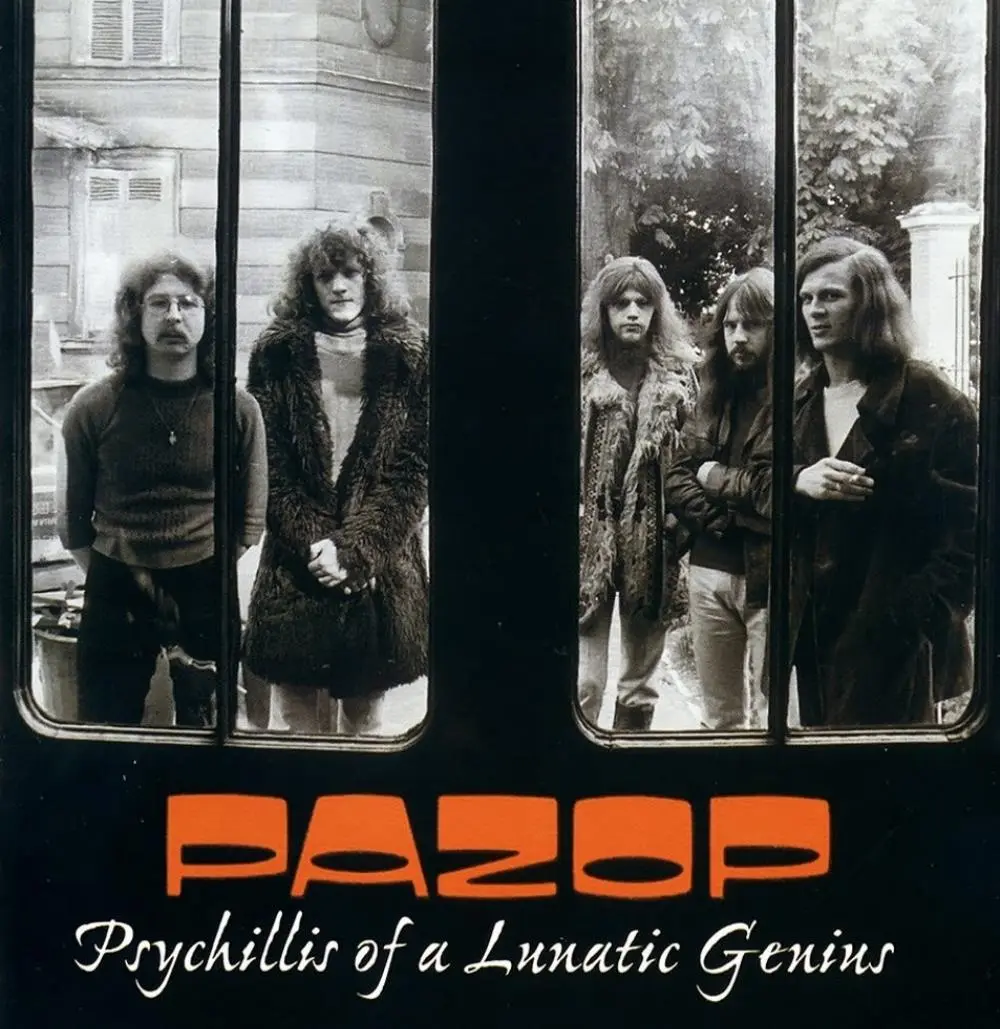 Pazop recorded their intended debut album, Psychillis of a Lunatic Genius, in July 1972 at Studio Hérouville in France. Musea first issued the title on a 1996 archive CD, and Replica isolated the intended debut program on the April 2016 LP.
Bogaert and Wuyts composed eight pieces for guitarless ensemble arrangements. The album presents those pieces with vocalist–flutist Dirk Bogaert, keyboardist Frank Wuyts, violinist Kuba Szczepanski, bassist Patrick Cogneaux, and drummer Jacky Mauer. Pazop interlock flute and violin figures with keyboard-led changes, then pivot compact refrains through clipped breaks. Bogaert places sketch-like vocal lines across high-register unisons and suite-like section changes.
“Le La Loo Loo Le La” skitters through brisk, circus-tinted figures and clipped ensemble turns. “Crying for Disaster’s Hand” softens around a fragile lead line, then quickens into a sharper final section. “What Is the Further Purpose” chatters through fast text, comic responses, and low-end propulsion. “Swaying Fire” flashes between sharp outbursts, soft passages, and a shouted title cry.
“Harlequin of Love” pivots through emphatic lead entries, abrupt tempo shifts, and compact breakaway passages. “Mirela” darts through a short course with angled ensemble motion. “Freedom Dance” trades theatrical calls with answered lead phrases before a brisk refrain arrives. “Lovelight” surges through heavier sectional turns and emphatic cadence.
A1. “Le La Loo Loo Le La” (2:29)
A2. “Crying for Disaster’s Hand” (4:08)
A3. “What Is the Further Purpose” (3:10)
A4. “Swaying Fire” (3:32)
B1. “Harlequin of Love” (2:50)
B2. “Mirela” (2:10)
B3. “Freedom Dance” (3:28)
B4. “Lovelight” (4:06)
Producer Luigi Ogival booked Michel Magne’s Studio Hérouville for the July 1972 sessions. Engineer Dominique Blanc-Franquard recorded the group on 24-track equipment. Barclay issued the 1972 single “Captain Black” (b/w “Morning”) after the label declined the album master. Michel Magne retained the tapes after Ogival failed to cover the studio costs.
Julien Louvet remastered the material for the Replica LP. The Replica LP appeared in a cover with a black-and-white halftone band photograph beneath red and ochre circular overlays.
Pazop
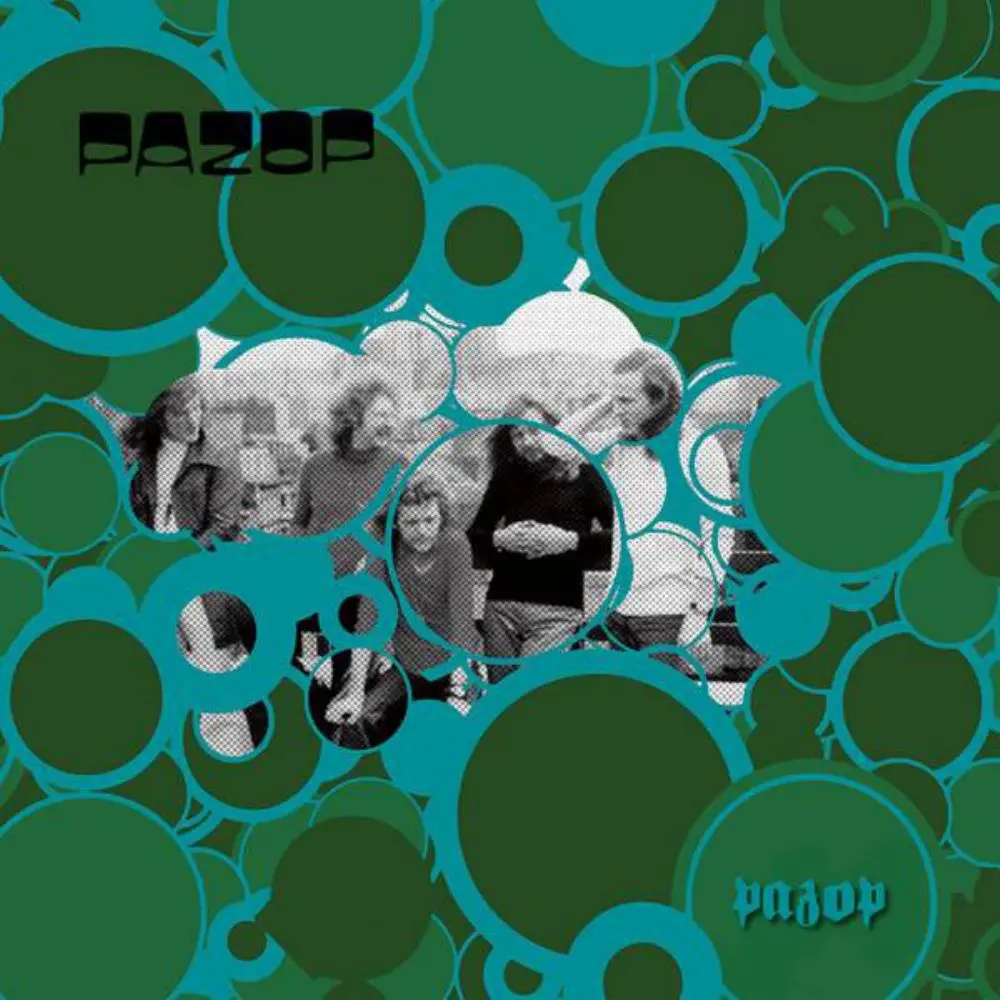 Replica and Musea issued the self-titled Pazop album in April 2016 as the second intended LP by the group. Musea first issued the 1973 sequence as the second half of the 1996 CD Psychillis of a Lunatic Genius; Replica later split the 1972 and 1973 material across two LPs and reserved the second set for Pazop.
Pazop contains eight Bogaert–Wuyts pieces, performed by the Psychillis lineup with Szczepanski, Cogneaux, and Mauer. They extend on the Zappa/Softs template with interlocked keyboard–violin filigree, clipped vocal vignettes, flute passages, and stop-start cadences with chamber trappings.
“Bami, Lychee, Si” coils through keyboard shimmer, squeaky violin, female vocal placement, and a chant-refrain with carnival-tinted turns. “Harlequin of Love” reprises a vintage verse shape through clean English diction, compact title cadence, and quick section shifts. “Can It Be Sin” croons over ominous flute and distortion, drops into cymbal wash, then erupts when the vocal line rises into a larger passage. “And the Hermit Will Be the Master” lurches from piano entry into theatrical vocal turns, plastic-toned saxophone, shouted title cadence, and laughter.
“M.M.M.” glides through bright lead lines before a late bass feature draws the instrumental into firmer contour. “In the Army (Devil Likes Smoke)” parades through shouted command, military-march parody, and spoken interjection. “Airport Formalities and Taking Off / Stewardess and Breakfast” drives under a steady rhythm, lifts an overblown lead at midstream, then splinters into chaotic breakdown and speech. “It’s the End” dissolves into echo-smeared farewell voices.
A1. “Bami, Lychee, Si” (5:26)
A2. “Harlequin of Love (Second Version)” (3:08)
A3. “Can It Be Sin” (6:54)
A4. “And the Hermit Will Be the Master” (5:18)
B1. “M.M.M.” (5:50)
B2. “In the Army (Devil Likes Smoke)” (1:37)
B3. “Airport Formalities and Taking Off / Stewardess and Breakfast” (6:18)
B4. “It’s the End” (0:44)
Pazop recorded the album in August and September 1973 at Start Studio in Belgium. Sylvain Van Holme booked the sessions after hiring the group for modern rock treatments of classical repertory. Alain Pierre mixed the 1973 material in 1994, and Julien Louvet remastered the separate 2016 Replica edition.
Despite the vaulting of both albums, Belgian CBS issued a second non-album Pazop single: “Merry Jungo” (b/w “Honey Honey”).
Postlude
Pazop outlasted the 1973 Start Studio sessions through a short run of concerts in France and Belgium. The group played two filmed Brussels dates at the American Theatre, then gave its last known performances at Ressaix in July 1974. After the split, three former members stayed close to the Brussels studio circuit, while Frank Wuyts entered the Rock in Opposition network and Kuba Szczepanski left rock work for several years.
Dirk Bogaert joined Patrick Cogneaux and Jacky Mauer in Avena Sativa, an unreleased Belgian group active into 1976. He then worked with Wuyts in Karass Bulband and rejoined Mauer in Abraxis, which recorded a self-titled album for IBC in December 1976. Bogaert entered the Cos circle on the 1978 album Babel, where he played flute and served as artistic producer. He later worked with Mauer and Sylvain Vanholme at Shiva Music, the Brussels studio tied to Cos, The Veterans, and Belgian electronic production.
Wuyts followed Pazop with sideman work for Arthur Conley, Pierre Vassiliu, and Jacques Higelin. He played keyboards on the 1980 Aksak Maboul album Un peu de l’âme des bandits, then worked with Denis Van Hecke in Musique Flexible. Wuyts also partnered with Geoff Leigh on From Here to Drums, a 1988 No Man’s Land album recorded across the first half of the decade. His French session credits include Higelin’s 1981 live album Higelin à Mogador and the 1982 album Higelin ’82.
Szczepanski left the Pazop orbit after the mid-1970s. He worked in medicine for several years, then returned to violin through the Belgian Radio house orchestra. His late-1970s record credits include a guest appearance on a 1978 Ragtime Cats album.
Cogneaux joined Bogaert and Mauer in Avena Sativa, then shifted from bass into sound work. He accompanied André Bialek with Wuyts on keyboards and worked from 1974 through 1978 as a sound technician for Cos, Kleptomania, Univers Zero, Present, Allan Holdsworth, and Terje Rypdal. From 1977 through 1988, he worked at Shiva Music as an engineer and assistant. His studio work placed him on the same path as Cos during the Babel sessions.
Mauer followed Avena Sativa with Abraxis, then helped convert the former Pazop rehearsal space into Shiva Music with Bogaert and Vanholme. Cos, The Veterans, and later Belgian electronic acts recorded there. Mauer reached the late-1980s Belgian New Beat circuit through Brussels Sound Revolution, whose 1989 Shiva/Sound Of Belgium 12-inch “Qui..?” used Paul Van den Boeynants press-conference material.
Discography:
- “Captain Black” / “Morning” (1972)
- Psychillis of a Lunatic Genius (1996, recorded 1972)
Sources:
Artist/Album Pages:
Eden's Children were an American psychedelic rock trio that released the 1968 albums Eden's Children...
Axis was a Paris-based psych-rock band of expatriated Greek musicians. They released six singles a...
Hodges, James & Smith were an American vocal trio that released four albums between 1973 and 1...
Family was an English rock band that released six albums on Reprise between 1968 and 1972, followed ...
Electric Light Orchestra is an English rock band that released eleven studio albums between 1971 and...
The Fatback Band was an American soul-funk rhythm ensemble from New York City, formed in 1970 by d...
Roy Harper (born June 12, 1941) is an English folk-rock singer/songwriter and guitarist from Rusho...
David Bowie (January 8, 1947 – January 10, 2016) was an English singer, songwriter, multi-instrument...
Ben Sidran (born August 14, 1943) is an American singer, pianist, keyboard player, songwriter, pro...
Jenghiz Khan was a Belgian hard-rock/psych band that released the album Well Cut in 1970 on Barclay....
A Foot in Coldwater (AFIC) was a Canadian hard-rock band from Toronto that released three Daffodi...
Laurie Styvers (Aug. 3, 1951 – Feb. 18, 1998) was an American singer/songwriter who recorded a 197...