

Oneness of Juju was an American spiritual-jazz/funk band from Washington, D.C., that grew out of Ju Ju.
Background
Oneness of Juju evolved from Ju Ju, an avant-garde jazz sextet that released the 1973/74 albums A Message From Mozambique and Chapter 2 Nia on Strata-East. Saxophonist James “Plunky Nkabinde” Branch formed Ju Ju in San Francisco, where he first performed with Ndikho Xaba & the Natives, the root band of Plunky vibraphonist Lon Mosh, percussionist Babatunde, and pianist Al Hammel Rasul. During their existence, Ju Ju moved to New York and added bassist Philips “Muzi Nkabinde” Branch.
In late 1974, Plunky returned to his native Richmond, Virginia, where the popularity of jazz-funk contrasted the free-jazz favored in America’s coastal cities. Oneness of Juju de-emphasized the Ornette Coleman/Sun Ra leanings of Ju Ju for a style akin to Herbie Hancock. He retained Mosh, Babatunde, Rasul, and Muzi. The lineup settled with two new recruits: drummer Ronnie Toler and singer Eka-Ete Jackie Lewis. They signed with Black Fire, a nascent DC-area label founded by disc jockey Jimmy Gray.
African Rhythms
 Oneness of Juju released their first album, African Rhythms, in 1975 on Black Fire.
The album blends jazz-funk, afrocentric rhythms, and spiritual jazz, maintaining political consciousness while exploring dense percussive textures. It marks the first recording with saxophonist James “Plunky” Branch leading the ensemble that included Al-Hammel Rasul, Babatunde, Lon Moshe, Muzi Nkabinde, Ronnie Toler, and vocalist Eka-Ete Jackie Lewis.
Plunky Nkabinde wrote most of the material, with co-writes from Muzi Nkabinde and Al-Hammel Rasul on select tracks. Babatunde contributed compositions on two tracks, and the group adapted one traditional chant.
The music divides into energetic afro-funk grooves, reflective spiritual passages, and rhythm-driven chants. The title track features choruses over kinetic percussion and echoing saxophone, while “Don’t Give Up” and “Liberation Dues” pair chants with layered, polyrhythmic arrangements. Tracks like “Funky Wood” and “Tarishi” emphasize percussive interplay, with the balafon, vibraphone, and Fender Rhodes anchoring melodic contours.
A1. “African Rhythms” (7:32)
A2. “Kazi” (6:15)
A3. “Funky Wood” (4:58)
A4. “Tarishi” (5:20)
A5. “Mashariki” (5:42)
B1. “Chants” (3:50)
B2. “Don’t Give Up” (6:10)
B3. “Incognito” (5:05)
B4. “Poo Too” (4:22)
B5. “Liberation Dues” (7:05)
Sessions occurred at Bias Studios, with recording and remix engineered by Robert Dawson and Millard “Jim” Watkins, and mastering by David Crawford. Plunky Nkabinde acted as producer and music director, with arrangements by the full ensemble.
The album art features photography by Norva Madden, with layout by Janet Brown.
In early 2002, Strut reissued African Rhythms with two bonus tracks: an instrumental version of “Liberation Dues” and the single version of “African Rhythms.”
Space Jungle Luv
 Oneness of Juju released their second album, Space Jungle Luv, in 1976 on Black Fire.
The album expands the group’s jazz-funk foundation into a lighter, more atmospheric sound, pairing afrocentric rhythms with exploratory solos. This recording retains core members Plunky Nkabinde, Muzi Nkabinde, Al-Hammel Rasul, Lon Moshe, Ronnie Toler, and Eka-Ete Jackie Lewis, while incorporating pianist Joseph Bonner and guitarist Melvin “Slyp” Glover.
Plunky Nkabinde wrote or co-wrote most tracks, with contributions from Muzi Nkabinde, Eka-Ete Jackie Lewis, Ronnie Toler, Al-Hammel Rasul, and Melvin Glover.
The music alternates between spacey funk, contemplative vocals, and percussion-driven textures. The opener, “River Luv Rite,” stretches a playful theme through layered saxophone and piano solos with understated vocalizing. Tracks like “Soul Love Now” and “Love’s Messenger” rely on exploratory percussion and subtle keyboard lines, while “Space Jungle Funk” and “Follow Me” push the ensemble into denser, rhythmically charged territory.
A1. “River Luv Rite” (8:03)
A2. “Follow Me” (4:57)
A3. “Soul Love Now” (4:50)
B1. “Space Jungle Funk” (9:36)
B2. “The Connection” (3:18)
B3. “Love’s Messenger” (3:07)
Sessions occurred on June 4, 1976, at Bias Recording Studios in Falls Church, Virginia. Plunky Nkabinde acted as music director and producer, with recording and remix engineered by Robert Dawson and Millard “Jim” Watkins. Mastering took place at Goldisc Recording Products, Inc., with additional lacquer cutting at Bell Sound Studios.
The album emphasizes collective interplay, with Plunky’s saxophone alternating tenor, soprano, and electric phasing, Muzi’s Fender bass navigating complex lines, Joseph Bonner providing piano solos, and Eka-Ete Jackie Lewis contributing calm, wordless vocal textures.
The 2002 Strut reissue added the previously unreleased track “F#.”
Bush Brothers & Space Rangers
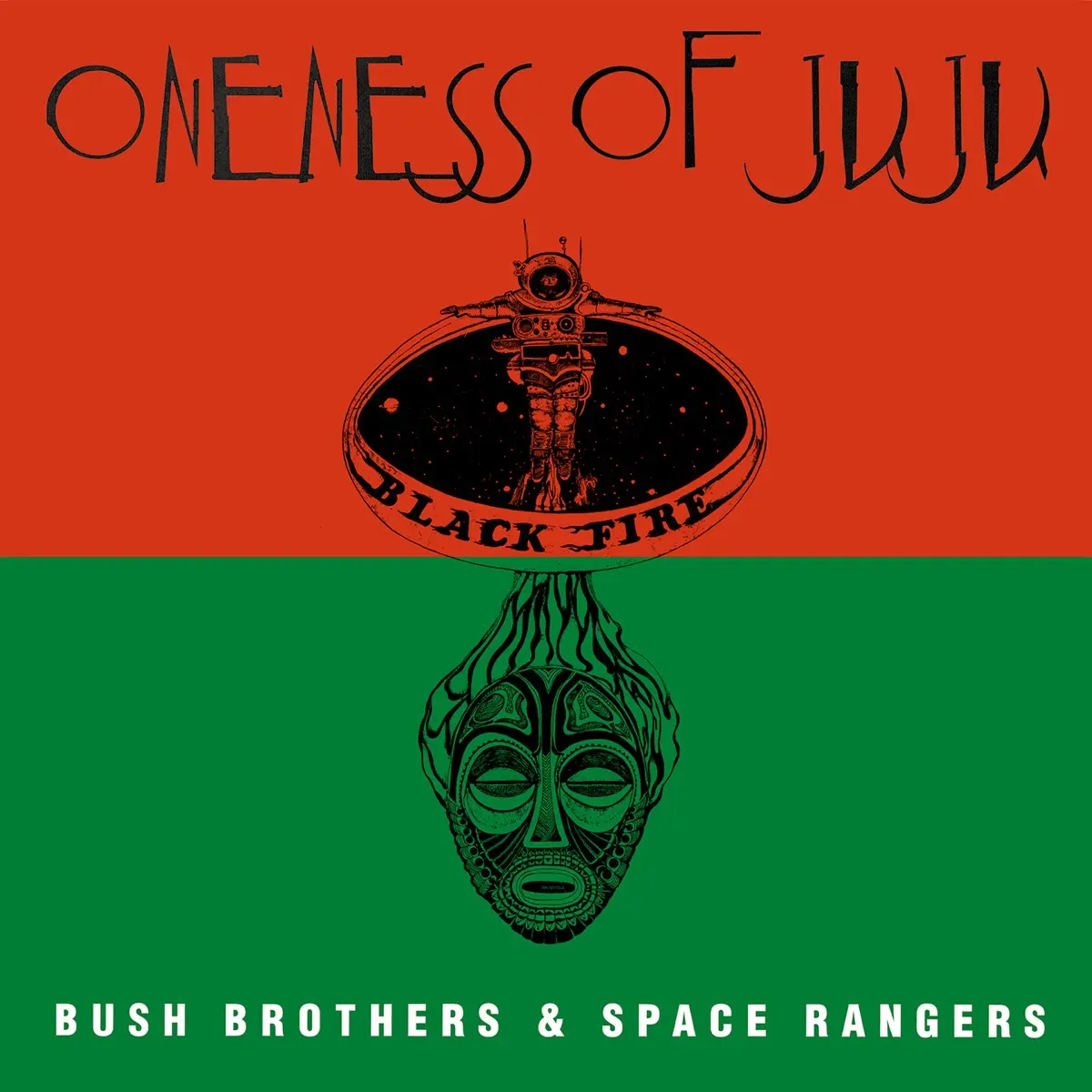 Oneness of Juju completed their third album, Bush Brothers & Space Rangers, in 1977 for Black Fire, which vaulted the contents until 1996 when the resurrected label issued the title as an archival disc.
The album blends jazz-funk with commercial P-Funk and disco elements, maintaining the band’s afrocentric percussion and saxophone work while exploring lighter, more accessible arrangements. Core members Plunky Nkabinde, Muzi Nkabinde, Eka-Ete Jackie Lewis, and Melvin Glover contribute alongside additional percussionists Peddie Maples and Okyerma Asante and pianist Brian Jackson.
Plunky Nkabinde and Muzi Nkabinde wrote or co-wrote most tracks. “Breezin'” is a cover of Bobby Womack tune recently popularized by George Benson.
The music alternates between extended instrumental explorations and rhythmically driven funk. The cover of “Breezin'” opens with fluid, lyrical phrasing over sustained percussion. The reworked “African Rhythms” stretches folk motifs with layered percussion, while tracks like “Plastic (Is Easy to See Thru)” and “Afro Beat” lean toward commercial funk with rhythmic repetition and syncopated bass lines.
A1. “Breezin'” (5:29) is a Bobby Womack composition first recorded in 1971 by Hungarian guitarist Gábor Szabó and covered in 1976 by George Benson, whose version became a smooth-jazz evergreen.
A2. “African Rhythms” (9:18)
A3. “Nooky” (4:35)
A1. “Be About the Future” (5:13)
A2. “Afro Beat” (3:44)
A3. “Plastic (Is Easy to See Thru)” (6:10)
A4. “Rhythms Timelessness” (2:08)
CD bonus tracks
“West Wind” (7:48)
“All Blues” (7:05)
“Bootsie’s Lament” (11:06)
“The Stuff to Make You Move” (5:04)
“Get Your Head Together” (5:59)
Sessions occurred in 1977 at Arrest Recording Studios, with mixing at Walton Recording. Plunky Nkabinde and Jimmy Gray produced, with recording engineers Jimmy Gray, Nivram, and Jim Watkins.
The album features percussion-driven textures, with Plunky’s tenor and soprano saxophone and flute guiding solos, Muzi’s Fender bass providing complex lines, and Eka-Ete Jackie Lewis adding controlled vocal color. Guitarist Melvin Glover and pianist Brian Jackson reinforce harmonic and rhythmic layers.
A 1978 single, “Plastic,” arranged by Juju & the Space Rangers and written by Muzi Nkabinde, paired with “Got to Be Right on It” (Melvin Glover, Muzi Nkabinde, arranged by Plunky Nkabinde) and was released on Black Fire BF 1002.
Every Way but Loose
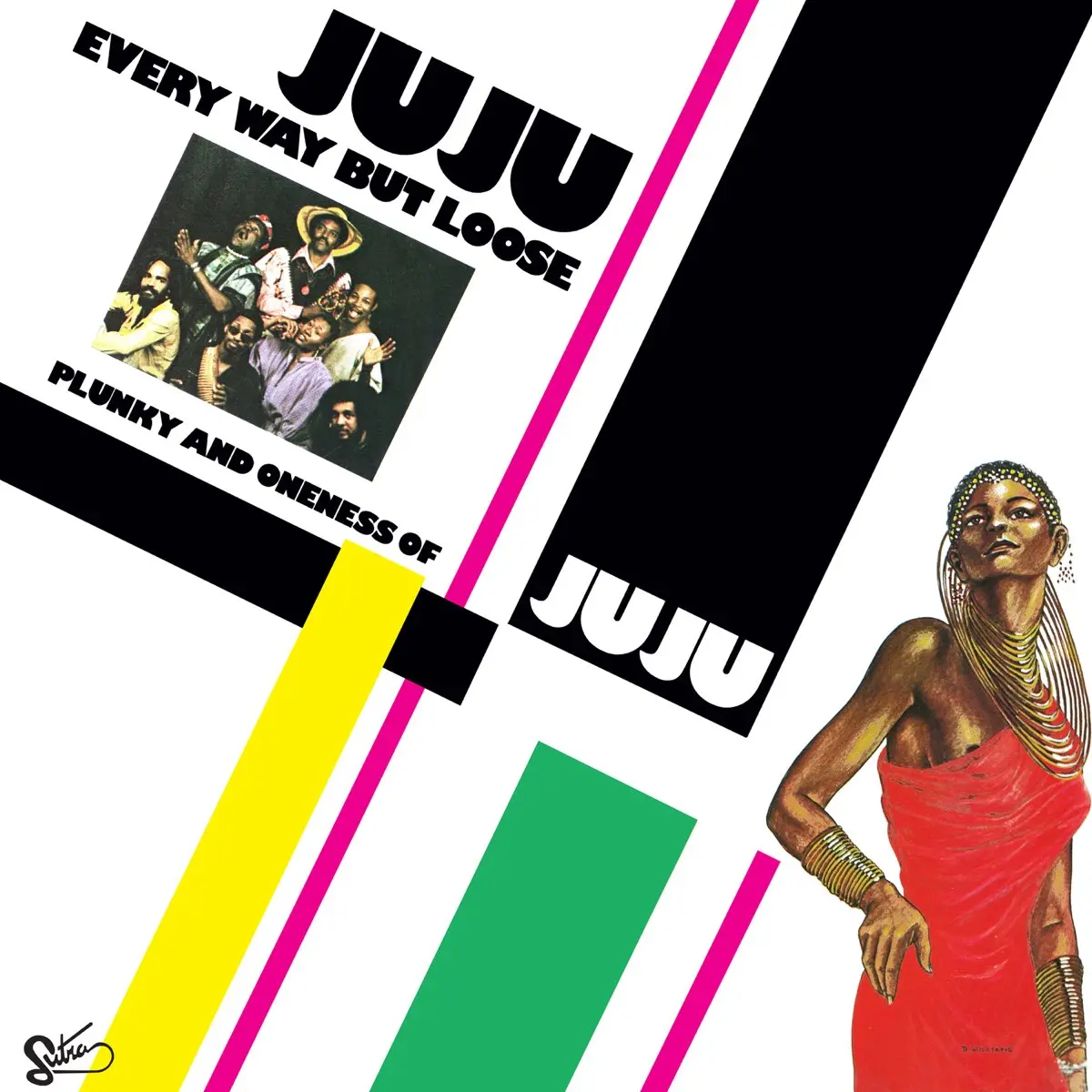 Plunky and the Oneness of Juju released their fourth album, Every Way but Loose, in 1982 on Black Fire.
The album continues the band’s jazz-funk approach with layered synthesizers, electric piano, and rhythmic percussion driving both up-tempo and mid-tempo tracks. Core members Plunky Nkabinde, Muzi Nkabinde, Eka-Ete Jackie Lewis, and Melvin Glover return alongside pianist William “Bill” Joyner, guitarist Ras Mel Glover Jr., and additional vocalists Judy Spears and Virtania “Cookie” Tillery.
Plunky Nkabinde and Muzi Nkabinde wrote or co-wrote the majority of the material, with Melvin Glover contributing two tracks.
The music alternates between socially conscious jazz-funk numbers and smoother, more reflective pieces. The opener “(Family Tree) Make a Change” features layered percussion and Plunky’s soprano saxophone, while “Run Away Bay” and “Higher” rely on electric piano textures and bass-driven rhythms. Ballad-like passages on “Always Have to Say Good-Bye” and “Loves Wonderland” highlight controlled vocals and subtle harmonies amid the percussion and keyboard arrangements.
A1. “(Family Tree) Make a Change” (6:28)
A2. “Run Away Bay” (6:19)
A3. “Loves Wonderland” (5:53)
B1. “Every Way But Loose” (6:45)
B2. “Higher” (5:40)
B3. “Always Have to Say Good-Bye” (5:55)
Plunky Nkabinde leads on tenor and soprano saxophone and flute while directing musical arrangements. Muzi Nkabinde handles Fender bass, percussion, and backing vocals. Lead vocals come from Eka-Ete and Virtania Tillery, supported by Judy Spears. Additional contributions include Ras Mel Glover Jr. on guitars, William Joyner and Weldon Hill on keyboards and synthesizers, Kevin Davis and Ronnie Toler on drums, and O. Asante on talking drum.
Sessions occurred at Omega Recording Studios with Muzi Nkabinde and Plunky Nkabinde producing. Billy Brady engineered and remixed the album alongside Plunky Nkabinde, with lacquers cut by Benny Quinn at The Lacquer Place.
The cover was designed by Denny M. Williams with photography by Lew Harrison.
Discography:
- African Rhythms (1975)
- Space Jungle Luv (1976)
- Bush Brothers & Space Rangers (1977)
- Every Way but Loose (1982 • Plunky & the Oneness of Juju)
- Electric Juju Nation (1984)
Sources:
- Discogs: Oneness of Juju
- JazzMusicArchives: Oneness of Juju
- 45cat: Oneness of Juju
- RYM: Oneness of Juju
- MusicBrainz: Oneness of Juju
Artist/Album Pages:
Tappa Zukie — aka David Sinclair (born July 2, 1955) — is a Jamaican reggae deejay and producer wh...
Burnier & Cartier were a Brazilian samba-folk duo that made a 1974 self-titled album on RCA, f...
Barbarella was a Danish art-pop band behind a 1975 self-titled album, alternately issued as First ...
Ace Spectrum was an American soul group from N.Y.C. that released three albums between 1974 and 19...
Gary Wilson is an American avant-pop musician who privately pressed the 1974 trio album Another Ga...
The Trammps were an American soul group from Philadelphia, formed in 1972. Early on, the group rel...
Richard Schönherz (born 1947) is an Austrian keyboardist, composer, and arranger who emerged in th...
Musica Orbis was an American electric chamber-music ensemble from Philadelphia that released the 1...
Colin Blunstone is an English singer who fronted The Zombies, which charted with the British Invas...
SAB was a Japanese electronic musician who released the 1978 album Crystallization on Vanity Recor...
The Hues Corporation was an American soul trio that released five albums through 1978 and scored ...
Gerry Rafferty (1947–2011) was a Scottish musician and songwriter who emerged in The Humblebums, a...