

Minako Yoshida — 吉田美奈子 (April 7, 1953) — is a Japanese singer/songwriter who debuted with an album on Showboat in 1973, followed by a four-album run on RCA that culminated with the 1977 release Twilight Zone. Between 1978 and 1983, she released four albums and a live disc on Alfa.
Background
Yoshida grew up in Ōmiya and entered music through school ensembles. She handled marimba in elementary-school ensemble work, then moved into brass-band activity in middle school, where she took up flute. That training did not stay academic for long. By her third year of middle school, an older schoolmate pulled her into paid club work in Ginza, where she played combo organ in a club band fronted by Tōru Ōki and learned material by The Doors before taking vocal spots during slow-dance sets.
In 1969, Yoshida entered the flute course at the affiliated high school of Tōhō College of Music. Around that same period, she saw Apryl Fool and met Haruomi Hosono and Takashi Matsumoto through the Tokyo Kid Brothers musical circuit. Their encouragement pushed her toward songwriting. She later said that she began drafting songs because they assumed a student at a music school ought to be writing them, and those early attempts quickly opened the door to live work.
Those new connections also widened her artistic circle. Yoshida spent time around illustrator Peter Satō’s apartment, where actors and musicians from the same downtown network gathered, and she treated that environment as a better education than the classroom. She left music school after two years and shifted her attention to gigs, rehearsals, and the practical study that came from working alongside older players.
Her early taste as a writer pointed toward the American singer-songwriter model. Yoshida gravitated to Laura Nyro and Carole King, and she shaped her first live activity around piano-backed songs in that vein. In May 1971, she formed the piano-and-bass duo Puff with former Blues Creation bassist Yoshiyuki Noji. The pairing matched her voice and keyboard chords against a melodic electric-bass counterline, and it gave her a small but decisive platform inside the loose network around Happy End.
Before her own album appeared, Yoshida had already entered professional recording work through that same circle. Her first credited studio appearance came not as a singer but as a flutist on “Yubikiri,” included on Eiichi Ohtaki’s 1972 solo debut. By then she had already begun to move from amateur live work into a recognizable role within the Tokyo musicians’ community, and that run of stage work, songwriting, and session exposure set the course toward her first LP on Showboat in 1973.
扉の冬 (Tobira no Fuyu)
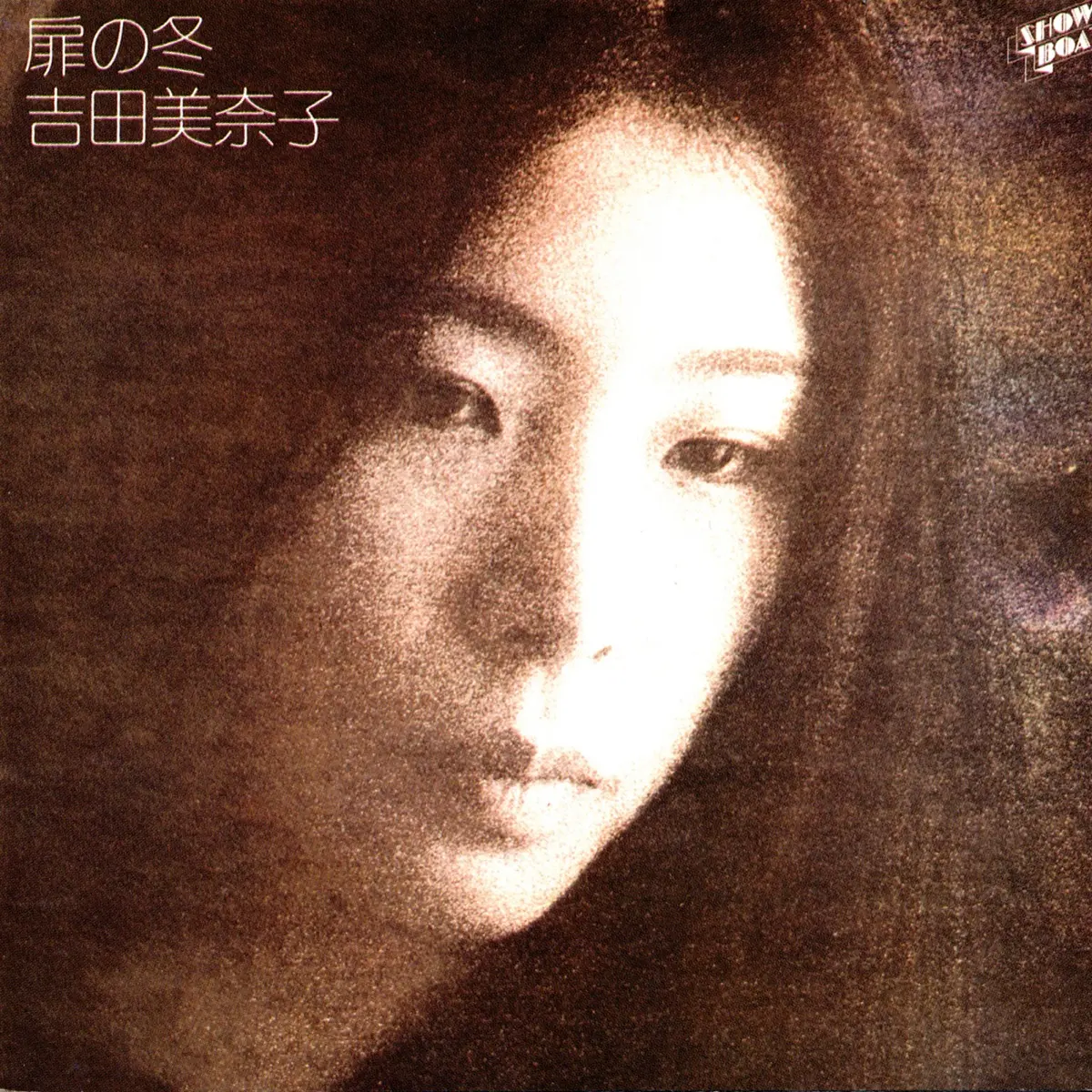 Minako Yoshida released 扉の冬 on September 21, 1973, on Showboat/Trio.
Piano and voice by Yoshida stand at the front of every arrangement. Drummer Tatsuo Hayashi and bassist Haruomi Hosono hold a measured underpin while guitarist Shigeru Suzuki answers Yoshida’s lines with clipped figures. Keyboardist Masataka Matsutoya adds organ and accordion across the set. Close-miked breath, slow pulse, and spare chord space shape much of the album’s surface. Brief ensemble surges cut through that intimacy at key points.
“外はみんな” [Everyone Outside] takes its first cue from a contemporary soul rhythm idea Yoshida had in mind at the time. “綱渡り” [Tightrope Walking] turns toward a more experimental design tied in part to her contact with stage theater. Yoshida also described the album as a direct extension of the way she sang and played piano together, with Caramel Mama adding the surrounding sound to that basic core. Yoshida wrote all nine songs.
A1. “外はみんな” [Everyone Outside] (2:53)
A2. “待ちぼうけ” [Left Waiting] (4:38)
A3. “扉の冬” [Winter at the Door] (2:41)
A4. “ねこ” [Cat] (3:08)
A5. “綱渡り” [Tightrope Walking] (3:57)
B1. “変奏” [Variations] (3:10)
B2. “かびん” [Fragile] (4:12)
B3. “ひるさがり” [Afternoon] (3:13)
B4. “週末” [Weekend] (3:52)
Yoshida recorded 扉の冬 at Mouri Studio in Meguro with co-producers Haruomi Hosono and Kinji Yoshino. Kinji Yoshino engineered the album, then handled the remix at Hit Studio in Shibuya with Masaki Nomura. Yoshida and Caramel Mama share the arrangement credit, and Yoshida alone took the orchestration credit.
The original LP used a gatefold sleeve. Joji Ide photographed Yoshida for the right-hand inner panel and the Caramel Mama members for the left, while Mitsuhiro Kushida handled the graphic concept and design.
Showboat issued “ねこ” (b/w “扉の冬”) as a 7-inch on September 21, 1973, the same day as the album.
MINAKO
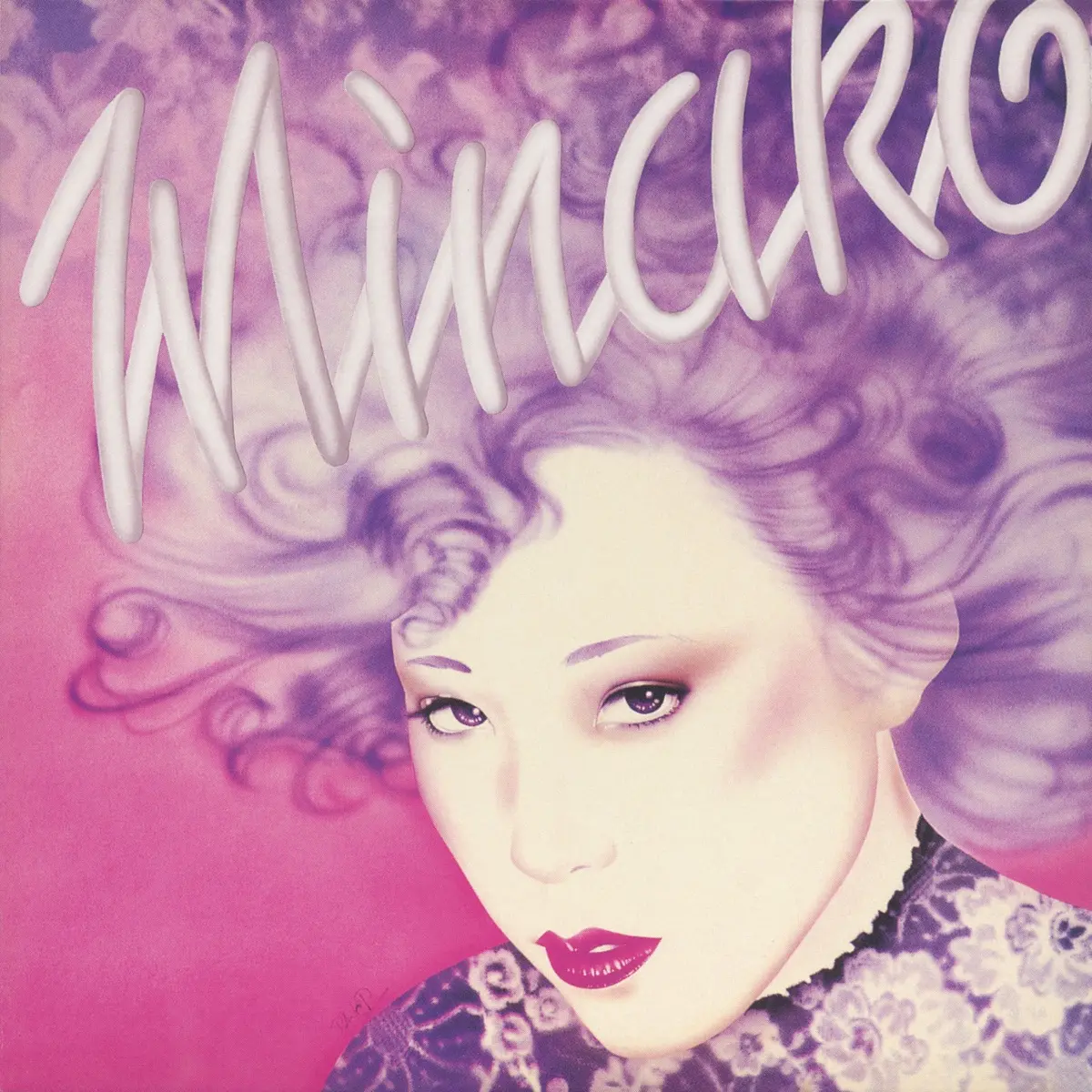 Minako Yoshida released MINAKO on October 25, 1975, on RCA/RVC.
Yoshida places her voice at the front of a larger ensemble on this set. Keyboardists Susumu Arima and Hiroshi Sato spread electric piano and organ through the arrangements while guitarist Shigeru Suzuki threads short replies around Yoshida’s lines. Bassist Kenji Takamizu and drummer Tatsuo Hayashi hold a steady underpin, and horn parts plus background voices widen the bigger passages.
The album opens with Yoshida’s Japanese adaptation of Benard Ighner’s “Everything Must Change,” first issued on Quincy Jones’s Body Heat. Side one also includes Eiichi Ohtaki’s “わたし” [Me]. Side two turns to Yumi Arai’s “チャイニーズ・スープ” [Chinese Soup] and “パラダイスへ” [To Paradise], then closes with Haruomi Hosono’s “ろっかばいまいべいびい” [Rock-a-Bye My Baby], first issued on HOSONO HOUSE.
A1. “移りゆくすべてに” [Everything Must Change] (8:03) — Benard Ighner, Minako Yoshida
A2. “レインボー・シー・ライン” [Rainbow Sea Line] (3:54) — Yoshida, Sato
A3. “住みなれた部屋で” [In a Familiar Room] (4:44) — Yoshida
A4. “わたし” [Me] (3:19) — Eiichi Ohtaki
B1. “夢を追って” [Chasing Dreams] (5:56) — Yoshida, Sato
B2. “チャイニーズ・スープ” [Chinese Soup] (2:33) — Yumi Arai
B3. “パラダイスへ” [To Paradise] (2:53) — Yumi Arai, Sato
B4. “時の中へ” [Into Time] (5:38) — Yoshida
B5. “ろっかばいまいべいびい” [Rock-a-Bye My Baby] (5:29) — Haruomi Hosono
Yoshida recorded MINAKO at Studio “A” in Shibaura, Tokyo, between August 21 and September 11, 1975, with producer Kunihiko Murai and engineer Norio Yoshizawa. Hiroshi Sato handled most of the arrangements, Susumu Arima shared arrangement credit on three tracks, and Banjin Tario with Jiro Inagaki arranged “わたし.”
Art director Kenkichi Sato and photographer Toru Kogure handled the sleeve. Masako Matsumura took the hair-design credit.
RCA prepared “チャイニーズ・スープ” (b/w “君の友だち” [You’ve Got a Friend]) as a promo-only 7-inch in December 1975.
MINAKO II –Live at Sun Plaza Hall October 3, 1975–
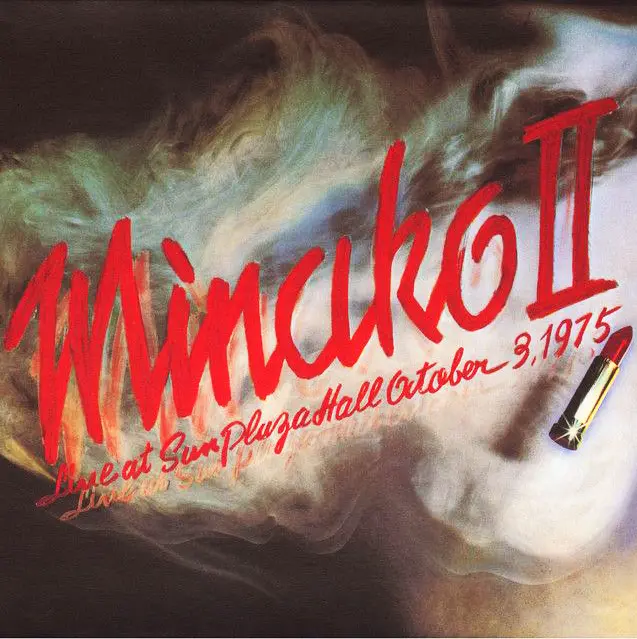 Minako Yoshida released MINAKO II –Live at Sun Plaza Hall October 3, 1975– on December 20, 1975, on RCA/RVC. The album documents her October 3, 1975 concert at Nakano Sun Plaza.
Yoshida brings a larger stage unit than the prior studio album and sets her voice against a sharper live attack. Keyboardists Hiroshi Sato and Akiko Yano spread electric piano and organ through the front line while guitarists Ginji Ito and Tsunehide Matsuki place clipped accents over Kenji Takamizu’s bass and Shuichi Murakami’s backbeat. Horn replies and guest chorus parts widen the bigger passages.
The opening stretch compresses four songs from 扉の冬 into short live readings before side one opens out with “Apple Knocker.” Side two turns toward American pop and standard repertory with “Good Morning Heartache,” “The Way We Were,” “You’ve Got a Friend / Precious Lord, Take My Hand,” “Ain’t No Mountain High Enough,” and “Someone to Watch Over Me.” Tower’s reissue note also identifies guest chorus spots by Tatsuro Yamashita and Taeko Onuki.
A1. “Once You Get Started” (1:48) — Terry Maiden, Garry Glenn Christopher
A2. “外はみんな” [Everyone Outside] (1:47) — Yoshida
A3. “扉の冬” [Winter at the Door] (1:22) — Yoshida
A4. “かびん” [Fragile] (1:36) — Yoshida
A5. “ふうらい坊” [Vagabond] (1:14) — Haruomi Hosono
A6. “明日天気になあれ” [Let Tomorrow Be Fair] (1:53) — Takashi Matsumoto, Haruomi Hosono
A7. “週末” [Weekend] (3:11) — Yoshida
A8. “Apple Knocker” (4:52) — Hiroshi Sato
B1. “Good Morning Heartache” (3:21) — Irene Higginbotham, Dan Fisher, Ervin Drake
B2. “追憶” [The Way We Were] (3:42) — Alan Bergman, Marilyn Bergman, Marvin Hamlisch
B3. “君の友だち” [You’ve Got a Friend / Precious Lord, Take My Hand] (4:52) — Carole King, Thomas A. Dorsey
B4. “Ain’t No Mountain High Enough” (7:20) — Nickolas Ashford, Valerie Simpson
B5. “Someone to Watch Over Me” (2:32) — Ira Gershwin, George Gershwin
B6. “Apple Knocker” (1:37) — Hiroshi Sato
Track titles, timings, and writer credits follow the reissue listings.
Yoshida recorded MINAKO II live at Nakano Sun Plaza on October 3, 1975, then remixed it at Studio A in Shibaura on October 23 and 24 with producer Kunihiko Murai and engineer Norio Yoshizawa. Hiroshi Sato arranged tracks 1 through 8, plus 11 and 14. Norio Maeda arranged tracks 9, 10, 12, and 13.
Kenkichi Sato handled the art direction. Tohru Kogure shot the sleeve photography.
FLAPPER
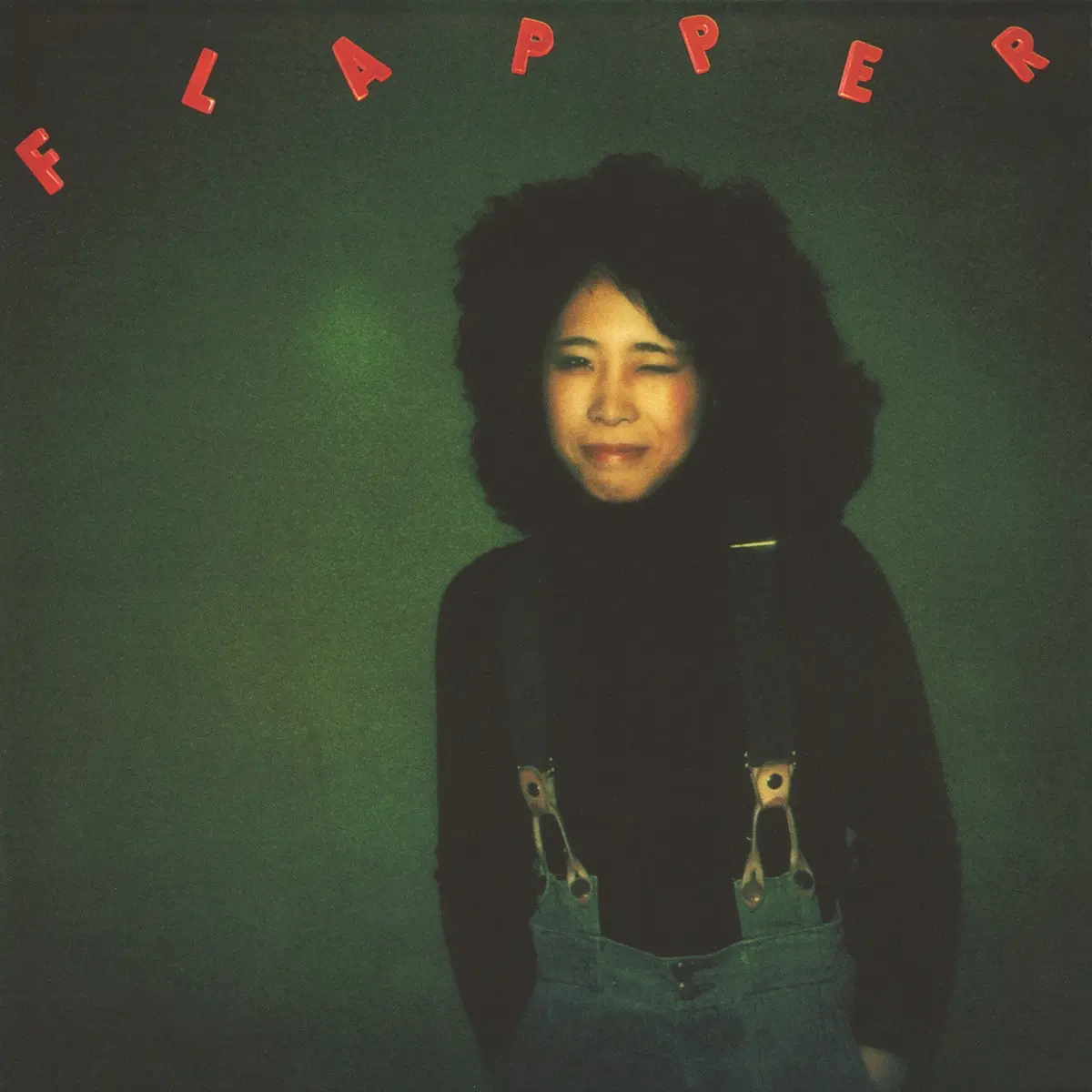 Minako Yoshida released FLAPPER on March 25, 1976, on RCA/RVC.
Yoshida sets her voice inside fuller charts than the two RCA titles around it. Electric piano, organ, strings, and synth parts widen the songs around guitar by Shigeru Suzuki or Tsunehide Matsuki. Bass by Haruomi Hosono or Kenji Takamizu and drums by Tatsuo Hayashi or Shuichi Murakami hold a firm underpin, while horn figures and stacked chorus lines thicken the brighter passages.
Kunihiko Murai shaped the album toward a singer-centered repertory, so Yoshida wrote only three originals here. She chose the outside writers herself and supplied lyrics to melodies by Haruomi Hosono, Hiroshi Sato, and Tatsuro Yamashita. “If I Could Meet You in a Dream” comes from Eiichi Ohtaki, and “Last Step” plus “Forever” later entered Yamashita’s Circus Town.
A1. “愛は彼方” [Love Is Far Away] (4:03) — Yoshida
A2. “かたおもい” [Unrequited Love] (4:29) — Akiko Yano
A3. “朝は君に” [Morning to You] (4:38) — Yoshida, Hiroshi Sato
A4. “ケッペキにいさん” [Fastidious Brother] (1:39) — Yoshida
A5. “ラムはお好き?” [Do You Like Rum?] (4:35) — Yoshida, Haruomi Hosono
B1. “夢で逢えたら” [If I Could Meet You in a Dream] (3:48) — Eiichi Ohtaki
B2. “チョッカイ” [Teasing] (3:58) — Yoshida, Hiroshi Sato
B3. “忘れかけてた季節へ” [To the Season I Nearly Forgot] (5:01) — Yoshida
B4. “ラスト・ステップ” [Last Step] (2:47) — Yoshida, Tatsuro Yamashita
B5. “永遠に” [Forever] (5:01) — Yoshida, Tatsuro Yamashita
Yoshida recorded FLAPPER at Studio A in Shibaura between December 4, 1975, and January 25, 1976, with producer Kunihiko Murai and engineers Norio Yoshizawa plus Hiroyuki Seto. Shunsuke Miyasumi assisted the production, and Yasuhiko Terada assisted the engineering.
Kenkichi Sato handled the art direction. Hajime Sawatari shot the sleeve photography.
RCA/RVC issued “夢で逢えたら” [If I Could Meet You in a Dream] (b/w “ラスト・ステップ” [Last Step]) as a 7-inch in July 1978.
Twilight Zone
 Minako Yoshida released Twilight Zone on March 25, 1977, on RCA/RVC. It was her fifth studio album and her last for the label.
Yoshida places piano and electric piano at the center of these arrangements and sets her voice inside a larger ensemble than the prior RCA records. Guitarists Kenji Ohmura and Tsunehide Matsuki cut short lines across Kenji Takamizu’s bass and Shuichi Murakami’s backbeat, while Hammond organ, horns, strings, harp, and percussion widen the writing without crowding the core pulse. Tatsuro Yamashita handled the orchestration, and Yoshida shaped the basic rhythm-track arrangements.
All nine songs are Yoshida originals. “Love” [Koi] opens after the overture with violin and flugelhorn in the foreground. “Runner” [Kaketekita Tasogare] carries Matsuki’s guitar solo, while “Melody” turns toward organ and electric-guitar breaks. “Shooting Star of Love” [Koi wa Ryusei] expands the largest chart on the album with brass solos and Murakami’s double-drum passage. “Say Just Good-Bye” [Sayonara] and the closing “Twilight Zone” return to a slower pull with solo lines from trombone, guitar, and alto saxophone.
A1. “Twilight Zone (Overture)” (1:41)
A2. “恋” [Love] (8:01)
A3. “駆けてきたたそがれ” [Runner] (4:20)
A4. “メロディー” [Melody] (6:10)
A5. “恋は流星” [Shooting Star of Love] (6:46)
B1. “Uptown” (3:50)
B2. “Raspberry Slope” (3:26)
B3. “さよなら” [Say Just Good-Bye] (6:18)
B4. “Twilight Zone” (7:46)
Yoshida recorded Twilight Zone between February 1 and 22, 1977. She cut rhythm tracks and strings at Mouri Studio in Meguro, tracked vocals and other instruments at Studio A in Shibaura, and remixed the album at RCA Studio in Shibuya with co-producer Tatsuro Yamashita and engineer Tamotsu Yoshida.
Kenkichi Sato handled the art direction and Koichi Miyazaki shot the sleeve photography. The original obi carried the line “街の色彩を届ける待望のMINAKO全曲自作ニューアルバム,” which presented the record as a full album of new Yoshida compositions.
RCA/RVC issued “恋は流星 Part I・II” [“Shooting Star of Love” Part I・II] as a 7-inch on March 25, 1977. It split the song across both sides and used a different take and arrangement from the LP version.
LET’S DO IT -愛は思うまま-
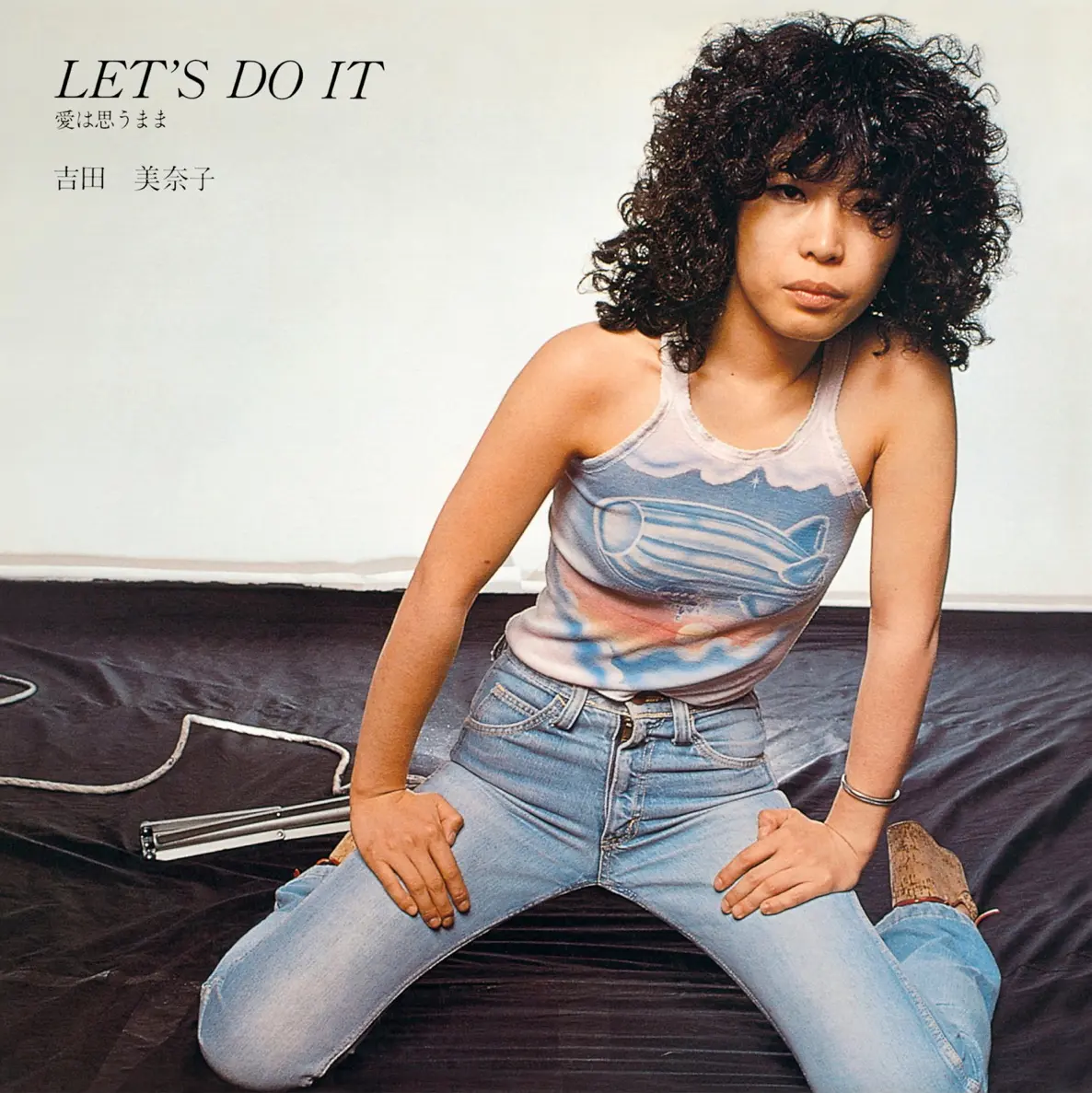 Minako Yoshida released LET’S DO IT -愛は思うまま- on October 25, 1978, on Alfa.
Yoshida narrows the writing toward vocal-led forms and sets her lines inside dense horn and string charts. Guitarists David T. Walker and Wah Wah Watson cut across Scott Edwards or Eddy Watkins on bass over Edward Greene or Alvin Taylor on drums, while Greg Phillinganes and Sylvester Rivers widen the harmony from the keyboards and Tim May joins the guitar line.
A1. “愛は思うまま” [Let’s Do It] (4:52) — Yoshida
A2. “恋の手ほどき” [I’ll Teach You All About Love] (4:10) — Yoshida, Yamashita
A3. “時よ” [Time] (3:35) — Yoshida
A4. “海” [The Sea] (3:58) — Yoshida
A5. “アイッド・ラーザー・リーヴ・ホワイル・アイム・イン・ラヴ” [I’d Rather Leave While I’m in Love] (3:05) — Carol Bayer Sager, Peter Allen
B1. “愛の炎” [Flames of Love] (4:07) — Yoshida, Yamashita
B2. “猫” [Cat] (4:48) — Yoshida
B3. “雲のゆくえに” [Clouds] (4:51) — Yoshida, Yamashita
B4. “影になりたい” [I Wanna Be Your Shadow] (5:12) — Yoshida, Sakamoto
Yoshida recorded LET’S DO IT -愛は思うまま- at Filmways Heider Recording Studio 3 in California with producers Gene Page and Billy Page. Sye Mitchell engineered the main sessions, Miki Curtis produced the vocal tracks, and Honk Cicalo handled vocal-track engineering plus the remix at Crimson Sound Studio in Santa Monica.
Norman Seeff photographed the front cover, back cover, and lyric insert. Aijiro Wakita handled the art direction.
Alfa issued “愛は思うまま -LET’S DO IT-” (b/w “時よ -TIME-”) as a 7-inch on November 5, 1978.
Alfa lifted “愛しているからさよならを -I’D RATHER LEAVE WHILE I’M IN LOVE-” (b/w “恋の手ほどき -I’LL TEACH YOU ALL ABOUT LOVE-”) as a 7-inch on October 21, 1979. The A-side re-cut the album’s only cover version for single release.
Monochrome
 Minako Yoshida released Monochrome on October 21, 1980, on Alfa.
Yoshida sings and plays keyboards over a six-piece lineup with long rests between accents and a narrow instrumental load. Guitarist Tsunehide Matsuki works in short phrases against Akira Okazawa’s bass and Yuichi Togashiki’s drums. Michael Mainieri enters on mallets, and Yasuaki Shimizu answers with saxophone lines. Yoshida also layers her own chorus parts across the record.
This was Yoshida’s first album under her sole production credit. She built the sessions from voice and piano, then added the rest of the parts in small-group recording blocks under her own budget control and jacket supervision. Songwriting stays almost entirely hers. “Rainy Day” is the lone co-write, with Tatsuro Yamashita on the music, and he later recorded it for Ride on Time. Yoshida later rebuilt “Tornado” in a heavily altered form for In Motion.
A1. “Tornado” (5:56)
A2. “Rainy Day” (5:25) — Yoshida, Yamashita
A3. “Black Moon” (4:41)
A4. “Sunset” (7:55)
B1. “Airport” (6:39)
B2. “Mirage” (4:19)
B3. “Midnight Driver” (7:44)
B4. “午後” [Afternoon] (4:47)
Yoshida recorded the rhythm tracks at CBS Sony Studio, Roppongi, on June 13, 14, 20, and 21 plus July 7, 1980. She cut voice tracks and overdubs there from July 3 through 29, added further overdubs at Studio A in Shibaura on July 21 through 23, and mixed the album back at CBS Sony Studio, Roppongi, on August 12, 13, and 15 with engineer Tamotsu Yoshida. JVC Cutting Center in Yokohama handled the mastering.
Minnie handled the art direction, Ray Gun the design, and Hajime Sawatari the photography. Aki Ikuta coordinated the production.
Monsters in Town
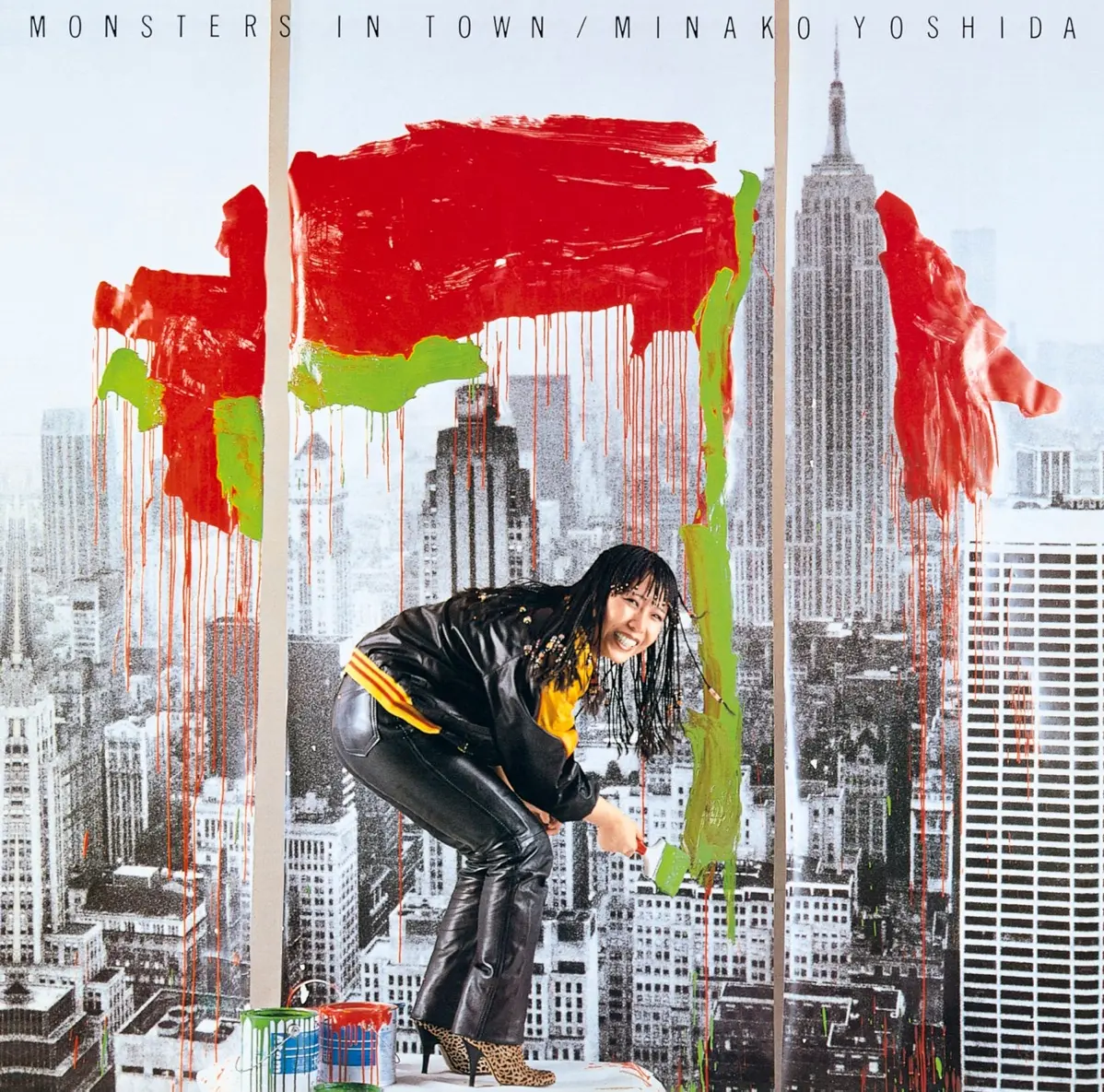 Minako Yoshida released Monsters in Town on November 21, 1981, on Alfa. It was her eighth studio album.
Yoshida writes here for a larger core band with added horn and string sections. Guitarists Takayuki Hijikata and Tsunehide Matsuki cut through Yasuharu Nakanishi’s keyboards, Akira Okazawa’s bass, and Yuichi Togashiki’s drums, while Yasuaki Shimizu and the arranged brass-string parts widen the attack. The album also shifts more weight onto ensemble construction and layered chorus writing, with Yoshida treating the record as a producer-led statement as much as a singer-led set.
Yoshida wrote and composed all eight songs. Aki shares the lyric credit on “Knock, Knock.” “Town” centers on prophet bass and a tenor-saxophone solo, “Lovin’ You” carries piano and baritone saxophone, “Nights in Her Eyes” works as a short choir passage, and “Moment of Twilight” places electric piano, flute, alto flute, harp, and tenor saxophone inside the arrangement.
A1. “Town” (6:19)
A2. “Lovin’ You” (5:58)
A3. “Nights in Her Eyes” (1:26)
A4. “Black Eye Lady” (5:18)
B1. “Monster Stomp” (5:17)
B2. “Knock, Knock” (4:59)
B3. “窓” [Moment of Twilight] (5:43)
B4. “つかの間の時へ” [Back in Town] (3:05)
Yoshida recorded and mixed Monsters in Town at CBS Sony Roppongi Studios in Tokyo with engineer Tamotsu Yoshida. She also produced and arranged the album, while Tatsuro Yamashita and Yasuaki Shimizu handled the string and horn arrangements.
Yoshida conceived the cover. Masayoshi Sukita shot the photographs, and Aki Ikuta with Ray Gun + One handled the graphics.
Alfa issued “Black Eye Lady” (b/w “Town”) as a 7-inch on November 21, 1981. The song also appeared in a Hitachi Maxell cassette-tape commercial that year. Alfa followed with “Town” (b/w “Monster Stomp (Extended Version)”) on April 15, 1982.
Light’n Up
 Minako Yoshida released Light’n Up on September 21, 1982, on Alfa.
Yoshida writes these arrangements around horn entries, string lifts, and keyboard color that rise from a tight rhythm bed. Guitarists Tsunehide Matsuki and Takayuki Hijikata cut across Akira Okazawa’s bass and Yuichi Togashiki’s drums, while Haruo Togashi and Hiroshi Sato divide the keyboard field between acoustic piano, electric piano, organ, OBX, and Prophet lines. New York horn overdubs and L. Leon Pendarvis string charts widen key passages, but Yoshida still binds the album through close vocal placement and sharply drawn chorus writing.
The title track places David Sanborn on alto sax over Yoshida’s Prophet bass and Yasuaki Shimizu’s horn writing. “Love Shower” hands the orchestral brief to Tatsuro Yamashita. “風” [Wind] opens with a Michael Brecker solo and turns into a duet exchange with Okazawa. “Morning Prayer” reduces the texture to piano, organ, choir, and Tommy Yoshida’s added voice. “斜陽 (Reflection)” [Reflection] places Yamashita in the chorus and Michael Brecker on tenor sax, while “Alcoholholer” folds Prophet 5, added horn writing by Yoshida, and Shimizu’s reed section into the album’s hardest surface.
Yoshida wrote all eight songs. Aki shares the lyric credit on “Alcoholholer.”
A1. “Light’n Up” (5:48)
A2. “頬に夜の灯” [Night Light on My Cheek] (5:42)
A3. “Love Shower” (3:16)
A4. “風” [Wind] (6:54)
B1. “Morning Prayer” (3:59)
B2. “斜陽 (Reflection)” [Reflection] (5:41)
B3. “時の向こう” [Beyond Time] (5:07)
B4. “Alcoholholer” (6:34) — Yoshida, Aki
Yoshida recorded Light’n Up at CBS Sony Roppongi Studio in Tokyo and A&R Studio in New York, then completed the mix in New York with Tamotsu Yoshida. She produced the album herself. The New York sessions also restored the Brecker Brothers horn section to its original lineup for the overdub work.
In Motion
 Minako Yoshida released In Motion on October 21, 1983, on Alfa.
Yoshida redraws these older songs with denser horn writing, clipped guitar interlock, and reed lines that take a larger share of the lead work. Haruo Togashi spreads organ, electric piano, OBX, and acoustic piano across the band, while Okazawa and Togashiki drive the set from a dry, hard pulse. The arrangements cut some songs to short bursts and open others with tenor-sax breaks, Emulator figures, extra snare, or tom-tom overlays.
“猫” [Cat], “愛は思うまま” [Let’s Do It], and “海” [The Sea] compress the Alfa material into tight live cuts built from horn punches and guitar slashes. “Tornado” adds Simmonas tom-toms and acoustic piano by Hiroshi Sato. “Alcoholholer” carries Yoshida’s rap, Prophet 5, and Solina against Shimizu’s reed block. “Town” closes with tenor-sax solo, acoustic piano, flute, and baritone saxophone after a long rise from the core band.
A1. “Uptown” (4:31)
A2. “猫” [Cat] (2:19)
A3. “愛は思うまま” [Let’s Do It] (3:54)
A4. “Lovin’ You” (3:46)
A5. “海” [The Sea] (4:54)
B1. “Tornado” (3:56)
B2. “Alcoholholer” (5:26) — Yoshida, Aki
B3. “Monster Stomp” (4:09)
B4. “Town” (5:35)
Yoshida based In Motion on performances recorded at Pit Inn Roppongi on September 22 through 24, 1982, then added horn and other studio work at CBS Sony Roppongi Studio, Onkio Haus, Nichion Studio, and Alfa Studio A. Tamotsu Yoshida captured the live recordings, Toshiro Ito mixed the album at CBS Sony Roppongi Studio, and Yoshida co-produced the record with Aki Ikuta.
The obi presented the album as a best selection that fused live performance with studio work. Its title borrows an American-football term for a back who breaks from a one-second post-set standstill. Yoshida also removed audience applause from the finished master because she did not need it in the final design.
Dark Crystal
 Minako Yoshida released Dark Crystal on April 10, 1989, on Mecatone/Sohbi Kikaku.
Yoshida narrows the backing to her own programming, keyboards, and layered voices across most of the album. Fairlight III and synthesizer parts build the harmonic bed, and the record relies on clipped attack, exposed space, and stacked vocal breadth more than outside ensemble traffic. Two outside arrangement roles break that self-contained design: Makoto Yano shapes the horns on “Gifted,” and Yasuaki Shimizu handles the brass-orchestra writing on “Nosferatu.”
“Starbow” opens with a sampled fragment of “Wind” from Bells. “Tang Tang” closes with a muted-trumpet color built from Minimoog and Fairlight CMI. “December Rain” strips the album to Yoshida alone at the piano. Yoshida later described the record as a hard, machine-like statement shaped during a closed emotional period, which matches the album’s narrow instrumental load and severe vocal surface.
1. “Starbow” (5:23)
2. “Gifted” (5:39)
3. “Tang Tang” (4:19)
4. “Crystal” (6:20)
5. “Heat Wave” (4:52)
6. “Nosferatu” (6:09)
7. “凪” [Calm] (6:55)
8. “December Rain” (6:41)
Yoshida recorded and mixed Dark Crystal at Victor Aoyama Studio in Tokyo with engineers Shigemi Watanabe and Tsuneo Tokono. She produced the album herself, wrote and arranged all eight songs, brought in Yasuo Kimoto for Fairlight III and synthesizer programming, and left only two arrangement exceptions on the record.
Peter Sato handled the art direction and design. Masayoshi Sukita shot the photographs. Yoshio Sugiyama took the makeup credit, and Kozue Naito handled wardrobe.
Discography:
- 扉の冬 (Tobira no Fuyu) (1973)
- Minako (1975)
- Minako II: Live at Sun Plaza Hall October 3, 1975 (1976)
- Flapper (1976)
- Twilight Zone (1977)
- Let’s Do It: 愛は思うまま (1978)
- Monochrome (1980)
- Monsters in Town (1981)
- Light’n Up (1982)
- In Motion (1983)
- Dark Crystal (1989)
Sources:
Artist/Album Pages:
Billy Preston (1946–2006) was an American R&B singer and keyboardist who released 24 albums be...
Vector was an American new wave/synthpop trio from Sacramento that made two 1983–85 albums on Exi...
Ambiance was an American jazz-funk/soul band from Los Angeles that released the 1979/80 albums Ebu...
Forty-Seven Times Its Own Weight was an American jazz-rock band from Austin that released the albu...
Axis Point was an English hard-rock supergroup that released the 1978–80 RCA albums Axis Point and...
Albania was a Scottish New Wave band that released multiple singles and the album Are You All Mine i...
Bike was an American hard-rock band from Michigan that evolved from Silver Bicycle and issued one...
Dorian Gray was a Croatian new wave band behind the 1983–85 Jugoton albums Sjaj u tami and Za tvoj...
Black Sabbath was an English hard-rock and heavy-metal band from Birmingham that formed in 1968. T...
Moe Koffman (Dec. 28, 1928 — March 28, 2001) was a Canadian flutist, saxophonist, composer, arrang...
Zanov is the performance name of French electronic musician Pierre Salkazanov, who released two albu...
Blues Creation was a Japanese hard-rock band that debuted with a 1969 Polydor album, followed by t...