

Dry Jack was an American jazz-rock band active between 1972 and 1982. They released two albums, Magical Elements and Whale City, both in 1979 on Inner City Records.
Members: Dwight Rucker (vocals, 1973-75), Rod Fleeman (guitar), John Lamb (guitar), Clint Swank (guitar), Rocco Marshall (guitar), Bill Bergman (guitar), Tony DePaolo (guitar), Chuck Lamb (piano, Moog, clavinet), Rich Lamb (bass), Evan DuChene (drums), Greg “Brimble” Collins (drums), Jon Margolis (drums, percussion)
Background
Dry Jack formed in 1973 in Kansas City, Missouri, around multi-instrumentalist Chuck Lamb (piano, Fender Rhodes electric piano, Clavinet, Mini-Moog synthesizer), a keyboardist who composed most material and drew from electric jazz influences. Lamb recruited his brother, bassist Rich Lamb (electric bass), with whom he shared early gigs blending fusion charts and rock backings. Drummer/percussionist Jon Margolis joined in 1974 through New York jazz circuits, locking in rhythms for club dates. Electric guitarist Rod Fleeman entered in 1977 after regional auditions, adding fleet lines to the quartet’s sound.
The band toured with artists including Ray Charles, Pat Metheny, Freddie Hubbard, and McCoy Tyner, then signed to Inner City Records following demo sessions. A club patron coined the name after declaring their set “really dry, jack.”
Magical Elements (1979)
 Dry Jack released their debut album, Magical Elements, in July 1979 on Inner City Records.
The album layers electric keyboards over fusion rhythms and guitar runs, recorded by multi-instrumentalist Chuck Lamb (acoustic piano, Fender Rhodes electric piano, Clavinet, Mini-Moog synthesizer), bassist Rich Lamb (electric bass), electric guitarist Rod Fleeman, and drummer/percussionist Jon Margolis. Chuck Lamb wrote six songs and co-wrote one (“Earth Daze”) with Fleeman.
Tracks range from rural-tinged openers to extended funk explorations. “Americana Hoedown” swings on bright piano lines and steady bass, “Lit Spinners” charges with Brazilian rhythms, Rhodes accents, and rapid guitar. “Laurel’s Dream” unfolds in echoing 6/8 ballad form with layered keys, “Magical Elements” drives on 5/4 samba pulses and unison lines. “Sunday Boogie-Nookie Stomp” stamps R&B patterns with static instrumental builds, “Strollin’ on Jupiter” charts jazz counterpoint in contained melodies, and “Earth Daze” tiers breezy keyboards into harder funk.
A1. “Americana Hoedown” (4:32)
A2. “Lit Spinners (A Tribute to the Pinball God, Zeftag)” (3:15)
A3. “Laurel’s Dream” (6:40)
A4. “Magical Elements” (6:30)
B1. “Sunday Boogie-Nookie Stomp” (6:40)
B2. “Strollin’ on Jupiter” (5:15)
B3. “Earth Daze” (9:16)
Sessions occurred at RPM Studios in New York City in October 1978 with producers Aimée Chiariello and Dry Jack, recording and mixing engineer Mike Barbiero, assistant engineers Ed Small and Mark Friedman, and mastering engineer Bob Ludwig. Mike Flanagan created cover art; Leo Bliok designed the liner; Kevin Yatarola provided photography; Ken Segall wrote liner notes.
Whale City (1980)
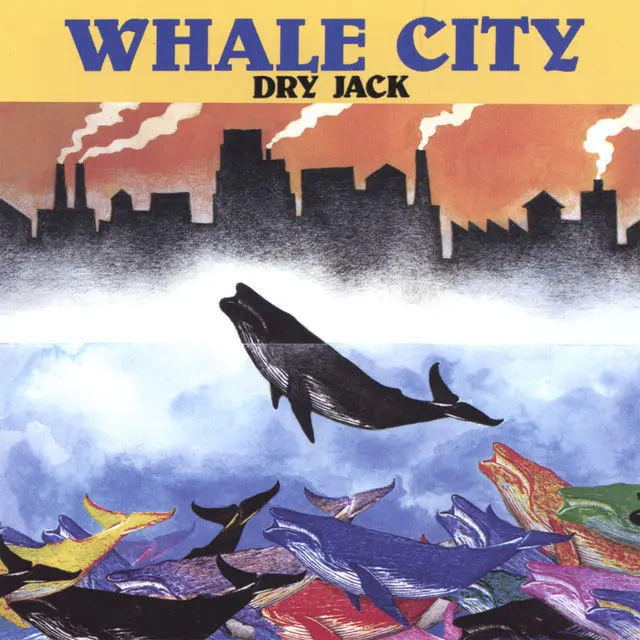 Dry Jack released their second album, Whale City, in February 1980 on Inner City Records.
The album extends keyboard-led fusion with midtempo bop and extended closers, recorded by multi-instrumentalist Chuck Lamb (acoustic piano, Fender Rhodes electric piano, synthesizer, Clavinet), bassist Rich Lamb (electric bass), electric guitarist Rod Fleeman, and drummer/percussionist Jon Margolis. Chuck Lamb wrote six songs and co-wrote one (“Butch and Bruce Go Under the Sea”) with Rich Lamb.
Tracks split into paired sketches and full-band statements. “Hammerhead” launches taut drives, “Heads in the Clouds” swells airy textures, and the two-part “Neener Nawner” sketches concise pulses. “Wimpy Thing” pairs guitar-keyboard exchanges, “Butch and Bruce Go Under the Sea” swings on midtempo bop lines with acoustic piano and unison horn-like figures from keys and guitar. “Whale City” closes in a 12-minute arc of shifting dynamics.
A1. “Hammerhead” (6:10)
A2. “Heads in the Clouds” (6:38)
A3. “Neener Nawner (Part One)” (3:22)
A4. “Neener Nawner (Part Two)” (3:55)
B1. “Wimpy Thing” (4:40)
B2. “Butch and Bruce Go Under the Sea” (5:20)
B3. “Whale City” (12:40)
Sessions occurred at Secret Sound Studios in New York City in July 1979 with producer Dry Jack, engineer Michael Barry, assistant engineer Jason Corsaro, and mastering engineer Bob Ludwig. Michael Flanagan created artwork; Bill Shuyler designed the liner; Charles Reynolds provided photography.
Postlude
Dry Jack disbanded in 1982 after gigs tapered. Inner City reissued both albums on CD in 2008. The quartet reunited in 2016 to record a third album, Alien Intervention, and continues occasional performances in New York, Colorado, Kansas City, and Rapid City, South Dakota.
Discography:
- Magical Elements (1979)
- Whale City (1979)
Sources:
Artist/Album Pages:
Quill was an American symphonic-rock trio from Santa Barbara that recorded the two-movement suite...
Iconoclasta was a Mexican symphonic-rock band that released three albums on Discos Rosenbach, incl...
Montrose was an American hard-rock band that released the 1973–74 albums Montrose and Paper Money ...
Prince Hammer — aka Berris Simpson — is a Jamaican reggae singer, deejay, and producer who emerged...
Sunrize was an American soul-funk band that released a 1982 self-titled album on the Boardwalk Ent...
McLuhan was an American symphonic/jazz-rock band that released the 1972 album Anomaly on Brunswick...
Don Sebesky (born Dec. 19, 1937) is an American jazz trombonist, keyboardist, and arranger from P...
Klique was an American soul-funk trio from Los Angeles that released four albums between 1981 and ...
Black Sabbath was an English hard-rock and heavy-metal band from Birmingham that formed in 1968. T...
Wapassou was a French chamber-rock band that released six albums between 1974 and 1986, including ...
Massada was a Dutch Latin-rock band that released three albums and a live disc between 1978 and 19...
Skorpio was a Hungarian rock band whose 1974 debut A rohanás paired organ-led hard rock and spawne...