

First Choice was an American soul-funk vocal trio from Philadelphia. Between 1973 and 1980, they made six albums and scored R&B crossover hits with “Armed and Extremely Dangerous,” “Smarty Pants,” “The Player (Part 1),” and “Doctor Love.” Co-founder Wardell Piper left after the first album for a solo career.
Members: Rochelle Fleming, Joyce Jones, Annette Guest, Mulaney Star, Wardell Piper, Ursula Herring, Debbie Martin
Background
First Choice evolved from The Debonettes, a Philadelphia vocal group with Overbrook High School classmates Annette Guest and Rochelle Fleming. They rehearsed in Annette’s family home and performed at talent shows and local events. Through WDAS Radio DJ Georgie Woods, they met MFSB co-founder and PIR soundman Norman Harris. Singers Wardell Piper and Malanie McSears (aka Mulaney Star) completed the first-recorded lineup.
In April 1972, First Choice debuted with “This Is the House (Where Love Died),” a Harris co-write with arranger Ronnie Baker. Harris produced the b-side, “One Step Away,” a co-write with Stylistics soundman Thom Bell.
The single appeared on New York’s Scepter Records label. Soon after its release, Mulaney quit and First Choice established its trio format. They secured a deal with Philly Groove, a label represented by Thom Bell with national distribution through Bell Records (no relation).
Armed and Extremely Dangerous
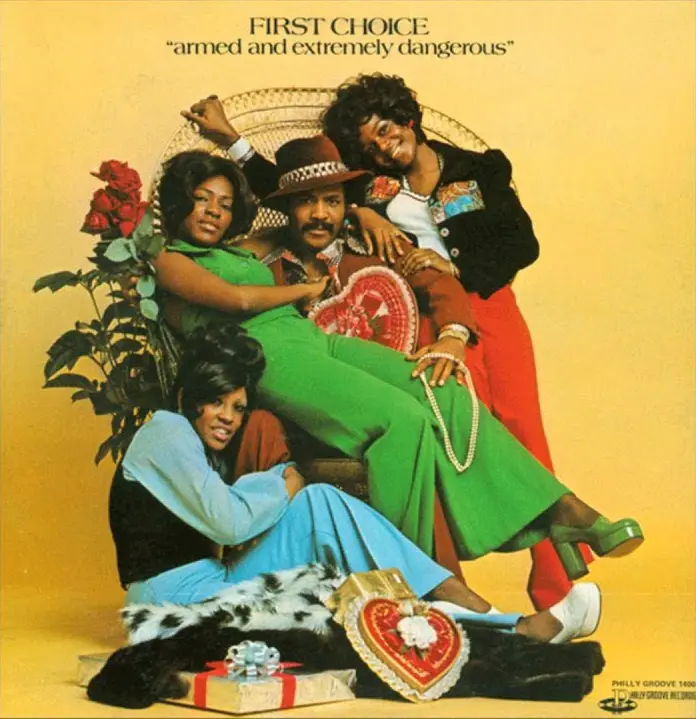 First Choice released their debut album, Armed and Extremely Dangerous, in August 1973 on Philly Groove.
The album presents the trio’s Philadelphia soul approach across a mix of uptempo and slow-tempo tracks, anchored by strong lead vocals from Rochelle Fleming and a blend of harmony lines from Annette Guest and Wardell Piper.
Allan Felder and Norman Harris co-wrote five tracks and collaborated on the closer, “One Step Away,” with Thom Bell. Armed also includes covers of Al Green “Love and Happiness”), Aretha Franklin (“Runnin’ Out of Fools”), and songs by Chuck Brooks and MSFB guitarist Bobby Eli.
The title track, “Armed and Extremely Dangerous,” combines sharp-turning vocals with a narrative of self-assertion. They slow on “Love and Happiness,” a richly orchestrated cover with fluid guitar, bass, and horn lines. Uptempo cuts such as “Smarty Pants” and “Newsy Neighbors” employ brisk rhythms and layered backing vocals, while “This Is the House” channels a Motown–inflected style with gospel-tinged harmonies. “One Step Away” spotlights Fleming’s commanding lead over subtle instrumental support.
A1. “Smarty Pants” (2:38) – A sly commentary on gender roles, its lyrics flip expectations of a confident woman while the arrangement moves with quick, clipped rhythm.
A2. “Runnin’ Out of Fools” (3:32) — The title track to Aretha’s 1964 sixth album, written by Kay Rogers and Richard Ahlert.
A3. “A Boy Named Junior” (3:41) — A character sketch that unfolds like a short story, marked by narrative detail and a slow-burning vocal line. (Brooks)
A4. “Love and Happiness” (6:57) — originated on Green’s 1972 album I’m Still in Love with You, co-written by Teenie Hodges, also covered in 1973 by Etta James. First Choice renders its themes of desire and release with surging horns and layered rhythm.
A5. “Wake Up to Me” (3:45) – A plea for renewed attention in a fading relationship, carried by softened instrumental textures that underline its vulnerability.
B1. “Newsy Neighbors” (5:57) – A wry take on gossip and intrusion, its playful lyric contrasts with the tightly wound drive of the rhythm section.
B2. “Armed and Extremely Dangerous” (2:48) – The title track dramatizes romance as high-stakes pursuit, fusing its cautionary lyric with urgent horn lines and quickfire rhythm.
B3. “This Little Woman” (3:50) – The singer asserts her value against underestimation, the performance blending self-assurance with a polished soul arrangement. (Eli, Carl Fisher)
B4. “This Is the House” (2:57) – A Motown-inspired cut whose call-and-response phrasing frames the household as both sanctuary and site of betrayal.
(B5. “One Step Away” (3:10) – The closer distills heartbreak into restrained terms, its intimate vocal against pared-down accompaniment giving the album a reflective finish.
Sessions occurred at Sigma Sound, Philadelphia, Pennsylvania with producers Stan Watson and Norman Harris.
Record label promoted Armed and Extremely Dangerous with the title single (b/w “Gonna Keep on Lovin’ Him”), which reached No. 11 on the Billboard R&B chart and No. 28 on the Hot 100. “Smarty Pants” followed as a single, peaking at No. 25 R&B and No. 56 pop. “Newsy Neighbors” reached No. 35 R&B and No. 97 on the Hot 100.
Between the album’s completion and release, Wardell Piper left First Choice, which hired singer Joyce Jones, who appears on the cover despite her absence from the record.
The Player
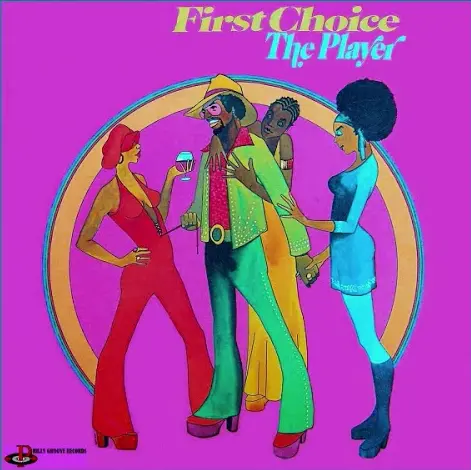 First Choice released their second album, The Player, in August 1974 on Philly Groove.
The album continues the trio’s Philadelphia soul approach with a mix of assertive and slower-tempo tracks, featuring lead vocals from Rochelle Fleming and harmonies from Annette Guest and Joyce Jones, who replaced Wardell Piper.
Norman Harris and Allan Felder co-wrote two tracks and collaborated on “You Took the Words Right Out of My Mouth” with Bunny Sigler. They also cover songs by Thelma Houston (“You’ve Been Doin’ Wrong for So Long”) and the UK duo Pearls (“Guilt”).
The title track, “The Player,” continues the tough, self-assertive theme of their debut, combining angular vocal lines with rhythmic drive. The album includes two versions of “Guilty,” a vocal and a slightly altered instrumental reprise, both emphasizing layered rhythms and string accompaniment. Uptempo tracks such as “Hustler Bill” and “Guess What Mary Jones Did” use brisk instrumentation and chorale backing, while “All I Need Is Time” slows the pace for a contemplative performance.
A1. “The Player” (7:10)
A2. “Guilty” (4:51) — Written by Ron Roker and Gerry Shury; also appears in a vocal and instrumental version
A3. “You Took the Words Right Out of My Mouth” (4:44)
A4. “You’ve Been Doin’ Wrong for So Long” (3:56) — Written by Frank Johnson and Terry Woodford, recorded immediately beforehand by Houston as a non-album Motown a-side.
B1. “Hustler Bill” (5:28) — Sigler, Jean Lang
B2. “All I Need Is Time” (4:42) — Bob Reneu
B3. “Guess What Mary Jones Did” (4:59)
B4. “Guilty (Instrumental)” (4:51) — Ron Roker, Gerry Shury
Sessions occurred at Sigma Sound and Future Gold, Philadelphia, Pennsylvania, with producers Stan Watson and Norman Harris.
Record label promoted The Player with the single “The Player (Part 1),” which reached No. 7 on the Billboard R&B chart and No. 70 on the Hot 100. “Guilty” followed as a single, peaking at No. 19 R&B and No. 103 on the Hot 100.
In 1975, First Choice signed with Warner Bros. and Joyce Jones cleared for singer Ursula Herring.
So Let Us Entertain You
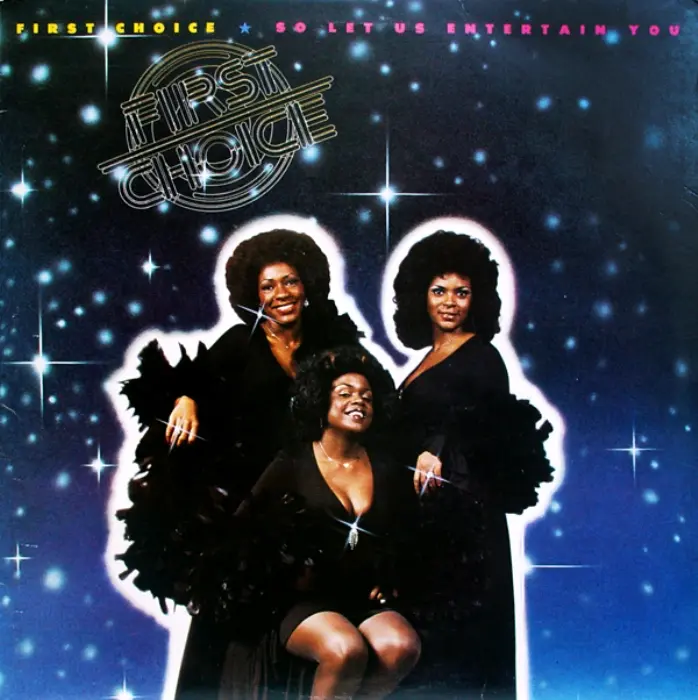 First Choice released their third album, So Let Us Entertain You, in March 1976 on Warner Bros.
The album finds the trio adapting their Philadelphia soul style to the mid-decade disco shift, with arrangements built on layered strings, steady rhythms, and vocal interplay between Rochelle Fleming, Annette Guest, and Joyce Jones.
James Dean and John Glover wrote four of the ten songs, including “Ain’t He Bad.” The songwriting team known as Hot Ice (Victor Drayton, Buddy Turner, Jerry Akins, John Bellmon) wrote “Yes, Maybe No” and the first two tracks on Side B, which also contains “I Got a Feeling,” a 1976 hit for Al Wilson.
The sequence balances declarative numbers such as “Ain’t He Bad” and “Let Him Go” with reflective material like “If the Sun Shines.” “Gotta Get Away (From You Baby)” builds lyrical urgency over sharp rhythm figures, while “Are You Ready for Me?” and “Don’t Fake It” sustain the album’s uptempo pace.
A1. “First Choice Theme” (3:10) — Harold Cephas, Arnold Coley, Stan Watson
A2. “Ain’t He Bad” (7:20)
A3. “I’ll Stay Right Here” (2:54)
A4. “Yes, Maybe No” (2:52)
A5. “Gotta Get Away (From You Baby)” (5:27)
B1. “Are You Ready for Me?” (4:05)
B2. “Don’t Fake It” (4:22)
B3. “I Got a Feeling” (5:27) — Homer Banks, Carl Hampton
B4. “Let Him Go” (5:53)
B5. “If the Sun Shines” (3:26)
Sessions occurred at Sigma Sound, Philadelphia, with producers Stan Watson and Vincent Montana Jr.
Warner Bros. promoted So Let Us Entertain You with “Gotta Get Away (From You Baby),” which reached No. 16 on the Billboard R&B chart and No. 64 on the Hot Soul Singles. “Let Him Go” followed, peaking at No. 97 R&B, and a medley single of “First Choice Theme” and “Ain’t He Bad” reached No. 7 on the US dance chart.
Delusions
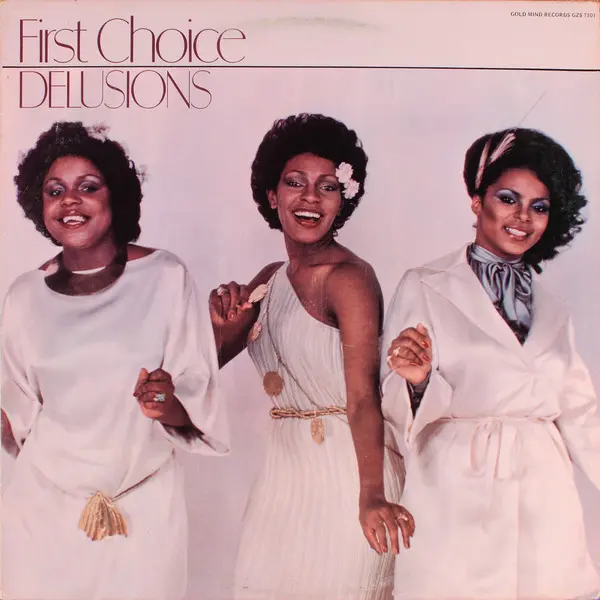 First Choice released their fourth album, Delusions, in September 1977 on Gold Mind.
The album introduced new member Ursula Herring alongside Rochelle Fleming and Annette Guest, with the trio shifting fully into the disco idiom under the Gold Mind/Salsoul umbrella. Strings, horns, and layered percussion frame the harmonies across uptempo dance tracks and slower, more atmospheric cuts.
Songwriter Ron Tyson worked with Norman Harris and Allan Felder on the first two tracks and “Chances Go Around.” Tyson also co-wrote “Gamble on Love” with bassist Ronnie Baker. Bruce Hawes and Bruce Gray contributed separate titles, while Ron Kersey co-wrote “I Love You More Than Before” with Cheryl Dickinson. Spinners songwriter Bruce Hawes co-wrote the last three tracks with input from Bruce Gray and Mikki Farrow.
“Doctor Love” opens the set with urgent rhythms, punchy horns, and call-and-response refrains. “Indian Giver” follows in a similar club vein, while the Stevie Wonder cover “Love Having You Around” stretches out in a longer, orchestral arrangement that intensifies its romantic theme. “Let No Man Put Asunder” takes a declarative lyrical stance over a slower pulse, contrasting with the compact, Northern soul-tinged “Gamble on Love.”
A1. “Doctor Love” (5:17)
A2. “Indian Giver” (4:51)
A3. “Love Having You Around” (6:57) — originated on Wonder’s 1972 album Music of My Mind, co-written by Syreeta Wright
A4. “Gamble on Love” (3:00)
B1. “Chances Go Around” (6:00)
B2. “I Love You More Than Before” (4:16)
B3. “Let No Man Put Asunder” (4:28)
B4. “Do Me Again” (3:50)
B5. “Jimmy ‘D'” (2:55)
Sessions occurred at Sigma Sound in Philadelphia with producers Norman Harris, Ron Kersey, Ronnie Baker, Earl Young, and Bruce Hawes.
Gold Mind promoted the album with “Doctor Love,” which reached No. 41 on the Billboard Hot 100, No. 23 on the R&B chart, and No. 8 on the disco chart. A follow-up, “Love Having You Around,” charted modestly at No. 68 R&B.
Hold Your Horses
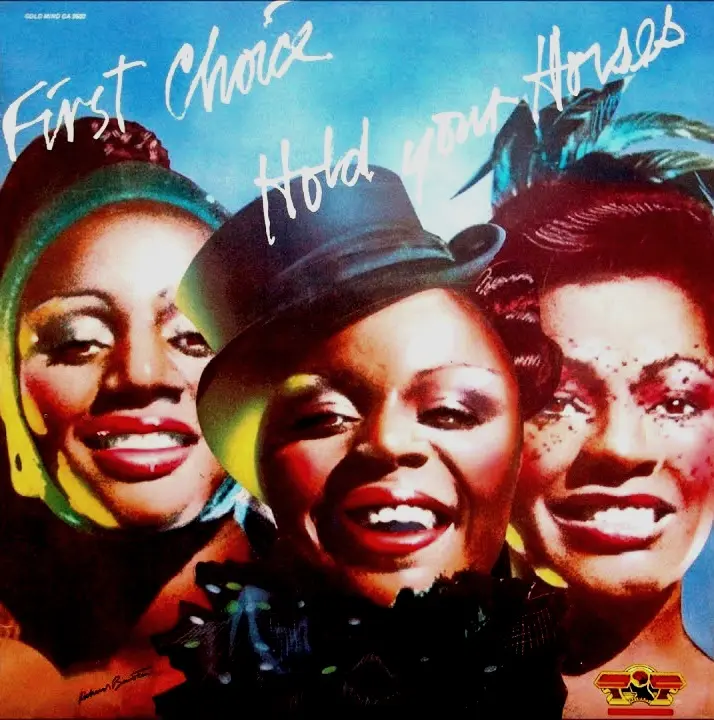 First Choice released their fifth album, Hold Your Horses, in January 1979 on Gold Mind.
The album combines Eurodisco arrangements with the trio’s established Philadelphia soul style. Rochelle Fleming, Annette Guest, and new member Debbie Martin front productions recorded both in Munich with keyboardist Thor Baldursson and in Philadelphia with guitarist Norman Harris.
Baldursson co-wrote two tracks with guitarist Mats Björklund and producer Pete Bellotte and arranged the opener “Let Me Down Easy,” written by David Jordan and Andrew Smith. The side-two closer “Double Cross” was written by Harris with lyricist Ron Tyson. The Steals brothers (Melvin and Mervin) with arranger McKinley Jackson contributed “Love Thang,” while “Hold Your Horses” was a collaboration between Kathleen Poppy, bassist Les Hurdle, percussionist Frank Ricotti, and keyboardist Peter Gosling.
The first side unfolds as a three-song suite that moves from the rising vocal lines of “Let Me Down Easy” through the Spanish-tinged “Good Morning Midnight” into the dramatic contours of “Great Expectations.” The title track rides on a fast, galloping rhythm, while “Love Thang” slows the pace with a deep funk undertone. “Double Cross” closes with a Philadelphia-styled interplay of guitars, rhythm, and strings.
A1. “Let Me Down Easy” (6:20)
A2. “Good Morning Midnight” (3:57)
A3. “Great Expectations” (5:33)
B1. “Hold Your Horses” (5:50)
B2. “Love Thang” (5:41)
B3. “Double Cross” (6:59)
Sessions occurred at Musicland in Munich with producers Tom Moulton and Baldursson, who worked with percussionist Keith Forsey, bassist Hurdle, guitarist Björklund, and the Munich Philharmonic. Additional sessions took place at Sigma Sound in Philadelphia with Harris and rhythm players Keith Benson (drums), Jimmy Williams (bass), and Bobby Eli and T.J. Tindall (guitars). Don Renaldo provided strings and horns at both locations.
Gold Mind promoted Hold Your Horses with three singles. The title track reached No. 73 on the Billboard R&B chart. “Double Cross” followed and peaked at No. 60, while “Love Thang” reached No. 52 on the Billboard dance chart.
Breakaway
First Choice released their sixth and final album, Breakaway, in March 1980 on Gold Mind.
Discography:
- Armed and Extremely Dangerous (1973)
- The Player (1974)
- So Let Us Entertain You (1976)
- Delusions (1977)
- Hold Your Horses (1979)
- Breakaway (1980)
Sources:
Artist/Album Pages:
Billy Joel is an American pianist, singer, and songwriter from the Bronx who released the album Co...
Cactus was an American hard-rock|blues band that released four albums between 1970 and 1972 on At...
Full Circle was an American southwest jazz-rock band behind a 1977 self-titled album on Bean Recor...
Eden was a German Christian symphonic-rock band that released the 1978–80 albums Erwartung and Perel...
Joe Chambers is an American jazz-funk drummer, pianist, vibraphonist, and composer from Stoneacre...
Luiz Bonfá (Oct. 17, 1922 — Jan. 12, 2001) was a Brazilian samba-jazz guitarist and composer who e...
Duffy were an English hard-rock band that released the album Scruffy Duffy on PAN in 1973, followe...
The Moody Blues were an English rock band active from 1964 to 2018. The original lineup included sin...
Le Groupe X was an Italian electro-funk/psych project headed by musician Gianluigi Pezzera. The pr...
Junior Murvin (circa 1946 – December 2, 2013) was a Jamaican reggae singer and songwriter who emer...
Arthur Brown (born June 24, 1942) is an English singer, performer, and bandleader from Whitby, Yor...
Ruth Copeland (born 1946) is an English soul-rock singer who moved stateside in the late 1960s and...