
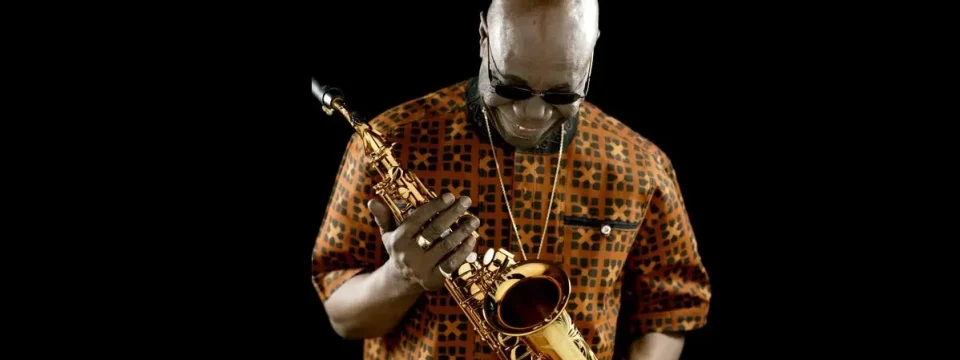
Manu Dibango (Dec., 12 1933 — March 24, 2020) was a Cameroonian saxophonist, malletist, and composer with a music career that spanned more than fifty years. In 1972 he cut the Afro-funk classic “Soul Makossa,” which became a much-covered, widely sampled global hit for the artist.
Background
Manu Dibango was born Emmanuel N’Djoké Dibango on December 12, 1933, in Douala, French Cameroon. Michel Manfred N’Djoké Dibango, a Yabassi civil servant, and a Duala mother who worked as a fashion designer raised him in a Protestant household near the Wouri River. The church choir gave Dibango his first organized music activity; the mother sometimes directed that choir. Dibango tried bamboo flute and homemade guitar during childhood, while the family gramophone brought French, American, and Cuban records into the home. He attended village school and a colonial school in Douala, where the school choir sang during Charles de Gaulle’s 1944 visit to Cameroon.
In 1949, Dibango sailed to France for secondary study at Saint-Calais in the Sarthe. He later studied at Chartres, Reims, and Paris, and the Reims course placed him in preparation for the philosophy baccalaureate. Dibango learned mandolin and classical piano during the French school years. A Cameroon student holiday camp at Saint-Hilaire-du-Harcouët introduced him to Francis Bebey and a borrowed saxophone. Dibango took private saxophone lessons and played classical, jazz, and blues pieces with Bebey at student dances.
During 1956, Dibango failed the second part of the baccalaureate. Michel Manfred N’Djoké Dibango ended financial support after the exam, and Dibango accepted club contracts in Brussels, Antwerp, and Charleroi. In Brussels, Dibango worked in private clubs and cabarets, then led the band at Les Anges Noirs for a Congolese audience tied to independence talks. Joseph Kabasele, known as Le Grand Kallé, hired Dibango for African Jazz after hearing him in that room. Dibango played saxophone and piano on Brussels sessions with Kabasele, then joined African Jazz for concerts in Léopoldville during the Congo independence period.
Dibango remained in Léopoldville after the African Jazz work and moved from sideman work into room leadership. Kabasele placed Dibango at the Afro-Négro club, where Marie-Josée “Coco” Dibango ran the bar and paid the musicians while Dibango led the house band. The band played jazz material, Congolese rumba, and American dance pieces for a mixed audience of Congolese patrons, Europeans, and United Nations personnel. Dokolo Sanu then urged the Dibangos to open the Tam-Tam, a second Léopoldville venue with a more self-directed band format. A family request took Dibango back to Cameroon in 1963, where he opened another Tam-Tam with Congolese musicians. Curfews and police raids during the Cameroon conflict damaged the venue, and Dibango returned to Paris in 1965.
In Paris, Dibango worked ballrooms and Pigalle hiring sessions, then toured behind Dick Rivers. Producer Gésip Légitimus brought Dibango into the television program Pulsations, where he led a large band during 1967. Nino Ferrer first used Dibango on Hammond organ, then heard the saxophone work and made him conductor of the touring orchestra. This Paris television and stage work put Dibango in charge of large arrangements immediately before the 1969 french Mercury release Saxy-Party, the first studio project under the Dibango name.
O Boso
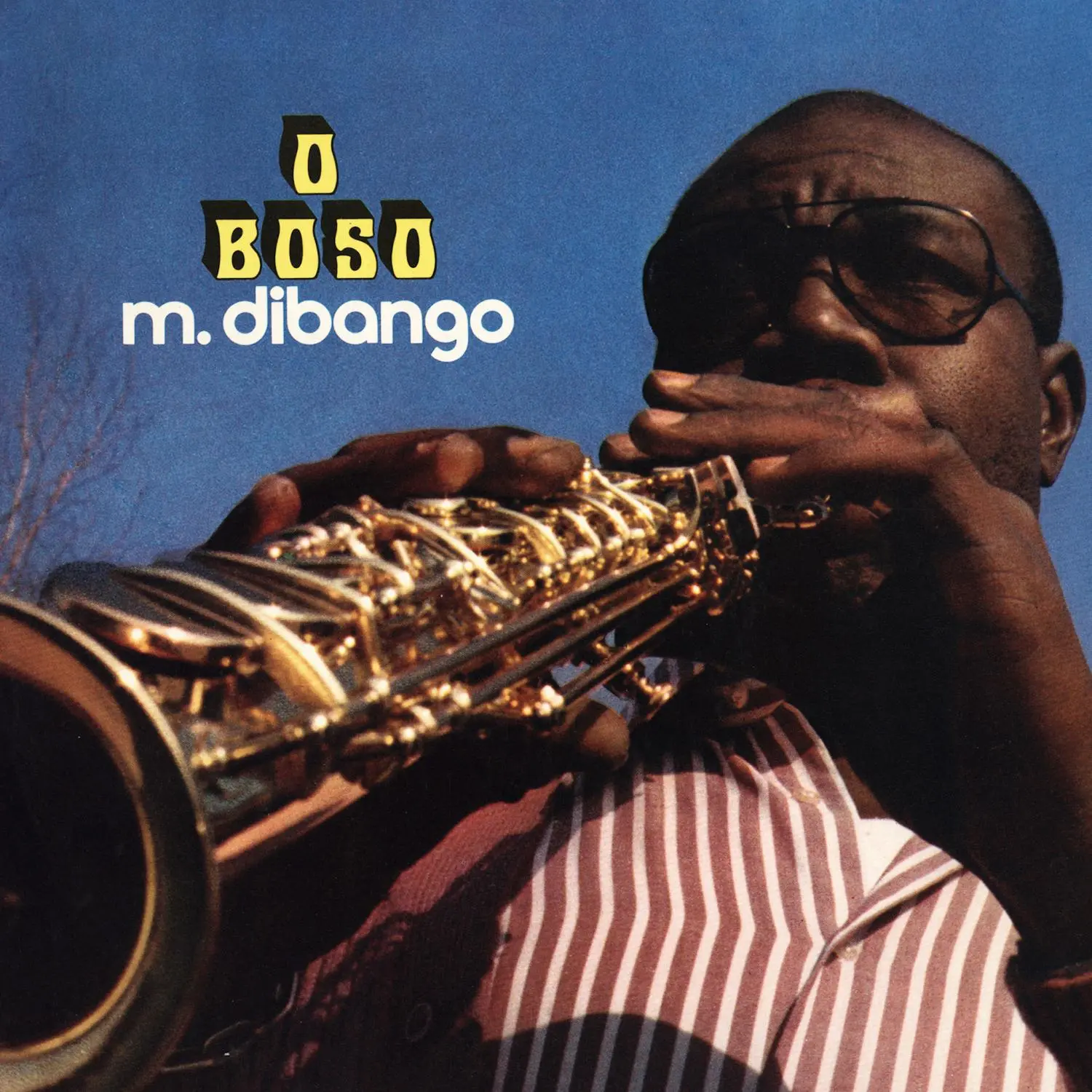 Manu Dibango released O Boso in 1972 on Fiesta.
Dibango leads seven sax-based originals with eight backing players: bassist Manfred Long, drummer Joby Jobs, guitarists Pierre Zogo and Jerry Malekani, percussionists Freddy Mars and Manu Rodanet, and pianists Georges Arvanitas and Patrice Galas.
“New Bell” sways through a see-saw bass line, wah-wah guitar flares, and bright horn charts. “Nights in Zeralda” coils at low heat, with Middle Eastern color at the opening and a settled hand-pattern undercurrent. “Hibiscus” simmers through a slow, moody stretch; echo and darkened tones hold the track before a subtler rhythm appears. “Dangwa” rolls from a florid piano opening into chants, call-and-response, and galloping hand-percussion. “O Boso” gallops through cross-rhythms and sustained dance pressure.
A1. “New Bell (Hard Pulsation)” (6:51)
A2. “Nights in Zeralda” (4:38)
A3. “Hibiscus” (6:23)
B1. “Dangwa (Three Points)” (6:00)
B2. “Wild Man in the City” (4:20)
B3. “O Boso” (5:23)
B4. “Ngosso” (2:50)
O Boso appeared in a sleeve with photography by Xavier Auvert. The Fiesta cover shows Dibango playing saxophone beneath a blue sky, with the bell placed near the lower-left foreground.
“Soul Makossa”
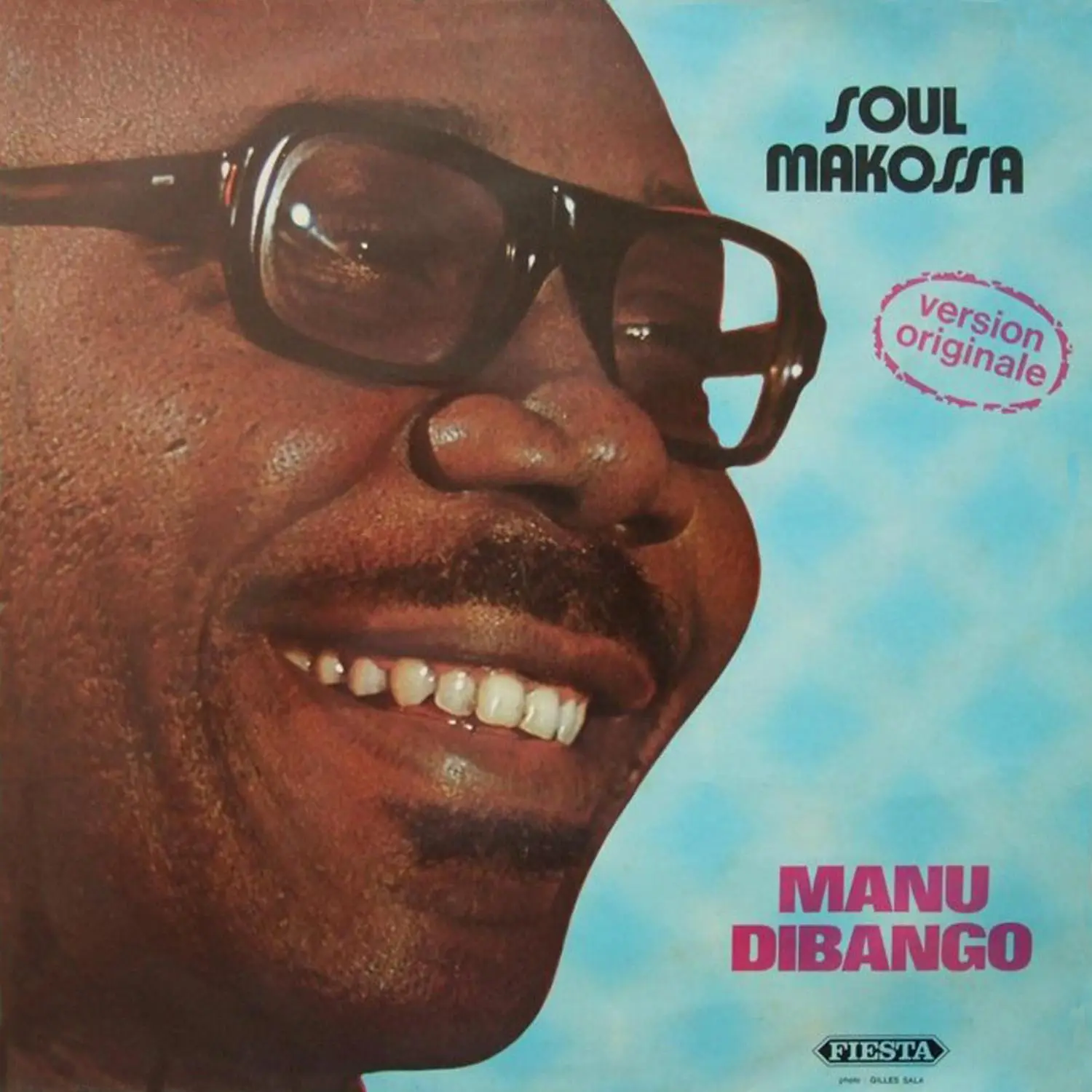 Fiesta issued “Soul Makossa” as a 1972 single. The original French issue placed the song behind “Hymne de la 8e Coupe d’Afrique des Nations,” a football-anthem side tied to the 1972 Africa Cup of Nations in Cameroon.
A. “Soul Makossa” (4:30) – snaps around a fractured saxophone line, a thumping beat, tight rhythm, and the title chant.
B. “Lily” (3:02)
The record moved from French release to New York club circulation after David Mancuso played imported copies at The Loft. Frankie Crocker then gave the title further exposure on WBLS. Atlantic licensed the Dibango recording from Fiesta and issued “Soul Makossa” in the United States with “Lily” on the reverse.
“Soul Makossa” reached No. 35 on the Billboard Hot 100 and No. 21 on the Billboard Hot Soul Singles chart during 1973. The song reached No. 17 in France and went Top 30 in Australia and Canada. Its US chart run coincided with a cover by the Los Angeles funk ensemble Afrique.
The single reshaped the preceding album’s presentation outside France. Atlantic and related international issues used Soul Makossa as the LP title, drawing five tracks from O Boso—“New Bell,” “Nights in Zeralda,” “Hibiscus,” “Dangwa,” and “O Boso”—and adding “Soul Makossa” and “Lily” in place of “Wild Man in the City” and “Ngosso.”
African Voodoo
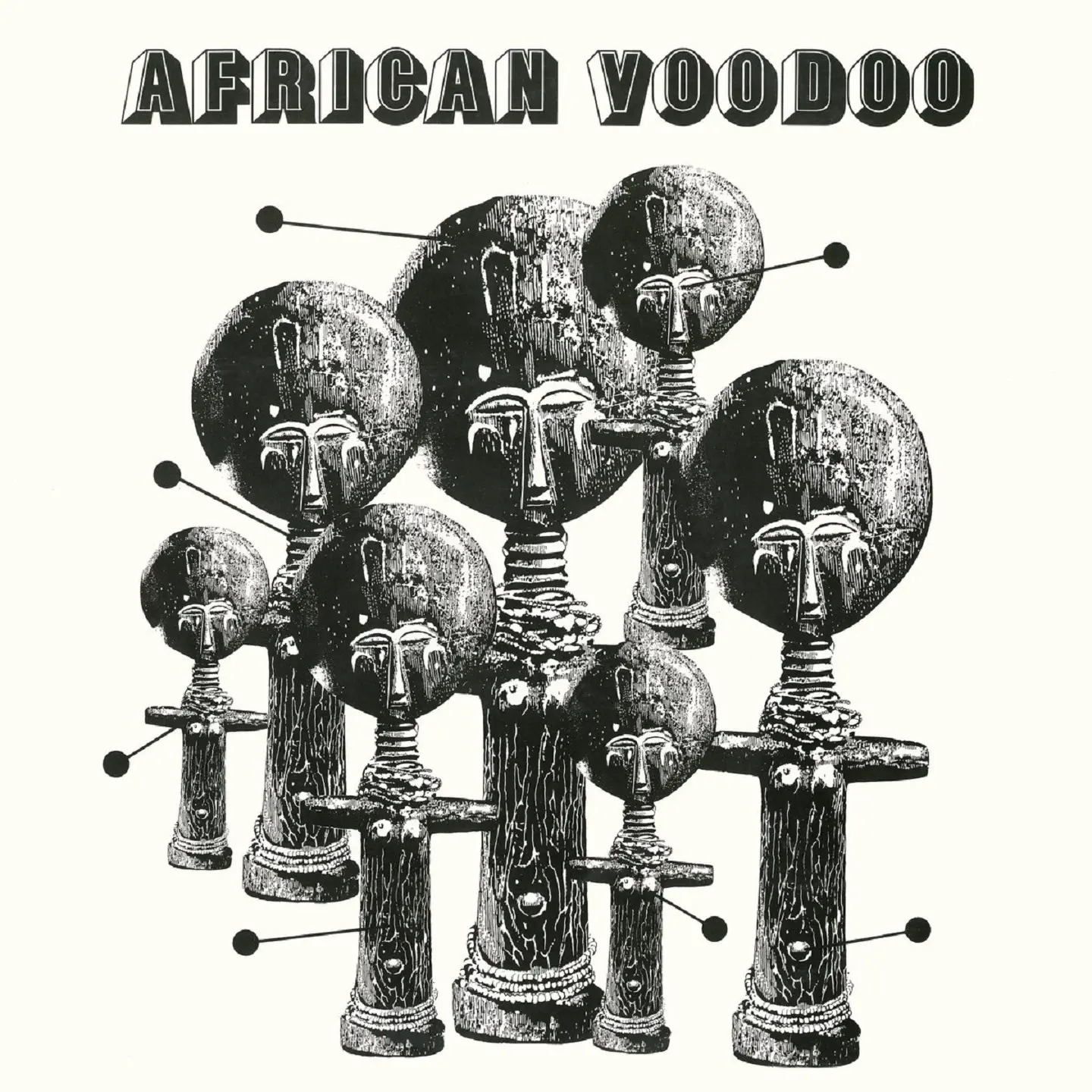 Manu Dibango released African Voodoo in 1972 on PSI.
The album contains twelve Dibango–Louis Delacour titles, recorded as short-form cues for cinema, television, and advertising use.
Dibango leads the sessions on saxophone, vibraphone, marimba, and organ. Trumpeter Yvan Julien, trombonist Jacques Bolognesi, guitarist Slim Pezin, bassist Manfred, drummer Lucien Dobat, and percussionist Émile Boza form the core studio group.
“Groovy Flute” clips along a very rhythmic course, with a bright, constant flute line at the front. “African Pop Session” bears down on a heavy, imposing rhythm. “Ba-Kuba” slows to a mesmeric pace. “Wilderness” tightens the percussive accents. “Soul Saxes Meeting” swings through a compact ensemble figure. “Jungle Riders” alternates electric-guitar and woodwind solos. “Coconut” skips through a Caribbean rhythmic pattern.
A1. “Groovy Flute” (2:33)
A2. “Soul Saxes Meeting” (2:58)
A3. “African Pop Session” (2:52)
A4. “Walking to Waza” (4:02)
A5. “Out of Score” (2:47)
A6. “Ba-Kuba” (3:53)
B1. “Zoom 2000” (3:56)
B2. “Aphrodite Shake” (3:24)
B3. “Wilderness” (3:08)
B4. “Jungle Riders” (2:59)
B5. “Iron Wood” (2:43)
B6. “Coconut” (2:11)
Sessions occurred in 1971 at Pathé-Marconi studio in Boulogne-Billancourt for professional sound illustration tied to cinema, television, and advertising.
Africadelic
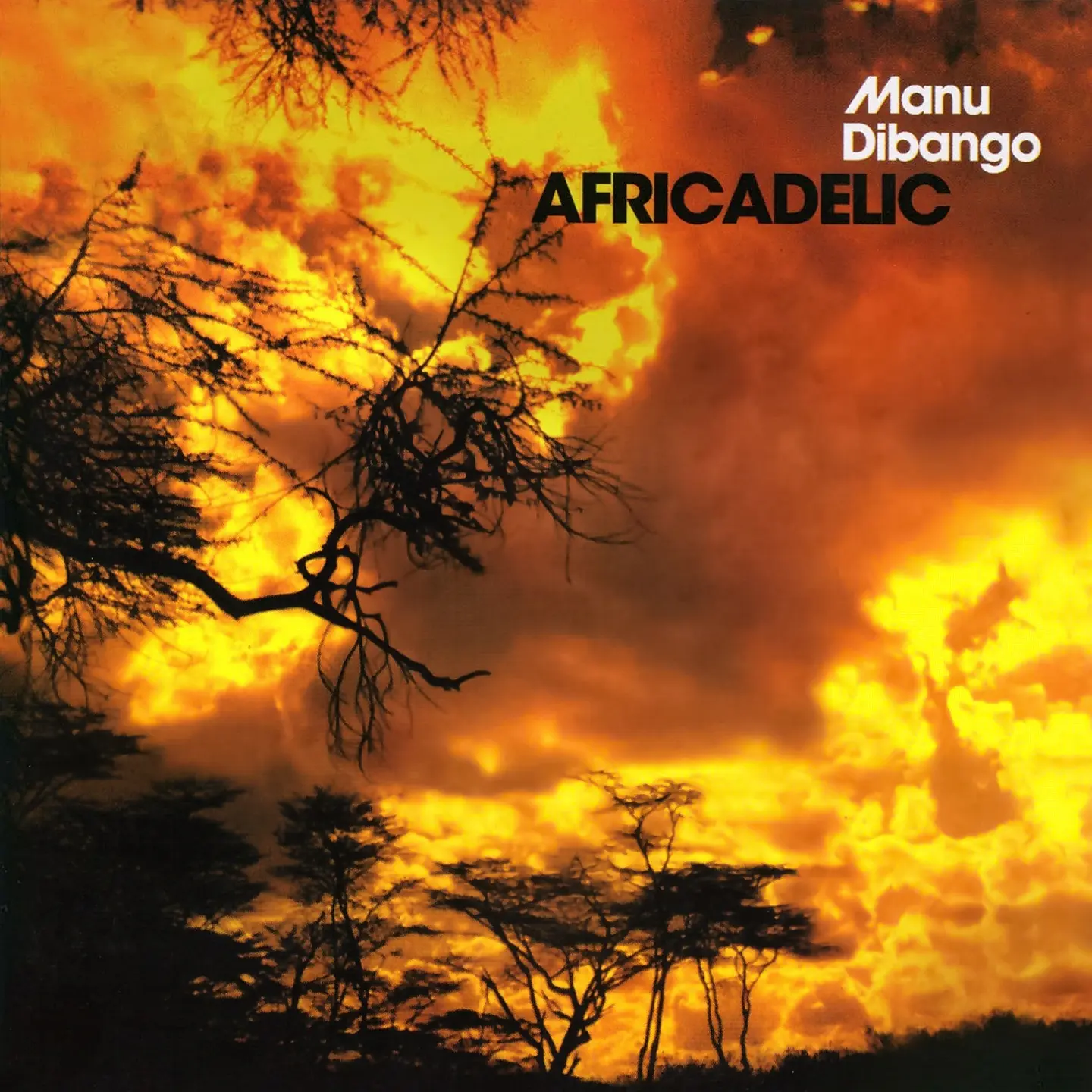
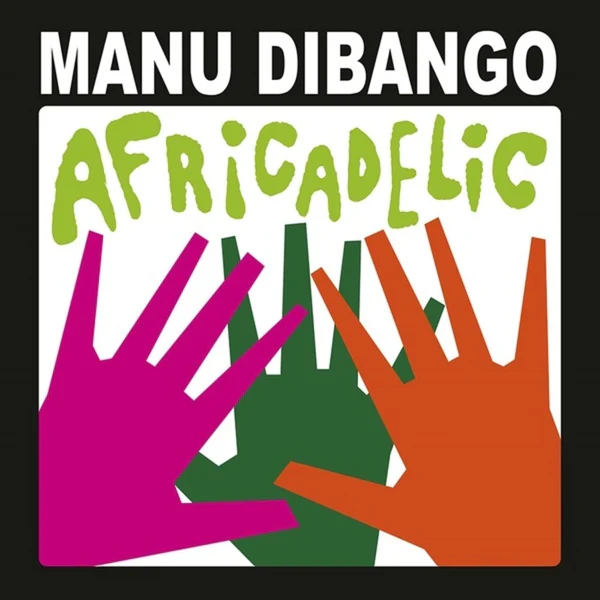 Manu Dibango released Africadelic in 1973 after the material originated through Louis Delacour’s Mondiophone library operation.
The album contains twelve Dibango–Delacour titles, later retitled from numbered theme cues into the song-title sequence below. Dibango directs Manu Dibango and His African Pop Group. The arrangements place saxophone and vibraphone over organ color, clipped guitar, brass figures, and percussion breaks.
“Soul Fiesta” raises dramatic tension through hard percussive accents before a vibraphone riff locks the cut into place. “Africadelic” stabs through brass, organ color, and rock-edged guitar under a Latin hand pattern. “African Battle” bears down on the denser side of that riff-and-accent vocabulary. “African Carnival” surges on full-section horns and polyrhythmic breaks.
“Oriental Sunset” glides through a high flute line and soft mallet color. “Monkey Beat” clips through a short, dance-directed figure. “Wa Wa” clips through the same compact rhythmic approach. “Percussion Storm” marches out on a final vibraphone line.
 A1. “Soul Fiesta” (2:10)
A2. “Africadelic” (2:15)
A3. “The Panther” (3:12)
A4. “African Battle” (3:15)
A5. “Black Beauty” (2:50)
A6. “African Carnaval” (2:26)
B1. “Moving Waves” (4:10)
B2. “Afro-Soul” (2:42)
B3. “Oriental Sunset” (1:43)
B4. “Monkey Beat” (2:40)
B5. “Wa-Wa” (3:00)
B6. “Percussion Storm” (1:52)
Sessions occurred in 1972 at Pathé-Marconi studio in Paris with artistic director Louis Delacour, engineer Alain Butet, and assistant engineer A. R. Bourdet.
Makossa Man (aka Pêpê Soup)
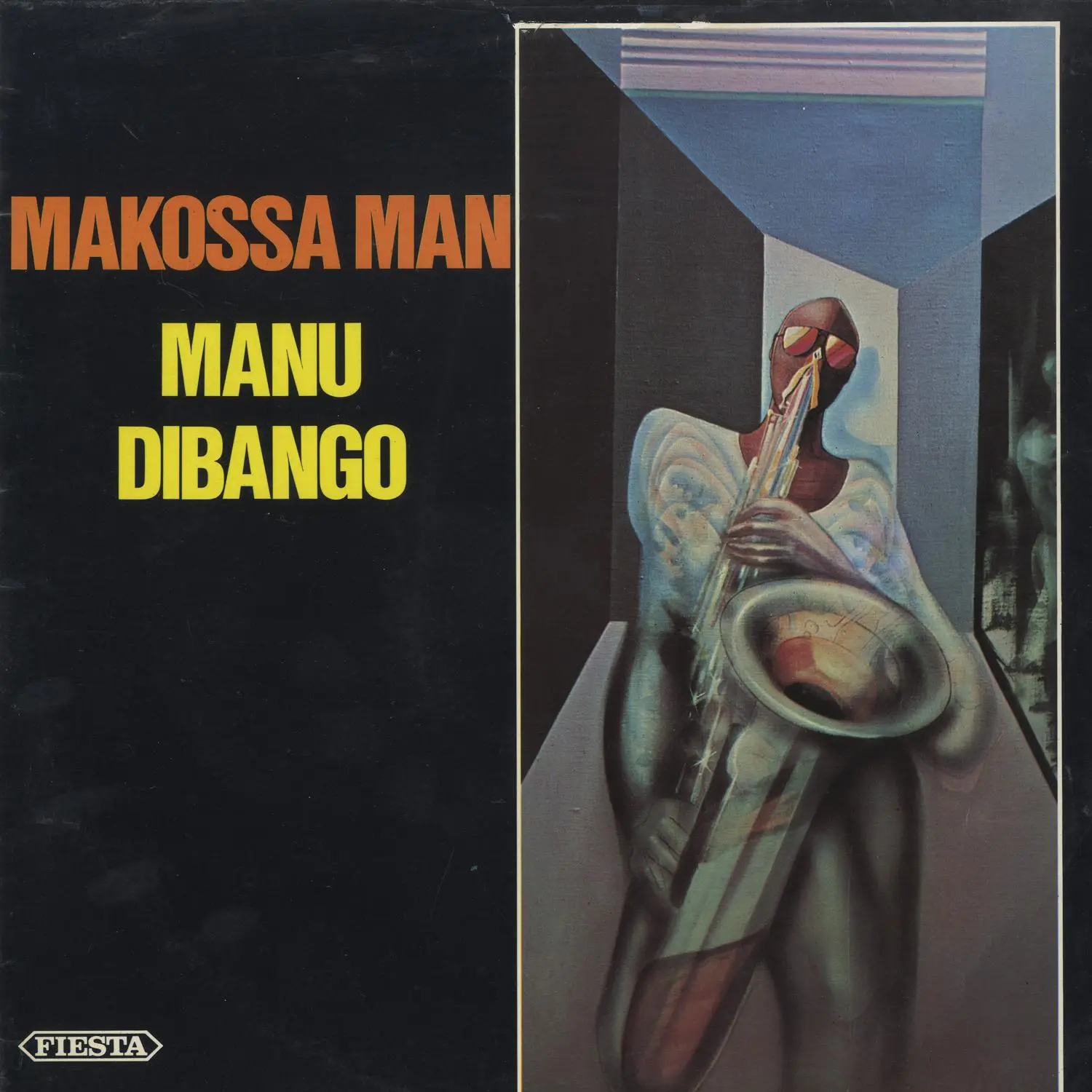 Manu Dibango released Makossa Man in 1974 on Atlantic. Decca also issued the same program as Pêpê Soup.
Dibango composed and arranged the eight titles, with the sequence extending the saxophone-and-voice model of “Soul Makossa” through longer makossa pieces.
He juggles sax with keyboards and mallet percussion, backed by organist Harry Gatibelza and two players each on bass (Manfred Long, Philippe Neveu), drums (Claude Vamur, Lucien Dobat), guitar (Jerry Malekani, Slim Pezin), and percussion (Freedy N’Kounkou, Manu Rodanet). “Weya” lunges from an immediate dance thrust, with a heavy bass line under saxophone phrases and hand percussion.
A1. “Pêpê Soup” (4:00)
A2. “Weya” (5:55)
A3. “Tôm Tôm” (4:55)
A4. “Mwassa Makossa” (6:05)
B1. “Moni” (4:15)
B2. “Essimo” (6:05)
B3. “Lakisane” (4:30)
B4. “Senga” (5:25)
Sessions occurred at Studio Sofrason in Paris with producer Rolande Le Couviour and recording engineer Fernando Braso. Brad Davis and Donald C. Hahn edited and mixed the album at A&R Studios in New York.
The U.S. Atlantic sleeve appeared with album design by Haig Adishian and photography by Jim Cummings. The French issue used cover design by H.R. Rafflenski and photography by J.M. Bel.
Atlantic issued “Pêpê Soup” as a 1973 single (b/w “Weya”). Italian sleeve variants appeared shortly after “Soul Makossa.”
Countdown at Kusini O.S.T.
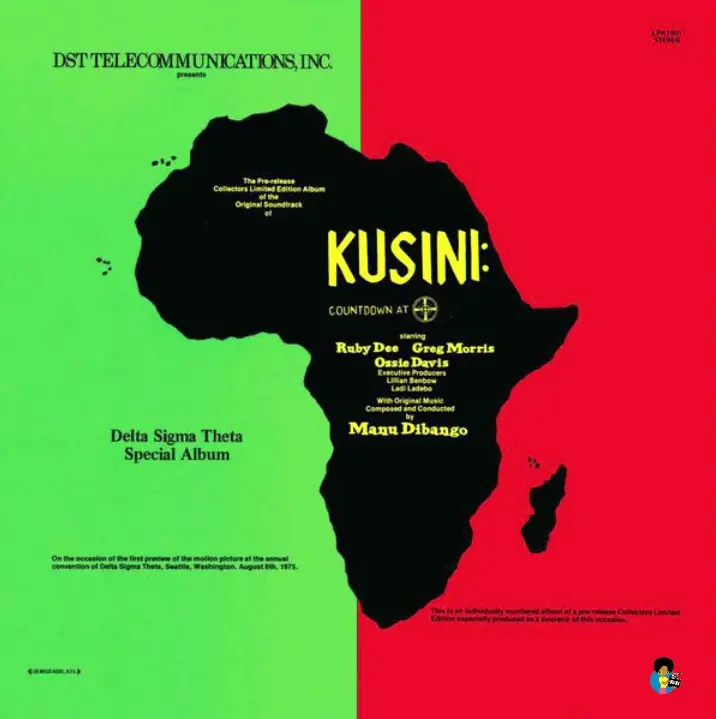 Manu Dibango released Countdown at Kusini on August 6, 1975 on LPK through D.S.T. Telecommunications as a U.S. promotional soundtrack album.
The LP carries the score to the Ossie Davis film, financed through Delta Sigma Theta and D.S.T. Telecommunications.
Dibango composed and conducted the eleven cues. He arranged ten alone, while Karl Shafer co-arranged “Motapo.” The sequence moves through street themes, promenade music, love-theme material, western reference, and liberation cues. “Bush” ratchets from bassline and driving horns into agitated guitar, then closes on a crash.
A1. “Go Slow Streets” (3:46)
A2. “Motapo” (5:24)
A3. “Promenade (Kusini)” (6:37)
A4. “Bokilo’s Boogie” (3:07)
A5. “Jam Session” (3:58)
B1. “Marine” (4:18)
B2. “Bush” (4:55)
B3. “Lea’s Love Theme” (3:31)
B4. “Blowin’ Western Mind” (6:13)
B5. “Liberation Song” (3:30)
B6. “Red Salter” (4:28)
The album appeared as a numbered limited-edition promotional LP tied to preview activity for the motion picture Countdown at Kusini, which follows Red Salter, an African American jazz musician who travels to the fictional African nation of Fahari and enters a struggle against a puppet government backed by multinational corporations. Ossie Davis directed the film and appears opposite Ruby Dee, whose character links Red to the revolutionary movement. The film was shot in Nigeria as a Delta Sigma Theta-backed production conceived as an alternative to contemporary blaxploitation images.
Manu 76
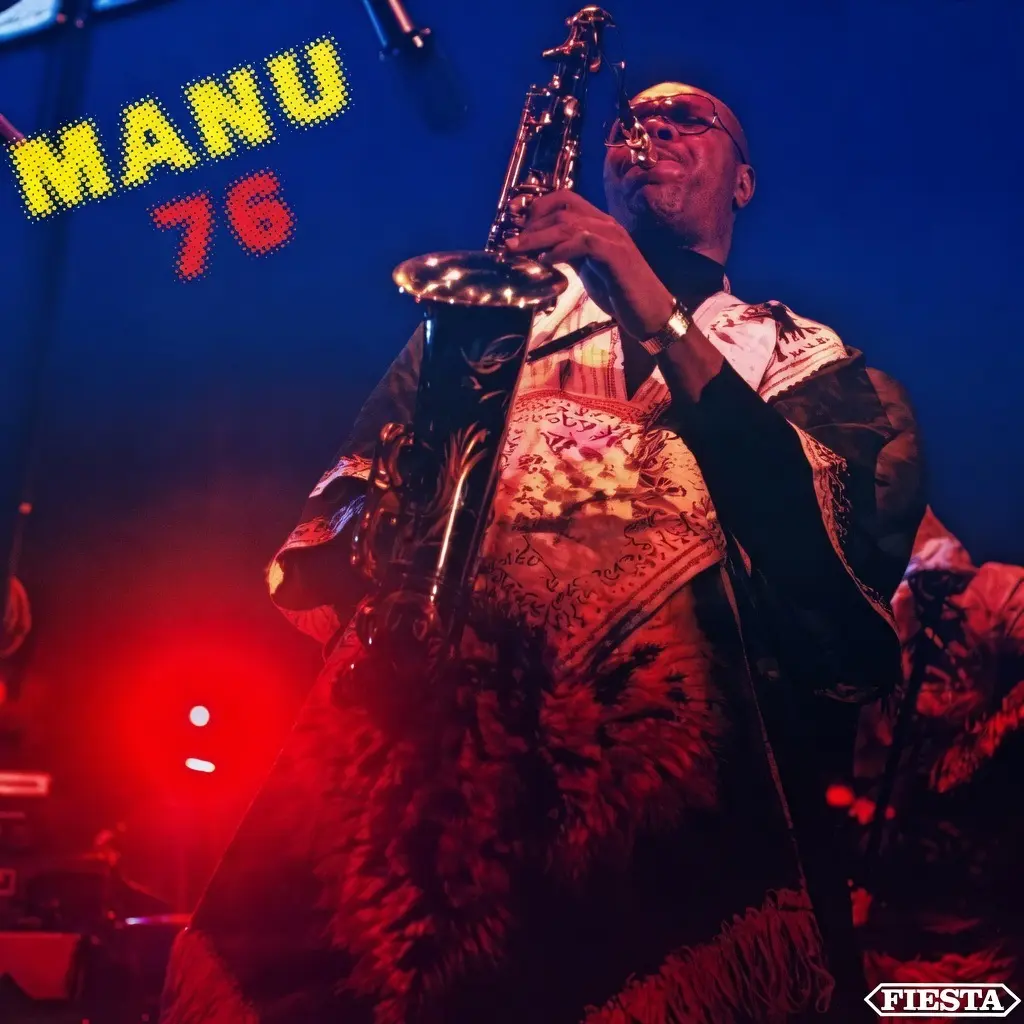 Manu Dibango released Manu 76 in 1976 on Fiesta/Decca.
Dibango composed and arranged the six titles, with the program divided between concise vocal pieces and extended instrumental structures. He juggles saxophone, piano, organ, and marimba. Georgia Dibango sings on “Qui Est Fou de Qui? (Chouchou),” and backing vocalists Anne-Marie Constant, Celia Lacombe, Manou Bale, and Monique Lesueur support the vocal tracks.
The larger studio group includes bassists Christian Padovan and Jo Tongo, drummers Claude Vamur, Lucien Dobat, and Patrick Francfort, pianist Alex Francfort, and guitarist Slim Pezin among the five credited guitarists. Horn players include saxophonists Mam Houari and Patrick Bourgoin, trombonists Christian Guizien, Jacques Bolognesi, and Marc Steckar, and trumpeters Francis Steckar, Freddy Hovsepian, and Pierre Dutour.
“Mouvement Ewondo” drives through a rousing extended sequence. “Besoka on Salsa” settles into pensive soundtrack color. “Angola” lands with bombastic closing pressure.
A1. “Qui Est Fou de Qui? (Chouchou)” (3:57)
A2. “Bokilo’s Boogie” (6:15)
A3. “Mimbo” (4:32)
B1. “Mouvement Ewondo” (7:50)
B2. “Besoka on Salsa” (7:35)
B3. “Angola” (4:25)
Sessions occurred in Paris during 1976. The 2015 Africa Seven edition restored the Fiesta material and identifies the album as a Soul Makossa-licensed reissue from the original catalog.
Afrovision
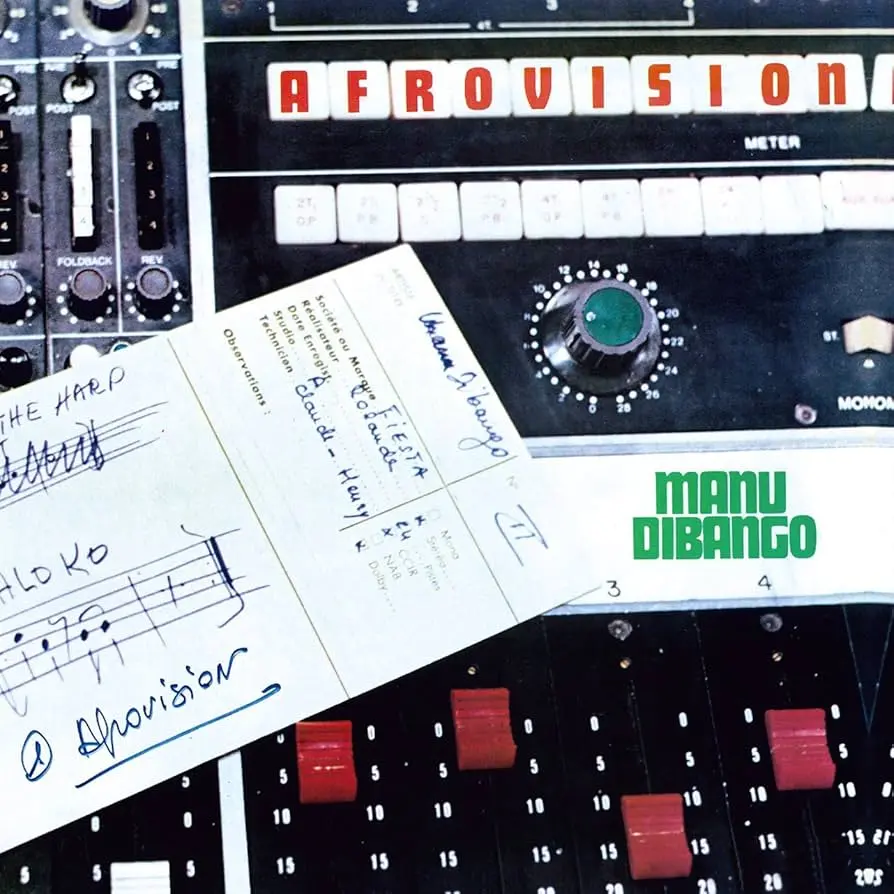 Manu Dibango released Afrovision in 1976 on Fiesta. Island issued the album in the United States during 1978 through Island Records.
The album contains six Dibango compositions and arrangements. Dibango plays saxophone, marimba, synthesizer, and vocals, joined by bassist Vicky Edimo, drummer Claude Vamur, pianist Alex Francfort, percussionists Freddy Nkounkou and Aiyb Dieng, and guitarists Jerry Malekani, Jo Tongo, and Bernard Torelli.
“Big Blow” snaps into a punchy opening drive. “Dakar Streets” slides through hand-pattern detail, a mewling guitar figure, and a rubbery bass line. “Aloko Party” surges with a brisk dance push. “Bayam Sell’am” keeps the same high-set motion. “Baobab Sun 7” loosens the album’s faster pattern with a slower tempo and a vibraphone lead. “Afrovision” closes on vibraphone color and a tight title-track rhythm.
A1. “Big Blow” (5:40)
A2. “Dakar Streets” (4:32)
A3. “Aloko Party” (5:41)
B1. “Bayam Sell’am” (5:56)
B2. “Baobab Sun 7” (7:00)
B3. “Afrovision” (5:30)
Island issued “Big Blow” as a U.S. 1978 single (b/w “Aloko Party”).
Ceddo O.S.T.
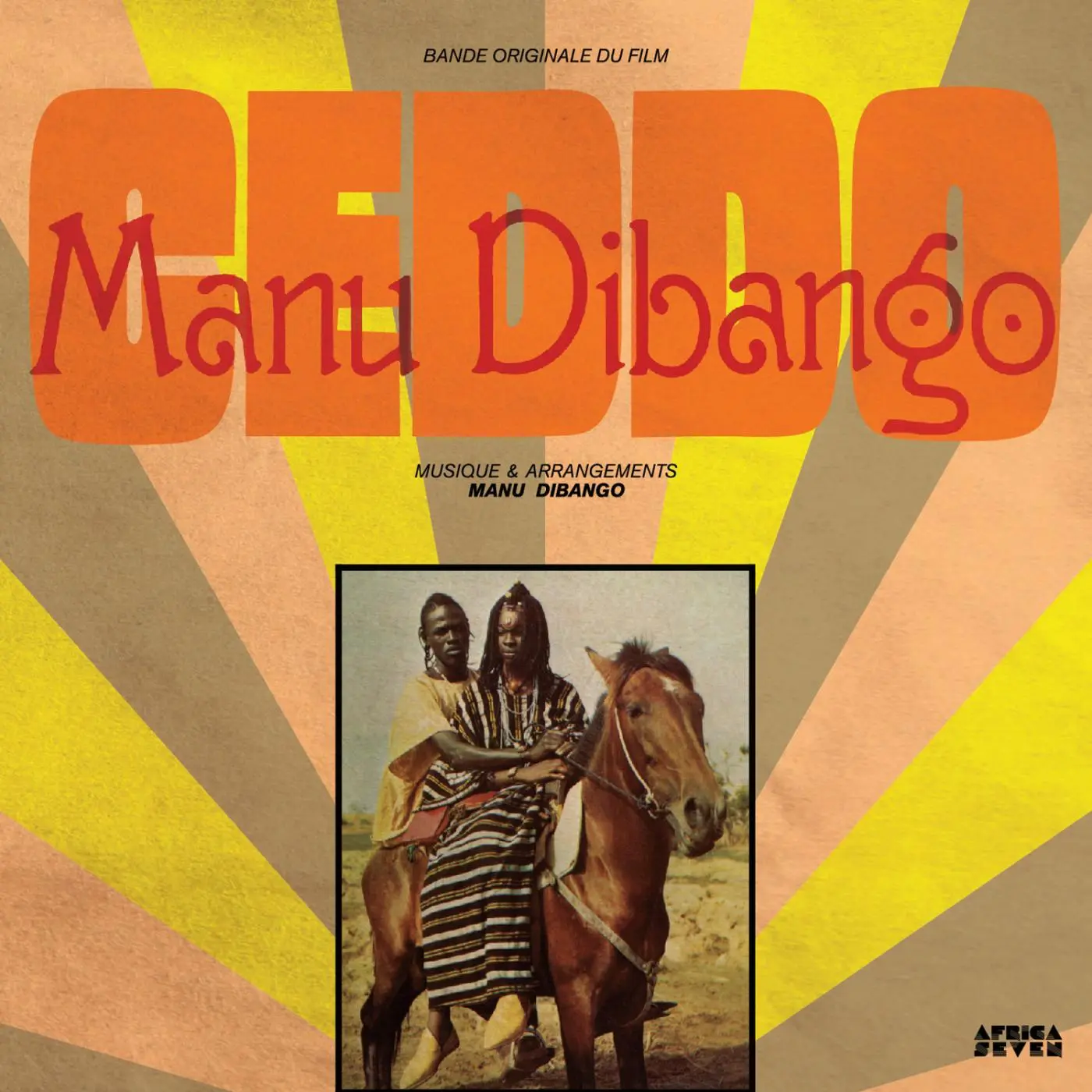 Manu Dibango released Ceddo O.S.T. in 1977 on Fiesta. The album preserves a seven-cue sequence from Ceddo, the Ousmane Sembène film, with Dibango as composer and arranger throughout.
Dibango shapes the program through title-theme returns, short scene cues, percussion accents, and longer B-side structures. “Ceddo” drifts through laid-back rhythms and bright vibraphone figures. Woodblocks and hand patterns keep the cue unhurried, then bass, low piano, wah-wah color, and saxophone ease into the restrained suite surface.
A1. “Ceddo (générique de début)” (7:05)
A2. “Les Cavaliers” (4:22)
A3. “Le Rêve de Dior” (3:37)
A4. “La Boisson” (2:04)
B1. “Marabout” (8:04)
B2. “Libre Ceddo” (5:35)
B3. “Ceddo (générique de fin)” (5:20)
Ceddo, the motion picture, sets a village conflict in precolonial Senegal, where outsiders resist forced conversion after the king aligns with an ascendant Islamic faction. The abduction of Princess Dior Yacine triggers a struggle among traditional authority, Islam, Christian missionaries, and the slave trade. Ousmane Sembène frames the conflict through political speech, communal resistance, and the princess’s return as a challenge to the new order.
Home Made
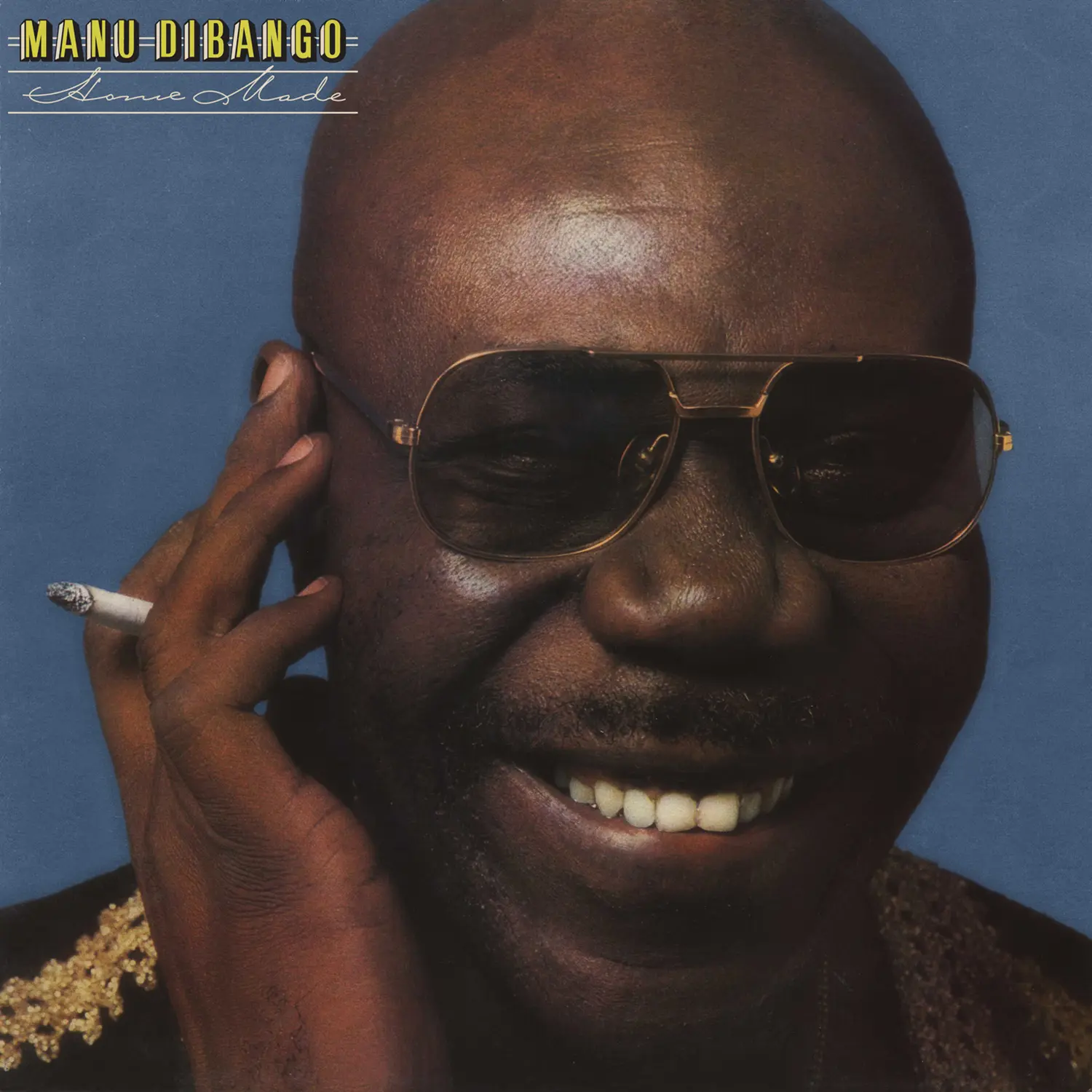 Manu Dibango released Home Made in 1979 on African.
Home Made contains four Dibango compositions built from Nigerian rhythm tracks and Paris overdubs. Dibango alternates tenor and alto sax, joined by Geraldo Pino & His Show Train: drummer Papa Soja, guitarist Nee Sackey, bassists Ernesto Apetor and Vicky Edimo, keyboardists Kingsley Asare Opoku and Jean-Claude Naimro, and percussionists Elvin Brown Idan and Sammy Quist.
Dibango interlocks with trombonist Alex Perdignon, tenor saxophonists Dele Okonkwo and Patrick Bourgoin, and trumpeters Jacques Bessot, Tunde Williams, and Zeal Oyan. Backing vocalists comprise Celia Lacombe, Florence Titty Dimbeng, Louise Edimo, and Monique Lesueur.
“Sun Explosion” erupts through a tight rhythm, timed guitar figures, and a bright female vocal line. “Tropical Garden” flashes Dibango’s deep-voiced phrases through horn riffs and picked guitar accents. “Ah! Freak Sans Fric” locks its force into horn harmony. “Oh Koh” answers Dibango with the female vocal line, then pushes the reeds and conga higher in the arrangement.
A1. “Sun Explosion” (9:12)
A2. “Tropical Garden” (8:25)
B1. “Ah! Freak Sans Fric” (8:38)
B2. “Oh Koh” (10:10)
Rhythm tracks were recorded in 1979 at Decca Studios, Lagos. Producers Odion Iruoje and Rolande Le Couviour oversaw the album; Lak Adeniran engineered the sessions. Henri Arcens mixed the Paris overdubs at Decca Studios.
Home Made appeared in a sleeve with photography by Pierre René-Worms. The cover shows a close portrait of Dibango in sunglasses, smiling against a blue-gray field with a cigarette lifted near his ear.
Gone Clear
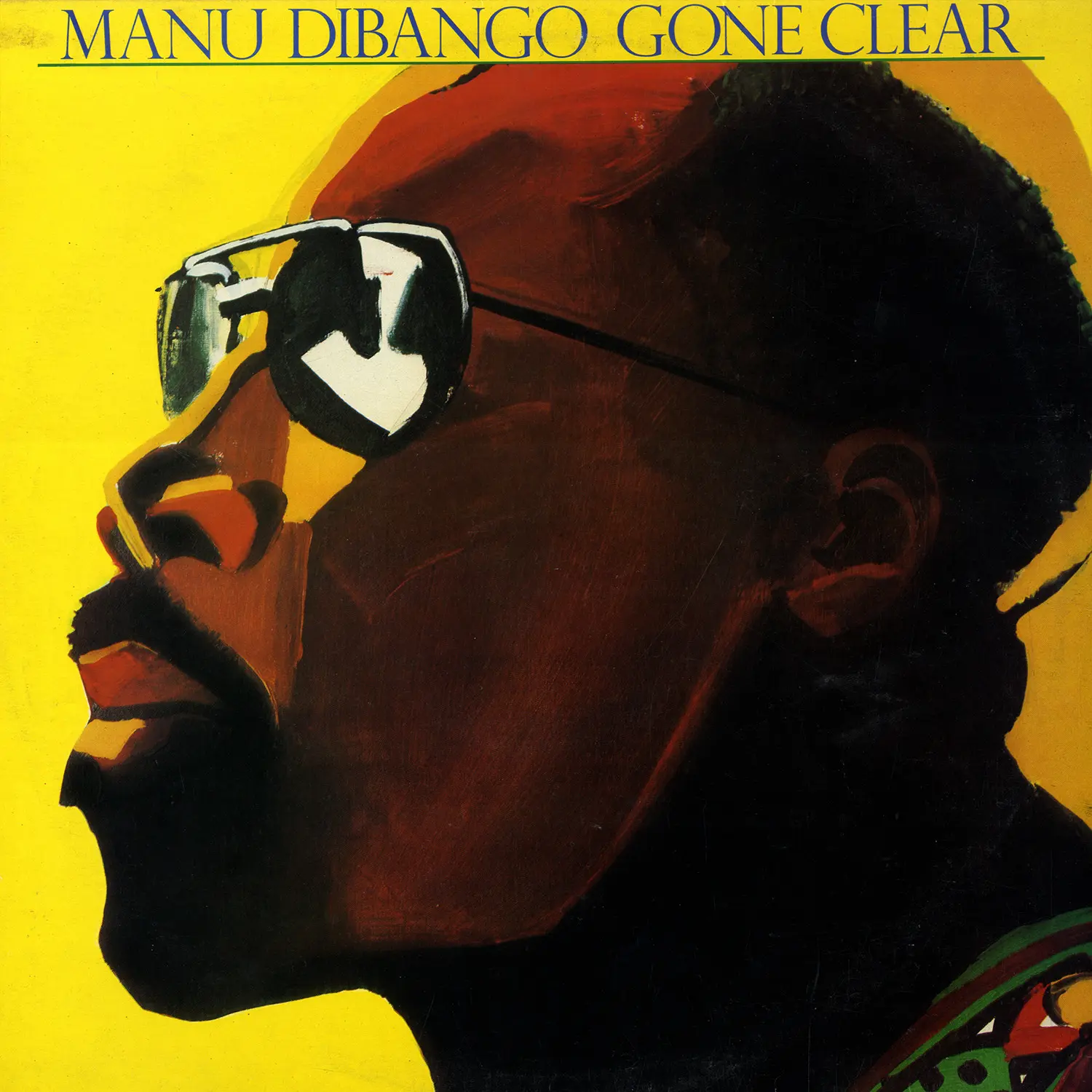 Manu Dibango released Gone Clear in 1980 on Island in the United Kingdom and Mango in the United States.
The LP contains six titles from Kingston sessions organized around reggae rhythm sections, horn lines, and Dibango’s saxophone-and-vocal placement. Geoffrey Chung produced and engineered the album at Dynamic Sounds Studios. The credited group includes bassist Robbie Shakespeare, drummer Sly Dunbar, keyboardist Ansel Collins, guitarist Mikey Chung, and horn players Michael Brecker, Randy Brecker, Barry Rogers, and Jon Faddis.
“Full Up” rides a steady beat with saxophone lines over repeated title phrases from the backing voices. “Goro City” pushes a quicker instrumental run, with the band locked behind Dibango’s lead. “Doctor Bird” leans into a fuller beat and deep-voiced phrases. “Reggae Makossa” recasts the earlier title in Caribbean-colored form. “Frozen Soul” settles into vibes and a time-feel close to “Full Up.”
A1. “Full Up” (4:32) – Dodd
A2. “Goro City” (8:39) – Dibango
A3. “Doctor Bird” (5:03) – Dibango
B1. “Reggae Makossa” (6:35) – Dibango
B2. “Frozen Soul” (4:03) – Sibbles, Mittoo
B3. “Tek Time” (7:03) – Dibango
The tracklist follows the original Island LP order; later complete-session data separates “Full Up” and “Frozen Soul” into Jamaican-source credits.
CRC issued “Goro City” as a French 1980 twelve-inch single (b/w “Reggae Makossa”).
Waka Juju
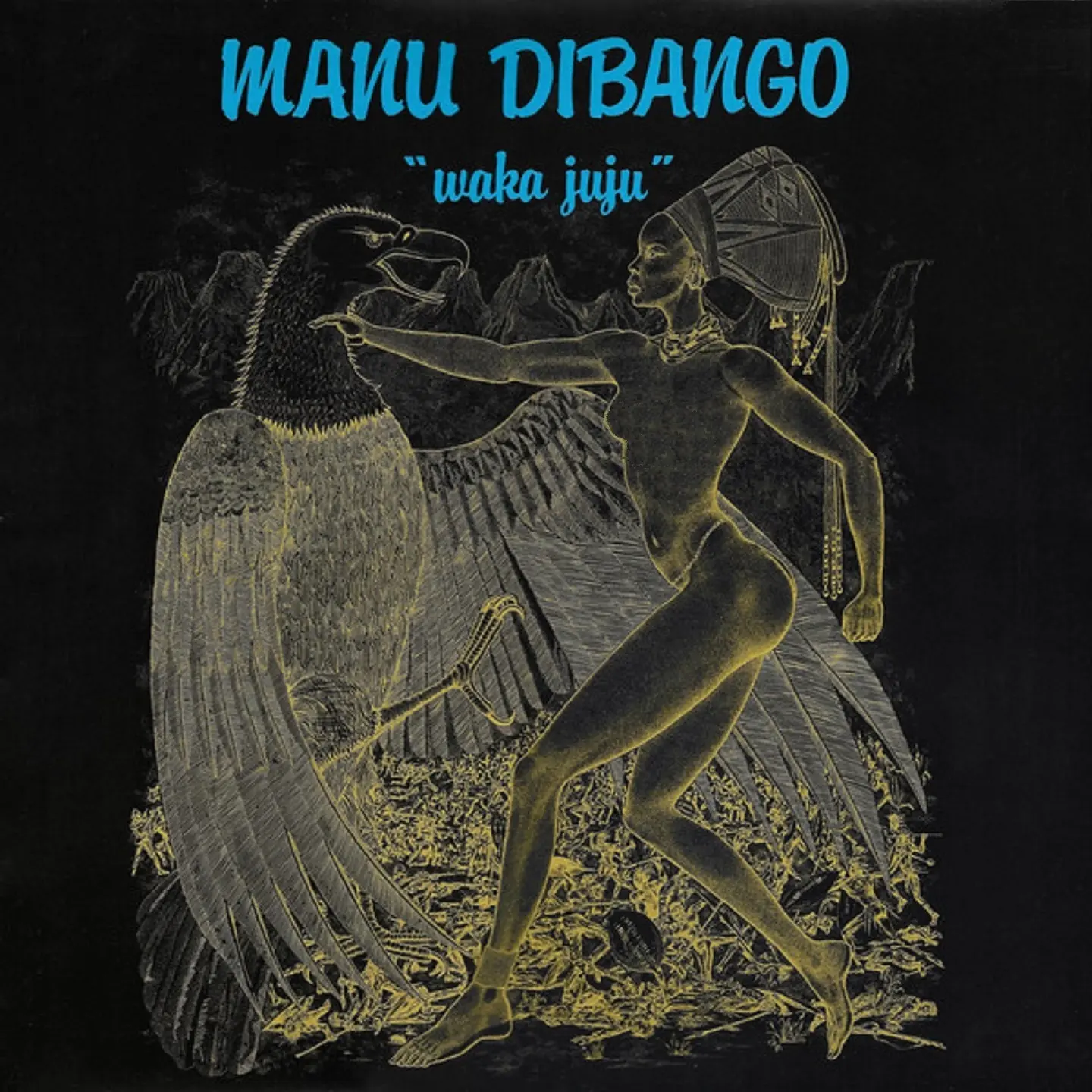 Manu Dibango released Waka Juju in 1982 on CRC Records. The title song addresses Yoruba juju; “Ma Marie” names Marie “Coco” Dibango, his wife and longtime manager.
Dibango juggles sax and marimba, joined by bassist Michel Alibo, drummer Brice Wassy, guitarists Jerry Malekani and Pierre Tchakounté, keyboardist Jean-Claude Naimro, and synthesist Wally Badarou. Catherine Elolongue Mbango, Elisabeth “Bébé” Manga, and Florence Titty Dimbeng form the backing-vocal group. Brice Wassy and Jean-Pierre Coco add congas and percussion; trumpeter Richard Descieux appears on “Ma Marie.”
“Waka Juju” turns the title concept toward Yoruba juju and, in the 1982 live reading, breaks into an extended percussion passage before returning through wobbly synthesizers, smooth keys, heavy bass, and an expressive saxophone lead. “Africa Boogie” has live evidence only: that version drives through clipped rhythm guitar, hard ensemble pressure, a Latin-inflected breakdown, and a late solo passage.
A1. “Waka Juju” (4:46)
A2. “Douala Serenade” (6:29)
A3. “Africa Boogie” (4:14)
B1. “Mouna Pola” (5:10)
B2. “Ma Marie” (6:40)
B3. “Manga-Bolo” (5:46)
Sessions occurred in 1982 at Studios Davout, Paris, with producer Giancarlo Cerri and engineer Gabriel Nahas. The album was mixed at Studio Marcadet in Saint-Denis.
Waka Juju appeared in a sleeve conceived by Adolarc and Danièle Pinot, with cover art by Eduardo Di Muro and verso photography by Ndumbéèra. The front cover sets blue artist text above a gold line drawing on a black field.
Polydor and CRC lifted “Africa Boogie” as a French twelve-inch single in 1982 (b/w “Mouna Pola”).
Electric Africa
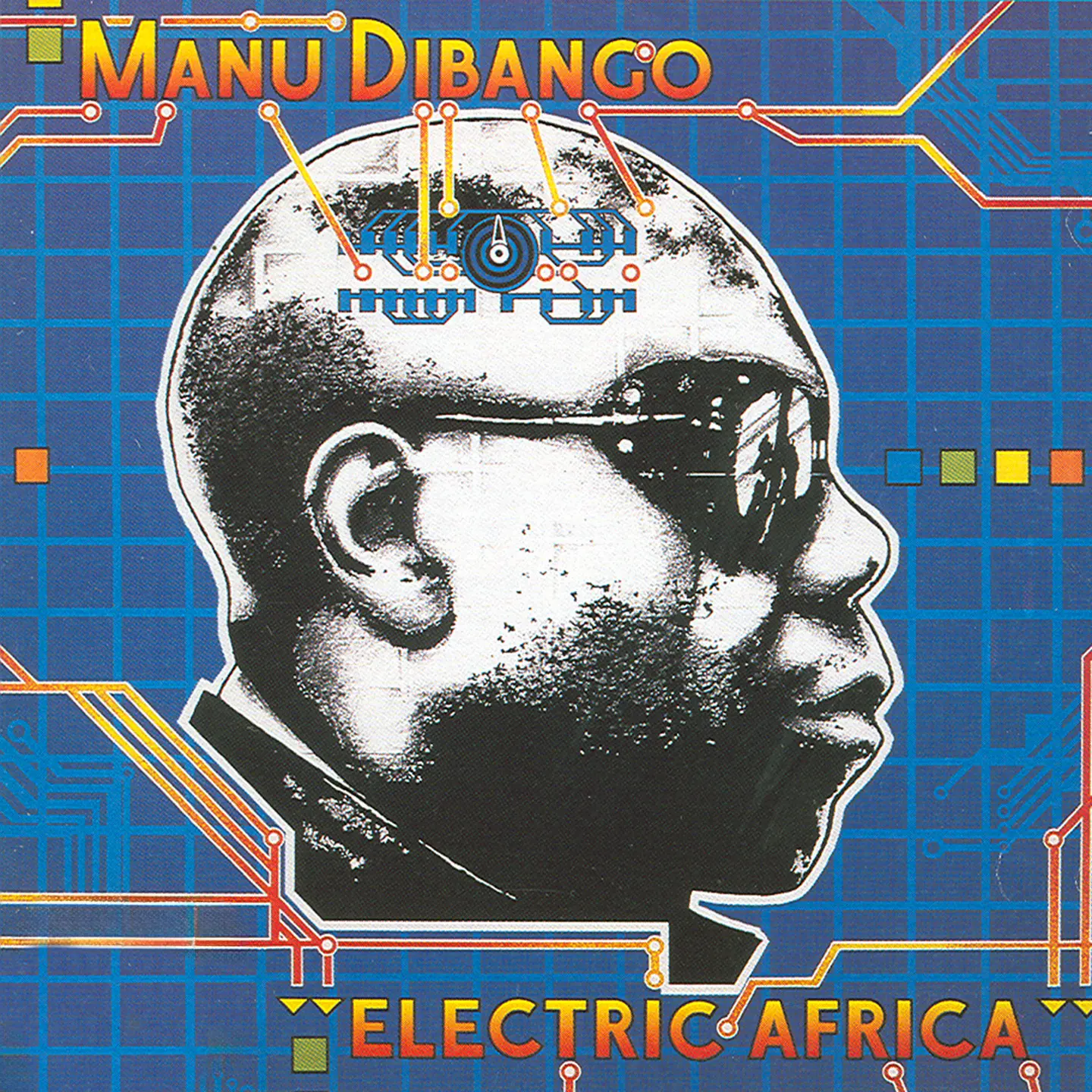 Manu Dibango released Electric Africa in 1985 on Celluloid.
Dibango handles multi-sax (tenor, baritone, soprano), piano, and the Yamaha DX-7 synthesizer. He partners here with Material mastermind Bill Laswell, who placed Manu’s voice and reeds in a hi-tech Fairlight setting with assorted plays, including guitarist Nicky Skopelitis and percussionists Aiyb Dieng and Mory Kanté. Electric Africa features musical guests Herbie Hancock, Bernie Worrell, and Level 42 auxiliary synthesist Wally Badarou.
“Pata Piya” pulses through an electrified opening, with dueling synthesizers circling the band figure. “Electric Africa” stretches around a bright electric-piano solo. “L’Arbre a Palabres” threads Dibango’s saxophone line through Hancock’s responses and Mory Kanté’s kora.
A1. “Pata Piya” (6:38) – Dibango, Laswell
A2. “Electric Africa” (10:24) – Dibango, Laswell
B1. “Echos Beti” (6:17) – Dibango
B2. “L’Arbre à palabres” (11:46) – Dibango
Sessions occurred at Studio Plus XXX in Paris with engineer Robert Musso. Bill Laswell produced Electric Africa in sequence with albums by Ginger Baker (Horses & Trees) and Public Image Ltd. (album).
Celluloid/Streetwave issued “Pata Piya” as a U.K. 1985 twelve-inch single, backed with “Abele Dance (‘85 Remix).”
Discography:
- Manu Dibango (1968)
- Saxy Party (1969)
- O Boso (1971)
- Soma Loba (1971)
- Soul Makossa (1972)
- African Voodoo (1972)
- Africadelic (1973)
- Blue Elephant (1973)
- Makossa Man (aka Pêpê Soup, 1974)
- African Funk (1974)
- Makossa Music (1975)
- African Rhythm Machine (1975)
- Countdown at Kusini O.S.T. (1975)
- Manu 76 (1976)
- Super Kumba (1976)
- The World of Manu Dibango (1976)
- Ceddo O.S.T (1977)
- L’Herbe Sauvage O.S.T. (1977)
- Disque D’Or (1977)
- A l’Olympia (1978)
- Anniversaire Au Pays (1978)
- Afrovision (1978)
- Sun Explosion (1978)
- Le Prix De La Liberte (1978)
- Gone Clear (1980)
- Ses Plus Grands Succes (1979)
- Home Made (1979)
- Ambassador (1981)
- Waka Juju (1982)
- Mboa (1982)
- Soft And Sweet (1983)
- Deliverance (1983)
- Surtension (1984)
- Electric Africa (1985)
- Afrijazzy (1986)
Sources:
Artist/Album Pages:
Jodo was an English hard-rock/blues band that released the album Guts on Decca in 1970. That same ...
Motohiko Hino — 日野元彦 (Jan. 3, 1946 — May 13, 1999) — was a Japanese drummer who played on more tha...
Sly & The Family Stone were an American soul-funk band that released eight albums between 196...
Water was a Dutch art-rock band behind the 1975 Philips album The Second Day, followed by the 1976...
Halina Frąckowiak is a Polish jazz-rock/folk singer who released five albums between 1974 and 1987...
Centipede was an English avant-garde jazz big-band led by pianist Keith Tippett for the 1971 RCA/Neo...
Max Webster was a Canadian rock band that released five studio albums between 1976 and 1980 on Ant...
Bill Withers (1938–2020) was an American soul singer/songwriter, best known for the 1971/72 AM eve...
Daniel Salinas is a Brazilian pianist, arranger, and conductor who made four 1957–61 Columbia albu...
The Beat was an English new wave band that emerged on the Birmingham ska scene with a 1979 cover o...
Maanam was a Polish rock band from Warszawa, formed in 1975 as a folk duo. As a reconfigured new w...
I.N.D. was an American soul-funk band that released the 1981 album Into New Dimensions on Erect Re...