

Material was an American avant-rock/No Wave band from NYC that released three EPs between 1979 and 1981 on Red Records, followed by two albums on Celluloid. Bassist Bill Laswell and drummer Fred Maher worked concurrently with Material guest Fred Frith in Massacre.
Members: Bill Laswell (bass), Fred Maher (drums), Michael Beinhorn (keyboards), Cliff Cultreri (guitar), William S. Burroughs (voice), Nicky Skopelitis (guitar), Shankar (violin), Simon Shaheen (violin), Jeff Bova (keyboards), Sly Dunbar (drums), Foday Musa Suso (kora, dousongonni, guitar, percussion, vocal), Bernie Worrell (keyboards), Aiyb Dieng (percussion), Ginger Baker (drums), Fred Frith (guitar), Charles Noyes (percussion), David Moss (percussion), Mark Miller (percussion), Wayne Shorter (saxophone), Bootsy Collins (bass)
Background
Bassist Bill Laswell moved to New York City in the late 1970s after formative years in the Midwest, where he absorbed a wide range of musical environments spanning R&B, funk, rock, and jazz. Raised in Illinois and later settling in Michigan during his teens, Laswell taught himself bass and gravitated toward approaches that emphasized texture, repetition, and sound manipulation rather than conventional accompaniment. By the time he arrived in New York, he was actively seeking collaborators interested in process-driven, studio-oriented music.
Laswell’s entry into a larger organizational network came through Georgian-born impresario Giorgio Gomelsky, who relocated to New York in 1978 following royalty income from his work with The Yardbirds. Gomelsky aimed to establish an American foothold for European progressive and jazz-rock groups associated with his orbit, including Gong, Henry Cow, and Magma. He opened the Zu Club in Manhattan and encouraged Laswell to assemble a resident ensemble. In response to a classified advertisement Laswell placed in The Village Voice, three teenagers—Michael Beinhorn (synthesizer), Fred Maher (drums), and Martin Bisi (engineering)—joined the project. Guitarist Cliff Cultreri followed soon after, with keyboardist Mark Kramer entering via his own connection to Gomelsky.
Operating initially as the “Zu Band,” the group rehearsed in the club’s basement and functioned as a flexible house ensemble. In October 1978, Gomelsky linked the band with former Gong frontman Daevid Allen for a performance at the Zu Manifestival, where the group appeared under the name New York Gong. That event expanded the lineup to include saxophonist George Bishop and drummer Chris Cutler, both associated with Allen’s N’Existe Pas project, while Michael Lawrence substituted for Cultreri and Fred Frith contributed guest appearances.
Allen returned to New York in March 1979, reactivating the collaboration with a revised lineup centered on Laswell, Beinhorn, Maher, Cultreri, and Kramer, augmented by drummer Stu Martin and alto saxophonist Don Davis. The group toured North America from April through June 1979 in a converted school bus, performing much of Gong’s Radio Gnome Invisible repertoire. Martin departed early in the tour and Bill Bacon replaced him for the remaining dates.
Following the tour, the group recorded About Time and completed a short run of French dates in September and October 1979. After that tour, Allen and the band separated amicably. Laswell, Beinhorn, Maher, and Cultreri continued working independently, shifting away from the Gong framework toward shorter, studio-focused compositions. By the end of 1979, this core unit adopted the name Material.
Temporary Music 1 (EP)
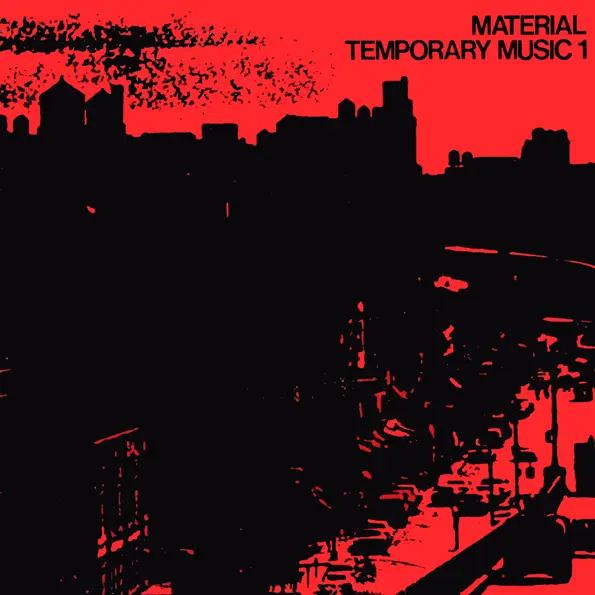 Material released their debut EP, Temporary Music 1, in 1979 on ZU Records.
The record introduces the trio’s early phase, merging stripped-down rhythms with saturated electronics and fragmentary guitar textures. Michael Beinhorn alternates between analog synthesizers and treated keyboard lines, interlocked with Fred Maher’s drums and Bill Laswell’s bass. Guitarist Cliff Cultreri plays across all four tracks. Don Davis guests on saxophone for the longest piece.
All material was composed and recorded between February and July 1979. The EP contains four instrumental tracks, two per side.
A1. “O.A.O.” (4:43)
A2. “On Sadism” (5:04)
B1. “White Man” (7:40) — alto saxophone by Don Davis
B2. “Process/Motion” (4:34)
Sessions were engineered by Eddy Offord and Rob Davis at Eddy Offord Remote Studio. TC cut the lacquer at Frankford/Wayne. The EP was released by ZU Records and distributed by Red Records. Cover photography by Felipe Orrego.
Temporary Music 2 (EP)
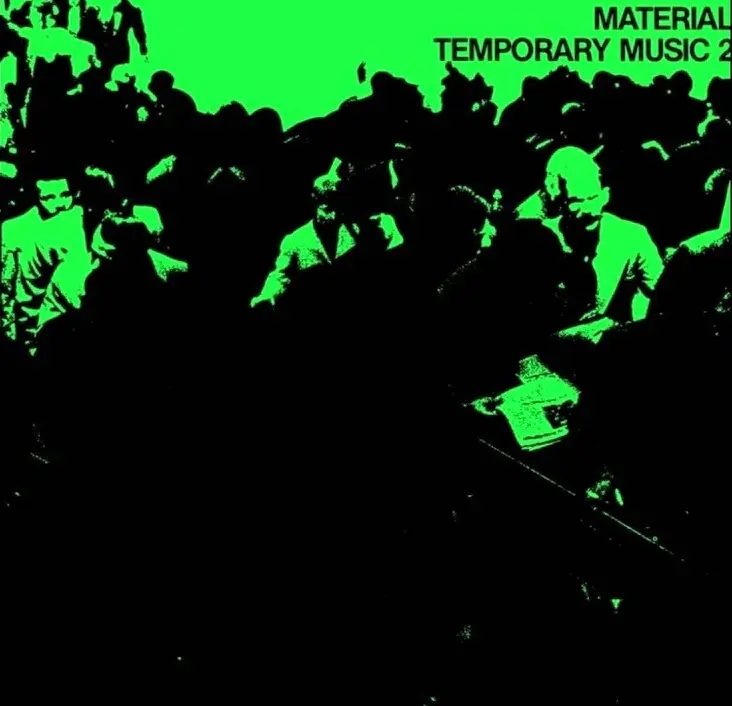 Material released their second EP, Temporary Music 2, in 1981 on Red Records.
The release continues their early series of rhythm-centered instrumentals recorded prior to their first full-length album. The lineup features Bill Laswell (bass), Fred Maher (drums), and Michael Beinhorn (synthesizer), recorded live in studio over two days in late 1980. The sound emphasizes staccato repetition and sparse sequencing, produced with a raw, minimal aesthetic.
Sessions took place at Linden Studio in Ambler, Pennsylvania, on September 25 and 26, 1980. The four tracks were issued in the UK on 12″ vinyl at 45 RPM.
A1. “Reduction”
A2. “Heritage”
B1. “Secret Life”
B2. “Dark Things”
Engineered by Bill Mauchly and Vin Moos. Produced by Material and Martin Bisi. Photography by Felipe Orrego.
American Songs (EP)
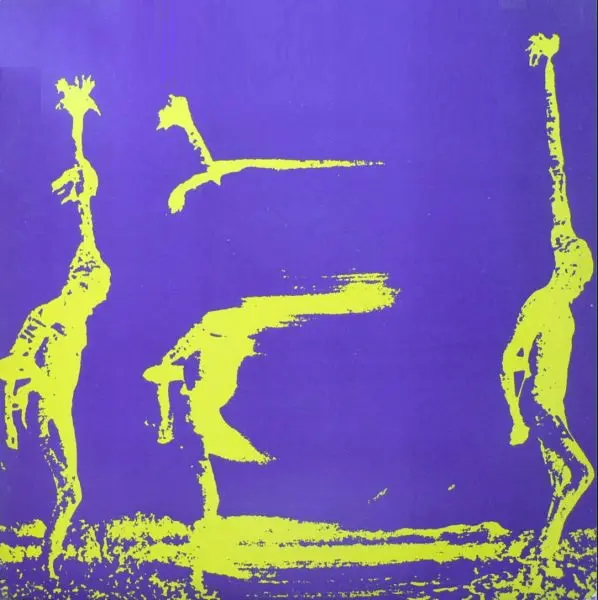 Material released their third EP, American Songs, in 1981 on Celluloid.
The record compiles two separate sessions recorded one year apart with slight personnel changes. Side A features Fred Maher on drums and Robert Quine on guitar; Side B includes drummer Bill Bacon and guitarist Cliff Cultreri. Michael Beinhorn plays synthesizer on all tracks and contributes vocals to side A, which also features Fred Maher on vocals. Bill Laswell plays bass throughout.
The two sides were recorded in New York City: side A on March 1–2, 1981; side B on March 29–30, 1980.
A1. “Ciquri” (6:25)
A2. “Detached” (5:05)
B1. “Discourse” (4:02)
B2. “Slow Murder” (3:59)
Produced by Material and Martin Bisi. Mastered by Howie Weinberg at Masterdisk. Pressed by Sonopress. Layout by Thi Linh Le. Photography by Felipe Orrego. Distributed by the Ariola Group of Companies.
Memory Serves
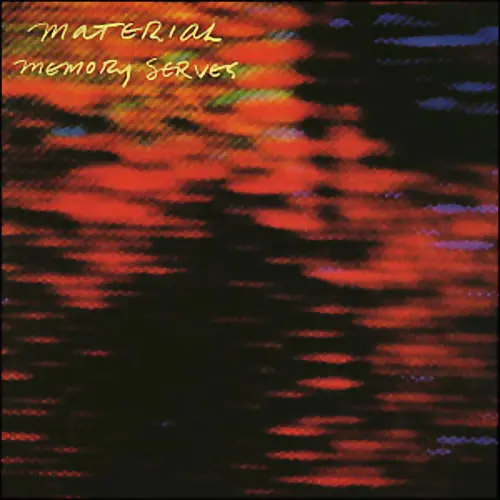 Material released their first full-length album, Memory Serves, in late 1981 on Celluloid.
The album expands their earlier minimalist format into layered ensemble arrangements featuring a rotating cast of downtown NYC improvisers. Michael Beinhorn incorporates tape effects, radio noise, and synthesizer treatments; Fred Maher adds drums, percussion, and guitar; and Bill Laswell plays 4-, 6-, and 8-string basses. Frequent contributors include guitarist Sonny Sharrock, violinist Billy Bang, and multi-instrumentalist Fred Frith, who also handled portions of the mixing. Additional collaborators include Olu Dara (trumpet), Henry Threadgill (alto saxophone), George Lewis (trombone), and Charles K. Noyes (drums, bells).
Laswell and Beinhorn co-wrote five of the album’s eight tracks. Remaining compositions are credited variously to Maher, Sharrock, Frith, Bang, Dara, and Lewis.
A1. “Memory Serves” (5:07)
A2. “Disappearing” (7:10) — with Henry Threadgill (alto sax) and Olu Dara (trumpet)
A3. “Upriver” (5:24) — with Olu Dara (trumpet) and Billy Bang (violin)
A4. “Metal Test” (4:30)
B1. “Conform to the Rhythm” (4:28)
B2. “Unauthorized” (3:49) — with Henry Threadgill (alto sax) and Billy Bang (violin)
B3. “Square Dance” (4:28) — with Henry Threadgill (alto sax) and George Lewis (trombone)
B4. “Silent Land” (3:50) — with George Lewis (trombone) and Charles K. Noyes (percussion)
Sessions occurred at OAO Studio in Brooklyn with engineer Martin Bisi, who co-produced the album with Material. The album appeared in Europe on Ariola, pressed by Sonopress. Cover design by Jan Luss and Thi-Linh Le. Printed in West Germany by Mohndruck Graphische Betriebe GmbH.
Frith, Laswell, and Maher also cut a 1981 live album, Killing Time, under the name Massacre.
One Down
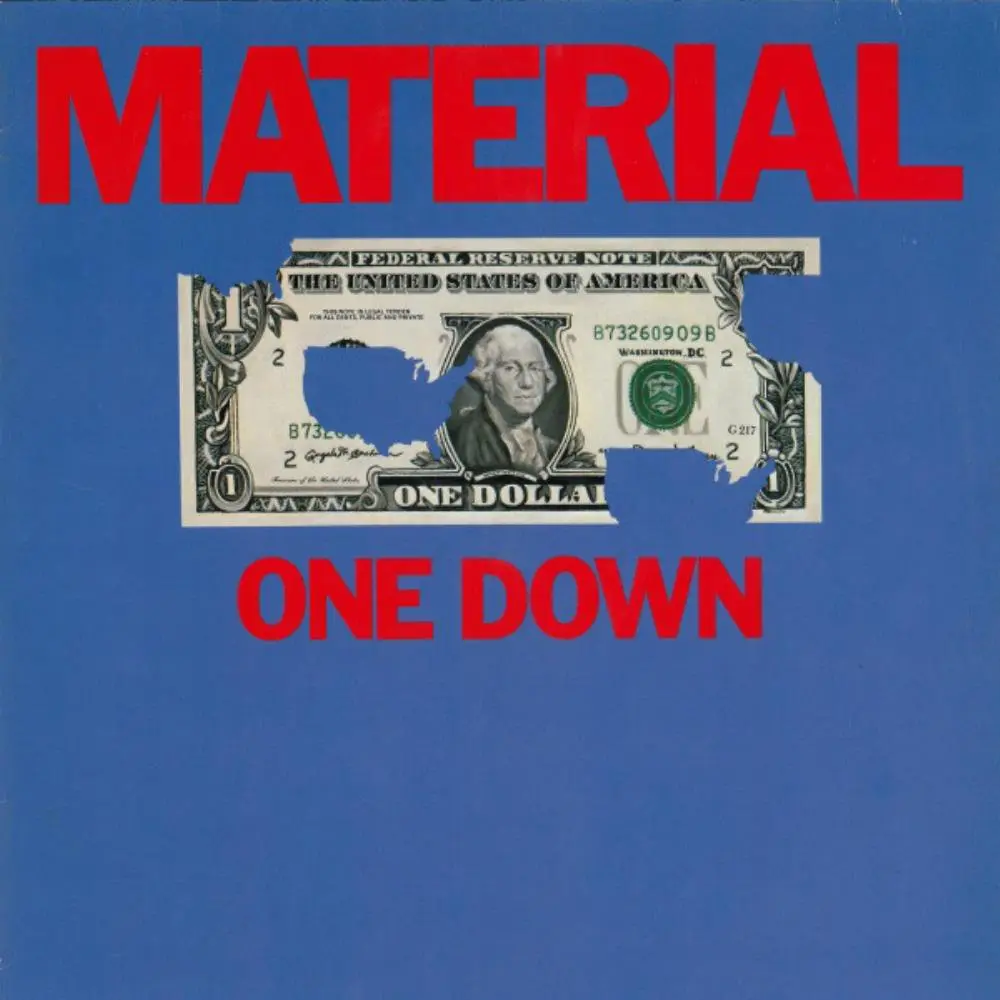 Material released their second album, One Down, in 1982 on Celluloid.
The album marks a shift toward structured song formats and vocal features, pairing the band’s layered studio approach with a rotating lineup of New York session players and guest singers. Bill Laswell anchors the record on bass, with Michael Beinhorn handling keyboards, synths, and co-production. Tracks incorporate elements of electro-funk, urban pop, and mutant disco across eight compositions recorded at two New York studios.
The album features vocals by Nona Hendryx, Bernard Fowler, B.J. Nelson, and Whitney Houston. Guitar parts are split across Nile Rodgers, Ronald “Head” Drayton, Fred Frith, and Nicky Skopelitis. Drumming is shared by J.T. Lewis, Tony Thompson, and Yogi Horton, with percussion from Daniel Ponce and Nicky Marrero. Woodwind guests include Oliver Lake and Archie Shepp.
A1. “Take a Chance” (4:32) — vocals by Nona Hendryx; guitar by Nicky Skopelitis
A2. “I’m the One” (5:26) — vocals by Bernard Fowler; electric piano by Raymond Jones; guitar by Nile Rodgers
A3. “Time Out” (4:55) — guitar by Fred Frith; percussion by Nicky Marrero
A4. “Let Me Have It All” (5:24) — backing vocals by Nona Hendryx; drums by Yogi Horton; guitar by Ronald “Head” Drayton
B1. “Come Down” (4:47) — vocals by Bernard Fowler; guitar by Nile Rodgers; saxophone by Oliver Lake
B2. “Holding On” (4:43) — guitars by Skopelitis and Drayton; percussion by Nicky Marrero
B3. “Memories” (4:00) — vocals by Whitney Houston; electric piano by Raymond Jones; drums by Yogi Horton; saxophone by Archie Shepp
B4. “Don’t Lose Control” (4:19) — voices by Jean Karakos, Nicky Skopelitis, Thi-Linh Le; bongos by Daniel Ponce
Sessions took place at RPM Studios and OAO Studios in New York. Engineered by Martin Bisi and Robert Musso. Produced by Bill Laswell and Michael Beinhorn. Executive production by Jean Karakos. Art direction by Paula Scher; cover painting by Michael Beinhorn. Design concept credited to Material.
Discography:
- Temporary Music 1 (EP, 1979)
- Temporary Music 2 (EP, 1981)
- American Songs (EP, 1981)
- Memory Serves (1981)
- One Down (1982)
- Seven Souls (1989)
- The Third Power (1991)
- Hallucination Engine (1994)
- The Road to the Western Lands (remixes, 1998)
- Intonarumori (1999)
- Apocalypse Live (2017 • The Master Musicians of Jajouka Led by Bachir Attar with Material)
Sources:
Artist/Album Pages:
Dusty Springfield (April 16, 1939 – March 2, 1999) was an English singer with a career in pop that s...
George Duke (January 12, 1946 – August 5, 2013) was an American jazz-funk keyboardist, composer, arr...
Maanam was a Polish rock band from Warszawa, formed in 1975 as a folk duo. As a reconfigured new w...
Dorian Gray was a Croatian new wave band behind the 1983–85 Jugoton albums Sjaj u tami and Za tvoj...
Iko was a Québécois coldwave trio that released the album '83 on Manhattan-Formula in 1982. Memb...
Akira Wada (born 1956) is a Japanese guitarist best known for his work with jazz-rockers Prism. Be...
The Actor was a Dutch coldwave duo behind the 1982–84 Trumpett albums Exploded View and A New Conc...
Claudja Barry is a Jamaican-born soul-funk singer who scored a disco hit with "Sweet Dynamite," th...
Trilark was an American soul-funk trio that released a 1982 self-titled album on Handshake Records...
Simple Minds are a Scottish rock band that released eleven studio albums between 1979 and 1995. Th...
Virna Lindt is a Swedish new wave singer behind the 1981 singles "Attention Stockholm" and "Young ...
Banco del Mutuo Soccorso is an Italian rock band that co-headed the nation's symphonic boom with t...