

Antônio Carlos Jobim (Jan. 25, 1927 — Dec. 8, 1994) was a Brazilian composer, pianist, guitarist, and singer, best known globally for the 1962 bossa nova evergreen “Garota de Ipanema (The Girl from Ipanema),” among the most covered songs of the 20th century. Across four decades, he recorded more than thirty studio albums, collaborative titles, and soundtrack works.
Background
Antônio Carlos Jobim was born Antônio Carlos Brasileiro de Almeida Jobim on January 25, 1927, in Tijuca, Rio de Janeiro, Brazil. His father, Jorge de Oliveira Jobim, worked as a diplomat, writer, professor, and journalist; his mother, Nilza Brasileiro de Almeida, ran a private school in Ipanema. Nilza moved Antônio Carlos and his sister Helena Isaura to Ipanema after the parents separated.
Jorge Jobim died in 1935, and Nilza later married Celso da Frota Pessoa, the stepfather who encouraged music lessons. Jobim began piano lessons at fourteen with Hans Joachim Koellreutter, then added guitar and harmonica. He entered architecture school but left after one year.
Jobim chose full-time music in the late Forties and played piano in Rio bars and nightclubs. He copied melodies for composers who needed staff notation and arranged material for local radio and record clients. Continental hired Jobim as an arranger in 1952 for studio work with Radamés Gnattali. In April 1953, Mauricy Moura recorded “Incerteza,” a Jobim–Newton Mendonça song, for Sinter. Jobim wrote with Billy Blanco on Rio de Janeiro: a montanha, o sol, o mar, a 1954 Continental LP arranged by Gnattali.
Jobim met poet and diplomat Vinicius de Moraes at Bar Villarino in May 1956 through Lúcio Rangel. De Moraes asked Jobim for music to Orfeu da Conceição, a stage work that reset the Orpheus myth in a Rio favela. Jobim and de Moraes composed the songs at the Nascimento Silva apartment in Ipanema.
Orfeu da Conceição
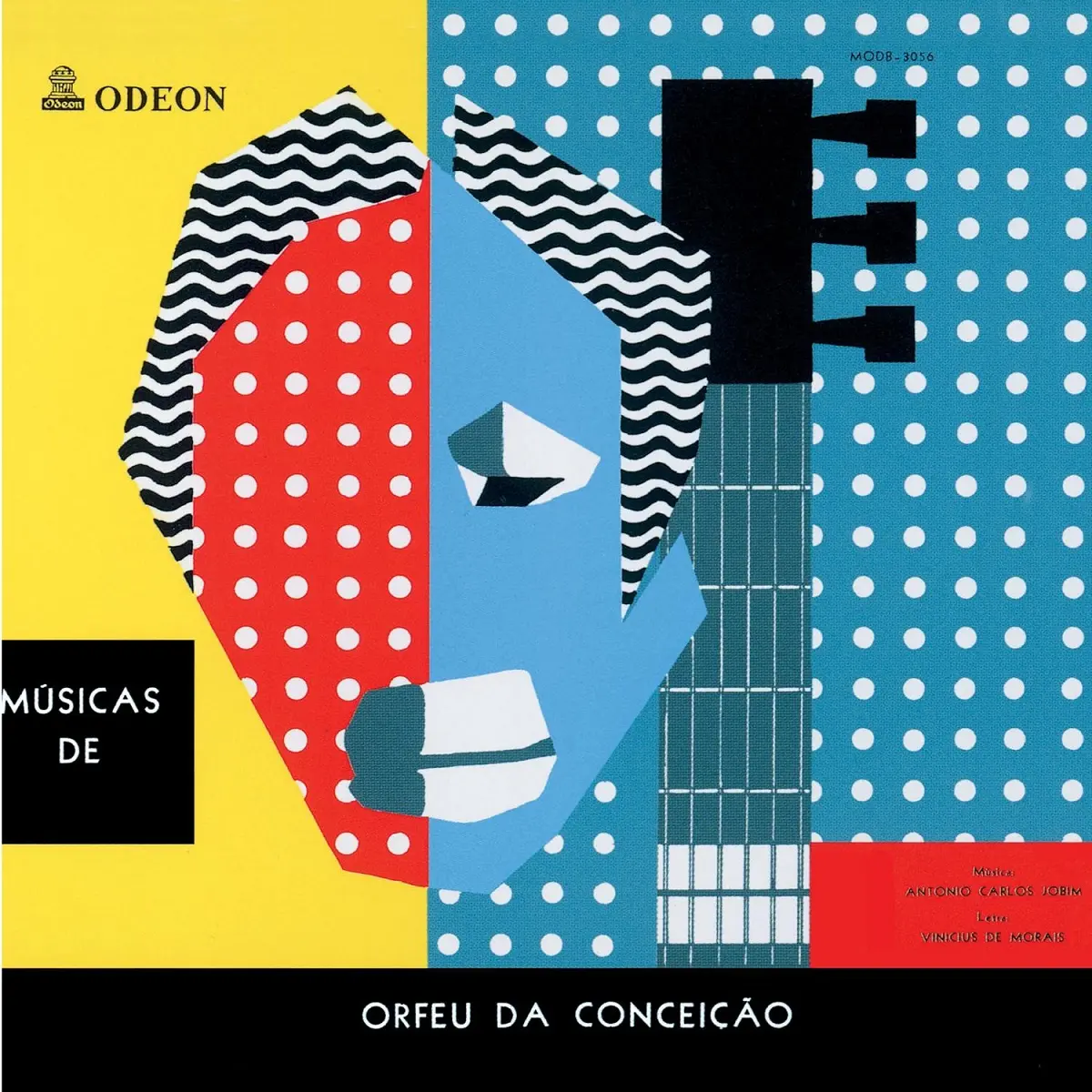 Antônio Carlos Jobim and Vinicius de Moraes released Orfeu da Conceição, a ten-inch theatrical soundtrack album, in October 1956 on Odeon.
Jobim arranged the seven stage pieces and conducted the Odeon orchestra. Vocalist Roberto Paiva sings the Orfeu songs; Vinicius de Moraes recites “Monólogo de Orfeu” over Bonfá guitar. The LP documents music from the Vinicius play, which premiered at Theatro Municipal in Rio de Janeiro before the Odeon issue.
“Overture” unfurls orchestral writing, then places Bonfá’s plucked “Valsa de Eurídice” before an instrumental return to “Lamento no morro.” “Monólogo de Orfeu” turns on spoken declamation, with flute set behind the voice. “Se todos fossem iguais a você” sways through a waltz-tilted song shape and Paiva’s projected delivery. “Um nome de mulher” leans into the same older vocal stance. “Mulher, sempre mulher” holds that projected canto in a compact form. “Eu e o meu amor” stays within the record’s older vocal-song manner. “Lamento no morro” closes the set with the same formal bearing that the overture had already recast without words.
A1. “Overture” (6:45) – Jobim
A2. “Monólogo de Orfeu” [Monologue of Orfeu] (2:52) – Moraes
B1. “Um nome de mulher” [A Woman’s Name] (2:05) – Jobim, Moraes
B2. “Se todos fossem iguais a você” [If Everyone Were Like You] (3:31) – Jobim, Moraes
B3. “Mulher, sempre mulher” [Woman, Always Woman] (1:56) – Jobim, Moraes
B4. “Eu e o meu amor” [Me and My Love] (1:41) – Jobim, Moraes
B5. “Lamento no morro” [Lament on the Hill] (2:06) – Jobim, Moraes
Aloysio de Oliveira initiated the October Odeon LP issue after the September stage premiere at Theatro Municipal in Rio de Janeiro.
Orfeu da Conceição appeared in a ten-inch sleeve with cover art by painter Raimundo Nogueira. The front cover shows a geometric face, a black guitar-neck shape, yellow and blue fields, red and blue white-dot patterns, and the Odeon mark. Two back-cover variants circulated: one carries a Vinicius de Moraes text, and the other carries Odeon release listings.
In 1958, singer/actress Elizeth Cardoso released Canção do Amor Demais, a Fiesta album arranged and written by Jobim, who adds pianio and chorus voice. João Gilberto plays guitar on “Chega de Saudade” and “Outra Vez” and joins Jobim and Walter Santos in the title-track chorus. Between 1958 and 1960, Jobim arranged the first two albums by João Gilberto, whose 1961 third co-credits Jobim and Walter Wanderley.
Black Orpheus
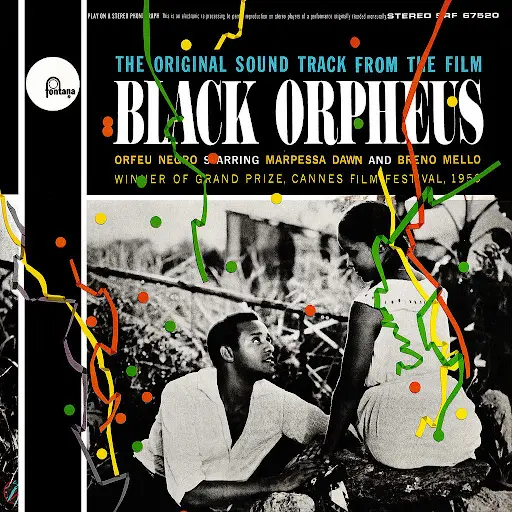 Antônio Carlos Jobim and Luiz Bonfá released Black Orpheus, the Epic soundtrack LP for the Marcel Camus film Orfeu Negro, in 1959 on Epic.
The soundtrack adapts the stage project into film cues, song reprises, frevo brass, carnival percussion, and samba-school sections. Jobim and Moraes wrote “A felicidade,” “Frevo de Orfeu,” and “O nosso amor”; Bonfá and Antônio Maria wrote “Manhã de Carnaval” and “Samba de Orfeu.” Agostinho dos Santos sings the Orfeu parts, Elizeth Cardoso sings the Euridice version of “Manhã de Carnaval.” Bonfá splits guitar parts with and Roberto Menescal.
Black Orpheus gives “A felicidade” a restrained lead voice and altered chord color. “Frevo” parades through a lively march figure. “O nosso amor” turns from group-voice jubilation to a tambourine-and-accordion variant. “Manhã de carnaval” recurs as a sentimental theme, shifting between sung and instrumental placements. “Scenes de la Macumba” yelps through ritual voices and conga-type percussion. “Samba de Orfeu” plucks its final-scene theme with idiosyncratic string motion and close harmonic turns. “Batterie de Cappela” foregrounds cuíca within the percussion battery.
A1. “Générique / A felicidade / Frevo / O nosso amor” [Opening Credits / Happiness / Frevo / Our Love] (9:23) – Jobim, Moraes; traditional
A2. “O nosso amor” [Our Love] (4:18) – Jobim, Moraes
A3. “Manhã de Carnaval / Scène du lever du soleil” [Carnival Morning / Sunrise Scene] (3:52) – Bonfá, Maria
A4. “Manhã de Carnaval” [Carnival Morning] (1:40) – Bonfá, Maria
B1. “Scènes de la Macumba” [Macumba Scenes] (3:15) – traditional
B2. “O nosso amor” [Our Love] (9:06) – Jobim, Moraes
B3. “Manhã de Carnaval” [Carnival Morning] (2:55) – Bonfá, Maria
B4. “Samba de Orfeu” [Samba of Orfeu] (2:15) – Bonfá, Maria
B5. “Batterie de Capela” [Capela Drums] (4:47) – traditional
Bateria de Escola de Samba and Coro de Escola de Samba carry the percussion and chorus sections, while Banda de Frevo appears on “Frevo de Orfeu.” The Epic sleeve places a film still of Breno Mello and Marpessa Dawn below a white title field and Cannes Grand Prize text.
The Composer of Desafinado, Plays
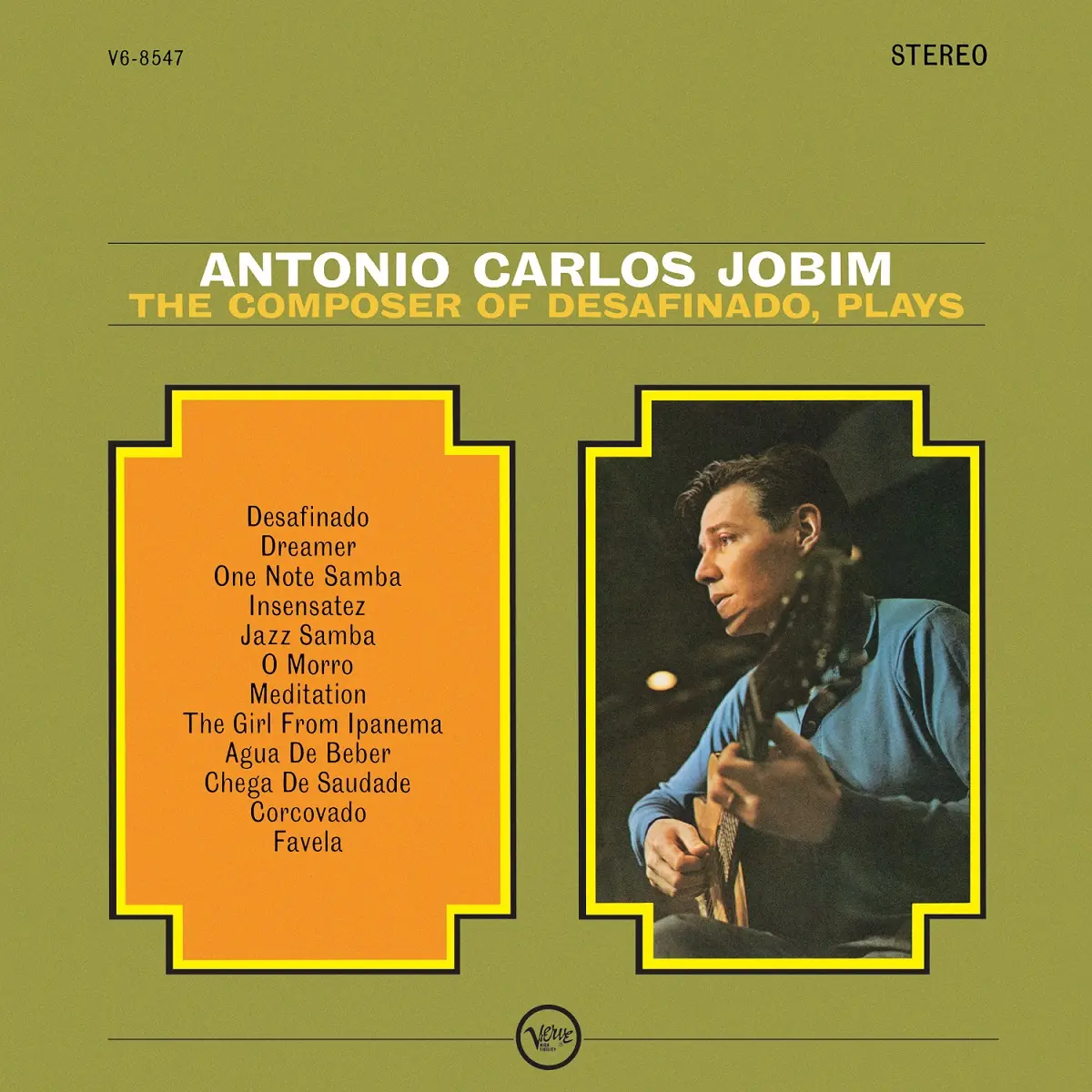 Antônio Carlos Jobim released his debut solo album, The Composer of Desafinado, Plays, in late August 1963 on Verve.
Jobim recasts twelve songs as instrumental studio pieces through piano and guitar. Claus Ogerman arranged and conducted the strings, placed around bassist George Duvivier, drummer Edson Machado, flutist Leo Wright, and trombonist Jimmy Cleveland.
“The Girl from Ipanema” glides through sparse single-hand piano and high flute shading. “Corcovado” settles into polished string voicing and light keyboard placement. “One Note Samba” tightens the instrumental surface around clipped title-line economy without vocal emphasis. “Chega de Saudade” traces the album’s restrained piano-and-orchestra manner across a longer instrumental reading. “Desafinado” curls through soft-edged harmony and understated Jobim phrasing.
A1. “The Girl from Ipanema” (2:42) – Jobim, Moraes, Gimbel
A2. “Amor em Paz (Once I Loved)” [Love in Peace] (3:36) – Jobim, Moraes
A3. “Agua de Beber” [Water to Drink] (2:50) – Jobim, Moraes, Gimbel
A4. “Vivo Sonhando (Dreamer)” [I Live Dreaming] (2:35) – Jobim
A5. “Favela (O Morro Não Tem Vez)” [Favela (The Hill Has No Turn)] (3:20) – Jobim, Moraes
A6. “Insensatez” [Foolishness] (2:53) – Jobim, Moraes
B1. “Corcovado” (2:25) – Jobim
B2. “One Note Samba” (2:14) – Jobim, Mendonça, Hendricks
B3. “Meditation” (3:15) – Jobim, Mendonça, Gimbel
B4. “Só Danço Samba” [I Only Dance Samba] (2:21) – Jobim, Moraes
B5. “Chega de Saudade” [Enough Longing] (4:19) – Jobim, Moraes
B6. “Desafinado” [Out of Tune] (2:44) – Jobim, Mendonça
Sessions occurred on May 9 and May 10, 1963, at A&R Studios in New York with producer Creed Taylor and engineer Phil Ramone. Val Valentin served as recording director.
The Composer of Desafinado, Plays appeared in a Verve sleeve with photography by Chuck Stewart. The cover places Jobim holding an acoustic guitar in a black-bordered photo panel beside an orange title panel on an olive field.
The Wonderful World of Antonio Carlos Jobim
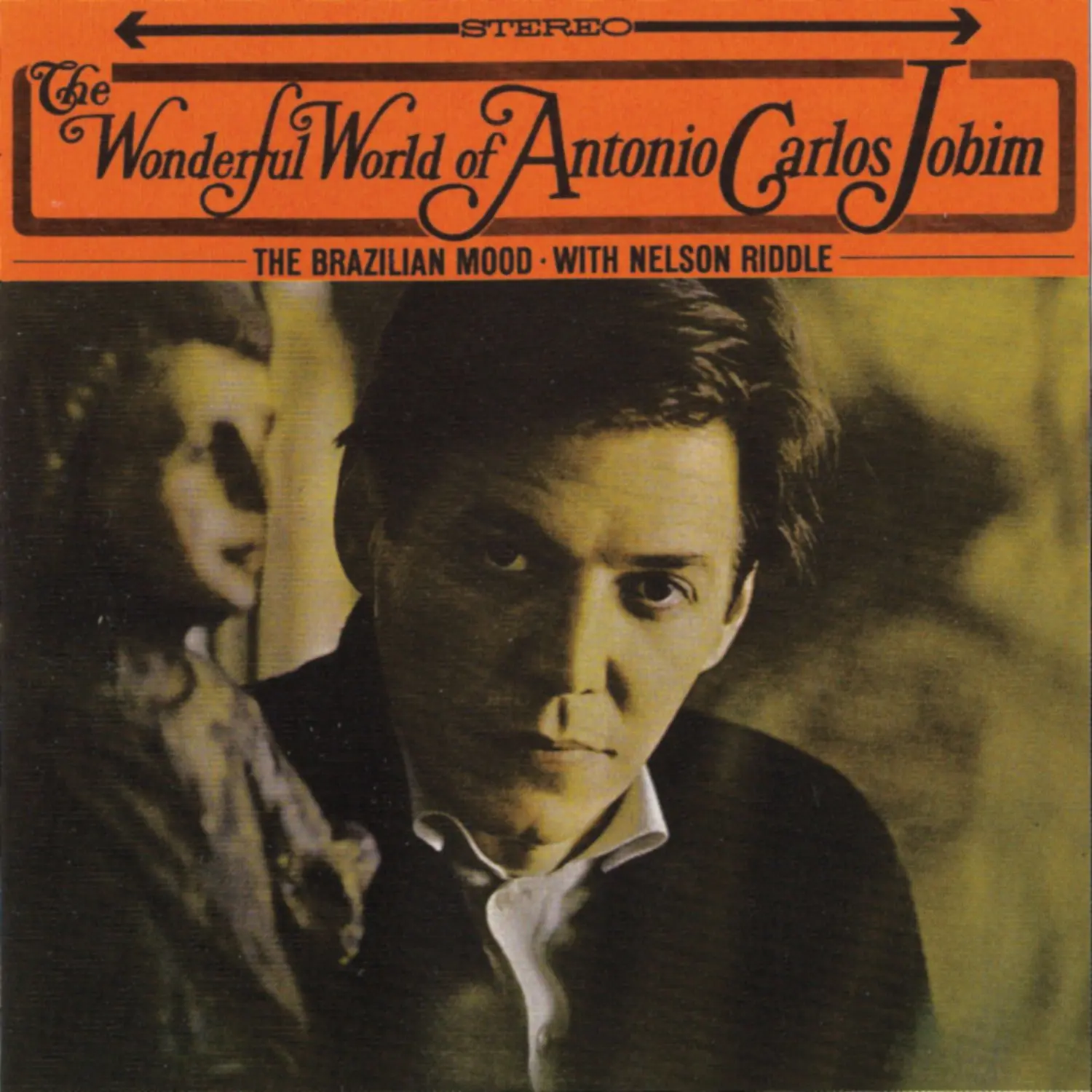 Antônio Carlos Jobim released his second solo album, The Wonderful World of Antonio Carlos Jobim, in 1965 on Warner Bros.
Wonderful World shifts Jobim from the instrumental Verve format to voice-led readings in English and Portuguese. Nelson Riddle arranges and conducts the orchestra; Jobim sings and plays piano and guitar, joined by drummer Dom Um Romão.
“She’s a Carioca” brightens the set with accented English delivery and a lighter vocal smile. “Surfboard” flickers through playful instrumental motion, then lets strings surge and fall at the line ending. “A Felicidade” hushes Jobim’s vocal into a contemplative reading. “Favela” presses brass and heavier percussion into a denser Riddle arrangement. “Dindi” drifts through restrained phrasing and small vocal turns.
A1. “She’s a Carioca” (2:38) – Jobim, Moraes, Gilbert
A2. “Água de Beber” [Water to Drink] (2:29) – Jobim, Moraes, Gimbel
A3. “Surfboard” (2:24) – Jobim
A4. “Useless Landscape” (2:18) – Jobim, Oliveira, Gilbert
A5. “Só Tinha de Ser com Você” [It Had to Be with You] (2:29) – Jobim, Oliveira
A6. “A Felicidade” [Happiness] (2:07) – Jobim, Moraes
B1. “Bonita” [Beautiful] (2:09) – Jobim, Lees, Gilbert
B2. “Favela” (2:37) – Jobim, Moraes
B3. “Valsa de Porto das Caixas” [Waltz of Porto das Caixas] (3:22) – Jobim
B4. “Samba do Avião” [Samba of the Airplane] (2:13) – Jobim, Lees
B5. “Por Toda a Minha Vida” [For All My Life] (1:51) – Jobim, Moraes
B6. “Dindi” (2:35) – Jobim, Oliveira, Gilbert
Sessions occurred in Los Angeles for Warner Bros. with producer Jimmy Hilliard and engineer Lowell Frank. Stan Cornyn wrote the liner notes.
The Wonderful World of Antonio Carlos Jobim appeared in a Warner Bros. sleeve with cover photography and art direction by Ed Thrasher. The cover places a close Jobim portrait beside a blurred sculptural figure, below a red title field and the subtitle “The Brazilian Mood • with Nelson Riddle.”
Francis Albert Sinatra & Antônio Carlos Jobim
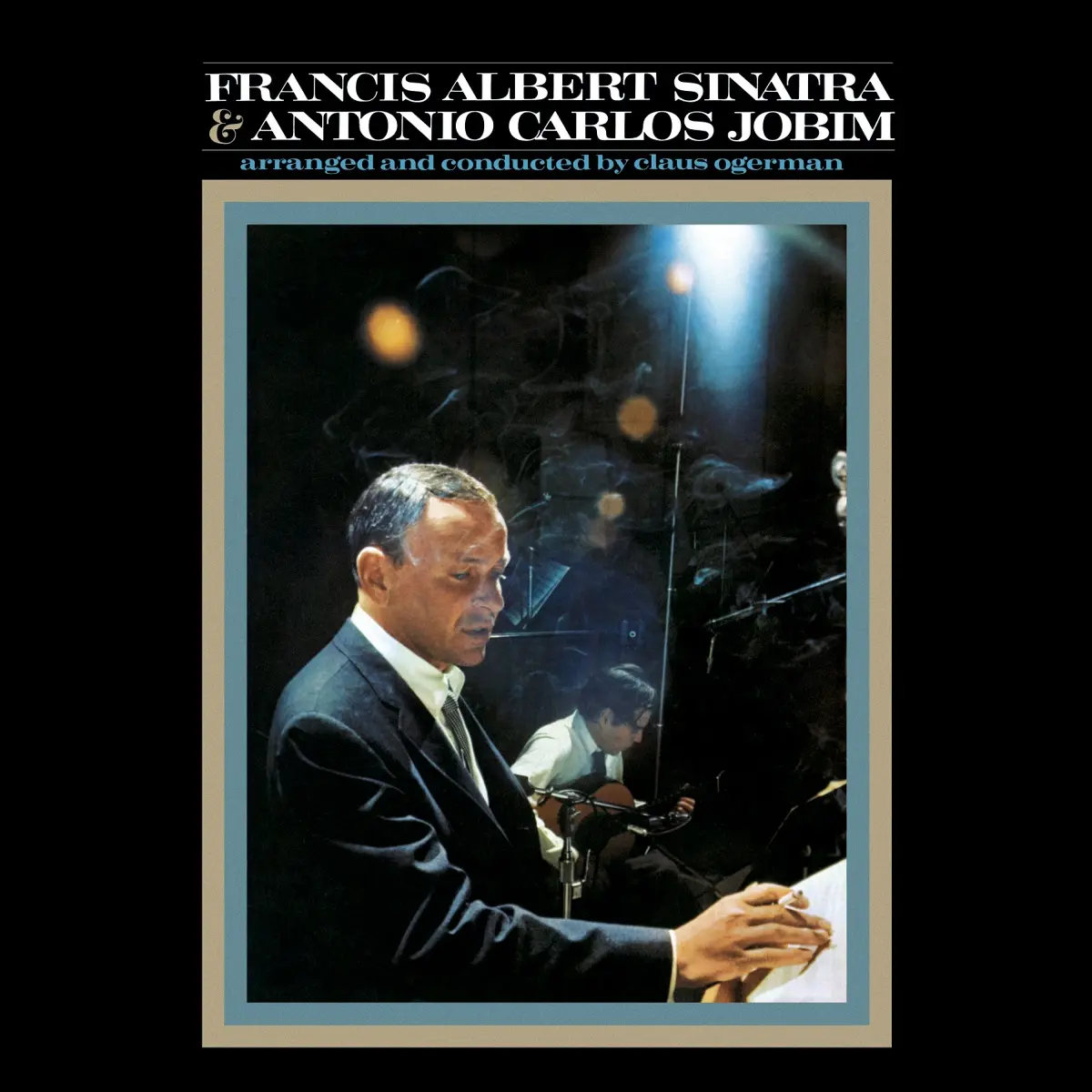 Frank Sinatra and Antônio Carlos Jobim released a collaborative album, Francis Albert Sinatra & Antônio Carlos Jobim, in March 1967 on Reprise.
The album sets the legendary singer in a bossa nova setting framed by Jobim’s guitar, piano, and backing-vocal entries. Claus Ogerman arranged and conducted the orchestra, paced by drummer Dom Um Romão. The program contains seven Jobim-linked songs and three standards: “Change Partners,” “I Concentrate on You,” and “Baubles, Bangles and Beads.”
“The Girl from Ipanema” glides on a soft strummed opening, hushed horn color, and close Sinatra–Jobim vocal placement. “Dindi” hushes its entrance, then lets the orchestra rise behind Sinatra before strings answer the final line. “Change Partners” brightens the set with jauntier motion, light percussion, and bouncing woodwind figures. “Quiet Nights of Quiet Stars” leans on long Sinatra phrases held through controlled breath. “Meditation” brushes its rhythm lightly and closes with Sinatra’s quiet breath against Jobim’s muted response.
“If You Never Come to Me” drops small piano touches between the vocal lines, then answers with low brass and reeds before a flute solo. “How Insensitive” rises through its central line and swells at the final landing. “I Concentrate on You” starts with bright upper voices and carries Sinatra through an extended bridge phrase. “Baubles, Bangles and Beads” shuffles under popping reed-brass accents, then lifts the strings as Sinatra moves up and down the line. “Once I Loved” keeps the delivery inward and ends with strings around Jobim’s guitar.
A1. “The Girl from Ipanema (Garota de Ipanema)” [The Girl from Ipanema] (3:00) – Jobim, Gimbel, Moraes
A2. “Dindi” (3:25) – Jobim, Gilbert, Oliveira
A3. “Change Partners” (2:40) – Berlin
A4. “Quiet Nights of Quiet Stars (Corcovado)” (2:45) – Jobim, Lees
A5. “Meditation (Meditação)” [Meditation] (2:51) – Jobim, Gimbel, Mendonça
B1. “If You Never Come to Me (Inútil paisagem)” [Useless Landscape] (2:10) – Jobim, Gilbert, Oliveira
B2. “How Insensitive (Insensatez)” [Foolishness] (3:15) – Jobim, Gimbel, Moraes
B3. “I Concentrate on You” (2:32) – Porter
B4. “Baubles, Bangles and Beads” (2:32) – Wright, Forrest
B5. “Once I Loved (O amor em paz)” [Love in Peace] (2:37) – Jobim, Gilbert, Moraes
Sessions occurred on January 30, January 31, and February 1, 1967, at Studio One, Warner Western Sound, Sunset Boulevard, Los Angeles, with producer Sonny Burke and engineer Lee Herschberg.
Francis Albert Sinatra & Antônio Carlos Jobim appeared in a Reprise sleeve under Ed Thrasher art direction. John Bryson took the cover photograph, which shows Sinatra beside Jobim during the album sessions; Ed Thrasher photographed the back cover.
Francis Albert Sinatra & Antônio Carlos Jobim reached No. 19 on the Billboard 200 and No. 4 on the Billboard Jazz Albums chart.
Wave
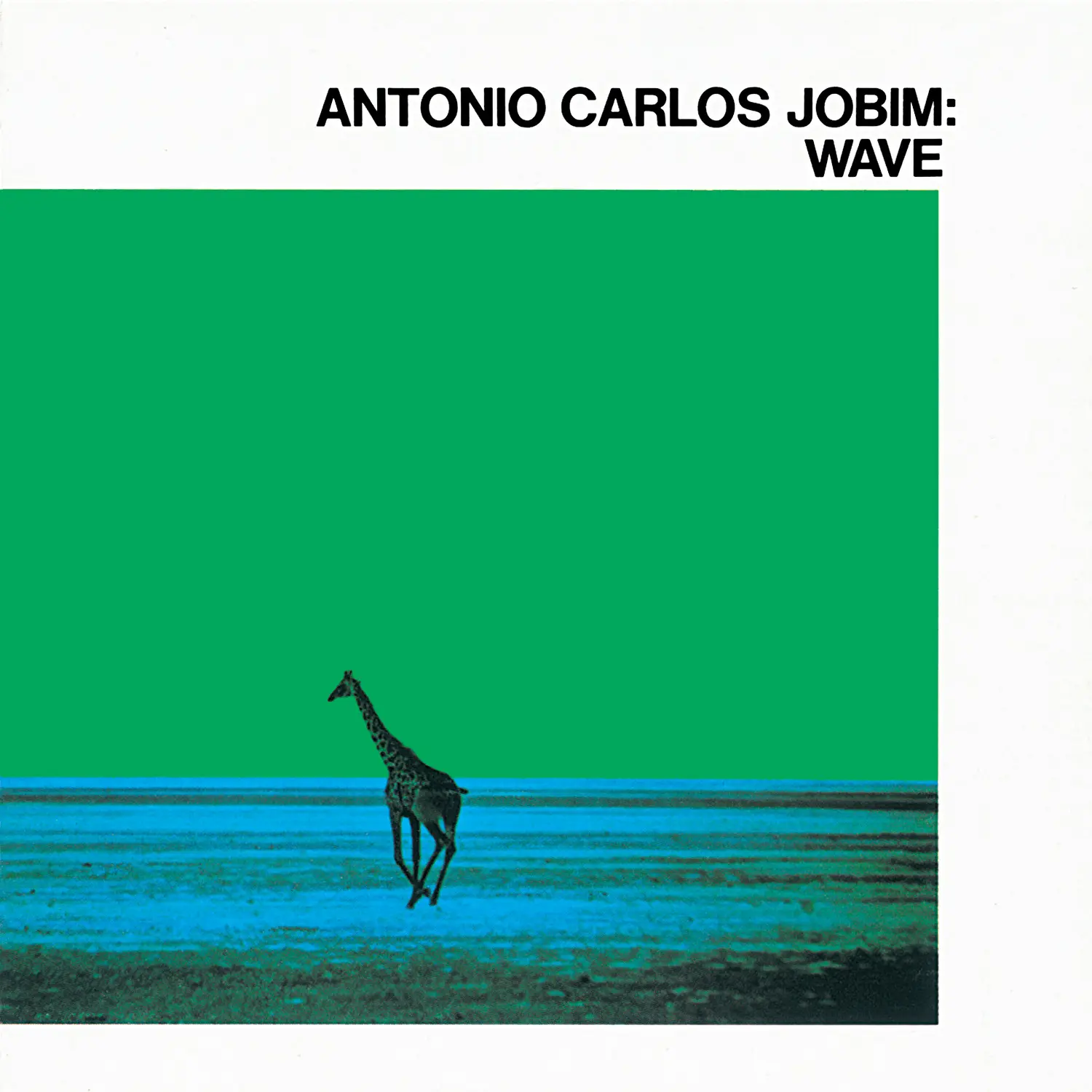 Antônio Carlos Jobim released Wave in September 1967 on CTI, an A&M Records imprint.
The album returns Jobim to an instrumental studio format of piano, guitar, and harpsichord wih orchestral arrangements by Claus Ogerman. Wave features bassist Ron Carter, flutist Jerome Richardson, trombonists Urbie Green and Jimmy Cleveland, and drummers Dom Um Romão, Bobby Rosengarden, and Cláudio Slon.
“Wave” glides through a quiet title line, with flute color and harpsichord glint around Jobim’s touch. “The Red Blouse” dances on low-end fills and crisp rhythmic accents. “Look to the Sky” leans into rounded trombone shading. “Batidinha” centers Jobim’s clear chordal strum. “Triste” keeps the strummed figure close and precise. “Lamento” hushes Jobim’s brief vocal into a vulnerable turn. “Antigua” brightens the pace with harpsichord figures. “Captain Bacardi” skips through a brisk low line, cuíca accents, and a trombone break.
A1. “Wave” (2:50) – Jobim
A2. “The Red Blouse” (5:00) – Jobim
A3. “Look to the Sky” (2:15) – Jobim
A4. “Batidinha” [Little Beat] (3:12) – Jobim
A5. “Triste” [Sad] (2:02) – Jobim
B1. “Mojave” (2:20) – Jobim
B2. “Diálogo” [Dialogue] (2:48) – Jobim
B3. “Lamento” [Lament] (2:41) – Jobim, Moraes
B4. “Antigua” (3:05) – Jobim
B5. “Captain Bacardi” (4:27) – Jobim
Sessions occurred on May 22–24 and June 15, 1967, at Van Gelder Studio in Englewood Cliffs, New Jersey, with producer Creed Taylor and engineer Rudy Van Gelder.
Wave appeared in a gatefold sleeve with design by Sam Antupit and photography by Pete Turner. The cover uses Turner’s solarized 1964 giraffe photograph, printed on the original red-magenta field; later reissues used a green field.
A&M issued “Wave” as a 1967 single (b/w “Triste”). Wave reached No. 114 on the Billboard 200 and No. 5 on the Billboard Jazz Albums chart.
Stone Flower
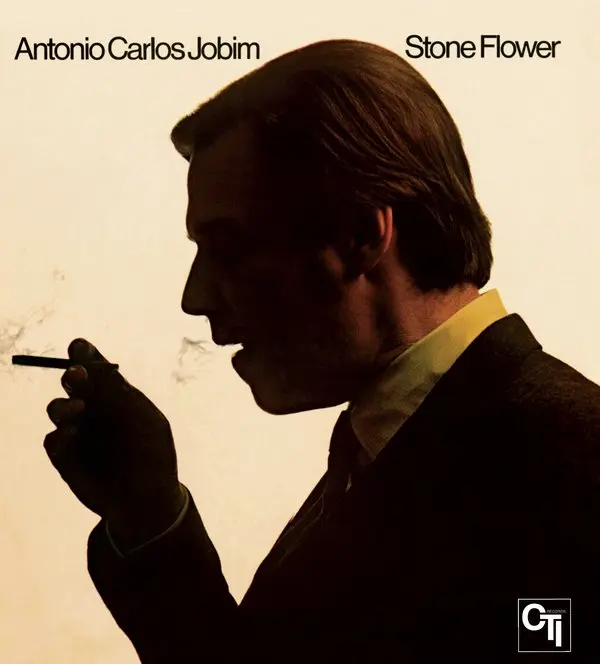 Antônio Carlos Jobim released Stone Flower on July 7, 1970, on CTI.
Stone Flower finds Jobin on electric piano, backed by Ron Carter, flutisy, Hubert Laws, saxophonist Joe Farrell, trombonist Urbie Green, violinist Harry Lookofsky, drummer João Palma, and percussionists Airto Moreira and Everaldo Ferreira.
“Tereza My Love” simmers through elongated trombone, shifting acoustic guitar, and a low answer figure. “Children’s Games” chimes with whistled keyboard doubling, ringing piano, and electric shimmer. “Choro” drifts through slow piano motion and unusual harmonic turns. “Brazil” chugs under steely percussion, bright electric-piano cascades, and Jobim’s minimal vocal.
“Stone Flower” coils through reverbed electric piano, dense percussion, and sharply colored violin. “Amparo” slows around piercing flute and moody piano. “Andorinha” brushes a relaxed low line through nocturnal unease. “God and the Devil in the Land of the Sun” darts through fast, freer saxophone shapes. “Sabiá” slows Jobim’s vocal around unsettled harmonic shading.
A1. “Tereza My Love” (4:20) – Jobim
A2. “Children’s Games” (3:25) – Jobim
A3. “Choro” [Cry] (2:05) – Jobim
A4. “Brazil” (7:19) – Barroso
B1. “Stone Flower” (3:18) – Jobim
B2. “Amparo” [Shelter] (3:35) – Jobim
B3. “Andorinha” [Swallow] (3:30) – Jobim
B4. “God and the Devil in the Land of the Sun” (2:20) – Jobim
B5. “Sabiá” [Thrush] (3:55) – Jobim, Buarque
Sessions occurred on seven dates between March 16 and May 22, 1970, at Van Gelder with the Taylor/Gelder sound team and arranger Eumir Deodato. The same sessions produced Jobim’s November 1970 A&M release, Tide.
Stone Flower appeared in a CTI gatefold sleeve with graphic design by Tony Lane and photography by Pete Turner. The cover places a side-profile portrait of Jobim with a cigarette against a tan field.
CTI issued “Stone Flower” as a September 1970 single (b/w “God and the Devil in the Land of the Sun”). Stone Flower reached No. 196 on the Billboard 200 and No. 18 on Billboard Jazz Albums.
Matita Perê
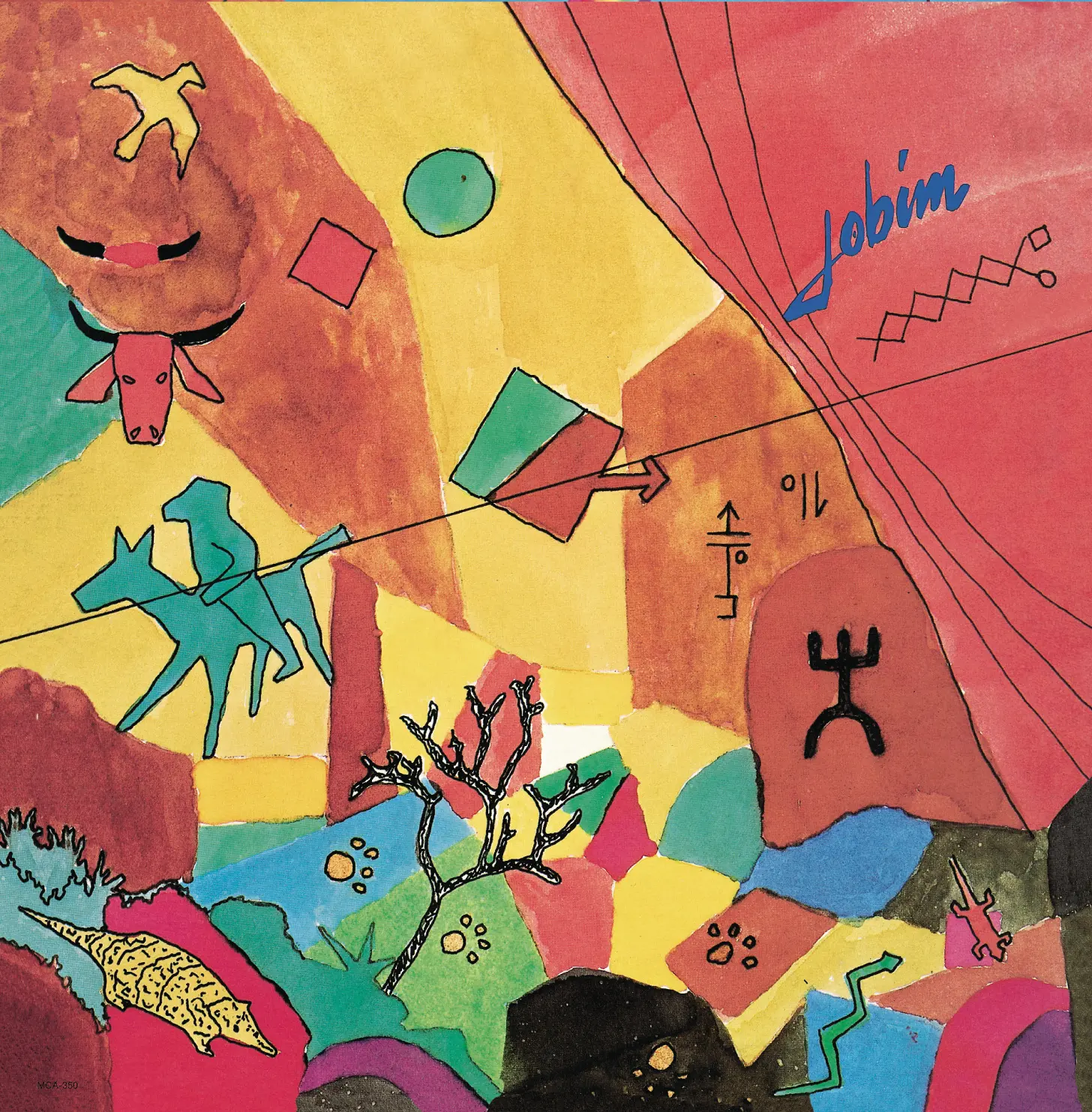 Tom Jobim released Matita Perê in 1973 on Philips.
The album extends the orchestral Jobim format through Portuguese vocal pieces, long-form film themes, and compact instrumental sections arranged and conducted by Claus Ogerman, whose ensemble includes concertmaster Harry Lookofsky, trombonist Urbie Green, bassists Richard Davis and Ron Carter, percussionists Airto Moreira, George Devens, and João Palma, and woodwind players Ray Beckenstein, Phil Bodner, Jerry Dodgion, Don Hammond, and Romeo Penque.
“Águas de Março” loops medium-slow chord motion, descending low figures, doubled Jobim vocals, and a small bird-call sign. “Ana Luiza” swells from smooth vocal line to instrumental interlude, warmer levada, and orchestral apex. “Matita Perê” zigzags through bird-call piano, twelve-tone exposure, high strings, sudden register shifts, and gallop-like orchestral motion. “Tempo do Mar” arches through dense harmony and rich arpeggio succession.
“Crônica da Casa Assassinada” sets train-motion orchestral effects against returning piano-motor figures and voice-and-piano punctuation. “Rancho nas Nuvens” turns sinuous arpeggios into one-note and two-note play before the dance figure enters. “Nuvens Douradas” resolves through slow cymbal wash, sixth-and-seventh turns, and two moving voices.
A1. “Águas de Março” [Waters of March] (3:55) – Jobim
A2. “Ana Luiza” (5:25) – Jobim
A3. “Matita Perê” (7:13) – Jobim, Pinheiro
A4. “Tempo do Mar” [Time of the Sea] (5:10) – Jobim
B1. “The Mantiqueira Range” (3:29) – Paulo Jobim
B2. “Crônica da Casa Assassinada” [Chronicle of the Murdered House] (9:57) – Jobim
— a. “Trem para Cordisburgo” [Train to Cordisburgo]
— b. “Chora Coração” [Cry, Heart]
— c. “O Jardim Abandonado” [The Abandoned Garden]
— d. “Milagre e Palhaços” [Miracle and Clowns]
B3. “Rancho das Nuvens” [Ranch of the Clouds] (4:01) – Jobim
B4. “Nuvens Douradas” [Golden Clouds] (3:16) – Jobim
Sessions occurred between December 11 and 13, 1972, at Columbia Recording Studios in New York City with producer-arranger Claus Ogerman and engineer Frank Laico. Eduardo Athayde shares production credit on the session documentation.
Matita Perê appeared in a Brazilian Philips gatefold sleeve. The front cover places a side-profile Jobim portrait below cream title lettering on a black field. Paulo Hermanny Jobim created the cover painting used inside the sleeve, whose image shows saturated landscape fields, birds, animals, symbols, a rainbow, and compass-like directional lines.
The U.S. MCA edition appeared as Jobim and added the English-language “Waters of March (Águas de Março)” after “Nuvens Douradas.”
Elis & Tom
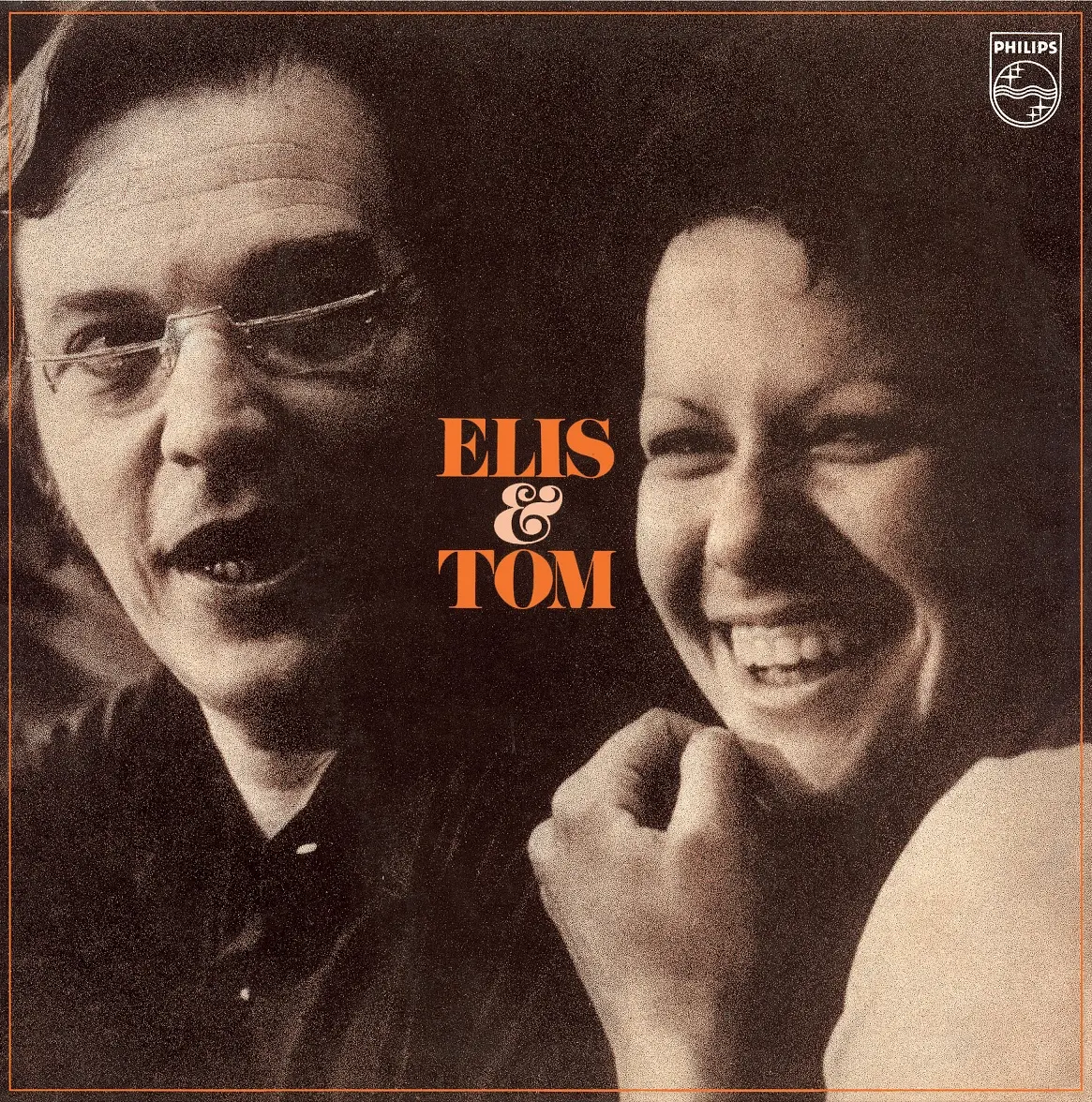 Elis Regina and Antônio Carlos Jobim released a collaborative album, Elis & Tom, in 1974 on Philips.
Regina leads the album as vocalist, joined on standard instruments by Jobim, who arranged “Modinha.” César Camargo Mariano arranged the remaining pieces and alternates piano with electric piano. The core group includes bassist Luizão Maia, drummer Paulo Braga, percussionist Chico Batera, guitarists Hélio Delmiro and Oscar Castro-Neves, flutists Hubert Laws and Jerome Richardson, and string conductor Bill Hitchcock.
“Águas de Março” trades short vocal entries over a descending chromatic low line and brushy levada, then breaks into clipped half-words, laughter, whistling, and loose syllables. “Só Tinha de Ser com Você” glides through a syncopated beat, acoustic chord figures, and relaxed Elis placement.
“Triste” hushes Elis almost to a whisper as electric-guitar color and nylon-string chords cross the middle section. “Corcovado” suspends lilting flute figures over deep strings while Jobim shadows Elis with a muted backing voice. “O Que Tinha de Ser” narrows to Elis, Jobim’s piano, and a near-whispered vocal shadow. “Retrato em Branco e Preto” keeps Elis close to a whisper with Jobim’s piano under the line. “Brigas, Nunca Mais” accents the first vocal pass with barely raised percussion, then adds Rhodes counterpoint near the ending.
“Por Toda a Minha Vida” places Elis against orchestra only and raises the dramatic contour. “Fotografia” keeps Elis relaxed over light band motion and syncopated beat. “Chovendo na Roseira” sways in waltz time as Jobim’s piano and Mariano’s keyboard interlock tightly. “Inútil Paisagem” pares the accompaniment to Jobim’s piano and a near-whispered backing vocal under Elis’s restrained line.
A1. “Águas de Março” [Waters of March] (3:29) – Jobim
A2. “Pois É” [Well, There It Is] (1:45) – Jobim, Buarque
A3. “Só Tinha de Ser com Você” [It Had to Be with You] (3:50) – Jobim, Oliveira
A4. “Modinha” [Little Song] (2:12) – Jobim, Moraes
A5. “Triste” [Sad] (2:38) – Jobim
A6. “Corcovado” (3:53) – Jobim
A7. “O Que Tinha de Ser” [What Had to Be] (1:40) – Jobim, Moraes
B1. “Retrato em Branco e Preto” [Portrait in Black and White] (3:02) – Jobim, Buarque
B2. “Brigas, Nunca Mais” [Fights, Never Again] (1:36) – Jobim, Moraes
B3. “Por Toda Minha Vida” [For All My Life] (2:02) – Jobim, Moraes
B4. “Fotografia” [Photograph] (2:45) – Jobim
B5. “Soneto de Separação” [Sonnet of Separation] (2:18) – Jobim, Moraes
B6. “Chovendo na Roseira” [Raining on the Rosebush] (3:10) – Jobim
B7. “Inútil Paisagem” [Useless Landscape] (3:11) – Jobim, Oliveira
Sessions occurred between February 22 and March 9, 1974, at MGM Studios in Los Angeles with producer Aloysio de Oliveira and engineer Humberto Gatica.
Elis & Tom appeared in a Philips gatefold sleeve with cover by Lobianco, inner-sleeve artwork by Aldo Luz, and photography by Nelson Mascarenhas. The front cover shows Regina and Jobim seated opposite each other beneath a white title field.
Urubu
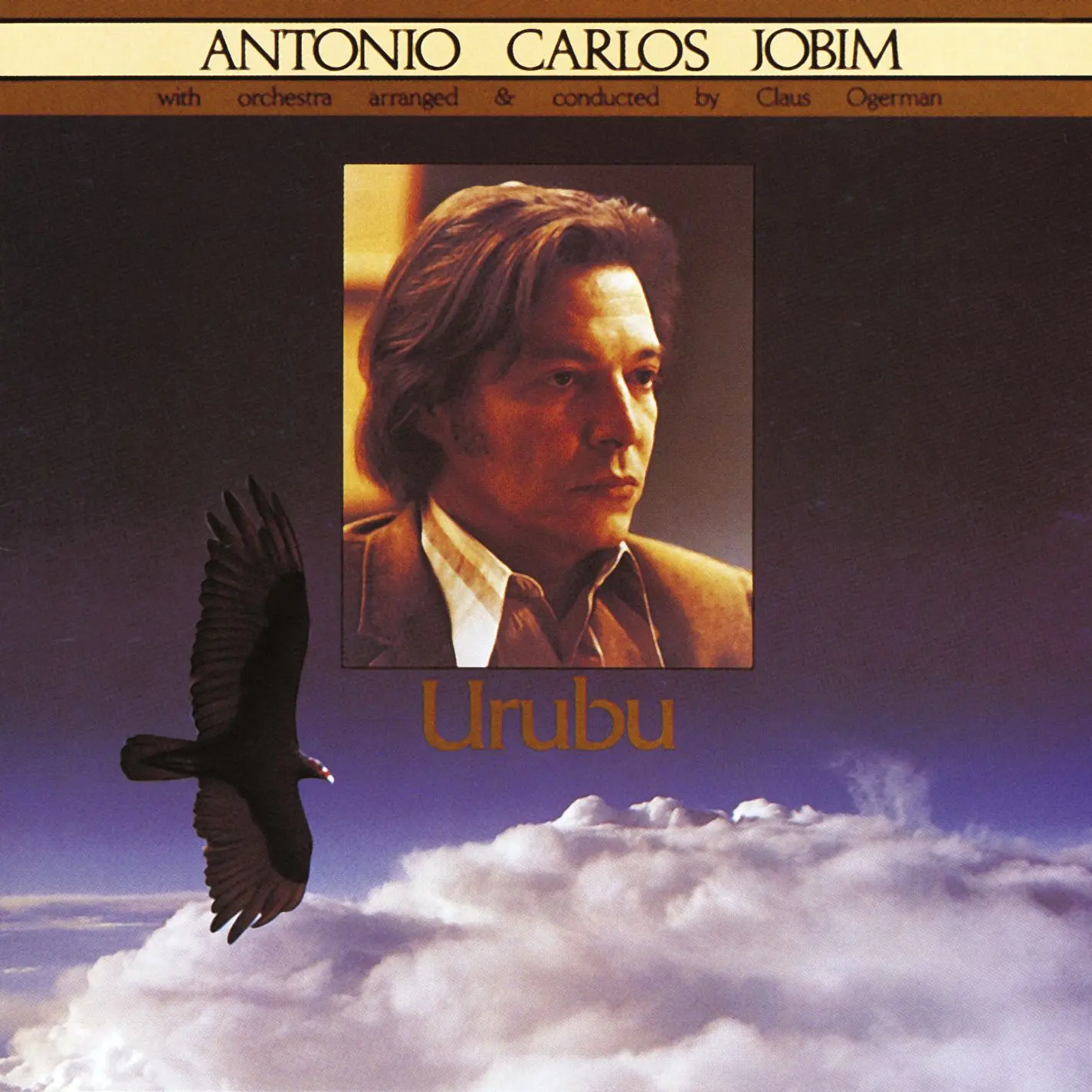 Antônio Carlos Jobim released Urubu in November 1976 on Warner Bros.
Urubu features Jobim-fronted orchestral works arranged and conducted by Claus Ogerman, anchored throughout by Carter and Palma.
“Bôto” rises from berimbau into constant-harmony vocal motion, dissonant strings, interior wind colors, and Miúcha’s answering presence. “Lígia” keeps Jobim’s rough vocal in a compact romantic song shape. “Correnteza” carries Jobim’s rough vocal through a lighter interior-colored line. “Ângela” darkens the same vocal grain into a sadder romantic turn.
“Saudade do Brasil” swells from orchestral strings and flutes into a central female-chorus peak. “Valse” presses a strong waltz figure through polished orchestral movement. “Arquitetura de Morar” expands the waltz figure through prominent woodwinds and string writing. “O Homem” bursts through a short, intense orchestral close.
A1. “Bôto” [Porpoise] (6:07) – Jobim, Jararaca
A2. “Lígia” (4:13) – Jobim
A3. “Correnteza” [Current] (2:41) – Jobim, Bonfá
A4. “Ângela” (2:50) – Jobim
B1. “Saudade do Brasil” [Longing for Brazil] (7:27) – Jobim
B2. “Valse” [Waltz] (3:14) – Paulo Jobim
B3. “Arquitetura de Morar” [Architecture to Live] (8:08) – Jobim
B4. “O Homem” [The Man] (2:31) – Jobim
Sessions spanned five dates between October 16 and 23, 1975, at Columbia Recording Studios in New York with producer Claus Ogerman and engineer Frank Laico.
Urubu appeared in a Warner Bros. sleeve with graphic design by Lockart and photography by Raymond Ross, Januário Garcia, and Fred Valentine. The front cover places a black-and-white Jobim portrait on a brown field beside the album title and the orchestra credit. Paulo Jobim created the back-cover illustration.
Discography:
- Sinfonia do Rio de Janeiro (1954 • Antônio Carlos Jobim & Billy Blanco)
- Orfeu da Conceição (1956 • Antônio Carlos Jobim & Vinicius de Moraes)
- O pequeno príncipe (1957)
- Black Orpheus (OST, 1959 • Antônio Carlos Jobim & Luiz Bonfá)
- Brasilia: Sinfonia da alvorada (1960 • Antônio Carlos Jobim & Vinicius de Moraes)
- The Composer of Desafinado, Plays (1963)
- Caymmi visita Tom (1964 • Dorival Caymmi & Tom Jobim)
- Herbie Mann & Joao Gilberto with Antonio Carlos Jobim: Recorded in Rio de Janeiro (1965)
- The Wonderful World of Antonio Carlos Jobim (1965)
- Love, Strings and Jobim: The Eloquence of Antonio Carlos Jobim (1966)
- Antônio Carlos Jobim & Sérgio Mendes (1967 • Antônio Carlos Jobim & Sérgio Mendes)
- Francis Albert Sinatra & Antônio Carlos Jobim (1967 • Frank Sinatra & Antônio Carlos Jobim)
- A Certain Mr. Jobim (1967)
- Wave (1967)
- Sinatra Jobim (1970 • Sinatra Jobim)
- The Adventurers (OST, 1970)
- Stone Flower (1970)
- Tide (1970)
- Matita Perê (1973 • Tom Jobim)
- Elis & Tom (1974 • Elis Regina & Antônio Carlos Jobim)
- Urubu (1976)
- Miúcha & Antônio Carlos Jobim (1977 • Miúcha & Antônio Carlos Jobim)
- Miúcha & Tom Jobim (1979 • Miúcha & Antônio Carlos Jobim)
- Terra Brasilis (1980)
- Edu & Tom, Tom & Edu (1981 • Edu Lobo & Tom Jobim)
- Gabriela (OST, 1983 • Gal Costa & Tom Jobim)
- Passarim (1987)
Sources:
- Discogs: Antônio Carlos Jobim
- RYM: Antônio Carlos Jobim
- 45cat: Antônio Carlos Jobim
- MusicBrainz: Antônio Carlos Jobim
Artist/Album Pages:
Contraction was a Québécois symphonic/jazz/folk band that released a self-titled album on Columbia...
Eero Koivistoinen (Jan. 13, 1946) is a Finnish jazz-rock saxophonist, composer, and bandleader who...
Gary Wright (April 26, 1943 – September 4, 2023) was an American singer, musician, and songwriter ...
Ville Emard Blues Band was a Québécois jazz-rock/funk big band that self-issued the album Minute! ...
Linda Lewis (Sept. 27, 1950 – May 3, 2023) was an English soul-pop signer who emerged in the 1970 ...
Jimmy Smith (December 8, 1928 — February 8, 2005) was an American soul-jazz/funk organist who pop...
Péloquin Sauvageau was a Québécois electro-psych duo that released the 1972 Polydor album Laissez-...
The Box Tops were an American pop-rock band that released four 1967–69 albums on Bell Records. They ...
Soluna was an Argentine folk ensemble that made the 1977 Microfón album Energía Natura. Frontman Gus...
Hydra was an American hard-rock/boogie band from Atlanta that released two albums on Capricorn in...
Khan was an English space-rock band that released the album Space Shanty on Deram in 1972. This wa...
The Diga Rhythm Band was an American percussion ensemble that released the 1976 album Diga on Roun...