

Chic was an American soul-funk band from New York, best known for the disco-era hits “Everybody Dance,” “Le Freak,” “I Want Your Love,” “Good Times,” and “Dance, Dance, Dance (Yowsah, Yowsah, Yowsah).” They released seven albums between 1977 and 1983 on Atlantic. Guitarist Nile Rodgers and bassist Bernard Edwards also wrote and produced albums for Diana Ross, Blondie‘s Debbie Harry, and early Chic singer Norma Jean Wright.
Members: Nile Rodgers (guitar, vocals, producer, 1977-present), Bernard Edwards (bass, vocals, producer, 1977-96), Tony Thompson (drums, 1977-83), Norma Jean Wright (lead vocals, 1977), Luci Martin (lead vocals, 1977-83), Alfa Anderson (lead vocals, 1978-83)
Background
Chic evolved from a partnership between guitarist Nile Rodgers (b. 1952) and Bernard Edwards (1952–1996), who met as R&B sidemen in the early 1970s. Rodgers was already writing songs; two of his co-compositions (“Black Satin Amazon Fire Engine Cry Baby” and “Loose Here”) appear on the 1970 album The Blue Guerrilla by soul-jazz poet Kain.
Rodgers and Edwards formed an R&B-rock combo The Boys, later renamed The Big Apple Band, which gigged the NYC club circuit. Despite interest in their demos, they were unable to secure a record deal. They served as the backing band for the soul group New York City, which issued two albums in 1973/74 on Chelsea Records.
After that group split, Rodgers and Edwards played on the album Missing You by soul singer Robert Cotter, released in 1976 on the tax-scam Tiger Lily label. Here, the pair first encountered drummer Tony Thomas, who’d done uncredited backing stints with Labelle and Ecstasy, Passion & Pain. The three formed the core of Chic, conceived to match disco-funk with a high-fashion style of dress.
Chic
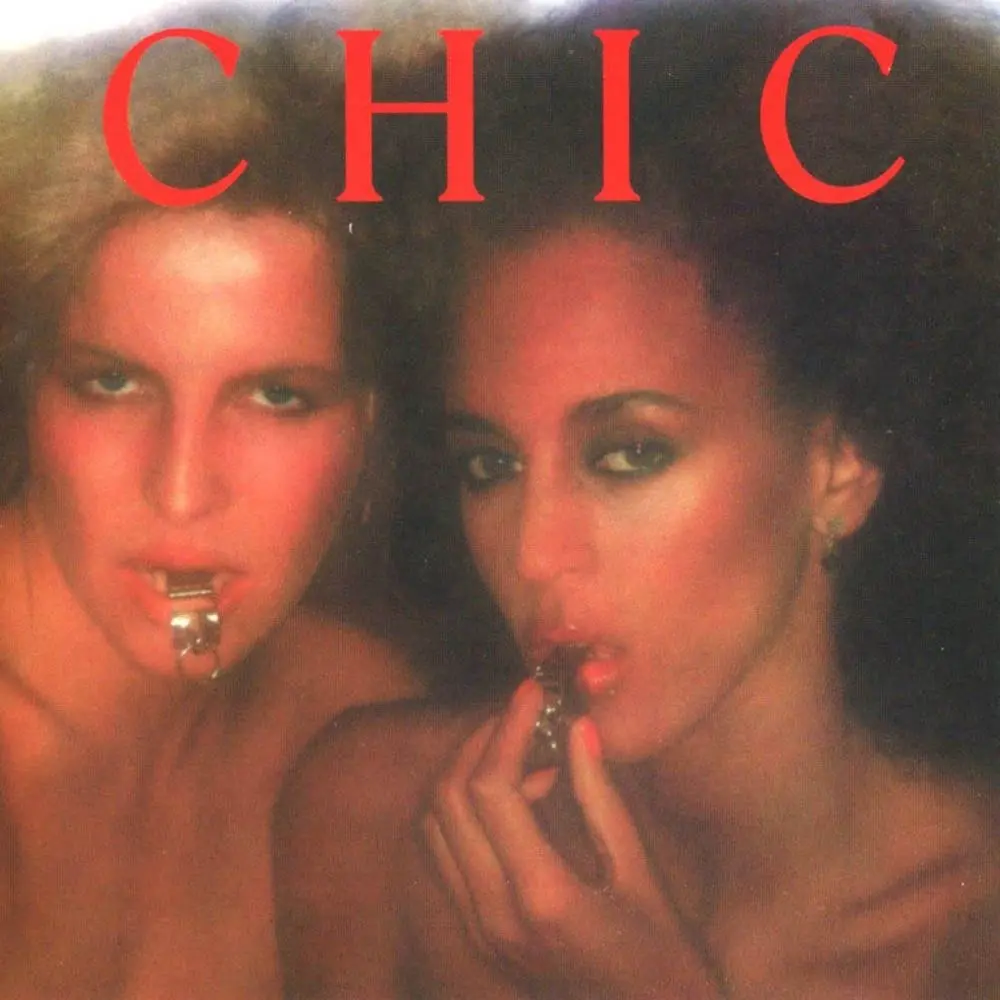 Chic released their self-titled debut album on November 22, 1977, on Atlantic.
The album pairs disco-funk rhythms with string-laden arrangements and alternating male–female vocals. It introduced the Rodgers–Edwards sound and includes the group’s first two hit singles.
Guitarist Nile Rodgers and bassist Bernard Edwards wrote the material with keyboardist–woodwind player Kenny Lehman, who co-wrote “Dance, Dance, Dance (Yowsah, Yowsah, Yowsah)” and “São Paulo.” Rodgers sings on “You Can Get By,” while lead vocals elsewhere rotate between Norma Jean Wright, Alfa Anderson, and Luci Martin.
The centerpiece “Dance, Dance, Dance (Yowsah, Yowsah, Yowsah)” stretches past eight minutes with a bass-driven pulse, sharp rhythm guitar, and layered string figures. “Everybody Dance” opens with a bass solo before breaking into extended piano and string interplay. “You Can Get By” pivots on circular choruses and percussion breaks, while “São Paulo” serves as a Latin-tinged instrumental interlude. “Falling in Love with You” reveals an early take on Chic’s ballad style, and “Strike Up the Band” closes the set with percussive drive.
A1. “Dance, Dance, Dance (Yowsah, Yowsah, Yowsah)” (8:30)
A2. “São Paulo” (4:30)
A3. “You Can Get By” (5:20)
B1. “Everybody Dance” (6:40)
B2. “Est-Ce Que C’est Chic” (3:38)
B3. “Falling in Love with You” (3:55)
B4. “Strike Up the Band” (5:10)
Sessions took place at Electric Lady Studios in New York, with vocals and mixing at Power Station. Rodgers, Edwards, and Lehman produced and arranged the album with engineering by Bob Clearmountain, Mike Frondelli, Robert Drake, Ron Johnson, and Tom Savarese.
Atlantic lifted “Dance, Dance, Dance (Yowsah, Yowsah, Yowsah)” as the first single (b/w “São Paulo”) in September 1977. It reached No. 6 on the Billboard Hot 100, R&B, and UK charts and topped the US Dance chart. In March 1978, Atlantic issued “Everybody Dance” (b/w “Est-Ce Que C’est Chic” or “You Can Get By”), which hit No. 9 in the UK and No. 38 on the Hot 100.
Chic peaked at No. 27 on the Billboard 200 and No. 12 R&B.
C’est Chic
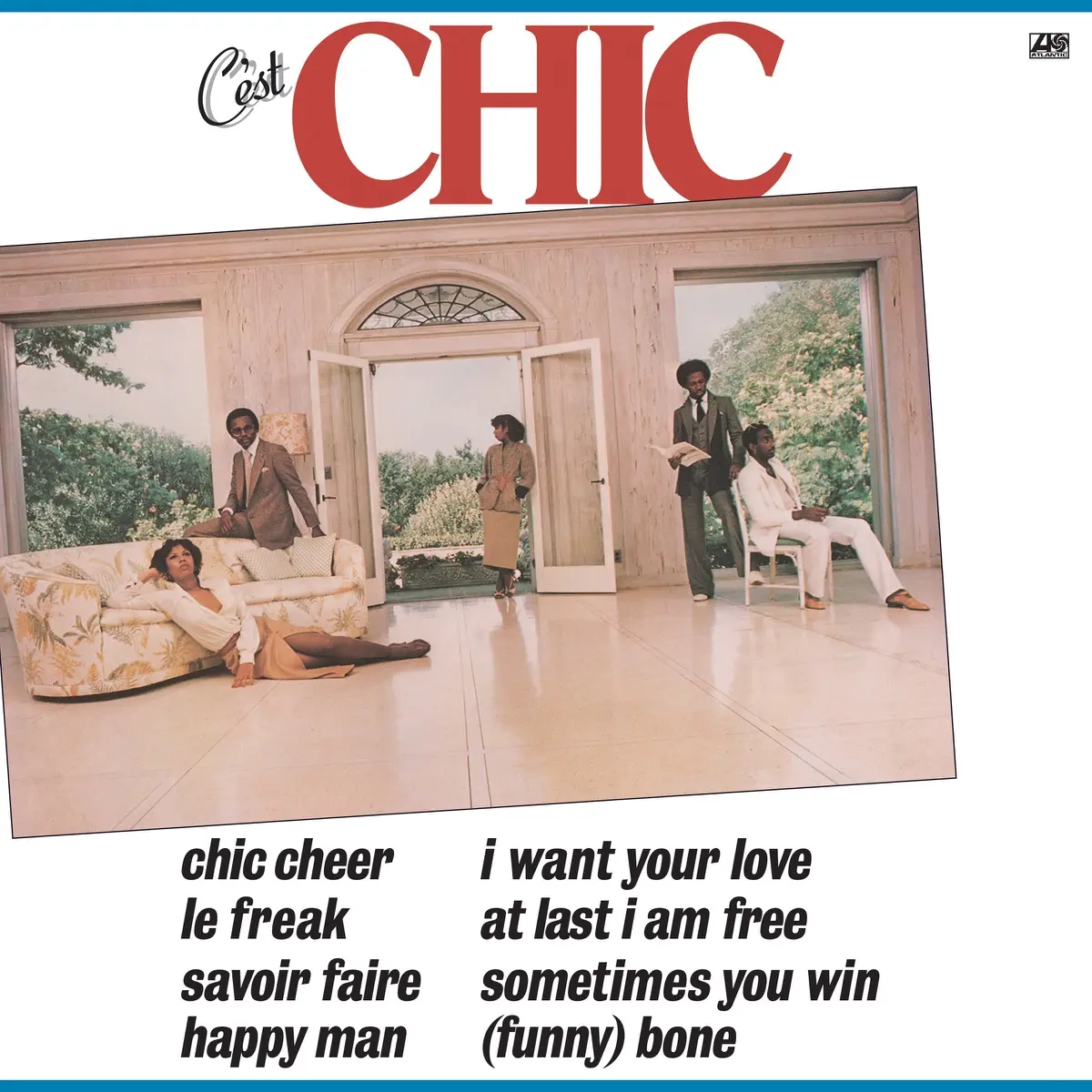 Chic released their second album, C’est Chic, on August 11, 1978, on Atlantic.
The album refined the group’s blend of orchestrated disco and rhythmic funk, pairing streamlined dance numbers with extended instrumentals and slower ballads.
Bassist Bernard Edwards and guitarist Nile Rodgers wrote and produced the eight songs, arranging them with horns, strings, and percussion. Vocal parts were handled by Alfa Anderson, Luci Martin, Luther Vandross, and others. Keyboardists Rob Sabino, Andy Schwartz, and Raymond Jones contributed piano and electric piano, while Tony Thompson played drums and Sammy Figueroa added percussion.
The sequence opens with “Chic Cheer,” a percussive call to the dancefloor, and pivots into the propulsive “Le Freak,” marked by churning rhythm guitar and string stabs. Side one closes with “Savoir Faire,” an instrumental built around Rodgers’ extended guitar solo, and “Happy Man,” where Edwards takes lead vocals. Side two features the group’s second major single “I Want Your Love,” whose string and horn arrangement heightens its yearning refrain. The slow, gospel-tinged “At Last I Am Free” contrasts with the upbeat “Sometimes You Win,” which incorporates prominent horns, before the album closes with the instrumental “(Funny) Bone.”
A1. “Chic Cheer” (4:42)
A2. “Le Freak” (5:23)
A3. “Savoir Faire” (5:01)
A4. “Happy Man” (4:17)
B1. “I Want Your Love” (6:45)
B2. “At Last I Am Free” (7:08)
B3. “Sometimes You Win” (4:26)
B4. “(Funny) Bone” (3:41)
Sessions took place at Power Station Studios in New York with Edwards and Rodgers producing and Bob Clearmountain engineering. Dennis King mastered the album at Atlantic Studios.
C’est Chic features photography by Joel Brodsky and art direction by Bob Defrin.
Atlantic issued “Le Freak” backed with “Savoir Faire” in September 1978. It topped the US, Canadian, Australian, and New Zealand charts and went Top 10 across Europe. A follow-up single, “I Want Your Love” backed with “(Funny) Bone,” appeared in January 1979 and reached No. 7 on the US Billboard Hot 100 and No. 4 in the UK.
The album reached No. 1 on the US R&B chart and No. 4 on the Billboard 200, also charting in multiple European markets.
Risqué
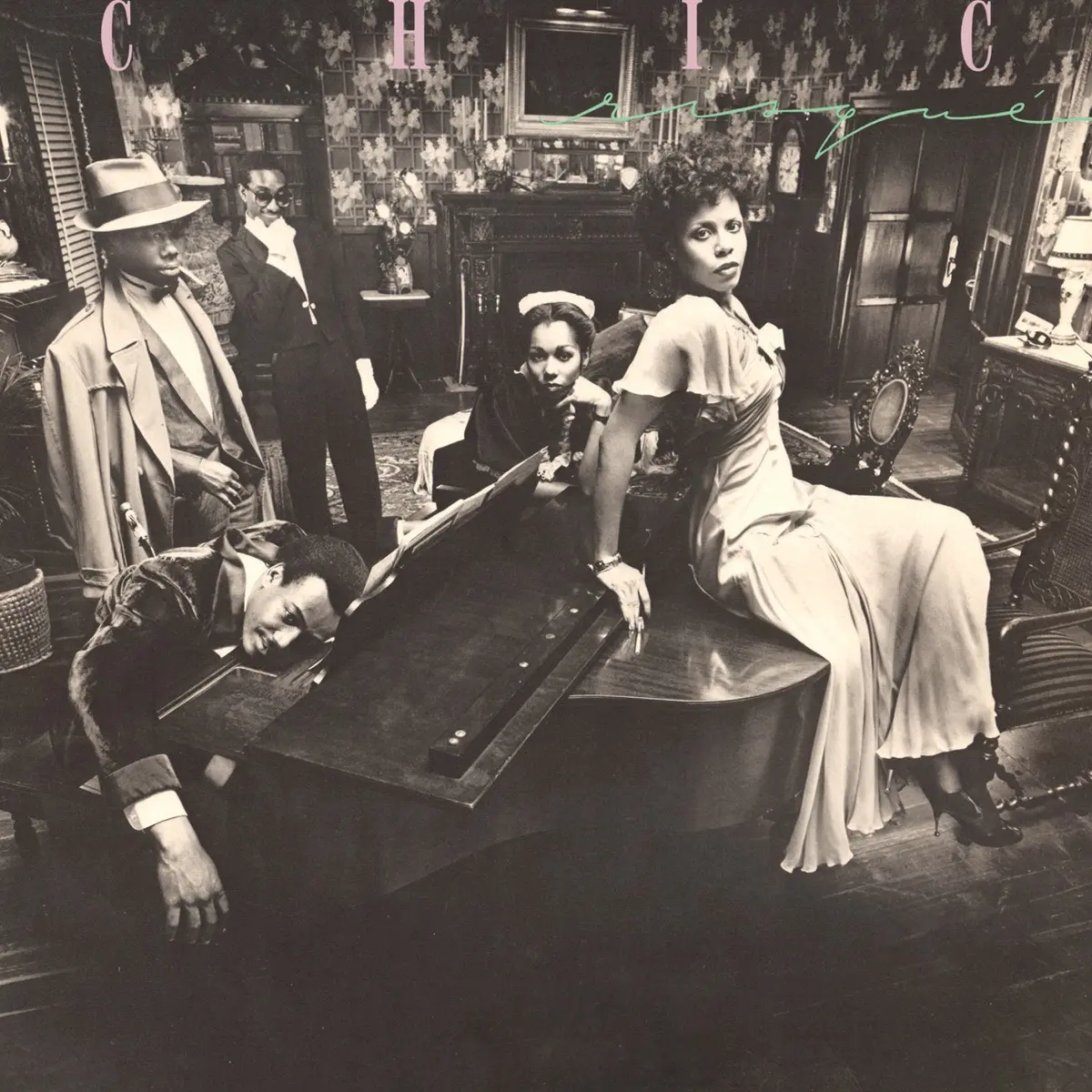 Chic released their third album, Risqué, on July 30, 1979, on Atlantic.
The album balances elongated dance numbers with atmospheric slow pieces and tighter funk tracks. It furthered Chic’s dominance in late-1970s dance music and yielded one of their most influential songs.
Bassist Bernard Edwards and guitarist Nile Rodgers wrote, arranged, and produced all seven tracks with string parts by The Chic Strings and additional keyboard contributions from Andy Schwartz, Raymond Jones, and Robert Sabino. Vocal duties rotate between Alfa Anderson, Luci Martin, Bernard Edwards, Fonzi Thornton, and others.
“Good Times” opens side one with a steady bass line, handclap rhythm, and layered group vocals that give way to an extended instrumental midsection. “A Warm Summer Night” lowers the pace with strings, piano, and whispered Spanish phrases. “My Feet Keep Dancing” closes the side with a buoyant vocal exchange between Edwards and Martin, accented by a tap dance solo from Fayard Nicholas, Eugene Jackson, and Sammy Warren. Side two starts with the quick-tempo single “My Forbidden Lover,” built on clipped guitar and string stabs. “Can’t Stand to Love You” centers on terse piano phrases and treated guitar, while “Will You Cry (When You Hear This Song)” slows to a dramatic ballad style. The album closes with “What About Me,” an assertive mid-tempo dance track.
A1. “Good Times” (8:13)
A2. “A Warm Summer Night” (6:08)
A3. “My Feet Keep Dancing” (6:46)
B1. “My Forbidden Lover” (4:42)
B2. “Can’t Stand to Love You” (2:55)
B3. “Will You Cry (When You Hear This Song)” (4:05)
B4. “What About Me” (4:10)
Sessions occurred at Power Station in New York, with additional work at Kendun Studios in California and Electric Lady Studios in New York. Edwards and Rodgers produced with engineering by Bob Clearmountain and assistant engineers Jackson Schwartz, Jeff Hendrickson, Jim Galante, Peter Robbins, and Ray Willard. Dennis King mastered the album at Atlantic Studios.
Risqué features art direction by Carin Goldberg and photography by Ken Ambrose. The project followed We Are Family, the Chic-backed third album by the soul-funk family act Sister Sledge.
Atlantic issued “Good Times” backed with “A Warm Summer Night” in June 1979. It reached No. 1 on the Billboard Hot 100, R&B, and Cashbox charts and topped the Canadian disco chart, also placing Top 10 in the UK and New Zealand. A second single, “My Forbidden Lover” backed with “What About Me,” appeared in September, followed in December by “My Feet Keep Dancing” backed with “Will You Cry (When You Hear This Song).”
Risqué reached No. 5 on the US Billboard 200 and No. 2 R&B.
Real People
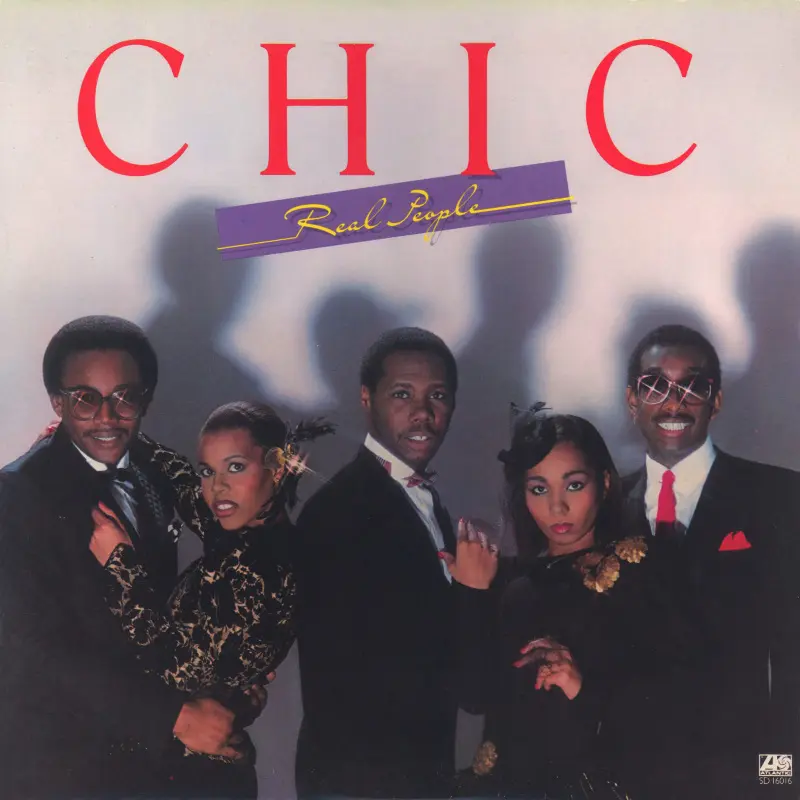 Chic released their fourth album, Real People, on June 30, 1980, on Atlantic.
The album adds sharper guitar tones and leaner rhythms to Chic’s orchestrated funk-disco style, incorporating ballads, dance tracks, and jazz-tinged instrumentals.
Bassist Bernard Edwards and guitarist Nile Rodgers wrote, arranged, and produced all eight songs with keyboardists Andy Schwartz and Raymond Jones, drummer Tony Thompson, percussionist Sammy Figueroa, and The Chic Strings led by Gene Orloff. Alfa Anderson and Luci Martin share vocals with support from Fonzi Thornton and Michelle Cobbs.
The sequence opens with the instrumental “Open Up,” a string-led workout that bridges disco and jazz. The title track combines clipped guitar and hard bass with a sarcastic lyric refrain. “I Loved You More” slows the pace with Luci Martin on lead vocal in one of Chic’s most dramatic ballads. “I Got Protection” follows with a brisk dance rhythm and humorous wordplay around its refrain. Side two begins with “Rebels Are We,” a steady, mid-paced single marked by a relaxed rhythm and instrumental break. “Chip Off the Old Block” builds on an assertive chorus and guitar drive, while “26” moves on crisp rhythm guitar and string accents with Edwards on lead vocal. The closing number, “You Can’t Do It Alone,” features Fonzi Thornton on lead against a mid-tempo backing with acoustic guitar interjections.
A1. “Open Up” (3:52)
A2. “Real People” (5:20)
A3. “I Loved You More” (3:06)
A4. “I Got Protection” (6:22)
B1. “Rebels Are We” (4:53)
B2. “Chip Off the Old Block” (4:56)
B3. “26” (3:57)
B4. “You Can’t Do It Alone” (4:39)
Sessions occurred at Power Station in New York with additional work at Guitarman and Stuyvesant Music, NYC. Edwards and Rodgers produced with engineering by Bob Clearmountain and Bill Scheniman, assisted by Garry Rindfuss, Jeff Hendrickson, Lucy Laurie, and others. Dennis King mastered the album.
Real People features art direction by Bob Defrin and photography by Bob Kiss. The album appeared one month after Diana, the Chic-backed tenth solo album by Diana Ross with the hits “Upside Down” and “I’m Coming Out.”
Atlantic issued “Rebels Are We” backed with “Open Up” in May 1980, which reached No. 8 on the Billboard R&B chart. A second single, “Real People” backed with “Chip Off the Old Block,” appeared in October. Some European territories opted for “26” as a follow-up single.
Take It Off
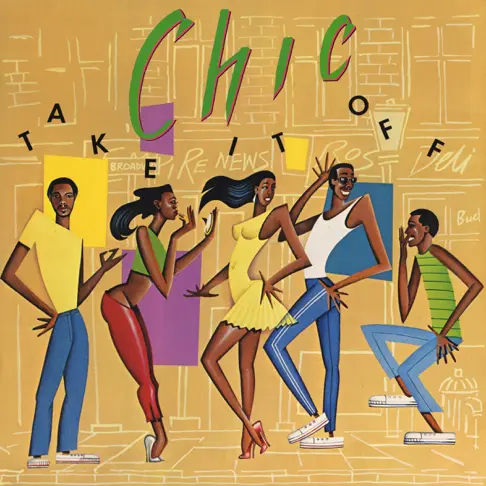 Chic released their fifth album, Take It Off, on November 16, 1981, on Atlantic.
The album marks a shift from the ornate string-laden sound of the late 1970s to a leaner, brass-centered funk style with jazz undertones and stripped rhythmic arrangements.
Nile Rodgers and Bernard Edwards wrote, produced, arranged, and conducted the album in full. Rodgers added guitar and occasional lead vocals, while Edwards played bass and sang lead on select tracks. Alfa Anderson, Luci Martin, Fonzi Thornton, Michelle Cobbs, and Jocelyn Brown handled the bulk of the vocals, with contributions from Nile and Bernard. Saxophonist Lenny Pickett played lead on “Just Out of Reach” and “Baby Doll,” supported by horn contributions from Ronnie Cuber, Michael Brecker, Randy Brecker, Ray Maldonado, and Vinny Della Rocca.
The set opens with “Stage Fright,” the closest link to the earlier Chic sound, followed by the wiry funk of “Burn Hard” and the jazz-tinged “So Fine,” built around Nile’s guitar solo. Edwards leads the mid-tempo “Flash Back,” while the mechanical “Telling Lies” strips the sound down to bass, drums, and clipped rhythm guitar. “Your Love Is Cancelled” features Nile on lead in a Rick James–influenced arrangement. Alfa fronts the smoother “Would You Be My Baby,” while Luci and Bernard duet on the taut funk of the title track. Thornton sings the soul-tinged “Just Out of Reach,” while Pickett drives the closing instrumental “Baby Doll” with tenor sax.
A1. “Stage Fright” (3:55)
A2. “Burn Hard” (5:12)
A3. “So Fine” (4:10)
A4. “Flash Back” (4:28)
A5. “Telling Lies” (2:28)
B1. “Your Love Is Cancelled” (4:12)
B2. “Would You Be My Baby” (3:34)
B3. “Take It Off” (5:12)
B4. “Just Out of Reach” (3:45)
B5. “Baby Doll” (3:10)
Sessions occurred at Power Station in New York City with Rodgers and Edwards producing and Bill Scheniman engineering. The project followed Kookoo, the Chic-backed solo debut by Blondie singer Debbie Harry.
Take It Off features artwork by Tony Wright with art direction by Sandi Young. Atlantic lifted “Stage Fright” backed with “So Fine.”
In April 1982, “Burn Hard” became the b-side to “Soup for One,” the theme to the namesake sex comedy. It reached No. 14 on the Billboard R&B chart.
Tongue in Chic
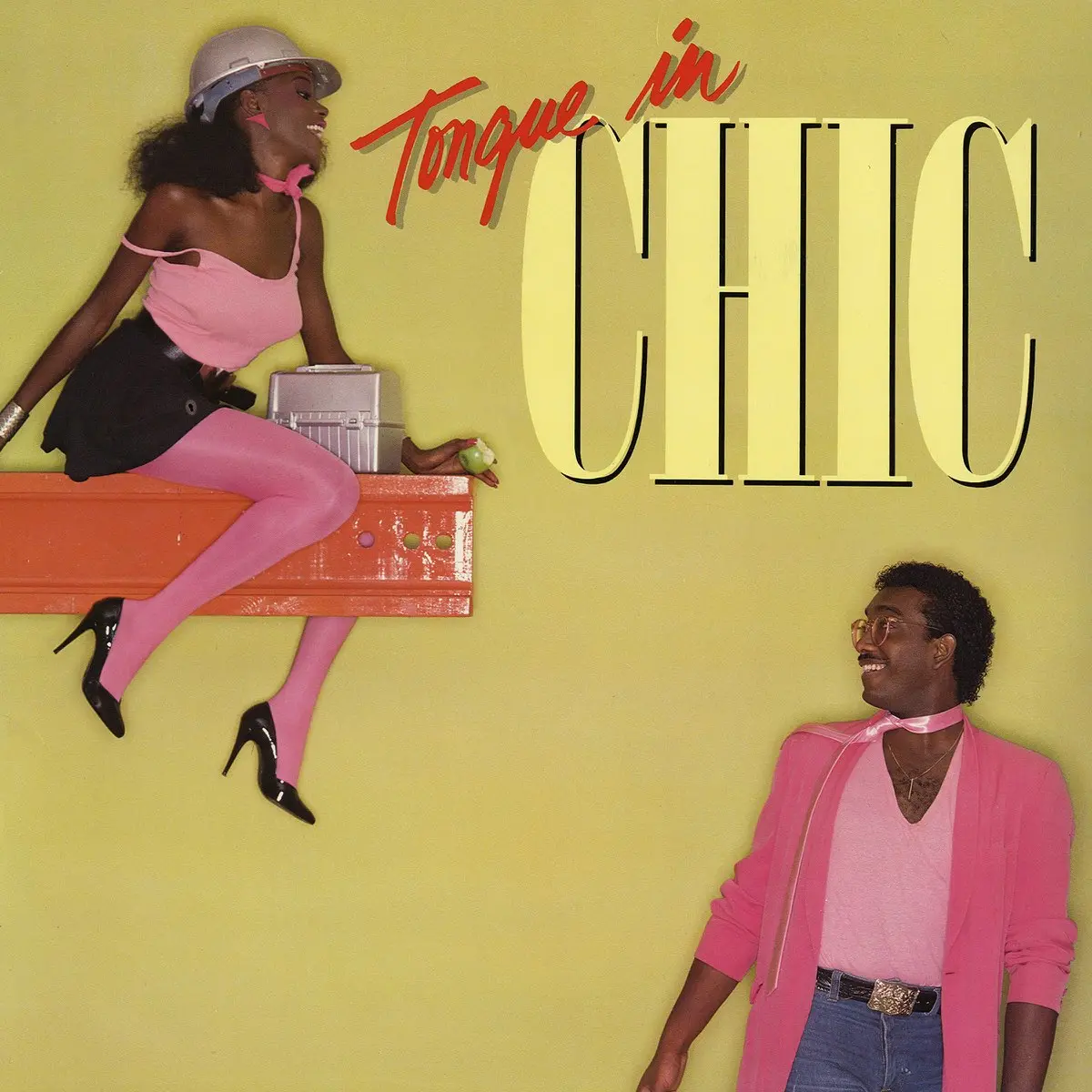 Chic released their sixth album, Tongue in Chic, on November 1, 1982, on Atlantic.
The album shifts from the stripped funk of Take It Off toward a brighter, brass-tinged R&B sound with nods to Chic’s late-1970s formula. Strings return in places, though the overall production emphasizes short, direct arrangements.
Nile Rodgers and Bernard Edwards wrote, produced, arranged, and conducted the album. Edwards played bass and shared vocals, while Rodgers handled guitar and occasional leads. Alfa Anderson, Luci Martin, Dolette McDonald, Jocelyn Brown, Fonzi Thornton, and Michelle Cobbs sang throughout, with Ray Maldonado on trumpet, Robert Aaron on saxophone, and Gene Orloff directing strings.
The set opens with “Hangin’,” a party-styled single, followed by Edwards’ vocal lead on the electronic “I Feel Your Love Comin’ On.” “When You Love Someone” starts as a ballad with Alfa and Luci up front before shifting into a tighter funk section. “Chic (Everybody Say)” recalls the self-referential chants of their early years, while “Hey Fool” pares back the arrangement to sparse rhythm guitar and vocals. “Sharing Love” takes a slower soul approach, echoing “Soup for One,” and the album closes with “City Lights,” driven by Edwards’ sharp bass figures and jam-like interplay.
A1. “Hangin’” (5:12)
A2. “I Feel Your Love Comin’ On” (6:52)
A3. “When You Love Someone” (5:06)
B1. “Chic (Everybody Say)” (4:46)
B2. “Hey Fool” (3:40)
B3. “Sharing Love” (2:40)
B4. “City Lights” (4:26)
Sessions occurred at Power Station in New York City with Rodgers and Edwards producing and Scott Litt recording and mixing.
Tongue in Chic features cover photography by Herbert Schulz with art direction by Bob Defrin.
Atlantic lifted “Hangin’” backed with “Chic (Everybody Say)” as a single in September 1982.
Believer
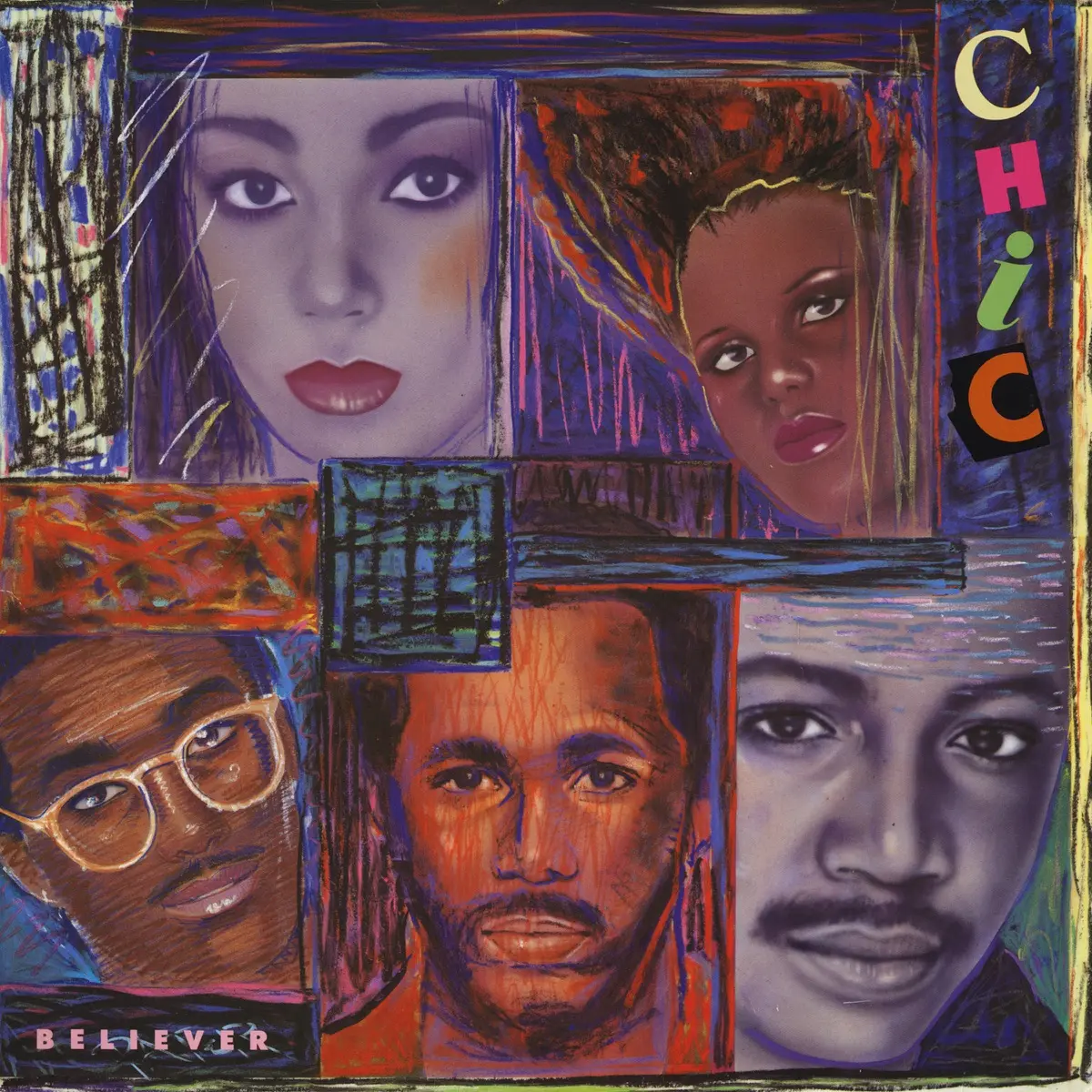 Chic released their seventh album, Believer, on November 14, 1983, on Atlantic.
The album updates Chic’s funk-disco foundation with heavier use of synthesizers, electronic drums, and high-tech production, reflecting shifts in early 1980s urban contemporary and dance music.
Guitarist Nile Rodgers and bassist Bernard Edwards produced, arranged, and conducted the album while writing all eight songs. Rodgers played guitar and sang occasional leads, Edwards handled bass and select vocals, and Tony Thompson played drums. Keyboardist Rob Sabino contributed throughout, while Alfa Anderson, Luci Martin, Fonzi Thornton, Curtis King, Brenda White, and Michelle Cobbs handled vocals. Gene Orloff conducted strings and horns.
The set opens with the title track, a slower-paced song marked by a darker tone. “You Are Beautiful” and “Show Me Your Light” emphasize clipped rhythm and brighter vocal layers, while “Take a Closer Look” and “You Got Some Love for Me” work in ballad territory with atmospheric touches. “Give Me the Lovin’” applies a mid-paced rhythm with smoother delivery, while “In Love With Music” rides a lighter, straightforward pace. The closing track, “Party Everybody,” acknowledges early hip-hop with spoken sections and chant-style vocals.
A1. “Believer” (5:06)
A2. “You Are Beautiful” (4:34)
A3. “Take a Closer Look” (4:38)
A4. “Give Me the Lovin’” (4:52)
B1. “Show Me Your Light” (3:57)
B2. “You Got Some Love for Me” (4:52)
B3. “In Love With Music” (3:52)
B4. “Party Everybody” (4:51)
Sessions occurred at Power Station in New York City with Rodgers and Edwards producing and Jason Corsaro engineering, recording, and mixing. Bob Ludwig mastered the album.
Atlantic lifted “Give Me the Lovin’” backed with “You Got Some Love for Me” as a single in November 1983.
Believer was Chic’s final album before their 1985 split.
Discography:
- Chic (1977)
- C’est Chic (1978)
- Risqué (1979)
- Real People (1980)
- Take It Off (1981)
- Tongue in Chic (1982)
- Believer (1983)
- Chic-Ism (1992)
Sources:
Artist/Album Pages:
The Nights were an American soul-funk band that released a 1976 self-titled album on ABC/Little St...
The LTG Exchange was an American funk band from N.Y.C. that made a 1974 self-titled album on Wand/...
Mad Cliff — alternately spelled Madcliff — is the moniker of an American soul-funk project release...
24-Carat Black was an American soul-funk band from Cincinnati, Ohio, that released the album Ghett...
The Love Unlimited Orchestra was a 40-piece American soul-funk big band from Los Angeles, formed i...
Muscle Shoals Horns were an American studio-based brass section that played backing tracks on nume...
White Heat was an American soul-funk band that released a 1975 self-titled album on RCA Victor. Th...
The Ohio Players were an American soul-funk band that emerged from Dayton, Ohio, in 1959 under the...
Zinc was a soul-funk studio project comprised of American and Italian session musicians assembled ...
Ozone was an American soul-funk band from Nashville that released five albums between 1980 and 198...
The Salsoul Orchestra was an American Latin-funk ensemble from N.Y.C. that served as the house ban...
Xavier was an American soul-funk band that released the 1982 Liberty album Point of Pleasure and s...