

The Ohio Players were an American soul-funk band that emerged from Dayton, Ohio, in 1959 under the name The Ohio Untouchables. During their early years, they released six singles between 1962 and 1964 on the Lu Pine and Thelma labels. This formative period established their foundation in rhythm and blues with a lean, guitar-led style that foreshadowed their eventual turn toward funk.
They adopted the Ohio Players name for their 1968 album Observations in Time, released on Capitol. After a brief hiatus, they reemerged with a revamped lineup and made the 1972/73 albums Pain, Pleasure, and Ecstasy on Westbound Records. This era marked their shift into extended, rhythm-centric funk, distinguished by dense instrumentation, flamboyant vocals, and provocative visual imagery.
The Ohio Players reached their commercial peak with the 1974 Mercury release Skin Tight, which initiated a string of hit albums through 1978. This period saw their sound coalesce into a sleek, studio-polished blend of rhythm-forward funk, falsetto vocal interplay, and syncopated horn charts. Their Mercury output yielded the crossover hits “Fire” and “Love Rollercoaster,” which cemented their status as one of the dominant funk acts of the mid-1970s.
Members: Marshall Jones (bass, 1959-84), Ralph Middlebrooks (trumpet, saxophone, trombone, 1959-84), Clarence Satchell (saxophone, flute, guitar, vocals, 1959-79), Cornelius Johnson (drums, 1959-63), Robert Ward (vocals, guitar, 1959-63), Leroy Bonner [Sugarfoot] (vocals, guitar, 1963-2013), Gregory Webster (drums, 1963-74), Dutch Robinson (piano, vocals, 1963-70), Bobby Lee Fears (vocals, 1963-70), Marvin Pierce (trombone, 1970-82), Norman Napier (trumpet, 1970-74), Walter “Junie” Morrison (keyboards, 1970-74), Charles Dale Allen (vocals, 1970-72), James Johnson (vocals, saxophone, 1972-74), James Williams (drums, percussion, vocals, 1974-present), Clarence Willis (guitar, vocals, 1974-present), Robert Jones (percussion, 1974-present), Billy Beck (keyboards, vocals, 1974-88, 2009-present), Darwin Dortch (bass, vocals, 1984-present), Ronald Nooks (keyboards, 1988-2009), Odeen Mays (vocals, keyboards, 1995-present)
Background
The Ohio Players formed as the Ohio Untouchables in 1959 Dayton, Ohio. The original lineup included bassist Marshall Jones and trumpeter Ralph Middlebrook, who both remained with the band for 25 years. Another co-founder, saxophonist Clarence “Satch” Satchell, stayed in the band until 1980. Initially, they served as the backing band for R&B vocal group The Falcons, which scored a No. 17 national hit in 1959 with “You’re So Fine.”
As the Ohio Untouchables, they issued the 1962 single “Love Is Amazing” (b/w “Forgive Me Darling”), followed by the 1964 release “I’m Tired” (b/w “Up Town”), both on the Detroit label Lu Pine Productions. Singer/guitarist Robert Ward took top billing on two further 1964 singles on the Thelma Record Co.: “Nobody Does Something for Nothing” and “Your Love Is Real” (b/w “I’m Gonna Cry a River”). Amid some acrimony, Ward departed that same year.
In 1965, the band hired drummer Gregory Webster and guitarist Leroy “Sugarfoot” Bonner, who became their frontman. They change their name to the Ohio Players to reflect their state of origin and self-perception as ladies men. With the addition of several come-and-go vocalists (Bobby Lee Fears, Dutch Robinson, Helena Ferguson Kilpatrick), they became the house band for the New York-based Compass Records.
Early Singles
In September 1967, the Ohio Players released their debut single, “A Thing Called Love” (b/w “Neighbors”), on Tangerine, a label owned by Ray Charles and distributed by ABC–Paramount.
 In September 1967, the Ohio Players released their second single, “Trespassin'” (b/w “You Don’t Mean It”), on Compass, a short-lived New York label that also issued singles by Jimmy Castor and English psychsters Episode Six (with Deep Purple mainstays Ian Gillan and Roger Glover).
In April 1968, the Ohio Players released their third single, “It’s a Crying Shame” (b/w “I’ve Got to Hold On”), also on Compass. All six of the Ohio Players’ 1967–68 sides appear with five additional early recordings on First Impressions, a 1972 compilation on Trip Records. Producer Johnny Brantley (an early Jimmy Castor soundman) oversaw these singles and their subsequent album.
Observations in Time
 The Ohio Players released their first album, Observations In Time, in 1969 on Capitol Records.
The album contains eight group-written originals and three covers: The Wizard of Oz theme (“Over the Rainbow”), an Allen Toussaint cover (“Mother-In-Law”), and a seven-minute version of the Gershwin standard “Summertime.”
Observations favors a brassy, hard-hitting R&B style with clipped guitar and raspy vocals over steady, mid-tempo pacing. Tracks like “Street Party,” “The Man That I Am,” and “Here Today and Gone Tomorrow” deliver in-the-pocket Southern-style funk with stripped-down horn charts. “Cold Cold World” leans toward jazz-blues phrasing, while the extended takes on “Summertime” and “Over the Rainbow” use tonal reshaping and rhythmic suspension to draw out their harmonic undercurrents.
A1. “Here Today and Gone Tomorrow” (3:32)
A2. “Mother-in-Law” (3:12)
A3. “Stop Lying to Yourself” (2:10)
A4. “Over the Rainbow” (3:25)
A5. “Find Someone to Love” (2:15)
A6. “Cold Cold World” (2:53)
B1. “Summertime” (7:14)
B2. “Bad Bargain” (2:36)
B3. “The Man That I Am” (2:28)
B4. “Loney Street” (2:31)
B5. “Street Party” (2:20)
Capitol issued two singles from the album: “Here Today and Gone Tomorrow” (b/w “Bad Bargain”) and “Over the Rainbow” (b/w “Find Someone to Love”).
1971–1973: The Westbound Years
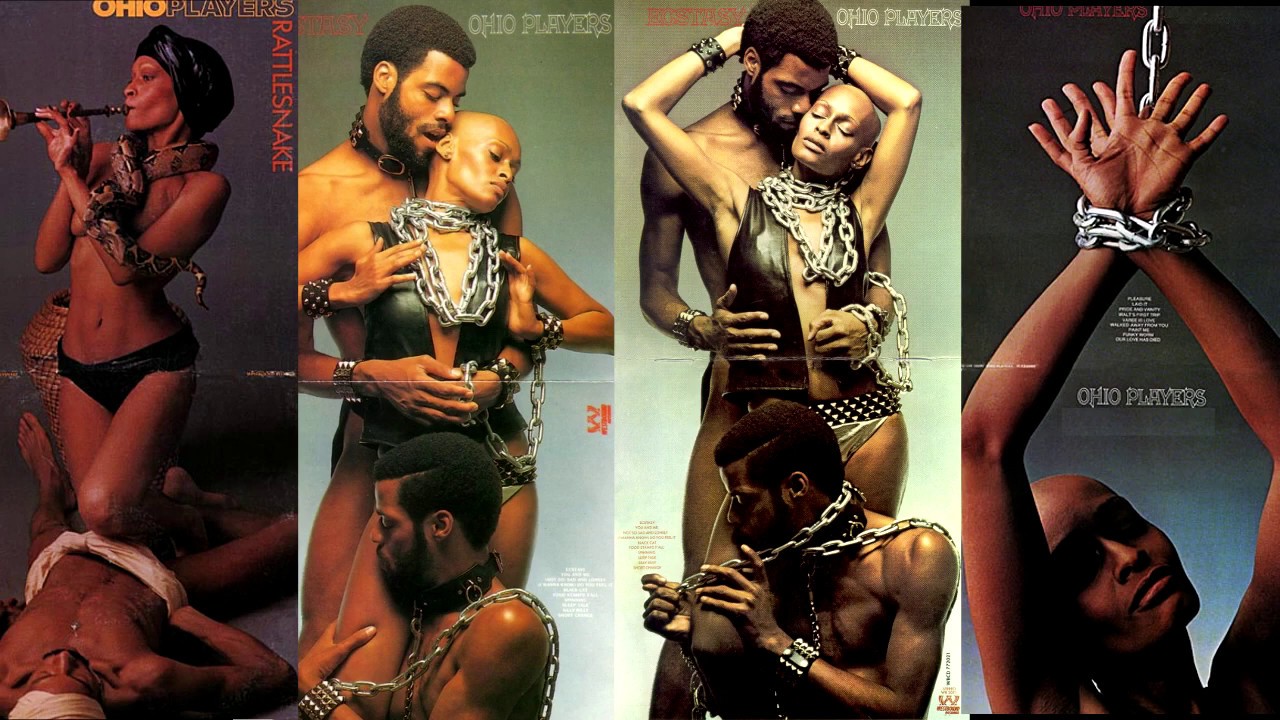 The Ohio Players disbanded briefly in 1970 but reformed with a new lineup that featured Jones, Middlebrook, Webster, Bonner, Satchell, trumpeter Bruce Napier, vocalist Charles Dale Allen, trombonist Marvin Pierce, and keyboardist Walter “Junie” Morrison. The new nine-piece Ohio Players signed with the Detroit-based Westbound label.
Pain
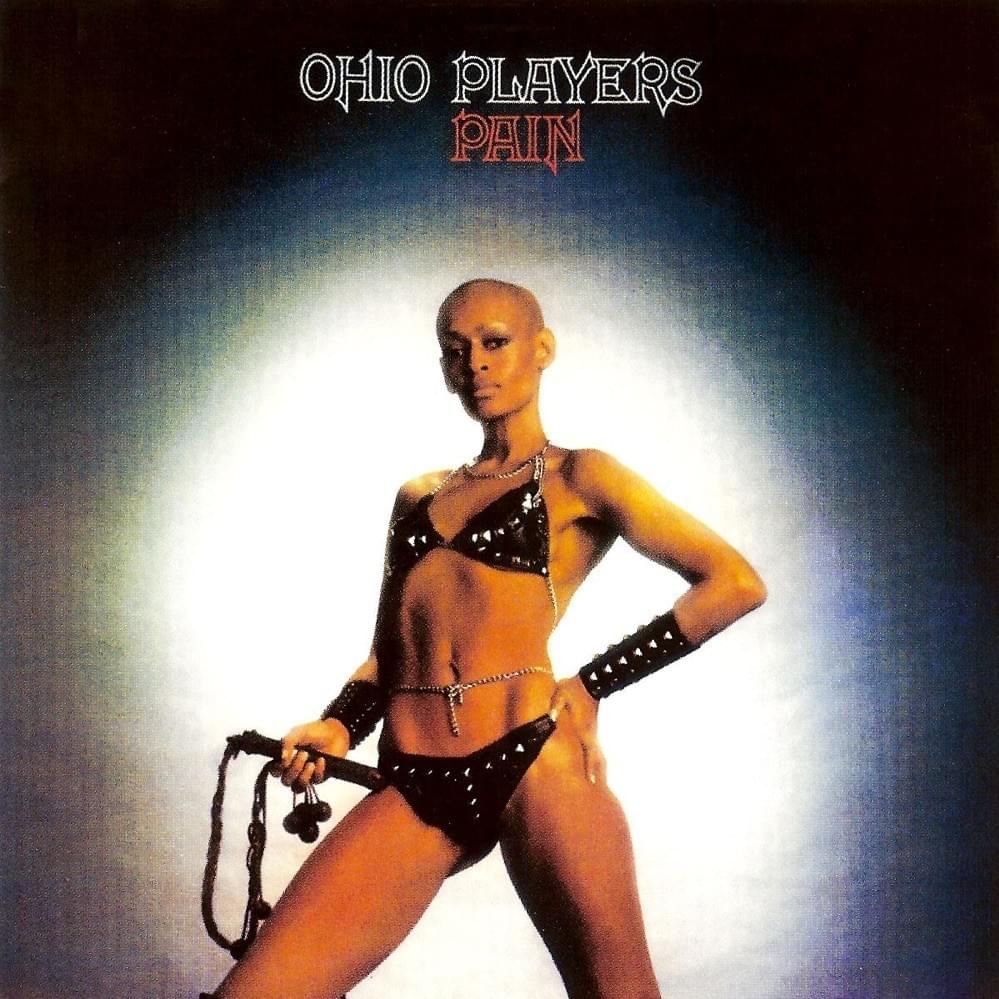 The Ohio Players released their second album, Pain, in February 1972 on Westbound.
The album features six group-composed tracks. Pain solidified the Ohio Players’ core sextet — Andrew Noland, Gregory Webster, Walter “Junie” Morrison, Leroy Bonner, Marshall Jones, and Ralph Middlebrook — and introduced a jagged, bottom-heavy strain of funk layered with jazz, soul, blues, and rock elements.
The title track pivots on taut rhythm shifts and horn interjections, with Junie Morrison’s vocal shouts punctuated by a hard-bop trumpet break and Sugarfoot Bonner’s clipped guitar fills. “Never Had a Dream” opens space for long rests and drum breaks, shaping its ballad form with subtle tension and restrained jazz phrasing. “Players Balling (Players Doin’ Their Own Thang)” runs loose and celebratory, blending freight-train piano riffs and off-the-cuff vocal exclamations in a laid-back instrumental frame.
“I Wanna Hear From You” moves with clipped syncopation, alternating vocals against sharp guitar accents and horn blasts. “The Reds” works a slow, brooding blues form built on piercing guitar lines and old-time piano runs. The album closes on “Singing in the Morning,” a seven-minute suite that threads jazz-rock phrasing, character interludes, and layered instrumental textures across its episodic structure.
A1. “Pain” (6:12) – A mostly instrumental funk workout with sharp rhythm accents, hollered vocals, a searing trumpet solo, and a final shift into hard-bop jazz.
A2. “Never Had a Dream” (4:35) – Built on drum breaks and pauses that stretch tension across a mid-tempo jazz-soul ballad.
A3. “Players Balling (Players Doin’ Their Own Thang)” (4:22) – Loose instrumental marked by piano riffs, vocal adlibs, and a communal, party-like feel.
B1. “I Wanna Hear From You” (2:52) – Features alternating vocal lines, staggered horn bursts, and clipped rhythmic interplay.
B2. “The Reds” (5:08) – Slow blues with biting guitar licks and period piano fills.
B3. “Singing in the Morning” (7:01) – Expansive jazz-funk-rock hybrid with layered instrumentation and surreal vocal interjections. Junie introduces his “granny” character on this track.
Sessions occurred under the supervision of Bob Scerbo. Billy Pittman, Herb James, and the Ohio Players produced the album.
Pain features cover photography by Joel Brodsky. This and subsequent Westbound titles depict BDSM imagery with Pat “Running Bear” Evans, an Afro-Cherokee model noted for her striking baldness. The vertical gatefold presents Pat “Running Bear” Evans standing with a whip over a submissive male figure.
Westbound issued “Pain (Part 1)” backed with “Pain (Part II),” which reached No. 35 on the Billboard R&B chart.
The album reached No. 21 on Billboard’s Top Soul LPs chart.
Pleasure
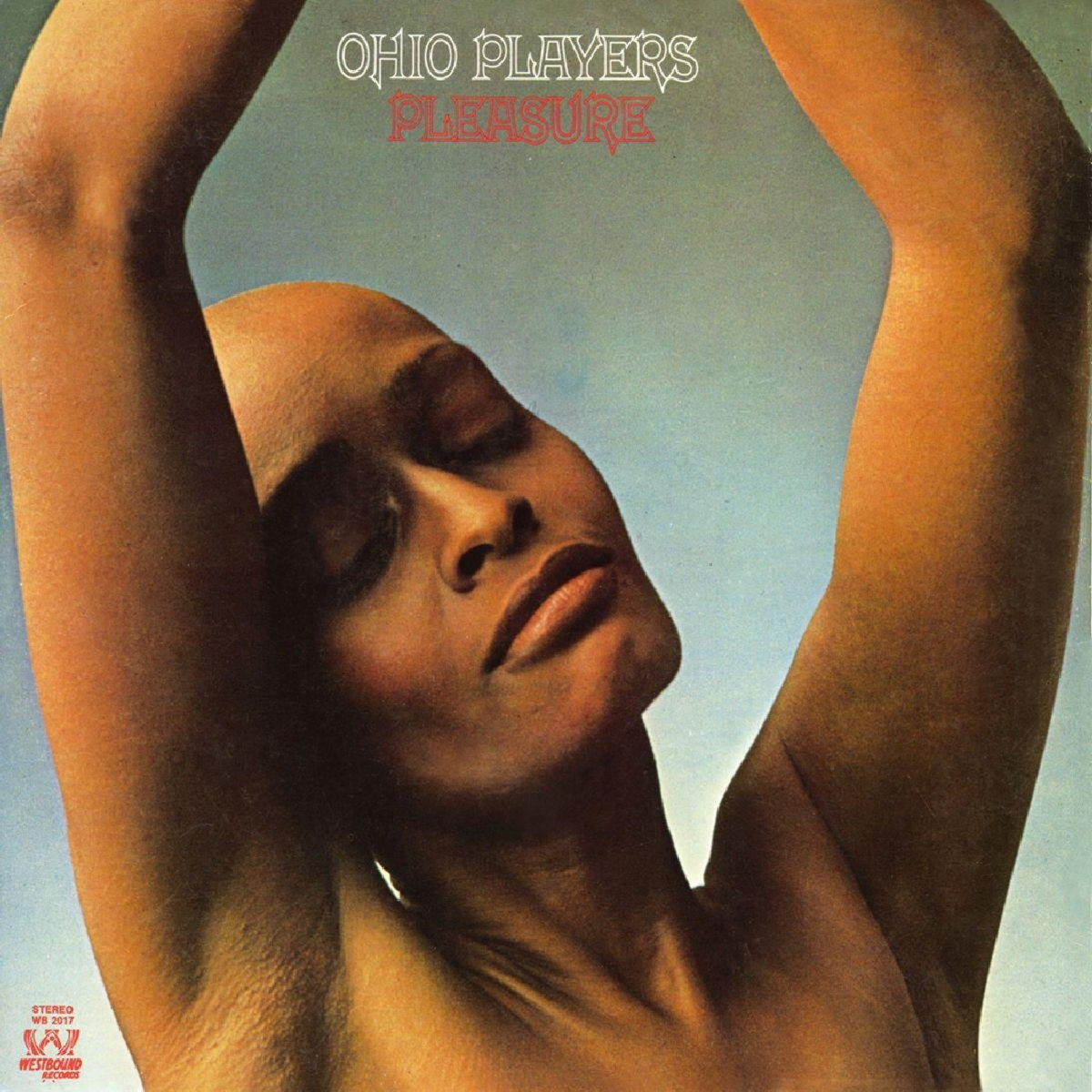 The Ohio Players released their third album, Pleasure, in December 1972 on Westbound.
Pleasure expands the Ohio Players’ funk palette with thicker arrangements, extended instrumental sections, and jazz-rooted structures that stretch beyond conventional song forms. The Players group-wrote and arranged all nine tracks.
The title track opens with sharp keyboard phrasing and builds over a live-wire rhythm, layering flute, organ, and guitar into a rolling funk-rock ascent. “Laid It” pairs tight rhythmic pacing with stacked soul harmonies and nonsensical vocal asides that blur into the rhythm. The band stretches out on “Pride and Vanity,” a slow-moving showcase for full-group interplay, trading off piano leads, rich bass lines, and fluid brass runs. “Walt’s First Trip” operates in instrumental mode with clipped horn charts and a locked-in rhythm section.
The second side shifts toward vocal cuts: “Varee Is Love” works close harmonies and quiet-storm pacing; “Paint Me” alternates falsetto phrases with slinky, short-meter funk; “Walked Away From You” incorporates country-style guitar fills into its compact frame. “Funky Worm” centers on high-pitched synthesizer solos that imitate its title subject, with comedic voice acting layered across a rolling bass pattern. The closer “Our Love Has Died” drifts into a slow, resigned mood with spare trombone lines and overdriven guitar textures spaced across a ballad format.
A1. “Pleasure” (5:28) – Opens with flute and Hammond organ over a funk-rock pulse; features extended keyboard soloing.
A2. “Laid It” (3:00) – Driven by sharp rhythmic shifts, layered vocal chants, and surrealist lyrics
A3. “Pride and Vanity” (4:22) – Longform jazz-soul instrumental with alternating spotlight sections for piano, bass, and horns.
A4. “Walt’s First Trip” (3:08) – Brassy instrumental with clipped horn lines and a tightly wound rhythm section.
B1. “Varee Is Love” (2:43) – Ballad with soft harmonies and Philly-style vocal blends.
B2. “Walked Away From You” (2:29) – Features brisk funk pacing and twang-inflected guitar leads.
B3. “Paint Me” (2:02) – Alternates falsetto vocals and horn bridges across a stop-start funk structure.
B4. “Funky Worm” (2:35) – Synth-heavy novelty track with cartoon vocal skits (Junie’s granny character) and pitch-modulated keyboard leads mimicking the title creature.
B5. “Our Love Has Died” (4:45) – Slow ballad with trombone-led phrasing and clipped guitar lines layered into a mournful tone.
Sessions occurred at Artie Fields Studios. The Ohio Players produced the album with engineering by Arlen Smith. Bob Scerbo oversaw art production.
 Pleasure features photography by Joel Brodsky and art direction by David Krieger. The vertical gatefold presents Pat Evans shackled overhead.
Singles include “Pleasure” backed with “I Wanna Hear From You,” “Varee Is Love” backed with “Walt’s First Trip,” and “Funky Worm” backed with “Paint Me.” “Funky Worm” reached No. 15 on the Billboard Hot 100 and No. 1 on the R&B chart.
The album reached No. 4 on Billboard’s Top Soul LPs chart and No. 63 on the Top LPs chart.
Ecstasy
 The Ohio Players released their fourth album, Ecstasy, in September 1973 on Westbound.
Ecstasy emphasizes tighter structure and tonal clarity while keeping the dense layering and abrupt pivots of their earlier output. Several tracks lean toward instrumental funk, while others explore contrasting moods: darkened balladry, brass-heavy mid-tempos, and brightened pop-soul. The band wrote and arranged eight of the ten tracks. “Not So Sad and Lonely” and “Food Stamps Y’all” are credited to B. Baine and L. Crane. Walter “Junie” Morrison handled the arrangements.
The title track plays as a clipped instrumental, built on Sugarfoot’s circular guitar motif, a high organ lead, and a terse, forward-moving bassline. “You and Me” switches into soft-soul territory, pairing falsetto vocals with harmonized refrains over a slower pace. “(Not So) Sad and Lonely” follows a blues pattern, punctuated by horns and steady rhythmic drive. “(I Wanna Know) Do You Feel It” unfolds in a suspended ballad form with restrained instrumental spacing. “Black Cat” moves with harder impact, led by a wide drum swing, clustered horn lines, and a low-centered rhythm.
“Food Stamps Y’all” continues in instrumental form, driven by clipped brass and electric piano tones. “Spinning” tightens the rhythmic approach with cleaner surface texture. “Sleep Talk” slows to a brooding tempo, featuring wah-wah guitar against sparse horn bursts. “Silly Billy” lifts the tone with light phrasing and an overtly sentimental vocal line. “Short Change” closes the album with layered guitars, stacked horns, and a compressed funk-rock rhythm.
A1. “Ecstasy” (2:27) – Semi-instrumental with looped guitar figure, high organ tones, and clipped bass movement.
A2. “You and Me” (3:12) – Soft-soul ballad with falsetto leads and embellishments reminiscent of Chi-Lites arrangements.
A3. “Not So Sad and Lonely” (3:20) – Blues-structured funk with brass punctuation and mid-tempo pacing.
A4. “(I Wanna Know) Do You Feel It” (4:23) – Tension-based soul with delayed vocal entry and suspended phrasing.
A5. “Black Cat” (4:25) – Low-heavy rhythm and wide drum swing with dense horn layering.
B1. “Food Stamps Y’all” (3:12) – Instrumental with tight horn stabs and clustered keyboard phrasing.
B2. “Spinning” (3:04)
B3. “Sleep Talk” (3:15) – Slow-tempo piece with wah-wah accents and restrained horn bursts.
B4. “Silly Billy” (4:26) – Light ballad with a softened vocal approach.
B5. “Short Change” (2:55) – Compressed funk-rock instrumental driven by layered guitar and percussive stomp.
Sessions occurred with engineering by Arlen Smith. The Ohio Players produced the album under the supervision of Bob Scerbo.
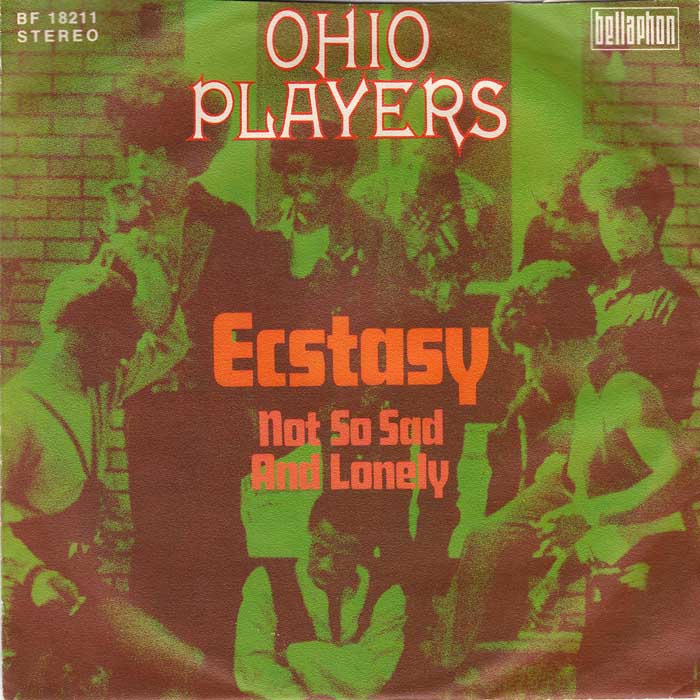 Ecstasy features photography by Joel Brodsky and liner photography by Neil Terk. David Krieger handled art direction with design by Ron Canagata. The vertical gatefold shows Pat Evans embraced by two men, one dominant and one submissive.
Westbound issued “Ecstasy” backed with “Not So Sad and Lonely,” which reached No. 12 on the R&B chart. “Sleep Talk” also appeared as a single.
The album reached No. 19 on Billboard’s Top Soul LPs chart and No. 70 on the Top LPs chart.
Westbound Archival Comps
After the Ohio Players switched labels, Westbound issued two albums of leftover material and a greatest hits compilation.
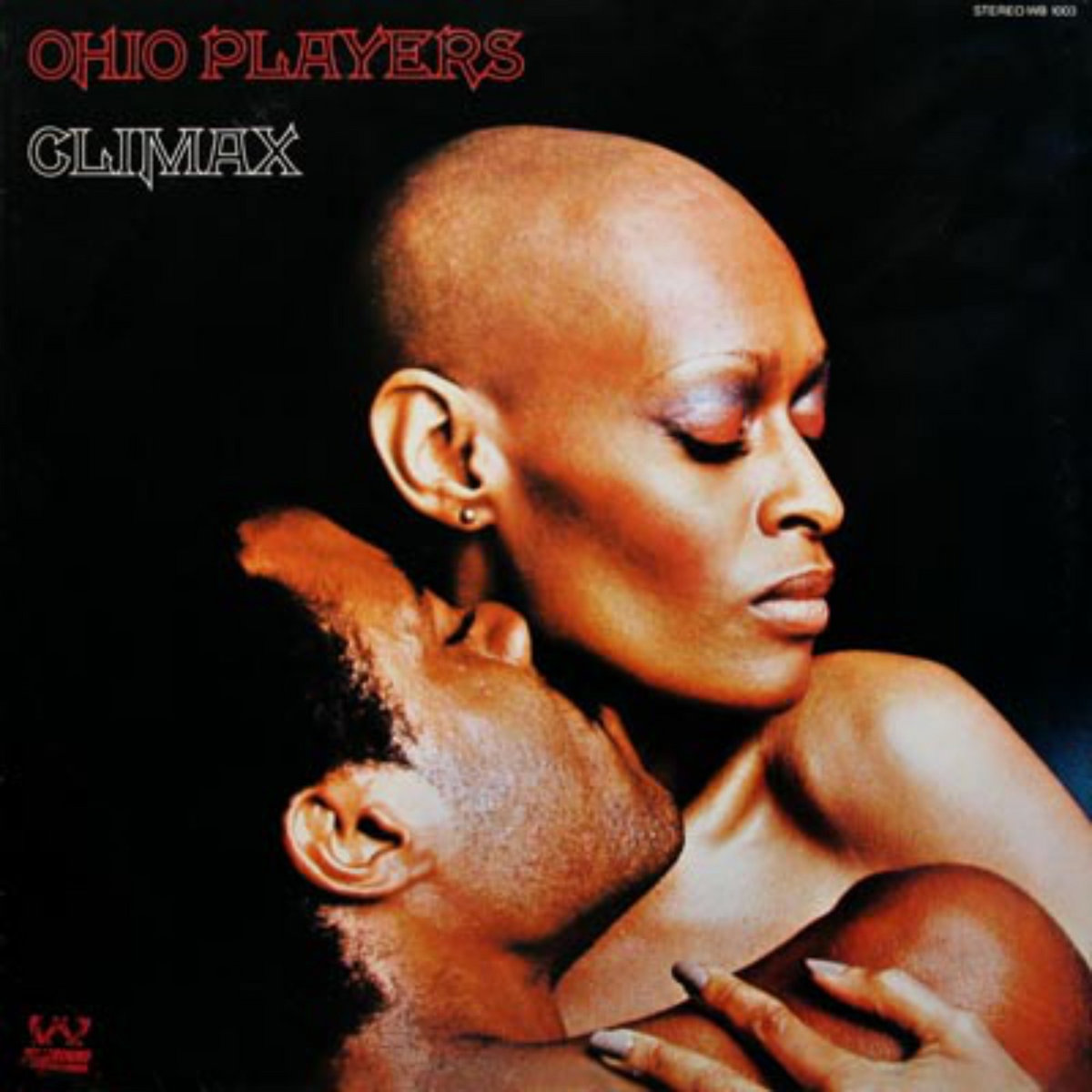 In October 1974, Westbound issued Climax, a compilation with five unearthed tracks, including covers of Creedence Clearwater Revival (“Proud Mary”) and Marvin Gaye (“What’s Going On”).
Composers Belda Baine and Louis Crane are co-credited for the three newly-released originals: “Climax,” “Pack It Up,” and “Ruffell Foot.” Climax also repeats one Pain cut (“Players Ballin’”) and two Ecstasy numbers (“Sleep Talk,” “Food Stamps Y’all”).
A1. “Sleep Talk” (3:15)
A2. “Ruffell Foot” (4:07)
A3. “Proud Mary” (5:21)
A4. “Climax” (6:50)
B1. “What’s Going On” (6:00)
B2. “Food Stamps Y’all” (2:28)
B3. “Players Ballin’” (4:31)
B4. “Pack It Up” (4:20)
Sessions occurred during the band’s tenure at Westbound under production supervision by Bob Scerbo.
The vertical Climax gatefold shows a shut-eyed Pat Evans in the embrace of a sub who takes a knife to the back.
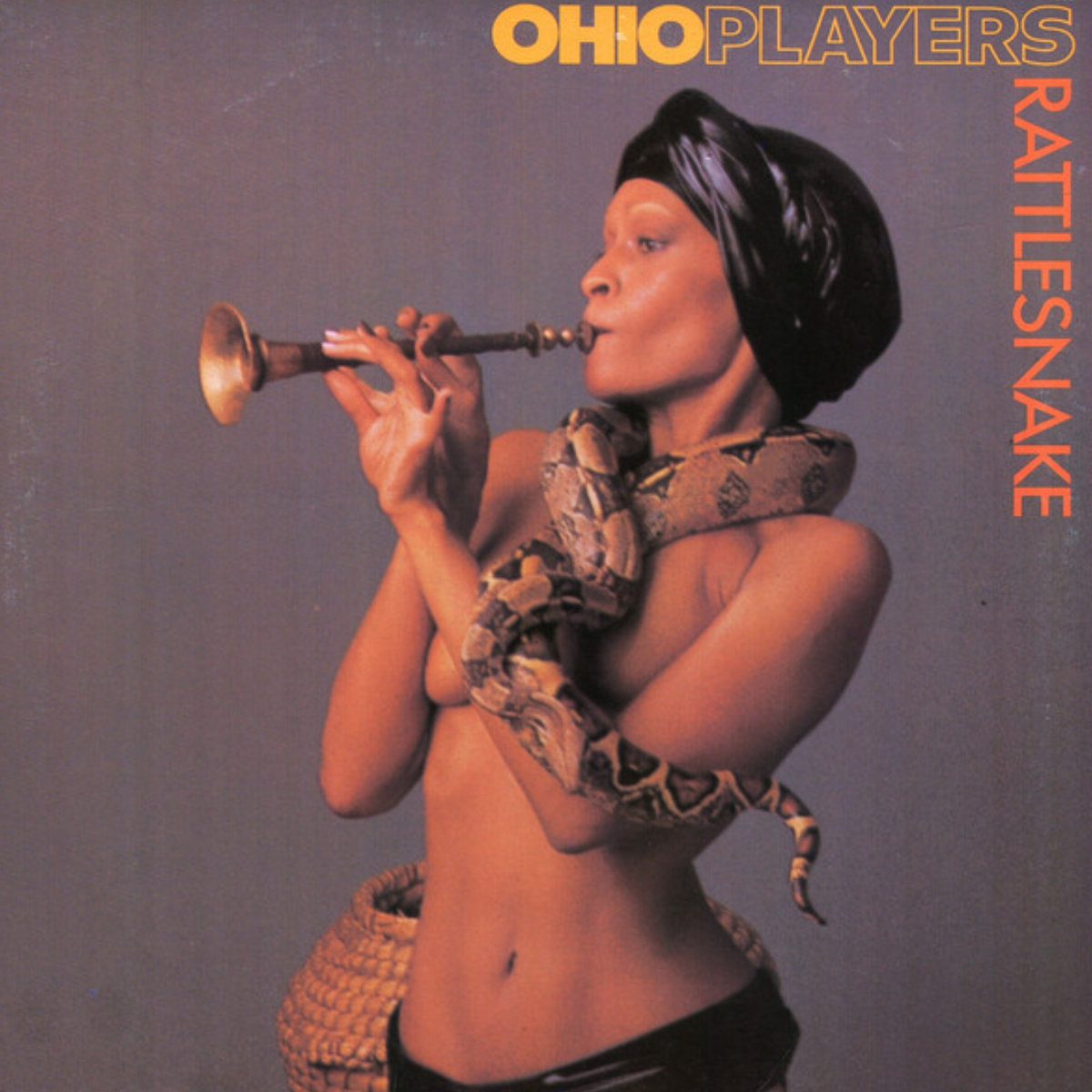 In December 1975, Westbound issued Rattlesnake, a second roundup of unreleased material from their time at the label.
Rattlesnake contains eight newly unearthed songs and three repeats from their Westbound studio albums: two from Pleasure (“Laid It,” “Varee Is Love”) and the Ecstasy track “Spinning.” The exclusive tracks are Baine/Crane credited apart from two (“Introducing the Players,” “Hustle Bird”) credited to the Ohio Players.
A1. “Rattlesnake” (2:58)
A2. “Introducing the Players” (3:57)
A3. “What It Is” (4:45)
A4. “Rooster Poot” (2:14)
A5. “Gone Forever” (3:42)
 B1. “Hustle Bird” (2:54)
B2. “Spinning” (3:05)
B3. “Hollywood Hump” (2:28)
B4. “Laid It” (3:01)
B5. “Varee (Is Love)” (2:44)
B6. “She Locked It” (3:12)
The vertical Rattlesnake gatefold shows a headwrapped Pat Evans snake-charming while knelled before a lying sub.
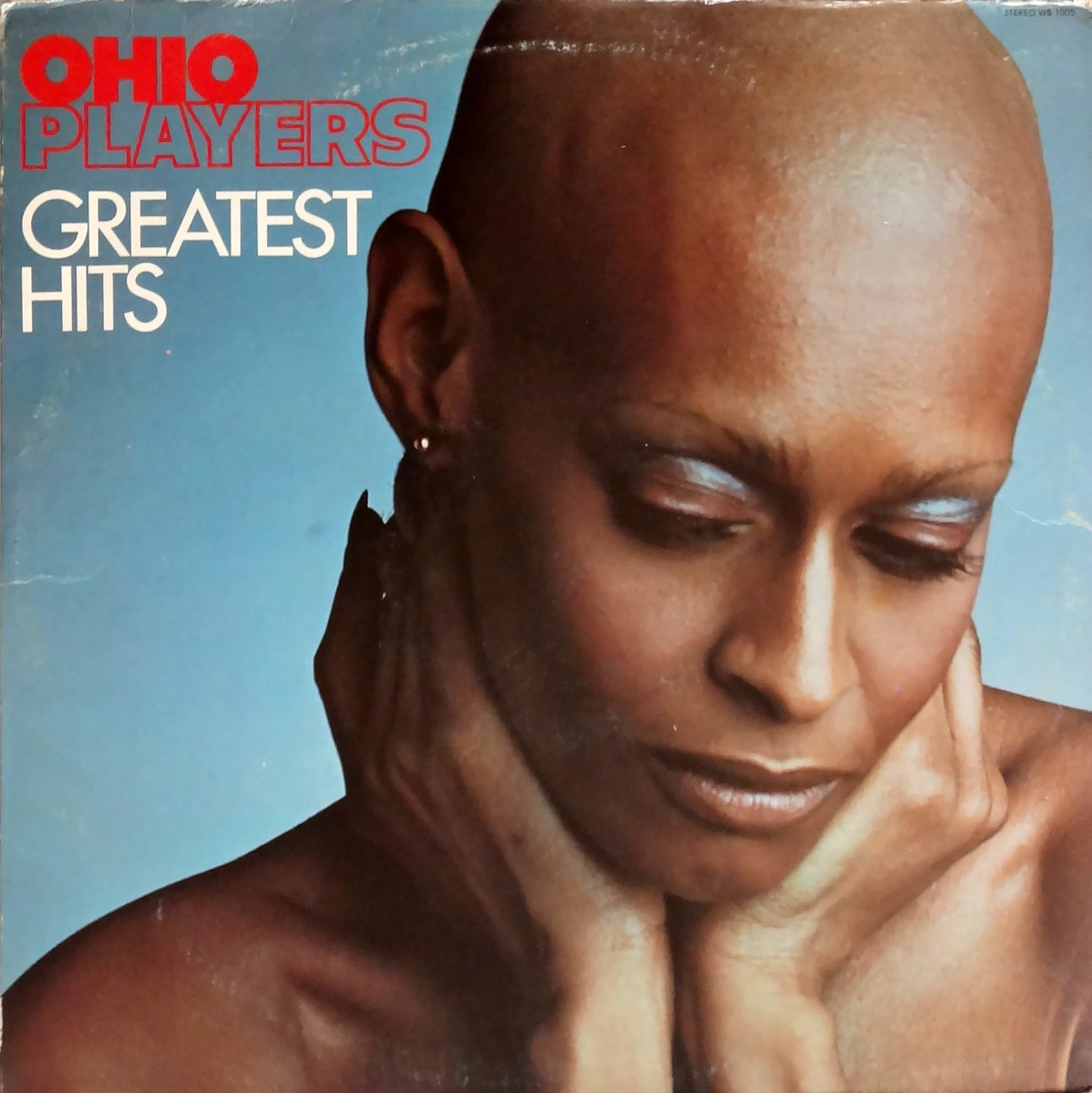
Westbound also issued Ohio Players Greatest Hits, a standard compilation with eight tracks drawn from their 1972/73 studio albums (“Pain” split into two parts) and the recent extra “Climax.”
1974–1978: The Mercury Years
In 1974, the Ohio Players signed to Mercury Records. Morrison cleared for keyboardist Billy Beck and Webster made way for drummer Jimmy “Diamond” Williams.
Skin Tight
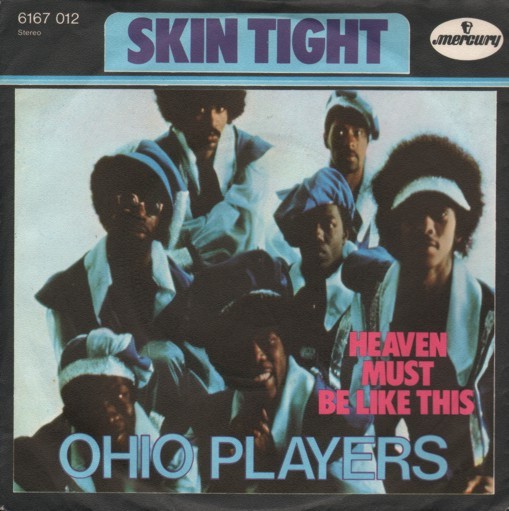
 The Ohio Players released their fifth proper album, Skin Tight, in April 1974 on Mercury.
The album contains six group-written songs, including the R&B hits “Skin Tight,” “Jive Turkey,” and the quiet-storm deep cut “Heaven Must Be Like This.” Keyboardist Billy Beck plays piano, organ, Fender Rhodes electric piano, Clavinet, and ARP synthesizer on Skin Tight, which features Marvin “Merv” Pierce on trumpet, flugelhorn, and valve trombone.
Skin Tight opens with three extended funk workouts and closes with three slower pieces that lean toward balladry and introspection. The title track rides clipped riffs, sharp horn accents, and low-end bass over a drawn-out funk form. “Streakin’ Cheek to Cheek” is faster and fully instrumental, built on rapid-fire rhythms and tightly arranged horn lines. “It’s Your Night / Words of Love” slows down with spoken-word interludes and a long, improvised jazz piano section.
On side two, “Jive Turkey” returns to thick mid-tempo funk with stacked horns and compressed riffs. “Heaven Must Be Like This” shifts into soft falsetto with sustained chords and lucid, luminous synth textures. “Anybody Gonna Be Saved?” closes the album with a downbeat gospel-funk arrangement carried by electric keys and call-and-response vocals.
 A1. “Skin Tight” (7:52) – Clipped funk riffing with low-end bass, sharp horn accents, and extended form.
A2. “Streakin’ Cheek to Cheek” (5:43) – Up-tempo instrumental with brisk pace and tight horn lines.
A3. “It’s Your Night / Words of Love” (7:58) – Slow, spoken-word passages with extended jazz piano improvisation.
B1. “Jive Turkey” (7:09) – Mid-tempo funk with stacked horns and compressed rhythm guitar.
B2. “Heaven Must Be Like This” (7:18) – Soft falsetto ballad with sustained chords and jazz inflection.
B3. “Anybody Gonna Be Saved?” (4:56) – Slow funk with gospel phrasing, electric keys, and call-response structure.
Sessions occurred at Paragon Recording Studios in Chicago with the Ohio Players self-producing and remixing the album. Dave Phimister handled mastering.
 Skin Tight appeared in a horizontal gatefold that shows a scantily clad woman’s lower extremities, overlaid with member photos on the backside. This was their only post-1972 cover that doesn’t show a woman’s face.
The album spun off two singles: “Jive Turkey (Part 1)” backed with “Streakin’ Cheek to Cheek,” and “Skin Tight,” backed with “Heaven Must Be Like This.”
The album reached No. 11 on the Billboard Top LPs chart and No. 1 on the Billboard Top Soul LPs. The title track peaked at No. 13 pop and No. 2 R&B, while “Jive Turkey” reached No. 47 pop and No. 6 R&B.
Fire
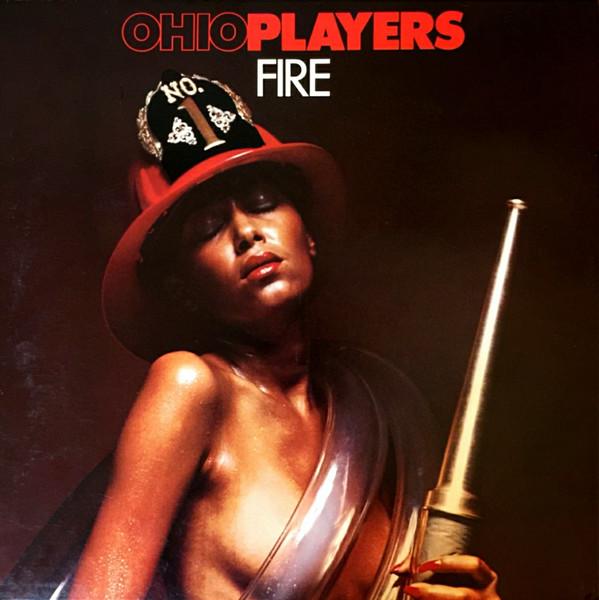 The Ohio Players released their sixth album, Fire, in November 1974 on Mercury.
Fire balances thick funk arrangements with slower, more soulful tracks in a clear sequence. The album contains eight group-written tracks, including the quiet-storm ballad “I Want to Be Free” and the crossover title-track, which opens with a tightly wound rhythm and urgent horn stabs, sustaining pressure with clipped guitar lines and layered vocals.
“Smoke” delivers dense funk with percussive horns and surging energy, while “Runnin’ from the Devil” shifts to a looser funk form with warped brass accents. “What the Hell” moves closer to funk-rock with overdriven guitar solos and a hard-driving rhythm section. “Together” and “It’s All Over” scale back the tempo and instrumentation, relying on falsetto vocals, restrained rhythm guitar, and soft backing harmonies. “I Want to Be Free” extends with a slow-burning vocal build. The album closes with “Together/Feelings,” a brief reprise built on light instrumental phrasing.
 A1. “Fire” (4:36) – Uptempo, horn-led funk anchored in clipped rhythm and layered vocal refrains, punctuated by a fire truck siren at both ends of the arrangement.
A2. “Together” (3:08)
A3. “Runnin’ from the Devil” (4:48) – Loose, mid-tempo funk track with warped brass lines and light rhythmic swing.
A4. “I Want to Be Free” (6:56) – Extended ballad with searing drum fills and a slow, emotive vocal arc.
 B1. “Smoke” (5:59) – Dense funk arrangement with percussive horns and propulsive drive.
B2. “It’s All Over” (4:15)
B3. “What the Hell” (5:38) – Funk-rock hybrid with distorted guitar solos and aggressive rhythmic pacing.
B4. “Together/Feelings” (1:11)
Sessions occurred at Paragon Recording Studios in Chicago with the Ohio Players producing and Barry Mraz engineering. Mastering took place at Sterling Sound in New York by Lee Hulko.
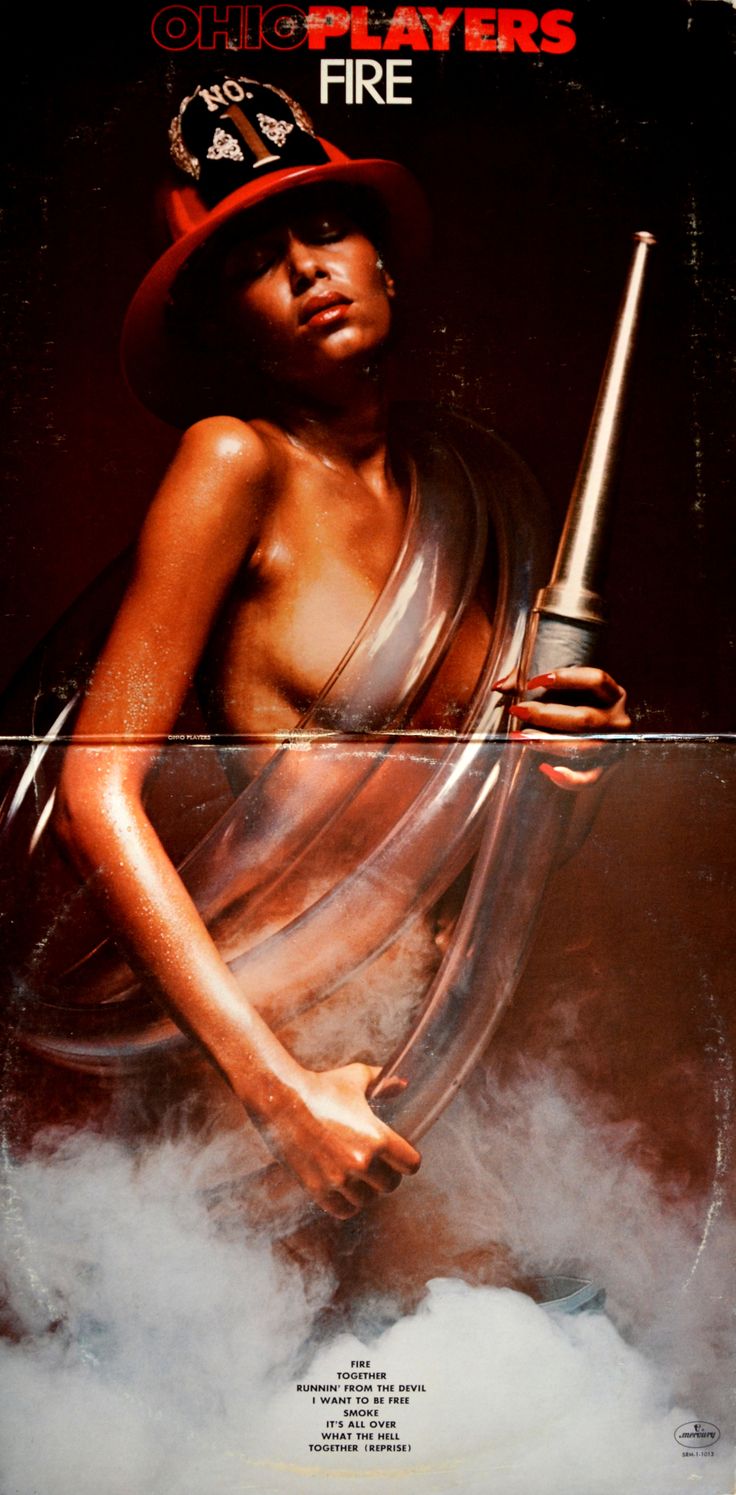
Fire features artwork by AGI and Jim Ladwig. The gatefold shows a model in a firefighter helmet wielding an extinguisher. On the inner gate, she lies face-up in smoke with her body partially obscured by member portraits.
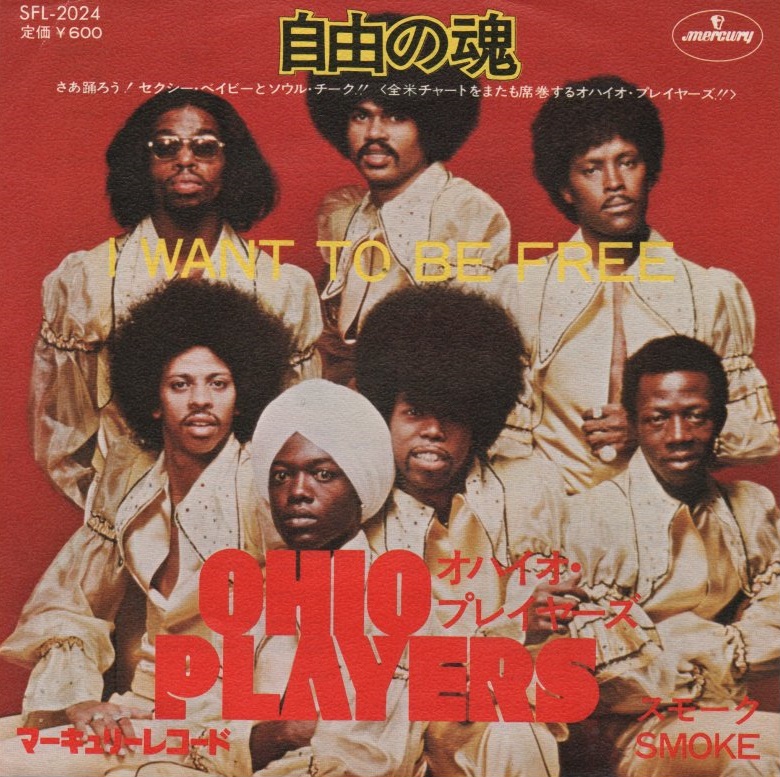 The album spawned two singles: “Fire” backed with “Together” in November 1974, and “I Want to Be Free” backed with “Smoke” in 1975.
Fire topped both the Billboard Top LPs and Top Soul LPs charts. The title track reached No. 1 on the Billboard Hot 100 and Hot Soul Singles charts, while “I Want to Be Free” peaked at No. 6 on the R&B chart.
Honey
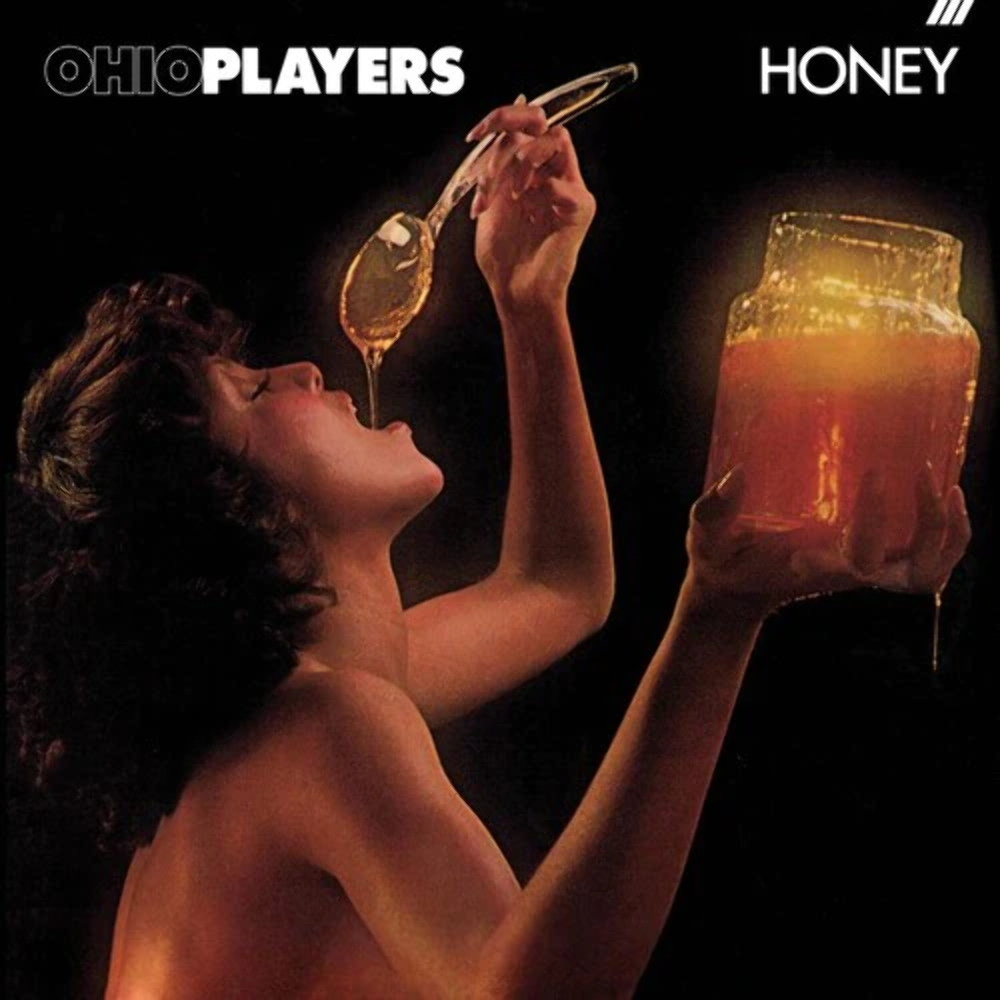 The Ohio Players released their seventh album, Honey, on August 16, 1975, on Mercury.
Honey emphasizes tight funk structures and slow ballad forms, sequencing clipped rhythms and layered percussion alongside softened passages with falsetto phrasing and sustained horn lines.
“Fopp” and “Love Rollercoaster” spring forth with compressed energy and dense interplay between guitar, bass, and brass. “Sweet Sticky Thing” slows the pace with rounded horn accents and stretched vocal lines. The title track, “Let’s Love,” and “Alone” extend the ballad format with open textures, vocal restraint, and minimal rhythmic tension. “Ain’t Givin’ Up No Ground” acts as a brief instrumental transition.
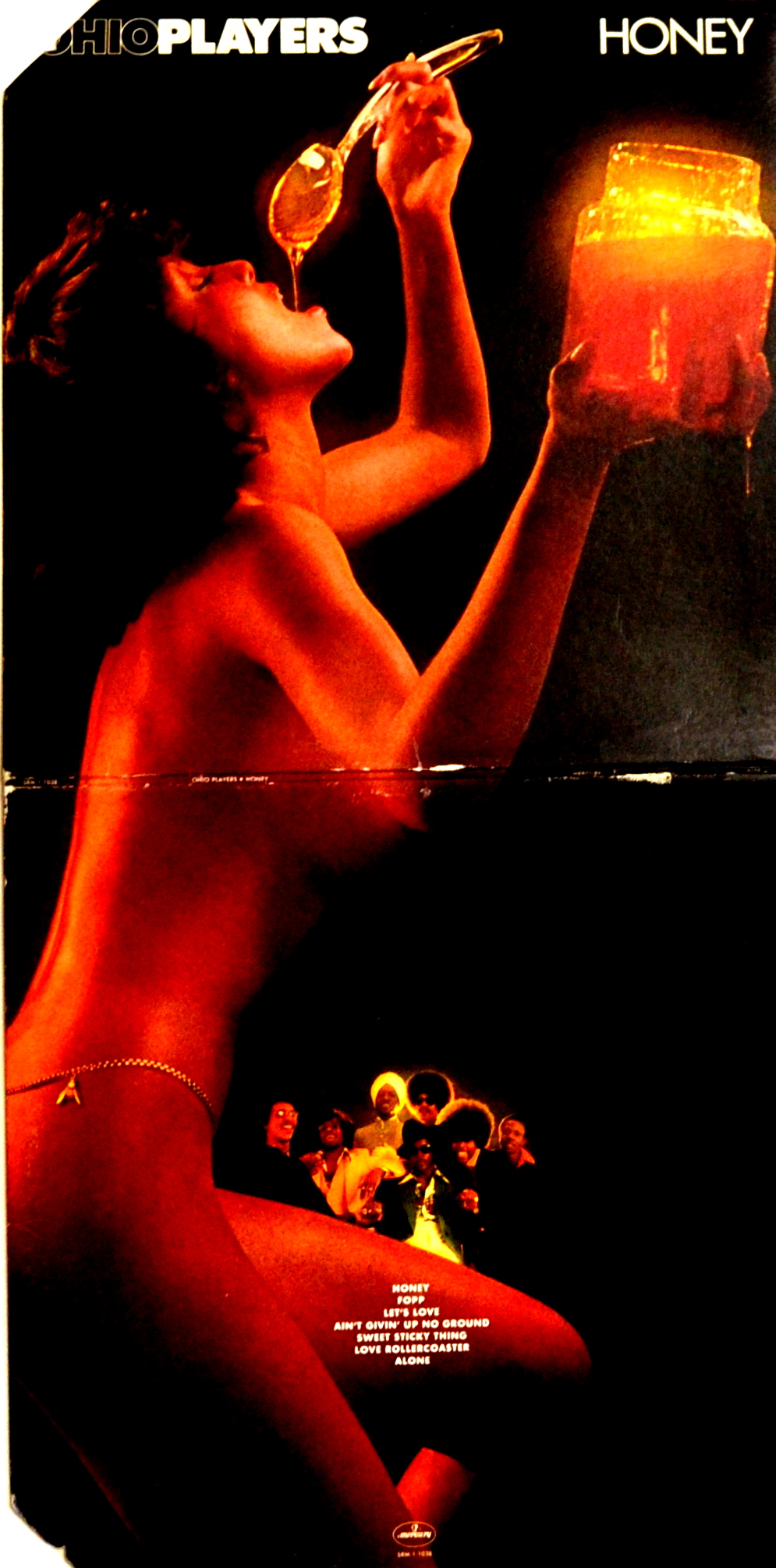 A1. “Honey” (5:15)
A2. “Fopp” (3:45) – Midtempo funk built on clipped guitar, staccato brass hits, and short vocal phrases traded with ensemble breaks.
A3. “Let’s Love” (5:15)
A4. “Ain’t Givin’ Up No Ground” (1:45)
B1. “Sweet Sticky Thing” (6:13) – Slower funk anchored in sustained horn textures, falsetto lead vocal, and a guitar solo with sharp tonal shifts.
B2. “Love Rollercoaster” (4:52) – High-velocity funk structured around short vocal motifs, recurring guitar patterns, and a layered siren effect in the mix.
B3. “Alone” (4:40) – Down-tempo ballad with extended vocal phrasing and sparse electric piano voicings.
Sessions occurred at Paragon Recording Studios in Chicago from February to June 1975 with the Ohio Players producing and Barry Mraz engineering. Mastering was handled by Gilbert Kong.
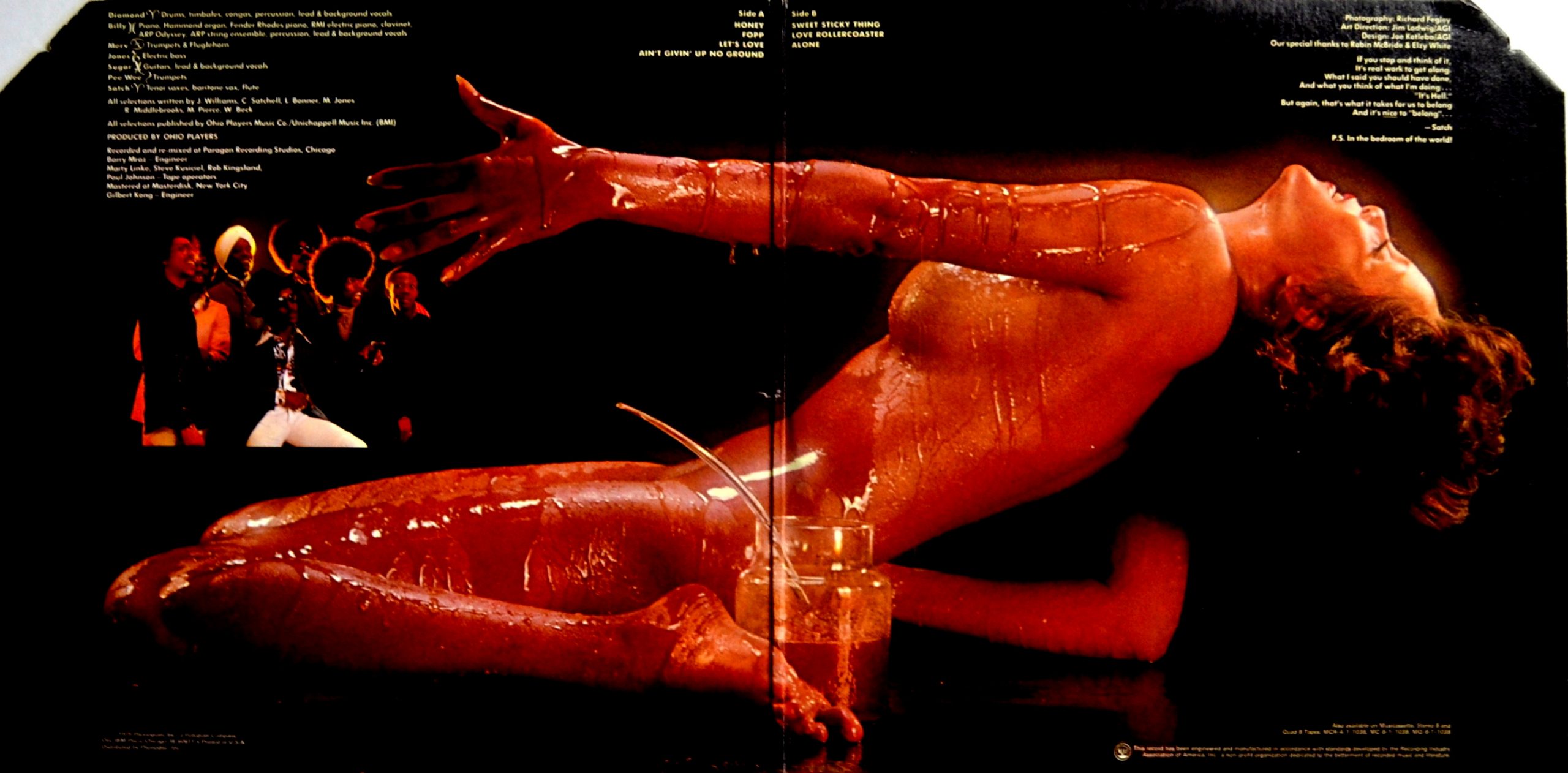 The vertical outer-gatefold displays Panamanian-born model Ester Cordet in a provocative pose, nude and dripping honey into her open mouth. The inner horizontal gatefold extends the imagery with shots of Cordet reclining and writhing on the floor, her body slick with honey. The photo shoot was part of the band’s long-running collaboration with photographer Joel Brodsky, who helped define their sensual and stylized visual brand.
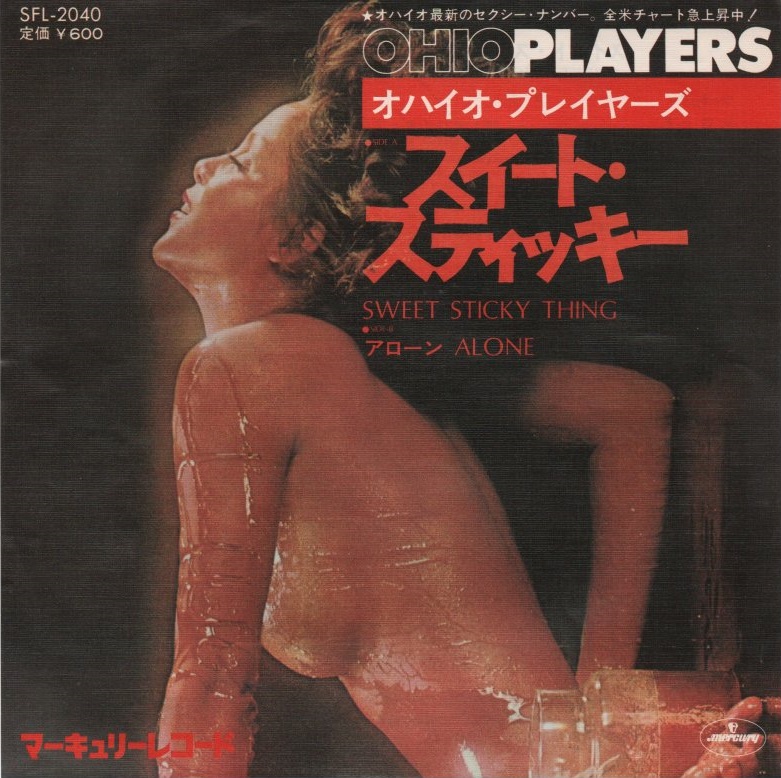 The album’s visual became the basis for two widely circulated urban legends surrounding the hit single “Love Rollercoaster.” One rumor claimed that the honey used during the shoot severely burned Cordet’s skin, ending her modeling career. Another alleged that a scream heard in the track’s mix captured the moment of her being murdered off-mic during the session.
Cordet, who was Playboy’s Playmate of the Month for October 1974, was unharmed and alive well after the album’s release. The scream in “Love Rollercoaster” was a studio embellishment added intentionally by the band.
 Three singles were released: “Sweet Sticky Thing” (b/w “Alone”) in August 1975, “Love Rollercoaster” (b/w “It’s All Over”) in November 1975, and “Fopp” (b/w “Let’s Love”) in February 1976. Both “Sweet Sticky Thing” and “Love Rollercoaster” topped the R&B chart, with the latter also reaching No. 1 on the Billboard Hot 100 and No. 2 in Canada. “Fopp” peaked at No. 30 pop and No. 9 R&B.
Honey reached No. 2 on the Billboard 200 and spent three weeks at No. 1 on the Billboard Soul Albums chart.
Contradiction
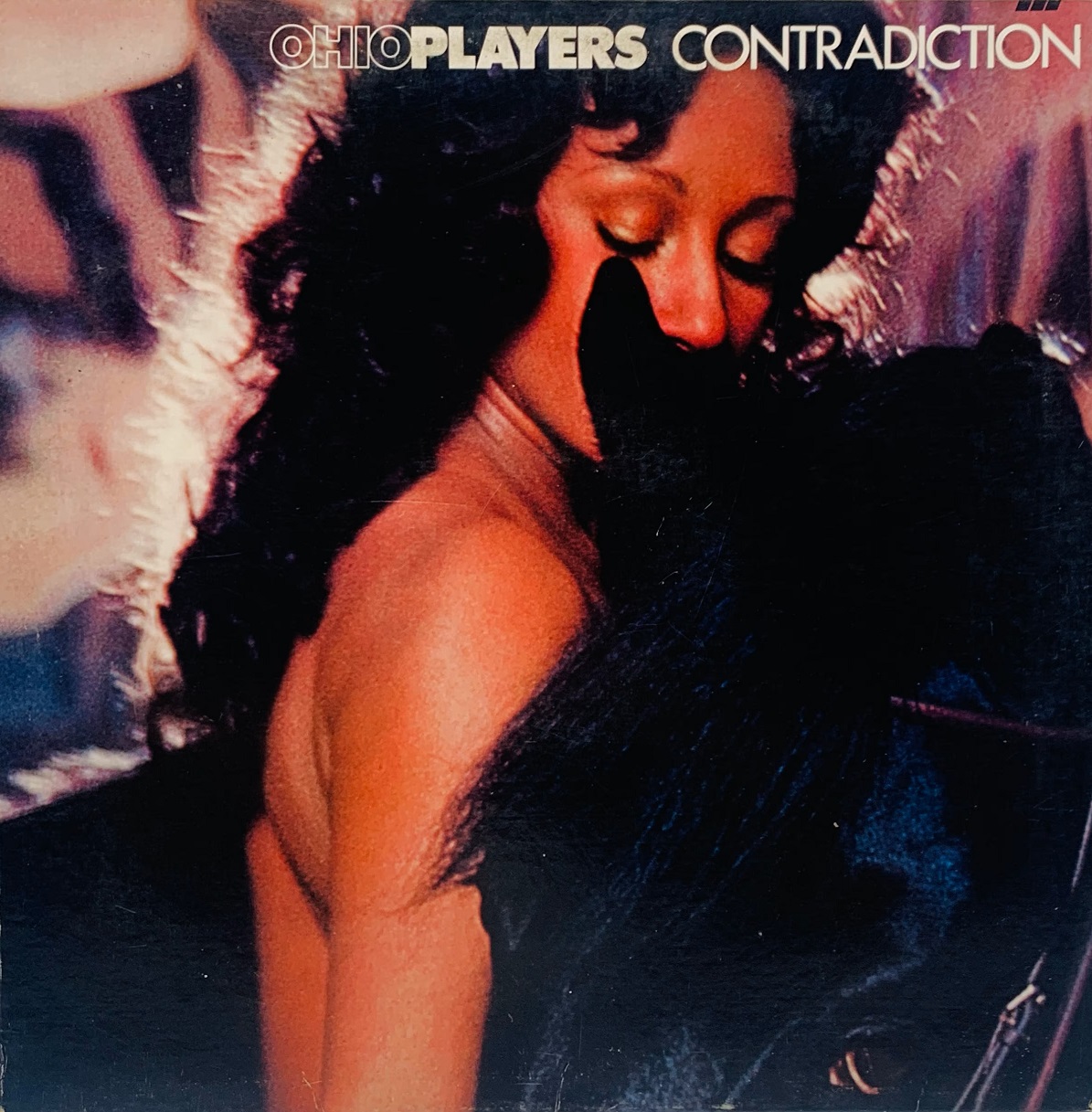 The Ohio Players released their eighth album, Contradiction, in March 1976 on Mercury.
Contradiction balances taut funk structures with looser soul ballads and minor stylistic departures.
The title track opens with clipped rhythms and tight vocal layering, anchoring a run of funk-driven material that includes “Who’d She Coo?” and “Tell the Truth,” both shaped by short-form pacing and rhythmic vocal interplay. “Little Lady Maria” incorporates mariachi-style horn voicings into a compact funk structure, while “Far East Mississippi” features blues inflections and harmonica phrasing over a looser rhythmic pocket.
“Precious Love” unfolds with layered chord voicings and staggered vocal entrances, while “Bi-Centennial” leans toward dreamlike pacing and sustained textures. “My Life” and “My Ladies Run Me Crazy” stretch the album’s vocal range, alternating falsetto and baritone within laid-back rhythmic settings.
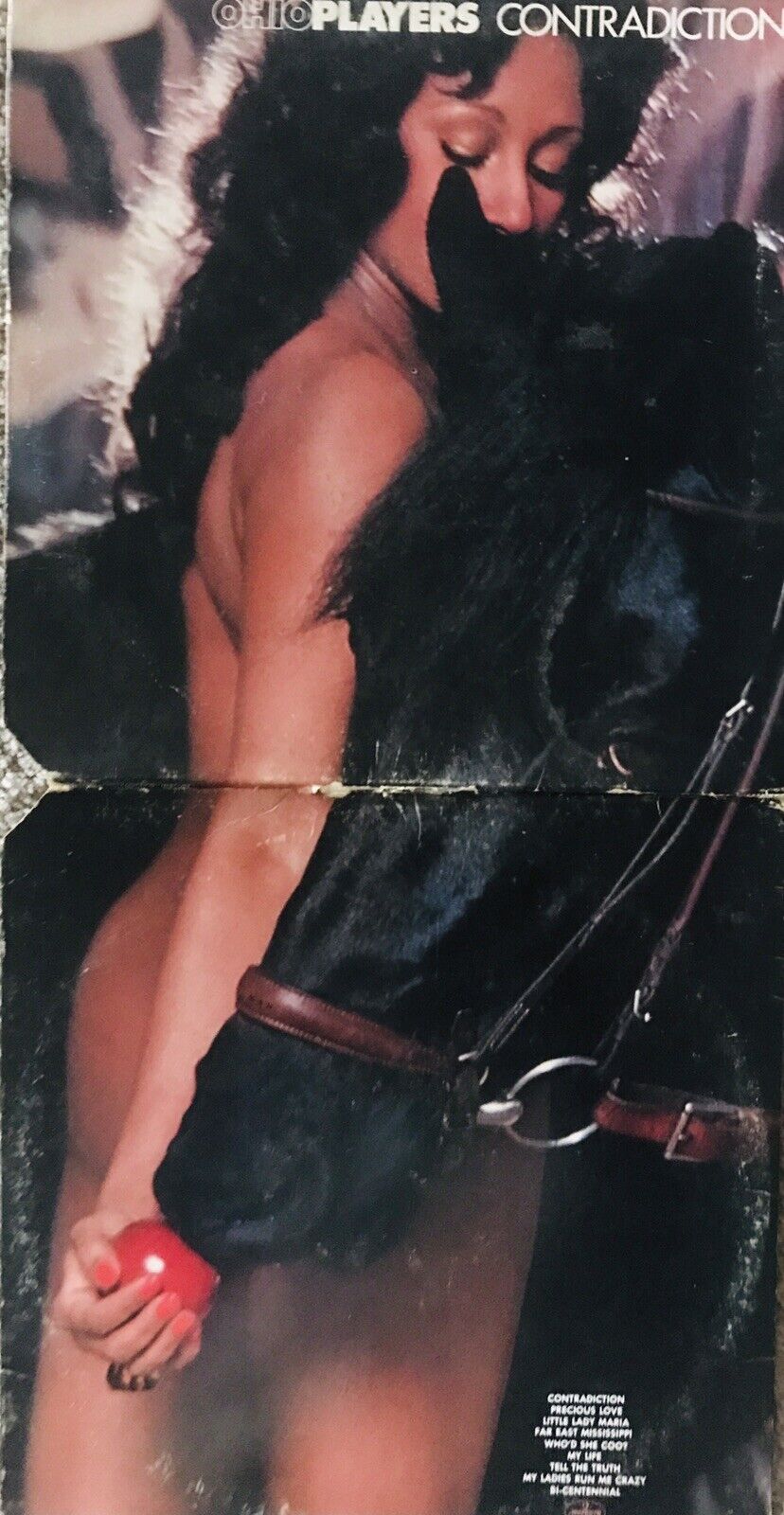 A1. “Contradiction” (4:37) – Clipped rhythm and layered vocals shape a dense, mid-tempo funk.
A2. “Precious Love” (4:57) – Structured on chord layering and staggered vocal entrances.
A3. “Little Lady Maria” (4:16) – Features mariachi-inspired horn lines over compact funk instrumentation.
A4. “Far East Mississippi” (4:58) – Adds harmonica phrasing and blues detail over looser pacing.
B1. “Who’d She Coo?” (4:32) – Sharp rhythm and vocal chant phrasing drive a tight funk form.
B2. “My Life” (4:01) – Combines baritone lead with subdued backing vocals and rolling rhythm.
B3. “Tell the Truth” (3:37) – Brisk funk phrasing built around vocal interplay and clipped instrumental breaks.
B4. “My Ladies Run Me Crazy” (3:54)
B5. “Bi-Centennial” (3:44) – Stretches into slower, atmospheric territory with dreamlike texture and sustained tones.
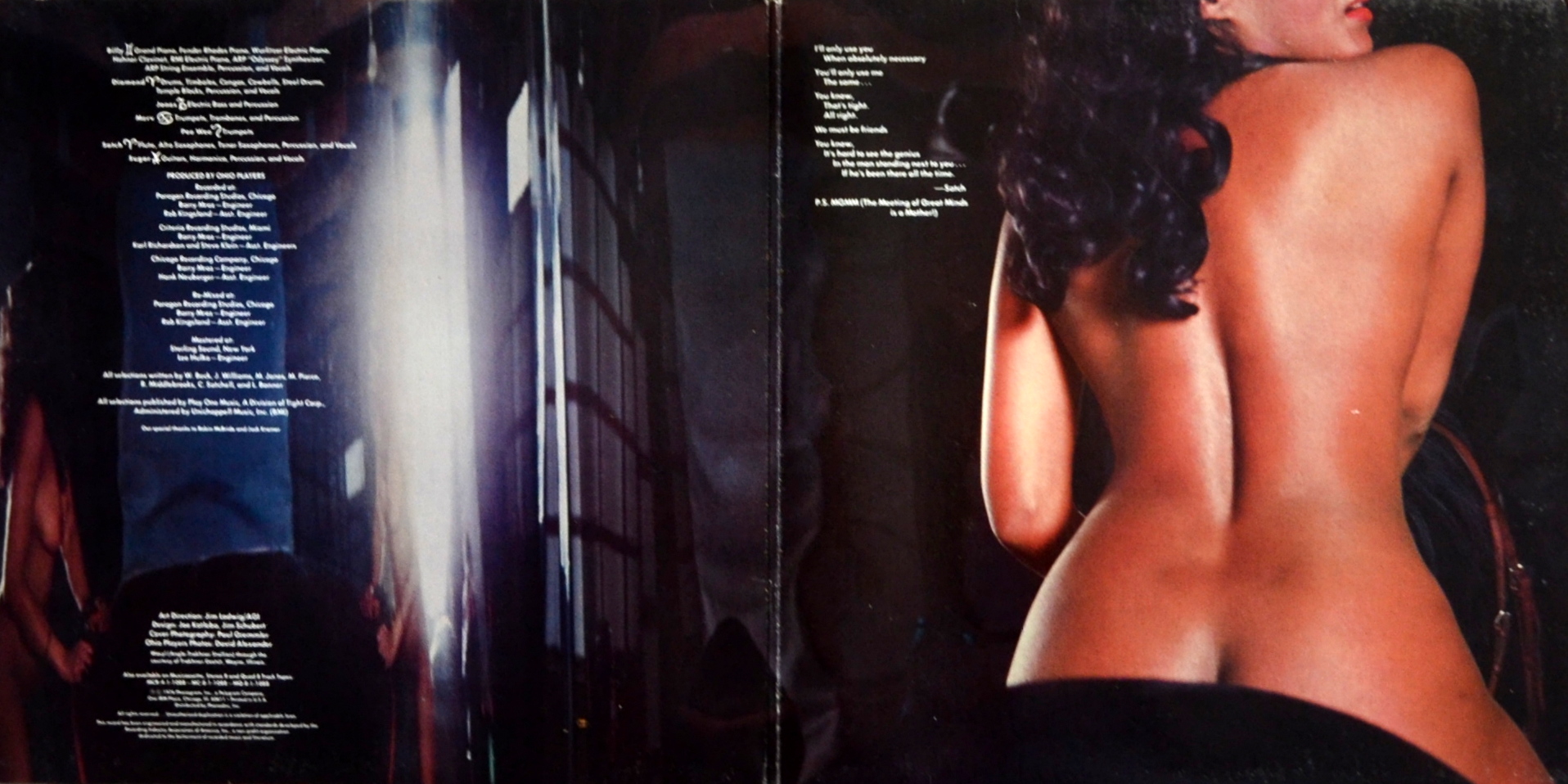 Sessions occurred at Paragon Recording Studios and Chicago Recording Company in Chicago, as well as Criteria Recording Studios in Miami, with the Ohio Players self-producing and Barry Mraz engineering across all locations.
Contradiction features cover photography by Paul Gremmler. The gatefold image shows a nude model offering a shiny red apple to a horse named Wasyl, an Anglo-Trakehner stallion credited in the liner notes. The woman, however, remains unnamed.
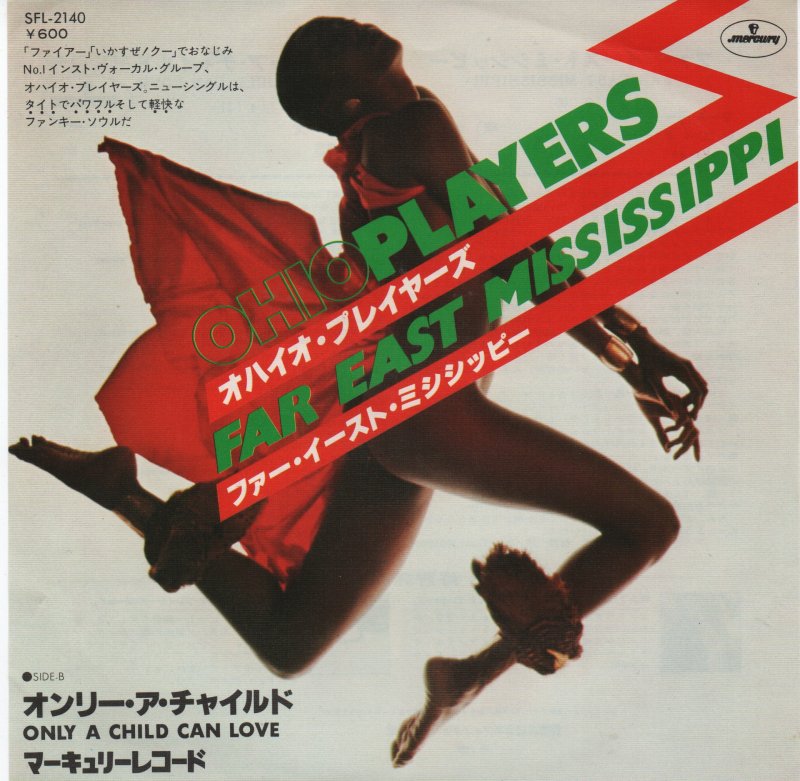 The album yielded two singles: “Who’d She Coo?”, released in February 1976 and backed with “Bi-Centennial,” reached No. 1 on the Billboard R&B chart. “Far East Mississippi” reappeared as an October 1976 single with an exclusive b-side, “Only a Child Can Love.”
Contradiction peaked at No. 12 on the Billboard Top LPs chart and became the band’s fourth consecutive album to top the R&B Albums chart.
Gold
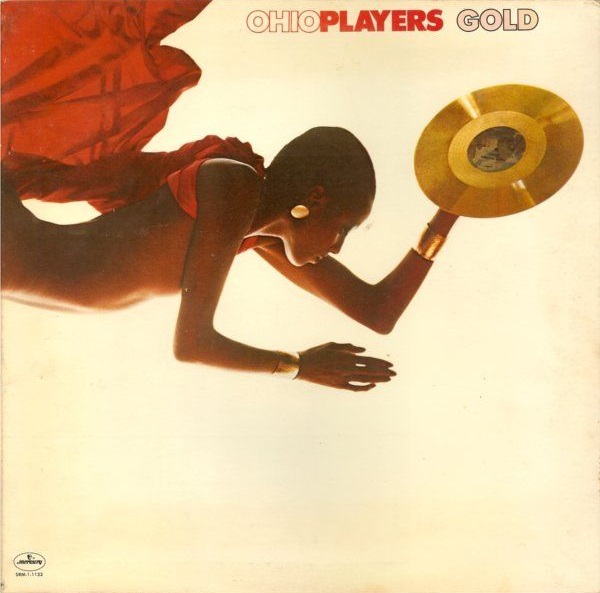 In October 1976, Mercury issued Gold, an eleven-track compilation of Ohio Players material on the label.
Gold collects three songs each from Honey (“Love Rollercoaster,” “Fopp,” “Sweet Sticky Thing”), Fire (“I Want to Be Free,” “Smoke,” “Fire”), and two apiece from Skin Tight (“Jive Turkey,” “Skin Tight”) and Contradiction (“Far East Mississippi,” “Who’d She Coo?”).
Gold contains two exclusives: “Only a Child Can Love” (the b-side to “Far East Mississippi”) and “Feel the Beat (Everybody Disco),” released in January 1977 as a single from this compilation.
Angel
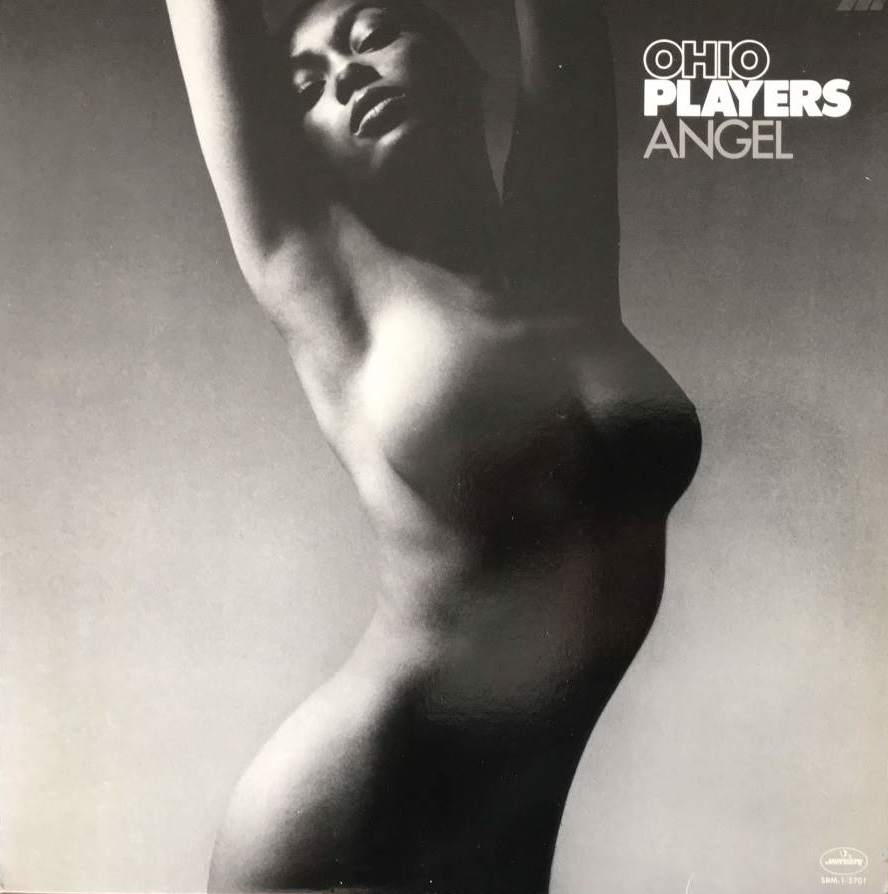 The Ohio Players released their ninth album, Angel, in March 1977 on Mercury. This album presents an eight-piece lineup with rhythm guitarist Clarence “Chet” Willis.
Angel shifts from their earlier rock-inflected work and centers on midtempo funk and balladry, marked by stacked vocal arrangements, subdued rhythmic shifts, and concise horn accents. The title track opens with layered harmonies over moderate pacing and clean brass interjections.
“Body Vibes” bridges smooth R&B vocal layering with lightly syncopated instrumentation. “O-H-I-O” reduces the arrangement to chant phrasing and clipped, repetitive rhythm. “Can You Still Love Me” alternates between baritone lead and falsetto response in a sparse, suspended structure. Elsewhere, the band revisits prior tropes with softer returns.
A1. “Angel” (7:28) – Layered soul phrasing and gradual build over midtempo rhythm and bright horn stabs.
A2. “Merry Go Round” (4:15) – Echoes “Love Rollercoaster” with thinner returns and a forced amusement-ride motif.
A3. “Glad to Know You’re Mine” (4:06)
A4. “Don’t Fight My Love” (4:13)
B1. “Body Vibes” (7:10) – Merges R&B vocal smoothness with restrained funk instrumentation.
B2. “Can You Still Love Me” (4:50) – Trades lead baritone and falsetto backgrounds over a drifting pace.
B3. “O-H-I-O” (3:07) – Chant-driven funk trimmed down to vocal repetition and clipped rhythm.
B4. “Faith” (5:30)
Sessions occurred at Paragon Recording Studios and The Chicago Recording Company in Chicago, with production handled by the Ohio Players and recording and remix engineering by Barry Mraz.
Angel features artwork by Victor Skrebneski, whose shadowy black-and-white photograph of an unidentified nude woman appears across the vertical gatefold—the only monochrome cover in the band’s catalog.
Three singles were released: “Body Vibes” backed with “Don’t Fight My Love,” “O-H-I-O” with “Can You Still Love Me,” and “Merry Go Round” paired with the title track. “O-H-I-O” reached No. 9 on the Billboard R&B chart.
The album peaked at No. 9 on Billboard’s Top Soul LPs chart.
Mr. Mean
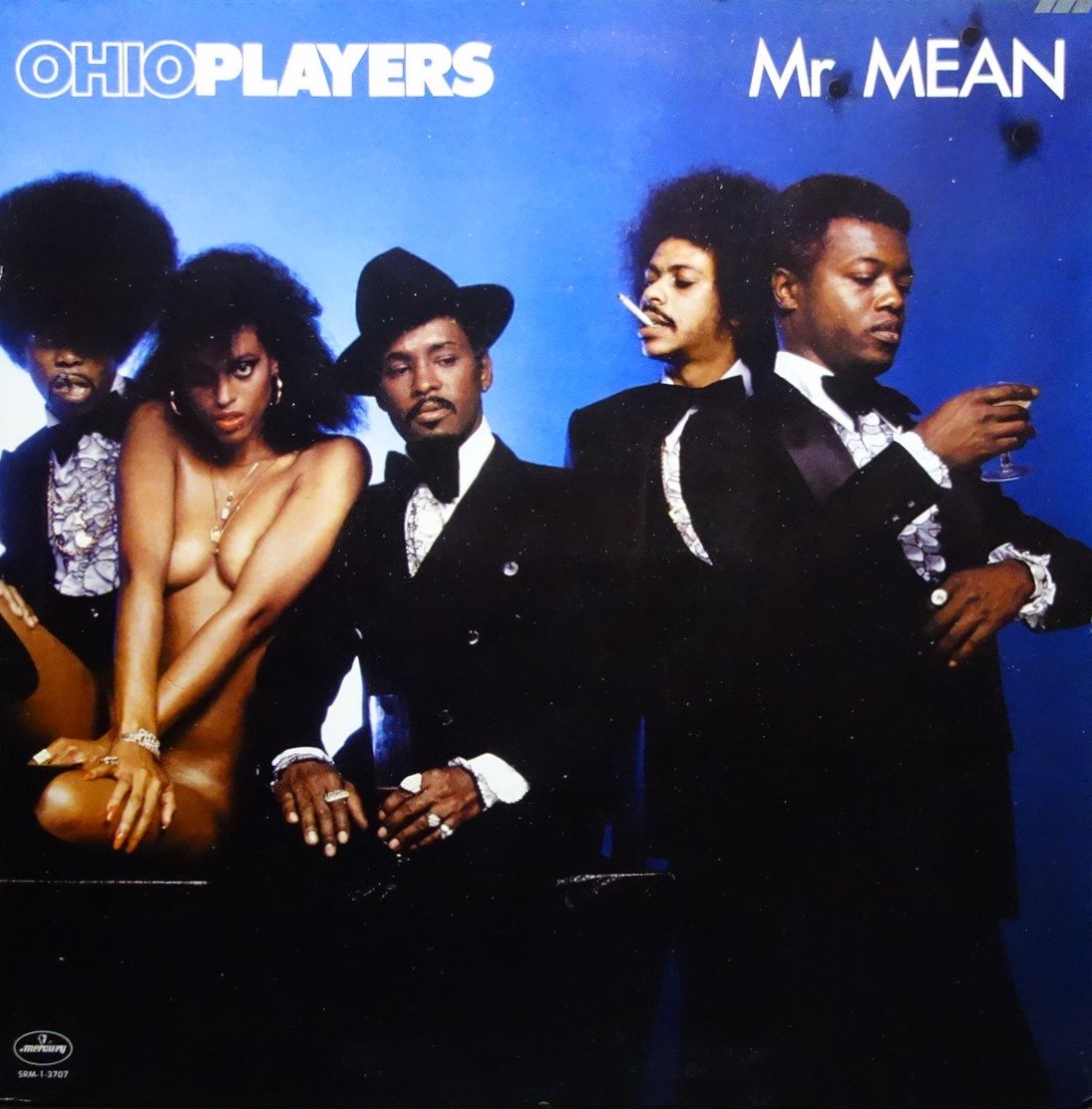 The Ohio Players released their tenth album, Mr. Mean, in December 1977 on Mercury. It served as the soundtrack to the blaxploitation action-crime film of the same name.
Mr. Mean stars NFL defensive back Fred Williamson as the titular hired gun contracted by a former mafia associate to assassinate Ranati, a corrupt mafia boss who exploits the poor through fake charities. After accepting the job, Mr. Mean finds himself targeted in return. The film co-stars Lou Castel as Huberto and Raimund Harmstorf as Rommell.
Musically, Mr. Mean balances dense, rhythmically complex funk with expansive slow jams and moody instrumental passages marked by sultry saxophones and synth textures.
The title track and “Fight Me, Chase Me” carry sharp rhythmic variations and tight, aggressive figures while “Good Luck Charm” stretches into a nearly ten-minute slow-burning soul ballad anchored by Sugarfoot’s nuanced baritone. The shorter tracks serve as atmospheric interludes.
A1. “Mr. Mean” (5:16) – Tight riffing with layered horns and shifting rhythmic accents.
A2. “Fight Me, Chase Me” (5:10)
A3. “The Controller’s Mind” (1:36)
A4. “The Big Score” (7:34)
B1. “Magic Trick” (6:56)
B2. “Good Luck Charm” (9:36) – Slow ballad featuring expressive baritone and layered soul textures.
B3. “Speak Easy” (3:52)
Sessions occurred at Record Plant and The Sound Factory in Los Angeles and at Paragon Recording Studios in Chicago, with production by the Ohio Players and engineering by Gary Ladinsky and Steve Kusiciel.
Mr. Mean features artwork by Richard Fegley and design by Joe Kotleba. It marked the first Ohio Players album with a horizontal gatefold and the first to picture the band alongside the featured model.
Two tracks—“Magic Trick” and “Good Luck Charm (Part 1)”—were released as singles.
Jass-Ay-Lay-Dee
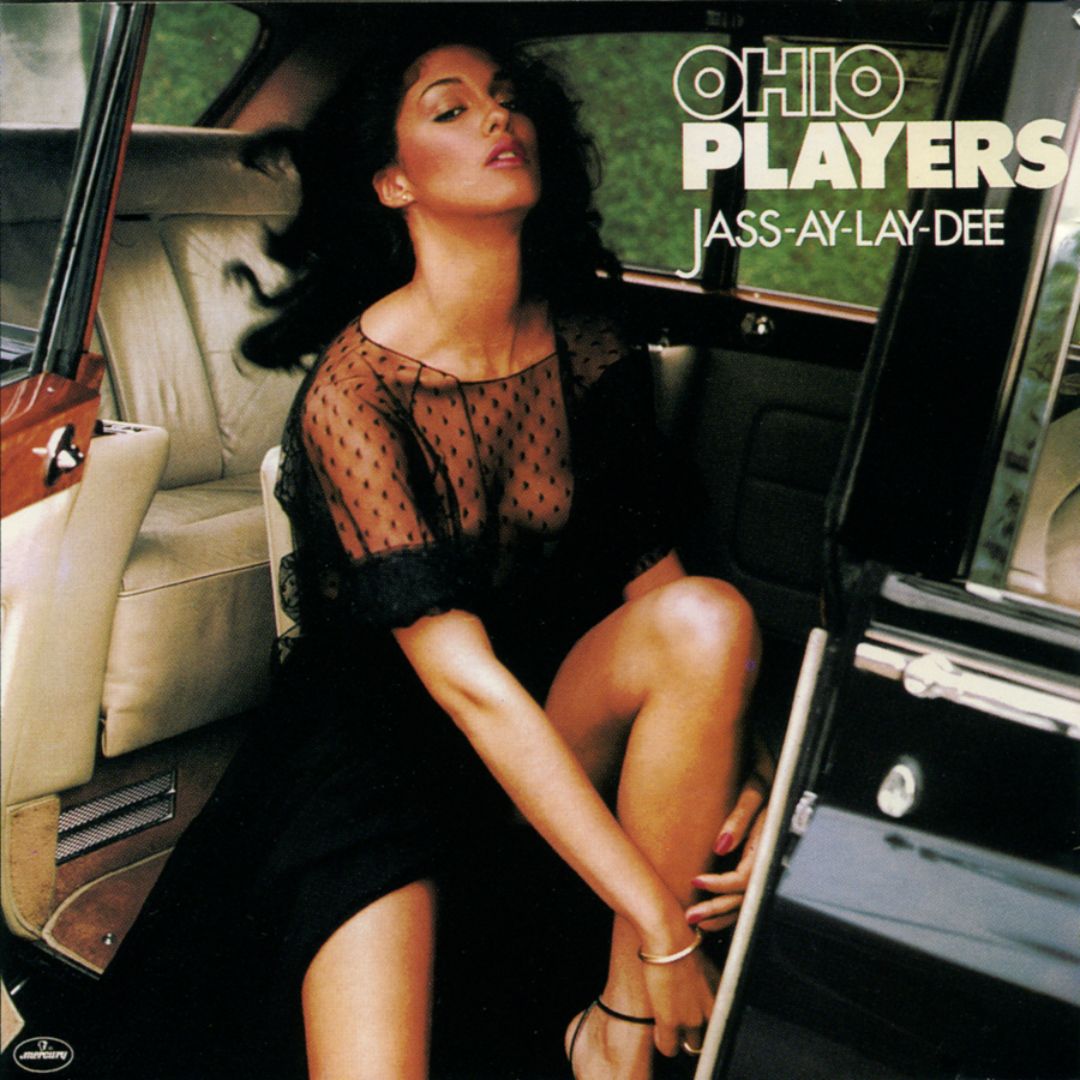 The Ohio Players released their eleventh album, Jass-Ay-Lay-Dee, in August 1978 on Mercury. The title is a phonetic rendering of “jazzy lady.”
All tracks were written by the band’s core lineup: Leroy “Sugarfoot” Bonner, Billy Beck, Marshall “Rock” Jones, James “Diamond” Williams, Ralph “Pee Wee” Middlebrooks, Clarence “Satch” Satchell, Marvin “Merv” Pierce, and Clarence “Chet” Willis, who sings lead on “Time Slips Away.”
Jass-Ay-Lay-Dee balances tight rhythmic patterns with smoother, jazz-tinged arrangements and layered vocal harmonies. The opener “Funk-O-Nots” channels Parliament/Funkadelic with dense rhythmic interplay. “Time Slips Away” centers on a jazz-funk guitar line with synth textures and vocal layers, then shifts to the upbeat “Shoot Yer Shot.” The title track explores jazz-funk motifs over extended passages.
A1. “Funk-O-Nots” (4:53)
A2. “Sleepwalkin’” (5:32)
A3. “Jass-Ay-Lay-Dee” (8:13)
B1. “Nott Enuff” (5:00)
B2. “Time Slips Away / Shoot Yer Shot” (7:12)
B3. “Dance (If Ya Wanta)” (6:13)
Sessions occurred at the Chicago Recording Company and Paragon Recording Studios in Chicago and at the Record Plant in Los Angeles, with production by the Ohio Players. Mastering was completed at Sterling Sound.
Two singles were released: “Funk-O-Nots” backed with “Sleepwalkin’,” and “Time Slips Away” backed with “Nott Enuff.”
The album reached No. 15 on the Billboard Top Soul LPs chart.
Later Albums
Everybody Up
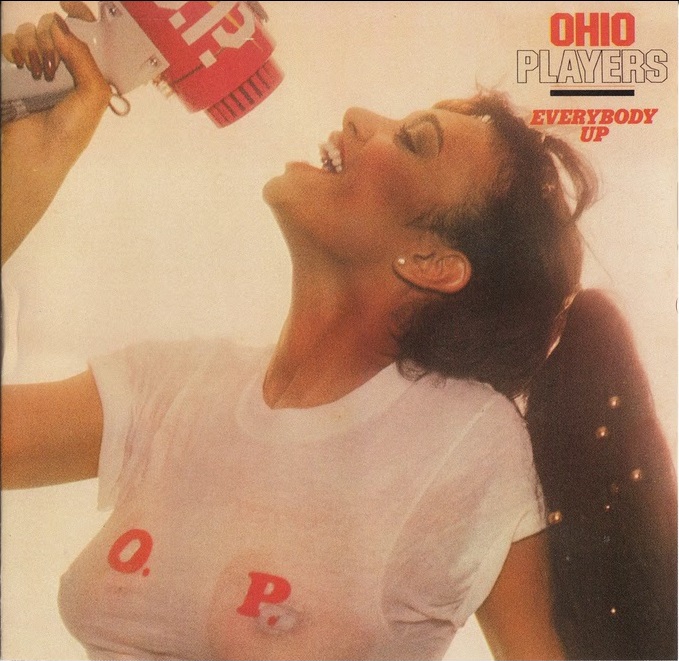 The Ohio Players released their twelfth album, Everybody Up, in 1979 on Arista.
All tracks were written and produced by the Ohio Players, with core contributions from Leroy “Sugarfoot” Bonner, Willie Beck, Clarence “Satch” Satchell, Marshall Jones, James “Diamond” Williams, Marvin “Merv” Pierce, Clarence “Chet” Willis, and Ralph “Pee Wee” Middlebrooks. Additional percussion on the album was provided by Azzedin Weston and Reubens Bassini.
Everybody Up favors polished string arrangements and refined pacing across extended track lengths. The title track features a sleek, drawn-out rhythm with lush layers. “Don’t Say Goodbye” highlights Sugarfoot’s guitar work and restrained vocal delivery. “Take De Funk Off, Fly” maintains steady rhythmic variations, anchored by tight ensemble vocals.
A1. “Everybody Up” (9:28) – Polished layers and extended, steady rhythmic drive.
A2. “Don’t Say Goodbye” (5:45) – Slow funk ballad with guitar leads from Sugarfoot.
A3. “Make Me Feel” (6:47)
B1. “Say It” (6:58)
B2. “Take De Funk Off, Fly” (6:06)
B3. “Something Special” (4:45)
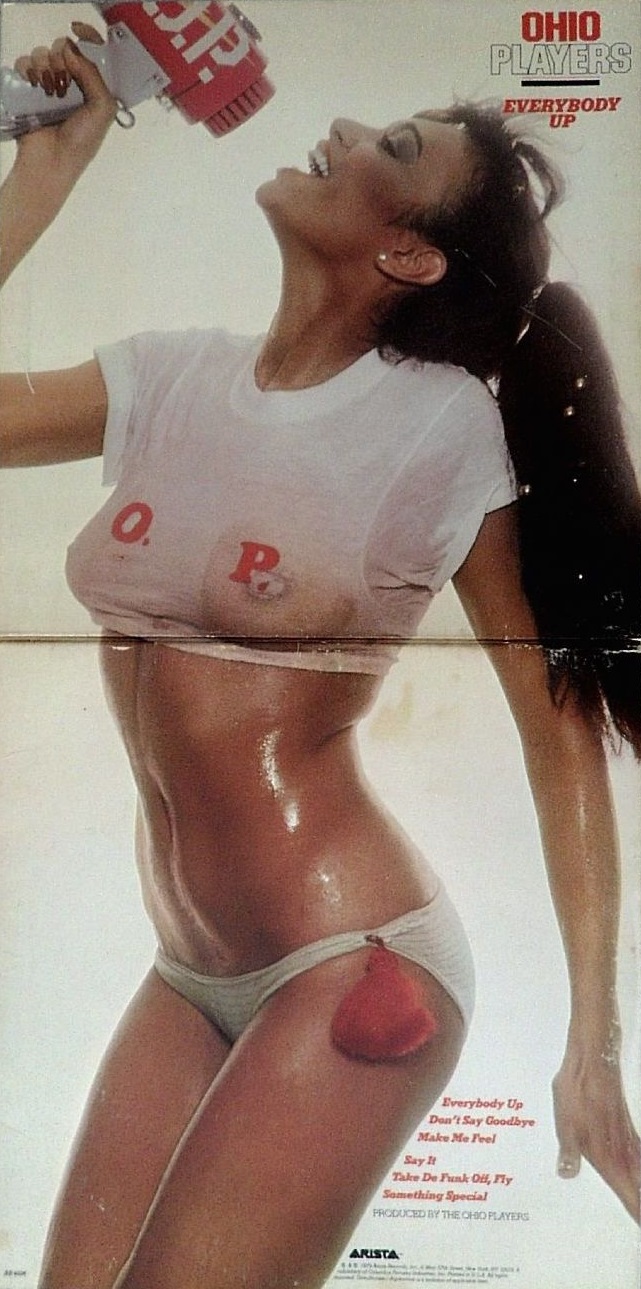 Sessions occurred at Fifth Floor Studios in Cincinnati, the Ohio Players Studio in Dayton, and Paragon Studios in Chicago. The album was produced by the Ohio Players and engineered by Gary Platt, Jim Krause, and Steve Kusiciel, with additional engineering and mixing on select tracks by Tim Bomba and William Wittman. Final mixing took place at Paragon Studios.
Everybody Up features artwork by Donn Davenport and includes photography by Tony Barboza and portrait work by Mario Astorga. The album is packaged in a gatefold sleeve.
Two singles were released: “Everybody Up” backed with “Take De Funk Off, Fly,” and “Don’t Say Goodbye” backed with “Say It.”
The album reached No. 19 on the Billboard Top Soul LPs chart.
Tenderness
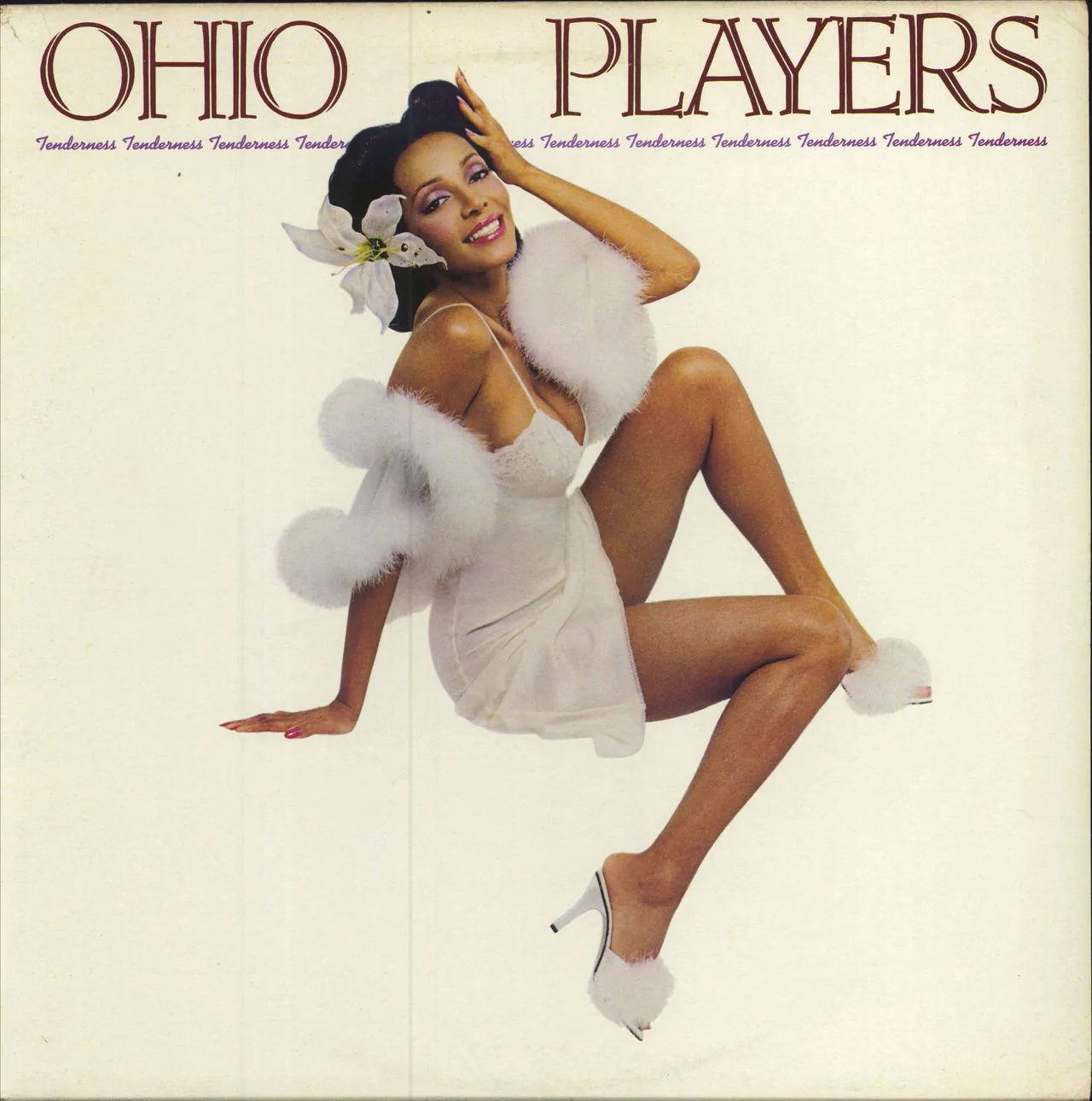 The Ohio Players released their thirteenth album, Tenderness, in March 1981 on Boardwalk.
Seven tracks are co-writes by core members Leroy “Sugarfoot” Bonner, Marvin “Merv” Pierce,and synth programmer L. David “Dr. J.” Johnson; assisted on four by Ralph “Pee Wee” Middlebrooks.
The album contains two Otis Redding covers: “Try a Little Tenderness,” a 1932 standard by Harry Woods, Jimmy Campbell, and Reg Connelly; and “(Sittin’ On) The Dock of the Bay,” the 1968 Stax classic by Redding and MG’s guitarist Steve Cropper.
A1. “Try A Little Tenderness” (3:52)
A2. “Sometimes I Cry” (4:02)
A3. “Skinny” (3:52)
A4. “Try To Be A Man” (3:27)
A5. “Boardwalkin'” (3:47)
B1. “Call Me” (5:20)
B2. “Sitting On The Dock Of The Bay” (3:39)
B3. “It Takes A While” (3:45)
B4. “Hard To Love Your Brother” (3:15)
Sessions occurred at 5th Floor Recording Studio in Cincinnati, Step Up Recording Studio in Los Angeles, and the Record Plant in Los Angeles. The album was produced by Leroy “Sugarfoot” Bonner for Grand Illusion, Inc., with engineering and mixing by Gary Platt. Larry Boden handled mastering.
Tenderness features artwork by Art Hotel and Christopher Whorf, with photography by Harry Langdon.
Ouch!
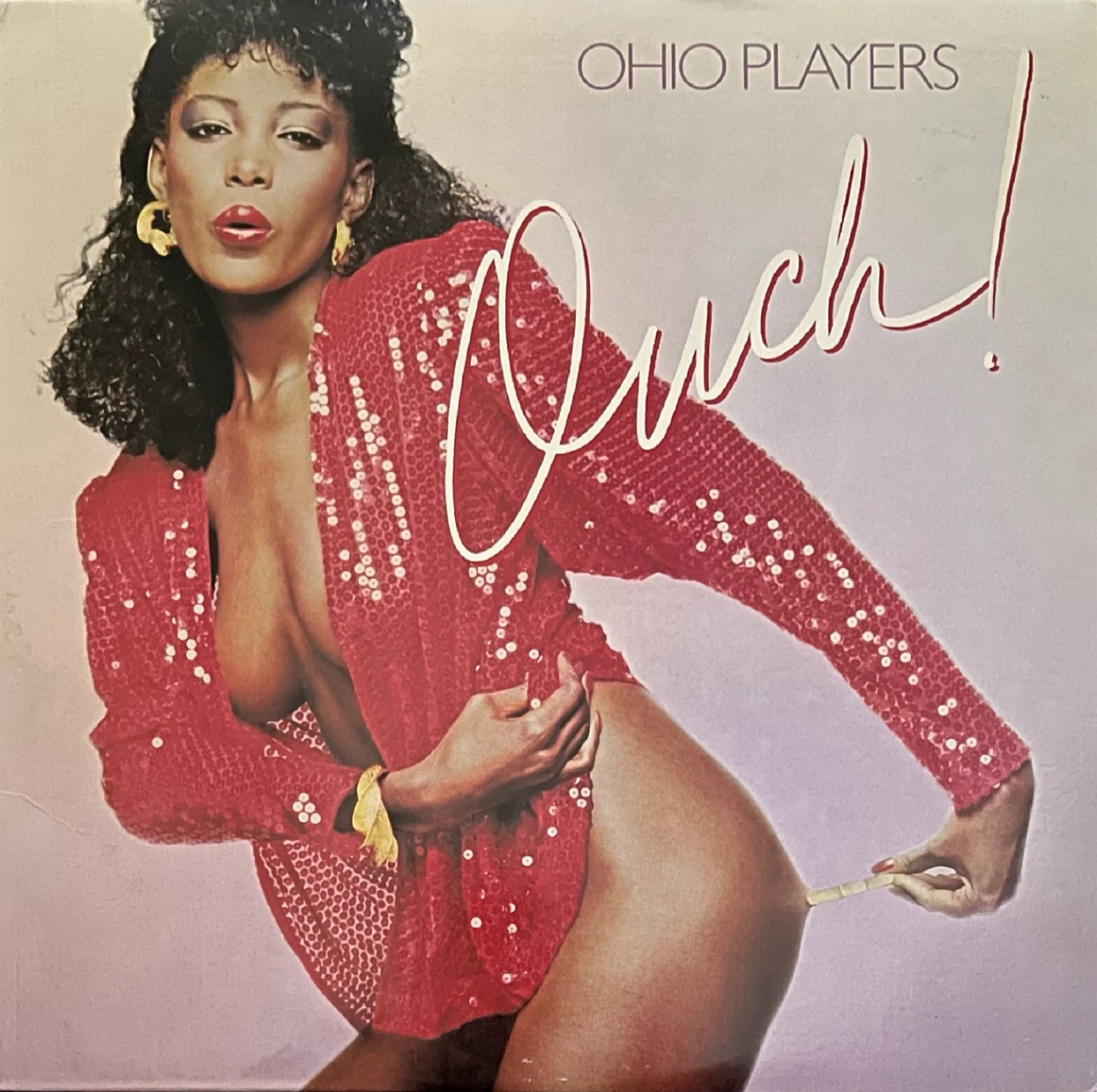 The Ohio Players released their fourteenth album, Ouch!, in late 1981 on Boardwalk.
The album contains seven tracks credited to producers Richard “Dimples” Fields and Belinda Wilson. Ouch! opens with “Do Your Thing,” a Charles Wright cover. Side B includes “Just Me” by guitarist/singer Leroy “Sugar” Bonner.
A1. “Do Your Thing” (5:13)
A2. “The Star of the Party” (4:09)
A3. “Sweet Lil’ Lady” (3:43)
A4. “Everybody Dance” (5:48)
B1. “My Baby Gets the Best of My Love” (3:25)
B2. “Just Me” (4:44)
B3. “Thinkin’ Bout You” (4:28)
B4. “Devoted” (3:45)
B5. “I’d Better Take a Coffee Break” (5:30)
Sessions occurred at unspecified studios with Richard “Dimples” Fields serving as producer. Engineering was handled by Anthony R. Modster, Carl Lange, Gloria Davis, and Tom Herzer. Horn and string arrangements were by Hense Powell.
Graduation
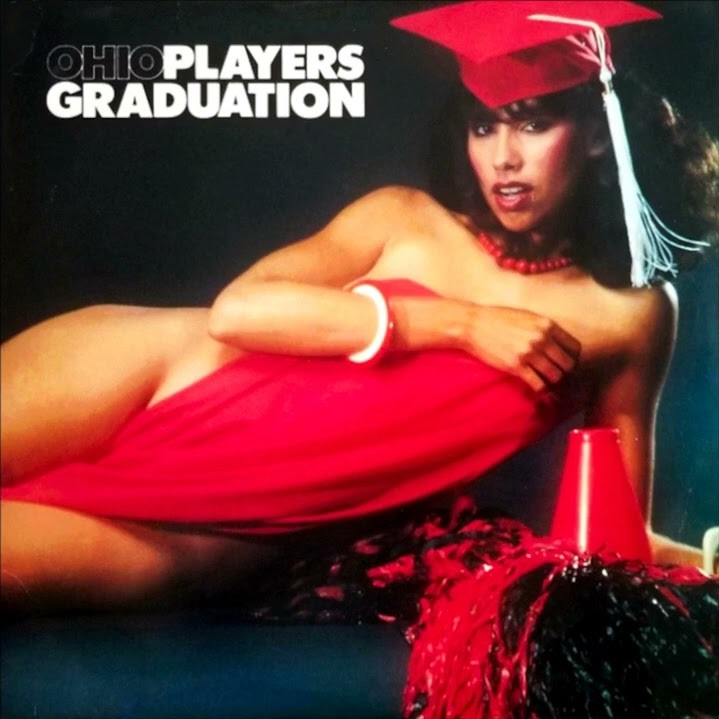 The Ohio Players released their fifteenth album, Graduation, in 1984 on Century Vista.
The album features eight tracks primarily credited to keyboardist Billy Beck, bassist Marshall Jones, and vocalist/producer Ollie Scales. Guitarist Gary “G-Money” Roebuck and bassist Mike Carter contribute on several tracks. “Fast Track” includes additional writing by P. Bass, and “So Nice I Got My R & B” features Glynn Sewell.
A1. “Fast Track” (4:44)
A2. “Follow Me” (4:39)
A3. “Don’t You Know I Care” (4:38)
A4. “So Nice I Got My R & B” (3:35)
B1. “School Girl” (4:32)
B2. “All Night” (4:40)
B3. “Now Is The Time” (5:40)
B4. “Sight For Sore Eyes” (5:00)
Sessions occurred at QCA and Fifth Floor in Cincinnati and Cybetekniks in Dayton with producer Marshall Jones and associate producer Billy Beck. Engineering was handled by Jerry Studenka, Jim Greene, Phil Mahaffey, Ric Probst, and Robin Jenney.
Back
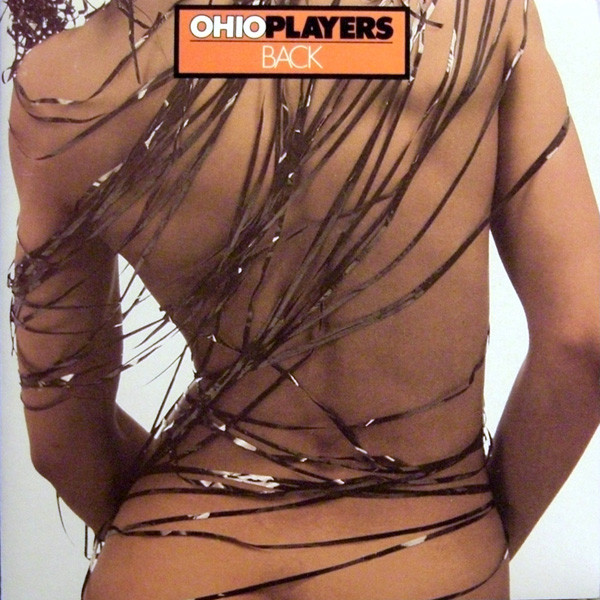 The Ohio Players released their sixteenth album, Back, in 1988 on Track Record.
The album features original material written and produced primarily by the Ohio Players. “Vibe Alive” was co-produced by Chip Wilson and John A. Bokowski, who also contributed additional engineering.
Guest keyboardist Herbie Hancock appears on the album, following Leroy “Sugarfoot” Bonner’s appearance on Hancock’s Perfect Machine. The track “I’m Madd!” addresses the dangers of drunk driving.
A1. “Get 2 The Good Part” (4:10)
A2. “Sweat” (3:49)
A3. “From Now On (Let’s Play)” (5:20)
A4. “Show Off” (4:21)
A5. “Just To Show My Love” (4:53)
B1. “I’m Madd!” (3:58)
B2. “Vibe Alive” (4:54)
B3. “Rock The House” (3:41)
B4. “Just A Minute” (5:27)
B5. “Reputation” (4:35)
B6. “Try” (4:23)
Sessions occurred at Sonic Art Studio in Lake Villa, Illinois, with additional tracking at Royal Recorders in Lake Geneva and Westlake Audio in Los Angeles. The album was produced and mixed by the Ohio Players, with engineering by Gerry Brown, John A. Bokowski Jr., and Glen Rupp. Executive production was handled by Chip Wilson.
Back features artwork art-directed by Jim Ladwig, with hand-colored band portraits by Bill Solsin and photography by Richard Fegley.
Discography:
- Observations in Time (1968)
- First Impressions (1972)
- Pain (1972)
- Pleasure (1972)
- Ecstasy (1973)
- Skin Tight (1974)
- Fire (1974)
- Climax (1974)
- Honey (1975)
- Rattlesnake (1975)
- Contradiction (1976)
- Angel (1977)
- Mr. Mean(1977)
- Jass-Ay-Lay-Dee (1978)
- Everybody Up (1979)
- Ouch! (1981)
- Tenderness (1981)
- Graduation (1984)
- Back (1988)
- Jam [archival] (1996)
Sources:
Artist/Album Pages:
Dayton was an American soul-funk band from Dayton, Ohio, that debuted with a self-titled album on ...
Starpoint was an American soul-funk band from Annapolis, Maryland, that made ten albums between 19...
Sunrize was an American soul-funk band that released a 1982 self-titled album on the Boardwalk Ent...
Panaché was an American soul-funk duo that released the 1979 album This Is Panaché on self-press R...
Fantasy was an American soul-funk band behind the 1981/82 Pavillion albums Fantasy and Sex and Mate...
Newban was an American soul-funk band that released two albums on the tax-scam Guinness label in 1...
Joy was an American Midwest hard-rock band that released three 1970/71 singles on Paula Records, f...
Funkadelic was an American soul-funk/psych band from Detroit that released eight albums on Westbou...
Magnum was an American soul-funk band from San Pedro Bay, California, that released the album Full...
Mad River was an American psychedelic-rock band that self-released a 1967 EP and signed to Capitol f...
Ollie Baba was an American soul-funk band that released a 1978 self-titled album on Polydor. Mem...
Brass Construction was an American soul-funk band from Brooklyn, best known for their crossover hi...