

Wireless was a Canadian hard-rock band that released a 1976 self-titled album on Atlantic, followed by the 1978–1980 Anthem titles Positively Human Relatively Sane and No Static, the latter produced by Geddy Lee.
Members: Steve McMurray (guitar, vocals), Glenn Beatson (drums, 1975-77), Allan Marshall (bass, vocals), Mike Crawford (guitar, vocals), Laurie Delgrande (keyboards, 1975), Michael Lalonde (vocals, 1976-77), Marty Morin (drums, 1977-81)
Background
Wireless had roots in Autumn, an Australian folk-pop band that topped the Go-Set chart with “Yellow River” (a 1970 UK No. 1 for Christie) and released the 1971 album Come Autumn on Warner Bros. Autumn included guitarist Steve McMurray and drummer Glenn Beatson, joined late-stage by bassist–singer Allan Marshall. After the band’s efforts in the UK market, the three toured Canada and settled in Toronto, where they added guitarist Mike Crawford and singer Michael Lalonde.
Atlantic signed Wireless and linked them with producer Jack Richardson, a recent soundman for Brutus and Barnaby Bye.
Wireless
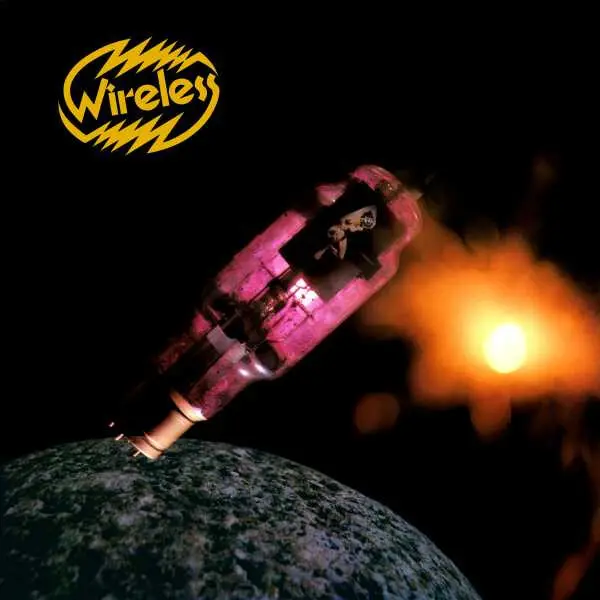 Wireless released their self-titled debut album in August 1976 on Atlantic.
The album overlays firm vocals, tight harmonies, and dual guitars across a mix of hard and soft numbers, including a lengthened version of the Come Autumn track “Lady Anne.” McMurray and Crawford soar in the upper register while Marshall and Beatson lock into heavy, driving patterns as Lalonde soars throughout six new originals and two Sixties covers.
A1. “Spend the Night With Me” (4:32) — Wireless
A2. “Old Fashioned Feeling” (4:37) — McMurray
A3. “Where We Ought to Be” (3:37) — Marshall
A4. “Lady Anne” (6:31) — McMurray
A5. “I Just Couldn’t Believe It” (3:05) — Marshall
B1. “Lovin’ in Return” (3:44) — Marshall
B2. “Chain of Fools” (3:29) — was a 1967 Billboard No. 2 hit for Aretha Franklin, written by Don Covay.
B3. “Go Now” (3:03) — Milton Bennett, Larry Banks; originated as a February 1964 single by Brooklyn R&B singer Bessie Banks, popularized soon after by the Moody Blues.
B4. “Love the Way You Feel” (5:26) — Marshall
Sessions occurred at Soundstage, Toronto, with producer Jack Richardson, engineer Brian Christian, and technical assistant Jim Frank. George Graves mastered the album at J.A.M.F.
Photographer David Street oversaw the jacket concept with graphic details by Peter Lole.
Atlantic Canada lifted “Spend the Night With Me” as a single (b/w “Love the Way You Feel”), followed by “Where We Ought to Be” (b/w “Lovin’ in Return”).
Wireless embarked on a Canadian tour but lost their record deal the following spring. Lalonde departed and Beatson returned to Australia. Wireless reconfigured with drummer Marty Morin, an alumnus of Heat Exchange and Goddo.
Positively Human, Relatively Sane
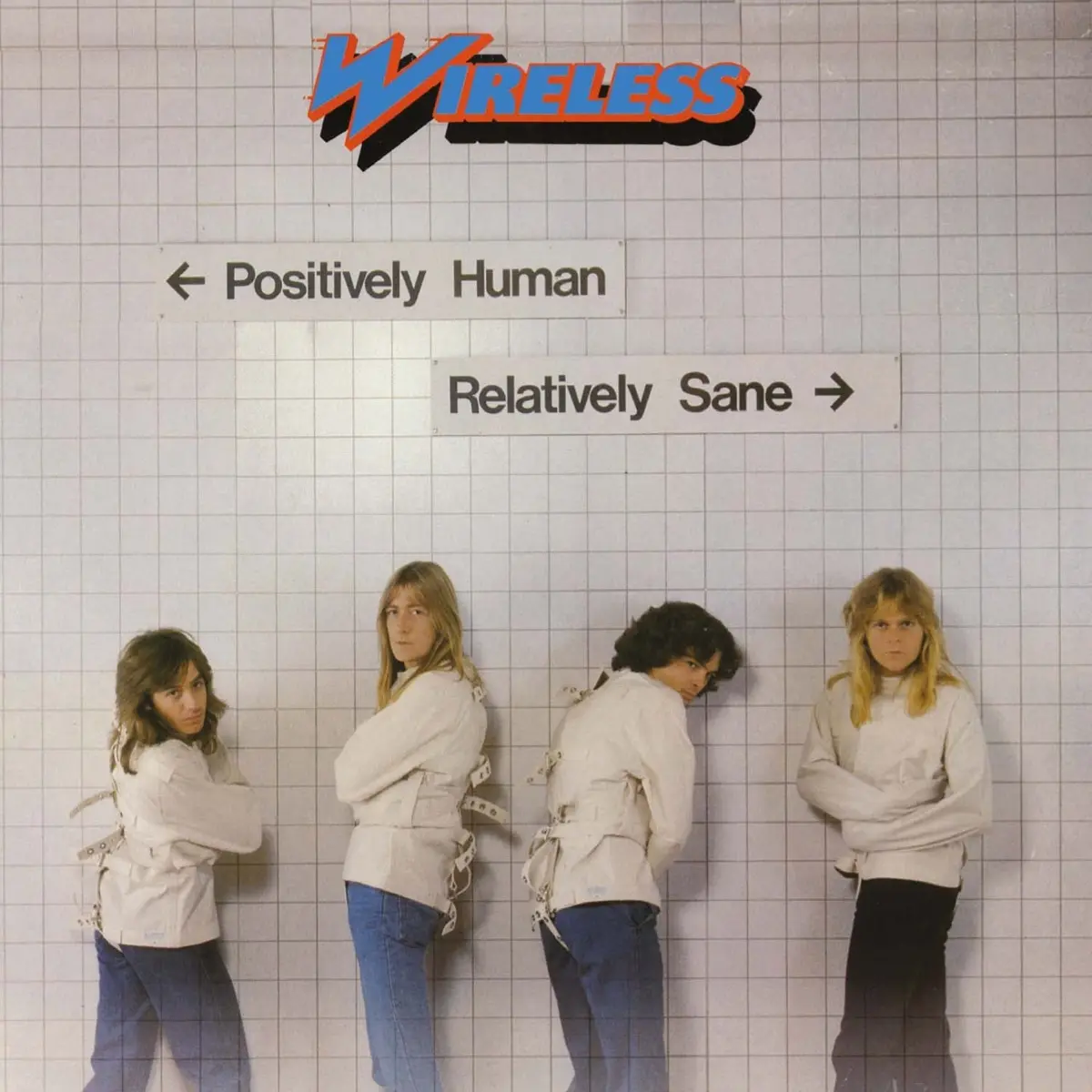 Wireless released their second album, Positively Human, Relatively Sane, in December 1978 on Anthem.
The album presents Wireless as a dual guitar four-piece with bassist Allan Marshall foregrounded as their new frontman. Guitarists McMurray and Crawford run roughshod as Marshall pulsates against Morin’s taut backbeat, culminating with the epic “461 Markham.” Morin takes lead vocals on “What You Make It” and “The Rut.”
A1. “I Know You Know” (3:27) — Marshall
A2. “No Way Out” (2:53) — Marshall, Crawford, McMurray
A3. “Goodnight Ladies” (3:55) — Crawford, Lalonde, Marshall
A4. “Right to Beg” (4:21) — Marshall, Crawford, McMurray
A5. “What You Make It” (3:39) — Morin, Michael Tilka
B1. “The Hard Way” (4:10) — Marshall
B2. “Sign Right Here” (3:42) — Marshall
B3. “The Rut” (4:40) — Morin, Jensen
B4. “461 Markham” (5:10) — Crawford, McMurray, Marshall
Wireless recorded and mixed Positively Human, Relatively Sane at Phase One Studios, Toronto, with engineer Mark Wright and producer Mike Tilka, the former Max Webster bassist.
Paul Hodgson and Fifty Fingers handled the album concept and design. John J. Wood shot the cover, and Earle Steiner supplied the live photography.
Anthem Canada issued “I Know You Know” as a single (b/w “No Way Out”). Wireless interacted on the live circuit with Rush, whose bassist–singer Geddy Lee undertook the band on downtime between Hemispheres and Permanent Waves.
No Static
 Wireless released their third album, No Static, in June 1980 on Anthem.
No Static runs on terse forms, clipped attack, and odd rhythmic turns. “Pay to Ride” hits with a straight-ahead charge, but the beat shifts at key points and throws the song off balance. “Timekeeper” drops into a looser pace, then snaps into brief gallops, with the rhythm and vocal contour set in a crooked pattern. “Go Naked Through the World” places most of its strangeness in the lyric and drives through a hard, blunt arrangement, while “One of a Kind” locks to a stuttering drum figure and threads sharper guitar angles through the top.
“East of the Sun, West of the Moon” slows the pace, lifts the voice into a more open line, and adds unusual percussion detail. “Deep Heat,” “Warm Night With a 3/4 Moon,” and “Friends” form a denser middle stretch with minor-key turns, compact force, and small rhythmic dislocations, before “Journey of a Possible Hero” closes the album in darker, apocalyptic fashion. One broader review available on the web also singled out “Pay to Ride,” “Timekeeper,” and “Friends” among the album’s most direct cuts, but it did not add much usable track detail beyond that.
A1. “Pay to Ride” (2:54) — Marshall
A2. “Timekeeper” (3:16) — McMurray, Marshall
A3. “Go Naked Through the World” (3:21) — Marshall
A4. “One of a Kind” (3:07) — McMurray, Marshall
A5. “East of the Sun, West of the Moon” (4:19) — McMurray, Marshall
B1. “Deep Heat” (3:10) — Morin, Marshall
B2. “Warm Night With a ¾ Moon” (3:50) — McMurray, Crawford, Morin
B3. “Friends” (4:00) — McMurray, Marshall
B4. “Journey of a Possible Hero” (4:13) — McMurray, Marshall
Wireless recorded No Static in December 1979 at Le Studio, Morin Heights, Quebec, with producer Geddy Lee and engineer Paul Northfield. Rush soundman Terry Brown mixed “Timekeeper” at Sound Stage.
Graphic illustrator David Cousins and photographer Rodney Bowes created the No Static visual package.
Anthem Canada lifted “Pay to Ride” as a single (b/w “Journey of a Possible Hero”).
Postlude
Wireless folded soon after No Static. Morin rejoined Goddo and collaborated with rock songstress Lisa Price on “Runaway,” a track on her 1983 mini-album Priceless.
Discography:
- Wireless (1976)
- Positively Human Relatively Sane (1978)
- No Static (1980)
Sources:
Artist/Album Pages:
Eddie and the Hot Rods were an English pub-rock/punk band that released the 1976/77 Island albums...
Eclipse was a Québécois electro/space-funk band behind a 1976 self-titled CBS album, followed by t...
Albatross was an American Midwest symphonic-rock band that issued an eponymous album on self-press...
Pepe Sánchez y Su Rock Band were a Spanish Latin-jazz/rock band behind the 1976 Marfer album Regre...
The Rock Follies were an English vocal trio that starred in their own musical-drama series on ITV ...
Pyramid was an Australian jazz-rock band behind a 1980 self-titled album on East Recording Company, ...
Alshia was an American symphonic/hard-rock band that self-released a 1980 eponymous album. Memb...
Ryo Kawasaki — 川崎燎 (Feb. 25, 1947) — is a Japanese jazz-rock guitarist who released the album Juic...
Tom Browne (born Oct. 30, 1954) is an American jazz-funk trumpeter from Queens. He emerged behind...
Camera Obscura were an English coldwave/synthpop duo from York, North Yorkshire, that was active b...
Hugh Abdullah Rashid Brodie (Feb. 7, 1933 — April 5, 2017) was an American jazz-funk tenor and sop...
Sunrise was an American art-rock/pop band behind a 1977 self-titled album on Buddah, produced by ...