

White Noise was the electronic/experimental musical project of English keyboardist, composer, and double-bassist David Vorhaus. The project initially yielded the album An Electric Storm, recorded with members of the BBC Radiophonic Workshop and released on Island in 1969. Vorhaus revitalized the White Noise nameplate for the album Concerto For Synthesizer on Virgin in 1975, followed by Re-entry on Pulse Records in 1980.
Members: David Vorhaus (double bass, electronics, synthesizer), Delia Derbyshire (electronics), Brian Hodgson (electronics), Paul Lytton (drums), John Whitman (vocals), Annie Bird (vocals), Val Shaw (vocals)
Background
White Noise formed in London in 1968 when American-born physicist and classical bassist David Vorhaus joined forces with BBC Radiophonic Workshop composers Delia Derbyshire and Brian Hodgson. Vorhaus (b. 1949, New Hampshire), trained in both orchestral performance and electronic engineering, was en route to a symphony gig when he wandered into a lecture by Derbyshire and Hodgson—both ex-members of Unit Delta Plus—on musique concrète and emerging studio technologies. The three bonded over a shared interest in sonic experimentation and opened the Kaleidophon Studio in Camden Town within weeks.
Delia Derbyshire (b. May 5, 1937, Coventry) held a BA in mathematics and music from Cambridge and had worked at the BBC since 1960, where she famously realized the Doctor Who theme using tape manipulation. Brian Hodgson (b. 1938, Liverpool) joined the BBC Radiophonic Workshop in 1962 and developed numerous pioneering effects for Doctor Who, including the TARDIS and Dalek voices. Both approached sound as an extension of dramatic art and design rather than traditional musicianship.
Vorhaus, seeking to adapt his instrumental skills to the new electronic context, invented the Kaleidophon—a ribbon-controlled, bass-inspired synthesizer. Using this and early tape-splice techniques, the trio built the foundations of An Electric Storm (1969), an album that fused electronic composition, pop structures, and theatrical sound design.
An Electric Storm
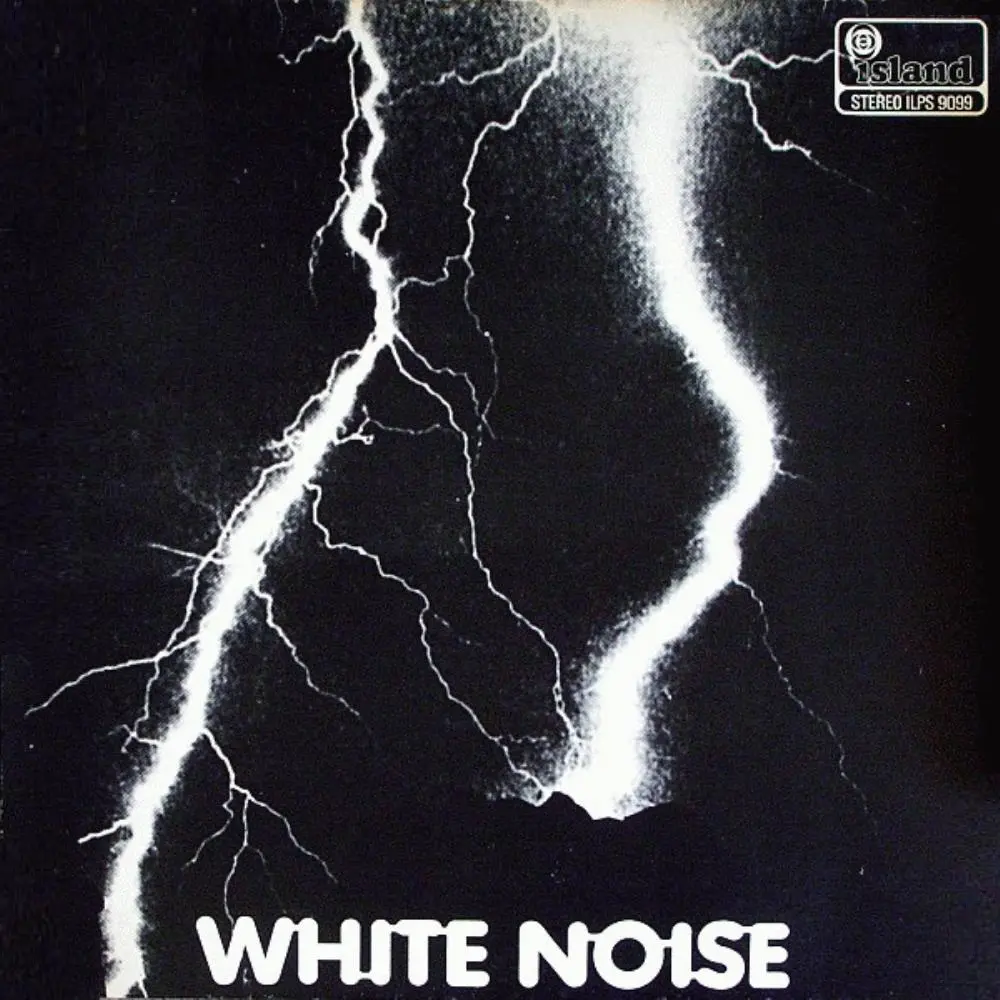 White Noise released their debut album, An Electric Storm, in June 1969 on Island.
An Electric Storm is built from analog splicework, raw signal manipulation, and cut-up pop constructions by David Vorhaus, Delia Derbyshire, and Brian Hodgson. Composed from the inside out—directly with oscillators, filters, and razor blades—the album eschews conventional arrangement in favor of procedural collage. Rather than apply treatments to finished songs, White Noise generated form through process: staggered edits, looped ambiances, and sudden tonal reversals. British proto-synth circuitry—including early voltage-controlled oscillators and ring modulators—filters through the mix not as ornamentation but as structural material.
The first half, Phase In, reconfigures pop forms through unstable geometry. “Love Without Sound” unspools like a lullaby turned inside out: detuned glissandi ripple under John Whitman’s narcotic vocal, which surfaces and recedes within a drifting stereo field. “My Game of Loving” sets whispered dialogues and breath loops against a steady pulse, climaxing in a chopped and layered montage of spoken-word, vocal echo, and simulated orgasm. “Here Come the Fleas” swerves between mock nursery rhyme and glitch opera, as Annie Bird narrates domestic irritation over scrambled edits, bent timbres, flickering jolts, and dropouts. “Firebird” and “Your Hidden Dreams” offer more consonant phrases and stable pacing, but even these yield to warped resonance, stereo trickery, and sudden tape edits.
Side Two abandons song form entirely. “The Visitation” unfolds as a haunted radio drama: fractured waltz refrains flicker between sobs, screeches, fairground organ, and backwards loops, climaxing in breakdowns of reverb, delay, and wordless lament. “Black Mass: An Electric Storm in Hell” drags the album into final disintegration—Paul Lytton’s tribal drumming tangles with synthetic thunderclaps, warped chants, and tortured screams that stretch and splinter across the stereo field. It ends not with resolution, but collapse.
A1. “Love Without Sound” (3:07)
A2. “My Game of Loving” (4:10)
A3. “Here Come the Fleas” (2:15)
A4. “Firebird” (3:05)
A5. “Your Hidden Dreams” (4:58)
B1. “The Visitation” (11:14)
B2. “Black Mass: An Electric Storm in Hell” (7:22)
Every moment on An Electric Storm was cut by hand, before the arrival of voltage-controlled synthesizers or multitrack automation. The music mutates bar to bar, rarely repeating or resolving, held together by tactile precision and a complete disregard for convention. Structure yields to interruption; composition becomes disassembly. What remains is a record that moves not toward order, but into ever deeper states of transformation.
Vorhaus coordinated production under the Kaleidophon name, with recording stretched across 1968. Initial sessions yielded the first two tracks as single candidates, but after encouragement from Island’s Chris Blackwell, the group committed to a full album. They spent the year layering edits, designing tones, and building each track from hand-cut fragments and synthesized overlays. As the deadline closed in, they completed “Black Mass” in a single day to meet Island’s demands. Over time, its tape-splice intensity and warped melodrama found a second life among experimentalists.
White Noise 2: Concerto for Synthesizer
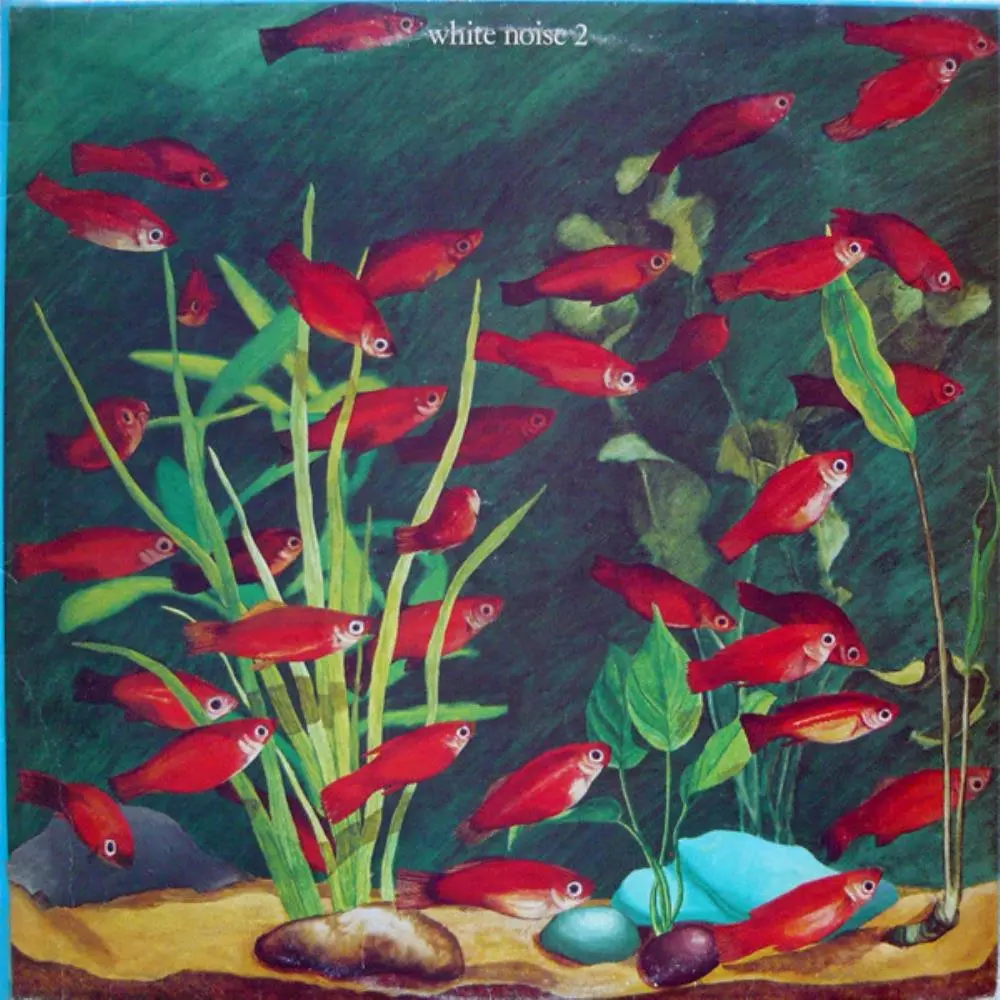 David Vorhaus released the second White Noise album, Concerto for Synthesizer, in 1975 on Virgin.
Vorhaus built the album around the custom Kaleidophon synthesizer system, combining two EMS VCS3 units with a bank of self-designed modules and prototype sequencers. Unlike the debut, Concerto for Synthesizer unfolds as a continuous instrumental suite in three movements, performed entirely by Vorhaus using multi-tracked electronics. He conceived the album as a full concerto in which the synthesizer acts as both soloist and orchestra.
A1. “Movement I” (11:34)
A2. “Movement II” (7:50)
B1. “Movement II (Continued)” (6:45)
B2. “Movement III” (12:30)
Vorhaus produced, recorded, and mixed the album in 1974 at his private Camden studio using sixteen tracks of tape, each section built from sequenced passages, voltage-controlled events, and multi-layered tones designed with custom electronics. He wrote the liner notes, designed the concept, and coordinated cover artwork with Ray Smith, who supplied the painting and photography.
White Noise III – Re-entry
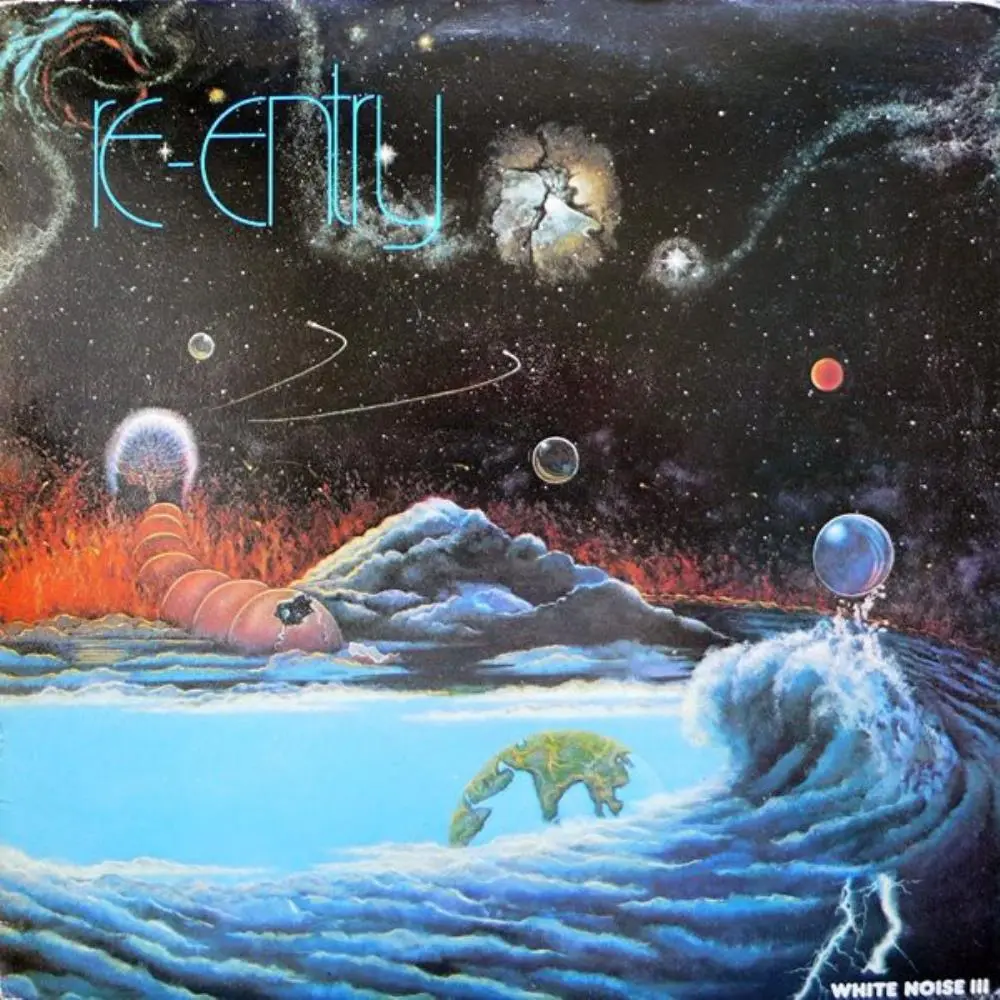 David Vorhaus released the third White Noise album, Re-entry, in 1980 on Pulse.
Structured as a single longform suite across two LP sides, the album unfolds as a continuous sequence of synthesizer-based compositions with abrupt transitions and spoken interludes. Vorhaus composed and performed the entire album using a modular system that included the Kaleidophon, the M.A.N.I.A.C., the Prophet 5, Oberheim SEM, Yamaha and EMS VCS3 synthesizers, and the Fairlight CMI as a featured sound source. He handled all instrumentation himself, with vocal contributions from Pete Brown on “Leaving Song” and both Vorhaus and Linda Hayes on “Black Hole Blues.”
A1. “Countdown” (1:00)
A2. “Lift Off” (1:43)
A3. “Afterburn” (1:11)
A4. “Burn 2” (1:34)
A5. “Orbit” (2:41)
A6. “Leaving Song” (1:36)
A7. “Deep Space Drift” (2:21)
A8. “Meteor Storm” (2:07)
A9. “Disorientation” (1:20)
A10. “Time Traveller” (4:20)
B1. “Space Warp” (2:37)
B2. “Voices” (0:59)
B3. “Heavy Breathing” (1:07)
B4. “Black Hole Blues” (2:27)
B5. “Nine Dimensions” (5:23)
B6. “Nebulous Meets Nebula” (2:28)
B7. “The Cygnus Constellation” (5:02)
Vorhaus recorded and produced Re-entry in his Camden studio using multi-track tape and sequenced synthesizer environments. He cut the lacquer at The Town House and oversaw artwork in coordination with illustrator Soya Bezor and layout designer Stefan Suchomski. The album was issued by Pulse with continuous playback on each side. The later CD reissue added three bonus tracks—“Splashdown 1,” “Splashdown 2,” and “Splashdown 3”—as a postscript to the original space-themed suite.
Postlude
Starting in the 1980s, David Vorhaus expanded his work into the world of library music, producing a series of electronic albums for KPM Music and De Wolfe Music: The Vorhaus Sound Experiments (KPM, 1980), Sleight of Mind (KPM, 1982), and a string of titles with composer Dave Bradnum: Electro-graphics (De Wolfe, 1982), Sound Conjurer (KPM, 1983), and The Quest (De Wolfe, 1984). He closed the series with Out of the Dark (KPM, 1985), continuing to focus on textural electronics crafted for narrative and broadcast media.
Discography:
- An Electric Storm (1969)
- White Noise 2: Concerto for Synthesizer (1975)
- White Noise III – Re-entry (1980)
Sources:
Artist/Album Pages:
From was a German jazz-rock band headed by saxophonist Gustl Mayr. On CBS, they made the 1971/72 a...
Home was an English rustic art-rock band from London, best remembered for the 1972 epic "Lady of t...
The Pale Fountains were an English sophisti-pop band that debuted in 1982 on Les Disques du Crépuscu...
Neuronium are a Spanish electronic combo from Barcelona, formed in 1976 by keyboardist Michel Huyg...
It's a Beautiful Day was an American psychedelic folk band from San Francisco that released four ...
Eddie Harris (Oct. 20, 1934 — Nov. 5, 1996) was an American post-bop/jazz-funk tenor saxophonist...
Blue Goose was an English hard-rock band that made a 1975 self-titled album on Anchor. Pre-record ...
Mieko Hirota (弘田三枝子) — aka Miko (Feb 5, 1947 — July 21, 2020) — was a Japanese jazz singer who rel...
Camberwell Now was an English art-rock trio that debuted with a five-song EP on small-press Duplic...
Dr. Music was a Canadian jazz-rock/soul collective from Toronto that released three albums from 19...
The Trip was an Italian symphonic/psych band that released three albums between 1970 and 1973 on R...
A Euphonious Wail was an American west coast soul-rock band behind a 1973 self-titled album on Kap...