

Pat Lundy (194?–1994) was an American soul singer from New York who released five Sixties small-label singles and signed with Columbia for her 1968 debut album, Soul Ain’t Nothin’ but the Blues. After four De Luxe singles, she resurfaced with the 1973 RCA album Only Love Spoken Here. In 1976, she landed on Pyramid Records for her two final albums, The Lady Has Arrived and Loving You: The Funkiest Feeling.
Background
Pat Lundy was born on July 9, 1941. She came from Columbus, Ohio, where she won a singing prize at a neighborhood social center as a teenager. The prize gave her a ten-day nightclub engagement, and the booking lasted eight months.
Lundy joined the Symbols after her Columbus club work. She later toured with Carl Sally and the Madisons, then took New York dates under her own name. Lundy made her first 45 with the July 1962 Toto single “Play It Again” (b/w “I’ll Keep Pressing On”). Leopard issued “You Hit Me Where It Hurts” (b/w “Walkin’ By the River”) and “It’s Rainin’ Outside” (b/w “Hal’s Belles”) during 1963. Heidi followed with the 1965 singles “Make It for the Door” (b/w “Come to Me”) and “We Got A Thing Goin’ On” (b/w “I Really Love You”), the latter pairing Lundy with Bobby Harris.
Columbia executive John Hammond heard Lundy during her New York period. She reached Columbia with the January 1967 single “Wildfire” (b/w “City of Stone”). Lundy followed with “Nothing But Tears” (b/w “Any Day Now”) and “Soul Ain’t Nothin’ But the Blues” (b/w “Another Rainy Day”) before the 1968 Columbia album Soul Ain’t Nothin’ But the Blues.
Soul Ain’t Nothin’ but the Blues
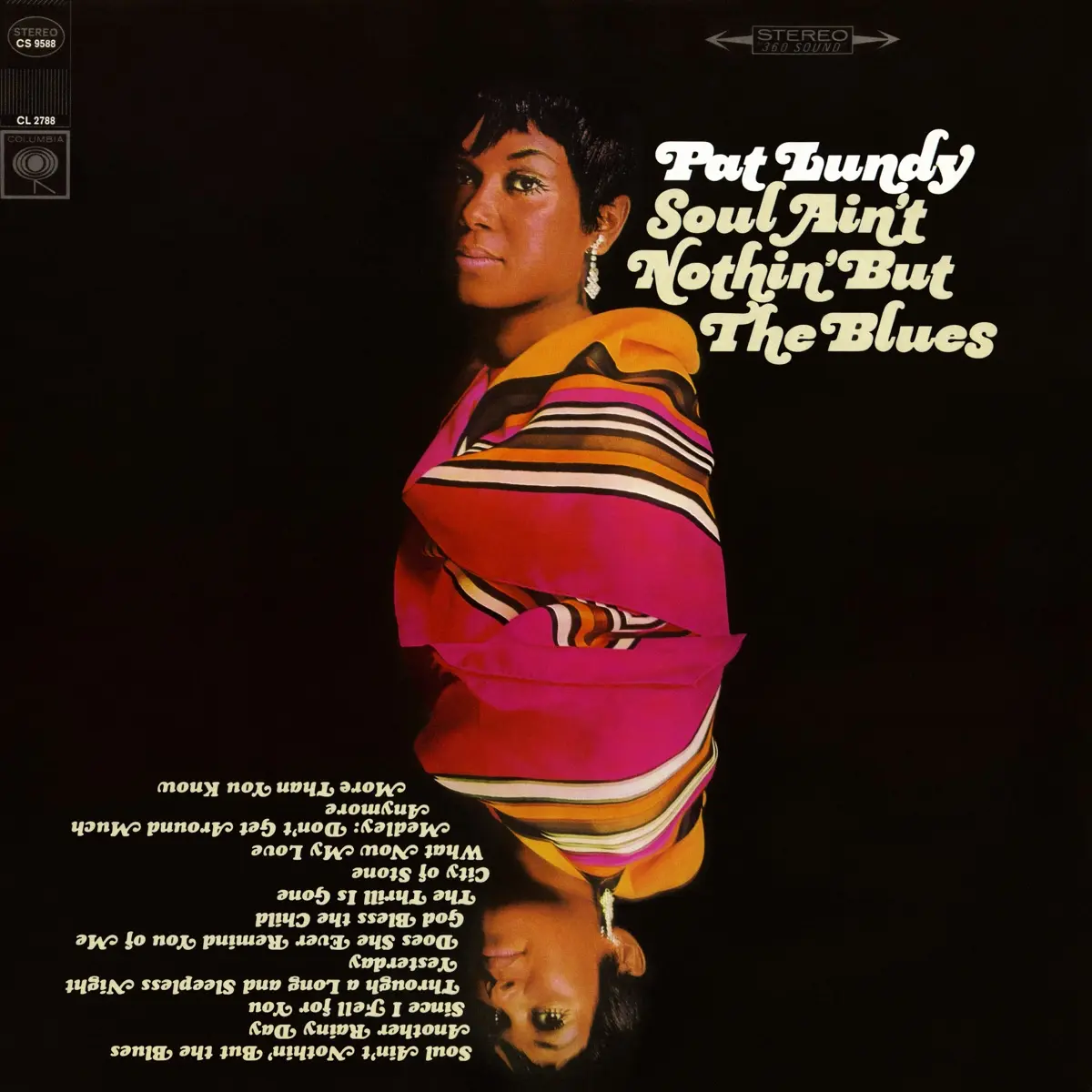 Pat Lundy released her debut album, Soul Ain’t Nothin’ but the Blues, in January 1968 on Columbia.
Lundy works across vocal soul, pop standard, and blues-ballad material, with the title song and “Another Rainy Day” placed beside long-circulating repertory pieces. Buddy Scott and Jimmy Radcliffe supplied four titles, while the remaining sequence draws on material by Gilbert Bécaud, Pierre Delanoë, Carl Sigman, John Lennon, Paul McCartney, Duke Ellington, Mack Gordon, Buddy Johnson, Billie Holiday, Arthur Herzog Jr., Lew Brown, and Ray Henderson.
“Does She Ever Remind You of Me” arches through an uptown chart, with Lundy extending the address in long, controlled phrases. “What Now My Love” swells through a formal standard cadence, with the lead placed high in the arrangement. “Don’t Get Around Much Anymore and More Than You Know” braids two standards into a compact medley, shifting from clipped swing phrasing to a suspended ballad cadence. “Through a Long and Sleepless Night” lingers on held vowels and late-line tension.
“City of Stone” sharpens the Scott–Radcliffe material with arranged brass and a firmer pulse. “Soul Ain’t Nothin’ but the Blues” bolts through a fast single treatment, with Lundy pushing the title line over bright production and hard sectional lift. “God Bless the Child” holds to measured recital, with the vocal line shaped through slow restraint.
A1. “Does She Ever Remind You of Me” (3:25) – Scott/Radcliffe
A2. “What Now My Love” (2:55) – Sigman/Bécaud/Delanoë
A3. “Yesterday” (2:53) – Lennon/McCartney
A4. “Don’t Get Around Much Anymore / More Than You Know” (3:42) – Ellington/Eliscu/Russell/Rose/Youmans
A5. “Through a Long and Sleepless Night” (4:26) – Newman/Gordon
B1. “City of Stone” (2:46) – Scott/Radcliffe
B2. “Since I Fell for You” (3:10) – Johnson
B3. “Soul Ain’t Nothin’ but the Blues” (2:23) – Scott/Radcliffe
B4. “God Bless the Child” (3:26) – Herzog/Holiday
B5. “The Thrill Is Gone” (2:09) – Brown/Henderson
B6. “Another Rainy Day” (2:41) – Scott/Radcliffe
Columbia lifted “Soul Ain’t Nothin’ but the Blues” as a 1968 single with “The Thrill Is Gone” on the reverse. “What Now My Love” followed in 1968 with “Does She Ever Remind You of Me” on the reverse, and “City of Stone” appeared in 1969 with “The Thrill Is Gone” on the reverse.
Lundy followed the album with the August 1968 standalone single “Mr. Rainmaker” (b/w “The Complete Man”).
1969–70 De Luxe Singles
A. “Only Mama That’ll Walk the Line”
B. “Prove It”
A. “I’m Your Special Fool”
B. “Another Lovin’ Kind of Feeling”
A. “Breaking Up is Hard to Do”
B. “I Apologize”
A. “Another Lovin’ Kind of Feeling”
B. “One Woman”
Only Love Spoken Here
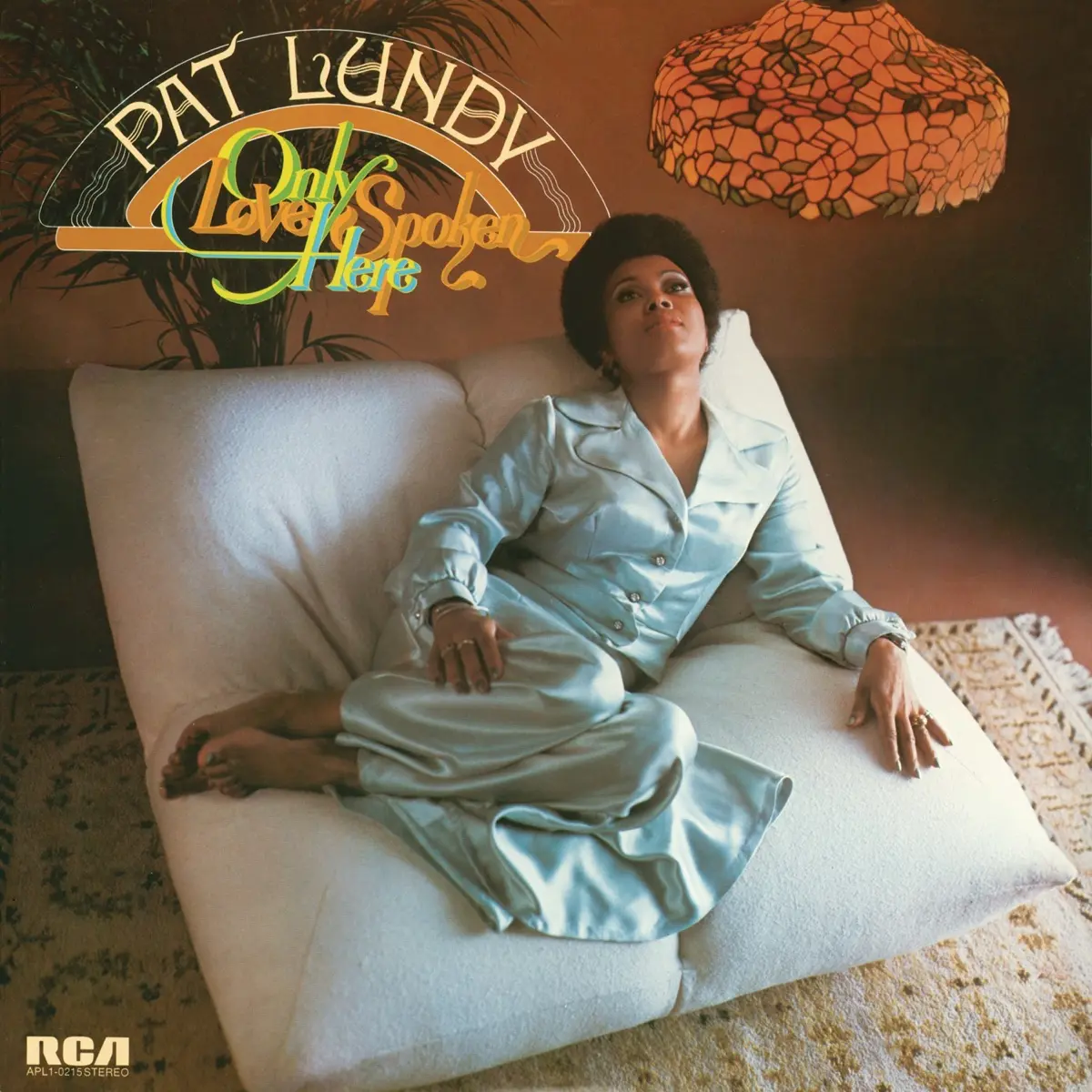 Pat Lundy released her second album, Only Love Spoken Here, in September 1973 on RCA Victor.
Lundy works across staged soul ballads, theater material, and orchestral pop-soul. The sequence includes Broadway-source titles in “Thank Heaven for You” and “Love, Love, Love,” the RCA soul side “He’s the Father of My Children,” and the title ballad by Richard Ahlert and Leon Carr. Buddy Scott and Herb Lovelle produced the album for RCA Victor. Bert Keyes arranged and conducted the first side, and Danny Holgate arranged the title track.
“I’ve Never Been a Woman Before” opens with spoken narration before Lundy widens the line into staged ballad phrasing. “No More Tears to Cry” steadies the side with a held lead and polished chorus rise. “Thank Heaven for You” leans into a grateful refrain, with the arrangement widening around the repeated title address. “Love Child” hardens the set with a rougher pulse and clipped attack.
“He’s the Father of My Children” compresses domestic narrative into short vocal turns. “Only Love Spoken Here” settles into a softer ballad cadence under Danny Holgate’s arrangement. “It’s Impossible” broadens the standard with a clean orchestral rise. “What Is Love” circles the question phrase in tidy, declarative lines.
A1. “I’ve Never Been a Woman Before” (4:53) – Miller/Baird
A2. “No More Tears to Cry” (3:24) – Keyes/March
A3. “Thank Heaven for You” (3:54) – Grant
A4. “Love Child” (3:19) – Scott/Radcliffe
A5. “He’s the Father of My Children” (2:57) – Medley
B1. “Only Love Spoken Here” (3:07) – Ahlert/Carr
B2. “It’s Impossible” (3:33) – Manzanero/Wayne
B3. “Friend of Mine (I Wanna Thank You So Much)” (3:08) – Molluso
B4. “What Is Love” (2:37) – Scott
B5. “Love, Love, Love” (3:03) – Bailey/Williams
RCA Victor issued “He’s the Father of My Children” and “Thank Heaven for You” on one 1972 single. “He’s the Father of My Children” reached No. 90 on the US R&B chart during July nineteen seventy-three. The label also issued “Friend of Mine (I Wanna Thank You So Much)” in 1972 with “Closer” on the reverse.
Pat Lundi – “Party Music”
In 1975, Pat Lundy (with the modified surname Lundi) linked with Vigor Records and released “Party Music,” a one-off single written by Melissa Manchester.
The Lady Has Arrived
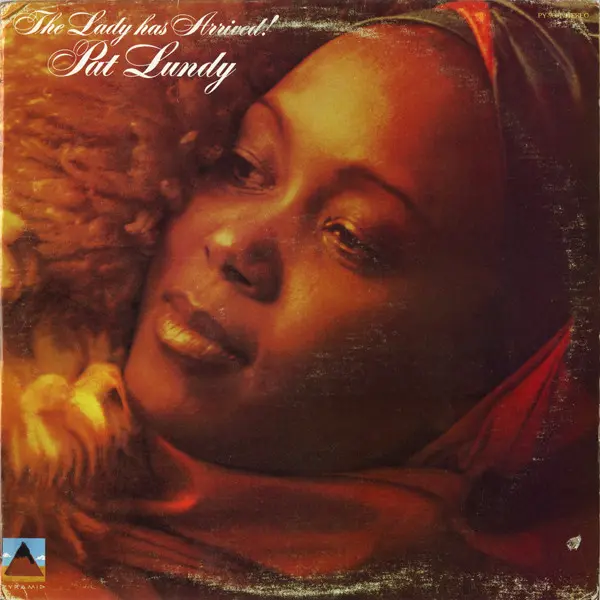 Pat Lundy released her third album, The Lady Has Arrived, in 1976 on Pyramid. “Who Are You Now” appeared in the film Hurry Up Or I’ll Be Thirsty.
The album presents mid-seventies soul with brass charts, backing-choir responses, and clipped dance-band accents. Lundy sings material by Buddy Scott, Phil Medley, James Coleman Dugan, Bruce Hart, Stephen J. Lawrence, Stephen Schwartz, and George Harrison. Scott and Medley supplied five of the eight titles, and “Who Are You Now” came from the motion picture Hurry Up or I’ll Be Thirsty.
“Day By Day/My Sweet Lord” snaps from a tight syncopated intro into a devotional medley. “Baby Don’t You Let Me Down” slows around a blues-weighted ballad lead. “Happy Walk” skips through a brisk dancer’s pulse, with the title set to short forward accents. “Let’s Get Down to Business” steps through a buoyant mid-tempo pattern and plain-spoken title commands. “Ain’t No Pity In the Naked City” carries the Jackie Wilson number into a larger 1976 arrangement, with Lundy sharpening the title line against the city setting.
A1. “One On One” (2:52) – Scott/Medley
A2. “Baby Don’t Let Me Down” (4:26) – Scott/Medley
A3. “Day By Day / My Sweet Lord” (4:54) – Schwartz/Harrison
A4. “Happy Walk” (3:27) – Scott/Medley
B1. “Strong Lovin’ Man” (4:10) – Scott/Medley
B2. “Who Are You Now” (3:30) – Hart/Lawrence
B3. “Let’s Get Down to Business” (4:36) – Dugan
B4. “Ain’t No Pity in the Naked City” (5:05) – Scott/Medley
Sessions occurred at Groove Sound Studio in New York with Buddy Scott and Dennis Ganim as producers. Phil Medley arranged the album. Lundy sings with backing vocalists Albertine Robinson, Hilda Harris, Meritha Stewart, and Patti Austin; bassists Bob Babbitt, Gordon Edwards, and Joe Mack; keyboardists Derek Smith and George Butcher; percussionist George Devons; and a horn-and-string ensemble.
Pyramid issued “Let’s Get Down to Business” as an April 1976 single with “Ain’t No Pity in the Naked City” on the reverse. “Let’s Get Down to Business” reached No. 94 on the US R&B chart, and “Ain’t No Pity in the Naked City” reached No. 96 on the US R&B chart. Pyramid also issued “One On One” in 1976 with “Baby Don’t Let Me Down” on the reverse. “Day By Day / My Sweet Lord” appeared on the reverse of D.C. LaRue’s 1976 twelve-inch single “Cathedrals.”
Loving You: The Funkiest Feeling
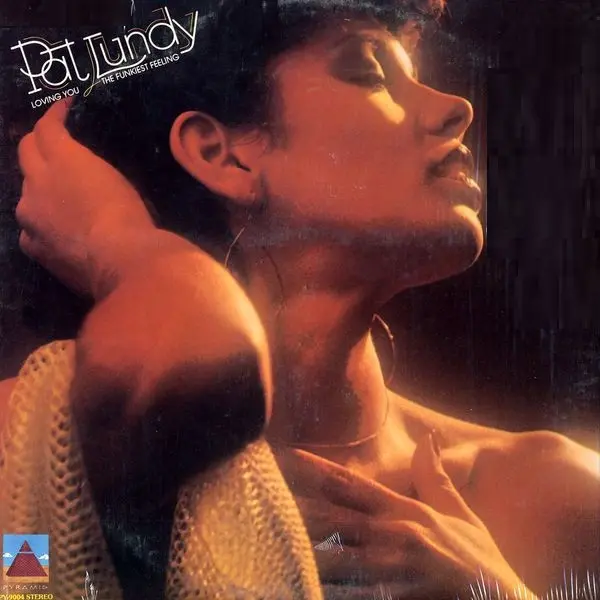 Pat Lundy released her fourth album, Loving You: The Funkiest Feeling, in 1977 on Pyramid.
The album places Lundy in late-seventies soul settings with extended rhythm sections, brass-lined refrains, and string-backed ballads. The sequence recasts Big Bill Broonzy and Lil Green’s “In the Dark” and Nat Adderley and Oscar Brown Jr.’s “Work Song” beside six Scott–Medley titles and two Arnold Ahlert credits. Buddy Scott produced the album, Dennis Ganim served as executive producer, and Phil Medley arranged and conducted the sessions.
“In the Dark” opens the set with Lundy placed close to the lyric, then pulls the refrain into a restrained early-side cadence. “It’s Time Somebody Told Me About the Rain” lingers on long-line delivery and a weathered title phrase. “Thank God We Finally Found the Sun” widens the release point with a warmer chorus lift. “Work Song” stretches the Nat Adderley–Oscar Brown Jr. number into an extended break-driven workout. “Ain’t That the Funkiest Feelin’” rides the title phrase over a firmer late-side dance pulse. “Put a Little Love Back” closes with a compact, upturned refrain.
A1. “In the Dark” (3:59) – Broonzy/Green
A2. “It’s Time Somebody Told Me About the Rain” (4:59) – Ahlert
A3. “Thank God We Finally Found the Sun” (4:37) – Blake/Scott/Medley
A4. “Baby, Baby, Baby” (4:15) – Scott/Medley
A5. “Loving You” (5:01) – Scott/Medley
B1. “Work Song” (7:10) – Adderley/Brown
B2. “Ain’t That the Funkiest Feelin’” (4:34) – Scott/Medley
B3. “Danger Heartbreak Ahead” (2:59) – Landon/Ahlert
B4. “Put a Little Love Back” (3:18) – Scott/Medley
Lundy sings with backing vocalists Albertine Robinson, Frank Floyd, Gayle Nelson, and Patti Austin. The album features guitarists Billy Nichols, Jeff Mironov, Jerry Friedman, and Van McCoy, with a larger studio ensemble under Medley’s arrangements.
Pyramid issued “Work Song” as a 1977 single with “Put a Little Love Back” on the reverse. “Work Song” reached No. 17 on the US dance chart during March 1977.
Discography:
- Soul Ain’t Nothin’ but the Blues (1968)
- Only Love Spoken Here (1973)
- The Lady Has Arrived (1976)
- Loving You: The Funkiest Feeling (1977)
Sources:
Artist/Album Pages:
Zauber was an Italian symphonic-folk band that released a 1978 self-titled album on Mu. After thei...
Lori Lieberman is an American singer/songwriter who released four 1972–75 albums on Capitol Record...
Zuider Zee was an American pop-rock band from Memphis that released a 1975 self-titled album on C...
Fernando Yvosky is a Venezuelan musician, singer, and composer who self-released the 1975 symphoni...
Rhésus O was a French jazz-rock/psych band that cut a self-titled 1971 album on Epic. They featured ...
Bootsy's Rubber Band was an American funk band from Detroit that released four albums between 1976...
Korni Grupa was a Yugoslav symphonic-rock band that released fourteen singles and the 1972–74 albu...
Stonehouse was an English hard-rock band that released the album Stonehouse Creek on RCA Victor i...
Tribu was a Spanish jazz-rock band that made the 1978–80 albums Barriu Chinu and Que em de fer? M...
Haikara was a Finnish symphonic/jazz-rock band that made the 1972–74 albums Haikara and Geafar, fo...
The Collectors were a Canadian psychedelic rock band that released seven singles and the 1968–69 ...
Jarka was a Spanish jazz-psych/folk combo that released the 1971/72 albums Ortodoxia and Morgue O ...