

Galaxy-Lin was a Dutch art-rock band that released three singles and the 1974/75 Polydor albums Galaxy-Lin and “G.”
Members: Dick Remelink (saxophone, flute), Hugo van Haastert (mandolin, vocals), Peter Rijnvis (drums), Peter Wassenaar (bass), Robbie van Leeuwen (mandolin, vocals), Ruud van de Berg [aka Rudy Bennett] (vocals), Hans de Vos (mandolin), Skip van Rooy (keyboards)
Background
Galaxy-Lin formed in 1974 in Den Haag, Zuid-Holland, when singer Ruud van de Berg, an elder statesman of Dutch rock, exited Shocking Blue and teamed with Ekseption saxophonist Dick Remelink.
Van de Berg (aka Rudy Bennett) fronted Sixties Nederbeat legends The Motions, the springboard of Shocking Blue, which he co-fronted with Mariska Veres. Remelink served the second Ekseption lineup, responsible for the 1970-72 albums Beggar Julia’s Time Trip, 3, 00:04, and 5. They assembled Galaxy-Lin with bassist Peter Wassenaar, drummer Peter Rijnvis, and keyboardist Skip van Rooy.
Wassenaar hailed from Blue Planet, a Philips singles act that scored a 1970 hit with “I’m Going Man I’m Going.” Rijnvis played in the Dutch Five, a mid-Sixties Nederbeat combo. Van Rooy backed The Buffoons, a perennial harmony-pop group. Galaxy-Lin became a six-piece with newcomer Hugo van Haastert, a singing mandolin player.
Galaxy-Lin
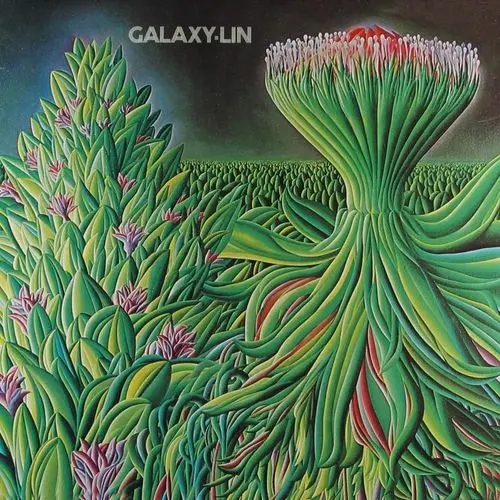 Galaxy-Lin released their self-titled debut album on August 15, 1974, on Polydor.
Galaxy-Lin presents the Amsterdam sextet’s unique merger of folk instrumentation, chamber textures, and jazz-inflected progressive rock. Mandolin and flute form the group’s tonal core, framed by light percussion, syncopated bass, and flowing vocal arrangements. The album combines lyrical introspection with cinematic, Eastern-tinged passages that alternate between pastoral calm and rhythmic urgency.
Vocalist Rudy Bennett fronts the ensemble with expressive, resonant phrasing while mandolinist Hugo van Haastert anchors the harmonic interplay alongside flutist–saxophonist Dick Remelink. Bassist Peter Wassenaar and drummer Peter Rijnvis establish flexible rhythmic pacing with dynamic flourishes and subtle percussive color.
Robbie van Leeuwen wrote six tracks, dual-credited as producer (under his real name) and vocalist (under the Anglicized Rudy Bennett pseudonym). They cover songs by Pentangle (“Travelling Song”) and the musical Oliver! (“Boy for Sale”).
A1. “Travelling Song” (5:08)
A2. “Boy for Sale” (2:58) opens with Spanish guitar filigree; tightens into a medium-slow instrumental ballad (in D minor) with plucked mandolin/guitar patterns and shakers.
A3. “Mean Love” (4:47)
A4. “Rain and Snow” (5:23)
B1. “Utopia” (5:31) opens with rattling cymbal mist and harp-like guitar strokes, cuts to a Latin-jazz verse with plucked mandolin and sentimental sax lines (Dm→Gm); quasi-Oriental bridge with simmering guitar and booming gong.
B2. “I Look at My Watch” (5:33) sound-off intro (in G minor) with cymbals, staccato guitar, and fuzzy sax sustain; gritty impassioned vocals, punchy sax interjections; sensitive flute solo cuts to aggressive, roaming sax showcase. Revved percussive outro with double-tracked fuzzy leads. The lyrics emphasize the strains of time in a fading romance.
B3. “Curiosa” (6:30) opens with another quasi-Oriental motif with brisk guitar/mandolin plucking and gong flourishes (Jade Warrior vibes). Tight moderate verse (in G) of strummed mandolin overlaid with picked, lyrical leads. Bridge: plucked, interwoven mandolin filigree and triangles. Second half: tighter verse with hopping rhythmic pattern and crisp, flowing tenor sax.
Sessions occurred at Phonogram Studios in Hilversum with guitarist–composer Robbie van Leeuwen producing under his own name and doubling as vocalist under the Bennett alias. Engineer John Sonneveld handled recording and photography.
The cover, designed by Bas Kloens, depicts a greenfield of alien shrubbery.
Polydor issued Galaxy-Lin on August 15, 1974, and promoted it with “Travelling Song” (b/w “Utopia”), which introduced their blend of mandolin-driven folk-rock and orchestral pop elements to Dutch audiences.
“G”
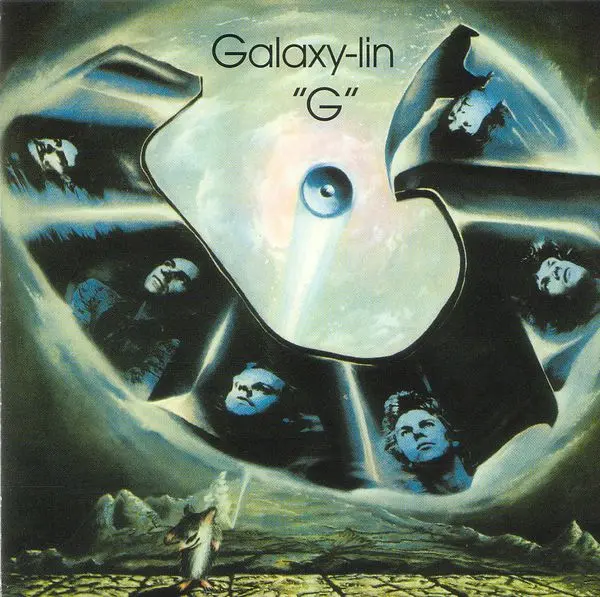 Galaxy-Lin released their second album, “G,“ in September 1975 on Polydor.
G refines Galaxy-Lin’s fusion of chamber instrumentation and progressive song form with denser arrangements and greater use of electric keys. The band’s mandolin–flute interplay now operates within a layered studio sound that alternates between pastoral reflection and ornate rhythmic passages. The music balances folk-rooted textures with jazz-rock sophistication, revealing a broader dynamic range than their debut.
Rudy Bennett leads with clear, emotive phrasing supported by mandolinist Hugo van Haastert and reedist Dick Remelink, whose flute and saxophone lines give the album its contrasting lyricism and bite. Bassist Peter Wassenaar and drummer Peter Rijnvis handle the shifting rhythmic contours with assurance and restraint, complementing the album’s suite-like flow.
Side B contains two three-part suites, both composed by Robbie van Leeuwen, who also wrote the single sides “Long Hot Summer” and “Don’t.” Side A contains the group-written “I Know My Baby” and their second Pentangle cover, “Hunting Song.”
A1. “I Know My Baby” (5:16)
A2. “Long Hot Summer” (4:51) nocturnal opener of rhythmless Fender Rhodes and flute signals a mid-tempo verse (in A minor) with cymbal-driven keys and measured, contoured vocal lines. Accelerates for a keyboard solo, handled with bold, roaming dexterity amid channeled guitar leads and foregrounded rhythmic push.
A3. “Hunting Song” (5:07) originated on Basket of Light, Pentangle’s 1969 third album. Galaxy-Lin’s version is a melodramatic ballad with poignant, impassioned vocals and call-and-response refrains across a filigree of piano and faint plucked guitar. Tight rhythmic backing ensues for a tradeoff of lyrical sax solos and a dual mandolin spotlight.
A4. “Don’t” (3:10)
B1. “Bizarre” (8:07) slow intro of flute and musical-box glockenspiel (in G minor), joined by duo-plucked mandolin. Intensifies with medium-slow bluesy licks, which alert to a martial sequence of snare/flute trade-offs, followed with cocktail runs across a foregrounded bass figure. Second part: flute and mandolin entwine across a cymbal-rattling bass pattern (ascending from E minor). Third part: phased roaming bassline ensnared in chime-like cymbals and windy sounds; cut abruptly to the reinstated musical box intro, overwhelmed with synth-treated blues licks to the fadeout.
— a. “Bizarre”
— b. “Yquem”
— c. “Finale”
B2. “Ode to the Highways” (7:53) strummed mandolin heralds a driving mid-tempo pattern (Am→Dm) of bass, piano, and organ; soon overlaid with fluid sax. Bridge: flowing sequence of mandolin, plucked flanged guitar, organ, and melodica (in G with dominant thirds). Restart (at 4:30) with soft piano etude. New medium-uptempo pattern of melodica-organ lines and xylophone accents. The second pause (at 6:45) precedes a mandolin showcase with filigree countered by reverse tape.
— a. “Ode to the Highways”
— b. “The Entertainer”
— c. “Mandolin Morning”
Sessions took place at Phonogram Studios in Hilversum with Robbie van Leeuwen producing and arranging. He coordinated the ensemble’s layered sound, adding electric and acoustic guitars to reinforce the harmonic base.
The sleeve features artwork by Frans Erkelens with front-cover photography by Roger Everiss, depicting each member between a gap in a damaged underwater rotor.
Polydor promoted G with two singles: “Hunting Song” backed with “Don’t,” followed by “Long Hot Summer” backed with “Fool.” Both releases highlighted the band’s balance of ornate craftsmanship and melodic restraint, sustaining their presence on the Dutch progressive scene into late 1975.
Postlude
Ruud van de Berg teamed with Trace keyboardist Rick Van Der Linden (another Ekseption alumnus) in Mistral, an electro space-pop project that cut six singles on CNR, including the 1977 hit “Jamie,” a synth-trance number with airy vocals by Sylvia van Asten (ex-Zodiac), promoted with Bugaloo-attired performances on Dutch television.
Dick Remelink played on the 1976 third Trace album, The White Ladies, and rejoined Ekseption for a 1978 one-off.
Hugo Van Haastert released two late-Seventies solo schlager singles.
Skip van Rooy played for the Future World Orchestra, an electronic producer project that yielded two albums in 1982/83 on Dureco Benelux.
Peter Wassenaar surfaced in the mid-Eighties AOR band Jody’s Private Luxury.
Discography:
- Galaxy-Lin (1974)
- “G” (1975)
Sources:
Artist/Album Pages:
Pat Rebillot (born April 21, 1935) is an American keyboardist, arranger, and producer who played ...
Bastard was a German hard-rock band that debuted with the 1977 NOVA album Back to the Nature, foll...
Barbara Dickson (born Sept. 27, 1947) is a Scottish folk/pop vocalist and actress who first entere...
Olli Ahvenlahti is a Finnish jazz-rock keyboardist, active since the early 1970s. In 1975, he part...
Kilburn and the High Roads were an English R&B/rock band from London, active for five years pr...
Spiders Webb was an American soul-funk band that released the 1976 Fantasy album I Don't Know What...
Aztec Two-Step was an American folk-pop duo of singer-guitarists Rex Fowler and Neal Shulman. They...
Sea Level was an American jazz-rock band from Macon, Georgia, formed in 1976 by musicians from the...
Foxy was an American Latin-funk band from Miami that made four albums between 1976 and 1979 on Da...
Bonnie Tyler (June 8, 1951 – July 8, 2026) was a Welsh soul-pop singer who emerged with the 1977 a...
Murasaki was a Japanese hard-rock band from the island of Okinawa. They made the 1975/76 Bourbon a...
Janusz Muniak (June 3, 1941 – January 31, 2016) was a Polish jazz saxophonist, flutist, and compos...