

Trace was the Dutch symphonic-rock trio behind the 1974/75 Philips albums Trace and Birds and the 1976 Vertigo title The White Ladies. Keyboardist Rick van der Linden came from Ekseption. Drummer Pierre van der Linden (no relation) played with Brainbox and Focus.
Members: Rick van der Linden (vocals, keyboards, Hammond organ, clavinet, pianet, synthesizer, harpsichord, mellotron, organ), Jaap van Eik (bass), Pierre van der Linden (drums), Ian Mosley (drums, 1975)
Background
Trace formed in 1973 in Den Dolder, Utrecht, Netherlands, as a keyboard-driven progressive rock trio conceived by multi-instrumentalist Rick van der Linden (keyboards, Hammond organ, clavinet, Pianet, synthesizer, harpsichord, Mellotron, organ), formerly of Ekseption. He was joined by bassist/guitarist Jaap van Eik and drummer Pierre van der Linden, both seasoned players in the Dutch rock and jazz scenes.
Keyboardist Rick van der Linden (b. August 5, 1946, Badhoevedorp, North Holland) was raised in a musically supportive household and trained extensively in classical piano and organ. After early studies at the Haarlem Conservatory and the Royal Conservatory in The Hague—where he graduated with honors in piano, organ, harmony, and counterpoint—he pursued dual interests in classical and popular music. While performing in jazz ensembles like the Occasional Swing Combo and playing concerti with symphony orchestras, he developed an approach that fused rock’s rhythmic drive with baroque and romantic sensibilities. In 1966, he joined Rein van den Broek’s InCrowd, soon renamed Ekseption, where his Bach-inspired rock arrangements brought the group international acclaim. After seven albums and extensive touring across Europe, Rick left Ekseption in 1974 to form a new project that would allow full freedom of expression at the keyboard.
Drummer Pierre van der Linden (b. February 19, 1946, Amsterdam) was already one of the Netherlands’ most accomplished percussionists. The son of actor Ab van der Linden, Pierre grew up steeped in the arts and began drumming as a teenager in early 1960s Amsterdam beat groups, including ZZ en de Maskers. In 1968, he co-founded Brainbox with Jan Akkerman and Cyril Havermans, marking his first major success. Three years later, he reunited with Akkerman in Focus, appearing on Moving Waves and Focus 3, and providing the thunderous propulsion behind the international hit “Hocus Pocus.” He left Focus in late 1973 and, by coincidence of surname but no relation, joined his cousin-in-law Rick’s new trio. Pierre’s hybrid jazz–rock technique—open-tuned drums, fluid tempo phrasing, and a mix of traditional and matched grip—proved a perfect complement to Rick’s ornate keyboard work.
Bassist Jaap van Eik (b. The Hague, South Holland) spent part of his childhood in Venezuela before returning to the Netherlands, where he began playing guitar at fourteen and switched to bass three years later “because in those days there were always too many guitarists.” A self-described admirer of Jack Bruce, Jeff Beck, and Stevie Wonder, Jaap earned a reputation in the late 1960s and early 1970s as one of Holland’s most versatile bassists. He recorded and toured with Cuby + Blizzards, Blues Dimension, The Motions, and Solution, and played on Jan Akkerman’s 1972 solo debut Profile. Known for using the bass as a melodic voice, Jaap also doubled on guitar within Trace, expanding the trio’s tonal reach.
The three musicians first convened in late 1973, rehearsing at Rick’s Den Dolder home studio, where they began blending classical, rock, and jazz idioms into extended instrumental forms. Their technical mastery and existing reputations quickly attracted label interest, leading to a contract with Philips Records. Before recording their debut album, Trace entered the studio in May 1974 to cut a debut single—a spirited reinterpretation of Dizzy Gillespie’s Latin-jazz staple “Tabu”, backed with Rick’s originals “Progress” and “Synti.” Issued that July, the single previewed the group’s high-energy interplay and contrapuntal precision.
Trace debuted live on Dutch television later that year, followed by select concert appearances that showcased Rick’s elaborate multi-keyboard rig and the trio’s tightly structured yet spontaneous arrangements. Their first LP, Trace, recorded that summer at Soundpush Studios in Blaricum, confirmed the band’s stature as the Netherlands’ premier symphonic rock act.
Trace
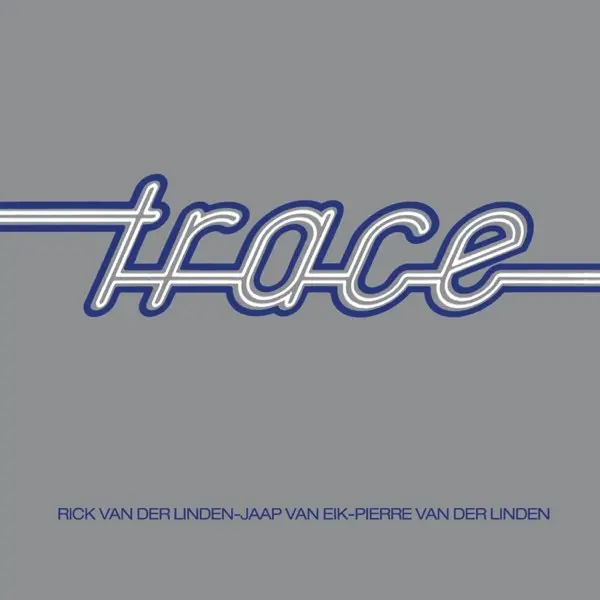 Trace released their self-titled debut album in September 1974 on Philips (Netherlands) and Sire (US).
The album presents Trace’s trademark blend of classical and progressive rock, led by ex-Ekseption keyboardist Rick van der Linden with bassist Jaap van Eik (Cuby and the Blizzards) and drummer Pierre van der Linden (Focus). Recorded as an instrumental trio, Trace channels symphonic grandeur through virtuosic keyboard displays and high-energy interplay in the manner of ELP and Refugee, with moments of humor and precision unique to Dutch prog.
Rick van der Linden composed most of the album, adapting baroque and romantic motifs into dynamic rock frameworks. Van Eik and Pierre van der Linden contributed three numbers, while Rick arranged the Bach-derived opener “Gaillarde.”
The album opens with “Gaillarde,” a brisk reworking of Bach’s Italian Concerto BWV 971, driven by organ and Mellotron exchanges over tightly woven bass and drum patterns. “Gare le Corbeau,” written by Jaap van Eik, rides a clipped rhythm and angular bassline before segueing into a reprise of “Gaillarde,” which expands the main theme with harpsichord flourishes and rapid organ passages. “The Death of Ace” contrasts with its solemn piano introduction, slow-building Mellotron layers, and shifting time signatures, while “The Escape of the Piper” races through bagpipe-toned organ runs and brisk tempo shifts. “Once” features quick piano exchanges and jazz-inflected bass accents.
Side B centers on the 12-minute “Progression,” an elaborate, multi-part suite where Rick alternates between clavinet, Moog, and Hammond in shifting rhythmic modes, balanced by Pierre’s explosive fills and Van Eik’s nimble counterlines. The closing sequence (“A Memory,” “The Lost Past,” “Final Trace”) ranges from atmospheric synth passages and a drum solo feature to a final, organ-dominated coda.
A1. “Gaillarde” (6:07) — adapts J.S. Bach’s Italian Concerto BWV 971 and a traditional Polish dance, arranged by Rick van der Linden
A2. “Gare le Corbeau” (2:02)
A3. “Gaillarde” (4:55)
A4. “The Death of Ace” (5:13)
A5. “The Escape of the Piper” (3:08)
A6. “Once” (4:11)
B1. “Progression” (12:02)
B2. “A Memory” (3:54)
B3. “The Lost Past” (3:27)
B4. “A Memory” (1:40)
B5. “Final Trace” (3:50)
Sessions occurred at Soundpush Studios in Blaricum with Trace producing and Jan Schuurman engineering.
Rick van der Linden plays grand piano, Hammond and church organs, Clavinet, Pianet, ARP synthesizer, Mellotron, ARP Solina string ensemble, harpsichord, pipe organ, and bagpipe. Jaap van Eik handles bass and electric guitar, and Pierre van der Linden plays drums and percussion.
Trace established the trio as a force in continental symphonic rock, noted for Rick’s classically anchored yet playful keyboard command and the group’s precision dynamic shifts, from stately baroque passages to full-bore progressive rock intensity.
Birds
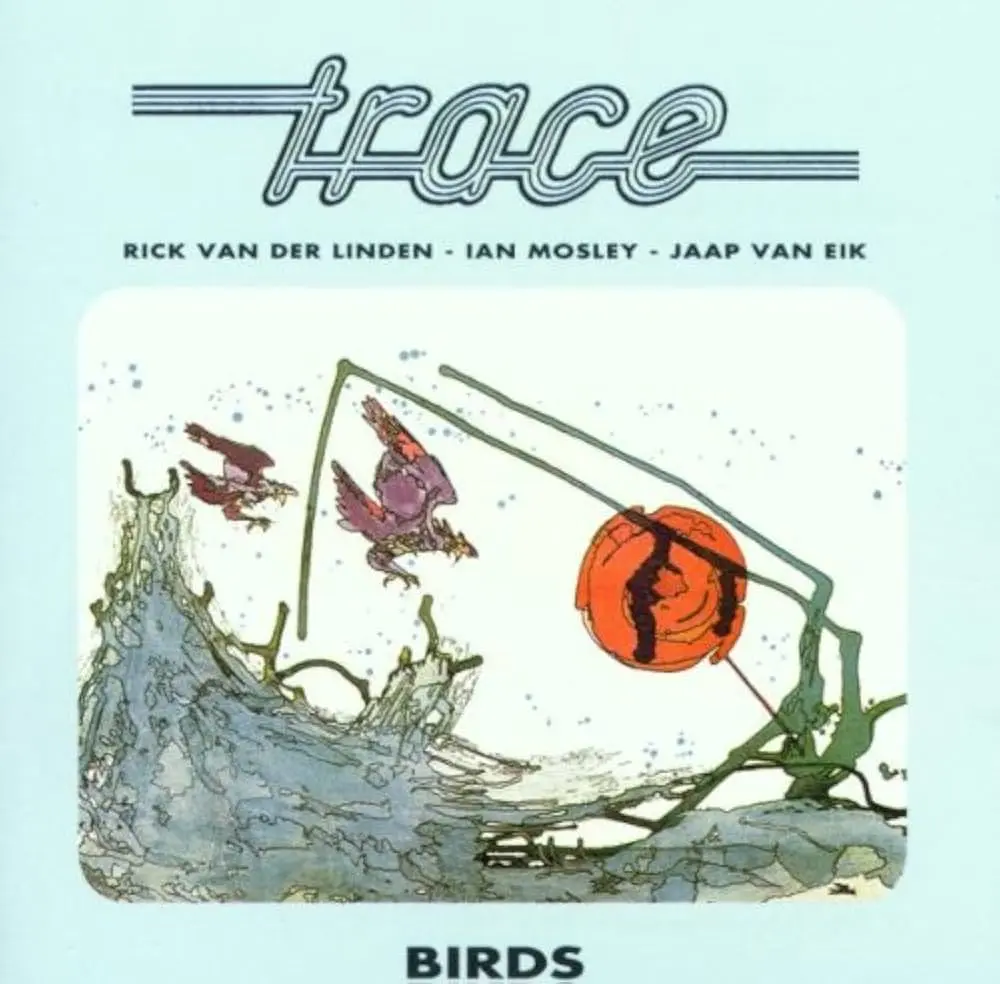 Trace released their second album, Birds, in September 1975 on Philips (Netherlands) and Sire (US).
The White Ladies
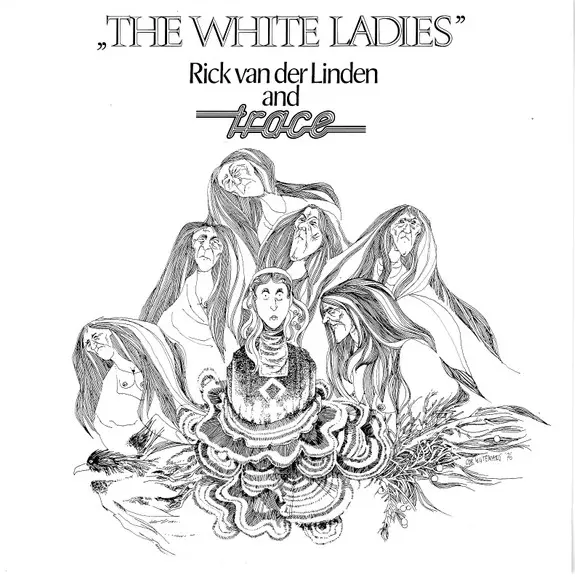 Trace released their third album, The White Ladies, in 1976 on Vertigo.
Discography:
- Trace (1974)
- Birds (1975)
- The White Ladies (1976)
Sources:
Artist/Album Pages:
John Martyn (September 11, 1948 — January 29, 2009) was an English singer/songwriter and guitarist...
Yusef Lateef (October 9, 1920 — December 23, 2013) was an American reedist and composer with a six...
Karma was an American Latin-jazz/funk super-group behind the 1976/77 albums Celebration and For Ev...
Pepe Sánchez y Su Rock Band were a Spanish Latin-jazz/rock band behind the 1976 Marfer album Regre...
Cybotron was an Australian electronic combo from Melbourne that released a 1976 self-titled album ...
Captain Beefheart was the performance moniker of Don Van Vliet (Jan. 15, 1941 — Dec. 17, 2010), an...
Mr. Big was an English hard-rock band from Oxford that made the 1975–77 EMI albums Sweet Silence a...
Jan Akkerman is the second solo album by Dutch classical/jazz-rock guitarist Jan Akkerman, released ...
Strapps was an English hard-rock band that made the 1976–78 Harvest albums Strapps, Secret Damage,...
Jimmy Ponder (May 10, 1946 — Sept. 16, 2013) was an American jazz guitarist from Pittsburgh who em...
Rainbow was an English hard-rock band formed by guitarist Ritchie Blackmore following his initial ...
Julian Priester (born June 29, 1935), also known as Pepo Mtoto, is an American trombonist from Ch...