

Bubble Puppy was an American psychedelic rock band from San Antonio, best known for their 1969 hit “Hot Smoke & Sasafrass.” They released one album, A Gathering of Promises, then changed their name to Demian for a 1971 self-titled effort on ABC–Dunhill.
Members: Rod Prince (guitar, vocals), David Fore (drums), Todd Potter (guitar), Roy Cox Jr. (bass, vocals)
Background
Bubble Puppy formed in 1966 when Bad Seeds guitarist–singer Rod Prince teamed with Mysterions bassist–singer Roy Cox. The Bad Seeds cut three 1965–66 singles for the Corpus Christi indie J-Beck Records. The Mysterions cut the 1965 single “Is It a Lie” (b/w “Why Should I Love You,” both Cox originals) for the San Antonian small-press Jox.
Cox and Prince teamed with Austin-bred guitarist–saxist Todd Potter. The initial lineup included Danny Segovia, the featured vocalist on 1962 rock–soul singles by The Sessions and The Reno Bops. Early member Clayton Pulley cleared for drummer David Fore. Their name derived from “Centrifugal Bumble-puppy,” a fictional children’s game in the 1932 dystopian novel Brave New World by English author Aldous Huxley.
In early 1967, Bubble Puppy signed with International Artists, a Houston-based indie that housed fellow Texan psych rockers the Red Crayola and the 13th Floor Elevators.
A Gathering of Promises
 Bubble Puppy released A Gathering of Promises in April 1969 on International Artists.
Guitarist Rod Prince co-wrote six songs with bassist Roy Cox and collaborated on the title track with ex-Bad Seeds bandmate Mike Taylor. Cox co-wrote “I’ve Got to Reach You” with rhythm guitarist Todd Potter, the author of “Todd’s Tune.” Side B contains “It’s Safe to Say,” written by Jim Mings of Austin rockers The Pack.
A Gathering of Promises balances sharp twin-lead interplay, stacked vocal harmonies, and studio-warped textures across a mix of tightly framed psych-rock and extended blues forms. “Hot Smoke and Sassafras” opens with compressed feedback and layered falsetto, while deeper cuts lean on contoured lines and slow-burning repetition. Tracks like “Beginning” and “Road to St. Stephens” draw strength from the Prince–Potter guitar axis, alternating between searing overdrive and latticework phrasings. Softer numbers (“It’s Safe to Say,” “A Gathering of Promises”) display folk inflections, though the album’s center leans toward compressed escalation and instrumental elongation.
A1. “Hot Smoke and Sasafrass” (2:30) – Opens with sustained feedback before tightening into a compact, fuzz-laden harmonized burst. The title (which misspells “sassafras”) stemmed from an episode of The Beverly Hillbillies.
A2. “Todd’s Tune” (3:07) – Rhythmically clipped; over-extended by a trailing fuzz solo.
A3. “I’ve Got to Reach You” (7:40) – Blues-inflected start gives way to harmonized vocals and long-form guitar escalation.
A4. “Lonely” (2:48) – Simpler structure with a pop contour, carried by vocal blend.
A5. “A Gathering of Promises” (2:26) – Lightly phased and folk-toned, with softened dynamics and acoustic underlay.
B1. “Hurry Sundown” (4:02) – Guitar-forward mid-tempo, marked by interlaced leads.
B2. “Elizabeth” (2:50) – Tighter form, accent on tandem lines and pacing.
B3. “It’s Safe to Say” (2:26) – Acoustic texture and group harmonies over a slow step rhythm.
B4. “Road to St. Stephens” (4:06) – Alternates between downbeat cadence and overlapping guitar lines.
B5. “Beginning” (3:45) – Modal phrasing and phase-shift accents cap the set with compressed tension.
Sessions occurred in the winter of 1968/69 at International Artists Recording Studios with engineer Hank Poole and producer Ray Rush, a veteran Roy Orbison soundman. The same pair oversaw the 13th Floor Elevators’ third studio album, Bull of the Woods.
A Gathering of Promises appeared in a single sleeve with a portrait shot of Bubble Puppy in period garb. Artist Bill Corbin III illustrated the backside: a felt-pen doodle of the band performing inside a gateway surrounded with psychedelic waves.
“Hot Smoke and Sasafrass” first appeared as a November 1968 single (b/w “Lonely”) and reached No. 14 on the Billboard Hot 100.
Name Change
After disappointing sales for A Gathering of Promises, Bubble Puppy split from International Artists in 1970 and relocated to Los Angeles under the management of Steppenwolf bassist Nick St. Nicholas. To sidestep contractual issues—and to distance themselves from the bubblegum connotation of their name—they rebranded as Demian, a reference to the 1919 Hermann Hesse novel suggested by St. Nicholas’s wife. The newly named group signed with ABC-Dunhill and issued a self-titled album in 1971.
Demian
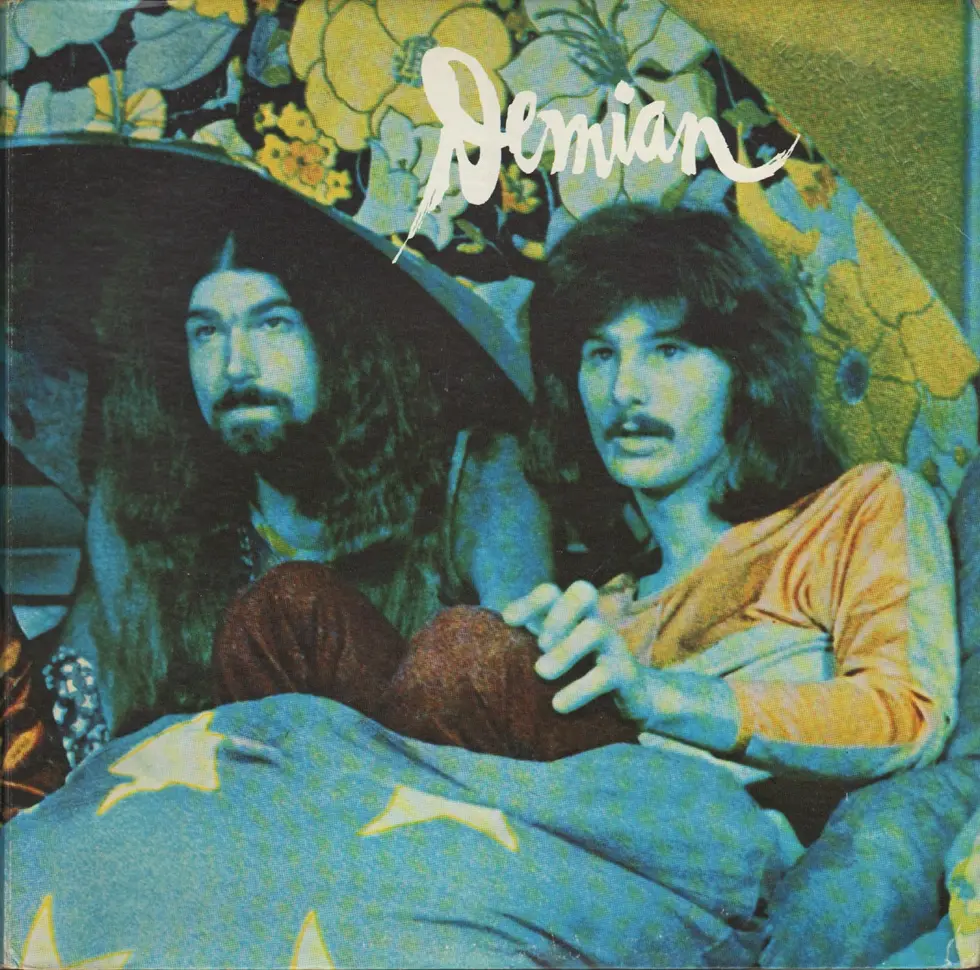 As Demian, the band released their second album in March 1971 on ABC–Dunhill.
Demian retains the Gathering of Promises lineup of bassist Roy Cox, drummer David Fore, and guitarist/singers Rod Prince and Todd Potter. Cox wrote the first two songs and co-wrote three (“Coming,” “No More Tenderness,” “Only a Loner”) with Prince. Potter submitted the three remaining songs, including a second iteration of “Todd’s Tune.”
The album shed’s most of Bubble Puppy’s acid-psych affects in favor of a leaner, riff-forward hard rock sound with latent blues inflection and twin-guitar interplay. Prince and Potter alternate between distortion-heavy leads and acoustic textures, anchored by Cox’s fluid bass phrasing and Fore’s responsive pulse. The writing emphasizes contrast: tight verses yield to stretching codas, and vocal passages often dissolve into instrumental dialogue. A live-in-studio atmosphere adds warmth and grit, lending spontaneity even to the more composed moments.
A1. “Face the Crowd” (2:35) – Opens with locked rhythm guitar and direct vocal phrasing; reminiscent of UK proto-metal acts but shaped by a distinctly looser American swing.
A2. “Windy City” (5:18) – Driven by a staggered, slow-burning riff and a standout lead break; the solo arcs with tactile phrasing, carried by a warm, low-set rhythmic push.
A3. “Love People” (2:49) – Acoustic-led with interlacing classical guitar; a subdued piece that strips the fuzz to spotlight tone and phrasing.
A4. “Coming” (5:30) – Shifts between slow rhythmic passages and upward-driving choruses; guitars alternate between atmospheric accents and unison runs.
B1. “Todd’s Tune” (3:19) – A tightened rework of the Gathering original; foregrounds negative space between phrases with more deliberate pacing.
B2. “No More Tenderness” (3:50) – Blends lyrical bitterness with a halting rhythmic foundation; short, clipped guitar figures frame the vocal.
B3. “Are You With Me Baby” (4:54) – Mid-tempo rocker with phased guitars and syncopated drive; builds around an angular chorus refrain.
B4. “Only a Loner” (4:35) – Closes with a heavy descent into blues-toned distortion and lyrical isolation; phrasing stretches in the instrumental breaks, lending a sense of weight and drift.
 Nick St. Nicholas produced the album in late 1970 at the Record Plant in Los Angeles, where Ford Theatre soundman Joe Zagarino engineered Demian between titles by B.B. King and Savage Rose. Joe’s assistant, Lillian Douma (credited as Llylliane) earned recent credits behind the James Gang and Mountain.
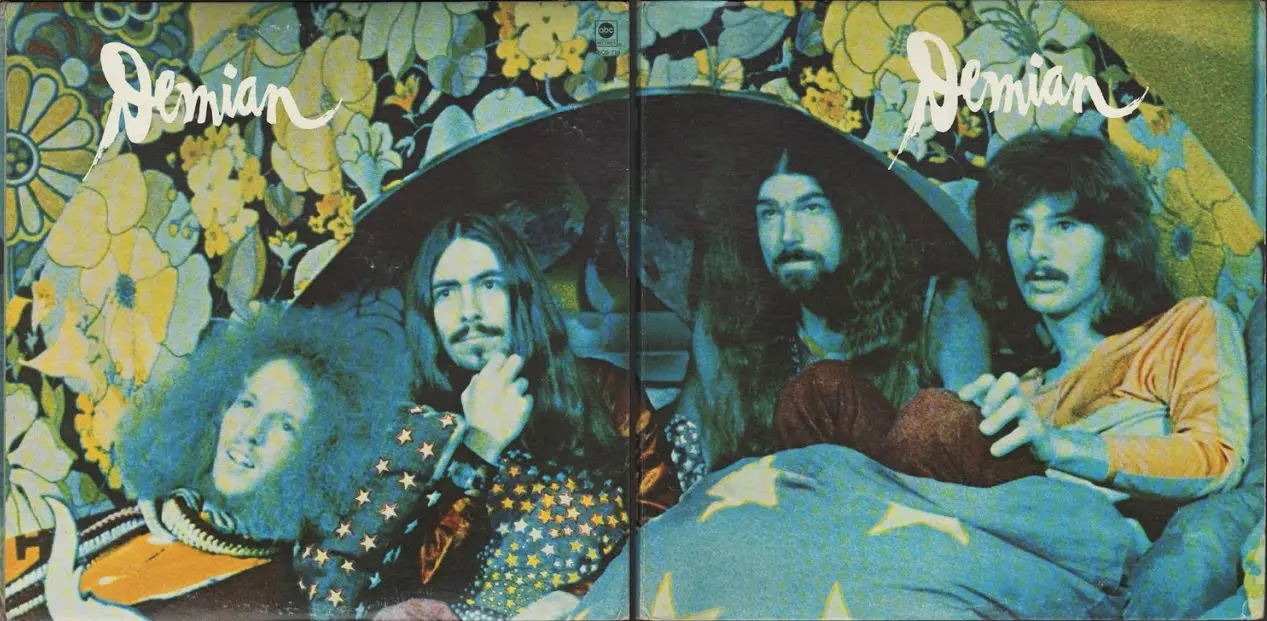
Demian appeared in a gatefold with a blue-tinted camper image of the long-haired quartet by photographer Bob Jenkins, whose images adorn 1970–72 covers for Beach Boys, Blues Image, Iron Butterfly, Providence, and The Wackers.
Later Activity
Rod Prince and Todd Potter formed Sirius, a hard-rock band that cut the 1979 album Rising on Texas one-press Ecric Flow.
David Fore surfaced in D-Day, an Austin punk band fronted by female singer De Lewellen. They cut the raunchy 1979 single “Too Young to Date” (b/w “Every Time I Ask You Out”) for Movement Productions. In 1983, they made a self-titled synthpop album on A&M.
Bubble Puppy reformed for the 1987 album Wheels Go Round, released in the UK on One Big Guitar.
Discography:
- A Gathering of Promises (1969)
- Wheels Go Round (1986)
Sources:
Artist/Album Pages:
Three Man Army was an English hard-rock trio that released the album A Third of a Lifetime on Pega...
Rolf Kühn (Sept. 29, 1929 – August 18, 2022) was a German clarinetist, composer, and bandleader wh...
The New York Dolls were an American hard-rock/glam band that released a self-titled album (produced ...
Gary Myrick is an American guitarist, singer, and songwriter from Dallas who made the 1980/81 Epi...
Kollektiv was a German jazz-psych/jam band that released a self-titled album on Brain in 1973. Tha...
Thors Hammer was a Danish jazz-rock band that issued a self-titled album on Metronome in 1971. M...
Kalevala was a Finnish art-rock/psych band from Helsinki that made the 1972 Finnlevy album People ...
Peter Bardens (June 19, 1945 — Jan. 22, 2002) was an English keyboardist, composer, and singer, best...
The Faces were an English hard-rock/soul band that released four studio albums between 1970 and 19...
Ford Theatre was an American psychedelic rock band behind the 1968/69 albums Trilogy for the Masse...
Clear Blue Sky was an English psychedelic hard-rock band from Acton that released a self-titled al...
Amnesty was an American funk band from Indianapolis that released two singles circa 1972/73 on Lam...