

Donny Hathaway (1945–1979) was an American soul singer, composer, and arranger who recorded for Atco between 1970 and 1973. His debut Everything Is Everything features “The Ghetto,” co-written with Leroy Hutson, while Donny Hathaway (1971) includes covers of “A Song for You” and “He Ain’t Heavy, He’s My Brother.”
He scored a signature hit with “This Christmas” and earned acclaim for Live (1972), recorded in New York and L.A. His collaborations with Roberta Flack—especially “Where Is the Love” and Roberta Flack & Donny Hathaway—cemented his legacy as a master of intimate, orchestrated soul.
Background
He was born Donny Edward Hathaway on October 1, 1945, in Chicago to Drusella Huntley, who later married Joseph Louis Bethany and bore Donny a half-sister, Jacqueline Holt. Donny grew up in St. Louis, Missouri, in the care of his grandmother, gospel singer Martha Pitts. He sang in church choir from age three and eventually took up piano. In 1963, he graduated from Vashon High School.
Hathaway attended Howard University on a fine arts scholarship. His roommate, drummer Ric Powell, led a trio that became Donny’s backing band. In 1967, Hathaway landed work at Curtom, a Chicago soul label founded by Impressions frontman Curtis Mayfield. At Curtom, Hathaway arranged the 1968–69 Unifics singles “Court of Love” and “The Beginning of My End.”
As a recording artist, Hathaway debuted with “I Thank You Baby,” a duet with singer June Conquest (billed as June & Donny). Mayfield co-wrote and produced the song, which features “What’s This I See” as the flipside. At a subsequent trade convention, Hathaway impressed Atlantic staffer King Curtis, who signed Donny to the label’s ATCO division.
In October 1969, Hathaway made his solo debut with “The Ghetto,” a two-part single co-written Leroy Hutson, Donny’s Howard classmate who later replaced Mayfield in the Impressions. Hathaway co-produced his first album with Powell.
Everything Is Everything
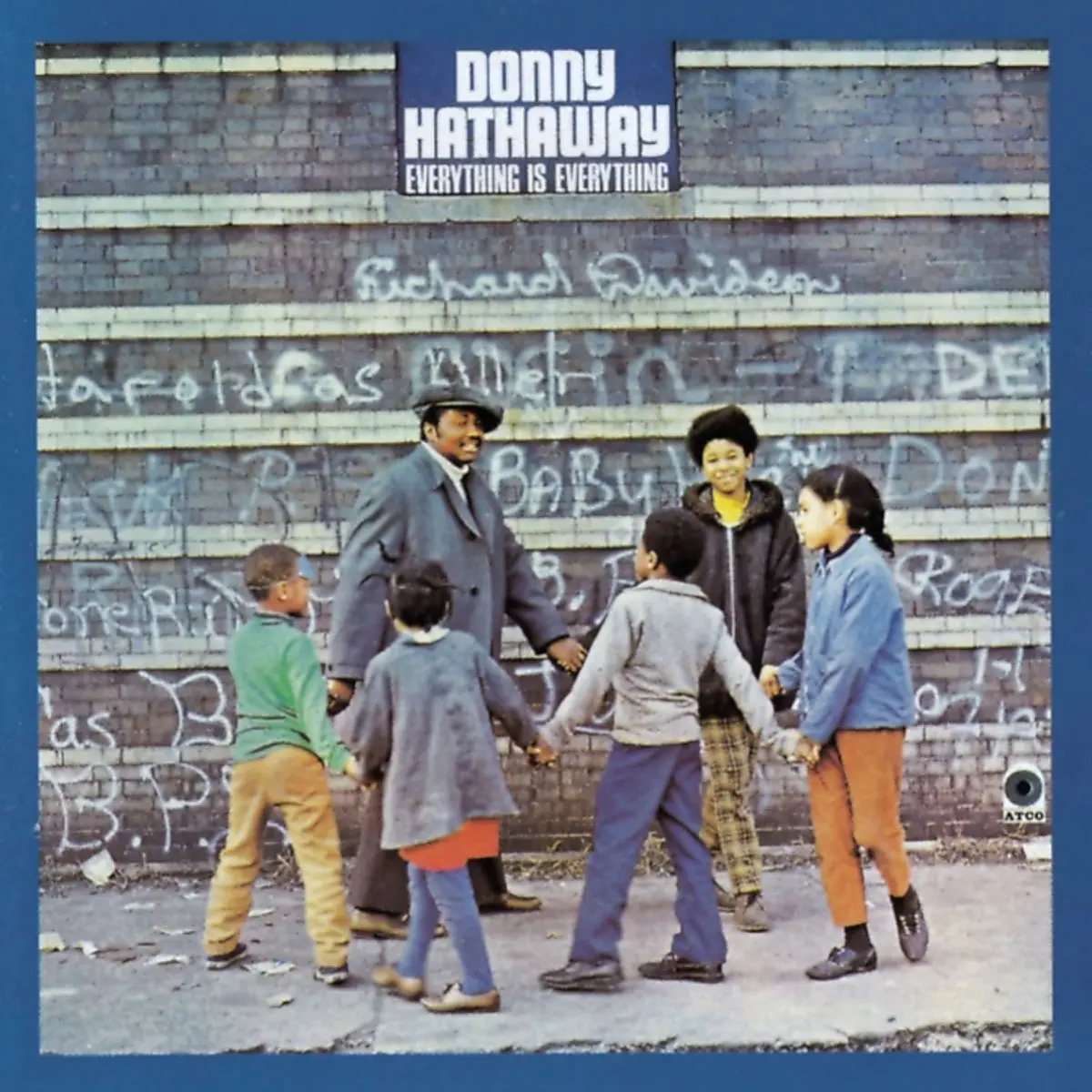 Donny Hathaway released his debut album, Everything Is Everything, in July 1970 on Atco.
The album pairs soul and gospel-rooted vocal performances with expansive, jazz-informed arrangements. It blends ballads, social commentary, and extended instrumental passages, establishing Hathaway as both a commanding vocalist and bandleader.
Hathaway sings lead and backing vocals and plays piano, Wurlitzer electric piano, organ, keyboard bass, and bass. His core collaborators include drummer Ric Powell, guitarist and bassist Phil Upchurch, bassist Louis Satterfield, drummer Morris Jennings, bassist Willie Weeks, and conga player Master Henry Gibson.
Hathaway wrote or co-wrote five of the album’s nine tracks, including two with Howard University associate Leroy Hutson. He covers Ray Charles (“I Believe to My Soul”), Nina Simone (“To Be Young, Gifted and Black”), and Erroll Garner (“Misty”).
The opening numbers “Voices Inside (Everything Is Everything)” and “Sugar Lee” serve as instrumental showcases with short vocal passages, while “The Ghetto” extends that format with handclaps, ambient background chatter, and Hathaway’s vocal interjections. “Tryin’ Times” casts a direct message of tolerance and unity over steady mid-tempo rhythm. “Thank You Master (For My Soul)” channels traditional gospel cadences, culminating in a forceful closing vocal. “Je Vous Aime (I Love You)” presents a romantic waltz with layered backing harmonies. Hathaway ends the set with a reinterpretation of Simone’s “To Be Young, Gifted and Black,” adding organ fills and an impassioned vocal lament.
A1. “Voices Inside (Everything Is Everything)” (3:28) — Written by Richard Evans, Ric Powell, and Phil Upchurch, the piece introduces Hathaway’s sound world with rhythmic drive and brass punctuations.A2. “Je Vous Aime (I Love You)” (3:31) — Hathaway, Leroy Hutson, and Edward Kennedy wrote this ballad, featuring multi-tracked vocals by Hathaway and a dedication to his wife Eulaulah.A3. “I Believe to My Soul” (3:51) — A Ray Charles R&B classic first released in 1959 as a B-side to “Let the Good Times Roll.” Hathaway transforms it with gospel inflections and call-and-response horn charts.A4. “Misty” (3:38) — A 1954 Erroll Garner instrumental standard with later lyrics by Johnny Burke, popularized in 1959 by Johnny Mathis. Hathaway reworks it as a soul torch song with organ accents.A5. “Sugar Lee” (4:05) — A Hathaway–Powell composition built on percussive layering and instrumental interplay.A6. “Tryin’ Times” (3:15) — Co-written with Leroy Hutson, this number delivers a message of social awareness and shared responsibility.B1. “Thank You Master (For My Soul)” (5:50) — Hathaway channels church tradition in a fervent testimonial performance.B2. “The Ghetto” (6:50) — Hathaway and Hutson penned this extended urban tableau, originally released as a single in 1969. It features Hathaway’s Wurlitzer, Gibson’s conga solo, ambient street sounds, and vocal exclamations.B3. “To Be Young, Gifted and Black” (6:43) — Originally by Nina Simone with lyrics by Weldon Irvine, the 1970 hit is reimagined by Hathaway with sustained organ tones and a lamenting vocal coda.
A1. “Voices Inside (Everything Is Everything)” (3:28) – Written by Richard Evans, Ric Powell, and Phil Upchurch. Hathaway builds a circular rhythmic pattern around layered horn phrases and electric piano, his voice emerging as both instrument and invocation. The lyric frames unity as spiritual necessity, while the ensemble’s shifting pace reflects the search for order within collective unrest.
A2. “Je Vous Aime (I Love You)” (3:31) – Written by Donny Hathaway, Leroy Hutson, and Edward Kennedy. A waltz-time declaration dedicated to Hathaway’s wife, Eulaulah, who also sings background vocals. The arrangement blends delicate phrasing with suspended harmonies, turning a simple expression of love into a meditation on constancy and faith.
A3. “I Believe to My Soul” (3:51) – Written by Ray Charles, first issued by Charles in 1959. Hathaway reimagines the piece with intensified rhythm and call-and-response horns. His phrasing transforms Charles’s lament of betrayal into a tense dialogue between accusation and endurance.
A4. “Misty” (3:38) – Originated as a 1954 instrumental by pianist Erroll Garner, with lyrics later added by Johnny Burke. Hathaway’s version reshapes the standard through elastic pacing and layered keys, replacing its lounge intimacy with a sense of devotional focus and personal reflection.
A5. “Sugar Lee” (4:05) – Written by Hathaway and Powell. A free-form instrumental led by intersecting horn lines and percussive drive. The track unfolds like a studio jam, built around Hathaway’s quick tonal shifts and conversational exchanges between rhythm and brass.
A6. “Tryin’ Times” (3:15) – Written by Hathaway and Hutson; previously recorded by Roberta Flack and Pops Staples. The lyric calls for compassion amid social strain, delivered through deliberate pacing and restrained instrumentation. Hathaway’s voice moves between resignation and insistence, embodying both witness and participant in the tension he describes.
B1. “Thank You Master (For My Soul)” (5:50) – Written by Hathaway. A contemporary psalm that fuses gospel improvisation with orchestral discipline. His vocal ascent, framed by brass and piano counterpoint, grows into a sustained act of gratitude and awe.
B2. “The Ghetto” (6:50) – Written by Hathaway and Hutson. Released first as a 1969 single, the piece combines jazz rhythm structures with Afro-Cuban percussion and documentary sound—street chatter, handclaps, a baby’s cry. Mostly instrumental, it functions as both portrait and protest, its chant of the title grounding a vivid sonic panorama of Black urban life.
B3. “To Be Young, Gifted and Black” (6:43) – Written by Nina Simone and Weldon Irvine, first introduced by Simone at the 1969 Harlem Cultural Festival. Hathaway’s arrangement retains Simone’s message of pride and resilience but tempers it with lamentation. His organ lines and choral refrains carry the song from public affirmation to private prayer.
Bonus track:
10. “A Dream” (4:14) – Written by Robert Ayers and Hathaway. A quiet reverie that blurs fantasy and waking sorrow, structured around slow rhythmic repetition and elliptical harmonies. The lyric’s imagined love collapses into self-awareness, leaving the closing chords unresolved.
Sessions occurred at Ter-Mar Studios in Chicago with Hathaway and Ric Powell as producers and Murray Allen and Roger Anfinsen as engineers. Additional players comprise a full brass and reed section with King Curtis (guitar), Clifford P. Davis (alto saxophone), Don Myrick (alto saxophone), Johnny Board and Lenard Druss (tenor saxophone), Willie Henderson (baritone saxophone), Oscar Brashear (trumpet), Robert A. Lewis (trumpet), John Howell (trumpet), Morris Ellis and John Avant (trombone), Aaron Dodd (tuba), Cyril Touff (bass trumpet), and Ethel Merker, John Lounsberry, and Paul A. Teryett (French horns).
Atco promoted Everything Is Everything with “The Ghetto” (b/w “The Ghetto Pt. 2”), issued in 1969, which reached No. 23 on the Billboard R&B chart and No. 87 on the Hot 100.
“The Ghetto” was later covered by George Benson with Joe Sample on Absolute Benson (2000) and by Leroy Hutson as “The Ghetto ’74” on The Man! (1973).
Donny Hathaway
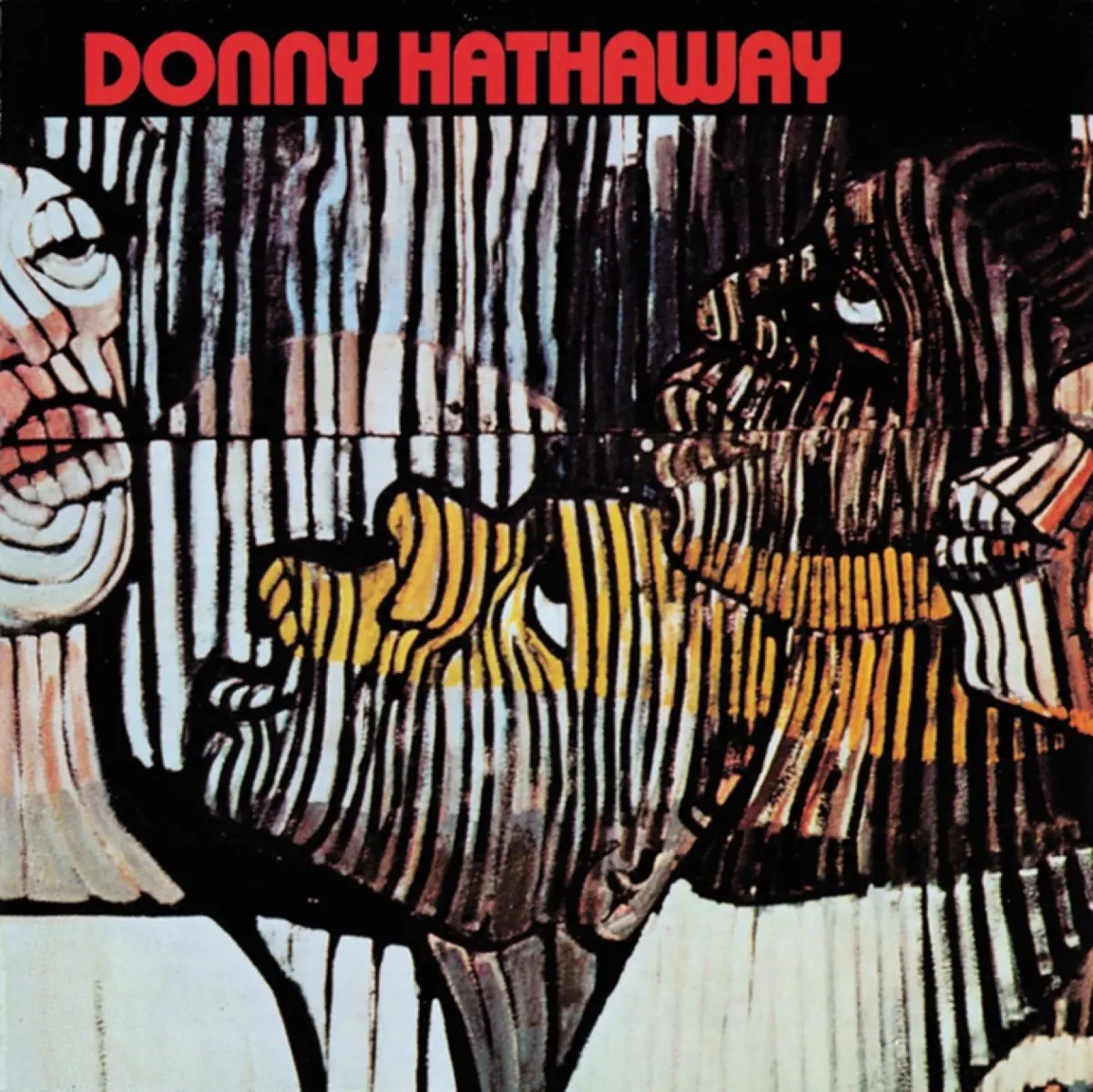 Donny Hathaway released his self-titled second album on April 2, 1971, on Atco.
The album places Hathaway’s impassioned vocal and keyboard work in a spare, gospel-inflected soul setting. It focuses on slow, hymnlike interpretations of contemporary songs alongside one original, contrasting the broader stylistic range of his debut with a moodier, reflective tone.
Hathaway sings lead vocals and plays piano and keyboards throughout. The backing band features guitarist Cornell Dupree, bassist Chuck Rainey, drummer Al Jackson Jr., tenor saxophonist King Curtis, and trumpeter Joe Newman. Additional personnel include guitarist John Littlejohn, drummer Morris Jennings, bassist Steve Novosel, bassist Phil Upchurch, percussionist Jack Jennings, and a chorus of backing vocalists that includes Cissy Houston, Judy Clay, Sylvia Shemwell, Myrna Smith, Ronnie Bright, Sammy Turner, Myrna Summers, Deirdre Tuck Corley, Ivory Stone, and Lillian Tynes.
Hathaway wrote one song, “Take a Love Song,” with lyricist Nadine McKinnor. He covers songs popularized by Gladys Knight & the Pips (“Giving Up”), Leon Russell (“A Song for You”), Billy Preston (“Little Girl”), the Hollies (“He Ain’t Heavy, He’s My Brother”), Dorsey Burnette (“Magnificent Sanctuary Band”), George S. Clinton (“She Is My Lady”), Mac Davis (“I Believe in Music”), and Ocean (“Put Your Hand in the Hand”).
The album opens with “Giving Up,” a drawn-out ballad centered on a quietly pulsing rhythm and Hathaway’s escalating vocal lines. “A Song for You” unfolds as a measured piano lament over soft orchestration, while “Little Girl” layers male choral harmonies over a steady rhythm. “Magnificent Sanctuary Band” provides the set’s most buoyant moment, aligning a gospel choir with brisk pacing. “He Ain’t Heavy, He’s My Brother” receives a restrained, solemn reading that strips the song to its emotional core. “I Believe in Music” lightens the tone with mid-tempo rhythm, while “Put Your Hand in the Hand” closes on a choir-led affirmation.
A1. “Giving Up” (6:20) — Written by Van McCoy and first recorded in 1964 by Gladys Knight & the Pips. A slow ballad of romantic surrender with extended vocal phrases and sustained organ tones.A2. “A Song for You” (5:25) — Written and first recorded in 1970 by Leon Russell. Hathaway reworks the piece as a piano-centered lament with orchestral embellishment.A3. “Little Girl” (4:47) — Written by Billy Preston. A gospel-leaning testimonial with ensemble backing vocals.A4. “He Ain’t Heavy, He’s My Brother” (5:55) — Written by Bobby Scott and Bob Russell, first recorded in 1969 by Kelly Gordon and made famous later that year by the Hollies. Hathaway pares it down to a spare, prayerful setting.A5. “Magnificent Sanctuary Band” (4:24) — Written by Dorsey Burnette. A driving gospel number with call-and-response vocals.B1. “She Is My Lady” (5:33) — Written by George S. Clinton. A romantic slow-burn ballad with flowing piano lines.B2. “I Believe in Music” (3:38) — Written and first recorded in 1970 by Mac Davis. Hathaway delivers a warm, mid-tempo reading.B3. “Take a Love Song” (4:53) — Written by Donny Hathaway and Nadine McKinnor. A devotional piano ballad with understated backing.B4. “Put Your Hand in the Hand” (3:49) — Written by Gene MacLellan, first recorded in 1970 by Anne Murray and popularized that year by Ocean. Hathaway frames the song as a rolling gospel piece with choir responses.
A1. “Giving Up” (6:20) – Written by Van McCoy; originated as a 1964 single by Gladys Knight & the Pips. Hathaway reshapes McCoy’s tale of romantic surrender into an extended act of reckoning. His pacing draws each line toward confession, while organ, strings, and restrained brass trace the slow unraveling of devotion.
A2. “A Song for You” (5:25) – Written by Leon Russell; first recorded on Russell’s 1970 debut Leon Russell. Hathaway interprets the song as a private address rather than a performance, unfolding its plea for forgiveness with controlled intensity. Arif Mardin’s orchestration shadows the vocal phrasing, creating the sense of a prayer carried by echo rather than accompaniment.
A3. “Little Girl” (4:47) – Written by Billy Preston; first recorded for his 1970 album Encouraging Words. Hathaway emphasizes the lyric’s tenderness through gradual build and unforced rhythm. Choral accents and Hammond organ deepen its devotional tone, aligning romantic care with spiritual guardianship.
A4. “He Ain’t Heavy, He’s My Brother” (5:55) – Written by Bob Russell and Bobby Scott; originated as a 1969 single by Kelly Gordon and popularized the same year by the Hollies. Hathaway pares away the sentimentality of earlier versions, voicing solidarity as endurance rather than sympathy. His phrasing alternates restraint and expansion, transforming the refrain into an act of lived compassion.
A5. “Magnificent Sanctuary Band” (4:24) – Written by Dorsey Burnette. Hathaway turns Burnette’s composition into a collective summons, framed by rhythmic drive and layered choir. The song moves with the cadence of a revival procession, merging civic and spiritual renewal into one continuous motion.
B1. “She Is My Lady” (5:33) – Written by George S. Clinton. Hathaway treats Clinton’s lyric as a quiet affirmation, sustained by subdued pacing and luminous chord turns. His vocal inflections shift between admiration and humility, tracing love as both solace and surrender.
B2. “I Believe in Music” (3:38) – Written by Mac Davis; originally recorded for Davis’s 1970 album I Believe in Music. Hathaway tempers Davis’s optimism with meditative poise, his rhythm section maintaining an unhurried pulse beneath a hymnlike refrain. The song becomes less declaration than faith reaffirmed through endurance.
B3. “Take a Love Song” (4:53) – Written by Donny Hathaway and Nadine McKinnor. The album’s lone self-penned piece, it distills Hathaway’s recurring themes of devotion and renewal. The pacing is deliberate, with voice and electric piano moving in parallel contours that frame love as redemptive act rather than fleeting sentiment.
B4. “Put Your Hand in the Hand” (3:49) – Written by Gene MacLellan; first recorded by Anne Murray in 1970 and popularized by Ocean the following year. Hathaway transforms it from pop hymn into a communal statement, expanding its call for trust into a chorus of affirmation led by full choir and firm rhythmic stride.
Bonus tracks:
10. “Be There” (3:02) – Written by Donny Hathaway and Charles Ostiguy. A compact study in warmth and patience, carried by clean harmonic pacing and understated rhythm. The lyric’s promise of constancy is rendered through simplicity rather than emphasis.
11. “This Christmas” (3:51) – Written by Donny Hathaway (as Donny Pitts) and Nadine McKinnor; first released as a single in 1970. Conceived to expand the representation of Black joy in holiday music, the song celebrates fellowship and anticipation through crisp rhythmic motion and ascending horn lines, closing the set in radiant affirmation.
Sessions occurred at Atlantic Studios in New York, Criteria Studios in Miami, and Universal Studios in Chicago with Jerry Wexler, Arif Mardin, and Donny Hathaway as producers. Engineering was handled by Howard Albert, Murray Allen, Ron Albert, Gene Paul, and Jimmy Douglass. Arif Mardin and Hathaway arranged the strings, horns, and choral parts.
Donny Hathaway features cover design by Loring Eutemey with photography by Michael Woodlon.
Atco promoted the album with “Giving Up” (b/w “A Song for You”) in early 1971.
Hathaway’s rendition of “A Song for You” became one of his most widely praised performances and was later covered by Aretha Franklin on her 1974 album Let Me in Your Life.
Live
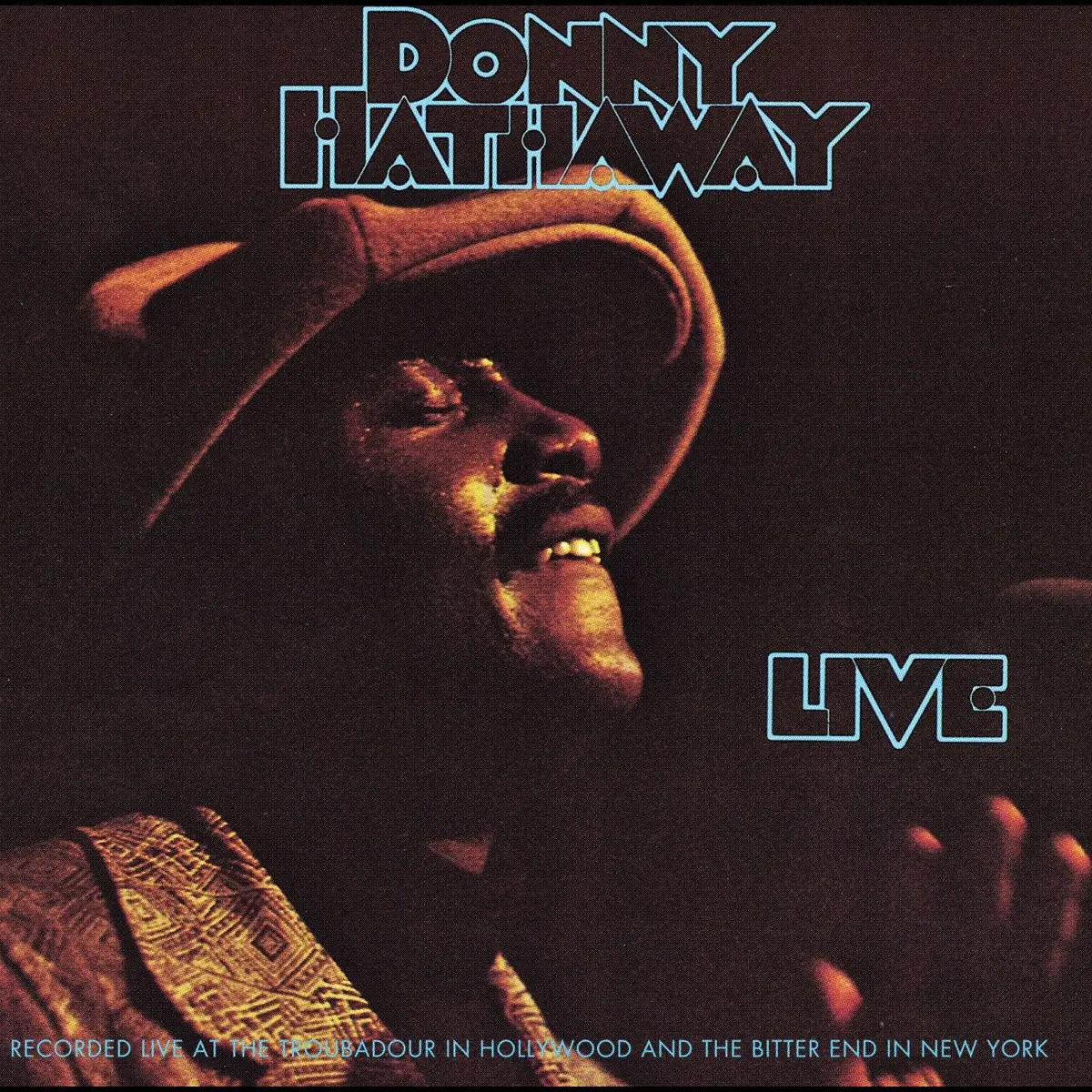 In February 1972, Donny Hathaway released Live, sourced from 1971 concerts at the Hollywood Troubadour (August 24–30) and New York’s Bitter End (October 7).
The album captures Hathaway in an intimate club setting, fronting a compact ensemble that stretches soul standards and original material into extended, jazz-leaning performance pieces. It spotlights his dynamic voice, electric piano work, and his rapport with an audience that functions as an active participant in several songs.
Hathaway sings and plays electric piano, piano, and organ. His backing band includes guitarist Phil Upchurch (side one), guitarist Cornell Dupree (side two), guitarist Mike Howard, bassist Willie Weeks, drummer Fred White, and percussionist Earl DeRouen.
Hathaway co-wrote two of the album’s eight songs. Additional selections include covers of songs popularized by Marvin Gaye (“What’s Going On”), Carole King (“You’ve Got a Friend”), John Lennon (“Jealous Guy”), and Ocean (“Put Your Hand in the Hand”), as well as songs associated with Hathaway’s earlier studio work.
The set opens with “What’s Going On,” a soul anthem that Hathaway reshapes with jazz voicings on electric piano and a warmly responsive audience. He follows with a 12-minute reading of his 1969 single “The Ghetto,” expanding its structure with conga breaks, instrumental soloing, and a call-and-response section where the crowd chants the title refrain. “Hey Girl” and “You’ve Got a Friend” take a more intimate turn, the latter built around Hathaway’s piano and massed audience vocals on the chorus. Side two includes “Little Ghetto Boy,” a spare performance steeped in quiet intensity, and “We’re Still Friends,” a ballad built on piano and unhurried phrasing. Lennon’s “Jealous Guy” receives a restrained, emotionally direct treatment, while the closer “Voices Inside (Everything Is Everything)” stretches to nearly fourteen minutes, giving Weeks a bass spotlight and guitarists room to stretch in successive movements.
A1. “What’s Going On” (5:18) — Marvin Gaye first cut this 1971 hit, written by Renaldo “Obie” Benson, Al Cleveland, and Gaye. Hathaway delivers it as a slow-building piano-led soul statement with responsive crowd murmurs.
A2. “The Ghetto” (12:08) — Hathaway and Leroy Hutson wrote this piece in 1969. His live version extends the studio original with solos and crowd participation.
A3. “Hey Girl” (4:03) — Written by Earl DeRouen. A softly stated soul piece with measured rhythm and warm vocal phrasing.
A4. “You’ve Got a Friend” (4:34) — Carole King’s 1971 ballad, popularized that year by James Taylor, receives an unadorned solo reading, the chorus carried by the audience.
B1. “Little Ghetto Boy” (4:29) — Written by DeRouen and Edward Howard. A slow, understated plea for dignity and survival in urban struggle.
B2. “We’re Still Friends” (5:12) — Co-written by Hathaway and Glenn Watts. A delicate ballad about lasting ties despite separation.
B3. “Jealous Guy” (3:08) — John Lennon’s 1971 composition, first released on Imagine, rendered as a gentle piano lament with fragile vocal restraint.
B4. “Voices Inside (Everything Is Everything)” (13:47) — Written by Richard Evans, Philip Upchurch, and Ric Powell. Originally the opener of Hathaway’s 1970 debut album, here reimagined as an extended instrumental workout with bass and guitar solos.
Sessions occurred at the Troubadour in Hollywood and the Bitter End in New York with Arif Mardin producing side one and Jerry Wexler and Arif Mardin producing side two. Ray Thompson engineered the Troubadour tapes; Tom Flye engineered the Bitter End recordings.
The cover features photography by Jim Cummins.
Atlantic promoted the album with a 1972 single of “Jealous Guy” (b/w “Voices Inside (Everything Is Everything)”).
Weeks’ bass solo on “Voices Inside (Everything Is Everything)” became widely cited among bassists, and the live version of “Little Ghetto Boy” was later covered by Hathaway’s daughter Lalah on her 2015 album Lalah Hathaway Live. In 1981, Roxy Music scored a No. 1 UK hit with their version of “Jealous Guy.”
Roberta Flack & Donny Hathaway
 In April 1972, Hathaway released his collaborative album with singer/pianist Roberta Flack, a fellow Atlantic recording artist.
The album pairs two Atlantic soul artists in an intimate, piano-anchored setting that balances orchestral balladry with understated urban rhythm. It contains eight vocal duets and two solo showcases by Flack, uniting their shared gospel and jazz backgrounds in a polished, mid-tempo soul sound.
Flack sings and plays electric piano, acoustic piano, and organ. Hathaway sings and plays acoustic and electric piano, and arranges horns and strings on select tracks. Guitarists Eric Gale and David Spinozza appear across the sessions along with bassist Chuck Rainey, drummers Bernard Purdie and Billy Cobham, percussionist Ralph MacDonald, vibraphonist Jack Jennings, flautists Joe Gentle and Hubert Laws, and soprano saxophonist Joe Farrell.
Hathaway and Flack co-wrote one song and collaborated on an additional track with Charles Mann. Hathaway co-wrote one further number with Eugene McDaniels. They cover songs popularized by Ben E. King (“I [Who Have Nothing]”), Carole King (“You’ve Got a Friend”), Aretha Franklin (“Baby I Love You”), the Righteous Brothers (“You’ve Lost That Lovin’ Feelin’”), Hal Kemp (“For All We Know”), and Billie Holiday (“Come Ye Disconsolate”). “Where Is the Love” originated with percussionist Ralph MacDonald and bassist William Salter.
The album opens with “I (Who Have Nothing),” a dramatic vocal duet arranged as a slow soul torch song with rich strings. “You’ve Got a Friend” sets the two singers over Hathaway’s piano in a close-harmony treatment of the Carole King ballad. “Baby I Love You” adopts the steady rhythm of Franklin’s 1967 hit, while “Be Real Black for Me” pairs their voices in a reflective original that contemplates identity and shared cultural strength. They elongate “You’ve Lost That Lovin’ Feelin’” into a long, slow R&B arrangement with a weighty bass line and sax fills. Side two highlights “Where Is the Love,” a lightly percussive, rhythm-centered duet that became the album’s breakout single. Hathaway and McDaniels’ “When Love Has Grown” takes a brighter turn, and “Come Ye Disconsolate” frames the pair’s voices in a restrained gospel hymn. The album closes with “Mood,” a seven-minute solo piano meditation by Flack.
A1. “I (Who Have Nothing)” (5:00) — English adaptation of the 1961 Italian song “Uno dei Tanti,” first recorded in English in 1963 by Ben E. King with lyrics by Jerry Leiber and Mike Stoller. A stark, slow ballad of unrequited love.
A2. “You’ve Got a Friend” (3:24) — Written by Carole King and recorded for her 1971 album Tapestry. Flack and Hathaway layer warm harmonies over piano and strings.
A3. “Baby I Love You” (3:24) — Originally recorded in 1967 by Aretha Franklin, written by Ronnie Shannon. A mid-tempo soul piece about romantic devotion.
A4. “Be Real Black for Me” (3:30) — Written by Roberta Flack, Donny Hathaway, and Charles Mann. A personal reflection on identity and shared experience.
A5. “You’ve Lost That Lovin’ Feelin’” (6:36) — Written by Barry Mann, Cynthia Weil, and Phil Spector; first recorded in 1964 by the Righteous Brothers. A slow, stately version with extended phrasing and full orchestration.
B1. “For All We Know” (3:38) — Popularized in 1934 by Hal Kemp and Isham Jones. A nostalgic ballad about parting.
B2. “Where Is the Love” (2:43) — Written by Ralph MacDonald and William Salter. A lightly rhythmic love duet built on gentle percussion and interwoven vocals.
B3. “When Love Has Grown” (3:31) — Written by Donny Hathaway and Eugene McDaniels. A softly buoyant soul number on fading affection.
B4. “Come Ye Disconsolate” (4:50) — Written by Thomas Moore and Samuel Webbe Sr., later associated with gospel singer Mahalia Jackson. A restrained spiritual duet.
B5. “Mood” (7:00) — Written and performed by Roberta Flack. A solo piano instrumental coda.
Sessions occurred at Regent Sound and Atlantic Studios in New York with Arif Mardin and Joel Dorn producing. Jimmy Douglass, Lew Hahn, and Gene Paul engineered the sessions. Mardin arranged the strings and woodwinds.
Atlantic promoted the album with “You’ve Got a Friend” (b/w “Gone Away”) in May 1971, which reached No. 29 on the Billboard Hot 100 and No. 8 on the R&B chart. “You’ve Lost That Lovin’ Feelin’” followed in September 1971 (b/w “Be Real Black for Me”), reaching No. 71 on the Hot 100 and No. 30 R&B. “Where Is the Love” appeared in April 1972 (b/w “Mood”), peaking at No. 5 on the Hot 100 and topping both the R&B and Easy Listening charts. It won a Grammy Award for Best Pop Performance by a Duo or Group with Vocals at the 1973 ceremony.
Come Back, Charleston Blue (OST)
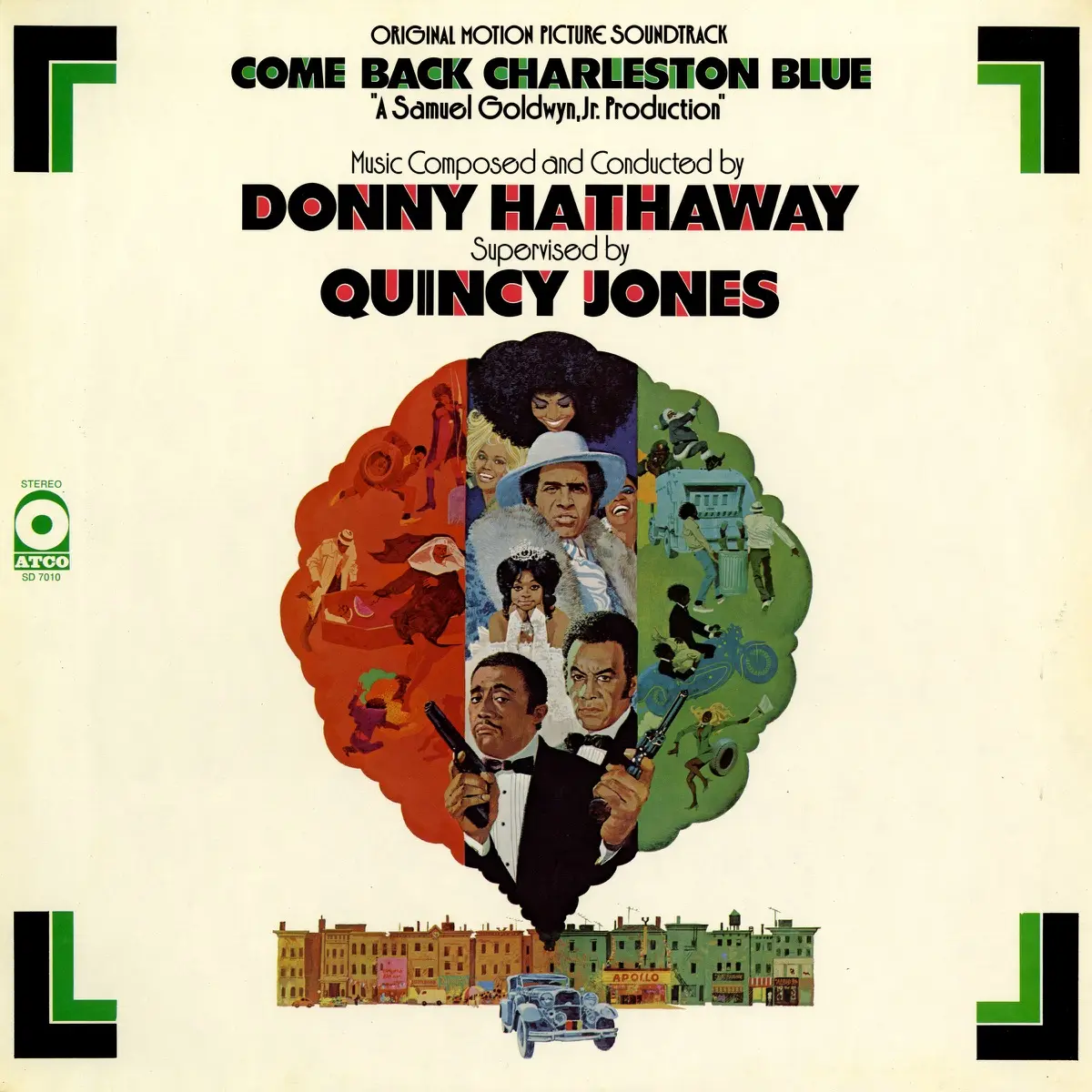 In June 1972, Donny Hathaway released Come Back, Charleston Blue, Atco’s soundtrack to the blaxploitation crime comedy starring Godfrey Cambridge and Raymond St. Jacques.
The album consists almost entirely of instrumentals arranged in short cues and themes, interspersed with select vocal moments. It blends jazz-inflected orchestral passages, street-scene funk, and brief mood pieces tailored to the film’s Harlem setting.
Hathaway sings and plays electric piano, Hammond organ, acoustic piano, and bass. The sessions involve multiple guitarists, drummers, bassists, and reedists under Hathaway’s direction, with Quincy Jones serving as music supervisor.
Hathaway wrote nineteen of the soundtrack’s twenty-one pieces. He co-wrote the title track with Al Cleveland and Quincy Jones and included one outside song, “Little Ghetto Boy,” written by Earl DeRouen and Edward Howard.
Much of the score consists of brief thematic instrumentals that function as scene motifs. “Main Theme” introduces the central melody in a subdued, orchestral jazz arrangement. Short transitional pieces like “String Segue,” “Explosion,” and “Switch ‘Charleston Blue’” serve as linking material between longer cues. “Basie” and “Come Back Basie” pay homage to Count Basie’s swing with lightly syncopated rhythm and brass phrasing. “Harlem Dawn,” “Vegetable Wagon,” and “Hearse to the Graveyard” convey atmosphere with slow, brass-heavy textures. Hathaway delivers a short vocal passage on “Tim’s High,” while “Furniture Truck” adopts a steady street-funk pulse. “Little Ghetto Boy,” later immortalized in Hathaway’s live repertoire, emerges here in a studio reading framed by strings. The closing “Come Back Charleston Blue” reprises the title motif with a fuller arrangement.
A1. “Main Theme” (2:20) — orchestral jazz cue introducing the score’s central melody.
A2. “Basie” (3:54) — swing-oriented instrumental tribute to Count Basie.
A3. “String Segue” (0:34) — transitional string figure.
A4.1. “Vegetable Wagon” (1:07) — ambient scene cue with subdued brass.
A4.2. “Harlem Dawn” (1:38) — moody morning scene with light orchestration.
A4.3. “Scratchy Record” (3:09) — lounge instrumental with record FX.
A4.4. “Explosion” (0:24) — short tension burst.
A5.1. “Hearse to the Graveyard” (2:46) — processional with brass and strings.
A5.2. “Switch ‘Charleston Blue’” (0:32) — brief reprise of main motif.
B1.1. “Come Back Basie” (2:37) — swing instrumental echoing A2.
B1.2. “Detective’s Goof” (0:27) — comedic cue.
B1.3. “Gravedigger Jones & Coffin Ed’s Funeral” (3:00) — minor-key funeral theme with winds and muted brass.
B1.4. “String Segue” (0:19) — transitional reprise.
B2. “Little Ghetto Boy” (3:49) — written by Earl DeRouen and Edward Howard; slow, urban lament on youth facing social hardship.
B3.1. “Hail to the Queen” (0:21) — short fanfare.
B3.2. “Drag Queen Chase” (0:48) — brisk cue for chase sequence.
B3.3. “Bossa Nova” (1:47) — light bossa rhythm with flute accents.
B4. “Tim’s High” (1:30) — brief vocal piece with Hathaway singing over electric piano.
B5. “Furniture Truck” (1:18) — instrumental with steady urban rhythm.
B6.1. “Liberation” (2:54) — slow-building cue with brass and strings.
B6.2. “Come Back Charleston Blue” (2:05) — main theme reprise, co-written by Hathaway, Al Cleveland, and Quincy Jones.
Sessions occurred in New York with Hathaway producing and Quincy Jones supervising.
Come Back, Charleston Blue served as the soundtrack to the 1972 film Come Back, Charleston Blue, directed by Mark Warren and adapted from Chester Himes’ novel The Heat’s On. Set in Harlem, it follows detectives Ed “Coffin Ed” Johnson and “Grave Digger” Jones as they investigate a series of murders marked by a blue steel straight razor, the calling card of the long-vanished vigilante Charleston Blue. The plot centers on Joe Painter, a photographer who revives Charleston Blue’s legend to drive the mafia from Harlem, only to reveal conflicting motives as the detectives close in.
In 2007, Rhino issued a remastered CD with alternate and live versions of “Little Ghetto Boy.” That song later became a signature in Hathaway’s live shows and has been covered by Lalah Hathaway and others.
Extension of a Man
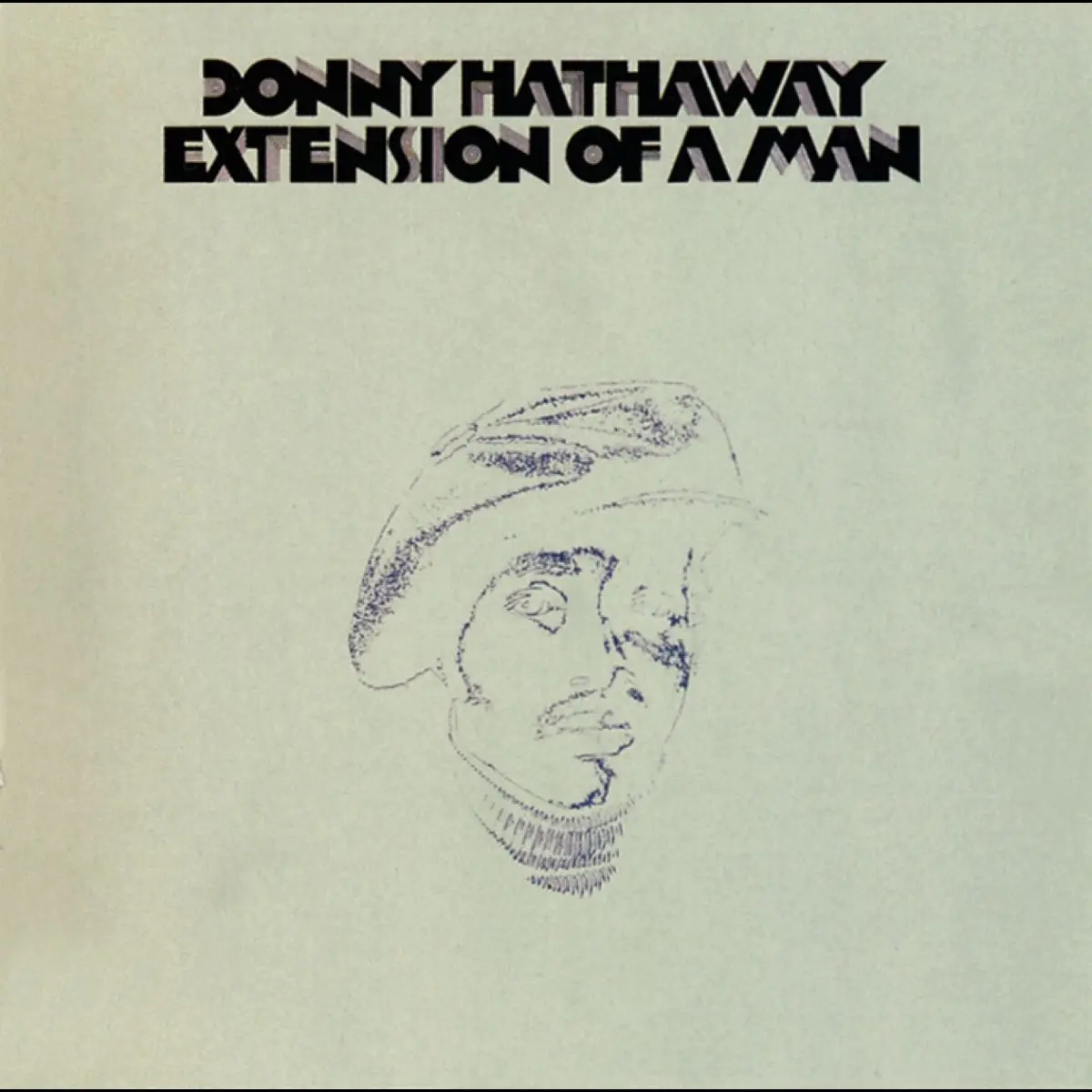 Donny Hathaway released his third solo studio album, Extension of a Man, in June 1973 on Atco.
The album presents Hathaway at his most ambitious as a composer, arranger, and performer, merging large-scale orchestral works with soul, jazz, and funk-based material. It contains nine vocal pieces and two instrumentals, ranging from inner-city funk to ragtime, devotional music, and ballads.
Hathaway sings and plays Fender Rhodes electric piano, Hammond organ, acoustic piano, and bass. He arranged and orchestrated the opening track for full orchestra and choir. The sessions feature five guitarists (including Cornell Dupree, David Spinozza, and Phil Upchurch), four drummers (including Fred White and Grady Tate), four bassists (including RTF bassist Stanley Clarke and Willie Weeks), and six reedists (including flautist Hubert Laws and tenor saxophonist David Newman). Marvin Stamm, Joe Newman, and Ernie Royal appear on trumpet; Garnett Brown on trombone; Don Butterfield on tuba; Phil Bodner on clarinet and alto saxophone; and Cissy Houston among several backing vocalists.
Hathaway wrote six songs on Extension of a Man and co-wrote one with lyricist Edward Howard. The set includes covers of songs popularized by Al Kooper (“I Love You More Than You’ll Ever Know”), Danny O’Keefe (“Magdalena”), and Leon Ware (“I Know It’s You”), plus material by J.R. Bailey and Ken Williams (“Love, Love, Love”).
The album opens with “I Love the Lord; He Heard My Cry (Parts I & II),” an extended, wordless orchestral and choral piece that integrates classical structure with modern rhythm and harmonic uplift. “Someday We’ll All Be Free,” written with Howard, serves as the album’s emotional centerpiece with its direct, encouraging lyric and soaring vocal delivery. Hathaway moves into soft pop-soul on “Flying Easy” and jazz-fusion on “Valdez in the Country,” built around Fender Rhodes improvisation. His rendition of “I Love You More Than You’ll Ever Know” intensifies Kooper’s torch ballad with desperate vocal phrasing. “Come Little Children” shifts to funk with layered horns and wah-wah guitar. “Love, Love, Love” aligns with early-70s soul-pop in the Marvin Gaye vein. “The Slums” extends his earlier “The Ghetto” concept into a long instrumental chant with horn accents and urban street-party ambiance. The light ragtime of “Magdalena” contrasts the surrounding material, while “I Know It’s You” closes with Ware’s piano ballad.
A1. “I Love the Lord; He Heard My Cry (Parts I & II)” (5:32) — arranged and orchestrated by Hathaway for orchestra and choir. The melody quotes “Here Comes De Honey Man” from Gershwin’s Porgy and Bess.A2. “Someday We’ll All Be Free” (Hathaway, Edward Howard) (4:14) — Howard wrote the lyric as a message of personal strength during Hathaway’s mental health struggles.A3. “Flying Easy” (3:13) — a soft pop-soul number with electric piano lead.A4. “Valdez in the Country” (3:33) — instrumental Fender Rhodes jazz-fusion.A5. “I Love You More Than You’ll Ever Know” (Al Kooper) (5:23) — originated as a 1968 side by Blood, Sweat & Tears, written by Kooper, who first recorded it on their debut.B1. “Come Little Children” (4:35) — funk number with wah-wah guitar and horns.B2. “Love, Love, Love” (J.R. Bailey, Ken Williams) (3:25) — originated in 1972 as a solo hit for Bailey. A smooth soul-pop love song with Fender Rhodes underpinning.B3. “The Slums” (5:11) — long instrumental chant with horn figures and crowd effects, conceptually linked to Hathaway’s “The Ghetto.”B4. “Magdalena” (Danny O’Keefe) (3:08) — ragtime-inspired interpretation of O’Keefe’s folk composition.B5. “I Know It’s You” (Leon Ware) (5:13) — Ware’s ballad treated as a closing piano torch song.
Sessions occurred at A&R, Bell Sound, Regent Sound, and Atlantic Studios in New York, and Universal Recording in Chicago, with Arif Mardin producing and engineering by Jimmy Douglass, Lew Hahn, and Gene Paul. Jerry Wexler produced “Lord Help Me,” included on later CD editions.
Atco promoted the album with “Love, Love, Love” (b/w “Someday We’ll All Be Free”), which reached No. 44 on the Billboard Hot 100 and No. 16 on the R&B chart. “Come Little Children” followed in 1974.
“Someday We’ll All Be Free” has since been covered by Aretha Franklin, George Benson, Don Henley, Alicia Keys, and Bilal. “Valdez in the Country” was later covered by George Benson.
Discography:
- Everything Is Everything (1970)
- Donny Hathaway (1971)
- Come Back, Charleston Blue (OST, 1972)
- Live (1972)
- Roberta Flack & Donny Hathaway (1972 • Roberta Flack & Donny Hathaway)
- Extension of a Man (1973)
- Roberta Flack Featuring Donny Hathaway (1980 • Roberta Flack Featuring Donny Hathaway)
Sources:
Artist/Album Pages:
Shadowfax was an American jazz band from Chicago that first appeared with the 1976 Passport Record...
Edelweiss was a Spanish folk/psych trio behind the 1973 album En el Principio... on TOP Records. ...
Eddie Harris (Oct. 20, 1934 — Nov. 5, 1996) was an American post-bop/jazz-funk tenor saxophonist...
Andy Pratt is an American singer/songwriter from Boston, best known for the song "Avenging Annie"...
West Bruce & Laing were an English-American super-trio comprised of ex-Cream bassist-singer Jack...
Kingdom Come was an English psychedelic space-rock band that released the 1971–73 Polydor albums G...
Elias Hulk was an English hard-rock-psych band from Bournemouth, Dorset, that released the album U...
Cláudia (born Maria das Graças Rallo on May 10, 1948) is a Brazilian samba-pop singer who emerged ...
Reale Accademia di Musica was an Italian symphonic-rock band that released a 1972 self-titled albu...
Riccardo Cocciante (born Feb. 20, 1946) is an Italian singer/songwriter who debuted with the 1972 ...
Pentangle was an English folk-rock band from London that released six albums between 1968 and 1972...
Arzachel was an English psych-rock band, originally known as Uriel, that released a self-titled al...