

The Vapors were an English rock band that released the 1980–81 albums New Clear Days and Magnets on United Artists–Liberty. They foreshadowed the Second British Invasion with their transatlantic hit “Turning Japanese.”
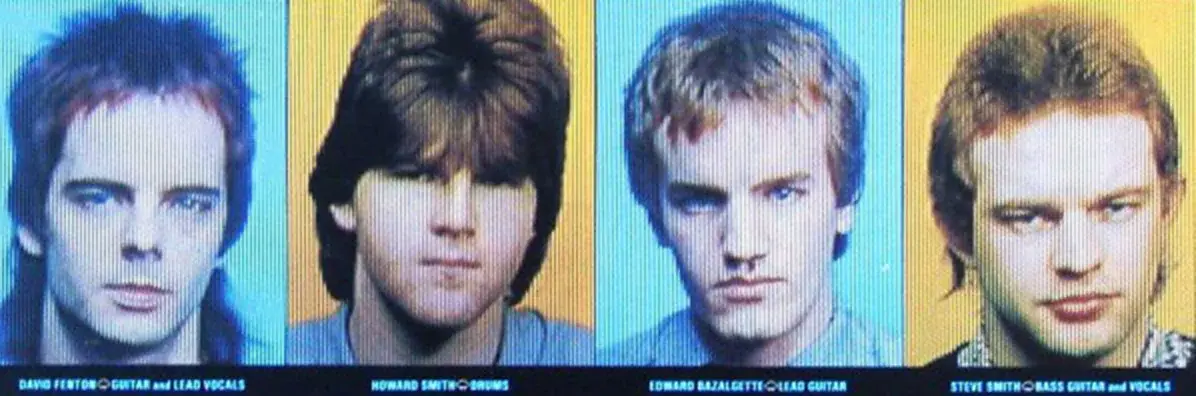
Members: David Fenton (vocals, guitar), Edward Bazalgette (lead guitar), Howard Smith (drums), Steve Smith (bass)
Background
The Vapors assembled in Guildford, Surrey, in 1978 when guitarist, singer, and songwriter David Fenton teamed with lead guitarist Edward Bazalgette, bassist Steve Smith, and drummer Howard Smith (no relation) — all newcomers to the scene. They gigged locally as The Vapours but soon switched to the American spelling (no “u”).
Their early show at the Three Lions pub in Farncombe impressed Jam bassist Bruce Foxton, who linked them with manager John Weller (father of Jam frontman Paul Weller). The Vapors were the opening act on The Jam’s 1979 Setting Sons tour. United Artists signed The Vapors and issued their first single that autumn.
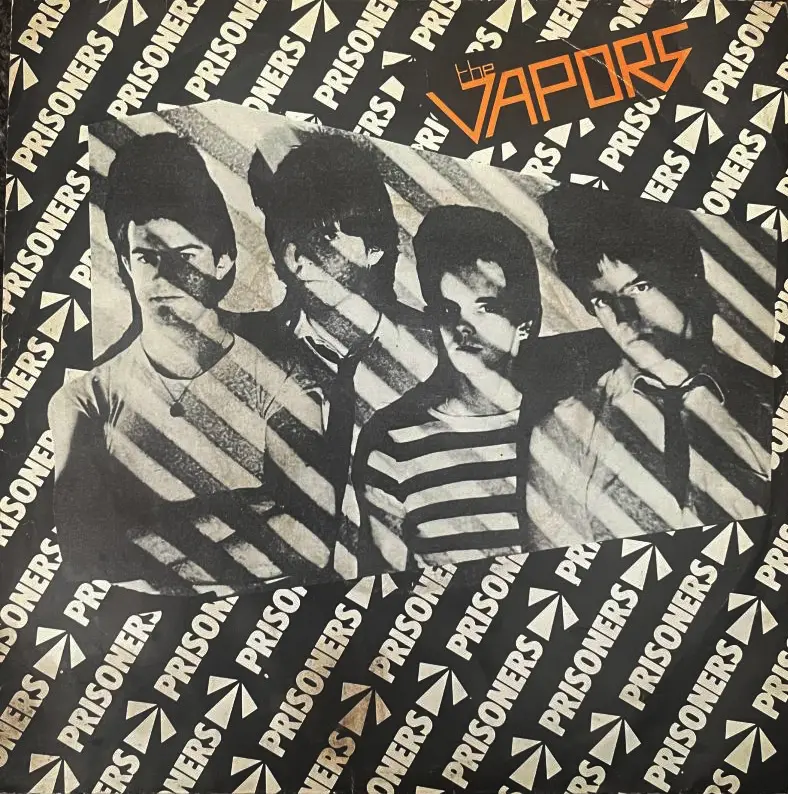 The Vapors originally penned “Turning Japanese” as their ace in the hole but opted to withhold it for their second release, fearing that a surefire hit might go unnoticed as the debut of an unknown band. Instead, they introduced themselves with “Prisoners,” released on October 26, 1979. A taut, nervy track with sharp rhythmic breaks and jangled urgency, “Prisoners” laid the groundwork for their lean, singalong approach to post-punk pop. Its B-side, “Sunstroke,” was a non-album track that showcased a more off-kilter, angular energy, revealing early signs of the band’s idiosyncratic voice within the burgeoning new wave landscape.
A. “Prisoners”
B. “Sunstroke”
“Turning Japanese”
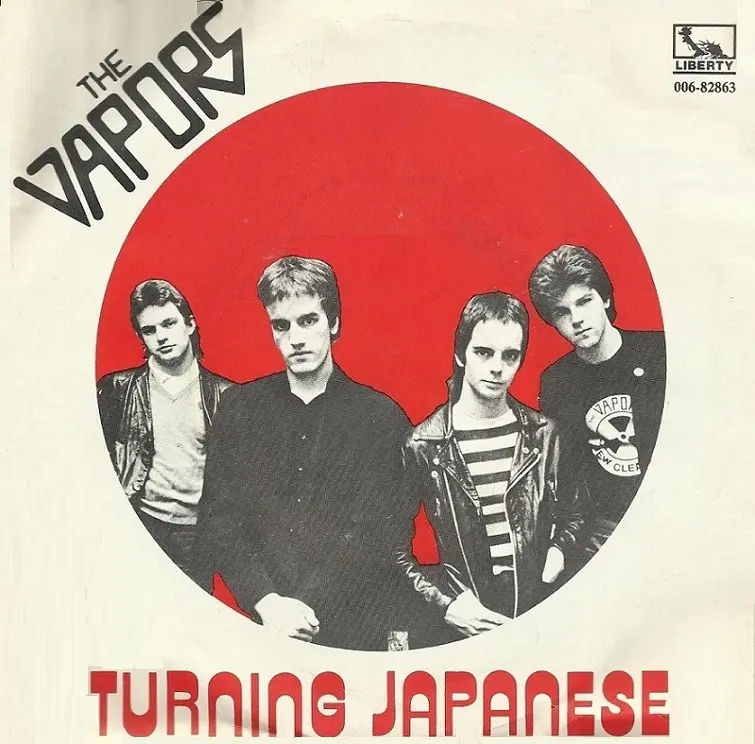
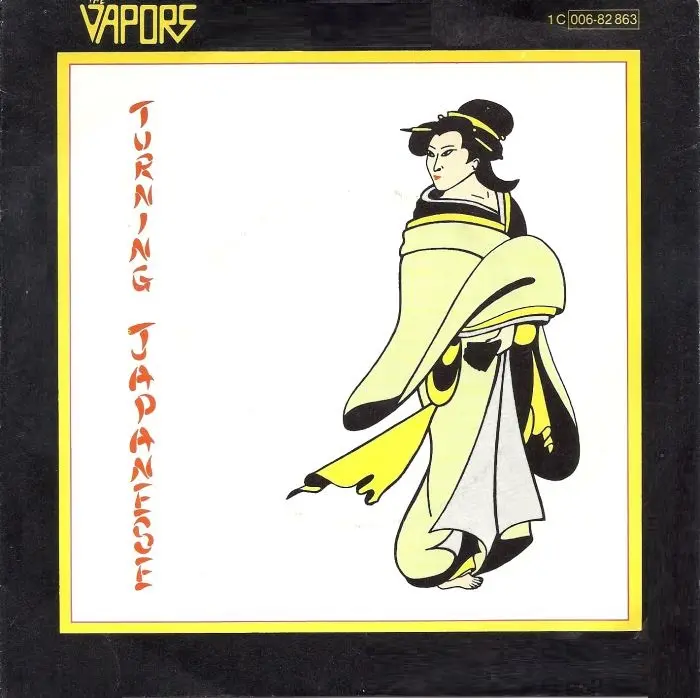 On January 25, 1980, The Vapors released their second single: “Turning Japanese,” an uptempo multi-riff rocker framed with a quasi-Eastern motif.
David Fenton conceived the song as a tongue-in-cheek love letter—a young man obsessively staring at a photo of his ex. Though often misconstrued as a euphemism for masturbation, Fenton denied this, stating it was inspired by heartbreak: “Turning Japanese is all the clichés about angst and youth and turning into something you didn’t expect.”
Musically, the track hinges on an “oriental riff” by Edward Bazalgette, giving it an exotic edge over crisp, nervous guitars and tight drumming. Fenton’s chorus—pulled from a late-night epiphany—became a catch-phrase despite its abstract meaning.
Produced by Vic Coppersmith‑Heaven, who built the recording live at Basing Street before stripping it back to drums and overdubs, the group retained the song’s raw energy. According to Fenton, “our drummer just went ‘Boom! Splat!’ — but it sounded great, so we kept it.”
A. “Turning Japanese”
B. “Here Comes the Judge (Live)”
 Directed by Russell Mulcahy, the video features the band performing in a room adorned with Japanese-themed decor; Fenton poses as both samurai and pop icon while snapping Polaroids—evoking the song’s lyrical obsession across culture and alienation.
“Turning Japanese” was a global hit in early 1980, reaching No. 1 in Australia, No. 3 in the UK, No. 4 in Ireland, No. 6 in Canada, No. 9 in New Zealand, and charting in the United States at No. 31 on Cash Box and No. 36 on the Billboard Hot 100—an impressive feat for a British new wave single prior to the MTV era.
In the US, “Turning Japanese” became a breakthrough new wave moment before MTV’s launch, standing out amid scarce transatlantic hits. When MTV launched on August 1, 1981, “Turning Japanese” became the channel’s 151-aired video, slotted between clips by April Wine (“Just Between You and Me”) and Styx (“Rockin’ the Paradise”).
As one of the rare early British new wave acts to cross the Atlantic by 1980, “Turning Japanese” paved the way for the Second British Invasion while remaining The Vapors’ defining moment.
New Clear Days
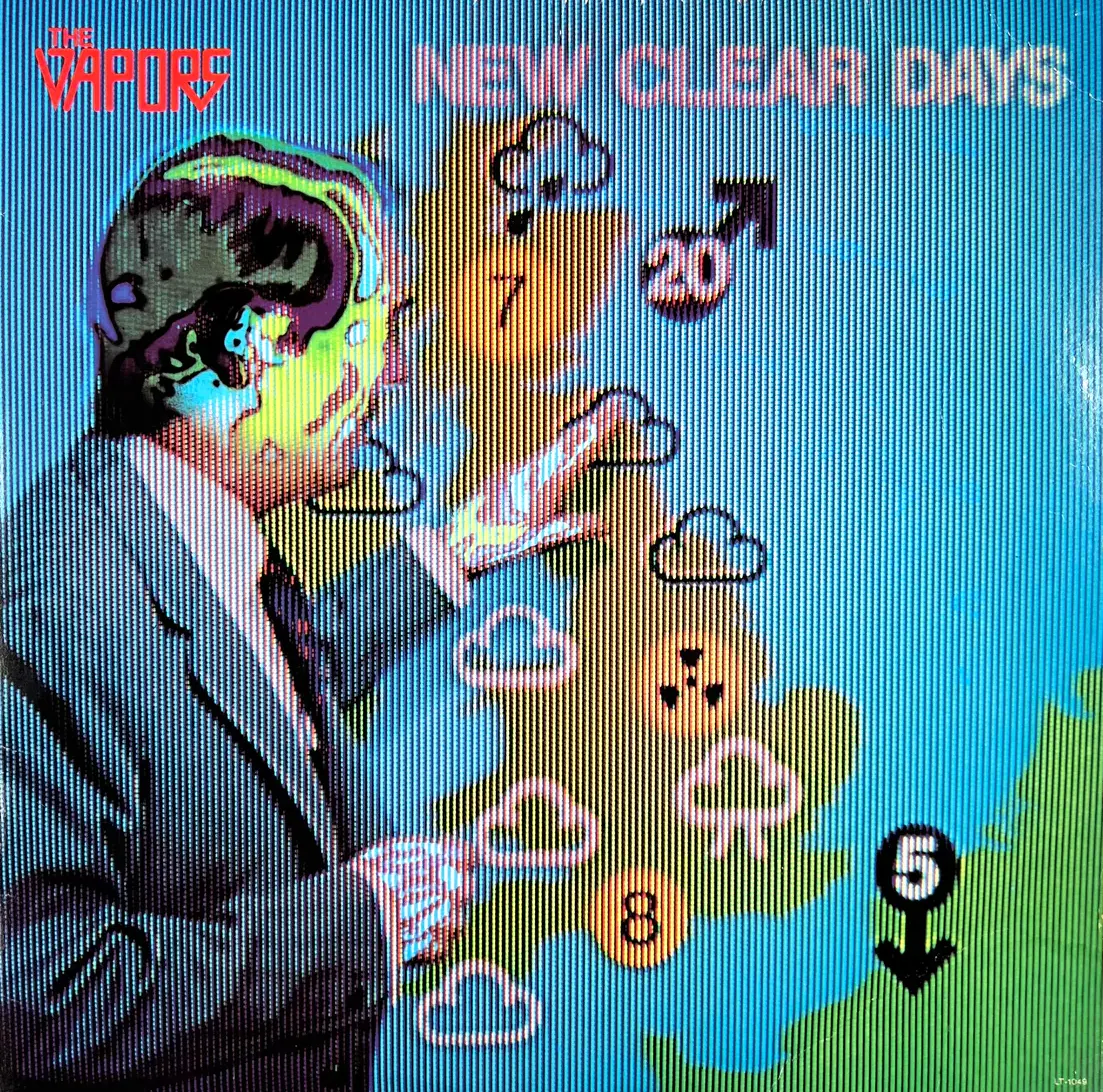 The Vapors released their debut album, New Clear Days, in May 1980 on United Artists.
All eleven songs were written by frontman David Fenton, including the transatlantic hit “Turning Japanese.” The rest of the album blends punchy, angst‑laden tracks—like “Cold War” and “Bunkers,” which explore geopolitical paranoia—with melodic reflections on youthful longing, such as “Trains” and “Waiting for the Weekend.”
Fenton and lead guitarist Edward Bazalgette shaped the album’s crisp ringing guitar interplay, supported by Steve Smith’s crisp Rickenbacker bass and Howard Smith’s precise machine‑gun drumming. String textures and a cimbalom (on “Letter From Hiro”) add a slightly exotic counterpoint to the otherwise sharply post‑punk palette.
 A1. “Spring Collection” (2:52)
A2. “Turning Japanese” (3:44)
A3. “Cold War” (3:57)
A4. “America” (2:22)
A5. “Trains” (3:26)
A6. “Bunkers” (3:54)
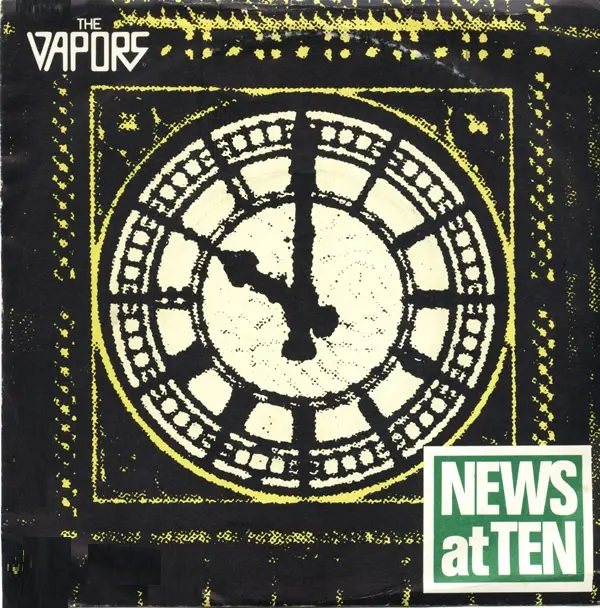
B1. “News at Ten” (3:18)
B2. “Somehow” (3:33)
B3. “Sixty Second Interval” (3:52)
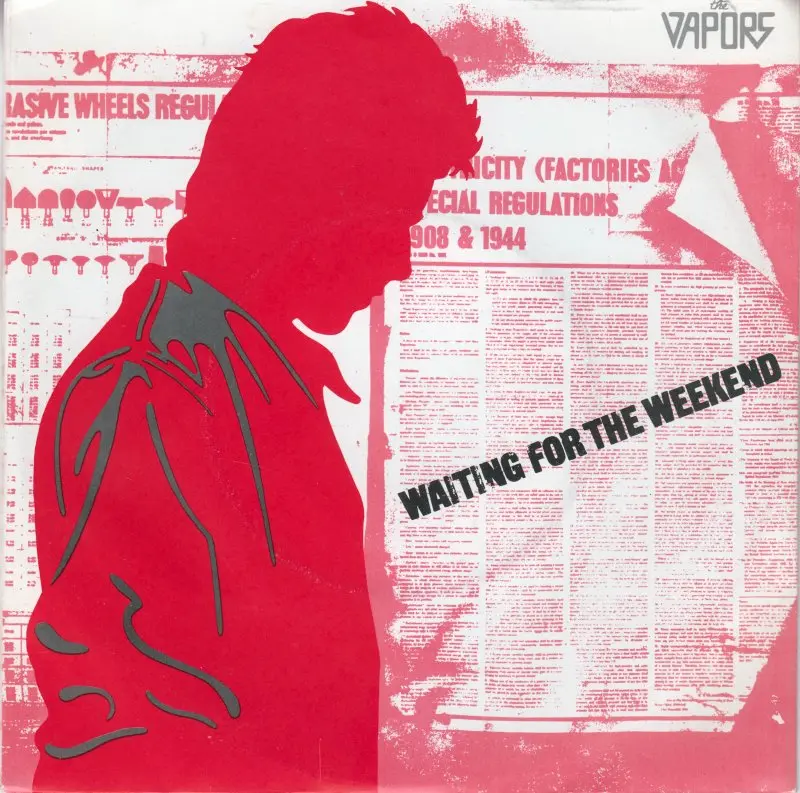
B4. “Waiting for the Weekend” (3:07)
B5. “Letter from Hiro” (6:23)
 Sessions took place in late 1979 at Basing Street, Roundhouse, and Town House Studios in London, engineered by Andy Lydon and Trevor Hallesy and produced by Vic Coppersmith‑Heaven—fresh from shaping the Jam’s sound on All Mod Cons and Setting Sons.
On June 6, The Vapors lifted “News at Ten” as the follow-up single to “Turning Japanese.” The track, which critiques media complacency and generational disillusionment, appeared with two non-album B-sides: “Wasted” and “Talk Talk.” Despite a BBC strike that hindered its chart performance, “News at Ten” became a fan favorite and a staple of their live shows.
 B1. “Wasted”
B2. “Talk Talk”
The album’s third single, “Waiting for the Weekend,” appeared on September 5 with “Billy,” another exclusive.
B. “Billy”
New Clear Days reached No. 24 in Australia, No, 25 in New Zealand, and peaked at No. 44 on the UK Albums Chart.
Magnets
 The Vapors released their second album, Magnets, on March 9, 1981, on Liberty.
David Fenton lone-wrote everything except “Isolated Case,” co‑credited to Edward Bazalgette and Steve Smith. The record takes a darker tonal turn—“Jimmie Jones” tackles cult dynamics, “Spiders” and “Can’t Talk Anymore” probe mental instability, while the epic title track contemplates the tragic legacies of the Kennedys.
The band maintains its signature guitar-driven core but augments it with programmed keyboards from Robin Lumley, adding a subtle, brooding atmosphere beneath Fenton’s urgent delivery.
A1. “Jimmie Jones” (3:23)
A2. “Spiders” (4:57) encapsulates the album’s darker thematic turn, using arachnid imagery as a metaphor for surveillance, entrapment, and paranoia; set to a creeping rhythm and angular riffs.
A3. “Isolated Case” (3:30)
A4. “Civic Hall” (3:39)
A5. “Live at the Marquee” (4:04)
B1. “Daylight Titans” (3:23)
B2. “Johnny’s in Love (Again)” (3:45)
B3. “Can’t Talk Anymore” (3:18)
B4. “Lenina” (2:46)
B5. “Silver Machines” (3:52)
B6. “Magnets” (6:14)
 Recorded in November 1980 at Rock City (Shepperton) and Farmyard Studios (Little Chalfont), the album was produced and engineered by David Tickle, with engineers including Joe Blaney, and assistant keyboard programming by Lumley.
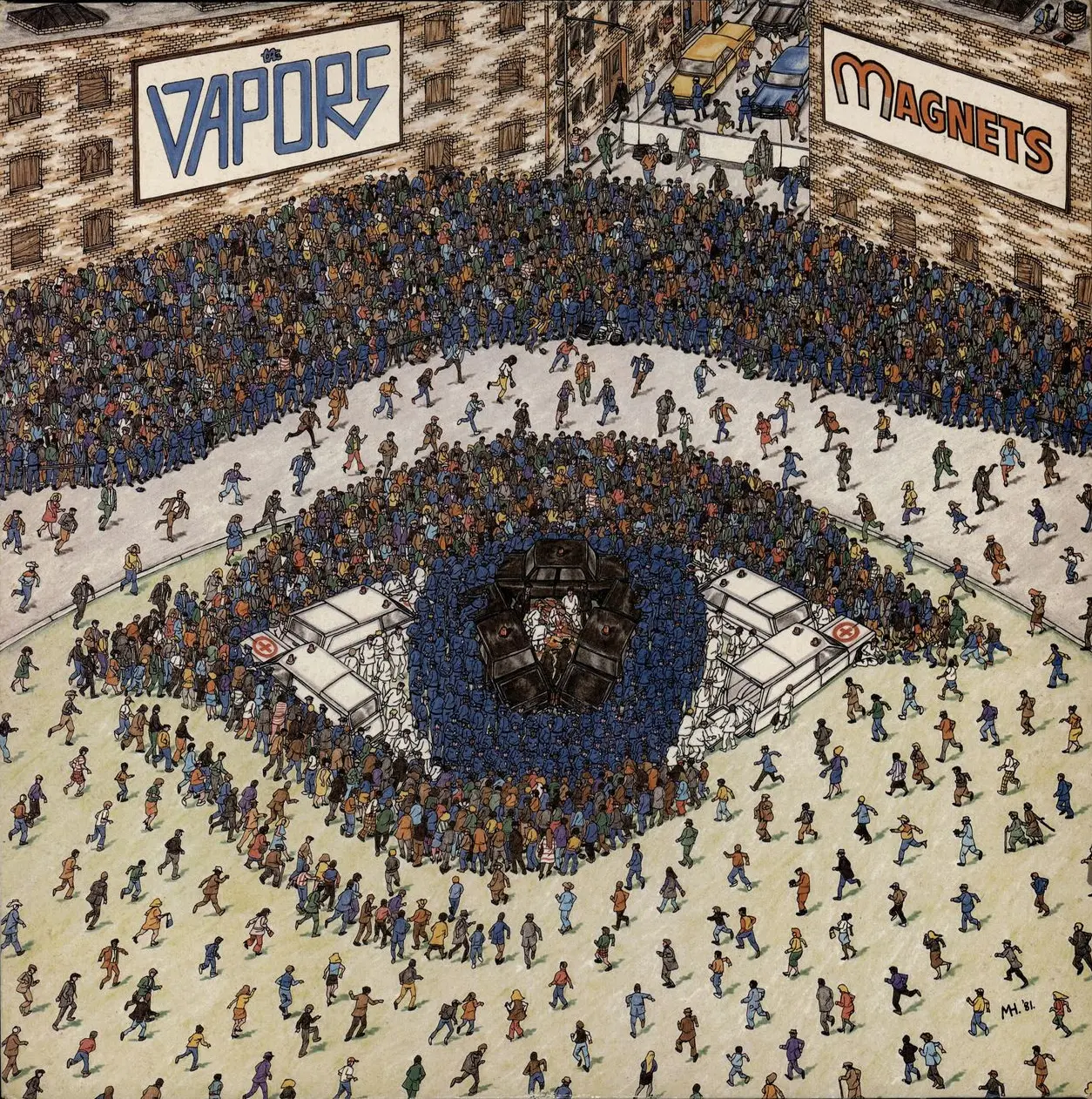
The Magnets album cover was designed by Martin Handford, who would later gain fame as the creator of the Where’s Wally? books. His signature crowd-detail style is already on full display here: the image presents a bustling urban square teeming with miniature figures, which—when viewed from afar—forms the shape of a giant human eye. At its center, a mob of riot police encircle a mysterious figure before stacked speakers, while civilians flee outward in chaos. On closer inspection, a chilling narrative emerges: it’s an assassination scene. The assassin, barely noticeable at first glance, stands atop a rooftop in the upper right, discreetly stowing a sniper rifle. The cover’s intricate, multilayered design reinforces the album’s themes of paranoia, manipulation, and unseen violence.
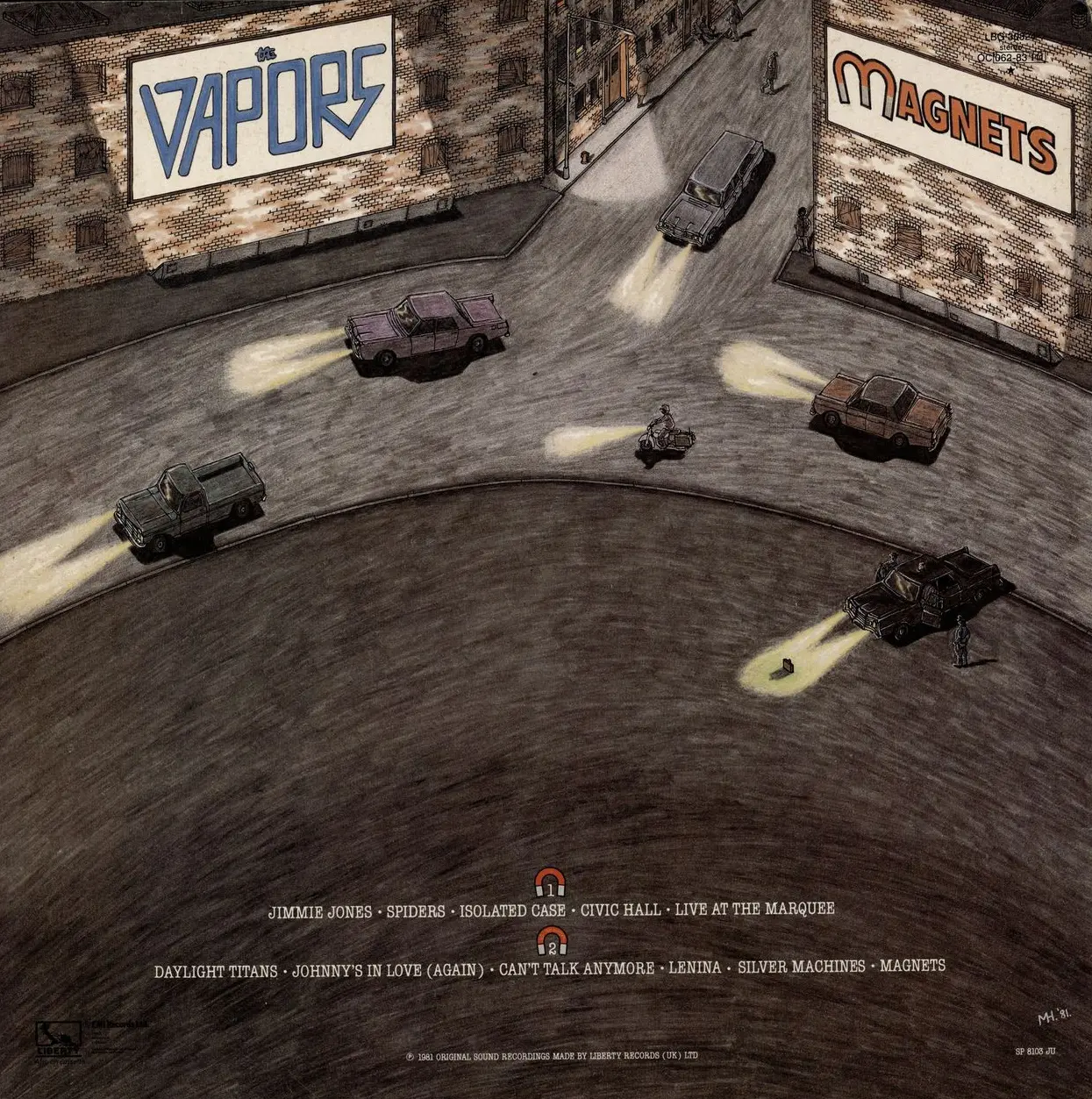
 The back artwork mirrors the same intersection from a nighttime perspective. The once-crowded square is now eerily vacant except for a few vintage cars and a motorcyclist, each casting long yellow beams of headlight onto the pavement. A small, unidentifiable object lies abandoned in one beam near the curb, lending a tone of post-chaos desolation. The “The Vapors” and “Magnets” signs remain in place, and the album’s tracklist runs along the bottom, punctuated with red and silver magnet icons that reinforce the album’s title motif.
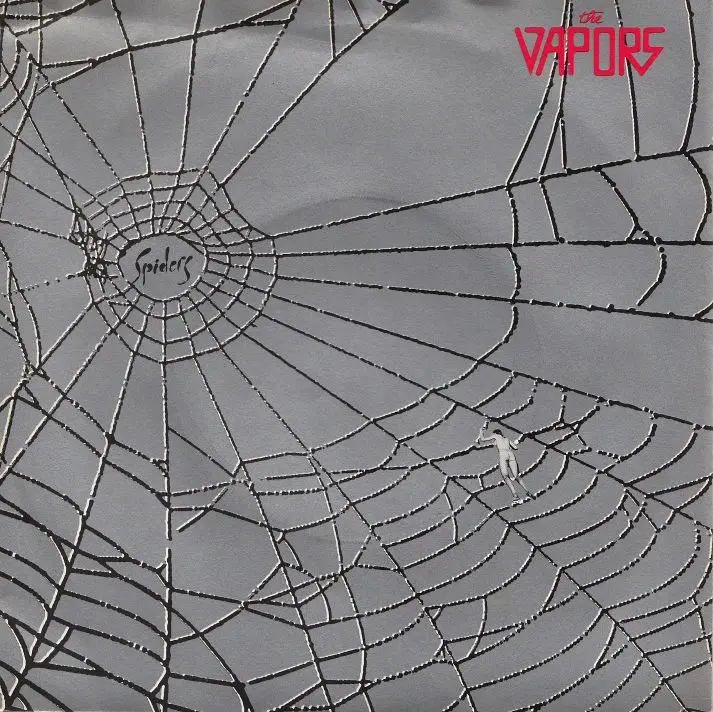
“Spiders” first appeared on February 6 as an advance single with “Galleries for Guns,” an exclusive b-sidethat references state violence and ideological conflict, making it one of the group’s most overtly topical recordings.
B. “Galleries for Guns”
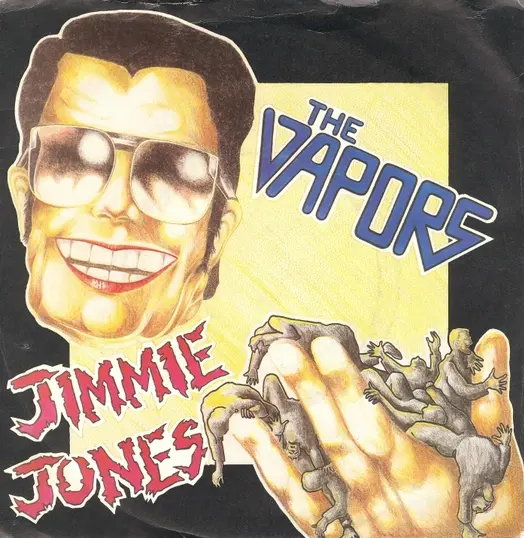 On May 22, The Vapors released a a remix of “Jimmie Jones,” their sardonic glance at cult leadership, with its title a thinly veiled reference to Peoples Temple figure Jim Jones. Set to a tight, choppy pattern and laced with eerie vocal effects, the song balanced immediacy with foreboding subject matter. The flip side featured a remix of “Daylight Titans,” a taut, fast-paced number that fused bright guitar lines with anxious lyrical tension. Neither version gained traction on the charts, despite the band’s increasing musical sophistication.
While Magnets reinforced the band’s sharpened lyrical vision, it coincided with internal tensions and managerial withdrawal, prefiguring their dissolution in 1982.
Discography:
- New Clear Days (1980)
- Magnets (1981)
Sources:
Artist/Album Pages:
Jane Siberry is a Canadian singer, songwriter, and multi-instrumentalist who debuted with a 1981 f...
Richard Gilly is a French singer/songwriter who debuted with the 1972 CBS release Je ne suis pas un ...
Danza Invisible was a Spanish new wave band that made the 1983–85 Ariola albums Contacto Interior ...
Argent was an English art-rock band that released six studio albums and a live double-LP on Epic bet...
Brand X was an English jazz-rock unit active between 1976 and 1980, driven by the fluid interplay ...
Jon Lord (1941–2012) was an English organist and composer, best known as a mainstay of hard-rockers ...
The Flowers were a Scottish post-punk band that released two singles on Bob Last's Pop:Aural Musi...
Bob Welch (July 31, 1946 — June 7, 2012) was an American singer, guitarist, and songwriter from Lo...
Quincicasm was an English avant-garde jazz combo that made a self-titled album in 1973 on Saydisc...
Bram Stoker was an English post-psych band that released the album Heavy Rock Spectacular on Windm...
Wang Chung was an English New Wave/modern-rock band that released a self-titled album under the na...
Keith Christmas is an English singer-songwriter who debuted with the 1969 album Stimulus on RCA. Tha...