
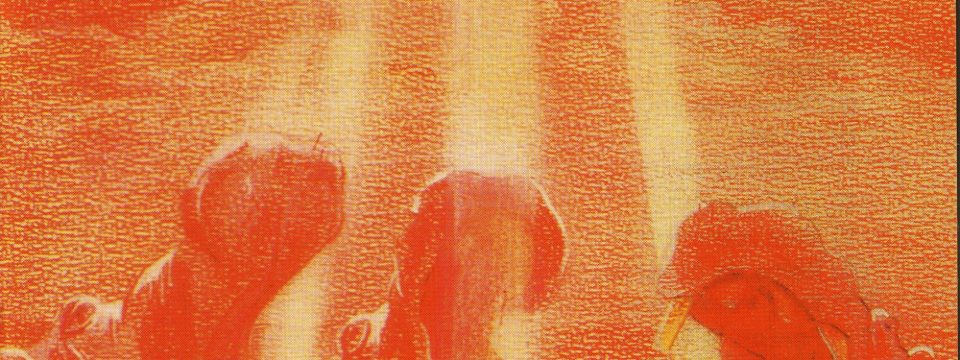
 Viva Boma is the second album by Belgian avant-garde jazz-rock combo Cos, released in November 1976 on IBC.
The album refines their hybrid of Canterbury-inspired jazz-rock and avant-prog, featuring heightened rhythmic intricacy, layered electric textures, and a tighter ensemble sound.
The lineup welcomes keyboardist–reedist Marc Hollander and drummer Guy Lonneux. Guitarist–flutist Daniel Schell composed all eight tracks, four in collaboration with Hollander. Pascale Son continues to front the group, utilizing wordless vocal phrasings as a lead instrument. Producer Marc Moulin contributes additional keyboards.
The material ranges from atmospheric miniatures to expansive multi-part pieces. The title track follows a brief electronic prelude, establishing a percussive framework of overlapping ethnic rhythms. The centerpiece, “L’Idiot Léon,” combines shifting time signatures and melodic development in an extended suite featuring oboe and bass clarinet. Cos recorded the sessions in July 1976 at Cathy’s 24-track Studio in Brussels.
A1. “Perhaps Next Record” (1:25) – Daniel Schell, Marc Hollander
The track opens with a brief electronic rhythm that establishes a sequence of recurring pulses. Primitive, distinct synthesizer tones emerge, creating a sonic motif that seamlessly leads into the next track. The rhythm and angular movement set a clear tone, marking the album’s energetic beginning.
A2. “Viva Boma” (2:35) – Daniel Schell
Pascale Son’s vocals weave through a rhythm infused with African-style percussion. The bass drives the section forcefully, while guitar and keyboard intertwine to shape an angular, cohesive movement. The composition introduces variety while maintaining the band’s signature originality, laying the groundwork for the album’s flow.
A3. “Nog Verder” [Still Further] (4:32) – Daniel Schell
The track begins with a delicate keyboard texture and unison vocals. A gentle triple rhythm carries the initial section, gradually building with contouring melodies. After two minutes, the organ enters, accelerating the tempo into a complex, intense section. Sections of seven-beat rhythm maintain energetic momentum, while angular vocals overlay a jazzy texture as the piece evolves.
A4. “Boehme” (3:17) – Daniel Schell
Dedicated to a hermetic philosopher, the track revolves around intricate harmonic progressions. Organ, drums, and keys establish a heavier foundation, with recurring multi-used sounds enhancing the steady rhythm. Vocals enter before the two-minute mark, shifting the piece into a funk-influenced section with wah-wah electric piano. The track closes in a fusion texture, merging diverse elements into an angular jazz-rock movement.
A5. “Flamboya” (7:33) – Daniel Schell
Vocals introduce an elegant, mysterious contour over a tense, flowing rhythm. Avant-garde rock influences surface intermittently, blending with complex textures throughout the arrangement. Electric piano mirrors the vocals, leading into chorused guitar and atmospheric synthesizers. A distorted bass solo takes prominence, followed by vocal improvisations and fuzzy keyboard textures that drive the composition to heightened intensity.
B1. “In Lulu” (4:08) – Daniel Schell, Marc Hollander
Pascale Son begins with vocalizations inspired by Middle Eastern and Indian styles before the band moves into a slow instrumental section. Percussion, guitar, and keyboards establish an immersive atmosphere, while overdubbed drum fills add subtle variation. The vocals entwine with avant-garde elements, guiding the composition through its delicate yet original flow.
B2. “L’idiot Léon” [The Idiot Leon] (10:48) – Daniel Schell, Marc Hollander
This extended track showcases the band’s technical breadth. Varied sequences repeat with nuanced changes as keyboards and guitars complement Pascale Son’s vocals. Piano textures interact with distorted keyboards, while guitar and bass create an original sonic flow. Jazzy solos and military-style drumming punctuate the piece, and later sections feature oboe, flute, and bass clarinet harmonies. Tempo shifts and evolving rhythms sustain the track’s dynamic, multifaceted character.
B3. “Ixelles” (5:02) – Daniel Schell
Angular movement drives the composition, alternating long instrumental passages with Pascale Son’s distinctly French vocals. Acoustic bass and cello enrich the midsection, while acoustic guitar solos punctuate the flow. A futuristic synthesizer appears early, defining a key element of the album’s sound, while the interplay of instruments maintains tension and complexity.
Bonus Tracks
9. “Mon Rebis” (6:04) – Marc Hollander
The track opens with a guitar arpeggio establishing an elegant atmosphere. Pascale Son’s vocals float over the angular chord progression, while the alto saxophone carries avant-garde passages. The band sustains a consistent, transparent sonic quality, blending technical precision with emotive clarity.
10. “Reine De La Vallée” [Queen of the Valley] (4:16) – Daniel Schell
Guitar and song vocals move in precise unison, while angular motifs shape the arrangement. Decorative bass lines and bright keyboard textures define the track’s atmosphere, creating a clear and complete sonic statement.
11. “Nog Verder (Demo Version)” [Still Further (Demo Version)] (7:20) – Daniel Schell
This early version presents a rawer texture than the album cut. Core vocal and instrumental sections remain intact, but the piece retains a session-like energy, emphasizing angular vocals and a dynamic sense of movement.
12. “Fanfan La Tulipe (Vocal Improvisation)” (2:41) – N/A
A purely improvised piece, the track pairs vocal and keyboard experimentation with spatially processed sounds. The composition embodies the band’s avant-garde approach, gradually refining ideas from earlier work into a flowing, exploratory statement.
Tracklist:
A1. “Perhaps Next Record” (1:25)
A2. “Viva Boma” (2:35)
A3. “Nog Verder” (4:32)
A4. “Boehme” (3:17)
A5. “Flamboya” (7:33)
B6. “In Lulu” (4:08)
B7. “L’idiot Léon” (10:48)
B8. “Ixelles” (5:02)
CD reissue bonus tracks:
9. “Mon rebis” (Previously Unreleased) (6:04)
10. “Reine de la vallée” (Previously Unreleased) (4:16)
11. “Nog Verder” (Demo Version) (7:20)
12. “Fanfan la Tulipe” (Vocal Improvisation) (2:41)
Credits:
Pascale Son — vocals, oboe
Daniel Schell — guitar, flute, devices, writer
Marc Hollander — keyboards, bass clarinet, devices
Alain Goutier — bass, cover art
Guy Lonneux — drums
Marc Moulin — producer
Pierre Dupriez — engineer
Artist/Album Pages:
Brazilian Dorian Dream is the third solo album by Brazilian keyboardist Manfredo Fest, released in 1...
Imaginary Voyage is the second of two studio albums released in 1976 by French-born/U.S.-based violi...
Album à Colorier is the second solo album by French musician/composer Albert Marcœur, released in 19...
Nova is an album by American jazz drummer Steve Reid, released in 1976 on Mustevic Sound. Tra...
Welsh-Connection is the eighth studio album by Welsh rockers Man. Released in 1976, the album would ...
Late Night Movies, All Night Brainstorms is the debut album by English art-rock/proto-punk band Doct...
Symphonie pour le jour où brûleront les cités is the debut album by French avant/chamber-rock quarte...
Beyond Expression is the second album by Dutch instrumental hard-rock band Finch, released in 1976 o...
Good Morning Kisses is the only album by Floridian singer/songwriter Michael Farneti, self-released ...
The Door Is Open is the second album by Pork Pie, the multinational jazz-rock collective led by Dutc...
Second Thoughts is the second album by Split Enz, released in August 1976 in Australia and New Zeala...
Ardour is the first of two albums by American symphonic-rock band Ethos, released in 1976 on Capitol...