

Ruphus was a Norwegian symphonic/jazz-rock band that released six albums between 1973 and 1979 on Polydor and Brain.
Singer Gudny Aspaas led the original lineup on New Born Day, comprised of post-psych Nordic heavy rock. Her replacement, Rune Østdahl, traded leads with male vocalist Rune Sundby on their 1974 album Ranshart, a polished symphonic-rock effort. Aspaas returned for their 1976 album Let Your Light Shine, full of soaring jazz-vocal epics and instrumentals produced by Terje Rypdal. Their third female vocalist, Sylvi Lillegaard, belted gritty lines across the jazz-rock interplay of the 1977/78 Ruphus albums Inner Voice and Flying Colours. Aspaas joined a third time for their 1979 swan song Man Made.
Members: Asle Nilsen (bass), Hans Petter Danielsen (guitar, 1972-73), Kjell Larsen (guitar), Håkon Graf (keyboards, 1972-76), Gudny Aspaas (vocals, 1972-74, 1975-76, 1978-81), Rune Sundby (vocals, 1972-74), Thor Bendiksen (drums, 1972-78, 1981), Freddy Dahl (vocals, 1974-76, 1980-81), Rune Østdahl (vocals, 1974-75), Jan Simonsen (keyboards, 1976-78), Sylvi Lillegaard (vocals, 1977-78), Udo Damen (drums, 1978-79), Kjell Rønningen (keyboards, 1978-80), Bjørn Jenssen (drums, 1979-?)<
Background
Ruphus had its roots in a band called Cat Food, formed in 1970 by flutist Asle Nilsen and guitarist Hans Petter Danielsen. After a sequence of short-term members, the lineup stabilized in 1972 with guitarist Kjell Larsen, keyboardist Håkon Graf, drummer Thor Bendiksen, and singers Rune Sundby (male) and Gudny Aspaas (female). Nilsen took up bass and the band became Ruphus.
In the spring of 1973, Ruphus signed to Polydor.
New Born Day
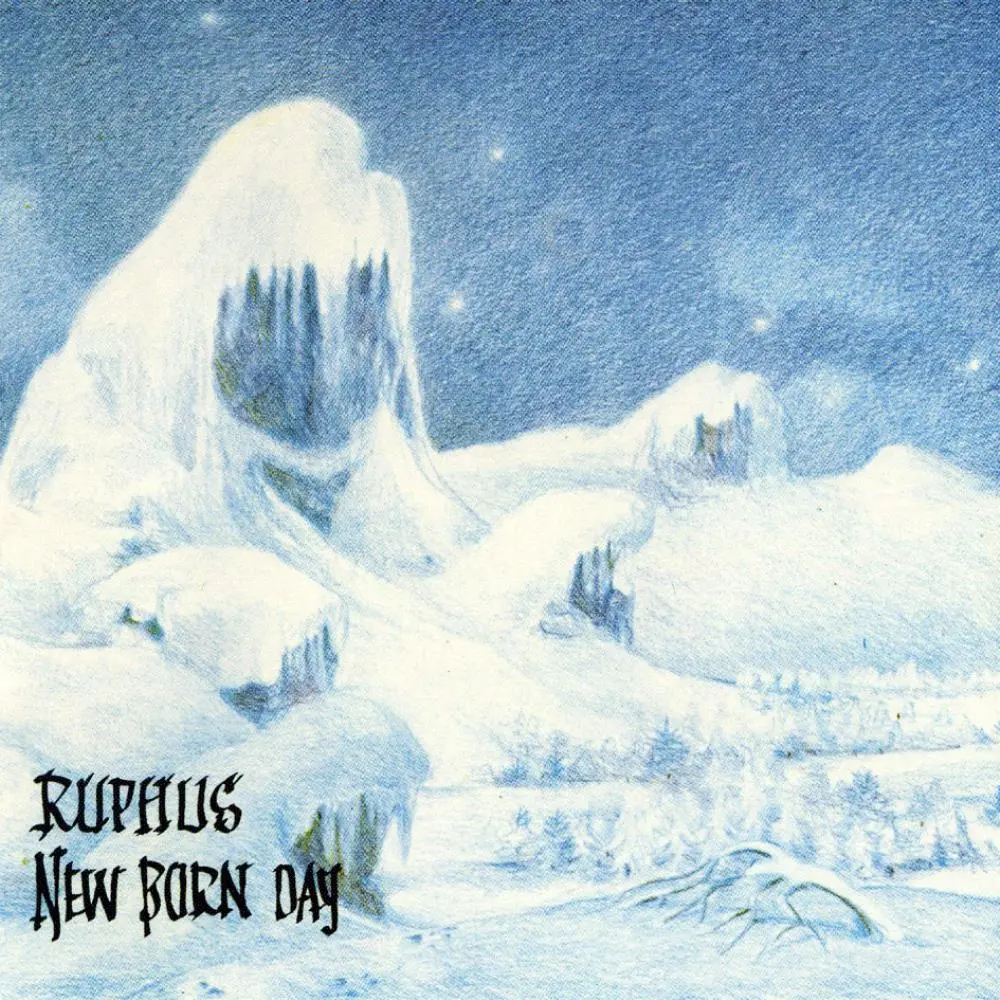 Ruphus released their debut album, New Born Day, in December 1973 on Polydor.
Across seven tracks, the band balanced forceful instrumental passages with dynamic vocal exchanges between Gudny Aspaas and Rune Sundby, blending heavy rock, jazz, and symphonic influences rooted in Hammond organ and guitar interplay akin to Frumpy.
Keyboardist Håkon Graf wrote four of the album’s seven songs and co-wrote the remainder with vocalist Sundby, guitarist Kjell Larsen, bassist Asle Nilsen, and singer Aspaas. Larsen handled most of the lead guitar work, while Sundby alternated between lead vocals, acoustic guitar, and saxophone.
The material alternates between power-driven, organ-heavy rock and intricate arrangements with flute and vibraphone accents. “Coloured Dreams” opens with churning guitar and dual vocals over surging Hammond lines. “Scientific Ways” contrasts acoustic passages and strident harmonies with flute interludes, while “Still Alive” and “The Man Who Started It All” combine jazz-inflected rhythm and brass-toned saxophone with forceful ensemble playing.
Side two peaks with “Trapped in a Game,” a dramatic, multi-sectioned piece centered on Aspaas’s commanding vocal delivery and organ-fueled dynamics. The title track features thick bass and rolling drum figures under layered keyboards, and “Day After Tomorrow” closes the album with a near-nine-minute sequence of tempo shifts and soaring vocal exchanges.
A1. “Coloured Dreams” (4:04)
A2. “Scientific Ways” (5:59)
A3. “Still Alive” (4:35)
A4. “The Man Who Started It All” (5:28)
B1. “Trapped in a Game” (6:06)
B2. “New Born Day” (5:43)
B3. “Day After Tomorrow” (8:47)
Sessions occurred at Rosenborg Studio in Oslo in September 1973 with producer Stein Robert Ludvigsen.
New Born Day appeared in a gatefold sleeve designed by Polydor’s in-house team, issued in both textured and non-textured variants, the former including a poster insert.
Ranshart
 Ruphus released their second album, Ranshart, in November 1974 on Polydor.
The album marked a stylistic embrace of British maximalist rock, akin to Babe Ruth and early Yes. Recorded as a five-piece with new vocalist Rune Østdahl, Ranshart presents a cleaner, keyboard-led sound centered on intricate arrangements and shifting time patterns. Compared to the heavier textures of New Born Day, this set emphasizes harmonic interplay, layered keyboards, and high-register vocals over dense guitar distortion.
Keyboardist Håkon Graf wrote or co-wrote four of the album’s five tracks, sharing credits with bassist Asle Nilsen, guitarist Kjell Larsen, lyricists Dag Saastad and Lars Nordlie, and poet Bjørn Dahl. Larsen contributed one co-write with Østdahl on the closing number.
The material alternates between rhythmic ensemble passages and long instrumental developments. “Love Is My Light” sets the tone with organ swells and Mellotron voicings under Østdahl’s high tenor lines. “Easy Lovers, Heavy Moaners” brings acoustic textures and multipart vocals in a lighter mood, while “Fallen Wonders” juxtaposes lyrical keyboard themes with assertive guitar breaks.
“Pictures of a Day,” the album’s centerpiece, unfolds in several movements with flute lines and Mellotron phrasing that suggest kinship with Focus and Kaipa. “Back Side” closes the album with Hammond-driven momentum and layered synthesizer solos across eight minutes of thematic turns.
A1. “Love Is My Light” (6:12)
A2. “Easy Lovers, Heavy Moaners” (4:37)
A3. “Fallen Wonders” (5:51)
B1. “Pictures of a Day” (8:30)
B2. “Back Side” (8:10)
Sessions occurred at Roger Arnhoff Studio in Oslo in October 1974 with Ruphus producing and Rolf Kjernet engineering.
Ranshart appeared in a single-sleeve design issued by Polydor Norway.
Ruphus accompanied Ranshart with a standalone single: “Flying Dutchman Fantasy,” a Graf/Sundby number backed with Graf’s “Opening Scene,” both added to later CD issues of the album.
A. “Flying Dutchman Fantasy” (3:08)
B. “Opening Theme” (3:18)
Let Your Light Shine
 Ruphus released their third album, Let Your Light Shine, in February 1976 on Polydor.
The album introduced a new jazz-fusion direction, shaped by keyboardist Håkon Graf’s concurrent work with guitarist Jon Eberson in Moose Loose and the influence of producer Terje Rypdal. Returning vocalist Gudny Aspaas joined Graf, guitarist Kjell Larsen, bassist–flutist Asle Nilsen, and drummer Thor Bendiksen in a sound that replaced Mellotron symphonics with supple Fender Rhodes, ARP synthesizer textures, and glacial, atmospheric interplay.
Graf wrote five of the album’s seven compositions, including the opening and closing tracks, while Nilsen and Larsen each contributed one. Guitarist Bjørn Tylden co-wrote the title track with Graf, and Rypdal provided additional synthesizer work and string arrangements.
The instrumental pieces unfold as continuous mood studies with occasional wordless vocals from Aspaas. “Sha Ba Wah” opens with electric piano syncopations and flute counterlines that lead into the brief interlude “Nordlys.” “Corner” and “Second Corner” present rhythmic exchanges between bass and drums under rippling ARP phrasings.
The title track builds from a submerged, nocturnal pulse into a bright, ascending movement of cascading keyboards and Aspaas’ soaring sustained vocal tones, evoking a transformation from dark oceanic depth to polar daylight. “Grasse” serves as a brief prelude to “Brain Boogie,” a ten-minute finale of relaxed fusion interplay with subtle funk pacing, calm electric piano motifs, and flute coloration.
A1. “Sha Ba Wah” (7:21)
A2. “Nordlys” (1:48)
A3. “Corner” (4:20)
A4. “Second Corner” (6:34)
B1. “Let Your Light Shine” (6:07)
B2. “Grasse” (1:48)
B3. “Brain Boogie” (9:58)
Sessions occurred at Rosenborg Studio in Oslo in December 1975 with Terje Rypdal producing and Hans Petter Danielsen engineering.
Let Your Light Shine features cover photography by Dag F. Gravem in a minimalist design consistent with Polydor’s mid-’70s Norwegian jazz line.
Inner Voice
 Ruphus released their fourth album, Inner Voice, in 1977 on Polydor.
The album advanced the band’s transition from symphonic rock into full-bodied jazz fusion, characterized by Fender Rhodes phrasing, abstract synthesizer tones, and brisk rhythmic exchanges under soulful female vocals. With the departure of keyboardist Håkon Graf and singer Gudny Aspaas, Ruphus rebuilt around returning members Kjell Larsen (guitar), Asle Nilsen (bass), and Thor Bendiksen (drums), joined by new recruits Jan Simonsen (keyboards) and Sylvi Lillegaard (vocals).
Larsen wrote three of the album’s six tracks and co-wrote two others. Lillegaard co-wrote four numbers and contributed all the lyrics, while Bendiksen and Simonsen each supplied one song. Nilsen composed the opening number on side two.
“Inner Voice” opens with electric piano and elastic guitar figures that rise beneath Lillegaard’s assertive phrasing. “Come Into View” unfolds across nearly seven minutes with an extended instrumental middle led by Simonsen’s Fender Rhodes runs and percussion by Svein Hansen. “No Deal” introduces a funk-influenced swing and alternating sung and instrumental sections, while “Too Late” and “Within the Walls” bring more lyrical vocal lines and disco-paced rhythm patterns. “Left Behind” closes the album with an expansive, synth-layered finale anchored by alternating vocal and keyboard cadences.
A1. “Inner Voice” (4:07)
A2. “Come Into View” (6:45) — features additional percussion by Svein Hansen
A3. “No Deal” (7:11) — features additional percussion by Svein Hansen
B1. “Too Late” (5:16)
B2. “Within the Walls” (6:26)
B3. “Left Behind” (6:10)
Sessions occurred at Rosenborg Studio in Oslo in January 1977 with Terje Rypdal producing and Hans Petter Danielsen engineering.
Inner Voice features front cover artwork by Kim Hart with back cover photography by Leif M. Sørlund and sleeve design by Jan Ole Norum.
Polydor promoted Inner Voice in Scandinavia and Germany through its association with Metronome Records, following Ruphus’s earlier exposure on the Brain Festival compilation LP recorded live in Essen, which showcased the band’s jazz-fusion lineup in concert.
Flying Colours
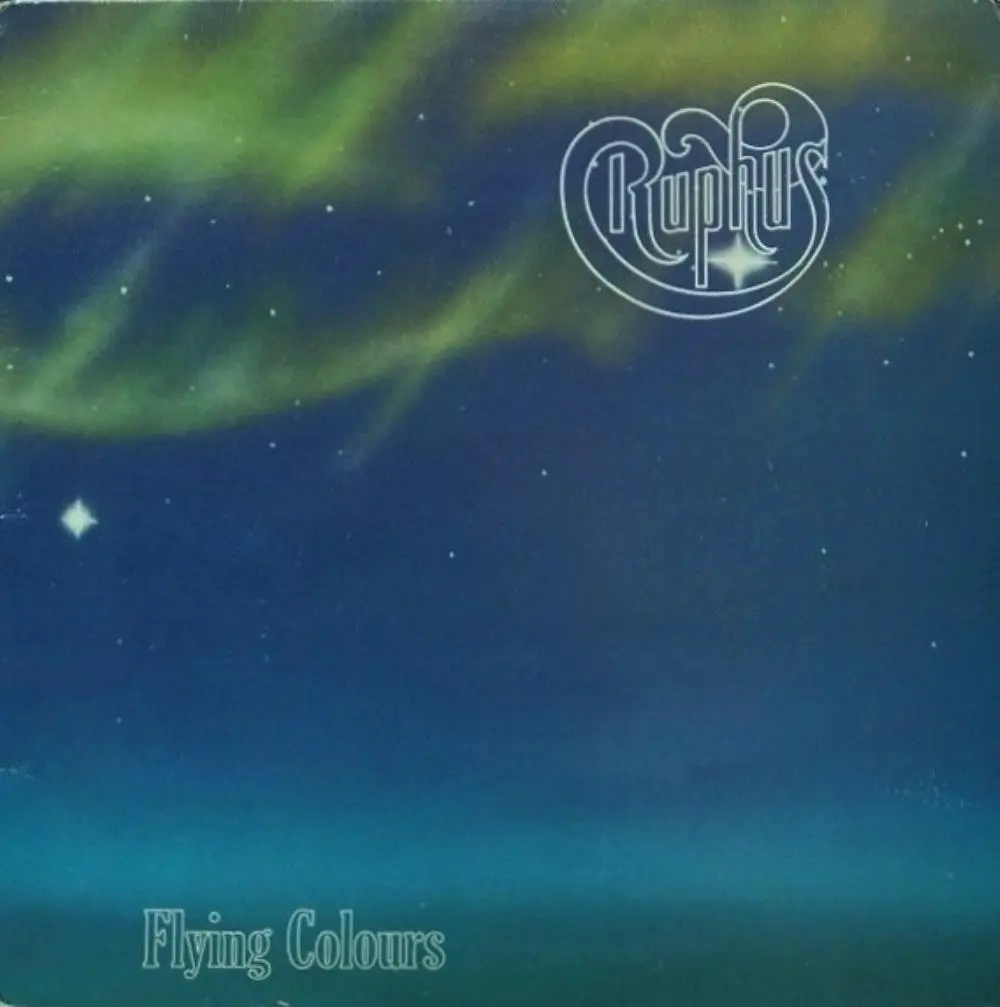 Ruphus released their fifth album, Flying Colours, in March 1978 on Polydor.
The album completed the band’s transition into refined jazz-fusion with pronounced funk inflections and a smoother rhythmic pulse. Vocalist Sylvi Lillegaard remained front and center, her raspy phrasing integrated into a luminous mix of electric piano, Moog synthesizer, and intricate percussion. Guitarist Kjell Larsen, keyboardist Jan Simonsen, bassist Asle Nilsen, and drummer Thor Bendiksen carried over the exploratory interplay of Inner Voice but applied a brighter, more melodic tone with increased compositional discipline and rhythmic clarity.
Larsen wrote two of the album’s eight pieces and co-wrote two others with Simonsen and Lillegaard. Simonsen composed the three-part suite “Moody Moments,” while Nilsen contributed “The Rivulet.” Lillegaard co-wrote three tracks and handled all the lyrics.
The first side alternates between brisk funk fusion and reflective instrumental passages. “Foodlovers’ Diet” opens with an uptempo rhythm under sharp guitar phrases and percussive accents, while “Frysja” recalls the group’s Nordic roots through shifting tonal layers and an airy, folk-inflected atmosphere. “Early Riser” and the title track adopt smoother textures with liquid keyboard passages and understated rhythmic movement.
Side two features the jazz-centered “The Rivulet,” highlighted by a violin solo from guest musician Trond Villa, followed by “Joy,” an electric-piano-driven number with brief choral phrasing. The closing suite, “Moody Moments,” unfolds in three sections—“The Moment,” “Gloom,” and “Exaltation”—tracing an instrumental arc from subdued piano motifs to funk-driven interplay and open harmonic resolution.
A1. “Foodlovers’ Diet” (3:54)
A2. “Frysja” (4:07)
A3. “Early Riser” (4:09)
A4. “Flying Colours” (6:12)
B1. “The Rivulet” (4:39) — features violin by Trond Villa
B2. “Joy” (4:20)
B3. “Moody Moments”
— a. “The Moment” (1:42)
— b. “Gloom” (2:33)
— c. “Exaltation” (5:08)
Sessions occurred at Rosenborg Studio in Oslo between December 1977 and January 1978 with Ruphus self-producing and Hans Petter Danielsen engineering and mixing.
Flying Colours was issued through Polydor’s German affiliate Metronome Musik and published by Wintrup Musikverlag. It marked the final album by the classic 1970s Ruphus lineup before a two-year hiatus.
Man Made
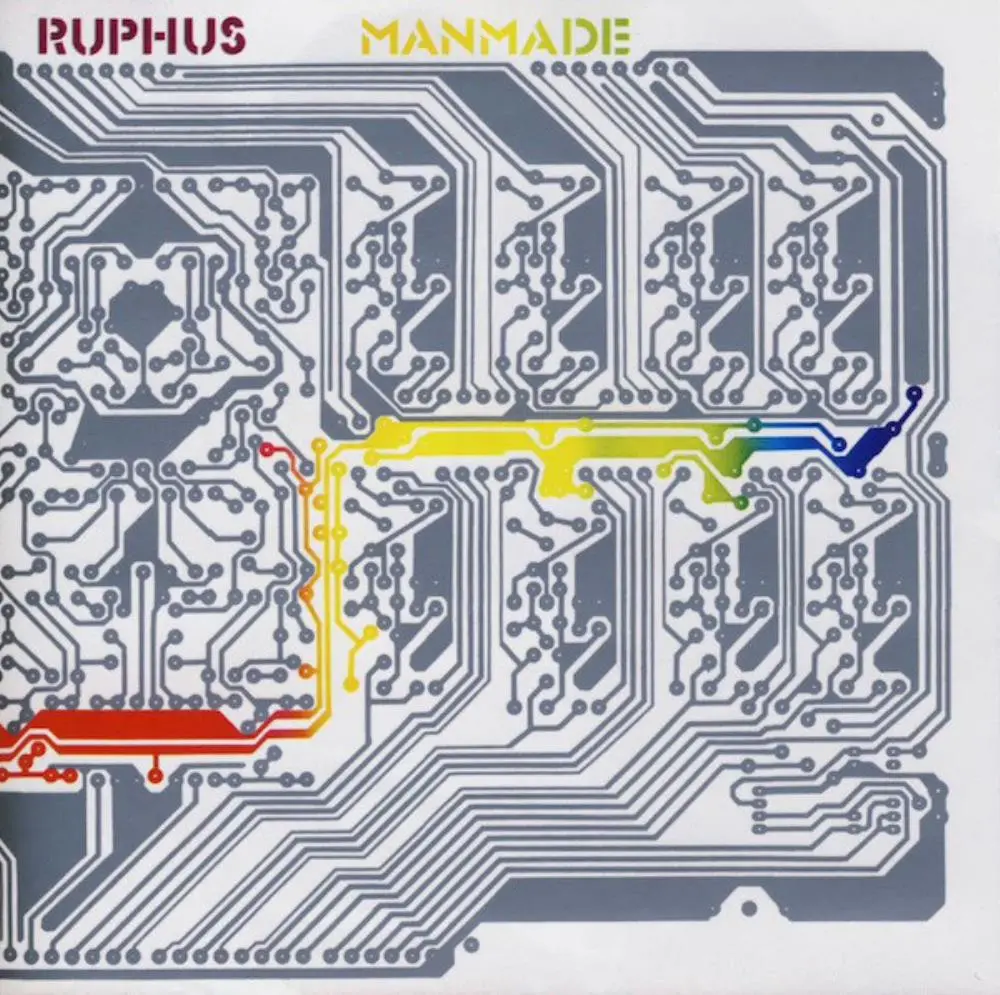 Ruphus released their sixth album, Man Made, in 1979 on Polydor.
The album continued the band’s focus on jazz-fusion with harmonic counterpoint and global rhythmic elements while emphasizing smooth, relaxed vocal delivery. Gudny Aspaas replaced Sylvi Lillegaard on lead vocals, bringing a polished, fluid tone that softened the ensemble’s sound and highlighted the interplay between Kjell Larsen’s guitar, Kjell Rønningen’s keyboards, Asle Nilsen’s bass, and Bjørn Jenssen’s drums and percussion.
Larsen composed the majority of the material, writing four tracks and co-writing one with Rønningen. Lillegaard contributed lyrics, while Aspaas performed all lead vocal lines.
The album opens with “Clear View,” a spacious, soft-jazz piece featuring extended guitar phrasing and syncopated bass and drum patterns, reflecting Canterbury-influenced improvisation. “Snowy Days” slows the pace into a drawn-out, reflective ballad. “Greener Grass Elsewhere” combines gentle jazz harmonies with subtle rhythmic shifts, while “Dear Friend” stretches over ten minutes with delicate instrumental interplay. “When the Tide Comes In” continues the subdued fusion approach, and “Fashion of Today” closes in epic form with balanced harmonic textures and fluid instrumental lines.
A1. “Clear View” (6:04)
A2. “Snowy Days” (6:44)
A3. “Greener Grass Elsewhere” (5:28)
B1. “Dear Friend” (10:35)
B2. “When the Tide Comes In” (5:40)
B3. “Fashion of Today” (6:35)
Sessions occurred at Sawmills Studio in England during January and February 1979 and were mixed at Sawmills with remixing at Rosenborg Studio. Colin H. Jennings and Steven O’Donnel co-produced, Simon Fraser engineered the recordings, and Hans Petter Danielsen handled remix engineering for side B.
Man Made features cover design and photography by Bruno Oldani. The album represents Ruphus’ final studio recording, emphasizing smooth jazz-fusion textures and strong vocal performance from Aspaas.
- New Born Day (1973)
- Ranshart (1974)
- “Flying Dutchman Fantasy” / “Opening Scene” (1974)
- Let Your Light Shine (1976)
- Inner Voice (1977)
- Flying Colours (1978)
- Man Made (1979)
Sources:
Artist/Album Pages:
Eugenio Finardi (born July 16, 1952) is an Italian singer/songwriter who released five albums betw...
Madden & Harris were the Australian symphonic-folk duo of multi-instrumentalist/tutor Peter Ha...
Moose Loose was a Norwegian jazz-rock band behind the 1974 Mai release Elgen er Løs, followed by t...
Roy Haynes (March 13, 1925 — November 12, 2024) was an American jazz drummer and bandleader from ...
Circus was the Swiss symphonic-rock band behind the 1976–78 Zytglogge albums Circus, Movin' On, Al...
Willis Jackson (April 25, 1932 – Oct. 25, 1987) was an American tenor saxophonist who released more ...
Alex Band was a Polish jazz-funk orchestra from Poznań, formed in 1977 as a backing group for singer...
Vortex was a French Zeuhl band that released a self-titled album on JBP in 1975, followed by the p...
Spheroe was a French jazz-rock band behind the 1977/78 Cobra albums Spheroe and Primadonna. Membe...
Gloria Gaynor is an American singer whose recording career began with a 1965 Jocida single and exp...
Sky King was an American jazz-funk band from Michigan that released the 1975 album Secret Sauce o...
GÄA was a German Krautrock band that made the 1974 album Auf der Bahn zum Uranus on Kerston. Track...