

Nadavati was a French jazz-rock band that released the 1978 IPG album Le Vent de l’esprit Souffle où il Veut.
Members: Jaques Liot (guitar, percussion), Patrice Freequentin (alto saxophone, flute), Mico Nissim (piano, synthesizer), Alain Lecointe (bass, percussion), Didier Hauck (drums, percussion)
Background
Nadavati formed in Paris after guitarist Jacky Liot left Hechetu Welo, an unissued jazz-rock group whose later lineup included ex-Ergo Sum singer-saxophonist Lionel Ledissez.
Liot had first worked with bassist Alain Lecointe in Caméléon, a short-lived group tied to manager-producer Patrice Michel. Caméléon cut the 1971 Epic single “Le Chemin de la Descente” (b/w “Je Hurle Que je T’aime”).
After Caméléon, Liot and Lecointe formed Hechetu Welo with drummer Didier Hauck (ex-Triode), keyboardist Dominique Luro, and singer-percussionist Patrick Mazie. Singer Hannibal Delamour and Ledissez joined near the end of the group’s run.
Hechetu Welo rehearsed in a basement for three years but played few concerts under its own name. The group then tested its repertory on a Brittany run of roughly ten dates before Liot’s exit. He wrote the Nadavati music for an unrealized theater piece about a spiritual quest, then recorded a solo demo of the pieces.
Lecointe heard the demo and joined the new project with Hauck. Liot and Lecointe then brought in keyboardist Mico Nissim and reedist Patrice “Free” Quentin.
Le Vent de l’esprit Souffle où il Veut
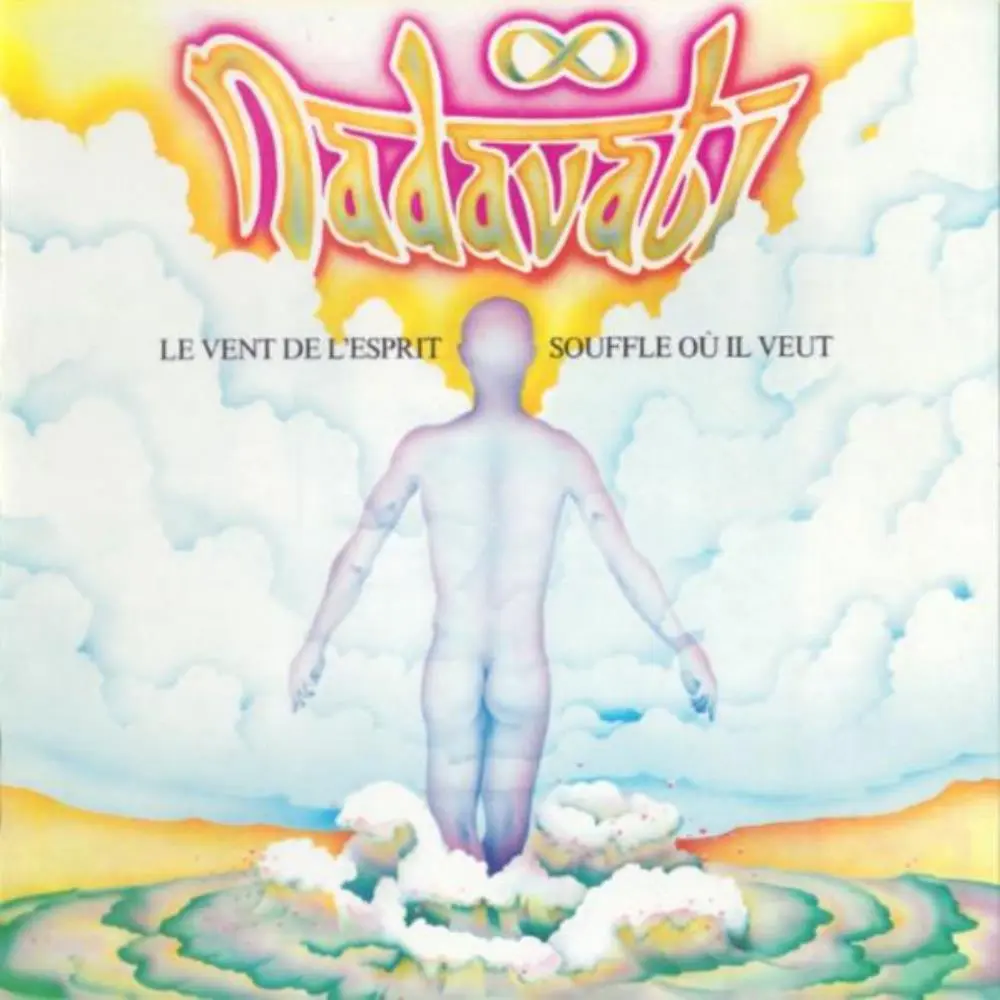 Nadavati released their only album, Le Vent de l’esprit Souffle où il Veut, in 1978 on IPG. The title translates as The Wind of the Spirit Blows Where It Will.
The album contains six Jacques Liot compositions adapted from music for an unrealized stage piece about a spiritual quest. Liot performs with reedist Patrice Freequentin (alto saxophone, flute), keyboardist Mico Nissim (piano, clavinet, electric piano, Oberheim synthesizer), bassist Alain Lecointe, and drummer Didier Hauck.
Nadavati also uses singers Lionel Ledissez and Joël Hanibal Delamour, plus brass parts by trumpeter Jean-François Canape, tenor saxophonist Richard Raux, and trombonist Joseph Traindl. They also employ a string quartet with violist Christian Dufour, cellist Jean-Jacques Wiederker, and violinists Michel Ripoche and Roland Stepczak.
“L’esprit Souffle où il Veut” surges through bright brass punctuation, clipped ensemble accents, and a chugging midsection of electric string counter-runs. “La Valse du Fou” whirls on tilted dance accents, with sax phrases and key turns that cut with lopsided stride. “Wu-Nien” races through fast unison motion and rapid improvising, then breaknecks into compact ensemble replies. “Retour” drops to cooler, open-spaced phrasing after the preceding rush.
“Ananda” lopes on a thick low-register pattern and locks solo lines into long, heat-hazed cycles. “Le Pays de la Lumière Dorée” leads wordless male chant across grinding rhythm patterns to a midsection climb before the final piano-led passage recedes into a long fade.
A1. “L’esprit souffle où il veut” [The Spirit Blows Where It Wills] (5:54)
A2. “La Valse du fou” [The Madman’s Waltz] (4:45)
A3. “Wu Nien” [No-Thought] (4:53)
A4. “Retour” [Return] (3:53)
B1. “Ananda” [Bliss] (10:00)
B2. “Le Pays de la lumière dorée” [The Land of Golden Light] (10:20)
The group recorded and mixed the album between April 18 and May 3, 1977, at Studio Adam in Roissy-en-Brie. Liot co-produced the sessions with Alain Lecointe and Jean-Jacques Terronnes.
Le Vent de l’esprit Souffle où il Veut displays a cover illustration by Jean-Louis Bilweis.
Postlude
Alain Lecointe played on 1981 albums by the Alain Eckert Quartet and Serge Bringolf & Strave (Vision).
Mico Nissim played on 1979–81 albums by Didier Malherbe, Claude Barthélémy, Moving, and Marquis de Sade. He went solo with the 1982 Celluloid release Dunya.
Patrice Freequentin played on 1977/89 albums by Urban Sax and Le Grand Nébuleux et les Laveurs de Consciences.
Discography:
- Le Vent de l’esprit Souffle où il Veut (1978)
Sources:
Artist/Album Pages:
Joe Farrell — aka Joseph Carl Firrantello (Dec. 16, 1937 — Jan. 10, 1986) — was an American woodwi...
Phoenix is a pioneering Romanian rock band, active from the mid-1960s. They released two beat-styl...
Opposite Corner was a Swedish avant-garde jazz ensemble on the 1972 split-release Club Jazz 5 with...
Jasper van't Hof (born June 30, 1947) is a Dutch pianist, keyboardist, composer, and bandleader ac...
The Sons of Champlin were an American brass-rock-soul band from San Francisco, formed in 1965 by n...
Pentacle was a French symphonic-rock band that released the album La Clef des Songes on Arcane in ...
Spirits Rejoice was a South African jazz-funk band behind the 1977 Atlantic album African Spaces, ...
Beto Guedes (born Aug. 13, 1951) is a Brazilian singer-songwriter and multi-instrumentalist who em...
Barbara Mason is an American soul singer and songwriter, best known for her 1965 hit "Yes, I'm Rea...
Strutt was an American soul-funk band behind the 1976 Brunswick album Time Moves On. Members: C...
The Floyd Hunchback Group was a Swiss jazz-rock band that released a 1978 self-titled album on Su...
Mike Santiago & Entity were an American jazz-rock quintet that released the 1977 Chiaroscuro a...