
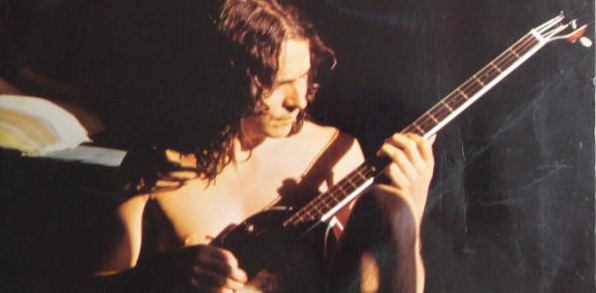
Beto Guedes (born Aug. 13, 1951) is a Brazilian singer-songwriter and multi-instrumentalist who emerged from the Belo Horizonte music circle of Milton Nascimento and Lô Borges. He appeared on their 1972 double album Clube da Esquina and shared a 1973 Odeon album with Danilo Caymmi, Novelli, and Toninho Horta.
Guedes launched his solo career with the 1977 album A Página do Relâmpago Elétrico, followed by the 1978–81 EMI-Odeon titles Amor de Índio, Sol de Primavera, and Contos da Lua Vaga.
Background
Beto Guedes was born Alberto de Castro Guedes on August 13, 1951, in Montes Claros, Minas Gerais, Brazil. His father, composer and saxophonist-clarinetist Godofredo Guedes, led a regional ensemble with relatives and friends. Beto joined on pandeiro at eight. In 1960, the family moved to Belo Horizonte, where he befriended Lô Borges.
In 1964, Guedes and Lô formed The Beavers with Yé Borges and Márcio Aquino. The quartet sang Beatles covers with Guedes on acoustic guitar and appeared on Rádio Inconfidência and local children’s television. During school holidays in Montes Claros, Guedes played electric bass with Os Brucutus, a dance band that included his older brother. Guitarist Toninho Horta also taught harmony to Guedes and Lô during their Belo Horizonte years.
In 1969, Guedes and Lô entered “Equatorial,” their partnership with lyricist Márcio Borges, in the first Festival Estudantil da Canção de Belo Horizonte. The following year, Som Imaginário performed “Feira Moderna,” a Guedes–Lô–Fernando Brant collaboration, at the V Festival Internacional da Canção. The group also cut the song for their 1970 Odeon debut Som Imaginário.
In 1972, Lô invited Guedes to Rio de Janeiro after Milton Nascimento proposed a joint double album. The three shared a house in Mar Azul, Niterói, where they prepared material for Clube da Esquina. Guedes played bass, drums, guitar, and percussion across the sessions and sang with Nascimento on “Nada Será Como Antes.”
Following Clube da Esquina, lyricist Ronaldo Bastos proposed individual Odeon albums for Guedes, Toninho Horta, Novelli, and Danilo Caymmi. The label approved a single shared LP. The four entered Odeon studios in Rio de Janeiro with producers Milton Miranda and Nelson Ângelo for the 1973 album Beto Guedes, Danilo Caymmi, Novelli e Toninho Horta.
Discography:
- Beto Guedes / Danilo Caymmi / Novelli / Toninho Horta (1973)
- A página do relâmpago elétrico (1977)
- Amor de índio (1978)
- Sol de primavera (1979)
- Contos da lua vaga (1981)
- Viagem das mãos (1984)
- Alma de borracha (1986)
References and notes
- Museu da Pessoa — Beto Guedes interview, September 21, 2004. Firsthand history of Godofredo, pandeiro, The Beavers, Os Brucutus, early broadcasts, festivals, and Clube da Esquina. (Oral history)
- Museu da Pessoa — Lô Borges interview. Confirms The Beavers lineup with Márcio Aquino, “Equatorial,” and the invitation that brought Guedes into the 1972 project. (Oral history)
- Museu da Pessoa — Toninho Horta interview. Confirms that Horta taught harmony to Guedes and Lô Borges during their adolescence. (Oral history)
- IMMuB — V Festival Internacional da Canção, Vol. 2. Original 1970 Odeon credits establish the three composers of “Feira Moderna” and Som Imaginário as performers. (Festival LP)
- Dicionário Cravo Albin — Som Imaginário. Confirms “Feira Moderna” on the 1970 debut album and the group involvement with Milton Nascimento. (Group discography)
- Folha de S.Paulo — Lô Borges, January 24, 2016. Firsthand account of the Rio move and early Clube da Esquina preparations. (Recollection)
- Maria Tereza R. Arruda Campos — Toninho Horta: Harmonia Compartilhada, 2010, pp. 66–67. Documents the Ronaldo Bastos proposal, Odeon refusal to finance four solo albums, and shared-LP arrangement. (Book)
- O POVO — Danilo Caymmi interview, September 18, 2017. Caymmi recalls the overnight Odeon session and additional recording time required by Guedes. (Interview)
- Discografia Brasileira — Beto Guedes, Danilo Caymmi, Novelli, Toninho Horta. Original 1973 Odeon album, production credits for Milton Miranda and Nelson Ângelo, and individual track personnel. (Album credits)
Artist/Album Pages:
Chris Craft was a Belgian space-funk studio project that yielded the album Discosmic Dance on Euro...
Proud was a Swedish heavy metal band behind the 1984 EMI album Fire Breaks the Dawn. Members: An...
Karthago was a German rock band formed around guitarist/vocalist Joey Albrecht and keyboardist Ing...
Starry Eyed and Laughing were an English rustic-rock band that released the 1974–75 CBS albums Sta...
Blue Mitchell (March 13, 1930 — May 21, 1979) was an American post-bop/jazz-funk trumpeter from M...
Roy Harper (born June 12, 1941) is an English folk-rock singer/songwriter and guitarist from Rusho...
Chris De Burgh (born Oct. 15, 1948) is an Irish singer/songwriter who launched his five-decade car...
Ernie Story is an American songwriter and musician from Minneapolis who released the 1977 album M...
Marshall Crenshaw is an American songwriter and guitarist from Detroit. He released six studio album...
New Order are an English electro-pop band that made five albums and twenty singles between 1981 an...
Pastoral was an Argentine folk duo of guitarist-singers Alejandro De Michele and Miguel Angel Erau...
Autumn was a Belgian coldwave trio that released three cassette albums and the single "Synthesize"...