

Marquis de Sade was a French New Wave/art-punk band from Rennes that issued a pair of shortplayers on Terrapin in 1978, followed by two albums and a standalone single on Pathé between 1979 and 1981.
Members: Philippe Pascal (vocals), Frank Darcel (guitar), Anzia (guitar, 1977-78), Christian Dargelos (bass, vocals, 1977-78), Pierre Thomas (drums, 1977-78), Thierry Alexandre (bass, 1979-81), Eric Morinière (drums, 1979-81), Philippe Herpin (saxophone), Daniel Paboeuf (saxophone)
Background
Marquis de Sade formed in Rennes during the summer of 1977 when bassist/singer Christian Dargelos and guitarist Frank Darcel (b. September 26, 1958; Loudéac) teamed amid the growing Breton punk scene. The pair initially intended to name their group Les Rats d’Égouts before adopting Marquis de Sade after the pen-name of Donatien Alphonse François (1740-1814), the French Romantic novelist whose sexually charged works gained academic renown in the 20th century. Drummer Pierre Thomas joined through a classified ad. Keyboardist Alain Pottier completed the early lineup.
Following their debut concert, singer Philippe Pascal (b. September 8, 1956; Sfax, Tunisia) replaced Pottier and became the group’s frontman. Pascal and Darcel had circulated in overlapping Rennes bands: Pascal came from Pentathal Lethally, which also included guitarist Anzia (Michel Rouillé) and inspired the later Marc Seberg connection. Saxophonist Daniel Paboeuf—a member of the experimental ensemble Anches Doo Too Cool—joined for their debut recording.
“Air-Tight Cell”
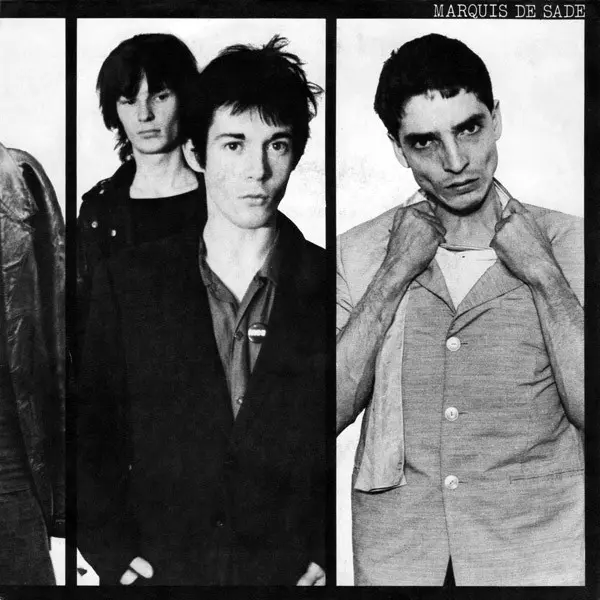 In early 1978, Marquis de Sade entered DB Studio in Rennes with engineer Jean-Pierre Boyer and Frédéric Renaud to record their first single for Terrapin Records. Released that July, “Air-Tight Cell” backed with “Henry” marked their recorded debut.
A. “Air-Tight Cell” (3:50) – fractious cut with trebly distorted guitar and blaring atonal sax across a brisk 4-on-4 bassline/backbeat; final third rolls back the riff for warmer sax excursions across the unrelenting rhythms.
B. “Henry” (3:40) – distorted stop/start riff (in D minor) poking 7ths from the syncopated bassline; spinning bridge (in B) with hyperactive strum; piercing lyrical guitar licks on the break.
Shortly afterward, Thomas departed for Private Jokes and Dargelos left the group. The new rhythm section featured drummer Eric Morinière and bassist Thierry Alexandre, solidifying the core lineup of Pascal, Darcel, and Morinière.
During this transition, temporary bassist Serge Papaïl (ex-Frakture) played with the band for several months, during which they recorded a four-song demo that included “Die” (later issued on CD reissues of Dantzig Twist), plus “Conrad Veidt” and “Who Said Why?”—two songs later featured on their debut album. Papaïl’s departure brought Alexandre’s arrival and the signing to the CBH division of Pathé-Marconi. Saxophonist Paboeuf returned for the album sessions, while Anzia remained until October 1979, when he was replaced by Frédéric Renaud.
Dantzig Twist
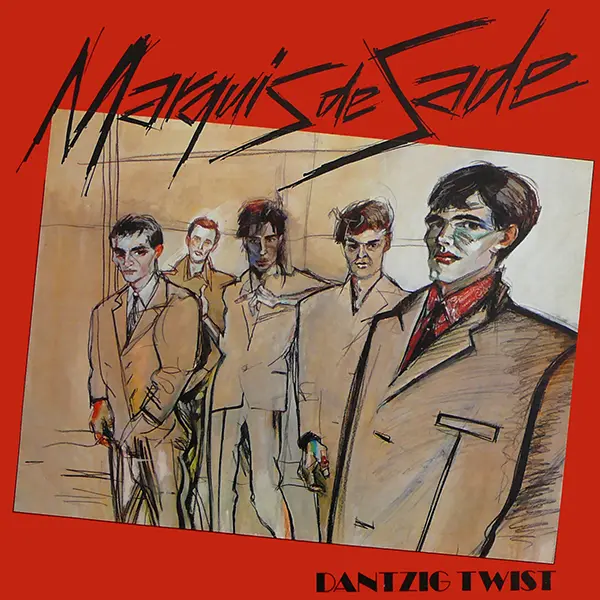 Marquis de Sade released their debut album, Dantzig Twist, in 1979 on Pathé.
The album captures their early post-punk aesthetic with clipped guitars, urgent rhythms, and stark vocal phrasing framed by brittle production and atmospheric saxophone. It combines expressionist imagery and taut musical architecture that bridges punk minimalism with art-rock tension.
Guitarist Frank Darcel composed most of the material with input from singer Philippe Pascal, bassist Thierry Alexandre, and saxophonist Daniel Paboeuf. Drummer Eric Morinière contributed one song, and Anzia wrote the closing track “Smiles.”
The music alternates between terse rhythm pieces and brooding mid-tempo numbers. “Set in Motion Memories” opens the set with serrated guitars and tense propulsion. “Walls” blends piano and bass over a moody 4/4 pace with Pascal’s declamatory vocal delivery and a staccato guitar break. “Henry,” recut from their first single, pairs angular guitars with atonal sax bursts. “Conrad Veidt” evokes German Expressionism, named after the actor who starred in The Cabinet of Dr. Caligari. “Skin Disease” drives briskly on a rigid backbeat and distorted riffing before breaking into an uneasy minor-key interlude. “Smiles” closes the album with restless dual guitars and fragmented bass patterns.
A1. “Set in Motion Memories” (3:50)
A2. “Henry” (3:25)
A3. “Walls” (3:37) — piano/bass intro in D; mid-tempo number with earnest vocals; staccato guitar break with cymbal mist.
A4. “Conrad Veidt” (4:54) — named after the German actor who starred in the 1920 horror silent The Cabinet of Dr. Caligari, a classic of Expressionist cinema.
A5. “Nacht und Nebel” (0:55)
B1. “Who Said Why?” (3:25) — bass-driven uptempo piece in C major with steady rhythm and clean, chorused guitar accents.
B2. “Japanese Spy” (2:12)
B3. “Skin Disease” (3:33) — brisk uptempo track with tight clicking backbeat and turgid bassline (in D), coiled with sandy guitar riffs; pensive mid-section (in E minor) with tumbling fills and broken chords.
B4. “Boys-Boys” (4:50)
B5. “Smiles” (2:35) — wayward Go4-like number with bobbing bass, twitching guitars, distant sax break.
Sessions took place in the summer of 1979 at DB Studio in Mélesse with producer Thierry Haupais and engineers Jean-Pierre Boyer and P. Darnaud. The album was cut at Translab in Paris.
Dantzig Twist features cover design by Laurent Leserre and photography by Richard Baltos. The band conceived the sleeve layout.
“Rythmiques”
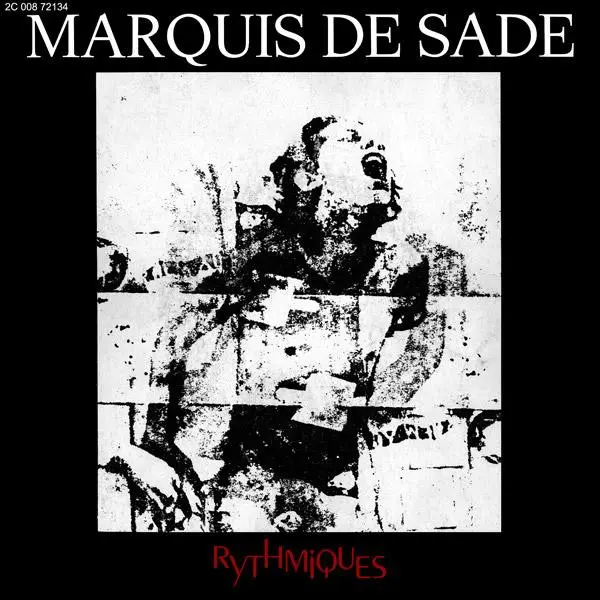 On June 10, 1980, Marquis de Sade dropped their second standalone single: “Rythmiques,” a Darcel/ Pascal original backed with “White Light White Heat,” a Velvet Underground cover. The A-side continued their taut rhythmic aesthetic while the flipside paid tribute to Lou Reed’s proto-punk blueprint.
A. “Rythmiques” (2:47)
B. “White Light White Heat” (3:03) originated as a the title-track to the 1968 second album by the Velvet Underground. David Bowie popularized the song in the UK and Europe with his 1972 live version.
Saxophonists Philippe Herpin and Daniel Paboeuf contributed to both tracks and appeared regularly with the band in concert as “permanent guests.”
Rue de Siam
Discography:
- “Air-Tight Cell” / “Henry” (1978)
- Dantzig Twist (1979)
- “Rythmiques” / “White Light White Heat” (1980)
- Rue de Siam (1981)
Sources:
Artist/Album Pages:
Ananga-Ranga was a Portuguese jazz-rock band that released three singles and the 1979/80 Metro-Som...
Torch was a Swedish metal band that released two shortplayers and the 1983/84 albums Torch and Ele...
Alice Cooper is an American singer and performer, best known for the shock-rock antics and horror tr...
Stanley Clarke is an American jazz-funk bassist who gained prominence in the supergroup Return to ...
Ian Thomas is a Canadian songwriter, guitarist, and singer who released six albums on GRT between ...
Fern Kinney is an American soul singer who released three albums and scored a 1979 UK No. 1 hit w...
Jorge Dalto (July 7, 1948 — Oct. 27, 1987) was an Argentine jazz-funk pianist who emerged as a sid...
Medium Medium was an English art-funk band from Nottingham that released three shortplayers and th...
Locomotiv GT was a Hungarian rock band from Budapest. Ringasd el magad and Bummm! established the ...
Spoons were a Canadian synthpop band that released three albums on Ready Records between 1981 and ...
Patrick D. Martin is an English new wave musician who released three 1979/80 singles on Deram and ...
The The are an English art-pop band headed by musician and songwriter Matt Johnson. As a duo, Th...