

Malicorne was a French folk band from the namesake commune of Malicorne in Auvergne, formed in 1973 by Gabriel Yacoub, Marie Sauvet, Hughes de Courson, and Laurent Vercambre.
The group adapted French-language traditional songs through multipart vocals, electric amplification, and instruments drawn from regional European repertories. Malicorne released eight studio albums between 1974 and 1986, plus the 1979 concert recording En Public. Revised lineups resumed activity in the 1980s and reunited from 2011 through a final concert in Paimpol in August 2017.
Members: Gabriel Yacoub (acoustic guitar, electric guitar, banjo, mandocello, autoharp, vocals), Marie Sauvet (hurdy gurdy, dulcimer, vocals), Hughes de Courson (crumhorn, flute, timpani, synthesizer, glockenspiel, piano, harmonium, positive organ, gaita, percussion, vocals, drums), Laurent Vercambre (violin, cello, viola d’amore, nyckelharpa, mandolin, mandocello, clarinet, melodeon accordion, guitar, vocals, bass), Olivier Zdrzalik (bass, percussion, keyboards, clavinet, choir, tubular bells, vocals), Jean-Pierre Arnoux (percussion, drums, tom-tom), Patrick Lemercier (violin, guitar, lyre, choir, bagpipes, crumhorn), Dom Reger (strings, vocals), André Proulx (flute), Brian Gulland (flute, bassoon, horn, keyboards, vocals), Michel Bourseix (xylophone), Michel Camicas (trombone), Jim Cuomo (saxophone), Bertrand Darin (piano), Richard Galliano (accordion, bandoneón), Alain Hatot (soprano saxophone), Iván Lantos (flute, bagpipes), Romain Mayoral (clarinet), Jean-Michel Kajdan (electric guitar), Alan Kloater (whistle, Uilleann pipes), Michel LeCam (mandolin, violin, choir, crumhorn)
Formation
Malicorne formed in Paris on September 5, 1973, when Gabriel Yacoub and Marie Sauvet assembled a group with Hughes de Courson and Laurent Vercambre. The name came from Malicorne-sur-Sarthe, a town encountered on the way to a Brittany engagement, not from a commune in Auvergne.
 Near the end of 1971, Gabriel joined the touring group of Alan Stivell. He played guitar, banjo, and dulcimer and sang on the 1972 concert album À l’Olympia and the 1973 studio release Chemins de Terre. In summer 1973, he left to concentrate on traditional songs in French.
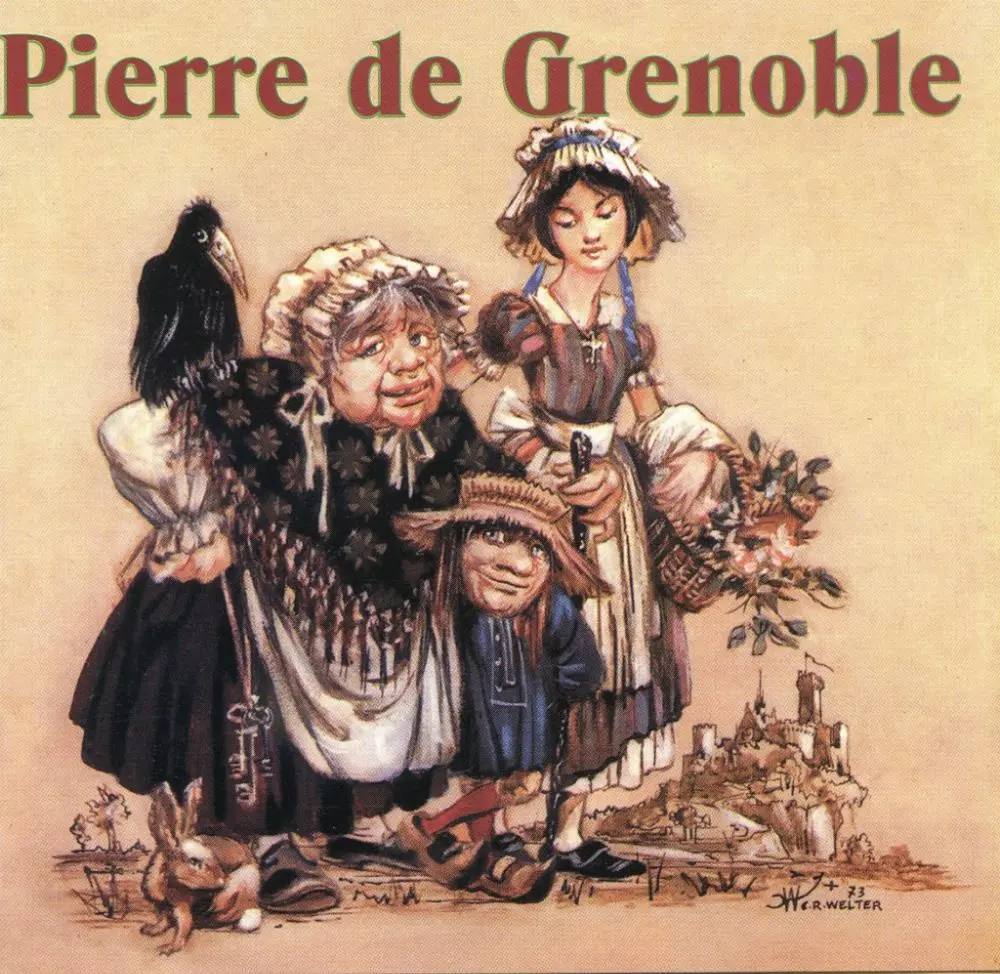
The 1973 album Pierre de Grenoble brought Gabriel and Marie together with de Courson, Vercambre, Dan Ar Braz, and musicians from the Stivell circle. Those sessions established the personnel link that produced Malicorne and introduced the quartet’s mixture of traditional texts, regional instruments, vocal arrangements, and electric guitar. Former radio executive René Boyer signed the new group to Hexagone, the label he founded for French folk and related artists. Boyer also issued recordings by Ar Braz, La Bamboche, and Juan José Mosalini.
Malicorne (Colin)
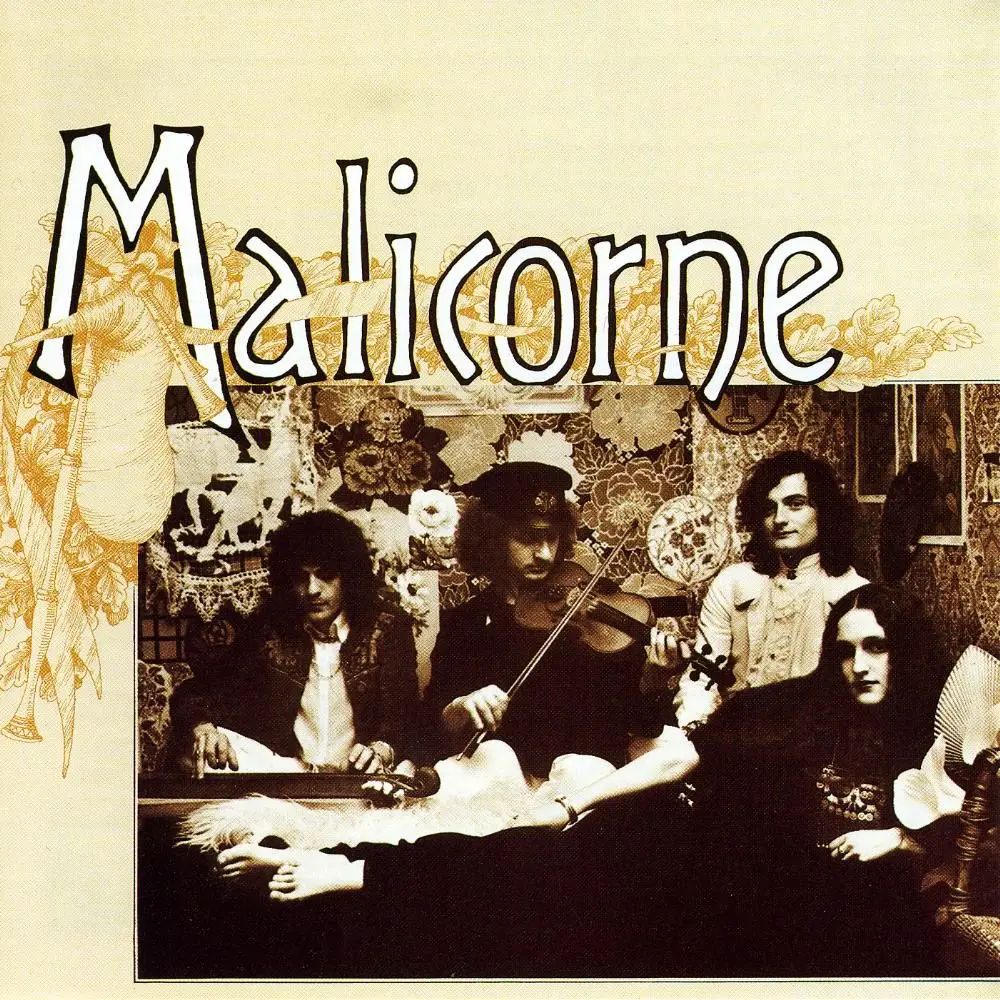 Malicorne released their self-titled debut album, commonly identified as Colin, in October 1974 on Hexagone.
The founding quartet arranged traditional French songs and dances for the album. Gabriel and Marie carry the principal vocal parts. De Courson and Vercambre expand the settings with bass, reeds, bowed strings, keyboards, and percussion. Gabriel composed the music for “La Pernette”; the remaining material derives from traditional sources.
“Dame Lombarde” turns through rhythmic interplay between electric bass and clean guitar figures. “La Pernette” hovers over a minor-key air beneath Marie Yacoub’s austere lead, then breaks into a closing dance. “Landry” advances beneath a steady beat and story-led delivery. “Réveillez-vous belle endormie” circles around bagpipe figures. “Le Deuil d’amour” drifts beneath drawn-out, mournful singing.
A1. “Colin” (1:02)
A2. “Dame Lombarde” [Lady from Lombardy] (3:11)
A3. “La Pernette” [Pernette] (7:07)
A4. “Les filles sont volages – Ronde” [Girls Are Fickle – Round Dance] (3:23)
A5. “La fille soldat” [The Soldier Girl] (3:59)
B1. “Landry” [Landry] (4:07)
B2. “Le chant des livrées” [The Wedding-Favors Song] (3:04)
B3. “Bourrée” [Bourrée Dance] (2:26)
B4. “Réveillez-vous belle endormie – Branle poitevin” [Awake, Sleeping Beauty – Poitou Branle Dance] (3:49)
B5. “Le deuil d’amour” [Love’s Mourning] (5:38)
B6. “Colin” (0:57)
Malicorne recorded the album in spring 1974 at Studio Acousti in Paris with producer René Boyer and engineers Nic Kinsey and Clément Ziegler. Kinsey became the principal engineer for the first three Malicorne albums and later mixed En Public. Albert Riou prepared the layout, while photographer Irina Ionesco created the monochrome cover portrait.
Hexagone issued the non-album song “Martin” as a 1975 single (b/w “Ronde”). “Martin” later appeared on the 1977 Hexagone compilation Quintessence.
Malicorne (Le Mariage anglais)
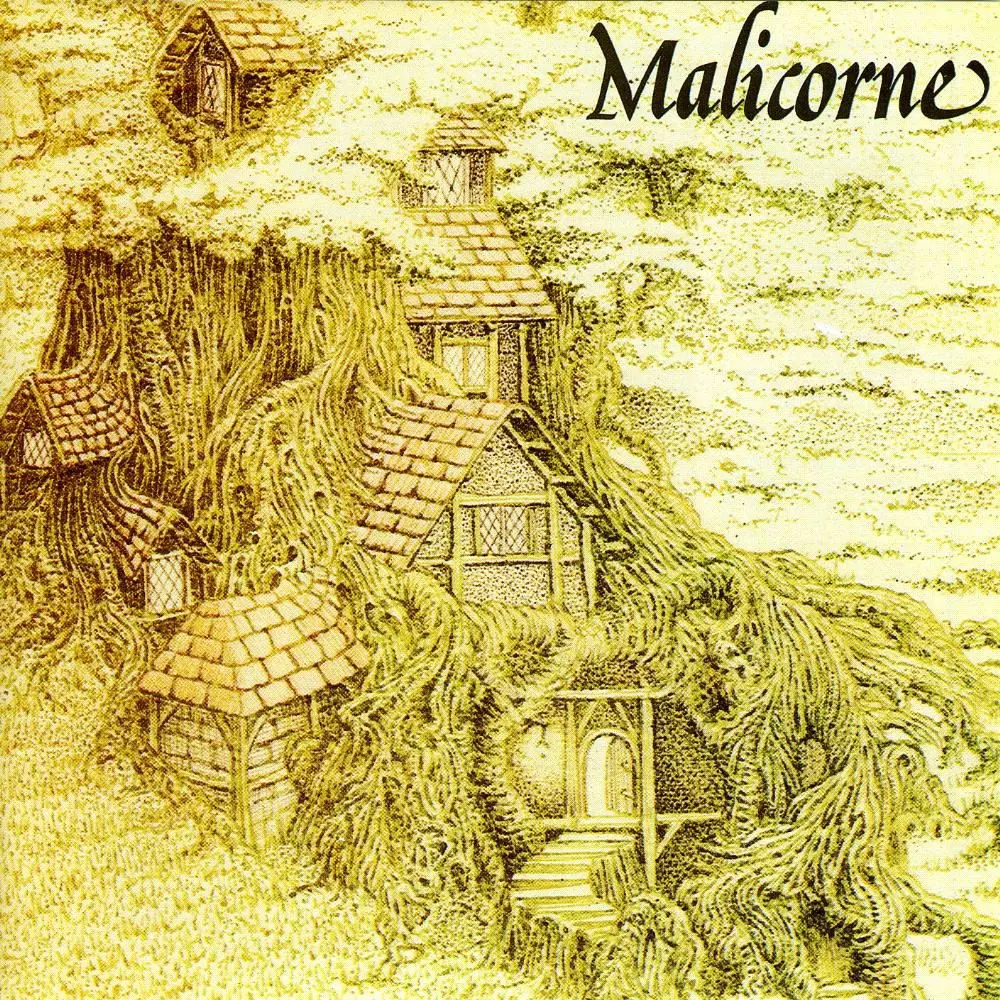 Malicorne released their second studio album, also self-titled and commonly identified as Le Mariage anglais, in November 1975 on Hexagone.
The founding quartet extends several traditional narratives into longer sectional arrangements. Malicorne adapted all ten pieces from traditional material, though the group composed the second movement of “La fille aux chansons.” Solo narration alternates with paired lines and four-part ensemble passages.
“Le Mariage anglais” coils around a low, knotted riff as reedy pipes cut through close ensemble singing. “Le Garçon jardinier” moves beneath Gabriel Yacoub’s measured lead on a taut acoustic figure, then breaks into sharper accents. “La Fille aux chansons” drifts through changing figures before a hypnotic late passage and Marie Yacoub’s high entry. “J’ai vu le loup, le renard et la belette” dances through a lively bourrée figure.
“Branle–La Péronnelle” barrels through an instrumental first half before full-group singing enters. “Le Galant indiscret” hovers beneath a flute line and unusual group phrasing. “Marions les roses” circles through unaccompanied choral singing.
A1. “Le mariage anglais” [The English Wedding] (4:07)
A2. “Le garçon jardinier” [The Gardener Boy] (2:54)
A3. “La fille aux chansons (Marion s’y promène)” [The Girl with Songs (Marion Goes Walking)] (10:26)
A4. “J’ai vu le loup, le renard et la belette” [I Saw the Wolf, the Fox and the Weasel] (2:29)
A5. “Cortège de noce” [Wedding Procession] (4:08)
B1. “Branle la Peronelle” [Peronelle Branle Dance] (4:31)
B2. “Le galand indiscret” [The Indiscreet Suitor] (2:19)
B3. “Marions les roses (Chant de quête)” [Let Us Match the Roses (Begging Song)] (3:31)
B4. “Suite – Bourrée, scottish-valse” [Suite – Bourrée, Schottische-Waltz] (2:34)
B5. “Le bouvier” [The Herdsman] (5:14)
The quartet recorded the album in spring 1975 at Studio Acousti with Boyer and Kinsey. Patrick Alexandre illustrated the front sleeve with a densely grouped settlement of timbered buildings amid foliage. Albert Riou handled the layout, with photographs by Christophe Bertoux, Christian Welter, and Riou.
Hexagone issued “J’ai vu le loup, le renard et la belette” as a 1975 promotional single (b/w “Marions les roses”). Another pressing paired a shortened radio edit of “Marions les roses” with “J’ai vu le loup, le renard et la belette.” The album later received a French gold award.
Almanach
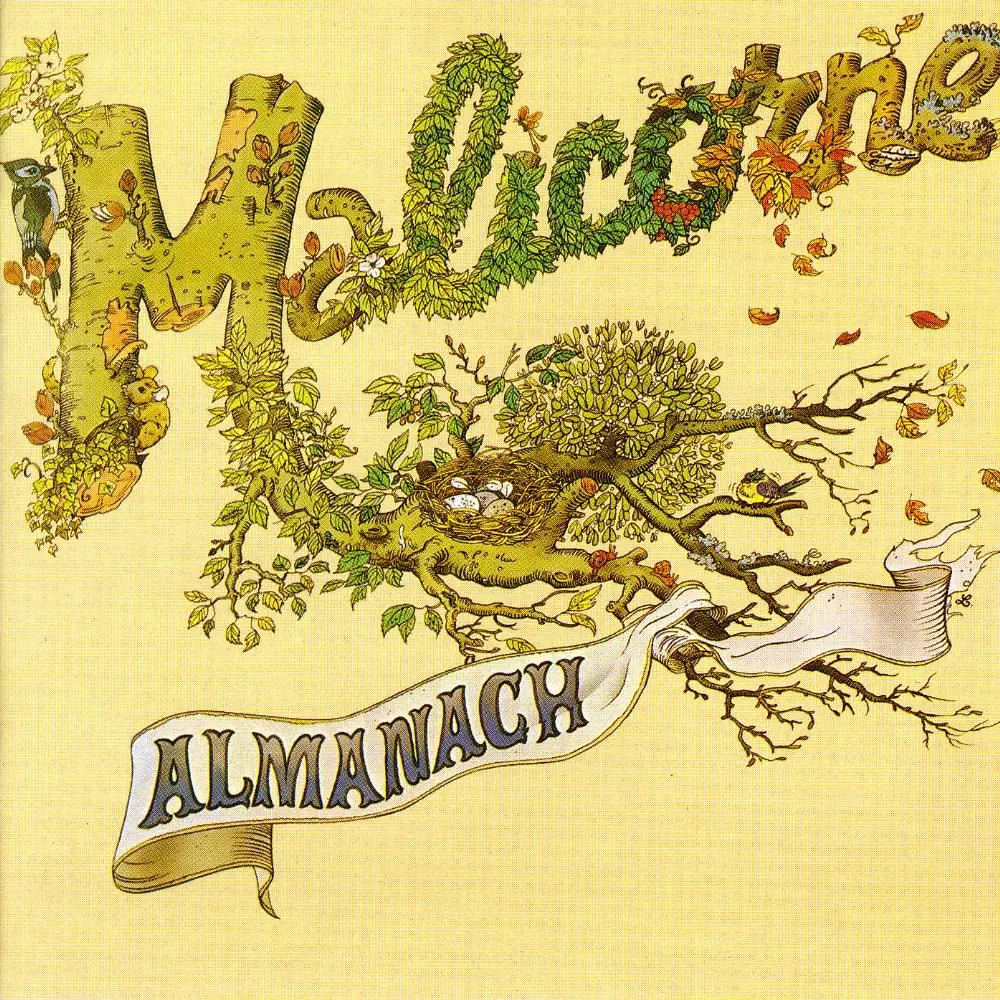 Malicorne released their third studio album, Almanach, in September 1976 on Hexagone.
Almanach links twelve pieces to the months, seasonal observances, and ceremonial practices of a calendar year. The original gatefold sleeve included an eight-page booklet explaining the customs attached to each selection. Olivier Zdrzalik-Kowalski joined on bass and keyboards, while members of La Bamboche appeared on “Les tristes noces.” Gabriel composed “Margot”; Malicorne adapted the balance from traditional material.
“Salut à la compagnie” tolls through weary unison singing over a slow beat. “Quand j’étais chez mon père” turns through layered parts in an irregular meter. “Margot” begins with male unison before women enter and widen the harmony. “Les Tristes Noces” gathers from a lone male lead into paired lines, quickens with violin, then halts for bells before returning in a funereal passage.
“Voici la Saint-Jean” coils around a stark, syncopated beat beneath Marie Yacoub’s prominent lead and tightly arranged responses. “Le Luneux” recedes from echoed opening figures into Marie Yacoub’s exposed lead, then admits a sparse guitar return. “Branle de la Haie” dances through a brighter electrified pattern.
“Quand je menai mes chevaux boire” circles through repeated lines beneath restrained singing. “La Fille au cresson” opens with interlocking lines, then drops to a sparse passage for the full-group entrance.“L’Écolier assassin” lingers on a repeated picked figure beneath Gabriel Yacoub’s narration; sharpened interludes twice break the pattern. “Noël est arrivé” marches on a military beat while bass drives a rollicking ensemble.
A1. “Salut à la compagnie (Part à Dieu)” [Greetings to the Company (God’s Share)] (0:55)
A2. “Quand j’étais chez mon père” [When I Was at My Father’s House] (3:39)
A3. “Margot” (0:56)
A4. “Les tristes noces” [The Sad Wedding] (7:42)
A5. “Voici venir le joli mai” [Here Comes Lovely May] (0:24)
A6. “Voici la Saint Jean (Ronde)” [Here Comes St. John’s Day (Round Dance)] (3:10)
A7. “Le luneux” [The Blind Man] (4:58)
B1. “Branle de la haie” [Hedge Branle Dance] (2:05)
B2. “Quand je menai mes chevaux boire” [When I Led My Horses to Drink] (4:36)
B3. “La fille au cresson” [The Watercress Girl] (3:37)
B4. “L’écolier assassin” [The Murderous Schoolboy] (8:35)
B5. “Noël est arrivé” [Christmas Has Arrived] (2:00)
Malicorne recorded Almanach in spring 1976 at Studio Acousti in Saint-Germain-des-Prés with Boyer and Kinsey. Laurent Leserre illustrated the gatefold package with branches, birds, a nest, foliage, and an unfurled title banner. Riou returned for the layout.
Hexagone issued “La jambe me fait mal (Noël est arrivé)” as a 1976 promotional single (b/w “Quand je menai mes chevaux boire”). “La fille au cresson” followed on another radio pressing (b/w “Branle de la haie”). Almanach received a French gold award in November 1977 after reported sales of 100,000 copies. The 2000 CD edition added “La fiancée du timbalier.”
Malicorne (Nous sommes chanteurs de sornettes)
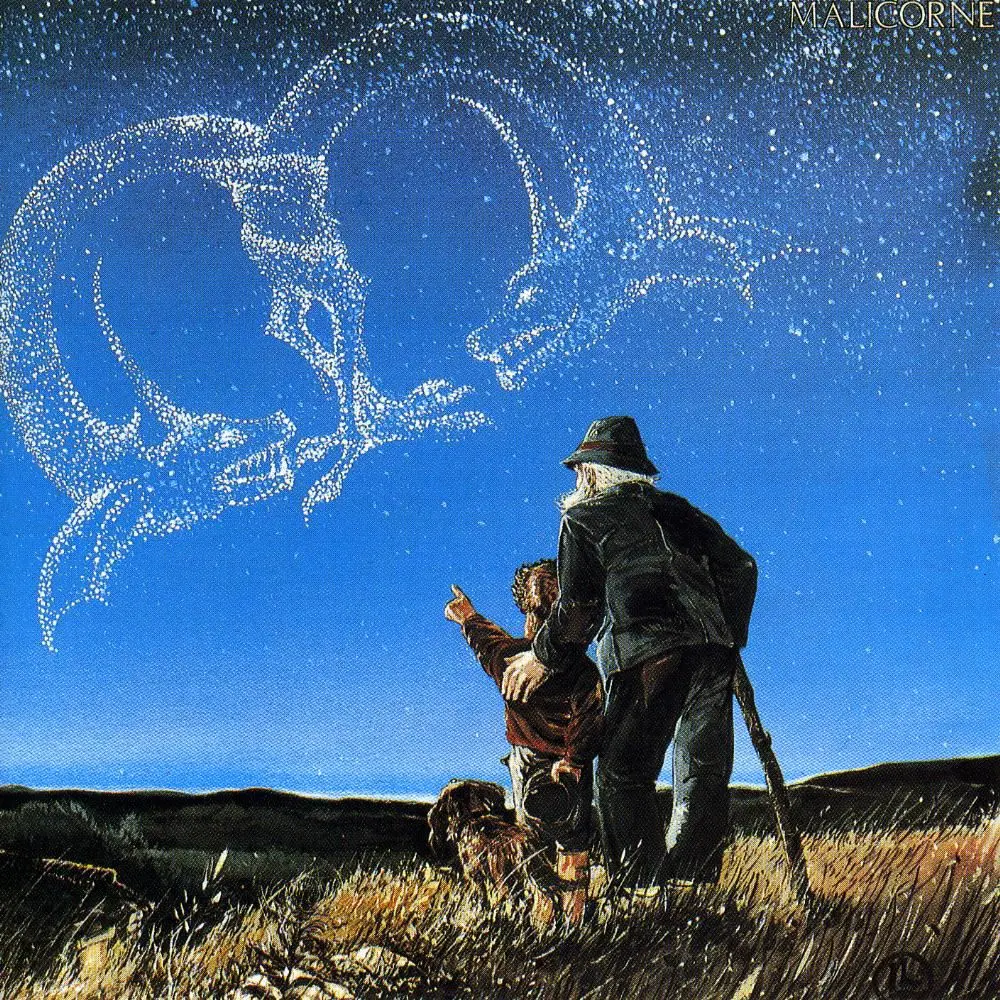 Malicorne released their fourth studio album, again self-titled and commonly identified as Nous sommes chanteurs de sornettes, in October 1977 on Hexagone.
Zdrzalik-Kowalski becomes a full member on bass, keyboards, percussion, and vocals. His arrival allows de Courson to concentrate on keyboards, reeds, and percussion. The five musicians also introduce synthesizer to the Malicorne studio arrangements. Gabriel wrote “Daniel mon fils” and contributed music to several traditional texts; Victor Hugo provided the words for “La fiancée du timbalier.”
“Nous sommes chanteurs de sornettes” rallies nasal group singing around a gavotte figure. “Couché tard, levé matin” bounds through Gabriel Yacoub’s vigorous delivery and comic turns. “Daniel mon fils” chants almost unaccompanied lines as organ swells toward a ceremonial close. “La Blanche Biche” hovers beneath Marie Yacoub’s exposed lead while keyed choral layers gather around horn calls.
“Bacchu Ber” marches with blunt ceremonial force. “Le Jardinier du couvent” sways on piano figures, then turns through four sections beneath agitated strings. “La Fiancée du timbalier” processes under imposing brass and stately ensemble singing. “Ma chanson est dite” stumbles through deliberate false chords and dazed group delivery.
A1. “Nous sommes chanteurs de sornettes – Gavotte” [We Are Singers of Nonsense – Gavotte] (2:41)
A2. “Couche tard, lève matin” [Late to Bed, Early to Rise] (3:53)
A3. “Daniel mon fils” [Daniel, My Son] (2:41)
A4. “Le déserteur – Le congé” [The Deserter – The Leave] (5:18)
A5. “La blanche biche” [The White Doe] (6:29)
B1. “Bacchu ber” (1:56)
B2. “Le jardinier du couvent” [The Convent Gardener] (9:01)
B3. “Misère” [Misery] (2:26)
B4. “La fiancée du timbalier” [The Kettledrummer’s Fiancée] (5:52)
B5. “Ma chanson est dite” [My Song Is Done] (0:28)
Malicorne recorded the album in summer 1977 at Studios Normandie with Boyer. Bruno Menny and Kinsey engineered the sessions with assistant Michel Etchegaray. Menny had worked with de Courson on the 1975 La Bamboche album Le Tailleur de pierre and remained associated with the Studio Frémontel sessions that followed. The front sleeve depicts two travelers and a dog beneath animal-shaped constellations in a darkening rural landscape.
L’Extraordinaire Tour de France d’Adélard Rousseau, dit Nivernais la clef des cœurs, Compagnon charpentier du devoir
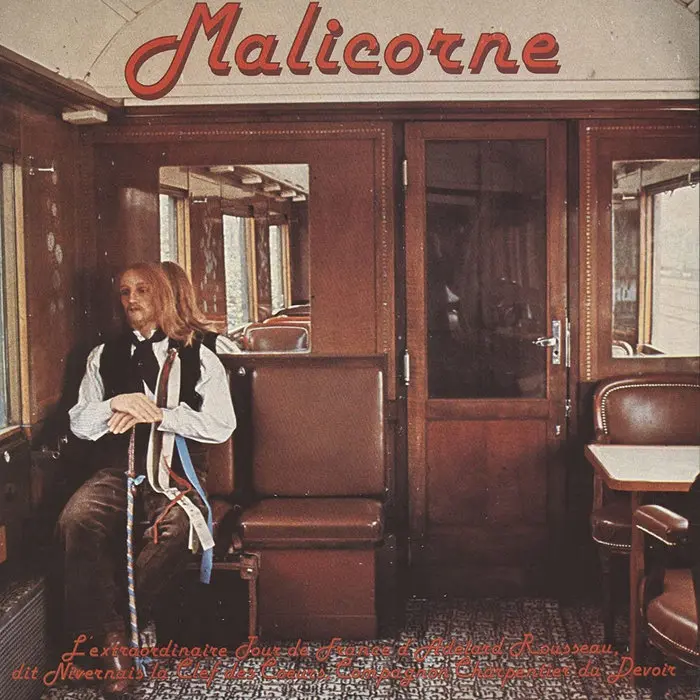 Malicorne released their fifth studio album, L’Extraordinaire Tour de France d’Adélard Rousseau, dit Nivernais la clef des cœurs, Compagnon charpentier du devoir, in October 1978 on Ballon Noir.
The album follows a fictional journeyman carpenter across France and links the songs through the rites, lodgings, dangers, and regional encounters of his tour. Gabriel wrote three pieces, while de Courson composed three further selections. Malicorne adapted the remaining material from traditional sources. Guitarist Dan Ar Braz plays electric solos on “Le mari jaloux” and “À Paris la grande ville,” while drummer Michel Santangeli appears on two tracks.
“La Danse des damnés” circles through a constricted dance figure and dark ensemble chant. “Le Mari jaloux–La Valse druze” darkens from a taut sung passage into an eerie music-box waltz. “Une fille dans le désespoir” quivers beneath Marie Yacoub’s feverish, close-set delivery.
“Compagnons qui roulez en Provence” trudges behind a frayed fanfare as group singing holds a solemn line. “La Complainte du coureur de bois” settles into unaccompanied ensemble chant. “L’Auberge sanglante” stretches a plaintive narrative across a steady, sedate tread. “Le Départ des compagnons–La Conduite” returns as an instrumental reprise crowned by brass-band chords.
A1. “La conduite” [The Send-Off] (3:52)
A2. “La danse des damnés” [The Dance of the Damned] (4:55)
A3. “Le mari jaloux – La valse druze” [The Jealous Husband – The Druze Waltz] (4:23)
A4. “Si l’amour prenait racine” [If Love Took Root] (2:41)
A5. “Une fille dans le désespoir” [A Girl in Despair] (3:20)
A6. “Les couleurs” [The Ribbons] (1:55)
B1. “À Paris la grande ville” [In Paris, the Great City] (3:53)
B2. “Compagnons qui roulez en Provence” [Companions Who Travel Through Provence] (3:03)
B3. “La complainte du coureur de bois” [The Woodsman’s Lament] (2:25)
B4. “L’auberge sanglante” [The Bloody Inn] (8:26)
B5. “Le départ des compagnons – La conduite” [The Companions’ Departure – The Send-Off] (2:21)
Malicorne produced the principal sessions at Studio Frémontel with Menny, who recorded the singing, effects, and most instrumental parts. Colin Caldwell recorded and mixed “Les couleurs” and the concluding reprise at Studio Acousti. Caldwell produced and engineered the Aynsley Dunbar album Blue Whale and engineered Vol. 4 for Black Sabbath. Jean-Daniel Mercier arranged the fanfare parts.
Alain Poirier designed the sleeve with illustration by Jean-Bernard Blanchet and photography by Sergio Gaudenti.
Ballon Noir issued “À Paris la grande ville” as a 1978 single (b/w “La danse des damnés”).
Vercambre and de Courson left Malicorne following the album’s associated concerts. Gabriel, Marie, and Zdrzalik-Kowalski rebuilt the group with Patrick Le Mercier, Jean-Pierre Arnoux, Brian Gulland, and Dominique Regef. Gulland had played bassoon, keyboards, and reeds with Gryphon before entering the revised lineup.
Le Bestiaire
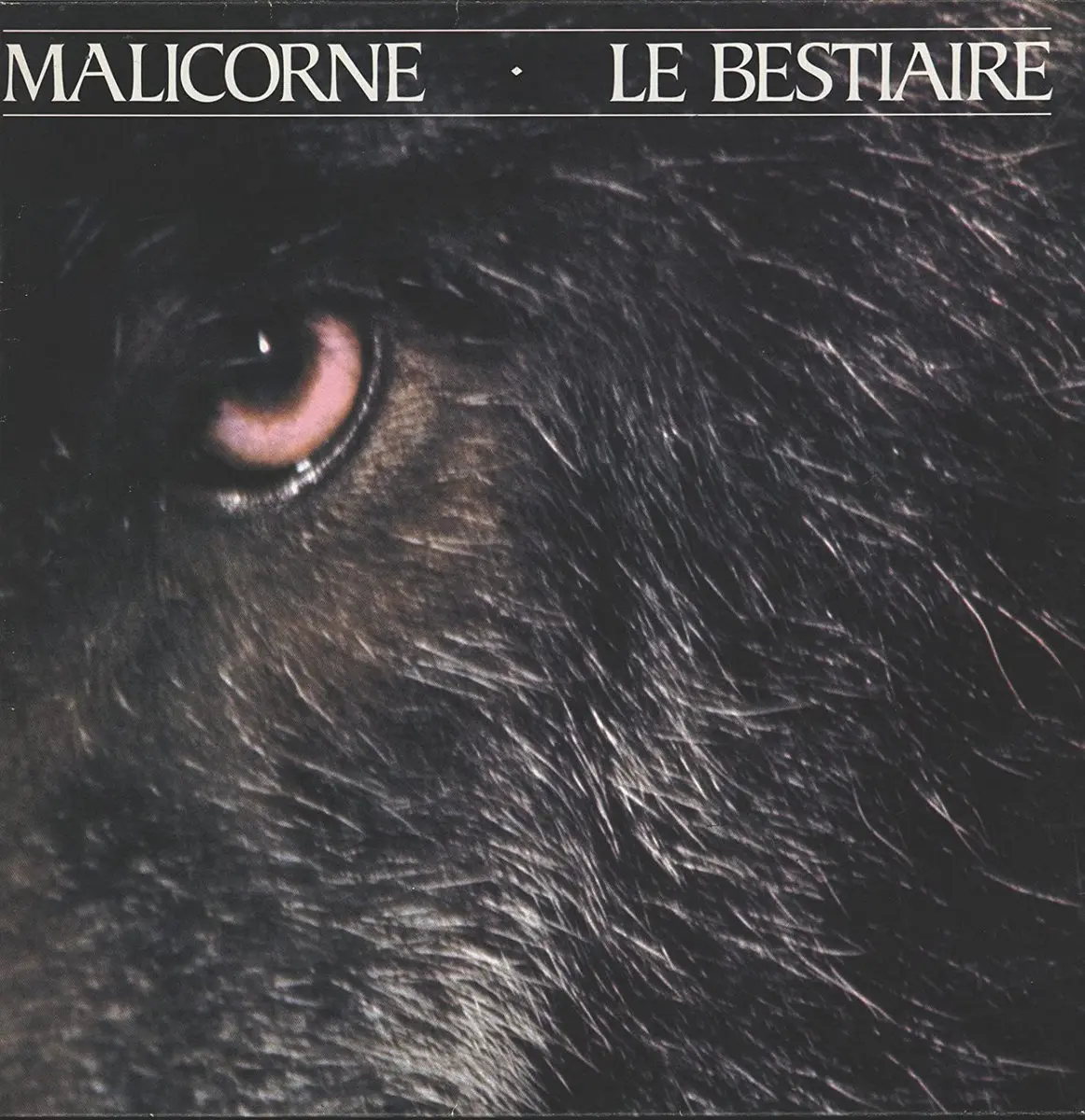 Malicorne released their sixth studio album, Le Bestiaire, in September 1979 on Ballon Noir.
The songs draw on animals, transformations, hunting legends, and supernatural creatures. Le Mercier and drummer Jean-Pierre Arnoux enter the primary rhythm group. Gulland and hurdy-gurdy player Dominique Regef complete the expanded lineup. Gabriel wrote “La mule,” “La chasse gallery,” and “Jean des loups”; Malicorne adapted the remaining pieces from traditional material.
“Les Sept Jours de Mai” drives on a metronomic beat as clavinet interlocks with blues harmonica. “La Mule” braids intricate unaccompanied group parts into a dense chant. “Le Branle des chevaux” barrels through a hard electrified dance figure. “Les Transformations” recedes from a choral entrance into delicate, threatening acoustic figures before a midway eruption from electric guitar. “La Chasse Gallery” drifts through dark electronic haze and strange sustained tones.
“Le Ballet des coqs” steps through a courtly instrumental dance. “Alexandre–Danse bulgare” accelerates midway through a dreamlike instrumental passage. “Jean des loups” pivots from baroque passages into firmer refrains, then revisits earlier themes through tense violin figures and successive instrumental turns.
A1. “Les sept jours de mai” [The Seven Days of May] (5:49)
A2. “La mule” [The Mule] (3:48)
A3. “Le branle des chevaux” [The Horses’ Branle Dance] (3:30)
A4. “Les transformations” [The Transformations] (7:55)
B1. “La chasse gallery” [The Flying Canoe] (5:37)
B2. “Le ballet des coqs” [The Roosters’ Ballet] (2:12)
B3. “Alexandre – Danse bulgare” [Alexandre – Bulgarian Dance] (4:40)
B4. “Jean des loups” [Jean of the Wolves] (8:04)
Former member de Courson produced Le Bestiaire at Studio Frémontel with Menny. De Courson had produced the 1975 La Bamboche debut and the contemporary Kolinda release 1514 at Frémontel.
Leserre prepared the layout after illustrating Almanach and designing the package for 1514. Jean Larivière-Brochard handled the exterior photography, with an additional photograph credited to Ziesler.
Boucherie Productions issued the first CD edition in 1996 with lyrics, photographs, and commentary in the accompanying material.
En Public
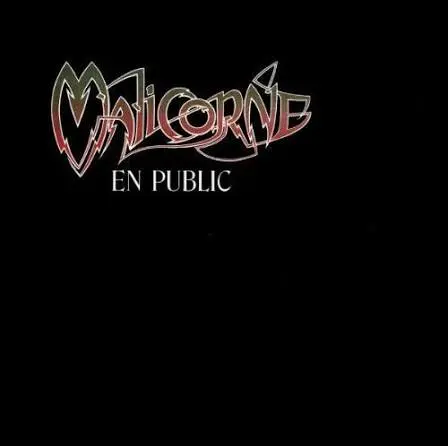 Malicorne released the concert album, En Public, in October 1979 on Ballon Noir.
En Public draws from two performances recorded at El Casino in Montreal on December 2–3, 1978, before the departures of de Courson and Vercambre. The sequence combines established album material with five pieces then unavailable on Malicorne studio LPs. Canadian violinist André Proulx appears on “La danse des damnés – Réels du casino” and “Suite de branles,” while Gulland adds bassoon and flutes to the latter selection.
“La Semaine–Fa fa fa–Branle” bounds from vigorous group singing into a violin taunt and closing dance. “Le Prince d’Orange” chants in unaccompanied harmony. “Pierre de Grenoble–Schiarazzula Marazzula” mourns through a long narrative, then breaks into an old dance air. “La Danse des damnés–Reels du Casino” darkens through constricted dance figures before French-Canadian reels ignite audience response. “Suite de branles” whirls through linked dances and brisk ensemble turns. “C’est le mai” rallies performers and audience around an unaccompanied refrain.
A1. “La semaine – Fa fa fa – Branle” [The Week – Fa Fa Fa – Branle Dance] (7:03)
A2. “Le mariage anglais” [The English Wedding] (4:48)
A3. “Le prince d’Orange” [The Prince of Orange] (2:44)
A4. “L’écolier assassin” [The Murderous Schoolboy] (10:58)
B1. “Pierre de Grenoble – Schiarazzula marazzula” [Pierre de Grenoble – Schiarazzula marazzula] (7:19)
B2. “La danse des damnés – Réels du casino” [The Dance of the Damned – Casino Reels] (7:28)
B3. “Suite de branles” [Branle Suite] (6:54)
B4. “C’est le mai” [This Is May] (2:56)
Guy Charbonneau recorded the Montreal concerts. Kinsey mixed the tapes after engineering the first three Malicorne studio albums. The front sleeve announced the five previously unissued selections, while the original pressing included an illustrated inner sleeve.
Balançoire en feu
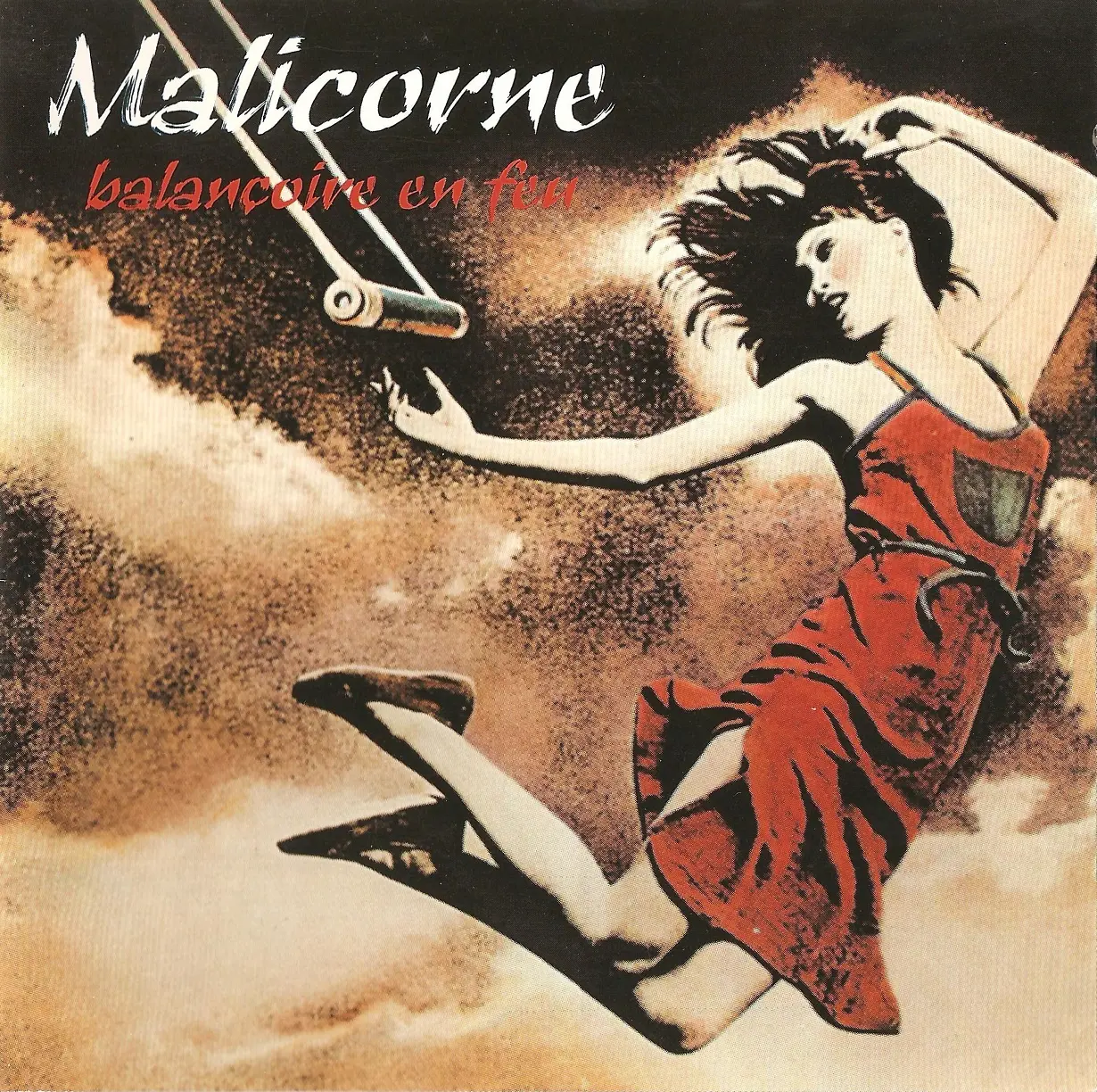 Malicorne released their seventh studio album, Balançoire en feu, in October 1981 on Elektra.
Étienne Roda-Gil supplied new words for all ten songs, replacing the collected traditional texts of the earlier albums. The principal lineup pairs Gabriel and Marie with Zdrzalik-Kowalski, Le Mercier, and Arnoux. De Courson returned as producer and keyboardist. Guests include Bulgarian wind player Iván Lantos and accordionist Richard Galliano, while Bruno Coulais arranged “Le couteau blond.”
“Vive la lune” wanders among strange timbres and abrupt instrumental turns. “Paysans sans peur” chants through unaccompanied ensemble parts. “Beau charpentier–Quand le cyprès” strolls beside piano, then broadens into layered group singing. “Le Couteau blond” pivots between chamber figures and a pronounced saxophone passage.
A1. “Balançoire en feu” [Swing on Fire] (5:54)
A2. “Vive la lune” [Long Live the Moon] (4:59)
A3. “Paysans sans peur” [Fearless Peasants] (1:20)
A4. “Chantier d’été” [Summer Worksite] (4:51)
A5. “Dans la rivière” [In the River] (4:41)
B1. “Soldat de la république” [Soldier of the Republic] (5:04)
B2. “Petite oasis” [Little Oasis] (3:53)
B3. “Beau charpentier – Quand le cyprès” [Handsome Carpenter – When the Cypress] (6:19)
B4. “Le couteau blond” [The Blond Knife] (3:52)
B5. “Balançoire en feu (Reprise)” [Swing on Fire (Reprise)] (1:15)
De Courson produced the album at Studio de Flexanville. Vincent Chambraud recorded and mixed the sessions. His recent Malicorne work followed Le Bestiaire and the Kolinda album 1514 at Frémontel.
Richard L. Schaeffer created the cover photograph and illustration. Jean-Félix Galletti designed the package, with interior photography by Alain Marouani.
Malicorne ended the touring cycle in early 1982. Gabriel concentrated on solo recordings. Marie moved into record-company work, and the revised group returned for North American and French performances in 1984.
Les Cathédrales de l’industrie
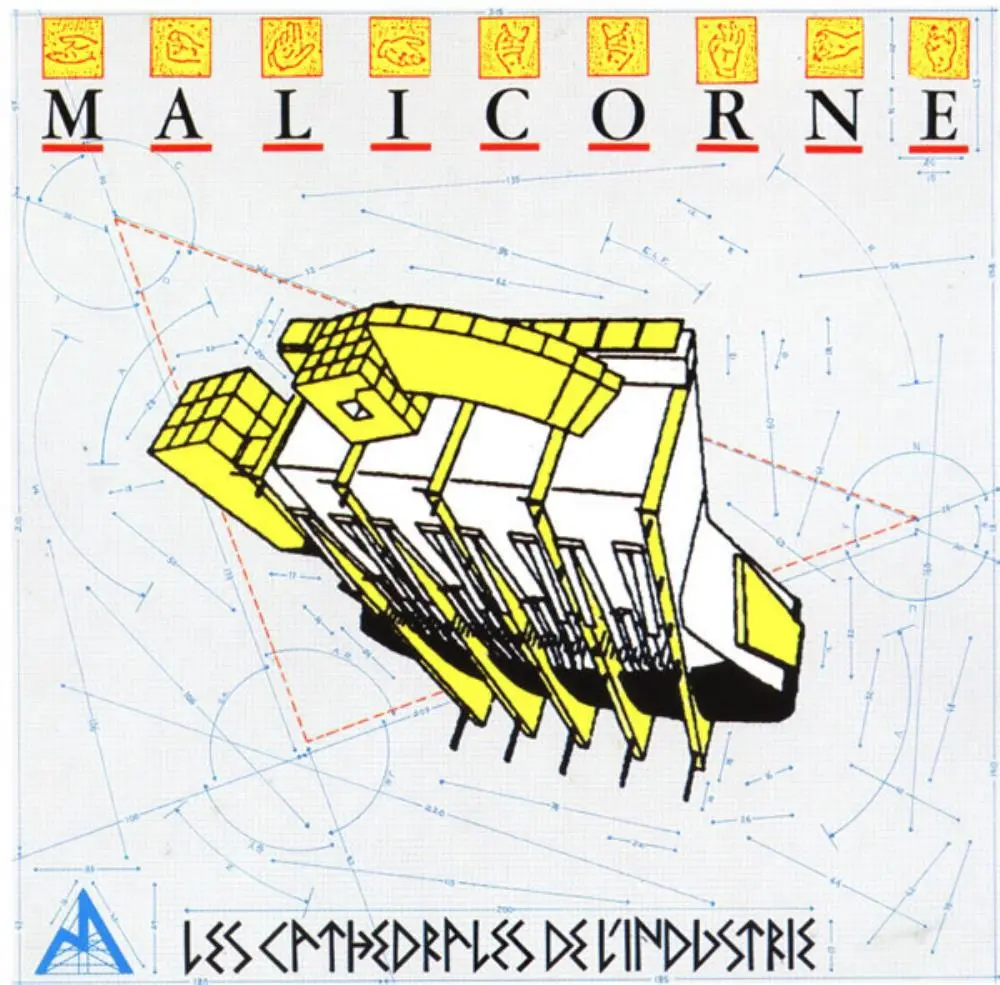 Malicorne released their eighth studio album, Les Cathédrales de l’industrie, in October 1986 on Celluloïd.
The project began as a Gabriel Yacoub solo album. Celluloïd issued the completed sessions under the Malicorne name. Gabriel and Marie reunited with Zdrzalik-Kowalski and Arnoux, while violinist Michel Le Cam joined the principal lineup. Additional guests include piper Alan Kloatr, chabrette player Olivier Daviau, guitarist Jean-Michel Kajdan, and programmer Patrick Clémentin-Robin. The nine songs use original texts and music, with Zdrzalik-Kowalski sharing two composition credits.
“La Nuit des sorcières” lingers on a nagging rhythm beneath Marie Yacoub’s soft lead as synthesizer and bass sustain nocturnal tension. “Sorcier” circles through percussion-led ritual figures and measured ensemble chant.
A1. “Les cathédrales de l’industrie” [The Cathedrals of Industry] (4:40)
A2. “Dormeur” [Sleeper] (4:42)
A3. “Il me reste un voyage à faire” [I Still Have a Journey to Make] (3:58)
A4. “La nuit des sorcières” [The Witches’ Night] (4:18)
B1. “Big Science (1.2.3.)” (3:37)
B2. “Le temps” [Time] (3:48)
B3. “Robe blanche, robe noire” [White Dress, Black Dress] (3:26)
B4. “Sorcier” [Sorcerer] (4:04)
B5. “Je resterai ici” [I Will Stay Here] (4:05)
Olivier Kowalski produced the sessions under the shortened form of his Zdrzalik-Kowalski name. His Malicorne role had begun with the Almanach lineup. Steve Prestage recorded the album after staff positions at Pye, Morgan, AIR, and Townhouse studios. Jacques Montmigny recorded Gabriel’s lead part on “Le temps.” Jean Nouvel created the sleeve illustration.
Celluloïd issued a radio edit of “Dormeur” with the album version on the reverse. “Big Science (1.2.3.)” followed as a single (b/w “Sorcier”).
Later Activity
Touring for Les Cathédrales de l’industrie continued until the July 22, 1989 closing concert. Gabriel then returned to his solo career.
The founding quartet reunited at the 2010 Francofolies de La Rochelle, with Gabriel, Marie, de Courson, and Vercambre appearing on July 15. Zdrzalik-Kowalski and several later associates also participated. The 2011 CD/DVD set Concert exceptionnel aux Francofolies de La Rochelle documented the performance.
Gabriel and Marie established another Malicorne lineup in 2011. The Almanach Tour began the following year. Vercambre rejoined for selected concerts from 2013 through the 2015 season. Malicorne played their final concert on August 12, 2017, at the Festival du chant de marin in Paimpol.
Gabriel Yacoub died in Bourges on January 22, 2025, at age 72.
Discography:
- Malicorne (1974)
- Malicorne (1975)
- Almanach (1976)
- Malicorne (1977)
- L’extraordinaire tour de France d’Adélard Rousseau, dit Nivernais la Clef des Cœurs, compagnon charpentier du devoir (1978)
- Le Bestiaire (1979)
- En Public (live, 1979)
- Balançoire en Feu (1981)
- Les Cathédrales de l’industrie (1986)
Sources:
Artist/Album Pages:
Madness are an English new wave band that released five albums between 1979 and 1984 on Stiff Record...
Lougarou / Garolou was a Québécois symphonic-folk band that released a 1976 self-titled album as L...
Lou Rawls (Dec. 1, 1933 — Jan. 6, 2006) was an American soul singer from Chicago who began in gosp...
Serene was a German symphonic-rock band that recorded a 1979 self-titled album, released in 1981 o...
Offenbach was a Québécois hard-rock band that released four albums on Barclay and Deram between 19...
Lou Courtney (1943–2021) was an American soul singer and songwriter who scored R&B hits with ...
National Health was an English avant-jazz/rock band from Canterbury that released a self-titled al...
Juan Hidalgo (Oct. 14, 1927 — Feb. 26, 2018) was a Spanish avant-garde composer, active three deca...
Space Waltz was a New Zealander art-rock band that released a self-titled album on EMI in 1975. ...
Osiris was an American soul-funk band Washington, DC, that released their first and third albums —...
Ratt was an Americann hard-rock band from Southern California that took shape on the Hollywood clu...
The Au Pairs were an English art-punk/funk band from Birmingham that released two singles on 021 R...