

Annabel Lamb is an English singer and songwriter who emerged in the early 1980s with a literate, synth-laced art pop style. She released two albums on A&M—Once Bitten (1983) and The Flame (1984)—before issuing three more on RCA, BMG, and Metronome between 1986 and 1988. Her work blends electronic textures with live instrumentation, often framed by poetic narratives and atmospheric arrangements.
Background
Annabel Lamb was born on September 28, 1955, in Surrey and grew up in Dorking, the youngest of five girls in a middle class family. Her older sister, Jenny, frequented London’s rock scene during the late sixties and attended the 1970 Isle of Wight Festival. Jenny socialized with assorted luminaries (Rolling Stones, Ralph McTell) and imprinted this era onto Annabel, who was too young to participate firsthand.
Lamb took up piano and learned her favorite songs by ear. (In a May 1983 interview with Record Mirror, she claimed to have once serenaded house guest Ralph McTell with a piano recital of his recent album). Her favorite song was “Riders On the Storm,” the late-period Doors ballad noted for its moody, misty vibe.
Lamb had a brief early marriage and initially trained to be a nurse. She used money earned at assorted hospitals (Epsom General, Charing Cross) on musical equipment and gained off-hours work as a session player on records by Tina Charles and Toni Basil, including an uncredited keyboard track on “Mickey.” Distressed with small-town vibes and hospital protocol, Lamb moved from Surrey to London to pursue music full-time.
1982 Singles
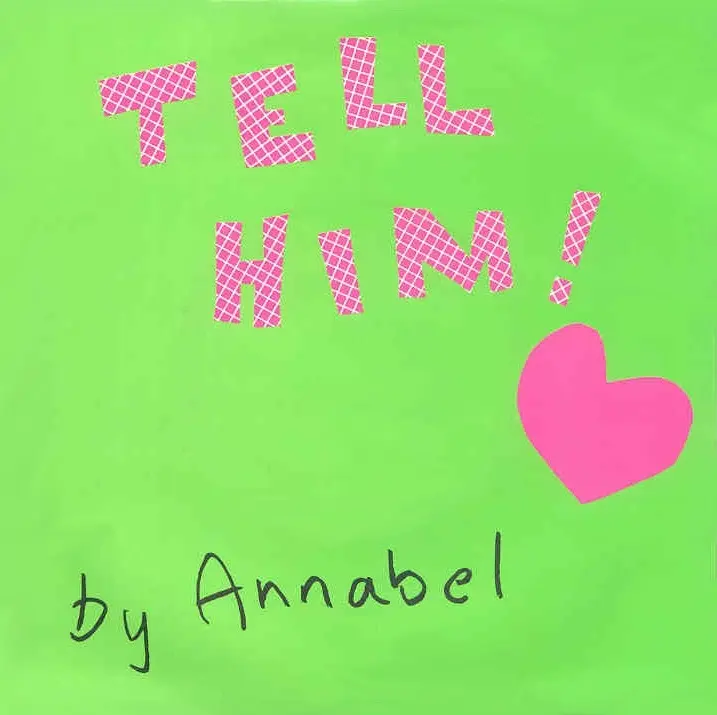 Annabel Lamb debuted on June 18, 1982, with “Tell Him,” a brisk cover of the 1963 Exciters hit written by Bert Russell. She paired it with her own song “All Night T.V.,” which introduced her blend of nocturnal imagery and pulsing synth-pop textures.
A. “Tell Him” (2:49) – originated as “Tell Her,” a 1962 single by R&B singer Ed Townshend; covered soon after by Queens girl group the Exciters, whose jittery arrangement popularized the song in North America. In 1963, Woking singer Billie Davis (aka Carol Hedges) made the song into a UK hit.
B. “All Night T.V.” (3:09)
On August 6, she followed with the self-penned “I Know How Love Goes,” backed with “Electronic Toys,” a sardonic piece with arrangements by Daniel Black and engineering by Brad Davis.
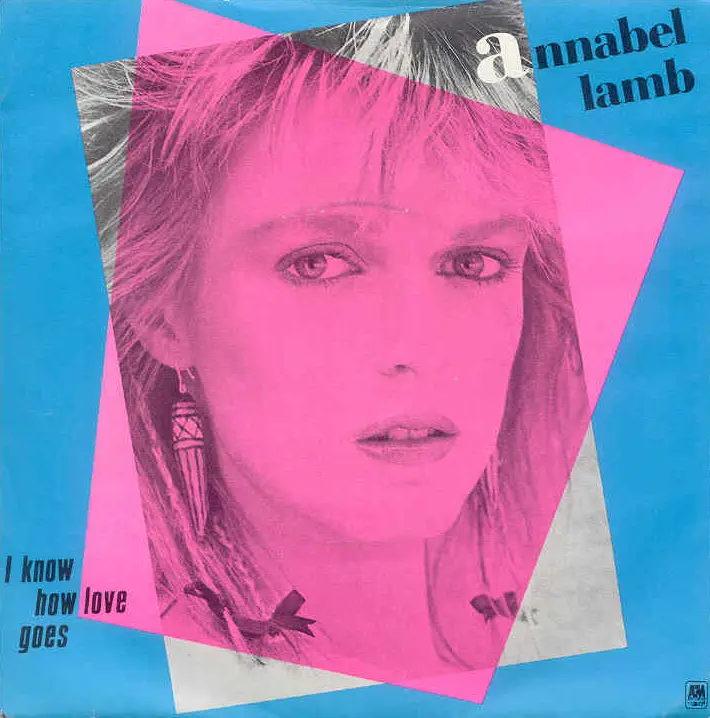 A. “I Know How Love Goes” (3:01)
B. “Electronic Toys” (3:12)
Her third single, released October 22, featured “Cinderella,” written by Mark Damron, supported by Lamb’s original “Safety In Numbers.”
A. “Cinderella” (3:20)
B. “Safety In Numbers”
All three singles were co-produced by Robin Langridge and Wally Brill, setting the foundation for her collaborative studio aesthetic that would carry through her first two albums. Brill—a prior soundman for Alternative TV, Soft Heap, Spizzles, Henry Badowski, and Karel Fialka—became her husband. Cover art for “Cinderella” was photographed by Peter Ashworth.
Once Bitten
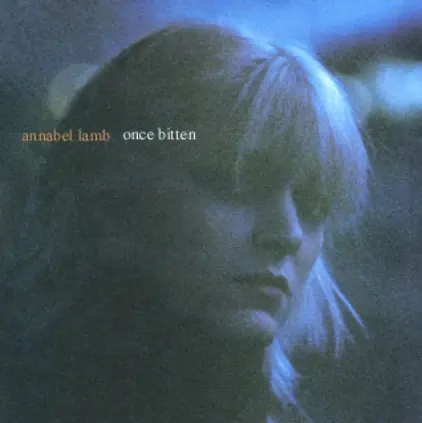 Annabel Lamb released her debut album, Once Bitten, in February 1983 on A&M Records.
Lamb recorded the album with a core lineup centered around guitarist Chris Jarrett, keyboardist Robin Langridge, and multi-instrumentalist Steve Greetham, who adds guitar and backing vocals to his fretless bass lines. She plays piano, Hammond organ, and synthesizer across the album’s ten tracks, sharing keyboard duties with Langridge.
Select cuts feature keyboards by John Kongos and Europeans head Steve Hogarth, whose guitarist bandmate Colin Woore appears on “Hold Fast.” Sound mastermind Adrian Borland plays guest guitar on “Heartland,” while Paul Hirsh’s panpipes and Jim Dvořák’s trumpet introduce contrasting textures on the final tracks.
 A1. “Riders On the Storm” (6:00)
A2. “Once Bitten” (3:17)
A3. “Take Me In Your Arms” (3:27)
A4. “Heartland” (3:22)
A5. “Backwards Through the Looking Glass” (4:26)
B1. “Dividing the Spoils of Love” (5:12) – with Hogarth (piano)
B2. “Hold Fast” (3:46)
B3. “Snake Pliskin” (2:22)
B4. “Missing” (4:14)
B5. “No Cure” (4:50)
Wally Brill produced Once Bitten with input from Kongos, who contributed Fairlight textures to the sessions. Lamb assembled the album at a time when synthesizer and digital sampling were becoming more prominent in UK studio production, and she embraced both analog and electronic instrumentation across a range of styles. Her drummer, Richie Stevens, became a serial sophisti-pop sessionist (Intimate Strangers, Kane Gang, Latin Quarter).
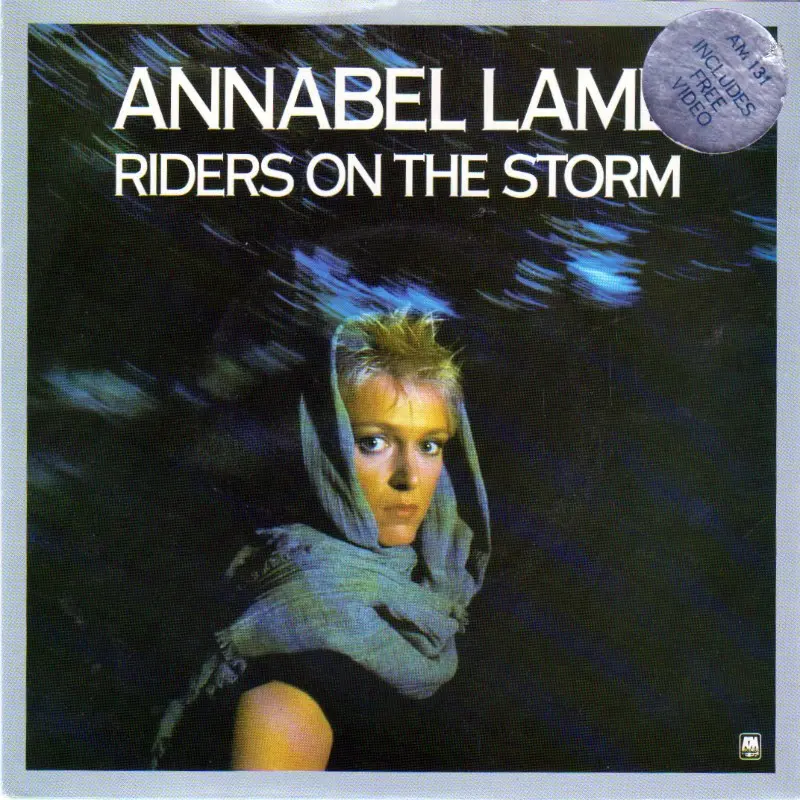 A&M issued three singles from the album. “Once Bitten” backed with “Take Me In Your Arms” appeared first in February 1983, followed by “Heartland” (b/w “Backwards (Reflection)”) in April.
Her six-minute cover of “Riders On the Storm,” backed with “No Cure,” was issued on August 25 and became Lamb’s best-known release. She mimed it for the September 13 broadcast of Top of the Pops, which also featured in-studio numbers by Heaven 17 (“Crushed by the Wheels of Industry”), JoBoxers (“Johnny Friendly”), Paul Young (“Come Back and Stay”), and Status Quo (“Ol’ Rag Blues”).
The Flame
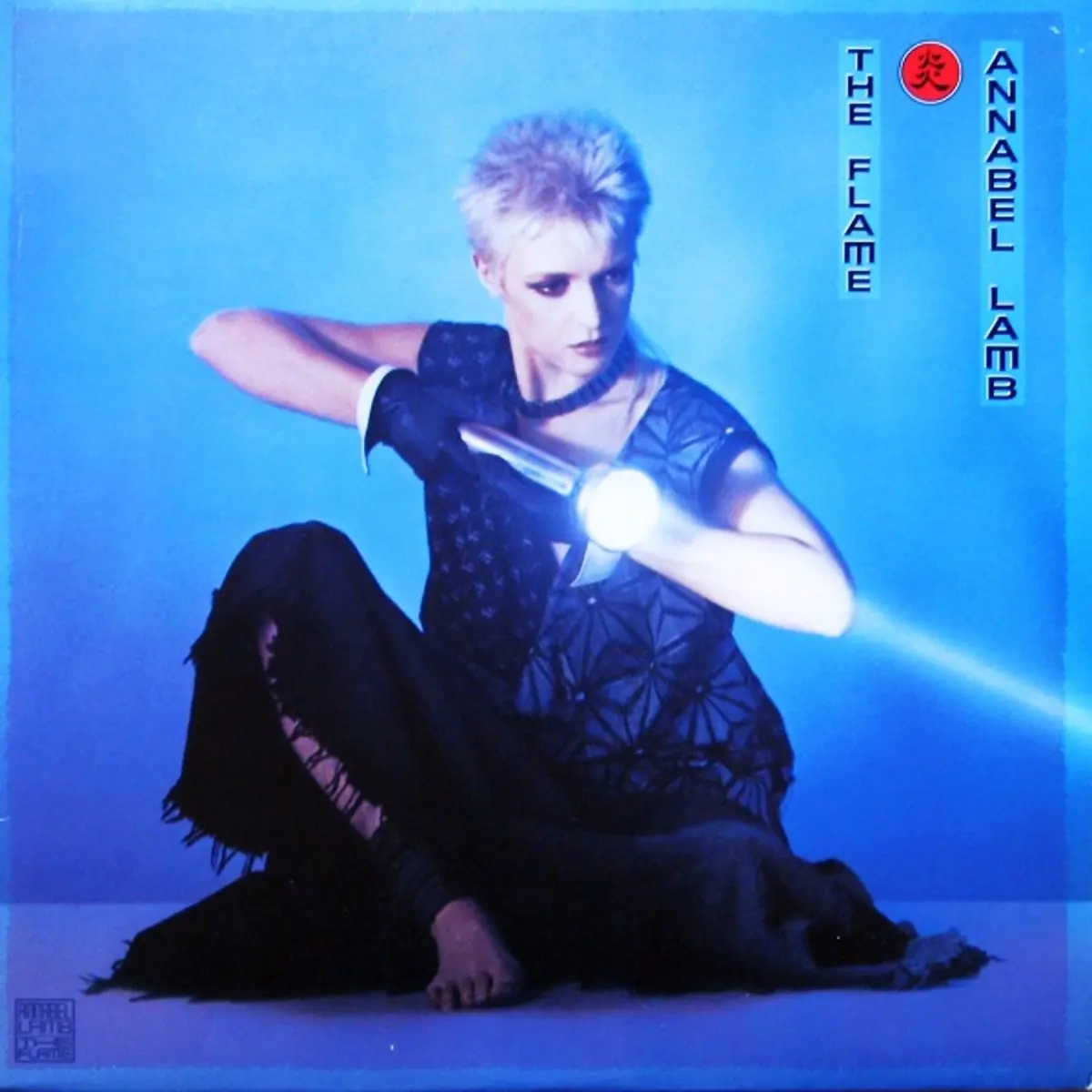 Annabel Lamb released her second album, The Flame, in April 1984 on A&M Records.
She arranged the album around the keyboard interaction of Robin Langridge, Richard Gibbs, and her own synthesizer textures, while guitarist Chris Jarrett remains a central melodic force. Brass parts by tenor saxophonist Kurt McGettrick and trumpeter Jim Dvořák punctuate the arrangements, with occasional vocal layering from Jo Ann Harris, Troyé Davenport, Judy Brown, and Nancy Shanks. Lamb composed or co-wrote nine of the ten tracks, reserving “Inside of My Head” for guest writer Jim Rawcliffe.
A1. “Sacraments of Love” (3:59) – portrays intimacy as ritual, framing physical passion as a form of communion. She contrasts societal judgment with private intensity: “You leave the light on just to stare at my face / The sheets are always torn, my life’s a Holy mess.”
A2. “Hands of the Hunter” (4:23) – describes a world caught between fear and survival, where safety feels mythic and danger ever-present. She evokes urban exile with “There is a woman on the radio… She’s packing up her children’s things / She’s moving away,” tying personal vulnerability to a broader sense of societal collapse.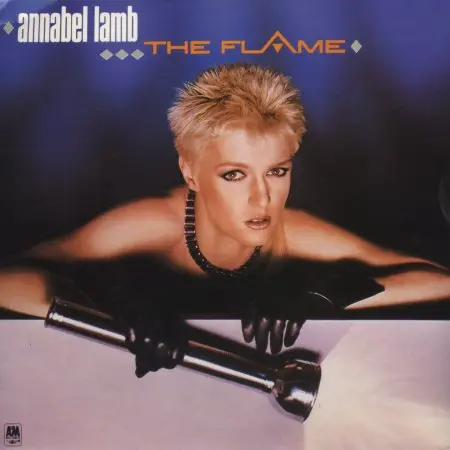 A3. “Weapon of Love” (4:17) – depicts love as a sharpened emotional weapon that wounds through neglect, resentment, or misused words. The bridge reverses sentiment into exhaustion: “To the victor goes the prize / Vacant looks from vacant eyes.”
A4. “Dream Boy” (3:52) – envisions a protector-figure whose quiet presence calms inner storms. She gives him mythic stature: “You are a lion in disguise / You are a mirror for her eyes,” hinting at the blurred line between projection and truth.
A5. “What the Eye Sees” (5:16) – questions the reliability of perception and language, arguing that sensation precedes certainty. She warns, “But we blindly believe everything they say,” turning the senses themselves into potential deceivers.
B1. “Things That I Fear” (4:42) – catalogs embodied anxiety—shadowy shapes, oppressive weight, spectral voices—in a spiral of paranoia and helplessness. She personifies dread with “There’s a woman sitting under the stairs / Can’t you see her? See her laughing?”
B2. “The Flame” (3:49) – fuses erotic imagery with metaphysical longing, presenting desire as both elemental and redemptive. She invites mutual surrender: “Then come to me and breathe your fire / We can make fire with what we know.”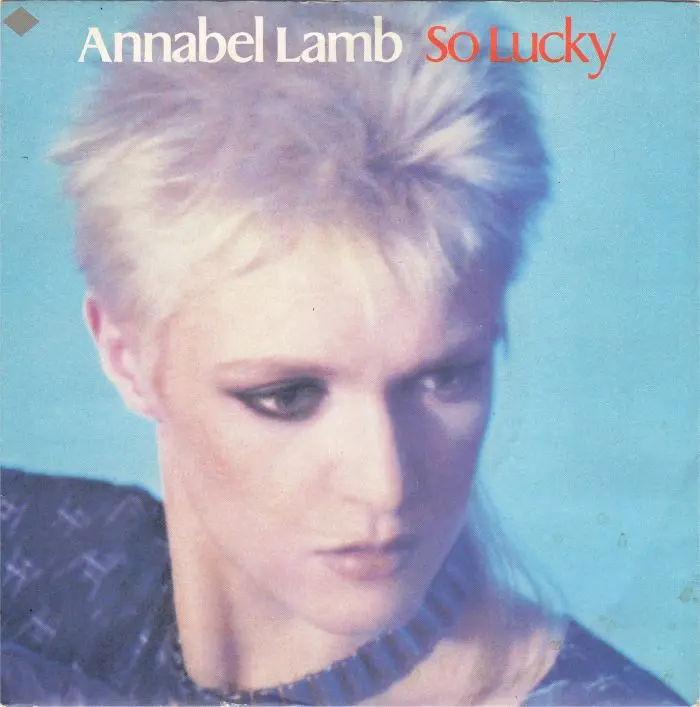 B3. “So Lucky In Bed” (3:05) – skewers the disconnect between physical success and emotional emptiness in a bitter second-person taunt. She punctures self-delusion with “You say you’ve fallen in love with a superman / You’ve only really fallen for a bulge and a tan.”
B4. “Inside of My Head” (3:24) – reveals post-breakup obsession, where memory eclipses reason and longing rewrites reality. She marks the shift into denial with “I should have seen it was never to be / Making mistakes is so easy for me.”
B5. “Talking to Me” (4:07) – affirms a telepathic connection that survives distance and silence. The lyric moves in spirals, grounded by the line “Even though you’re not here… you’re talking to me,” repeating like a mantra of unresolved attachment.
The Flame was co-produced by Wally Brill and David Anderle, who built on Lamb’s existing studio aesthetic with expanded horn, keyboard, and vocal arrangements. Alan Hodgson and Richie Stevens split drum duties while Scott Breadman adds supplemental percussion. Sessions combined programmed elements with live ensemble tracking, balancing digital polish with acoustic flourishes.
A&M issued “The Flame” as the lead single in March 1984, backed with a non-album version of Leonard Cohen’s “Sisters of Mercy.” A follow-up single, “So Lucky,” appeared in June with “Dream Boy” as its B-side.
When Angels Travel
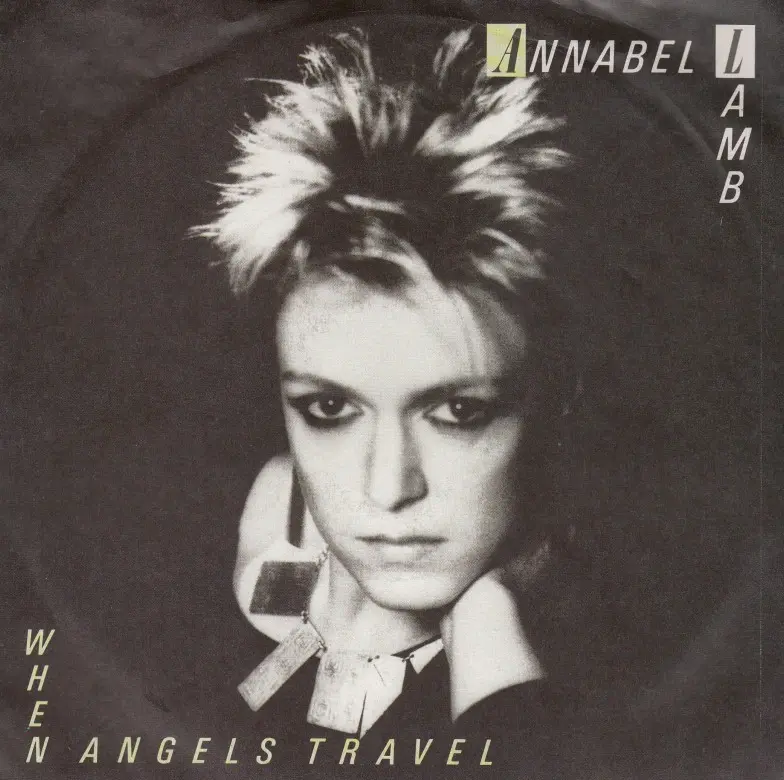
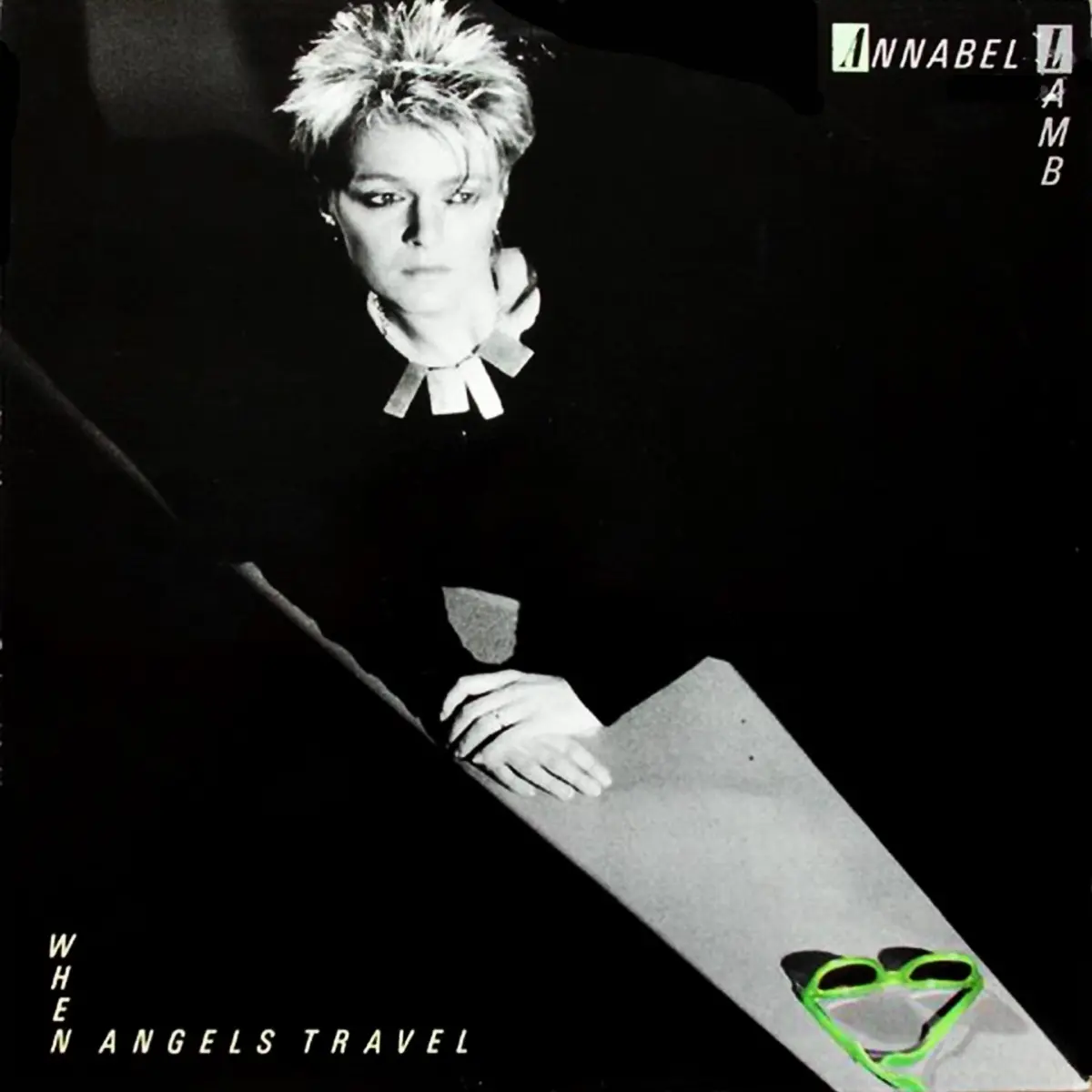 Annabel Lamb released her third album, When Angels Travel, in 1986 on RCA.
She expanded her sonic palette with layered keyboard textures, overlapping synthesized parts by herself and guest contributors. Guitar passages by Chris Jarrett cut through the denser arrangements, while guest spots and varied instrumentation support the shift toward a more textured, widescreen format. Lamb composed or co-wrote all ten tracks, pairing rhythmic patterns with narrative lyrics and atmospheric backdrops.
 A1. “Rope Bridge” (3:40)
A2. “When Angels Travel” (4:29)
A3. “Mixing” (4:45)
A4. “Traitor Traitor” (3:48)
A5. “Green Mansions” (4:31)
B1. “The Truth Hurts” (4:03)
B2. “African Affair” (3:52)
B3. “Wolf” (4:37)
B4. “Homecoming” (3:19)
B5. “Inferno” (4:58)
 Sessions for When Angels Travel marked Lamb’s transition to RCA after two albums with A&M. She produced the album in a looser collaborative setting, working across multiple studios with a rotating cast of players and vocal contributors. Synthesized percussion and ambient effects accompany acoustic and electric instrumentation, contrasting clipped rhythms with extended harmonic layers.
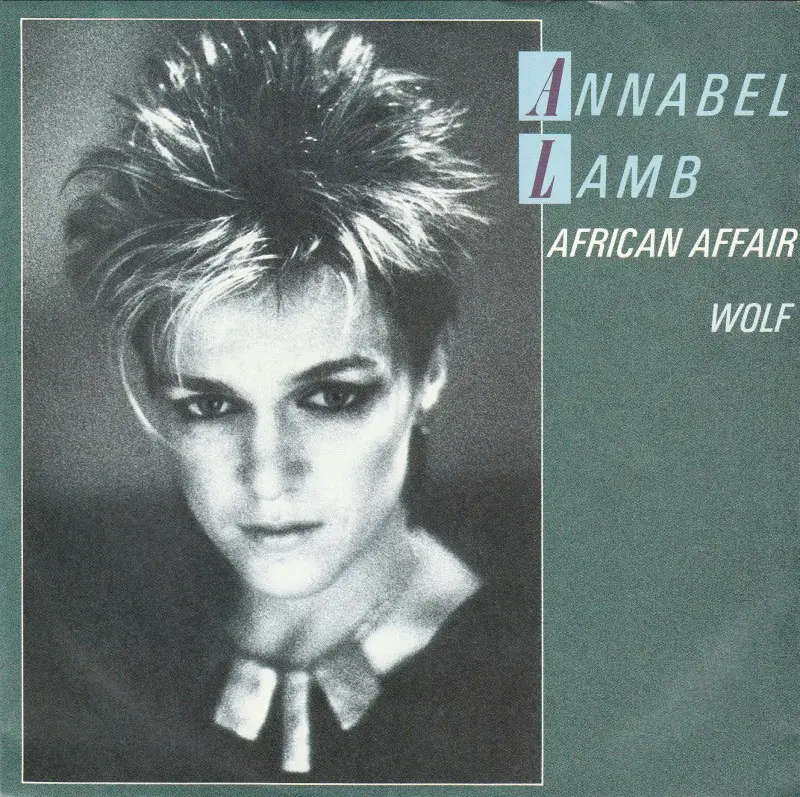
RCA issued three singles from the album. “When Angels Travel” appeared first, backed with “Mixing.” “African Affair,” paired with “Wolf,” followed soon after, and “The Truth Hurts” was issued last with “Homecoming” on the B-side.
Bridges
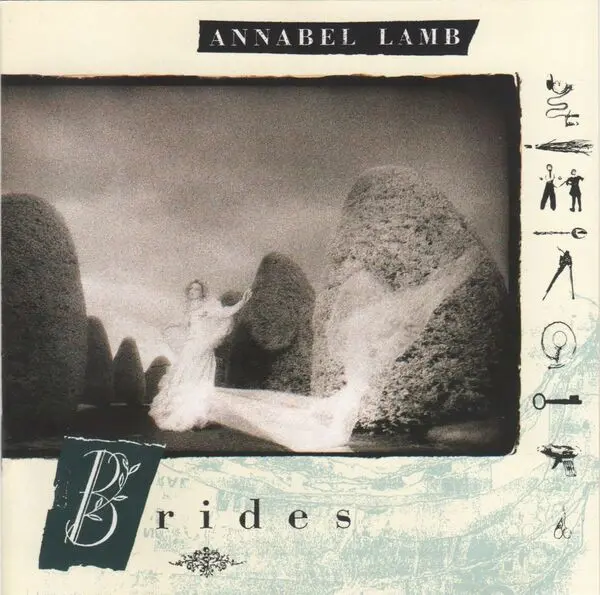 Annabel Lamb released her fourth album, Bridges, in 1987 on German RCA.
She built the album around an expanded sound palette that pairs electronic programming with live brass and vocal layering. Keyboardist Robin Langridge shares textural duties with Scott Davidson, while Chris Jarrett and S.G. handle contrasting guitar roles. Lamb co-produces and contributes additional keyboards and arrangements, supported by brass from saxophonist Harrison Smith and trumpeter Jim Dvořák, with guest vocals by Mica Paris and Dani Ali on three key tracks.
The material spans originals, co-writes, and select outside contributions including the Velvet Underground cover “Sweet Jane,” performed here as a duet with Mica Paris. Additional writers include Mark Damron (“Different Drum”) and Liam Sternberg, who supplied “Nada (Trick of the Light)” and programming. Dani Ali appears as a guest writer and singer on “Don’t Talk About Love” and “The Simple Truth.”
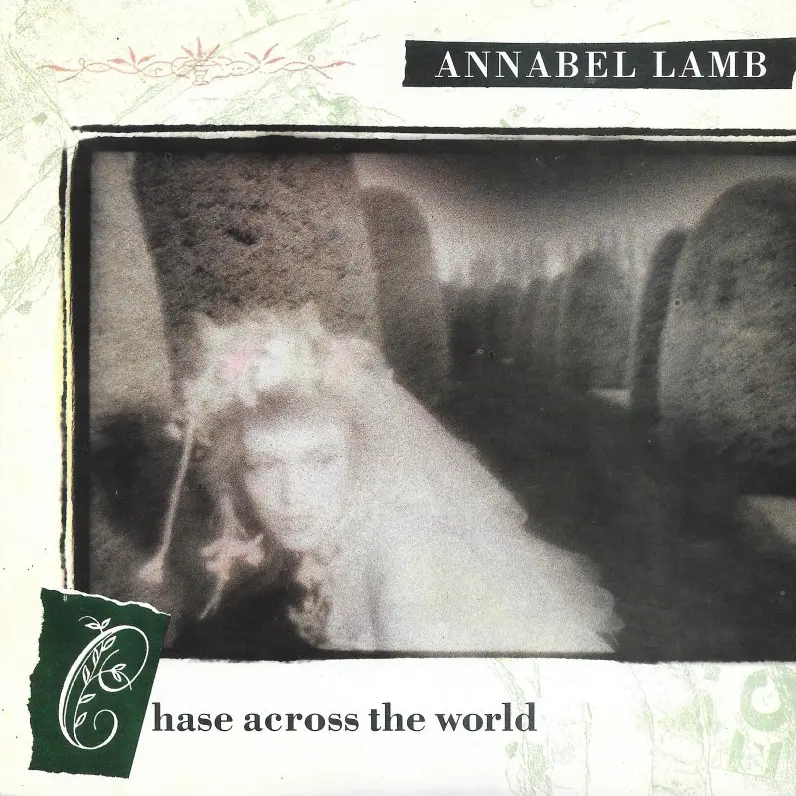 A1. “Chase Across the World” (4:31)
A2. “Different Drum” (4:34)
A3. “Country of Love” (4:43)
A4. “Nada (Trick of the Light)” (4:16)
A5. “Baby Baby” (5:23)
A6. “Come to Me” (3:49)
B1. “Sweet Jane” (4:19)
B2. “Don’t Talk About Love” (3:56)
B3. “The Simple Truth” (5:19)
B4. “In the Land of Dreamy Dreams” (3:56)
B5. “Lonely House” (5:07)
Lamb recorded Bridges at The Justice Room with Wally Brill, who engineered and co-mixed the sessions. Jack Adams mastered the album at Tape One, and Peter Mountain provided photography for the European packaging.
RCA issued “Different Drum” (b/w “In the Land of Dreamy Dreams”) as the lead single on June 15, 1987. A remix 7″ of “Chase Across the World” followed with “Inferno” as the B-side.
Justice
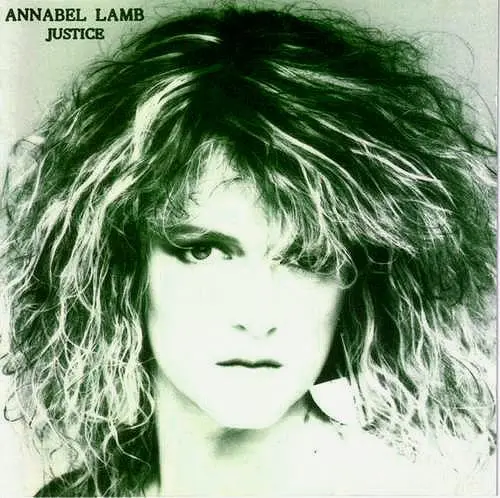 Annabel Lamb released her fifth album, Justice, in 1988 on German Metronome.
She anchors the album with layered keyboard arrangements and expanded horn voicings, blending acoustic textures with programmed elements. Keyboards by Robin Langridge and Dani Ali shift between piano and synth roles, while guitarist Chris Jarrett and bassist Steve Greetham engage in cross-patterned interplay. Brass flourishes from saxophonist Harrison Smith and trumpeter Jim Dvořák punctuate the material alongside rhythmic passages from percussionists Ken Dewar, Manny Elias, and Martin Barker.
Additional keyboard textures and drum programming came from Dani Ali, who had contributed vocals and arrangements on Bridges. Guest players include pianist Huw Warren and saxophonist Jamie Talbot, who contributes soprano parts alongside Smith’s tenor and soprano leads.
A1. “The Ghost of You” (4:04)
A2. “Refugee” (3:56)
A3. “Under You” (4:19)
A4. “Lonely Hearts” (6:00)
A5. “Devotion 2” (3:52)
B1. “Dream Come True” (4:53)
B2. “It’s a Lover’s World” (4:05)
B3. “Red Party Dress” (5:58)
B4. “Rock, Paper, Scissors, Matches” (3:54)
B5. “Don’t Fool Me” (3:51)
Lamb co-produced Justice with Wally Brill, who recorded and mixed the album at The Justice Room and The Wool Hall with assistant engineering by Brad Davis and Giles Adams. Ian Gillespie handled editing, and Jack Adams mastered the album at Tape One.
Photography was split between Michael von Gimbut and Peter Mountain, with sleeve design by Michael B. Behr. Distributed by Polygram Musik Vertrieb, the album appeared with a printed inner sleeve containing full lyrics and credits.
Discography:
- Once Bitten (1983)
- The Flame (1984)
- When Angels Travel (1986)
- Brides (1987)
- Justice (1988)
Sources:
- Discogs: Annabel Lamb
- 45cat: Annabel Lamb
- RYM: Annabel Lamb
- TVRDb.com: Top of the Pops – Annabel Lamb
Artist/Album Pages:
Gloria Gaynor is an American singer whose recording career began with a 1965 Jocida single and exp...
Kashif Saleem (Dec. 26, 1956 — Sept. 25, 2016) was an American R&B singer, songwriter, and key...
Centipede was an English avant-garde jazz big-band led by pianist Keith Tippett for the 1971 RCA/Neo...
Gerry Rafferty (1947–2011) was a Scottish musician and songwriter who emerged in The Humblebums, a...
Peter Michael Hamel is a German composer and electroacoustic musician behind the 1972/73 Vertigo t...
Rational Youth was a Québécois synthpop band that released the 1982 album Cold War Night Life on Y...
Swans Way as an English sophisti-pop trio that released the 1982 standalone single "Theme From the...
Douji Morita — 森田童子 (Jan. 15, 1952 — April 24, 2018) — was a Japanese folk-psych singer/songwriter...
Rockets was a French electro/space-funk band whose 1976–84 run produced On the Road Again, Plaster...
Noa was a French jazz-rock/Zeuhl band that self-released an eponymous album in 1980. Members: Al...
Red Summer was an English instrumental art-rock combo behind the 1982 album Release on Rimshot Rec...
Sad Café was an English ensemble that was active between the late 1970s and mid-1980s. Hailing from ...