

5 Hand Reel was an English/Scottish folk-rock band that released three albums between 1976 and 1978 on RCA Victor, followed by a 1979 fourth on Topic Records.
Members: Bobby Eaglesham (vocals, mandolin, guitar, dulcimer, side drum), Tom Hickland (vocals, fiddle, keyboards, organ), Barry Lyons (bass, keyboards, whistle), Dave Tulloch (percussion, side drum, harmonica), Chuck Fleming (fiddle, 1974-75), Dick Gaughan (vocals, guitar, tin whistle, cittern, 1975-78), Sam Bracken (vocals, guitar, 1978-80)
Background
5 Hand Reel formed in London as the renamed form of Spencer’s Feat, an electric folk group with singer–guitarist Bobby Eaglesham, fiddler Chuck Fleming, singer–fiddler–keyboardist Tom Hickland, bassist Barry Lyons, and drummer Dave Tulloch. The group reached its record lineup in June 1975 when Fleming cleared out for singer–guitarist Dick Gaughan.
Hickland moved from Belfast to London in 1971 and worked with Gaughan, Fleming, and singer Clive Woolf in the Holland-touring group Firewater. Gaughan came from the Edinburgh folk-club circuit and recorded the 1972 Trailer release No More Forever, followed by a spell with Boys of the Lough. Eaglesham gigged solo on the Scottish folk circuit after The Other Half, his duo with singer–banjoist Iain MacKintosh. Lyons had prior stints with Trees and Mr Fox. Tulloch worked earlier with Woolf at Cecil Sharp House.
5 Hand Reel worked from the folk-club network into a wider electric lineup with shared vocals, fiddle, fretted strings, rhythm instruments. Rubber Records signed the group in 1976 and sent the band to Impulse Studios in Wallsend, where producer Geoff Heslop and engineer Mickey Sweeney cut the self-titled first album on eight-track equipment.
5 Hand Reel
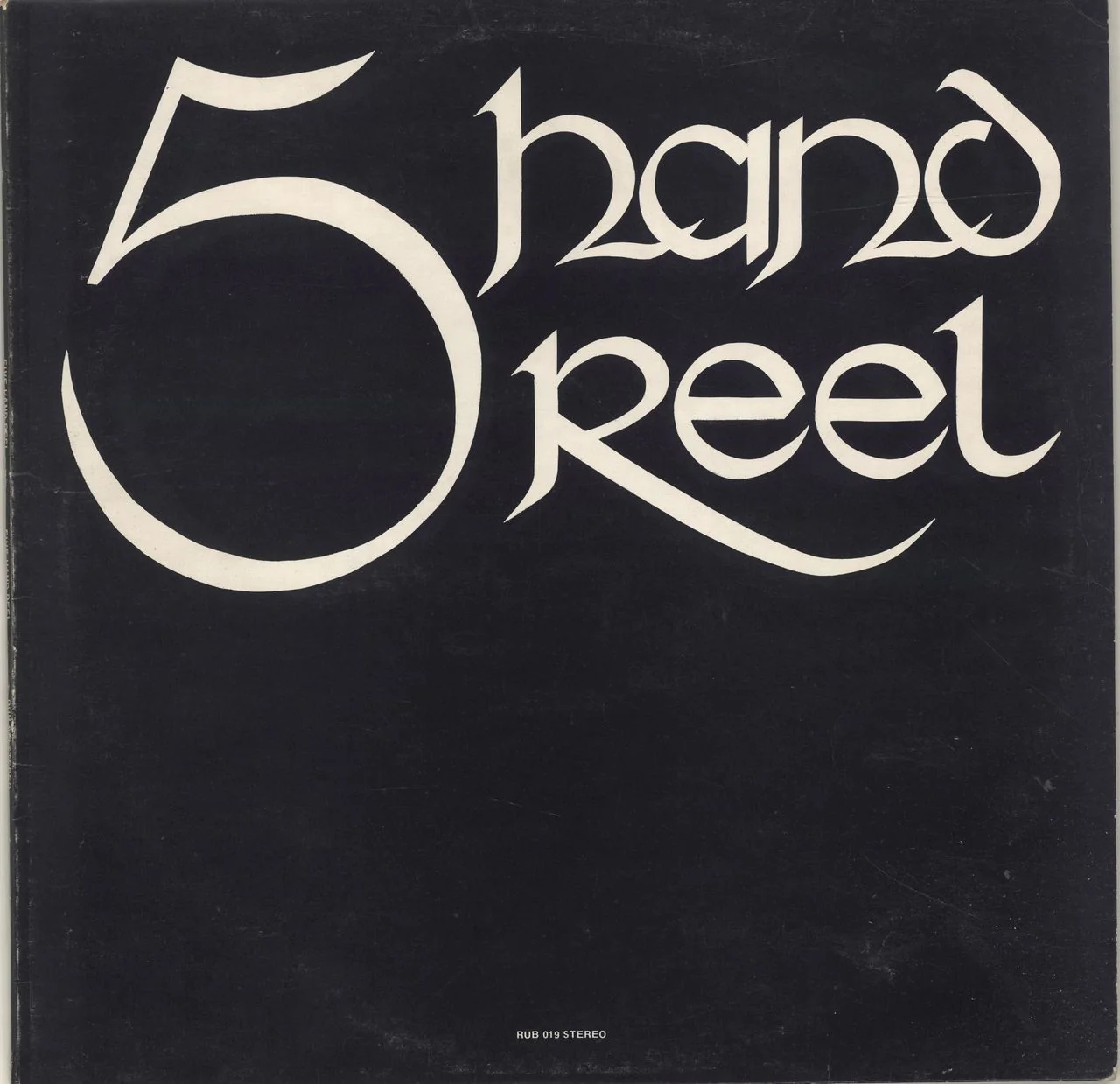 5 Hand Reel released their self-titled debut album in 1976 on Rubber Records.
The album documents their first recording lineup: Bobby Eaglesham, Dick Gaughan, Tom Hickland, Barry Lyons, and Dave Tulloch. The album contains eight traditional arrangements and the Eaglesham original “The Death of Argyll.” Longer pieces combine song fragments with jig, reel, and slip-jig material. Gaughan adds cittern, tin whistle, and tenor banjo beside guitar; Eaglesham adds mandolin and dulcimer.
“Both Sides of the Forth” braids song fragments and tune pieces into a shard-built arrangement. “Death of Argyll” colors Eaglesham’s composition with orchestral percussion and pipe-band accents. “Kempy’s Hat” shuttles from the title tune into “The Maid at the Spinning Wheel” and “Dr Gilbert,” a double-jig and reel sequence. “The Knight and the Shepherd’s Daughter” fits a traditional ballad text to the Shetland tune “Christmas Day i the Moarnin.”
“Sliave Gallion Braes” carries Eaglesham’s lead with Gaughan’s harmony behind the line. “When a Man’s in Love” sets Gaughan’s lead above his later preferred key. “Frankie’s Dog” closes with a tune set around “Campbell’s Farewell to Redcastle.”
A1. “Both Sides of the Forth: McGinty’s Meal and Ale / Hey Ca’ Through / Fisherrow / Top It Off” (7:05)
A2. “The Death of Argyll” (5:18) – Eaglesham
A3. “Kempy’s Hat / The Maid at the Spinning Wheel / Dr Gilbert” (5:21)
A4. “The Knight and the Shepherd’s Daughter” (2:57)
B1. “Sliave Gallion Braes” (5:46)
B2. “Wee Wee German Lairdie” (3:14)
B3. “The Maid of Listowel” (5:11)
B4. “When a Man’s in Love” (5:32)
B5. “Frankie’s Dog / Campbell’s Farewell to Redcastle” (4:36)
The band recorded and mixed the album on eight-track equipment at Impulse Studios, Wallsend, with producer Geoff Heslop and engineer Mickey Sweeney. The sleeve features photography by Tom Gilfellon and artwork by Kathy Davenport.
5 Hand Reel appeared in sequence with Gaughan’s second solo album, the 1976 Trailer release Kist o’ Gold.
For A’ That
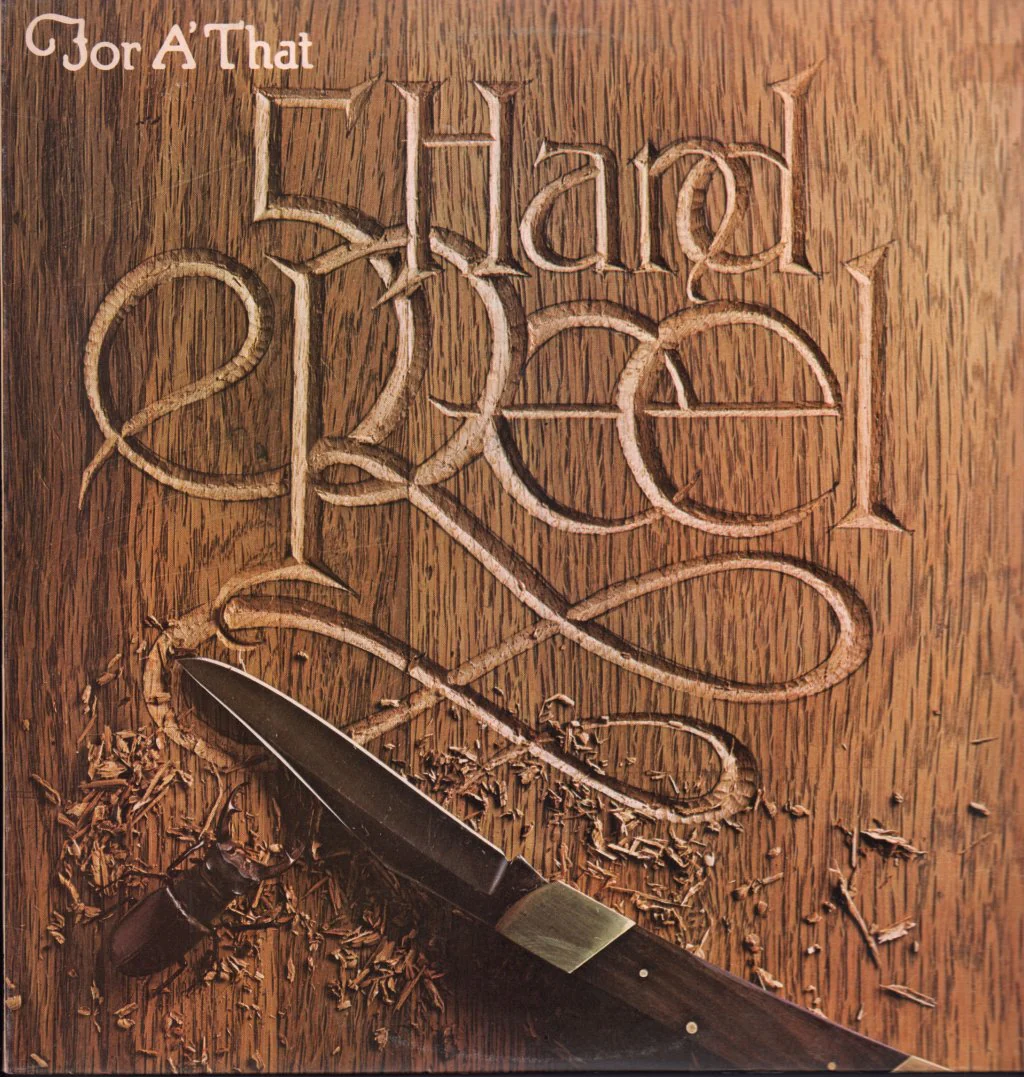 5 Hand Reel released their second album, For A’ That, in 1977 on RCA Victor.
For A’ That centers Gaelic song, Scots verse, ballad material, and dance-tune sets in the same five-piece lineup. The album contains seven traditional arrangements, two Robert Burns settings, and one Tulloch tune inside the closing set. Lead vocals pass among Gaughan, Eaglesham, and Hickland. Eaglesham adds side drum and dulcimer, while Hickland adds piano and organ.
“Bratach Bana” sets Gaelic vocal lines inside electric-edged accompaniment. “Pinch of Snuff” reels as a compact instrumental passage. “A Man’s a Man for A’ That” pairs Gaughan and Eaglesham on the Burns text. “P Stands for Paddy” links Hickland’s vocal line to “Paddy Fahey’s Reel.” “The Cruel Brother” places Gaughan’s lead over dulcimer. “Carrickfergus” pairs Gaughan and Eaglesham with electric guitar. “Lochanside” closes through pipe march, jig figures, and “The Marquis of Tullybardine” reel.
A1. “Bratach Bana” (2:19)
A2. “Pinch of Snuff” (3:59)
A3. “A Man’s a Man for A’ That” (3:27) – Burns
A4. “Haughs o’ Cromdale” (5:05)
A5. “Ae Fond Kiss” (4:02) – Burns
B1. “P Stands for Paddy / Paddy Fahey’s Reel” (4:53)
B2. “The Cruel Brother” (4:48)
B3. “Carrickfergus” (4:23)
B4. “Lochanside / The Jig of Slurs / Linda Brechin’s / The Marquis of Tullybardine” (4:52) – traditional, arranged by 5 Hand Reel; Tulloch
The band recorded For A’ That in July 1977 at Impulse Studios, Wallsend, with producer Geoff Heslop and engineer Mickey Sweeney. Steve Taylor mixed the album at CBS Studios in London. Graphic firm Sutton Paddock designed the sleeve.
Gaughan worked in sequence on his third solo album, Coppers and Brass, released in 1977 on Topic Records.
Earl o’ Moray
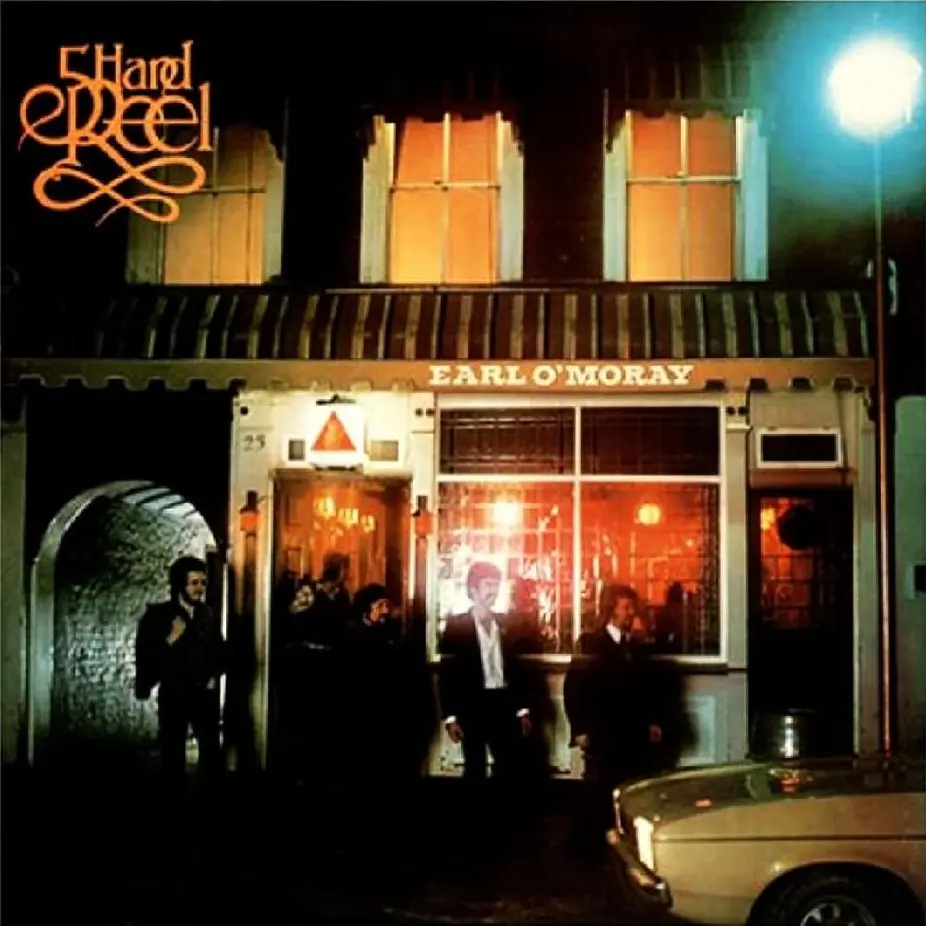 5 Hand Reel released their third album, Earl o’ Moray, in 1978 on RCA Victor.
Earl o’ Moray marks the final 5 Hand Reel album with Gaughan. The program contains six traditional arrangements, the Burns setting “My Love Is Like a Red, Red Rose,” and Hamish Henderson’s “Freedom Come-All-Ye.” The instrumental credits retain the established guitar–fiddle–bass–drum base, with whistle and harmonica from Lyons and Tulloch.
“My Love Is Like a Red, Red Rose” centers Eaglesham’s lead on the Burns song. “Sheriffmuir” gathers Jacobite fragments and a Carolan tune into one narrative run. “Child on the Road” gives Hickland the Irish ballad line. “The Trooper and the Maid” shifts between two tunes, using the change to mark turns in the story. “The Beef-Can Close” branches its riffs from the tune. “Jackson and Jane” gives Hickland a North Irish racehorse song.
A1. “My Love Is Like a Red, Red Rose” (3:46) – Burns
A2. “Sheriffmuir” (5:44)
A3. “The Child on the Road” (4:36)
A4. “The Bonnie Earl o’ Moray” (5:15)
B1. “The Trooper and the Maid” (5:08)
B2. “The Beef-Can Close” (3:27)
B3. “Jackson and Jane” (6:45)
B4. “Freedom Come-All-Ye” (3:43) – Henderson
Simon Nicol produced the album at Rockfield Studios. Mike Pela recorded the sessions, and David Hamilton-Smith mixed the album at CBS Studios in London. Alan Messer photographed the sleeve.
RCA Victor lifted “My Love Is Like a Red, Red Rose” as a 1978 single (b/w “Pinch of Snuff”).
Dick Gaughan heralded his exit from 5 Hand Reel with his eponymous fourth solo album, released in 1978 on Topic, which also issued his 1981 followup Handful of Earth.
A Bunch of Fives
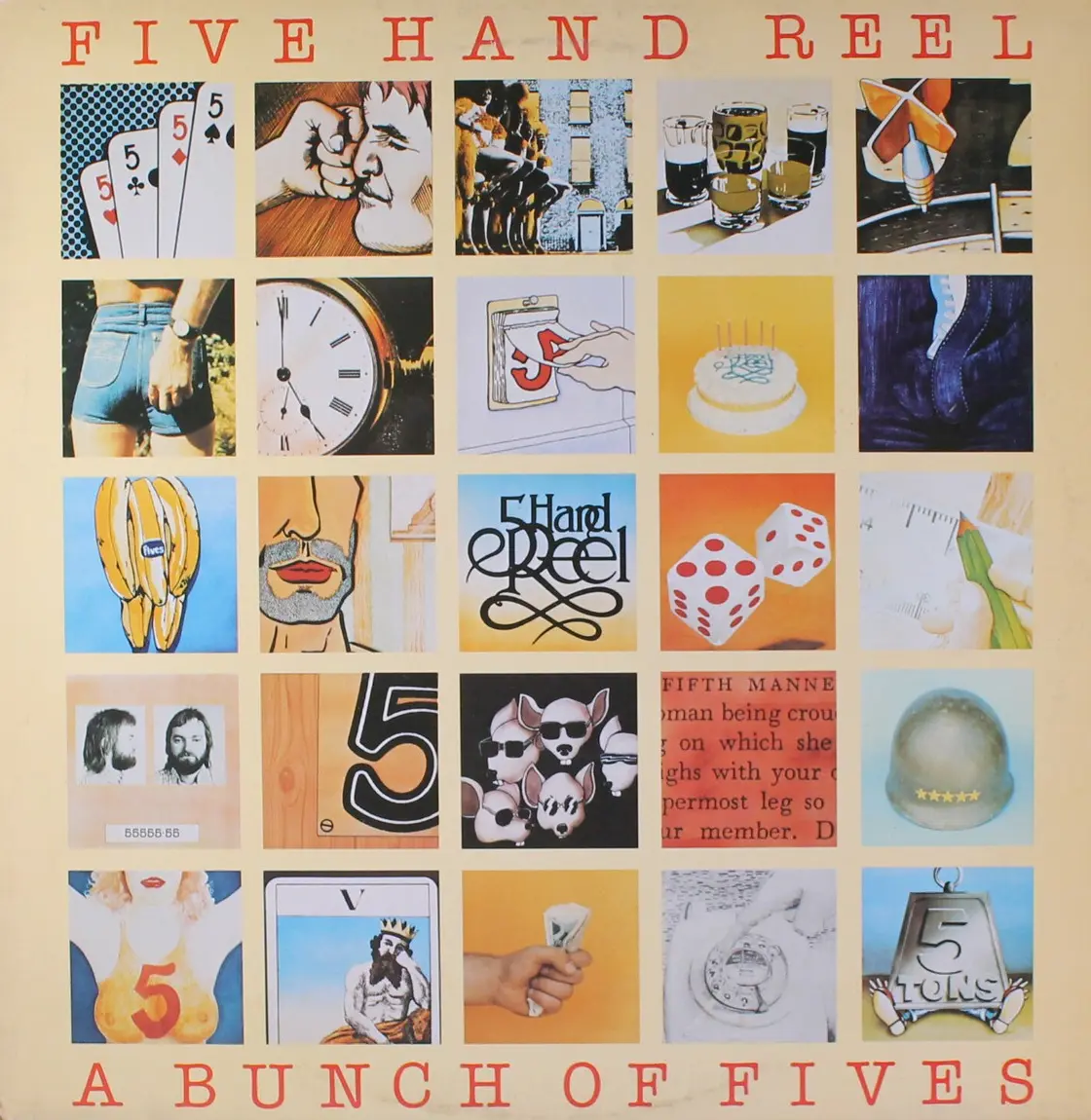 5 Hand Reel released their fourth mainline album, A Bunch of Fives, in 1979 on Topic Records.
A Bunch of Fives places Sam Bracken in Gaughan’s former vocal and guitar slot. The album contains five traditional arrangements, one band title, and a band setting of Florence Mary Wilson’s poem “The Man from God Knows Where.”
Bracken handles lead guitar, while Eaglesham adds bouzouki beside acoustic guitar. Lyons adds soprano saxophone and whistle; Tulloch adds French horn and harmonica.
A1. “Lay Ye Doon” (6:22)
A2. “The Man from God Knows Where” (7:41) – Wilson
A3. “Maggie Lauder” (4:20)
B1. “Satan Will Appear” (3:36) – Five Hand Reel
B2. “The House of Airlie” (4:36)
B3. “Paddy’s Green Shamrock Shore” (6:12)
B4. “Land o’ the Leal” (4:27)
5 Hand Reel and Graeme Myhre produced the album at Rock City Sound Studios in Shepperton, Middlesex, where the band recorded and mixed the sessions. Peter Wagstaff designed the cover. 5 Hand Reel and Dave Warwick photographed the sleeve.
Discography:
- 5 Hand Reel (1976)
- For A’ That (1977)
- Earl O’ Moray (1978)
- A Bunch of Fives (1979)
Sources:
Artist/Album Pages:
Still Life was an English organ-rock/psych band behind a 1971 self-titled album on the Vertigo "sw...
George-Edwards was an American art-pop duo from Detroit that self-pressed the 1977 album 38:38 an...
Zafer Dilek (August 30, 1944 — December 11, 2025) was a Turkish musician, composer, and arranger w...
Ausgang was an English goth-rock band from Birmingham that released two EPs on Criminal Damage Rec...
Riff Raff was an English jazz-rock band that released the 1973–74 RCA albums Riff Raff and Origina...
Full Moon Trio was a Belgian avant-jazz/rock band behind a 1975 self-titled album on Dwarf Records...
Kenny Barron (born June 9, 1943) is an American jazz pianist from Philadelphia who emerged as a Si...
Womega was a Belgian jazz-rock/soul band that released the 1975 album A Quick Step. They remained ...
Linda Tillery (born September 2, 1948) is an American singer, percussionist, producer, arranger, a...
Spin was a Dutch jazz-rock band that made the 1976/77 Ariola albums Spin and Whirlwind and scored ...
Lost Peace was a Swiss jazz-rock band that self-released a 1974 standalone single, followed by a h...
The Specials were an English ska band that released the 1979–80 albums The Specials and More Speci...