

Mandala was a Brazilian Latin/jazz-rock band from São Paulo that released a 1976 self-titled album on Morisom. The band featured prolific session keyboardist and eventual solo artist Nelson Ayres.
Members: Luiz Roberto Oliveira (acoustic guitar, synthesizer), Roberto Sion (flute, saxophone), Nelson Ayres (piano), Zé Eduardo Nazario (drums, percussion), Zeca Assumpção (bass)
Background
Mandala formed in São Paulo in 1972, when drummer Zé Eduardo Nazário assembled a five-piece group with reedist Roberto Sion, keyboardist Nelson Ayres, guitarist–synthesist Luiz Roberto Oliveira, and bassist Zeca Assumpção.
Nazário entered professional work in his early teens through a 1965–68 place in the samba-jazz group Xangô 3 with Itiberê Zwarg. His São Paulo club work at Toten and CAMJA led to the Grupo Experimental de Percussão de São Paulo with percussionist Guilherme Franco.
Ayres studied in São Paulo with Paul Urbach, Luís Schiavo, Conrad Bernhard, and Diogo Pacheco before a Berklee scholarship took him to Boston.
Sion came from Santos, studied piano before Conservatório Lavignac, and completed psychology at Unicamp. He then studied arrangement, improvisation, and saxophone at Berklee with Joseph Viola, Ryo Noda, Lee Konitz, and Joe Allard.
Assumpção, born José Thomaz Assumpção in São Paulo, studied music, arrangement, and composition at Berklee with John Neves, William Curtis, Herb Pomeroy, Ron McLure, and Gary Burton.
Mandala recorded music for the film Mandala, with collective arrangements across a program of pieces by Nazário, Assumpção, Oliveira, Sion, and Ayres. Morisom issued the 1976 LP Mandala – Trilha Sonora do Filme with production by Mori-Filme Produtora de Cinema e Discos.
Mandala
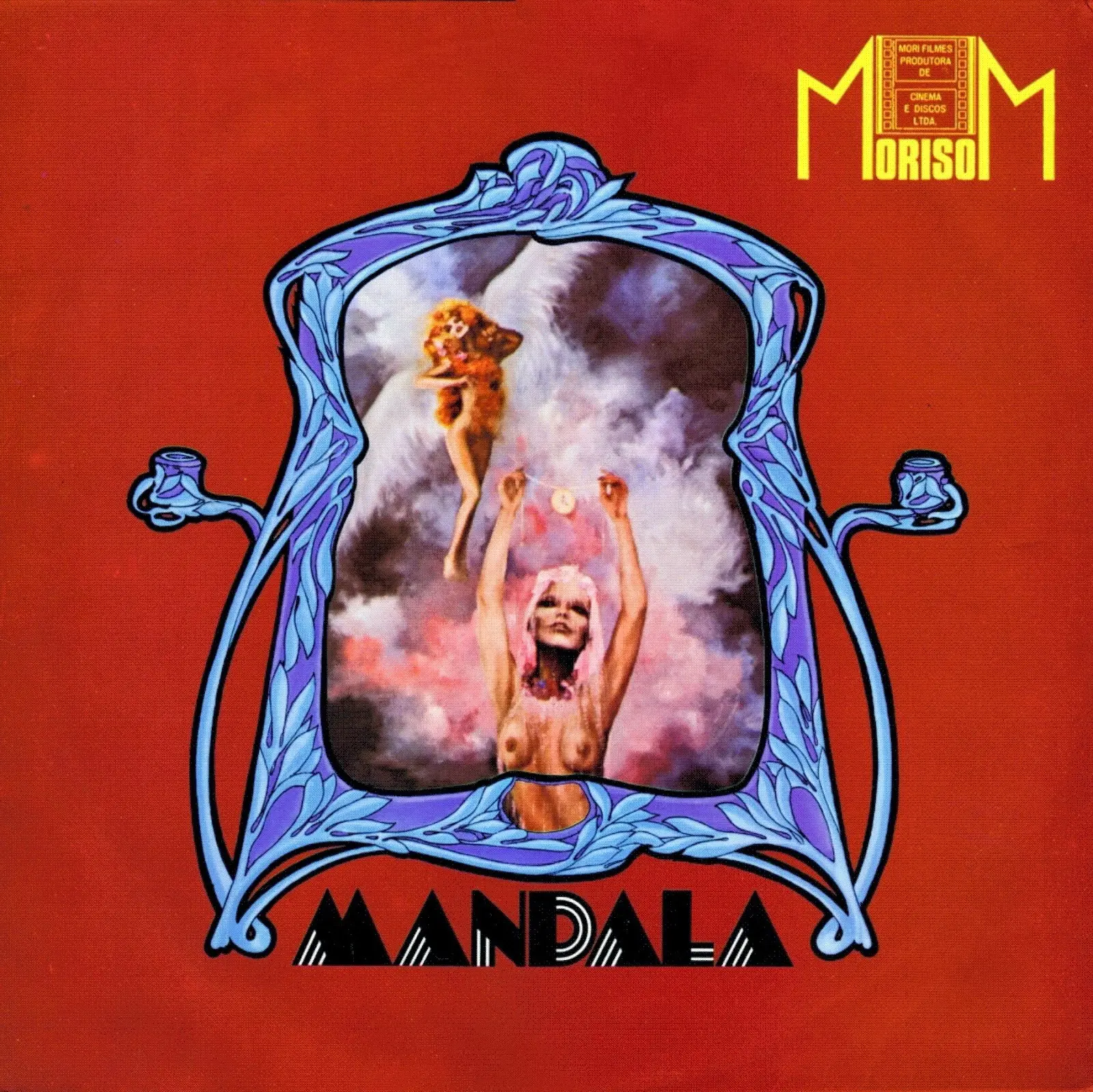 Mandala released their self-titled album in 1976 on Morisom.
The album presents six collective arrangements from material credited across the five players, with Zeca Assumpção assigned two titles.
Mandala opens in a pastoral register, with “Pitha’ta” rustling through soft bells, flute lead, and light samba traces. “Alga” ripples around water sound and a quieter new-age tint. “Matilho” darkens after the opening calm, then accelerates through rolling percussion, southern-tinged guitar, sputtering synthesizer, and Oriental-lined saxophone motives before the opening theme returns in warmer tone.
“Estilingue” introduces wordless chant-like vocals, jungle-colored percussion, and heavier sectional turns before a more polished lounge-jazz passage redirects the piece. “Nadava” blooms in a softer closing register. “El Baion” concludes with uptempo piano movement and a brighter rhythmic finish.
A1. “Pitha’tá” (3:35) – Nazário
A2. “Alga” [Seaweed] (3:18) – Assumpção
A3. “Matilho” [Pack] (10:44) – Oliveira
B1. “Estilingue” [Slingshot] (7:36) – Assumpção
B2. “Nadava” [Swam] (2:06) – Sion
B3. “El-Baion” [The Baião] (8:14) – Ayres
Mandala recorded the music in 1972. Morisom issued the LP in 1976 with Mori-Filme Produtora de Cinema e Discos as producer. The front sleeve has a brown field with a blue ornamental frame. Its central panel shows clouds and a raised-arm figure below a yellow Morisom mark.
Postlude
Zé Eduardo Nazário and Zeca Assumpção surfaced in 1979 with Grupo Um, an avant-garde samba jazz-rock band.
Nelson Ayres released a 1978 solo album for Philips as part of their MPBC Musica Popular Brasileira Contemporanea series. In 1983, he reteamed with Roberto Sion in the Latin samba band Pau Brasil.
Discography:
- Mandala (1976)
Sources:
Artist/Album Pages:
Rikki and the Last Days of Earth were an English art-punk band from Tamworth, Staffordshire, that ...
Deep Purple are an English hard-rock band formed in 1967. They emerged at the height of psychedelia ...
Ofege was a Nigerian Afro-psych band formed by Obalende teenagers. They made the 1973–75 EMI album...
Akiko Yano — 矢野顕子 (born Feb. 13, 1955) — is a Japanese art-pop singer who released five albums on ...
Barbara Dickson (born Sept. 27, 1947) is a Scottish folk/pop vocalist and actress who first entere...
Sfinx was a Romanian symphonic/hard-rock band that released two singles, two EPs, and three albums...
The Platina was an Israeli jazz-rock ensemble that first served as the backing band for Tel Aviv s...
Arco Iris are an Argentine folk-rock/art-rock quartet with a prolific 1970s output and a sporadic ...
Tom Harrell (born June 16, 1946) is an American post-bop/jazz-funk trumpeter, flugelhornist, comp...
Stu Gardner is an American R&B singer, musician, and composer who led the First Cosins Jazz E...
Gary Ogan is an American singer/songwriter from Portland, Ore., who emerged in partnership with mu...
Tyll was a German jazz-rock/psych band that released the 1975 album Sexphonie on Kerston. Member...