

Lonnie Smith (July 3, 1942 – September 28, 2021) was an American soul-jazz/funk organist.
He emerged as a George Benson sideman, followed by a stint with Lou Donaldson. In 1967, Smith launched his solo career with the Columbia album Finger Lickin’ Good.
Smith surfaced on Blue Note with the 1968 album Think!, followed by Turning Point, Move Your Hand, Drives, and the 1970 recording Live at Club Mozambique. His subsequent Groove Merchant run produced the 1975/76 jazz-funk titles Afro-Desia and Keep On Lovin’.
Background
Lonnie Smith was born on July 3, 1942, in Lackawanna, New York, outside Buffalo. His mother sang gospel and joined family members on a weekend radio program; those singers exposed him to gospel, blues, jazz, and classical music. Smith sang with relatives before he took up trumpet. He started trumpet in junior high school, learned by ear, and became a high-school band soloist. Smith sang with the Smith Brothers in 1957. At sixteen, he formed the Teen Kings with saxophonist Grover Washington Jr. and drummer Daryl Washington. He later led a vocal group called the Supremes before the Motown group used the name.
Art Kubera, owner of a Buffalo music store, gave Smith his first Hammond B-3 after Smith spent time at the shop. Smith worked out the instrument by ear from church-organ sound and records by Wild Bill Davis, Bill Doggett, and Jimmy Smith. A regional touring group hired him as organist within a few months. Back in Buffalo, Smith sat in at the Pine Grill with organist Jack McDuff’s group, where he met guitarist George Benson.
Smith and Benson rehearsed in Pittsburgh at the home of Benson’s mother, then went to New York. In November 1965, they played the Palms Cafe on 125th Street and Seventh Avenue. Producer John Hammond heard them there. Hammond signed Benson to Columbia and recorded It’s Uptown in February 1966 with guitarist/vocalist George Benson, organist Smith, baritone saxophonist Ronnie Cuber, and drummer Jimmy Lovelace.
In March 1966, Smith began a Columbia leader project that became Finger Lickin’ Good, with trumpeter Blue Mitchell, tenor saxophonist King Curtis, baritone saxophonist Ronnie Cuber, guitarists George Benson and Melvin Sparks, and drummers Charli Persip and Marion Booker. Before the end of the year, Hammond recorded The George Benson Cookbook with the George Benson Quartet; the album later carried a front-cover feature credit for Smith.
After the Columbia sessions, Smith joined saxophonist Lou Donaldson at Blue Note and played on Alligator Bogaloo, Mr. Shing-A-Ling, and Midnight Creeper.
Finger-Lickin’ Good
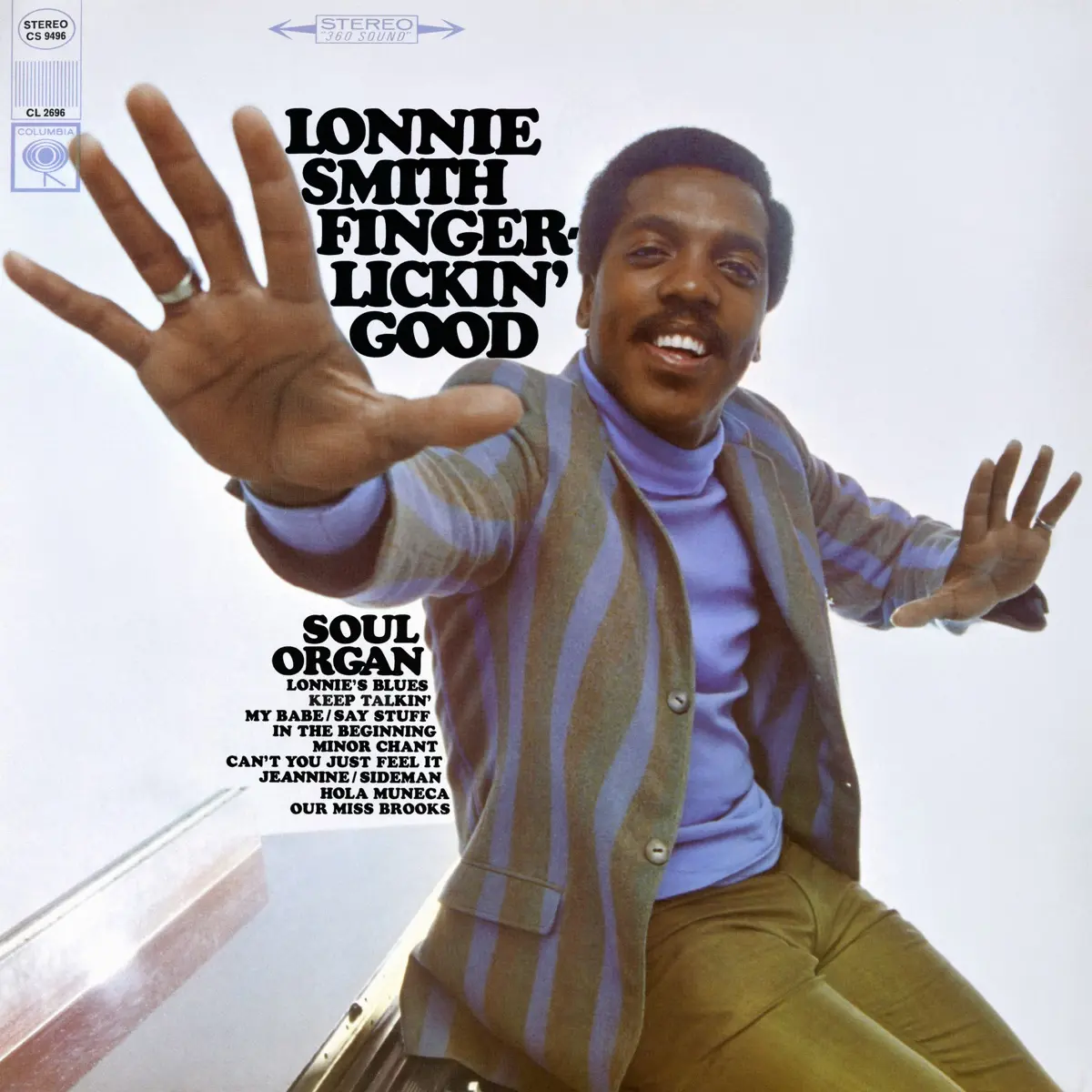 Lonnie Smith released his debut studio album, Finger-Lickin’ Good, in 1967 on Columbia. Smith leads the album on organ with trumpeter Blue Mitchell, saxophonists King Curtis and Ronnie Cuber, guitarists George Benson and Melvin Sparks, and drummer Marion Booker.
A1. “Hola Muneca” (2:53) – Smith
A2. “Minor Chant” (3:23) – Turrentine
A3. “Can’t You Just Feel It” (2:51) – Smith
A4. “Jeannine” (3:23) – Benson
A5. “Sideman” (4:47) – Smith
B1. “Keep Talkin’” (2:21) – Smith
B2. “My Babe” (3:25) – Dixon
B3. “In the Beginning” (2:54) – Smith
B4. “Lonnie’s Blues” (2:38) – Smith
B5. “Say Stuff” (2:55) – Smith
B6. “Our Miss Brooks” (3:04) – Vick
John Hammond produced the Columbia sides during New York sessions in March, May, and November 1966 and May 1967.
Think!
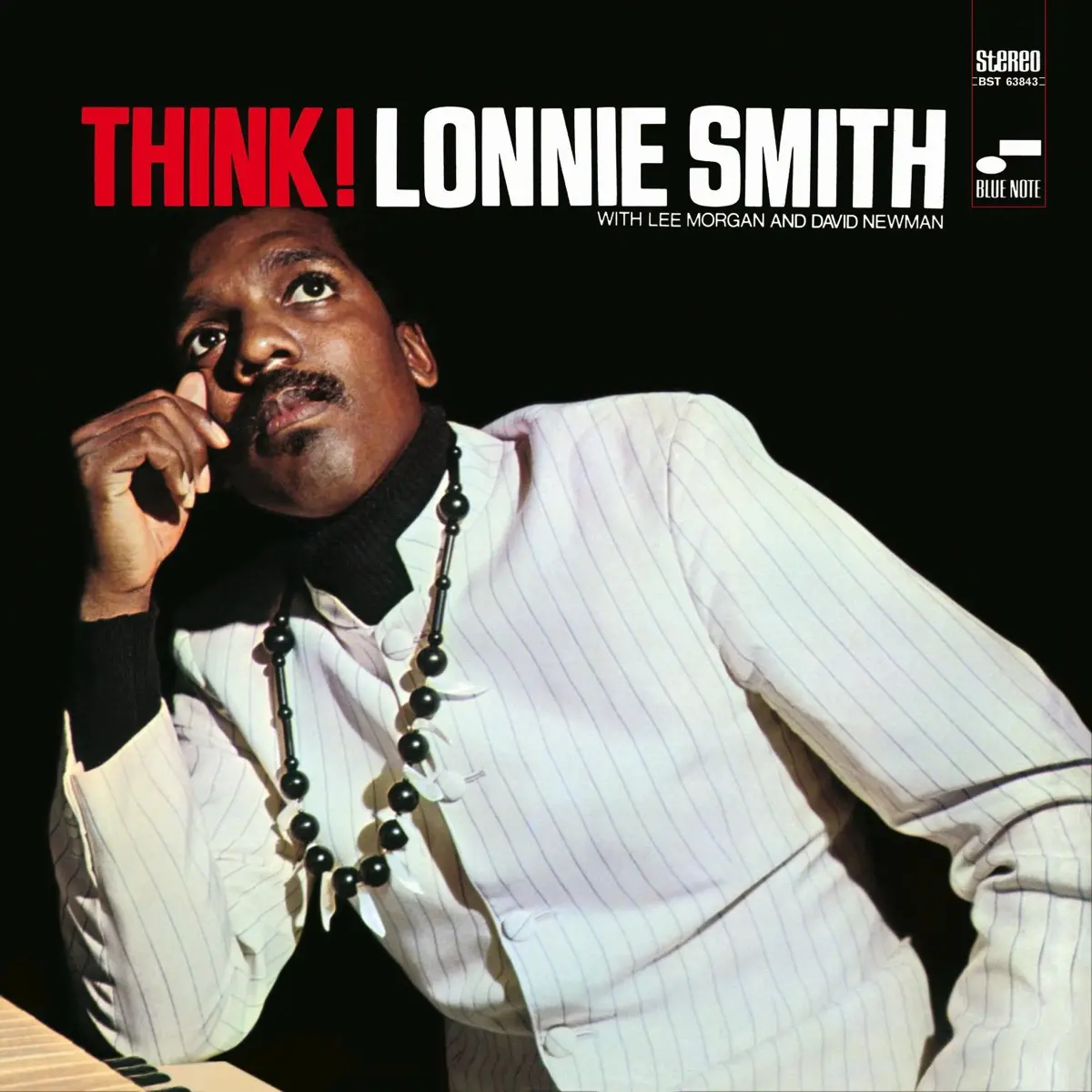 Lonnie Smith released his second studio album, Think!, in 1968 on Blue Note. Smith placed two original compositions beside songs by Hugh Masekela (“Son of Ice Bag”), Aretha Franklin (“Think”), and the traditional “Three Blind Mice.”
The album places trumpeter Lee Morgan and reedist David Newman on the frontline with Sparks and Booker. Percussionists Norberto Apellaniz and Willie Bivens add congas to “The Call of the Wild” and “Slouchin’,” with Henry “Pucho” Brown on timbales.
“Son of Ice Bag” opens with a harmonized theme over descending changes, then lengthens through sparse first statements and broader solo replies. “The Call of the Wild” lingers in a slow, suspended introduction, then breaks into dense Latin percussion and a sharper solo climb. “Three Blind Mice” states a bright harmonized head, then breaks into loose, quick solo turns. “Slouchin’” lopes through Latin accents and lean solo statements.
A1. “Son of Ice Bag” (11:15) – Masekela
A2. “The Call of the Wild” (12:31) – Smith
B1. “Think” (4:46) – Franklin, White
B2. “Three Blind Mice” (6:29) – Traditional
B3. “Slouchin’” (6:52) – Smith
Francis Wolff produced Think! on July 23, 1968, for Blue Note.
Turning Point
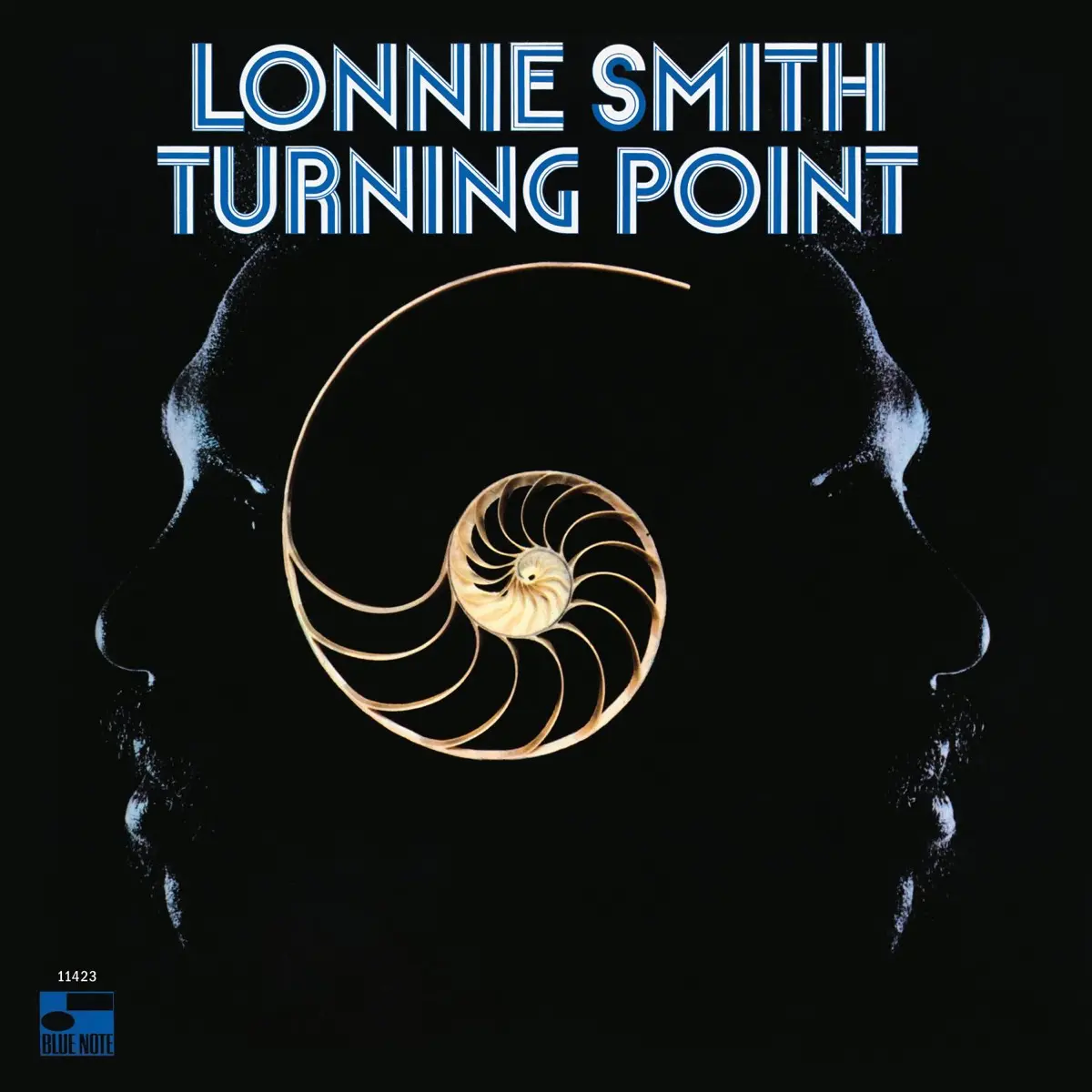 Lonnie Smith released his third studio album, Turning Point, in 1969 on Blue Note. Smith recorded the album with Morgan, Sparks, tenor saxophonist Bennie Maupin, trombonist Julian Priester, and drummer Leo Morris, later known as Idris Muhammad.
The album contains two Smith compositions and songs popularized by Joe Simon (“See Saw”), Bobby Blue Bland (“People Sure Act Funny”), and The Beatles (“Eleanor Rigby”).
“See Saw” snaps over a broad backbeat and clipped opening figures. “Slow High” works a blues path through harmonized lines and relaxed organ phrases. “People Sure Act Funny” leans back against a heavy backbeat, then cuts against it with busier right-hand figures. “Eleanor Rigby” circles an E-minor vamp and climbs toward a hard-clipped close over parade-bass accents. “Turning Point” opens in rubato organ figures, then shifts into faster blues changes and dense variation.
A1. “See Saw” (5:54) – Covay, Cropper
A2. “Slow High” (6:31) – Smith
A3. “People Sure Act Funny” (6:25) – Robinson, Turner
B1. “Eleanor Rigby” (9:18) – Lennon, McCartney
B2. “Turning Point” (8:23) – Smith
Smith recorded Turning Point on January 3, 1969, at Van Gelder Studio in Englewood Cliffs, New Jersey, with producer Francis Wolff and engineer Rudy Van Gelder.
Turning Point appeared in a gatefold sleeve with art direction by Frank Gauna and liner photography by Francis Wolff.
Drives
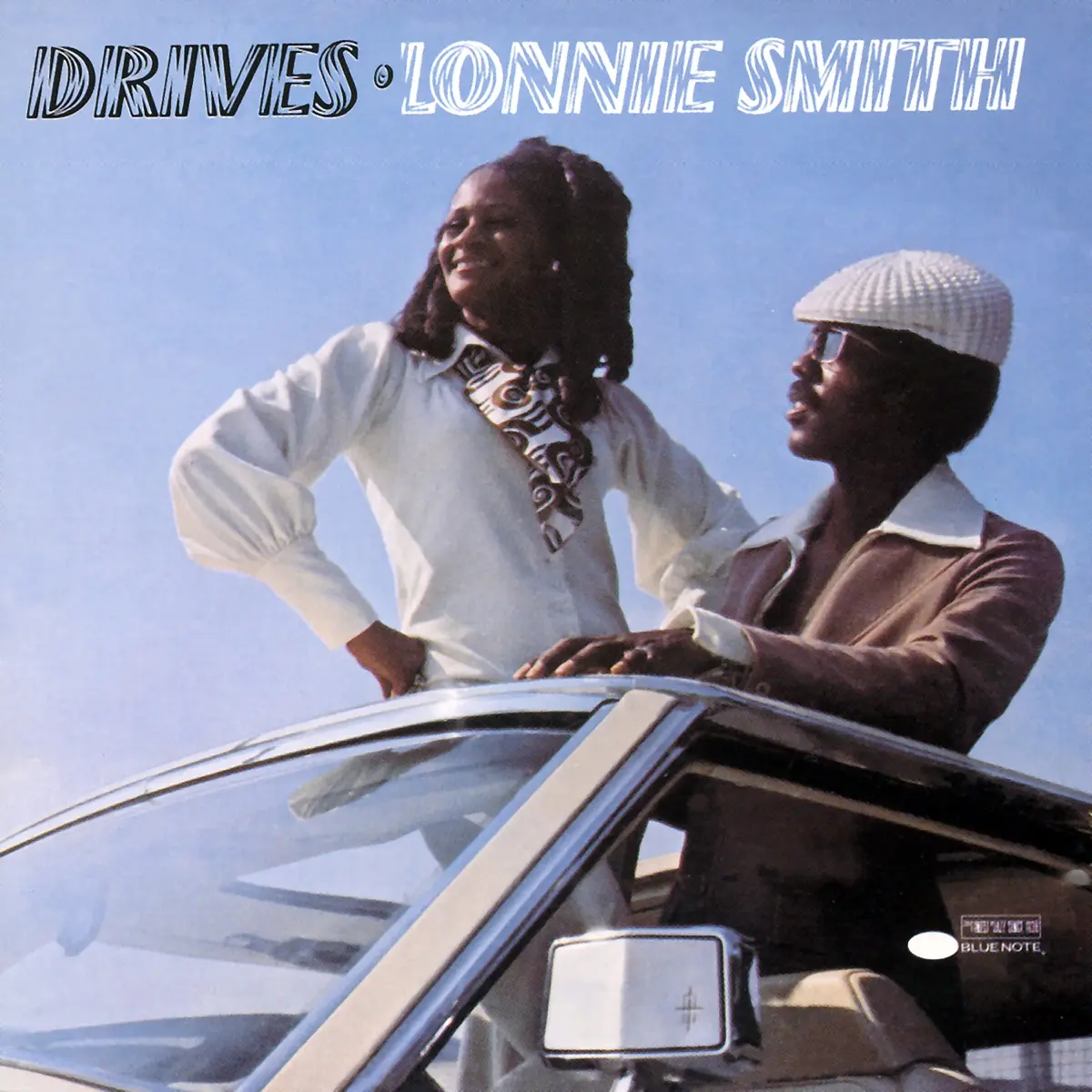 Lonnie Smith released his fourth studio album, Drives, in 1970 on Blue Note. Smith cut the session as a quintet with Cuber, tenor saxophonist Dave Hubbard, guitarist Larry McGee, and drummer Joe Dukes.
The program contains one Smith composition, “Psychedelic Pi,” and songs popularized by Edwin Starr (“Twenty-Five Miles”), Blood, Sweat & Tears (“Spinning Wheel”), Miles Davis (“Seven Steps to Heaven”), and Jimmy Smith (“Who’s Afraid of Virginia Woolf?”).
“Twenty-Five Miles” charges through terse horn bursts and snare licks, then breaks into Smith’s food-list vocal aside and drawled countdown. “Spinning Wheel” shifts from its familiar refrain into a lively solo stretch and a rattling coda.
“Seven Steps to Heaven” tightens the source tune into quick section turns. “Psychedelic Pi” drifts on a relaxed gait, with rough chordal bite, long sustain waves, and yelped vocalese. “Who’s Afraid of Virginia Woolf?” works a spiky line into an extended solo passage, with tone shifts against steady time.
A1. “Twenty-Five Miles” (5:36) – Bristol, Fuqua, Starr
A2. “Spinning Wheel” (7:30) – Clayton-Thomas
A3. “Seven Steps to Heaven” (5:43) – Davis, Feldman
B1. “Psychedelic Pi” (6:40) – Smith
B2. “Who’s Afraid of Virginia Woolf?” (10:17) – Kirkpatrick, Knox
Smith recorded Drives on January 2, 1970, at Van Gelder with Wolff and Rudy.
Drives appeared in a cover package overseen by Woody Woodward with photography by Francis Wolff.
Move Your Hand
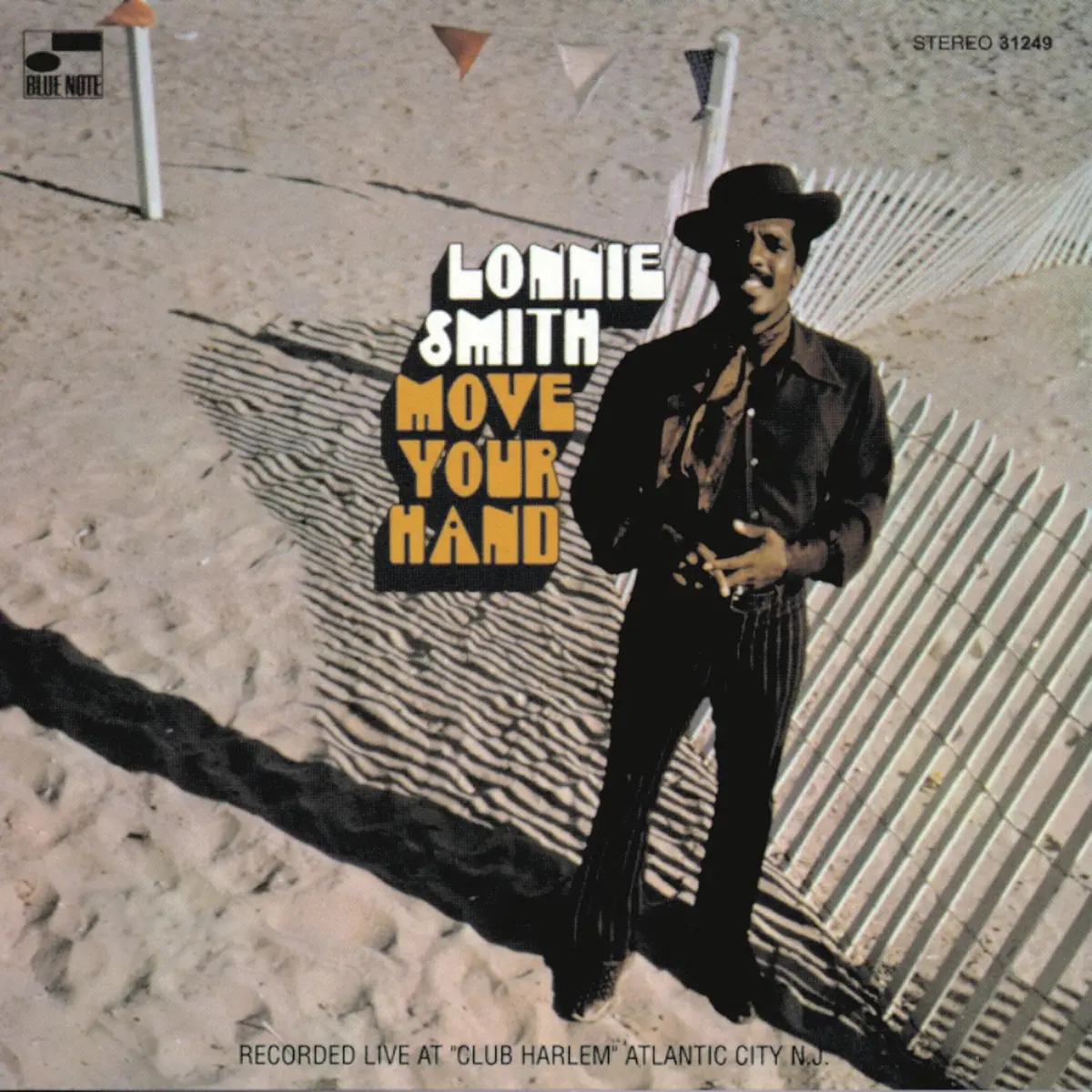 Lonnie Smith released the live album, Move Your Hand, in 1970 on Blue Note.
Smith performs on organ and vocals with tenor saxophonist Rudy Jones, Ronnie Cuber, Larry McGee, and drummer Sylvester Goshay. The album combines Smith originals “Layin’ in the Cut” and “Move Your Hand” with covers of songs popularized by the Coasters (“Charlie Brown”) and Donovan (“Sunshine Superman”).
Move Your Hand sustains live-club pressure through long riff cycles, delayed pop refrains, and clipped vocal cues. “Charlie Brown” delays its source refrain behind steady riff patterns. “Layin’ In The Cut” eases into a gentler gait and leaves Smith room for longer organ statements. “Sunshine Superman” recasts its pop line as a late-arriving refrain behind an unbroken dance figure. “Dancin’ In An Easy Groove” extends the Club Harlem set with a loose, unhurried sway.
A1. “Charlie Brown” (8:26) – Leiber, Stoller
A2. “Layin’ in the Cut” (10:11) – Smith
B1. “Move Your Hand” (9:01) – Smith
B2. “Sunshine Superman” (10:16) – Leitch
Smith recorded Move Your Hand on August 9, 1969, at Club Harlem in Atlantic City, New Jersey, with producer Francis Wolff. Blue Note credited Ed Greene with recording and Rudy Van Gelder with re-recording.
Blue Note lifted “Move Your Hand – Part 1” as a December 1969 single with “Move Your Hand – Part 2” on the B-side.
Move Your Hand reached No. 186 on Billboard Top LPs.
Mama Wailer
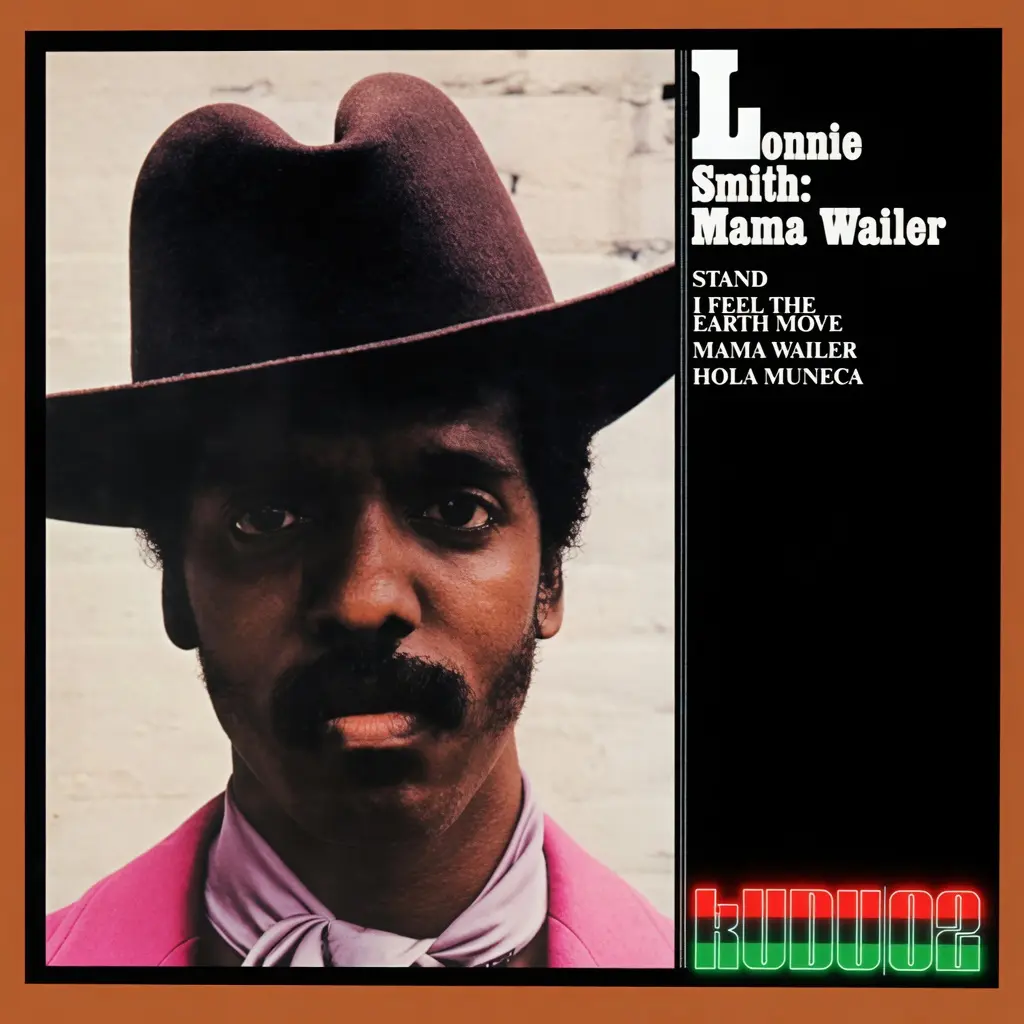 Lonnie Smith released his fifth studio album, Mama Wailer, in 1971 on Kudu.
The album pairs the Smith titles “Mama Wailer” and “Hola Muneca” with covers of songs popularized by Carole King (“I Feel the Earth Move”) and Sly and the Family Stone (“Stand”).
Trumpeter Danny Moore and reedist Grover Washington Jr. (flute, tenor saxophone) share the front-line credits with Dave Hubbard and saxophonist Marvin Cabell. Guitarists George Davis and Jimmy Ponder appear across the album, with Robert Lowe on “Mama Wailer.” Bassists Ron Carter and Chuck Rainey divide the low-register credits. Billy Cobham plays drums, with percussionists William King, Airto Moreira, and Richard Pratt.
“Mama Wailer” rides cross-accented rhythm figures while Smith cuts through the track with bent clavinet phrases. “Hola Muñeca” climbs into upper-register organ lines over a Latin gait. “I Feel the Earth Move” punches through a faster backbeat and short organ phrases. “Stand” sprawls across side two, then adds overdubbed organ layers, strange electronic tones, and a late surge into a harder ensemble riff.
A1. “Mama Wailer” (6:20) – Smith
A2. “Hola Muneca” (6:32) – Smith
B1. “I Feel the Earth Move” (5:06) – King
B2. “Stand” (17:27) – Stewart
Smith recorded Mama Wailer on July 14 and 15, 1971, at Van Gelder Studio in Englewood Cliffs, New Jersey, with producer Creed Taylor and engineer Rudy Van Gelder.
Kudu issued Mama Wailer in a sleeve with album photographs by Duane Michals and design by Bob Ciano. The label lifted “Mama Wailer (Part 1)” as a December 1971 single (b/w “Mama Wailer (Part 2)”).
Afro-Desia
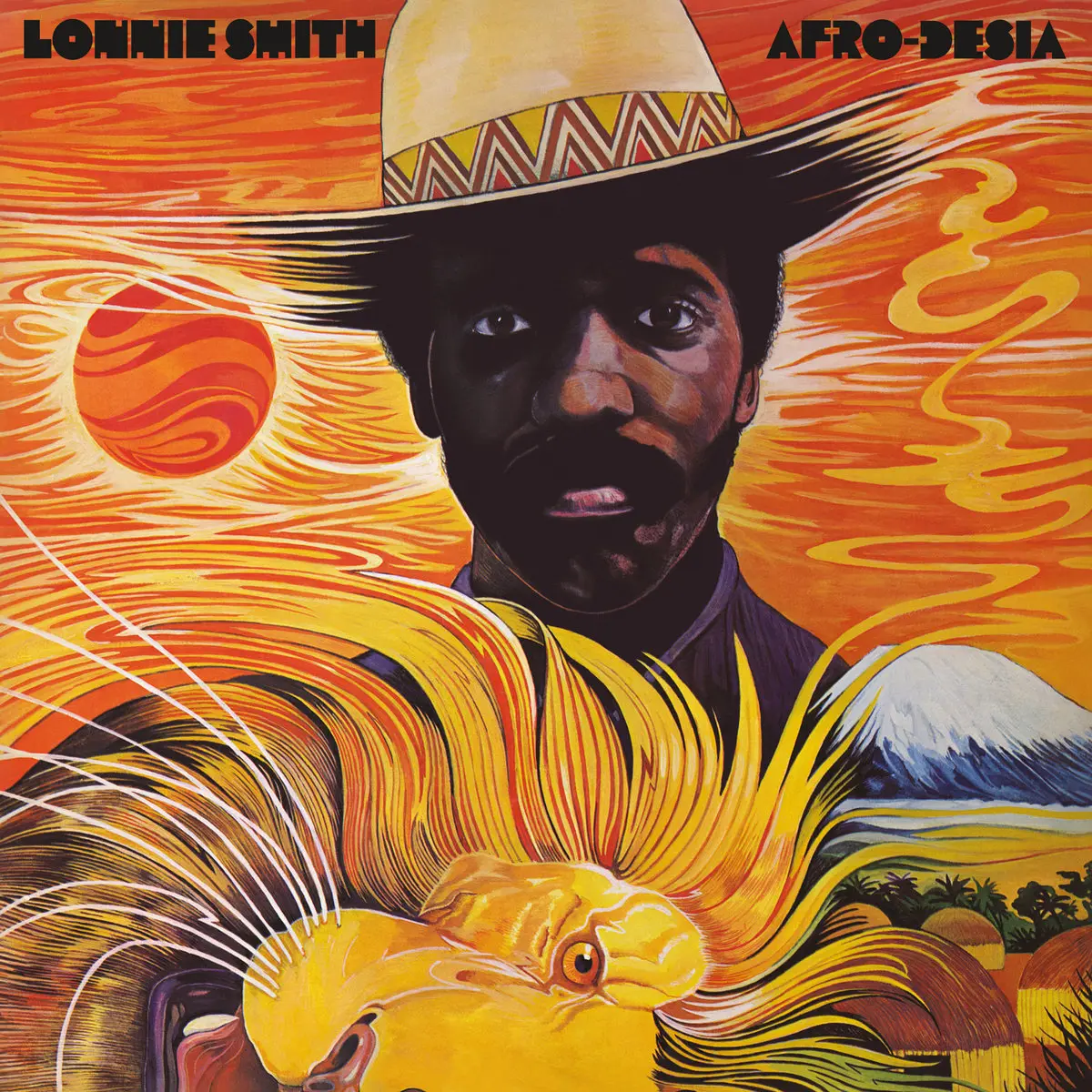 Lonnie Smith released his sixth studio album, Afro-Desia, in 1975 on Groove Merchant. Smith receives composer credit on all five titles.
Smith recorded with reedist Joe Lovano (tenor saxophone, soprano saxophone), trumpeter Greg Hopkins, bassist Ralphe Armstrong, Ron Carter, drummer Ben Riley, and percussionist Jamey Haddad (drums, percussion). Benson appears under the “Compliments of a Friend” guitar credit on three titles.
“Afrodesia” starts on a disco-leaning bass figure and campy vocal calls, then swerves into off-kilter electronics and percussion haze. “Spirits Free” threads an angular bass figure through phase-distorted keyboard tones, then thickens into warped synthesizer lines and distorted organ. “Straight to the Point” races through carnival-bright accents and hard ensemble lines. “Flavors” pushes the borrowed “Impressions” line at an up-tempo clip. “The Awakening” closes with extended improvisation and relaxed organ figures.
A1. “Afrodesia” (9:18)
A2. “Spirits Free” (15:00)
B1. “Straight to the Point” (6:54)
B2. “Flavors” (10:00)
B3. “The Awakening” (8:00)
Smith recorded Afro-Desia in 1975 in New York City with producer Sonny Lester.
Afro-Desia appeared in a Groove Merchant gatefold sleeve with cover art by Bob Grossé. Groove Merchant lifted “Afrodesia” as a 1975 single (b/w “Afrodesia (Disco Version)”).
Keep On Lovin’
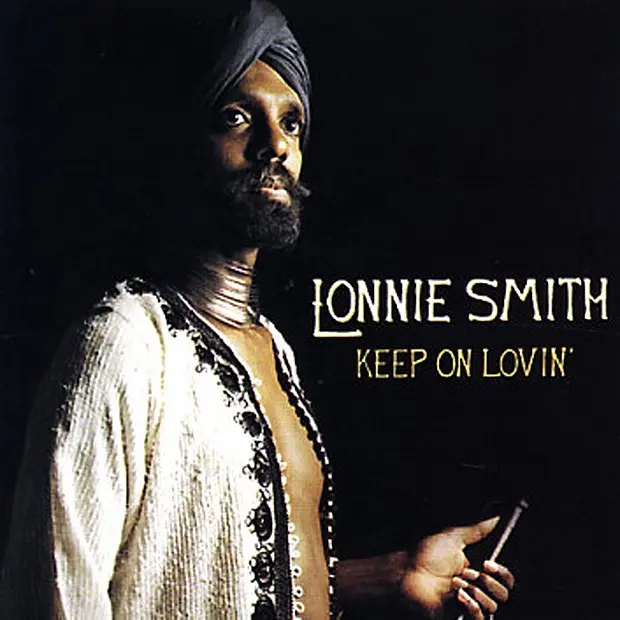 Lonnie Smith released his seventh studio album, Keep On Lovin’, in 1976 on Groove Merchant.
Smith plays Fender Rhodes, keyboards, and vocals across six titles split between his compositions and pieces by Jerry Friedman, Brad Baker, Lance Quinn, and Bob Babbitt. The studio group includes more than twenty players, with trumpeters Randy Brecker and Alan Rubin, trombonist Barry Rogers, guitarist Lance Quinn, bassists Bob Babbitt and Will Lee, drummer Rick Marotta, and percussionist Jimmy Maelen among the credited musicians.
“Keep On Lovin’” kicks through an uptempo keyboard figure and places Smith’s vocal in the lead. “Sizzle Stick” cuts the album’s sharpest dance-line pattern with electric-keyboard phrases and full arranged backing. “Lean Meat” rides a clipped downbeat figure through side-one pressure. “What I Want” returns Smith’s vocal to the front against a fuller studio chart. “No Tears Tomorrow” softens the ending with electric-keyboard lead and string shading inside the arrangement.
A1. “Keep On Lovin'” (6:00) – Friedman
A2. “Sizzle Stick” (5:57) – Baker, Quinn
A3. “Lean Meat” (6:16) – Baker, Quinn
B1. “What I Want” (5:58) – Smith
B2. “Filet-o-Sole” (5:44) – Babbitt
B3. “No Tears Tomorrow” (5:08) – Smith
Smith recorded Keep On Lovin’ in August 1976 at Mediasound in New York City with producer Sonny Lester and recording/mix engineer Tony Bongiovi.
Keep On Lovin’ appeared in a package designed by Ron Levine with cover photography by Chuck Stewart.
Groove Merchant lifted “Keep On Lovin'” as a 1976 single (b/w “Lean Meat”).
Funk Reaction
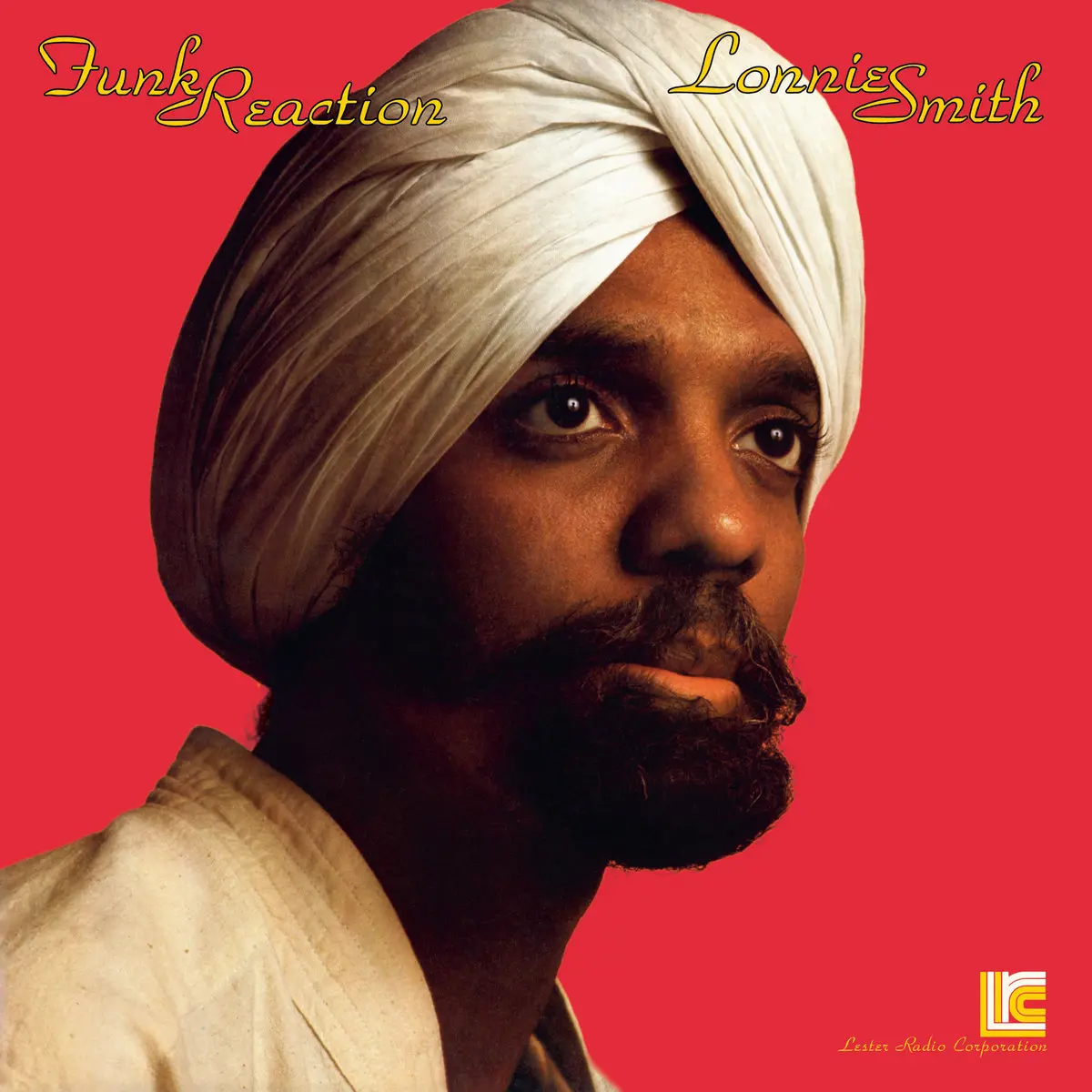 Lonnie Smith released his eighth studio album, Funk Reaction, in 1977 on Lester Radio Corporation.
Smith wrote “All in My Mind” for a program otherwise credited to Baker, Quinn, Babbitt, and Richie Hohenburger. Brad Baker arranged five titles and conducted the album, while Smith arranged the closing title. The sessions use a large studio cast that includes Brecker, Rubin, Rogers, Babbitt, Quinn, drummer Steve Gadd, and reedists Eddie Daniels, David Taylor, Lew Del Gatto, and George Young.
“Funk Reaction” sets Smith’s vocal against tight arranged backing and short electric-keyboard phrases. “For the Love of It” stacks reed-heavy writing around a compact synthesizer break. “Babbitt’s Other Song” favors charted ensemble weight over small-combo looseness. “It’s Changed” leans into guitar-forward phrasing and relaxed keyboard space. “When the Night Is Right” settles into a slick guitar-led line before Smith’s solo space opens.
A1. “Funk Reaction” (5:51) – Baker, Quinn
A2. “For the Love of It” (6:10) – Baker, Quinn
A3. “Babbitt’s Other Song” (6:12) – Babbitt
B1. “It’s Changed” (6:12) – Hohenburger
B2. “When the Night Is Right” (7:12) – Hohenburger
B3. “All in My Mind” (6:15) – Smith
Smith recorded Funk Reaction at Mediasound and O.D.O. Studios with producer Sonny Lester and recording engineers Bob Clifford, Glen Burger, and Tony Bongiovi.
Hal Wilson directed and designed the gatefold package. Chuck Stewart photographed the front cover, and Sonny Lester photographed the back cover and inside spread.
Lester Radio Corporation lifted “Funk Reaction” as a 1977 single (b/w “It’s Changed”). In 1978, T.K. Disco issued “Funk Reaction” as a 12-inch single (b/w “For the Love of It”).
Gotcha’
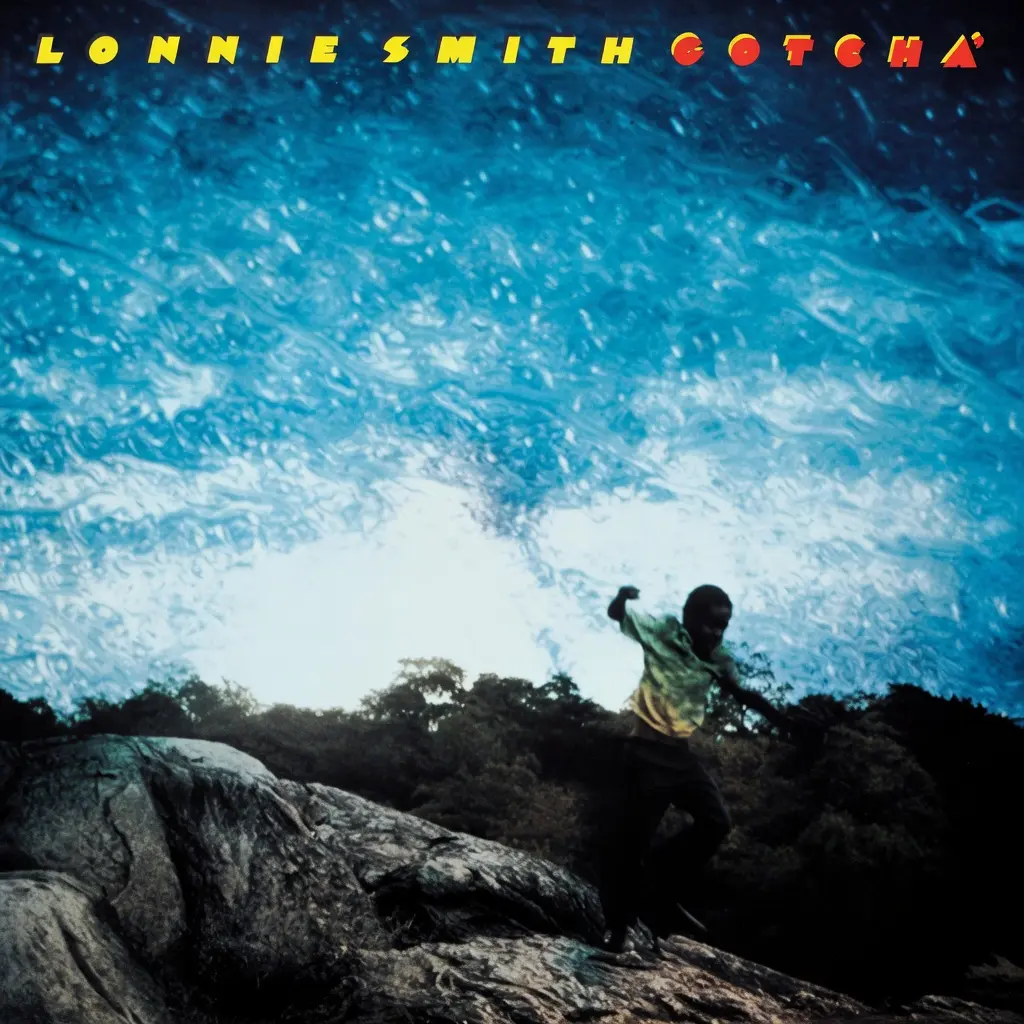 Lonnie Smith released his ninth studio album, Gotcha’, in 1978 on Lester Radio Corporation.
Smith wrote or co-wrote all six titles, with Gordon Grody credited on “Do It.” The credited ensemble totals more than a dozen players, with trumpeter Tom Browne, Daniels, bassists Neil Jason and Peter Caccamo, and guitarists Jay Berliner and Jerry Friedman among the sidemen.
“Do It” opens with a grunted cue, then jerks through staccato chants, snappy bass figures, clipped horn replies, and organ breaks. “I Need Your Love” places warm vocals inside enlarged backing, with strings and horns carrying the chart. “Sweet Honey Wine” reclines into a smoother mid-tempo setting with soft string and horn support. “My Latin Sky” turns on a guitar-driven Latin line with little organ presence. “Journey to Within” sits with the album’s warm keyboard-led side and avoids the hard-edged chant format of “Do It.”
A1. “Sweet Honey Wine” (5:39) – Smith
A2. “I Need Your Love” (5:42) – Smith
A3. “What’s Done Is Done” (6:29) – Smith
B1. “Do It” (6:09) – Smith, Grody
B2. “Journey to Within” (5:49) – Smith
B3. “My Latin Sky” (5:20) – Smith
Lance Quinn produced Gotcha’ for Sonny Lester Productions at Power Station and A&R Studios. Bob Heimall directed and designed the package.
T.K. Disco issued “Do It (Disco Version)” as a 1979 12-inch single (b/w “Do It (Radio Version)”).
Verification used Dr. Lonnie Smith discography data for release order and labels, album-credit listings for Keep On Lovin’, Funk Reaction, and Gotcha’, and singles listings for the three extracted 45/12-inch releases.
Discography:
- Finger-Lickin’ Good (1967)
- Think! (1968 • Lonnie Smith with Lee Morgan and David Newman)
- Turning Point (1969)
- Drives (1970)
- Move Your Hand (live, 1970)
- Mama Wailer (1971)
- Afro-Desia (1975)
- Keep On Lovin’ (1976)
- Funk Reaction (1977)
- Gotcha’ (1978)
- Flavors (1980)
- Alvin Queen – Definitive Black & Blue Sessions – Lenox & Seventh (1985)
- Lenox and Seventh (1985 • Alvin Queen & Lonnie Smith)
Sources:
Artist/Album Pages:
Experience Unlimited was an American funk band from Washington, D.C, that released the 1976 album ...
Rustichelli e Bordini was an Italian symphonic-rock duo that released the 1973 RCA album Opera Pri...
Pacific Drift was an English art-pop/psych band from Manchester that released the album Feelin' Fr...
LaMont Johnson (Oct. 1, 1941 — Oct. 21, 1999) was an American jazz pianist and composer who releas...
Gene Harris (September 1, 1933 — January 16, 2000) was an American jazz pianist. He led The Three ...
Iguana was an English brass-rock/funk band from Southampton that released a self-titled album on P...
Gary Bartz (born Sept. 26, 1940) is an American jazz saxophonist who first recorded behind Art Bla...
Scarlet Rivera is an American violinist from Chicago who emerged as part of Bob Dylan's 1976 Rolli...
Pastoral was an Argentine folk duo of guitarist-singers Alejandro De Michele and Miguel Angel Erau...
Mammut was a German Krautorck band that made an album in 1971 on Mouse Trick Track Music. Member...
Chilli Willi & The Red Hot Peppers were an English rustic-rock band that released the album Ki...
Metamorfosi was an Italian symphonic-rock band that released the 1972/73 albums ...E fu il Sesto G...