

Faze-O was an American soul-funk band that released three albums between 1977 and 1979 and scored an R&B hit with “Riding High.”
Members: Keith “Chop Chop” Harrison (keyboards), Ralph “Love” Aikens (guitar), Tyrone “Flye” Crum (bass), Roger “Dodger” Parker (drums), Robert “Bip” Neal, Jr. (percussion)
Background
Faze-O evolved in Dayton, Ohio, from the earlier funk trio Faze 3. Bassist Tyrone “Flye” Crum was a consistent member through this transition. As additional musicians joined and replaced earlier personnel, the collective settled as a five-piece under the Faze-O moniker.
The definitive core lineup included Crum on bass, Ralph “Love” Aikens on guitar and vocals, Roger Parker on drums, Robert “Bip” Neal providing lead vocals and percussion, and Keith Harrison handling lead vocals and keyboards. This self-contained group collaborated on writing original songs, with individual members contributing various elements and honing arrangements to establish the band’s style.
Riding High
 Faze-O released their debut album, Riding High, in 1977 on She Records.
The album introduces their blend of smooth mid-tempo funk and tightly arranged instrumental interplay, produced by the Ohio Players under the collective name Tight Corporation. Keyboardist Keith “Chop Chop” Harrison (Fender Rhodes, Clavinet, ARP String, Minimoog), guitarist Ralph “Love” Aikens (talk box), bassist Tyrone “Flye” Crum, drummer Roger “Dodger” Parker, and percussionist Robert “Bip” Neal Jr.
Harrison wrote the bulk of the album, including its signature title track, while the Ohio Players handled arrangements and production. The set captures the studio sheen and instrumental density associated with their producers’ work, emphasizing syncopated percussion, bright horn punctuation, and alternating vocal interplay.
“Riding High” anchors the album with a slow, undulating rhythm and sustained keyboard phrasing over a relaxed tempo, while “Funky Reputation” builds around driving bass and synthesizer lines. “Toe Jam” extends the band’s instrumental jamming sensibility, and “Get Some Booty” quickens the pace with overlapping percussion and shouted vocal cues. Balladic pieces like “You and I (Belong Together)” and “True Love” contrast the harder rhythmic cuts with smooth vocal layering.
A1. “Riding High” (5:21) — a steady, mid-tempo funk number that became Faze-O’s signature track and later a prime sample source for 1980s–90s hip hop producers.
A2. “Funky Reputation” (5:10) — features interlocking bass and synth motifs and alternating vocal calls.
A3. “You and I (Belong Together)” (5:20) — a mellow love song carried by Fender Rhodes tones.
B1. “Toe Jam” (4:59) — a percussive instrumental with recurring rhythmic figures.
B2. “True Love” (3:19) — emphasizes harmonized vocals and a lighter rhythmic pulse.
B3. “Get Some Booty” (2:49) — a brief, fast-tempo funk track with chant-like vocals.
B4. “Test – This Is Faze-O” (4:44) — a self-referential closer built on drum and synthesizer interplay.
Sessions occurred at Paragon Recording Studios and Chicago Recording Corporation with engineers Steve Kasciel and Hank Neuberger. The Ohio Players produced under their Tight Corporation alias, with horn parts by Bobby Lewis, Jack Kramer, and Paul Serrano.
Riding High features artwork by Gerard Huerta and Todd Schorr, with design direction by Bob Defrin.
She Records promoted the album with “Riding High” (b/w “Get Some Booty”), which reached No. 9 on the Billboard R&B chart and No. 98 on the Billboard 200 in 1978. “Riding High” became a cornerstone of modern sampling, later used in tracks by Fresh Four (“Wishing on a Star,” 1989) and EPMD (“Please Listen to My Demo,” 1989).
Good Thang
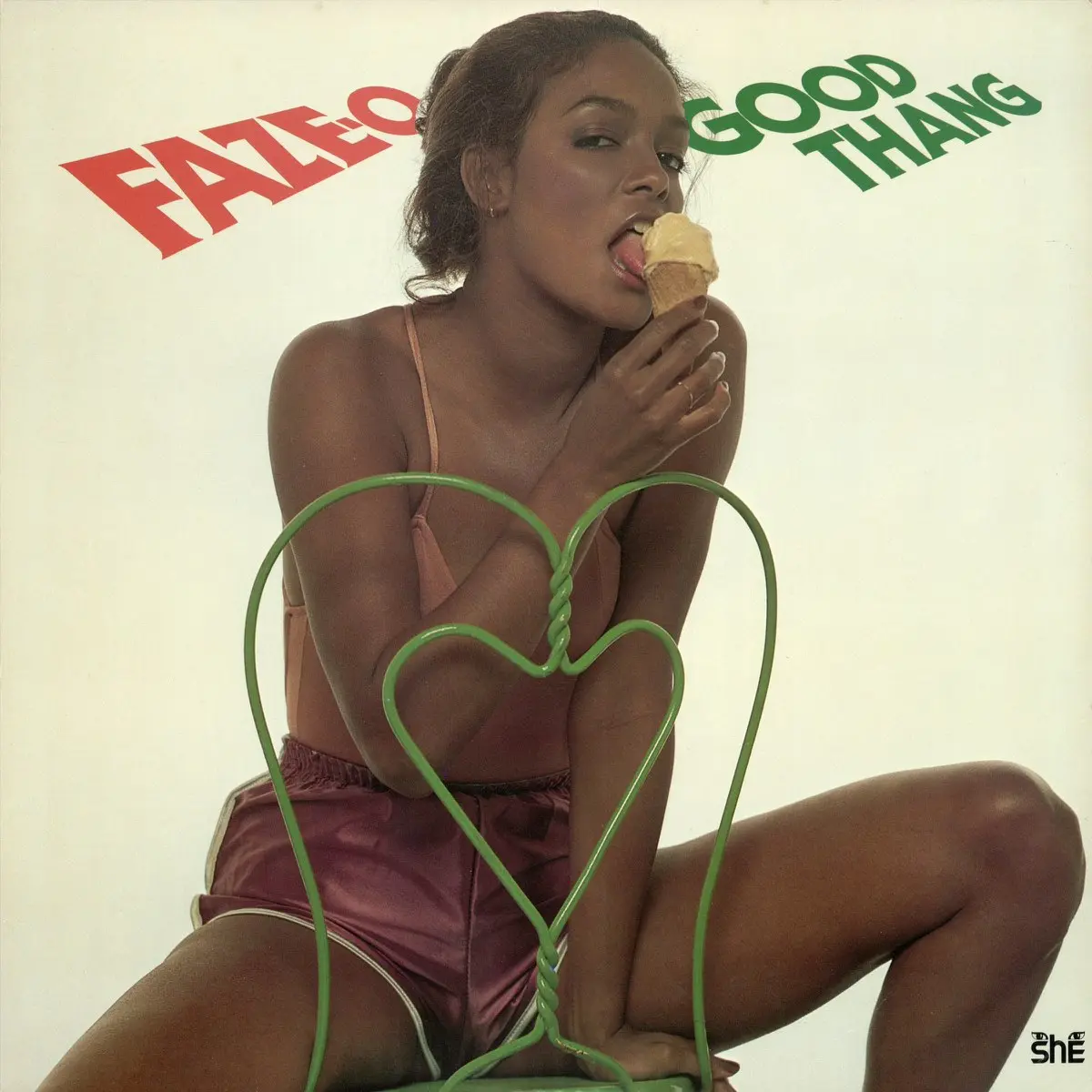 Faze-O released their second album, Good Thang, in 1978 on She Records.
The album continues the band’s partnership with the Ohio Players organization, this time under the production of Clarence “Satch” Satchell. It expands Faze-O’s funk aesthetic toward extended arrangements and layered instrumentation, blending steady rhythm patterns with atmospheric keyboard textures.
The group again features Keith “Chop Chop” Harrison (acoustic piano, Fender Rhodes, RMI electric piano, Clavinet, ARP String, Minimoog), Ralph “Love” Aikens Jr. (lead guitar, talk box, lead and backing vocals), Frederick Tyrone Crum (bass), Roger Parker (drums, percussion), and Robert Neal Jr. (percussion, lead and backing vocals), with contributions from Satchell (tenor saxophone, trumpet), Billy Beck (keyboards), Clarence Willis (rhythm guitar), Jack Kramer (trumpet), Allejo Poveda (Latin percussion), and Eddie “Bongo” Brown (bongos).
Harrison, Aikens, Crum, Neal, and Parker co-wrote all six songs, maintaining Faze-O’s collaborative approach. Satchell co-produced alongside Harrison and Beck, emphasizing spacious arrangements and a heavier rhythmic pulse than their debut.
The album opens with “Good Thang,” a slow-building, seven-minute piece that develops through phased Clavinet and filtered talk box textures. “Who Loves You,” a twelve-minute centerpiece, stretches into a cyclical jam with long instrumental passages and syncopated breakdowns. “Space People” adopts a light cosmic-funk tone, while “Party Time” and “Love Me Girl” return to steady rhythmic foundations with alternating vocal interplay. “Funky Lady” closes the set on a moderate tempo with recurring keyboard modulations.
A1. “Good Thang” (7:38) — built on gradual rhythmic layering and alternating talk box and synth phrases.
A2. “Who Loves You” (12:20) — an extended mid-tempo jam with alternating vocal chants and instrumental solos.
B1. “Space People” (4:31) — applies phased synthesizer and percussive overlays in a relaxed tempo.
B2. “Party Time” (5:10) — centers on call-and-response vocals over a tight rhythm section.
B3. “Love Me Girl” (5:05) — a smooth-paced love song framed by Clavinet and keyboard counterlines.
B4. “Funky Lady” (5:55) — closes with layered rhythm guitars and sustained keyboard phrasing.
Sessions occurred at Paragon Recording Studios in Chicago with producer Clarence “Satch” Satchell and co-producers Keith Harrison and Billy Beck. Marty Feldman and Steve Kusiciel engineered the album, which Dennis King mastered at Atlantic Studios.
Good Thang features photography by Joel Brodsky.
She Records promoted the album with the title track (b/w “Party Time”) in late 1978, marking Faze-O’s final release under Ohio Players’ production wing.
Breakin’ the Funk
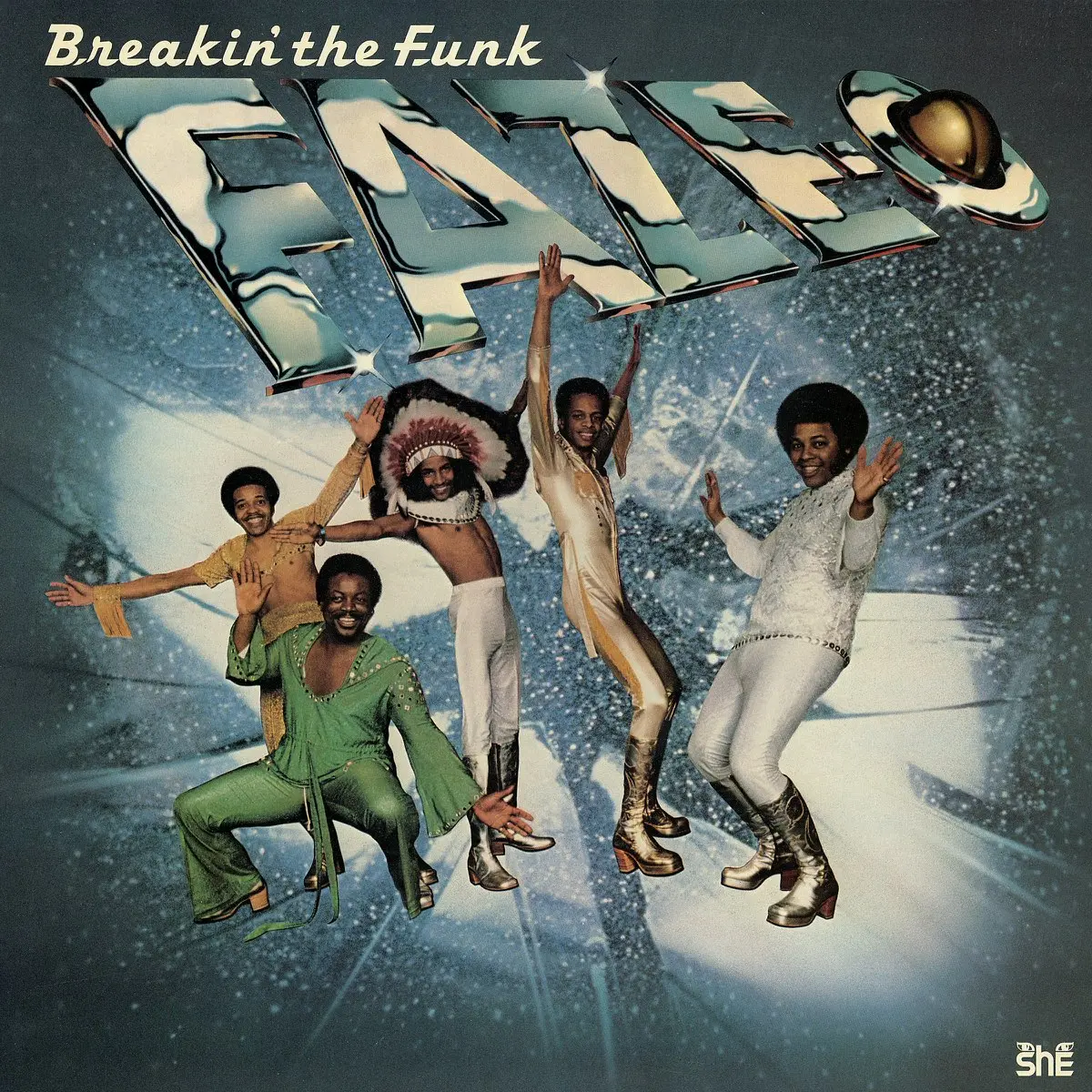 Faze-O released their third album, Breakin’ the Funk, in 1979 on She Records.
The album closes the Dayton group’s late-seventies run with a tighter, more streamlined sound that combines steady funk rhythms and layered synthesizer textures under the production of Clarence “Satch” Satchell of the Ohio Players. The lineup features Keith Harrison (keyboards, Moog and string synthesizers, acoustic and electric pianos, Clavinet, percussion, vocals), Ralph Aikens Jr. (lead and rhythm guitars, vocals), Frederick Tyrone Crum (bass, backing vocals), Robert Neal Jr. (percussion, lead and backing vocals), Roger Parker (drums, percussion), and Harry McLoud (rhythm guitar), augmented by trumpeter Randy Brecker and string arranger Mitch Farber.
Keyboardist Keith Harrison co-wrote all six songs and arranged the album’s material, sharing credits with Aikens, Neal, Crum, and Parker, and on two tracks with Satchell.
The title track anchors the set with sharp rhythm accents and alternating vocal exchanges. “Ya-Ba-Da-Ba-Duzie” and “Let’s Rock” reflect the group’s shift toward up-tempo syncopation and heavy keyboard layering, while “I Still Love You” and “I’m Thankful” temper the pace with smoother, introspective phrasing. “See You Through the Night” closes on a steady mid-tempo pulse with fluid synthesizer and trumpet lines.
A1. “Breakin’ the Funk” (6:00) — written by Keith Harrison, Ralph Aikens Jr., and Robert Neal Jr.
A2. “Ya-Ba-Da-Ba-Duzie” (6:10) — co-written by Harrison, Neal Jr., and Clarence Satchell.
A3. “I Still Love You” (6:00) — written by Harrison and Neal Jr.
B1. “Let’s Rock” (6:40) — co-written by Satchell, Harrison, Aikens Jr., and Frederick Crum.
B2. “I’m Thankful” (6:10) — written by Harrison and Neal Jr.
B3. “See You Through the Night” (4:52) — written by Satchell, Harrison, Aikens Jr., Neal Jr., and Roger Parker.
Sessions occurred at Fifth Floor Recording Studios in Cincinnati with producer Clarence Satchell and recording engineer Gary Clapp. Michael Brauer mixed the album at Mediasound in New York, and Ted Jensen mastered it at Sterling Sound. Mitch Farber arranged the string parts.
Breakin’ the Funk was pressed by Monarch Record Mfg. Co. and distributed through Atlantic Recording Corporation.
She Records promoted the album with the title track (b/w “I Still Love You”) in late 1979.
Postlude
Following Breakin’ the Funk, Keith Harrison joined Heatwave for Candles (1980) and Current (1982) before moving to the Dazz Band in time for their 1982 hit “Let It Whip.” Drummer Roger Parker later played with Slave during the Show Time era and with Steve Arrington’s Hall of Fame.
Discography:
- Riding High (1977)
- Good Thang (1978)
- Breakin’ the Funk (1979)
Sources:
Artist/Album Pages:
Starcrost was an American jazz-funk/soul band from Austin that released a self-titled album on Fab...
Dayton was an American soul-funk band from Dayton, Ohio, that debuted with a self-titled album on ...
Main Street was an American soul-funk band behind a 1976 self-titled album on Koala. They concurrent...
Kleeer was an American soul-funk band from NYC that released seven albums between 1979 and 1985 on...
Tin Huey was an American new wave/art-rock band from Akron, Ohio, that made two DIY EPs and the 19...
Zinc was a soul-funk studio project comprised of American and Italian session musicians assembled ...
The Final Solution was an American soul-funk band from Chicago that recorded music for Brotherman,...
Brass Construction was an American soul-funk band from Brooklyn, best known for their crossover hi...
Shock was an American synth-funk band that debuted with an album on Nebula Circle Records in 1980,...
Aurra was an American soul-funk band from Dayton, Ohio, that released a self-titled album on Dream...
Funk, Inc. was an American soul-funk band from Indianapolis that released five albums between 1971...
Wax was an American soul-funk septet that released the 1980/81 RCA albums Wax Attack and Do You Be...