

Ambiance was an American jazz-funk/soul band from Los Angeles that released the 1979/80 albums Ebun and Drift Up to Space on Da Mon.
Members: Daoud Abubakar Balewa
Background
Ambiance began in Los Angeles when Nigerian-born reedist and multi-instrumentalist Daoud Abubakar Balewa organized a changing studio collective around his compositions and the self-financed Da Mon Records imprint.
Balewa received formal classical training before further study with saxophonists Frank Mitchell and Jackie McLean, who instructed him in composition and jazz improvisation. His instruments included alto, soprano, and tenor saxophones, with additional work on flute, clarinet, keyboards, and Latin/Brazilian percussion.
Balewa built Ambiance as a rotating unit, with vocalist Monife Balewa, his wife, among the singers linked to the collective. The group used Da Mon as a private-press outlet for short-run albums in an independent Los Angeles setting. Balewa brought Ambiance to its first LP with drummer John Delatore, bassist Paul Olguin, guitarist Peter Lainson, keyboardist Bob Selvin, vocalist Moniife, and vocalists Elisa Jones and Sarah Flynn, with Flynn also credited on flute.
Ebun
 Ambiance released their debut album, Ebun, in 1979 on Da Mon.
Balewa leads the first Ambiance lineup through reed-centered themes, electric rhythm-section passages, and high-register vocal entries. Olguin, Delatore, Lainson, and Selvin form the core ensemble, with Monife, Sarah Flynn, and Elisa Jones on vocals. Flynn also plays flute, while Monife adds finger cymbals.
“Bossa Moniife” glides through Brazilian-tinged accents with an airy lead line and soft ensemble replies. “After June” settles into a brushed electric setting, with the female vocal placed close to the refrain. “Camouflage” curls through electric-bass motion and keyboard wash, then leaves room for clipped horn-line phrases. “O.F.C.” brightens the set through hand percussion detail and short ensemble accents. “Ebun” drifts through chimes and cosmic keyboard tone with Balewa’s reed line set above the rhythm section. “Turnaround” recasts the Walter Bishop theme through the album’s electric fusion touch. “Last Tango” saunters through Latin shading with a low-lit guitar figure and controlled horn cadence.
A1. “Bossa Monife” (5:26)
A2. “After June” (4:27)
A3. “Camouflage” (5:19)
A4. “O.F.C.” (4:32)
B1. “Ebun” (5:23)
B2. “Turnaround” (5:43) – Walter Bishop Jr.
B3. “Untitled Original” (4:27)
B4. “Last Tango” (5:26)
Balewa produced and engineered the album and PD and Side One Recorders.
Drift Up To Space
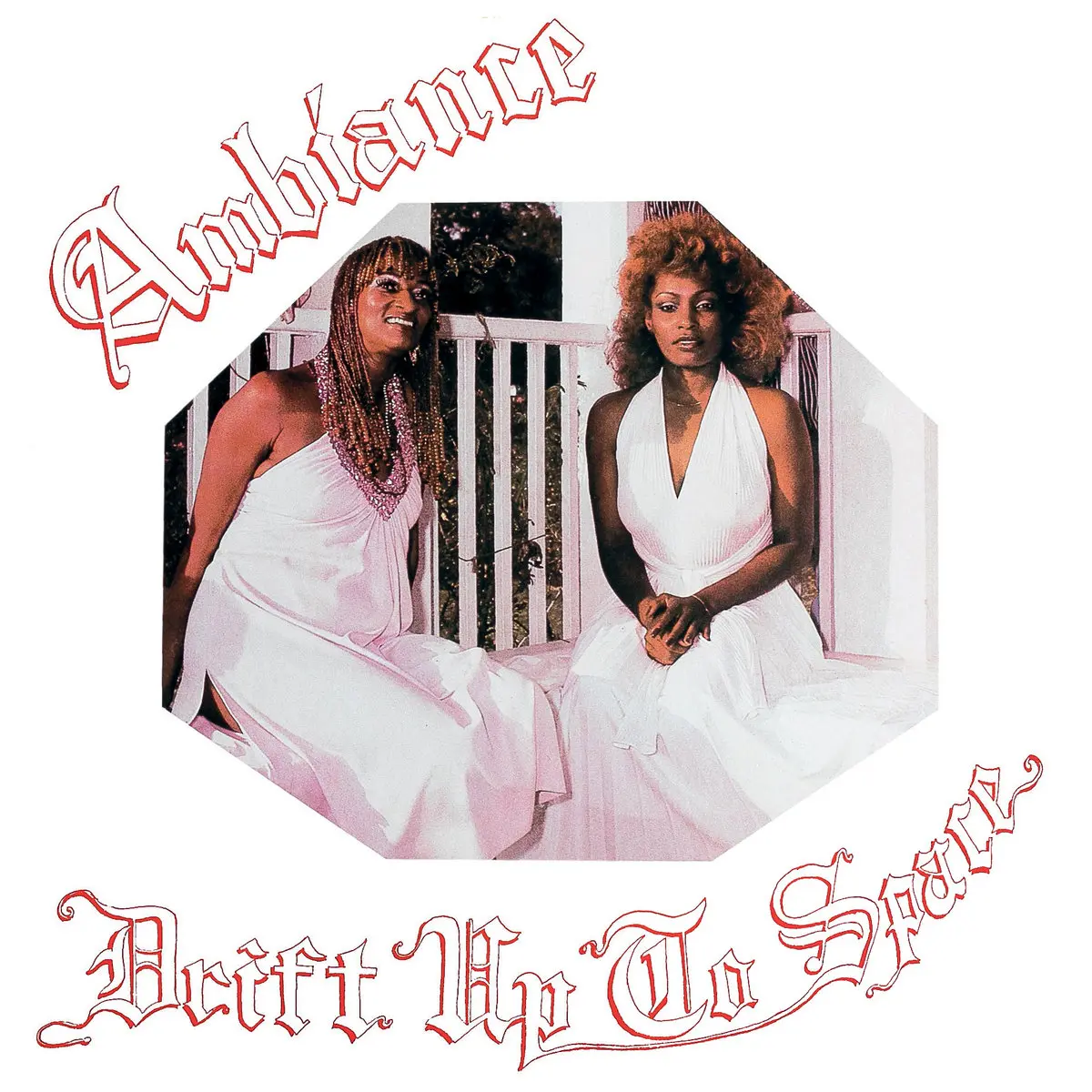 Ambiance released their second album, Drift Up To Space, in 1980 on Da Mon.
Space extends the debut lineup with synthesizer, handclaps, bells, flexitone, and added percussion. Olguin and Selvin return, joined by drummer Larry Anderson, guitarist Larry Knight, percussionist Michael Temple, and singer Sabrina. Balewa doubles across reeds and small percussion, while Monife remains in the vocal group.
“Drift Up to Space” floats across open-spaced modal lines, with Balewa’s horn phrases set over electric keyboard tone and small-bell detail. “Freedom” clips the pace into a shorter statement, with handclaps and vocal replies tightening the refrain. “Ironti” leans into ceremonial call patterns and percussive accents. “Simsamayaland” turns the group sound toward chant-led motion. “Devika” hovers longest over sustained electric harmony and slow horn-line release. “Just By Chance” answers the denser pieces with a lighter electric-fusion figure. “IO/IO” closes through repeated title-syllable motion and skyward ensemble cadence.
A1. “Drift Up to Space” (8:00) – Daoud Abubakar Balewa
A2. “Freedom” (4:00) – Bob Selvin
A3. “Ironti” (5:20) – Balewa
A4. “Simsamayaland” (5:20) – Selvin
B1. “Devika” (8:00) – D. Hubbard
B2. “Just By Chance” (5:10) – Selvin
B3. “10/10” (6:53)
Ambiance recorded the album on May 13 and 14, 1980, with recording and remix engineer “Radio” Rob Grogan and mastering engineer Howard Valentine. Drift Up To Space features art and illustration by Bill Davis with photography by Tony Lewis.
(Gida-Gida) “Tight & Tidy”
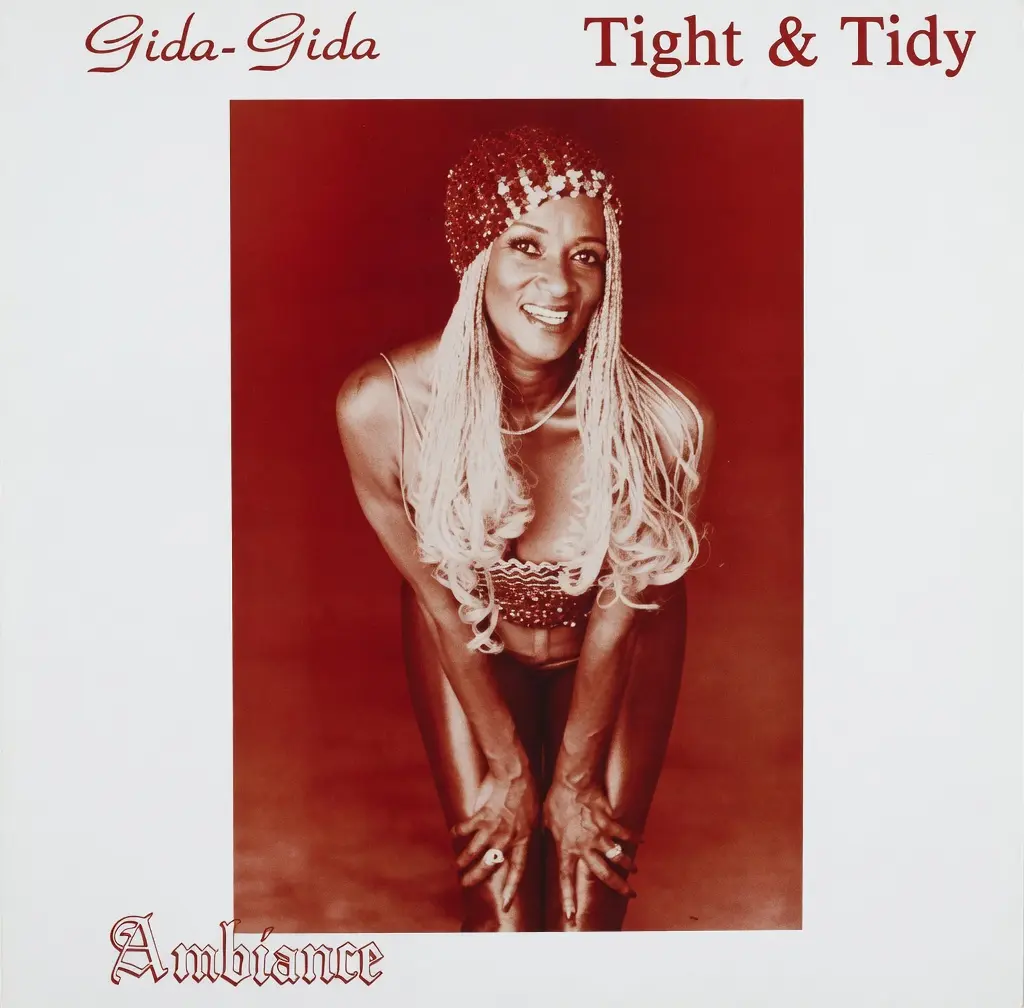 Ambiance released their third album, (Gida-Gida) “Tight & Tidy”, in 1981 on Da Mon.
Gida shifts toward a denser electric setting with African percussion, synthesizers, and vocal-led passages. The lineup pairs Balewa and Monife with bassist Richard West Jr., drummer/vibraphonist Tim Griggs, guitarist/bassist Curtis Robertson Jr., keyboardist Rick Karas, singer Monika McCain, and singer/finger-cymbal player Syreeta Wright. “Gida-Gida” places backing voices and finger cymbals around Balewa’s reed and percussion parts, while “There Is a Love” uses a lyric vocal setting.
“The Clavicle” haunts the opening stretch with a high-register figure and clipped ensemble replies. “Gida-Gida” surges through Afrocentric chant pressure and tight brass punctuation. “Atiji” braids vocal accents into the ensemble line. “Baggage” gathers denser composed turns, with the sections locked into angular changes. “Fiesta” dances through Latin-tinged celebration cues and bright horn cadence. “There Is a Love” sings through Syreeta Wright’s centered voice and modern-soul refrain placement. “Quasar” spirals back toward the group’s cosmic register, with the final cadence held inside the electric ensemble tone.
A1. “The Clavicle” (5:29)
A2. “Gida-Gida” (6:00) – Daoud Abubakar Balewa
A3. “Atiji” (6:20) – Balewa
A4. “Baggage” (5:30)
B1. “Fiesta” (6:01) – Gato Barbieri
B2. “There Is a Love” (5:20) – Curtis Robertson Jr., Syreeta Wright
B3. “Quasar” (5:45)
Into a New Journey
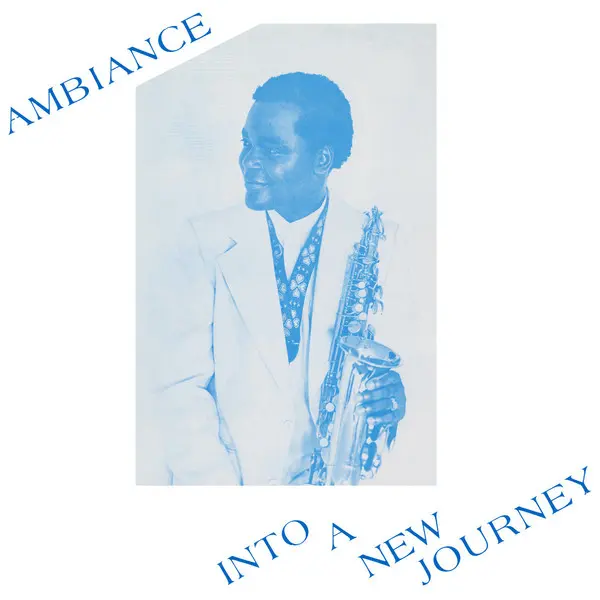 Ambiance released their fourth album, Into a New Journey, in 1982 on Da Mon.
Journey expands the ensemble without changing the group’s reed-and-vocal center. Monife returns beside singer/percussionist Atiji Malomon, bassist Randy Landis, drummer Danny Yamamoto, guitarist Jim Lum, keyboardists Danny Newmark, Jim Thornburn, and “Kimo” Cornwell. The album also includes koto player June Kuramoto, African drummer Rick Smith, and apito player Tyrone Ponder.
“The Black Narcissus” glides through modal horn phrases with an unforced ensemble cadence. “Something Better” rises through Monife Balewa’s wide vocal arcs, with the refrain set inside airy electric harmony. “Into a New Journey” chants across hand percussion detail and group motion, with Afro-Brazilian accents under the lead line. “500 Miles High” curls the vocal line through quick upper-register turns and bright fusion harmony. The album settles into open-spaced instrumental passages where Rhodes tone, bells, and handclaps mark the section changes.
A1. “The Arrival” (4:56) – Balewa
A2. “The Black Narcissus” (5:04) – Henderson
A3. “Something Better” (5:43) – Malomon, Balewa, Newmark
A4. “Into a New Journey (Onon Tuntun)” (4:23) – Balewa
B1. “The Eastwind” (5:32) – Lum
B2. “500 Miles High” (5:49) – Corea
B3. “Windows” (6:08) – Corea
Bill Thomas and Don Holden engineered the recording. Daoud Abubakar Balewa created the artwork.
Come Touch Tomorrow
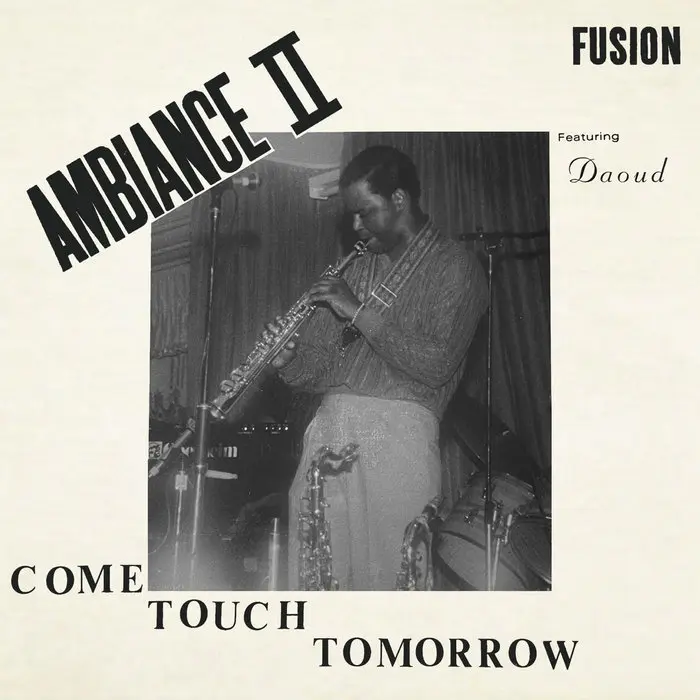 Ambiance released their fifth album, Come Touch Tomorrow, under the Ambiance II Fusion name in 1985 on Da Mon.
Tomorrow appears under the Ambiance II name and divides its personnel between Fusion and Fusion Ensemble credits. The album pairs Balewa with vocalist Suzanne Daniels, percussionist Ralph Rodriguez, bassists Juilian Breeton and Jardin Wilson, drummer/electronic drummer Dr. Issac Ford, guitarist Stanley Dominguez, keyboardist/synthesizer player Lee Williams, and alto saxophonist Larry Dominguez. The wider credit adds Landis, Lum, Cornwell, Rick Smith, and drummer Arnold Ramsey.
“I Dream Too Much” glides through spacey pads and a machine-timed beat, with the lead voice placed close to the refrain. “Come Touch Tomorrow” softens the mid-eighties surface into satin-toned vocal lines and low-lit ensemble cadence. “Don’t You Ever Take Your Love” coils the plea around a tighter programmed backbeat. “Samba Para Mi” saunters through a short Latin-tinged passage with a lighter dance accent. “Boy What a Joy” snaps into synth-led beat work and clipped electric punctuation. “The Camouflage” hovers over the older Ambiance theme in a smoother electronic setting.
A1. “I Dream Too Much” (5:30) – Balewa
A2. “Come Touch Tomorrow” (5:30) – Balewa
A3. “Don’t You Ever Take Your Love” (5:00) – Hayes
A4. “Samba Para Mi” (4:30) – Balewa
B1. “Boy What a Joy” (7:00) – Balewa
B2. “The Camouflage” (7:00) – Balewa
B3. “Naima” (5:30) – Coltrane
Sessions occurred in October and November 1984 at Sound Images Recording Studios in North Hollywood and Classic Sound Studios in Hollywood. Mark Coffin engineered and remixed the sessions.
Da Mon issued “Boy What a Joy” as a 1985 single-sided 12-inch single.
Colours in Spaces
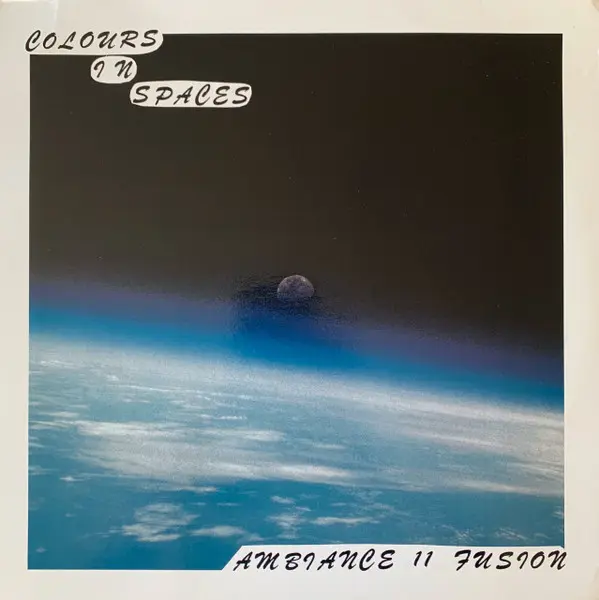 Ambiance released their sixth album, Colours in Spaces, under the Ambiance II Fusion name in 1986 on Da Mon.
The album presents five compact pieces by Ambiance II Fusion, with reed-led electric jazz, soft-focus keyboard tones, and percussion-accented ensemble passages. Balewa and Ambiance II Fusion move from the misted opening of “The Dew And The Mist” to a closing “500 Miles High” reading.
“The Dew and the Mist” hovers near the record’s suspended side, with soft-toned ensemble motion implied by the album’s meditative surface. “Colours in Spaces” glows from close-set opening chords into a bent electric figure, then slows into acoustic-tinged passagework. “Moonlight Dance” lingers within the same dusk-lit register, with short section turns and restrained cadence. “The Boxhead” tightens the set through a firmer fusion figure. “500 Miles High” returns the Corea piece to a late Ambiance setting, with the arrangement recast inside a compact five-track program.
A1. “The Dew And The Mist” (4:11)
A2. “Colours In Spaces” (5:12)
A3. “Moonlight Dance” (5:23)
B1. “The Boxhead” (6:22)
B2. “500 Miles High” (5:55) – Corea
Discography:
- Ebun (1979)
- Drift Up to Space (1980)
- Gida-Gida / Tight & Tidy (1981)
- Into a New Journey (1982)
- Come Touch Tomorrow (1985)
- Colours in Spaces (1986)
- Ambiance II Fusion Ensemble Featuring Daoud Aboubakar Balewa (1998 • Ambiance II Fusion Ensemble)
Sources:
Artist/Album Pages:
The Call was an American modern-rock band that made seven albums between 1982 and 1990 on Mercury...
I Roy — aka Roy Samuel Reid (June 28, 1944 — Nov. 27, 1999) — was a Jamaican dub/reggae artist and...
Bow Wow was a Japanese hard-rock/metal band behind a 1976 album on Victor Musical Industries, foll...
Bill Withers (1938–2020) was an American soul singer/songwriter, best known for the 1971/72 AM eve...
Josipa Lisac is a Croatian vocalist who briefly sang with the Zagreb pop groups O'Hara and Zlatni ...
V8 was an Argentine metal band that released three albums between 1983 and 1986 on Umbral, starting ...
Jean-Paul Prat (born Sept. 27, 1953) is a French multi-instrumentalist and composer who released t...
Lift was an American symphonic-rock band from New Orleans. Guinness, a tax-shelter label, pressed ...
George Clinton (born July 22, 1941) is an American R&B-funk singer, songwriter, bandleader, a...
Men Without Hats are a Québécois new wave band led by Ivan Doroschuk. They debuted with the 1980 E...
Der Moderne Man was a German NDW band that released the 1980–82 albums 80 Tage auf See and Unmodern,...
Bernard Wright (November 16, 1963 — May 19, 2022) was an American jazz-funk keyboardist from Queen...