

Stephanie Mills is an American R&B singer and actress who emerged (at 17) with the 1974 ABC release Movin’ in the Right Direction and its 1975 Motown followup For the First Time, a Burt Bacharach production.
After roles in 1976/77 Broadway productions of The Wiz and The Wonderful Wizard of Oz, Mills reemerged with the 1979/80 20th Century albums What Cha’ Gonna Do with My Lovin’ and Sweet Sensation. The latter spawned her biggest crossover hit, “Never Knew Love Like This Before.”
Following 1981’s Stephanie, Mills rounded the decade with three albums each on Casablanca and MCA. She scored five No. 1 hits on the Billboard Hot R&B chart with her 1986–89 singles “I Have Learned to Respect the Power of Love,” “I Feel Good All Over,” “(You’re Puttin’) A Rush on Me,” “Something in the Way (You Make Me Feel),” and “Home.”
Background
Mills was born Stephanie Dorthea Mills on March 22, 1957, in Bedford–Stuyvesant, Brooklyn. She sang gospel music as a child at Brooklyn’s Cornerstone Baptist Church. At age nine, she appeared in the Broadway musical Maggie Flynn. After six consecutive weekly amateur nights at the Apollo Theater, she became an opening act for the Isley Brothers.
In 1973, Mills debuted as a recording artist with the Paramount single “I Knew It Was Love” (b/w “The Passion and the Pain.”)
Movin’ in the Right Direction
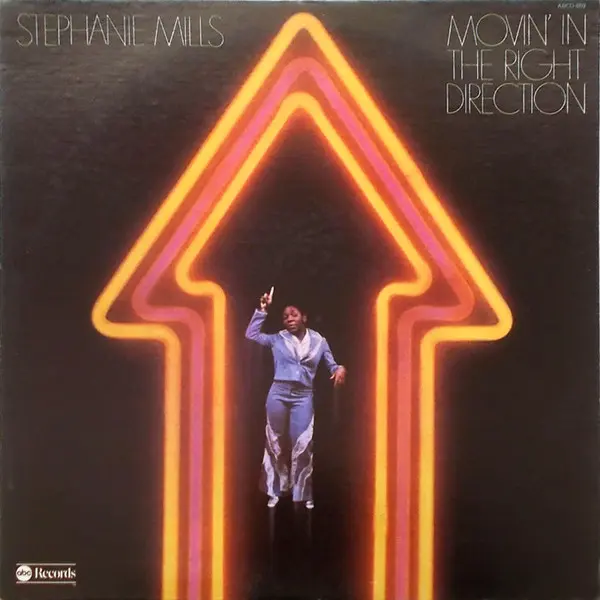 Stephanie Mills released her debut album, Movin’ in the Right Direction, on October 28, 1974, on ABC.
The album blends original soul compositions with theatrical covers, highlighting Mills’ youthful but assured voice. It juxtaposes Broadway material with contemporary R&B arrangements, demonstrating her range across ballads, mid-tempo numbers, and early disco-inflected tracks.
Pat Holley wrote three songs, including “Of All the Things,” “My Baby’s Melody,” and “Sweet Salvation.” Bert Keyes contributed two originals and co-wrote “I Knew It Was Love” with Holley. Truman Thomas wrote “I’ll Never Love Nobody Else but You,” Francine Greshler Feldmann penned “You Do It to Me,” Richard Ahlert co-wrote “I Don’t Want to Go Back” with Keyes, Charles Smalls supplied “Home,” and Harold Arlen and Edgar Y. Harburg supplied “Somewhere Over the Rainbow.” Frederic Weatherly wrote “Danny Boy.”
Mills approaches ballads with clear, contoured phrasing, while mid-tempo tracks emphasize rhythmic steadiness and light early-disco accents. Broadway-inspired numbers “Home” and “Somewhere Over the Rainbow” receive restrained, soulful treatments. The original single “I Knew It Was Love” pairs emotive vocals with understated instrumentation, and “I Don’t Want to Go Back” injects zestful pacing.
A1. “Movin’ in the Right Direction” (2:50)
A2. “Of All the Things” (3:35)
A3. “I’ll Never Love Nobody Else but You” (2:42)
A4. “My Baby’s Melody” (3:05)
A5. “Sweet Salvation” (2:50)
A6. “Home” (2:32)
B1. “I Knew It Was Love” (3:03)
B2. “You Do It to Me” (3:05)
B3. “I Don’t Want to Go Back” (2:40)
B4. “Danny Boy” (3:32)
B5. “Somewhere Over the Rainbow” (3:06)
Sessions occurred at Mediasound in New York City with Bert Keyes producing and arranging keyboards, strings, and horns. Paul Griffin handled additional keyboards, Bob Rose and Jeff Mironov played guitar, Bob Kreinar played bass, and Herschel Dwellingham performed drums. Backing vocals came from Anthony Hinton, Diane Sumler, Elaine Clark, Hattie Campell, Joey Mills, Julia Stewart, Luther Vandross, and Vandetta Jackson.
For the First Time
 Stephanie Mills released her second album, For the First Time, on October 11, 1975, on Motown.
The album pairs Mills’ R&B delivery with pop-oriented arrangements by Burt Bacharach and Hal David, mixing original compositions with covers previously recorded by Dionne Warwick. The record emphasizes polished instrumentation and precise phrasing, framing Mills’ vocals with layered orchestration and controlled rhythmic pacing.
Burt Bacharach and Hal David wrote the majority of the album. Bill Eaton arranged and contributed one track, Dave Mathews arranged another, and Kenny Asher arranged two tracks. Steven J. Hunt wrote “Love Is Everywhere,” and Michael L. Smith wrote “I Hope We Don’t Run Out of Music.”
The album alternates between soft pop ballads and more contoured R&B numbers. “I Took My Strength from You” and “The Way I Feel About You” showcase structured, flowing arrangements. Covers such as “This Empty Place” and “I See You for the First Time” receive clean, measured interpretation. Mid-tempo tracks like “Living on Plastic” and “All the Way to Paradise” maintain steady rhythmic pacing, while “Loneliness Remembers (What Happiness Forgets)” adds gentle, reflective shifts.
A1. “I Took My Strength From You” (3:50)
A2. “Living on Plastic” (2:48)
A3. “No One Remembers My Name” (3:22)
A4. “If You Can Learn How to Cry” (3:23)
A5. “Loneliness Remembers (What Happiness Forgets)” (2:30)
B1. “This Empty Place” (3:10)
B2. “The Way I Feel About You” (3:05)
B3. “I See You for the First Time” (3:06)
B4. “All the Way to Paradise” (3:19)
B5. “Please Let Go” (3:49)
Sessions occurred under the direction of Phil Ramone, with Bacharach and David producing. Engineering took place with Burt Szerlip, Craig David, David Smith, Rich Blakin, and Vicki Fabry assisting. Bacharach arranged most tracks, while Eaton, Mathews, and Asher handled specific arrangements.
For the First Time features art direction by Frank Mulvey and photography by Frank Moscati, presenting Mills in poised, formal imagery. The album includes the singles “I Took My Strength from You” and “Living on Plastic.”
Motown later compiled additional 1975 Bacharach sessions for Mills as the 1982 release Love Has Lifted Me, including tracks such as “Love Has Lifted Me” and “The Kingdom Within Everyone.”
A1. “Love Has Lifted Me” (5:35)
A2. “Love is Everywhere” (4:00) Steven J. Hunt
A3. “I Don’t Want to Be Reminded” (3:33)
A4. “You are the Melody of My Life” (4:06)
B1. “This Empty Place” (3:01)
B2. “I Hope We Don’t Run Out of Music” (3:40) Michael L. Smith
B3. “The Kingdom Within Everyone” (4:24)
B4. “Simple Masterpiece” (4:36)
What Cha’ Gonna Do with My Lovin’
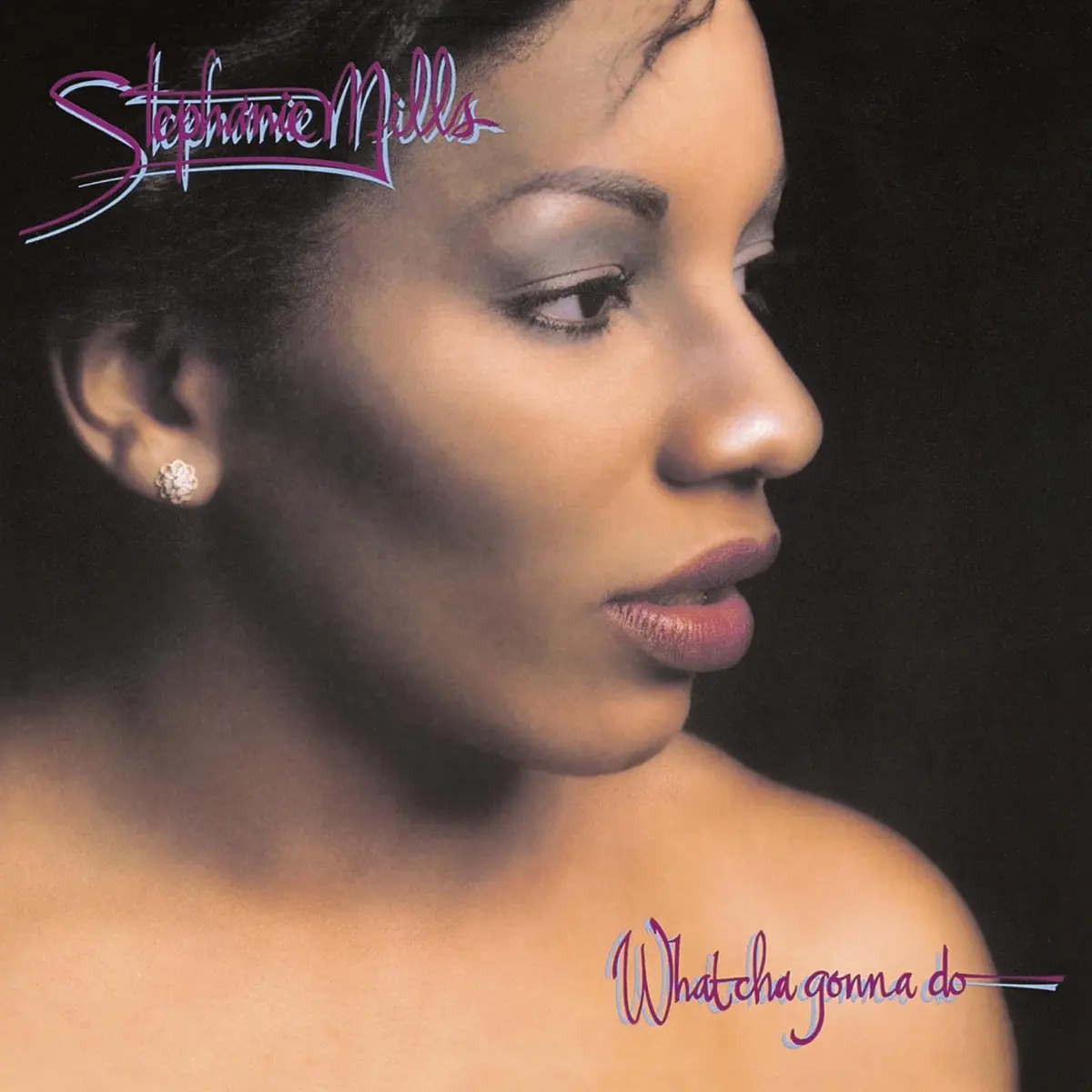 Stephanie Mills released her fourth-recorded (third released) album, What Cha’ Gonna Do with My Lovin’, on March 29, 1979, on 20th Century Fox.
The album combines dance-oriented tracks with romantic R&B ballads, emphasizing Mills’ soaring voice against string-heavy arrangements, synthesizers, and syncopated rhythms.
James Mtume and Reggie Lucas wrote most of the album. Peabo Bryson wrote “Feel the Fire,” and Edward Moore and Howard T. King wrote “Put Your Body in It.”
“You Can Get Over,” “Don’t Stop Dancin’,” and the title track layer sweeping strings, gilded brass, and shuffling uptempo rhythms that alternate between disco pulse and funk-inflected syncopation. “Put Your Body in It” centers on taut bass and clipped percussion patterns. In contrast, ballads such as “Deeper Inside Your Love,” “Starlight,” “You and I,” and Bryson’s “Feel the Fire” foreground Mills’ voice, highlighting contoured lines, sustained high notes, and expressive dynamic shifts that allow her phrasing to dominate the track.
A1. “What Cha Gonna Do with My Lovin'” (4:05)
A2. “You Can Get Over” (4:59)
A3. “Deeper Inside Your Love” (3:54)
A4. “Feel the Fire” (5:13)
B1. “Put Your Body in It” (4:05)
B2. “Starlight” (3:35)
B3. “You and I” (4:46)
B4. “Don’t Stop Dancin'” (3:45)
Sessions occurred at Sigma Sound in New York City, where Mtume and Lucas co-produced the album and played percussion and guitar.
The album features keyboardists Harry Whitaker, Hubert Eaves III, and Ed Walsh (synthesizer); guitarists Ed “Tree” Moore, and Joe Caro (acoustic); bassist Basil Fearington; drummer Howard T. King; percussionist Bashiri Johnson; and backing vocals from Brenda White King, Gwen Guthrie, Lani Groves, Tawatha Agee, Louise Bethune, Mary Johnson, John Simmons, James Mtume, Reggie Lucas, and Howard King, with strings and horns arranged by Wade Marcus.
As a single, “What Cha Gonna Do with My Lovin’” (b/w “Starlight”) reached No. 8 on the US R&B chart and No. 22 on the Billboard Hot 100. “You Can Get Over” appeared on the back of the non-album September 1979 single “Better Than Ever.”
What Cha’ Gonna Do with My Lovin’ charted at No. 12 on the US Billboard Top R&B Albums and No. 22 on the Billboard 200.
Sweet Sensation
 Stephanie Mills released her fifth album, Sweet Sensation, on April 16, 1980, on 20th Century Fox.
The album blends dance-oriented tracks with romantic slow jams, showcasing Mills’ powerful voice alongside layered strings, synthesizers, and syncopated rhythms.
James Mtume and Reggie Lucas wrote most of the album. Tawatha Agee and Hubert Eaves III wrote “Try My Love,” Edward Moore and Howard T. King wrote “D-A-N-C-I-N’,” and Joe Mills and John Simmons wrote “Mixture of Love.”
“Sweet Sensation” opens with buoyant strings, horns, and driving rhythms with precise bass and percussion interplay. “Never Knew Love Like This Before” layers lively percussion and soaring, controlled vocal delivery. “D-A-N-C-I-N’” emphasizes playful rhythmic turns and interwoven horns, while “I Just Wanna Say,” “Still Mine,” and “Mixture of Love” move with subtle harmonic shifts and expressive runs, giving Mills’ voice center stage throughout.
A1. “Sweet Sensation” (4:30)
A2. “Try My Love” (3:50)
A3. “I Just Wanna Say” (6:10)
A4. “Wish That You Were Mine” (4:33)
B1. “D-A-N-C-I-N'” (5:41)
B2. “Still Mine” (5:43)
B3. “Never Knew Love Like This Before” (5:27)
B4. “Mixture of Love” (4:25)
Sessions occurred at Sigma Sound Studios in New York City, with Mtume and Lucas co-producing and contributing keyboards, percussion, guitars, and vocal arrangements. James Dougherty engineered and mixed the sessions, assisted by Craig Michaels, with mastering by Ted Jensen at Sterling Sound.
The album features keyboardists Hubert Eaves III and Mtume (keyboards, percussion), Ed Walsh (synthesizer); guitarists Reggie Lucas and Ed Moore; bassist Basil Fearington; drummer Howard T. King; backing vocals from Tawatha Agee, Gwen Guthrie, Brenda White King, James Mtume, and Reggie Lucas; and strings and horns arranged by Gene Blanco and Wade Marcus.
As singles, “Sweet Sensation” reached No. 3 on the US R&B chart, and “Never Knew Love Like This Before” reached No. 6 on the US pop chart, No. 12 on R&B, and No. 5 on UK charts.
Sweet Sensation charted at No. 3 on the US Billboard Top R&B Albums and No. 16 on the Billboard 200.
Stephanie
 Stephanie Mills released her sixth album, Stephanie, on April 22, 1981, on 20th Century Fox and RCA (Australia, Europe).
The album emphasizes romantic slow jams while retaining carefully placed uptempo tracks, featuring Mills’ expressive vocals over layered keyboards, guitars, and precise rhythmic arrangements.
James Mtume and Reggie Lucas wrote most of the album. Tawatha Agee, Mtume, and Lucas wrote “Two Hearts”; Rodney Brown and Willie Lester wrote “Top of My List”; Howard King and Tawatha Agee wrote “My Love’s Been Good to You”; Jeffrey Daniel co-wrote “Magic” with Mills.
“Two Hearts” pairs Mills with Teddy Pendergrass over syncopated keys and intricate percussion, while “Night Games” and “I Believe in Love Songs” highlight sustained vocal arcs and dynamic contrasts. “Magic” and “Top of My List” balance measured rhythmic drive with sharp turns in phrasing, letting Mills’ voice navigate both energy and intimacy within the arrangements.
A1. “Winner” (4:50)
A2. “Two Hearts” (4:44)
A3. “Don’t Stop Doin’ What ‘Cha Do” (4:48)
A4. “Top of My List” (3:42)
B1. “I Believe in Love Songs” (4:14)
B2. “Night Games” (5:47)
B3. “My Love’s Been Good to You” (4:12)
B4. “Magic” (5:07)
Sessions occurred at Sigma Sound Studios in New York City with Mtume and Lucas producing and contributing keyboards, percussion, guitars, and vocal arrangements. Jim “Doc” Dougherty engineered, supported by Gerry Block, Jay Mark, Craig S. Michaels, and Matthew Weiner. Eugene Bianco served as horns and strings contractor.
The album features keyboardists James Mtume, Hubert Eaves III; guitarists Reggie Lucas and Ed “Tree” Moore; bassist Basil Fearington; drummer Howard King; and backing vocals from Brenda White King, Luther Vandross, Ullanda McCullough, and Tawatha Agee.
“Two Hearts” reached No. 3 on the US R&B chart and No. 40 on the pop chart, also charting in the UK at No. 49. “Night Games” reached No. 33 on the US R&B chart.
Stephanie charted at No. 3 on the US Billboard Top R&B Albums and No. 30 on the Billboard 200. The album earned Mills her second Grammy nomination for Best Female R&B Vocal Performance at the 24th Annual Grammy Awards.
Tantalizingly Hot
 Stephanie Mills released her seventh album, Tantalizingly Hot, on July 17, 1982, on Casablanca.
The album blends Mtume and Lucas’ precise, rhythmic production with contributions from Ashford & Simpson and Mills herself, balancing danceable soul numbers with smoother, romantic material.
All songs were written and produced by James Mtume and Reggie Lucas except where indicated. Ashford & Simpson wrote and produced “Keep Away Girls” and co-wrote/produced “I Can’t Give Back the Love I Feel for You.” Edward Moore and James Balton wrote “True Love Don’t Come Easy,” Mills co-produced and co-wrote “‘Ole Love,” and Jim Andron and Mark Winkler wrote “Your Love Is Always New.”
“Last Night” layers buoyant percussion, driving bass, and crisp horns with Mills’ soaring vocals. “You Can’t Run from My Love” features syncopated rhythms, sharp keyboard lines, and lively horn punctuations. “Keep Away Girls” and “I Can’t Give Back the Love I Feel for You” emphasize contoured phrasing over steady, deliberate rhythms. Softer cuts such as “‘Ole Love,” “True Love Don’t Come Easy,” and “Your Love Is Always New” highlight expressive runs and nuanced harmonic shifts, keeping Mills’ voice prominent throughout.
A1. “Last Night” (4:27)
A2. “Still Lovin’ You” (4:18)
A3. “Keep Away Girls” (4:52)
A4. “You Can’t Run From My Love” (4:14)
B1. “True Love Don’t Come Easy” (3:00)
B2. “‘Ole Love” (4:45)
B3. “Your Love is Always New” (3:03)
B4. “I Can’t Give Back the Love I Feel for You” (4:53)
Sessions occurred at Sigma Sound Studios in New York City with producers James Mtume, Reggie Lucas, Ashford & Simpson, and Stephanie Mills. Jim “Doc” Dougherty engineered the album with Gerry Block and Jay Mark assisting; Craig S. Michaels and Matthew Weiner served as assistant engineers. Eugene Bianco contracted horns and strings.
“Last Night” (b/w “Wailin’”) and “You Can’t Run from My Love” were released as singles.
Tantalizingly Hot reached No. 10 on the US Billboard Top R&B Albums and No. 48 on the Billboard 200.
Merciless
 Stephanie Mills released her eighth album, Merciless, on August 20, 1983, on Casablanca.
Merciless blends funk, jazz, and R&B with inventive production from Gary Klein, David Wolfert, and Phil Ramone, highlighting Mills’ vocal versatility across dance-oriented numbers and ballads.
The album features material written by Prince, Luther Vandross, Paul Jabara, David Wolfert, Henry Gaffney, Peter Kingsbery, Ralph Schuckett, Cassandra Mills, Michael Sembello, Barbara Morr, Betsy Durkin Matthes, and Brian Holland, Nickolas Ashford, and Valerie Simpson. Wolfert co-produced the majority of tracks with Klein, while Mills co-produced “His Name Is Michael” and Phil Ramone produced “His Name Is Michael.”
“How Come U Don’t Call Me Anymore?” delivers contoured, expressive phrasing over a measured rhythmic bed. “My Body” incorporates Latin-inflected percussion, keyboards, and feverish vocals. Mills and Peggi Blu interplay on “‘His Name Is Michael,’” turning lighthearted lyrics into playful dialogue. “Do You Love Him?” presents cool, breezy phrasing and precise vocal delivery, while “Pilot Error” and “Here I Am” employ lively pacing and bright keyboard lines. “Eternal Love” and “Never Get Enough of You” emphasize sustained vocal runs over subtle harmonic shifts.
A1. “How Come U Don’t Call Me Anymore?” (4:12)
A2. “Never Get Enough of You” (4:31)
A3. “Eternal Love” (4:41)
A4. “His Name is Michael” (3:18)
A5. “Here I Am” (4:13)
B1. “My Body” (4:06)
B2. “Do You Love Him?” (3:47)
B3. “Pilot Error” (5:07)
B4. “Since We’ve Been Together” (3:13)
Sessions occurred at The Hit Factory, Automated Sound Studios, Cherokee Recording Studios, The Record Plant, and Bossa Nova Hotel in New York and Los Angeles. Gary Klein and David Wolfert produced everything apart from “His Name Is Michael,” co-produced by Mills and Ramone.
As singles, “Pilot Error” and “How Come U Don’t Call Me Anymore?” both reached No. 12 on the R&B chart.
Merciless reached No. 12 on the US Billboard Top R&B Albums and No. 104 on the Billboard 200.
I’ve Got the Cure
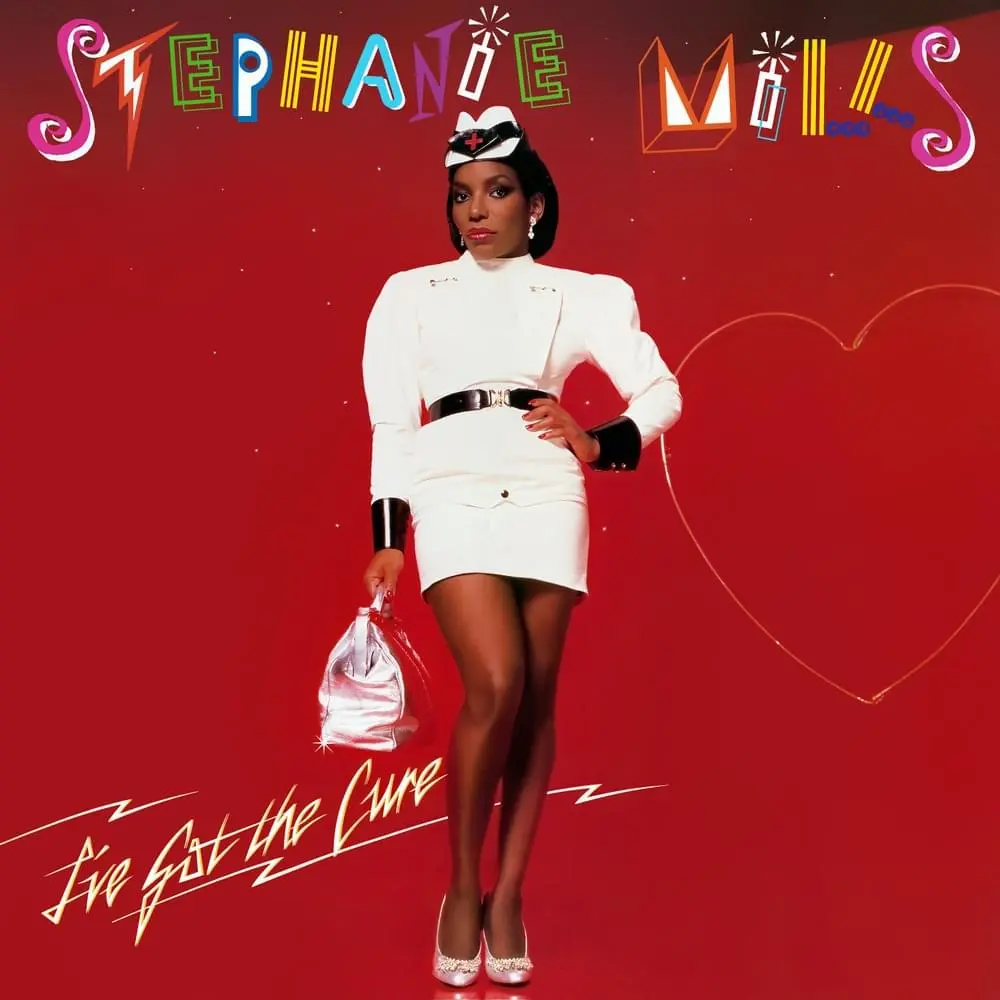 Stephanie Mills released her ninth album, I’ve Got the Cure, on September 10, 1984, on Casablanca.
I’ve Got the Cure blends R&B, urban pop, and dance-oriented soul with crisp production and layered instrumentation, emphasizing Mills’ dynamic vocal phrasing across upbeat numbers and ballads.
Songwriting credits include David “Hawk” Wolinski, Tom Snow, Roy Freeland, Pat Leonard, Keithen Carter, Kenny Loggins, Stephen Bishop, Len Ron Hanks, John Lewis Parker, Howard Grate, Michael Powell, and combinations thereof. George Duke produced four tracks, Wolinski co-produced five, and Mills served as executive producer.
“The Medicine Song” and “Edge of the Razor” drive buoyant rhythms with bright keyboard lines, precise percussion, and contoured vocal runs. “Give It Half a Chance,” “Outrageous,” and “Undercover” combine lively pacing with layered harmonies, while “In My Life,” “You Might Just Need a Friend,” and “Everlasting Love” focus on sustained phrasing and subtle harmonic shifts. “‘Rough Trade’” and “Undercover” feature energetic interplay between keyboards, guitars, and vocals, maintaining rhythmic momentum throughout the album.
A1. “The Medicine Song” (4:52)
A2. “Edge of the Razor” (4:56)
A3. “In My Life” (4:06)
A4. “Give it Half a Chance” (4:41)
B1. “Outrageous” (4:50)
B2. “You Might Just Need a Friend” (3:56)
B3. “Everlasting Love” (4:23)
B4. “Rough Trade” (3:49)
B5. “Undercover” (3:50)
Sessions occurred at Fantasy Records (Berkeley, CA), Soundcastle (Hollywood, CA), Le Gonks West (West Hollywood, CA), Cherokee Studios, and Foot on the Hill (Los Angeles, CA). George Duke produced tracks A2, A4, B1, B3; Hawk Wolinski co-produced the album’s balance. Mills served as executive producer. John Arrias recorded and mixed Wolinski-produced tracks; Tommy Vicari recorded and mixed Duke-produced tracks. Ivy Skoff and Constance de Guzman assisted on production.
“The Medicine Song” reached No. 1 on the Billboard Dance Club Songs chart. I’ve Got the Cure peaked at No. 10 on the US Billboard Top R&B Albums and No. 73 on the Billboard 200.
Bonus tracks on 2013 SoulMusic Records reissue:
“The Medicine Song” (Mark Berry 12 Inch Mix) – 6:40
“Edge of the Razor” (Dance Mix) – 6:39
“Edge of the Razor” (Dub Mix) – 4:01
Stephanie Mills (1985 album)
 Stephanie Mills released her self-titled tenth album on November 25, 1985, on MCA.
The album blends uptempo dance-oriented soul, smooth urban contemporary numbers, and soaring ballads, highlighting Mills’ contoured phrasing and dynamic vocal control. It marks her first collaboration with producer Nick Martinelli, establishing a partnership that would shape her subsequent MCA releases.
Songwriting credits include Carl Sturken, Evan Rogers, Karyn White, Robert Brookins, Tony Haynes, Raymond Jones, Diane Warren, Robbie Buchanan, Angela Winbush, Michael Jay, Michael Watson, and ex-Heatwave mastermind Rod Temperton.
“Stand Back” and “Automatic Passion” feature buoyant rhythms with precise percussion and layered keyboard textures. “Rising Desire” and “Under Pressure” maintain dynamic pacing with interlocking synthesizer and guitar lines. “Time of Your Life” and “Hold On to Midnight” offer sustained vocal phrasing over lush arrangements, while “Just You” and “I Have Learned to Respect the Power of Love” emphasize expressive runs and harmonic shifts. Ballads such as “I Have Learned to Respect the Power of Love” carry dramatic, soaring vocal lines, balancing the album’s rhythmic tracks.
A1. “Stand Back” (5:09)
A2. “Automatic Passion” (4:10)
A3. “Rising Desire” (5:57)
A4. “Time of Your Life” (4:28)
B1. “Hold On to Midnight” (5:40)
B2. “Just You” (4:50)
B3. “I Have Learned to Respect the Power of Love” (4:51)
B4. “Under Pressure” (6:20)
Sessions occurred at various studios in Los Angeles and Hollywood, California. Nick Martinelli produced “Stand Back,” George Duke produced tracks A2, A3, B2, B4, Richard Rudolph produced tracks A4, B1, and Ron Kersey produced B7. Engineers included Michael Tarisa, Erik Zobler, Tommy Vicari, Paul McKenna, and Hill Swimmer. Bernie Grundman mastered the album at A&M Studios in Hollywood, CA.
Singles included “Stand Back” (US R&B 15, Dance 7), “Rising Desire” (US R&B 11), and “I Have Learned to Respect the Power of Love” (US R&B 1).
The album peaked at No. 4 on the US Billboard Top R&B Albums and No. 47 on the Billboard 200.
If I Were Your Woman
 Stephanie Mills released her eleventh album, If I Were Your Woman, on June 1, 1987, on MCA.
The album emphasizes contemporary R&B textures with layered keyboards, programmed percussion, and lush balladry. Mills maintains precise, contoured phrasing across uptempo tracks and intimate slow numbers, continuing her collaboration with producers Nick Martinelli, George Duke, Ron “Have Mercy” Kersey, Paul Laurence, Robert Brookins, LaForrest “La La” Cope, and Davy D.
Songwriting credits include Gabriel and Annette Hardeman, Clay McMurray, Pamela Sawyer, Gloria Jones, Timmy Allen, Paul Laurence, Robert Brookins, Tony Haynes, Howard Grate, Barry J. Eastmond, Terry Alexander, Wayne Braithwaithe, David Reeves, Davy D, and Mills herself.
“I Feel Good All Over” opens with sustained vocal phrases over layered piano and synthesizer textures. “(You’re Puttin’) A Rush on Me” and “Secret Lady” employ programmed percussion and interlocking keyboard lines, while ballads such as “If I Were Your Woman” and “Touch Me Now” feature controlled dynamic shifts and harmonic layering. Rhythmic tracks like “Running for Your Love” and “Just You” highlight precise interplay between bass and drum programming.
A1. “I Feel Good All Over” (5:02)
A2. “If I Were Your Woman” (4:36)
A3. “(You’re Puttin’) A Rush on Me” (5:52)
A4. “Jesse” (5:17)
B1. “Secret Lady” (5:25)
B2. “Touch Me Now” (4:54)
B3. “Running for Your Love” (4:33)
B4. “Can’t Change My Way” (4:28)
Sessions occurred at multiple studios across Los Angeles and New York. Nick Martinelli produced A1, Ron Kersey produced A2, Paul Laurence produced A3, Robert Brookins produced A4, LaForrest “La La” Cope produced B1, Wayne Braithwaithe produced B2 and B3, and Davy D produced B4. Engineers included Hill Swimmer, Erik Zobler, Ron Banks, Mitch Gibson, Tommy Vicari, Philip Walters, Carl Beatty, Fernando Kral, John Convertino, Acar Key, Brian Max, Barbara Milne, and Bryan “Chuck” New. Taavi Mote and Louil Silas Jr. handled remixing.
Cassandra Mills and Stephanie Mills oversaw executive production and album concept. Art direction and design were handled by September, with front cover photography by Ron Slenzak.
Singles included “I Feel Good All Over” (US R&B 1), “(You’re Puttin’) A Rush on Me” (US R&B 1, US Pop 85, US Dance 23, UK 62), “Secret Lady” (US R&B 7), and “If I Were Your Woman” (US R&B 19).
The album peaked at No. 1 on the US Billboard Top R&B Albums chart and No. 30 on the Billboard 200.
Discography:
- Movin’ in the Right Direction (1974)
- For the First Time (1975)
- What Cha’ Gonna Do with My Lovin’ (1979)
- Sweet Sensation (1980)
- Stephanie (1981)
- Tantalizingly Hot (1982)
- Love Has Lifted Me (1982)
- Merciless (1983)
- I’ve Got the Cure (1984)
- Stephanie Mills (1985)
- If I Were Your Woman (1987)
- Home (1989)
Sources:
- Discogs: Stephanie Mills
- 45worlds: Stephanie Mills
- 45cat: Stephanie Mills
- MusicBrainz: Stephanie Mills
Artist/Album Pages:
Progres 2 are a Czech progressive rock band, formed in 1968 in Brno as the Progress Organization u...
Catharsis was a French jazz-rock/psych band that made two albums in 1971/72 on Saravah, followed ...
SPY was a Japanese New Wave band that released a self-titled album in 1980 on Invitation. Membe...
Loggins and Messina were an American country rock duo that released six studio albums and a live do...
Brother to Brother were an American studio-funk combo formed by singer/producer Michael Burton wi...
François Jeanneau (born 1935) is a French saxophonist, keyboardist, and composer who played in the...
Flame Dream is the Swiss symphonic-rock band behind the 1978/79 Philips albums Calatea and Element...
Change was a soul-funk studio project that spawned six albums between 1980 and 1985 on Warner and ...
Boule Noire — aka Georges Thurston (Dec. 29, 1951 — June 18, 2007) — was a Québécois soul-funk art...
Dragonfly was a Swiss symphonic-rock band that made a 1982 album, self-released on Highfly. Memb...
Jacques Blais is a Québécois guitarist and songwriter behind the 1975 Échanson album Thèmes, follo...
The Human League are an English synthpop band best known for their 1981 global No. 1 hit "Don't You ...