

Jimmy Owens is an American jazz-funk trumpeter, composer, and arranger who emerged as a mid-Sixties sideman of Herbie Mann and Eric Kloss. In 1967, Atlantic Records issued You Had Better Listen, billed to the Jimmy Owens/Kenny Barron Quintet.
Owens played on 1968/69 albums by Gary Bartz, George Benson, Joe Zawinul, and Yusef Lateef. He also joined chamber-rockers Ars Nova for their second album, Sunshine & Shadows.
In 1970, Owens made his solo debut with the Polydor release No Escaping It!!! At the height of jazz-funk, he made the 1976–78 Horizon albums Jimmy Owens and Headin’ Home.
Background
Jimmy Owens was born on December 9, 1943, in New York City. At age 14, he studied trumpet under post-bop bandleader Donald Byrd. He later studied composition under Canadian–American academic Henry Brant (1913–2008), a Columbia/Julliard proponent of spatialization.
Owens graduated early from Manhattan’s High School of Music & Art and later attended the University of Massachusetts, where he earned an MA in Education.
Early Credits
Owens earned his first-recorded credit on the 1960 Coral release Dance Tonight by the Newport Youth Band, the starting vehicle of saxophonist Ronnie Cuber. In December 1964, Owens backed mentor Donald Byrd on sessions for the trumpeter’s Blue Note release I’m Tryin’ To Get Home (Brass With Voices), which also features Herbie Hancock. Owens’ profile rose with credits on 1965/66 Atlantic titles by Hank Crawford (Dig These Blues), Herbie Mann (Today!), and Hubert Laws (Flute By Laws).
Owens played on ten 1967 albums, including titles by Mann (Impressions of the Middle East), Milt Jackson (Born Free), Attila Zoller (Katz & Maus), and multiple Prestige acts, including Buddy Terry (Electric Soul), Eric Kloss (First Class Kloss!), Jaki Byard (On the Spot!), and the Booker Ervin Sextet (Heavy!!!).
As a composer, Owens provided Dizzy Gillespie with “Get That Money Blues,” the seven-minute closing track on the be-bop legend’s 1966 Limelight release The Melody Lingers On.
You Had Better Listen
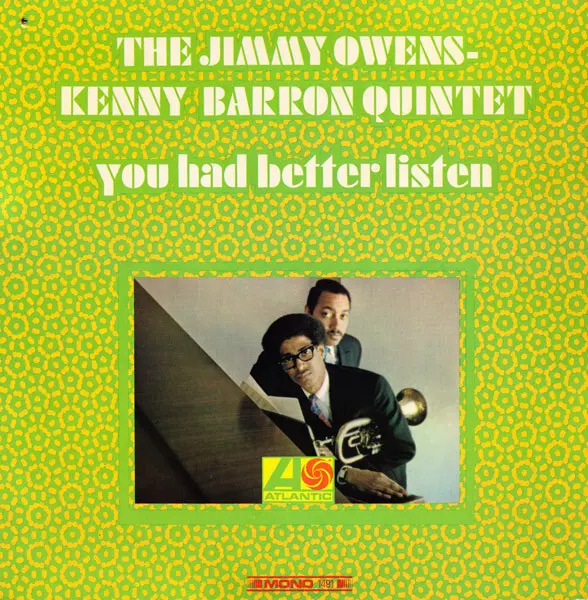 Jimmy Owens made his headline debut in partnership with pianist Kenny Barron on the 1967 Atlantic release You Had Better Listen, billed to the Jimmy Owens – Kenny Barron Quintet.
Owens wrote the title-piece that opens the album, which also features two Barron compositions (“Gigi,” “Carolina John”) and tunes by Gillespie associate James Moody (“Love, Where Are You?”) and the Broadway team of Matt Dennis and Tom Adair (“The Night We Called It a Day,” a Forties jazz standard popularized by Frank Sinatra).
The Owens/Barron Quintet included saxophonist Bennie Maupin, bassist Christopher White (a veteran sideman of Gillespie and Nina Simone), and a drum slot alternated by Freddie Waits and Rudy Collins (a presence on multiple Herbie Mann and Lalo Schifrin titles).
A1. “You Had Better Listen” (8:30)
A2. “The Night We Called It a Day” (5:08)
B1. “Gichi” (6:30)
B2. “Love, Where Are You?” (6:51)
B3. “Carolina John” (8:07)
1968–69 Credits
During 1968, Owens appeared on seventeen albums, including titles by Archie Shepp (The Way Ahead), Bobby Timmons (Got to Get It!), David Newman (Bigger & Better), Eddie Harris (Plug Me In), Gary Bartz (Libra), George Benson (Giblet Gravy), Joe Zawinul (The Rise & Fall of the Third Stream), Kenny Burrell (Blues – The Common Ground), ongoing associate Eric Kloss (Life Force, We’re Goin’ Up), and singers Junior Wells (Coming at You) and Marge Dodson (A Lovely Way to Live).
In 1969, Owens appeared on Yusef Lateef’s Detroit: Latitude 42° 30′ Longitude 83°, a pioneering jazz-funk album by veteran reedist Yusef Lateef.
Ars Nova
Owens ventured into rock as a member of Ars Nova, a New York psychedelic band that ushered chamber-rock arrangements on their 1968 debut album. Owens joined the septet lineup on their 1969 second album, Sunshine & Shadows, which includes their cover of “You Had Better Listen.”
The same lineup (including future Keith Jarrett guitarist Sam Brown) also appear on the 1969 Atco release Hair Styles, a psychedelic big-band recording billed to the Terminal Barbershop. Hair composer Galt MacDermot spearheaded the project, which also involved guitarist Eric Weissberg (the future Deliverance theme bajoist) and reedist Joe Farrell.
Owens and Brown also appeared on the 1969 ABC Records release File Under Rock by White Lightnin’, the bluegrass duo of Appalachian cousins Byard Ray and Obray Ramsey.
No Escaping It!!!
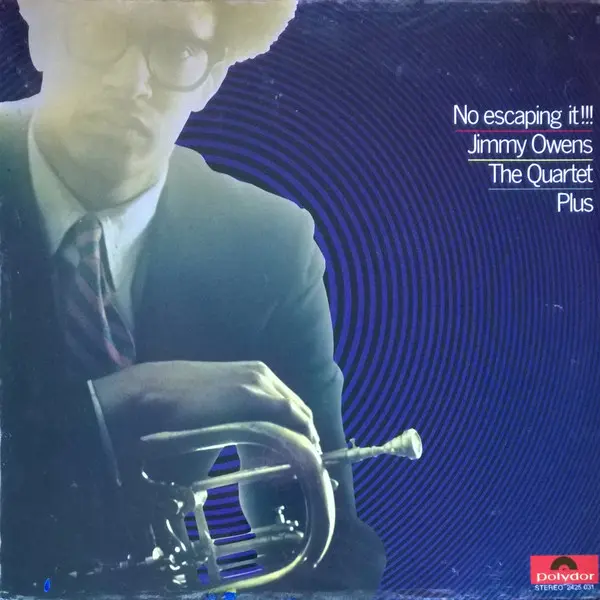 Jimmy Owens released his debut solo album, No Escaping It!!!, in 1970 on Polydor.
No Escaping It!!! contains six Owens originals plus Barron’s “Chicago Light Green” and Jimmy Webb’s “Didn’t We.” Barron and White return in a quartet with drummer Billy Cobham, with electric piano and electric bass inside the rhythm/key format. Select tracks add guitarist Sam Brown and a horn/reed supplement: French hornist Ray Alonge, saxophonist-flutist Billy Harper, tubist-baritone saxophonist Howard Johnson.
“Didn’t We” clips short ensemble figures to a steady underlay. “Lo-Slo-Bluze” saunters through electric-piano tint, low-end shading, and rounded high-note climbs. “Put It All Togetha” locks horn figures into a fixed production-number tread. “Complicity” charges through quartet interplay and hands its middle stretch to sliding, double-stop bass figures.
“No Escaping It” bends from knotty brass writing into a spare vamp, then clears space for a guitar solo. “Milan Is Love” glides to a low flugelhorn close, with the line held to an unhurried descent. “Funk-A-De-Mama” barrels through a fast boogie pattern, with a tuba break and slap-tongued tenor entrance.
A1. “Didn’t We” (3:07) – Webb
A2. “Lo-Slo-Bluze” (6:45) – Owens
A3. “Put It All Togetha” (3:45) – Owens
A4. “Complicity” (8:15) – Owens
B1. “Chicago Light Green” (2:46) – Barron
B2. “No Escaping It” (6:05) – Owens
B3. “Milan Is Love” (5:05) – Owens
B4. “Funk-A-De-Mama” (5:34) – Owens
Jimmy Owens produced and arranged the March 6 and 13, 1970 sessions at Record Plant in New York City. Endesha O’Brien engineered the album with assistant engineer Ben Taylor.
No Escaping It!!! appeared in a Polydor sleeve designed by Jon Bauch with cover and liner photography by James Belfon.
Jimmy Owens
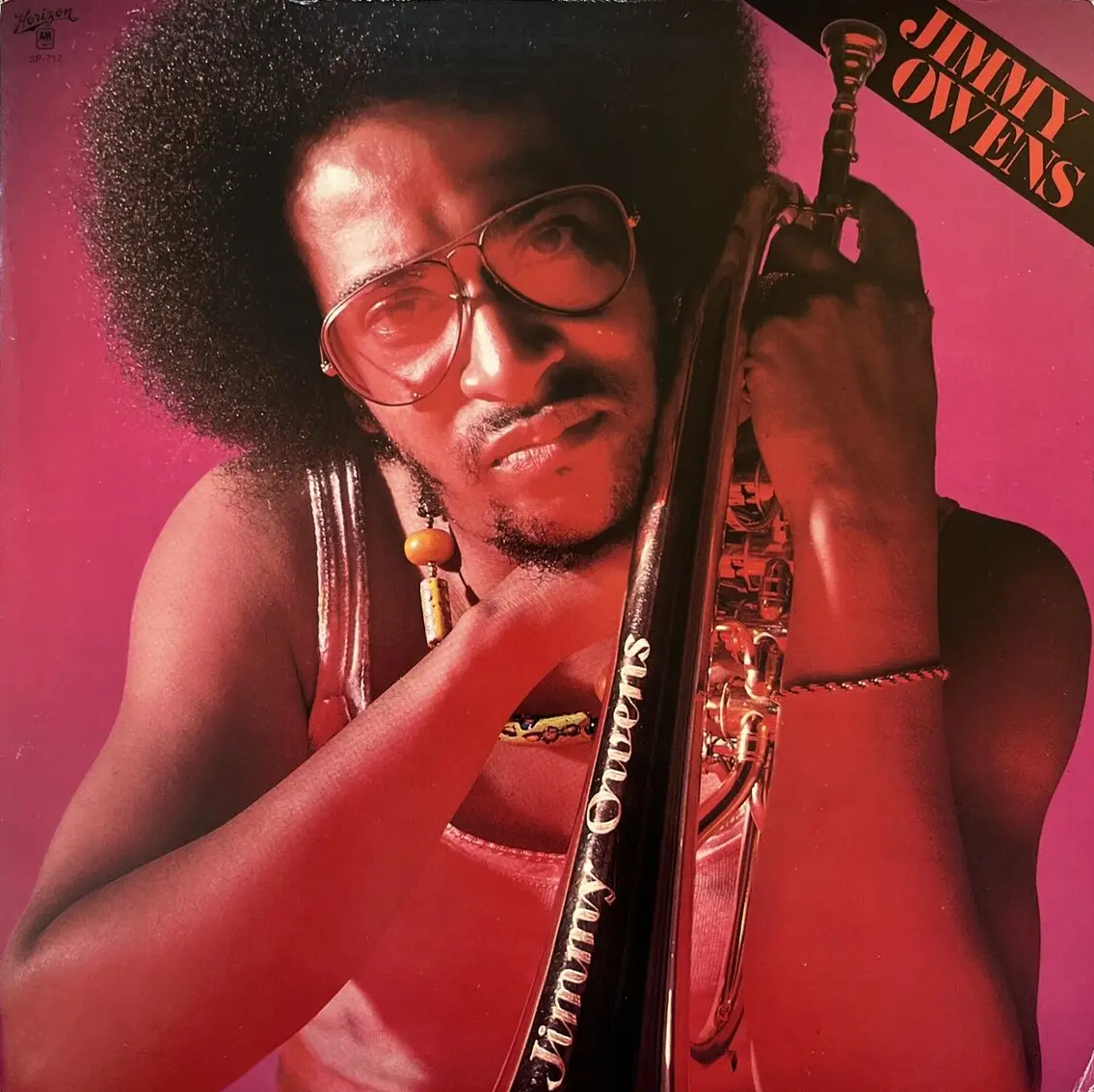 Jimmy Owens released his self-titled second solo album in 1976 on Horizon.
Owens contains three band originals and repertory pieces associated with Duke Ellington (“Caravan”) and Doris Day (“Secret Love”). Barron and White return beside drummer Brian Brake and percussionist Warren Smith. Jimmy employs three guitarists: George Davis, Lloyd Davis, and Carl Lynch.
“What’s the Use” coils around an oral wah-wah tint; Owens’ narrow upper tone cuts across a churning electric mix. “Do It to It” runs at a brisk allegro pace; Owens threads short phrases through ensemble accents.
A1. “Caravan” (10:02) – Ellington, Tizol, Mills
A2. “What’s the Use” (10:02) – Owens
B1. “Do It to It” (6:21) – Owens
B2. “Secret Love” (8:20) – Fain, Webster
B3. “My Life” (6:10) – White
Coleridge-Taylor Perkinson produced the album. Ed Rice and Gary Roth engineered the sessions.
Jimmy Owens appeared in a Horizon sleeve with Roland Young art direction, Chuck Beeson and Ken Anderson design, and photography by Bill King, Brent Owens, and Gösta Peterson.
Horizon issued edited mono and stereo versions of “Caravan” as a U.S. seven-inch single in 1976.
Headin’ Home
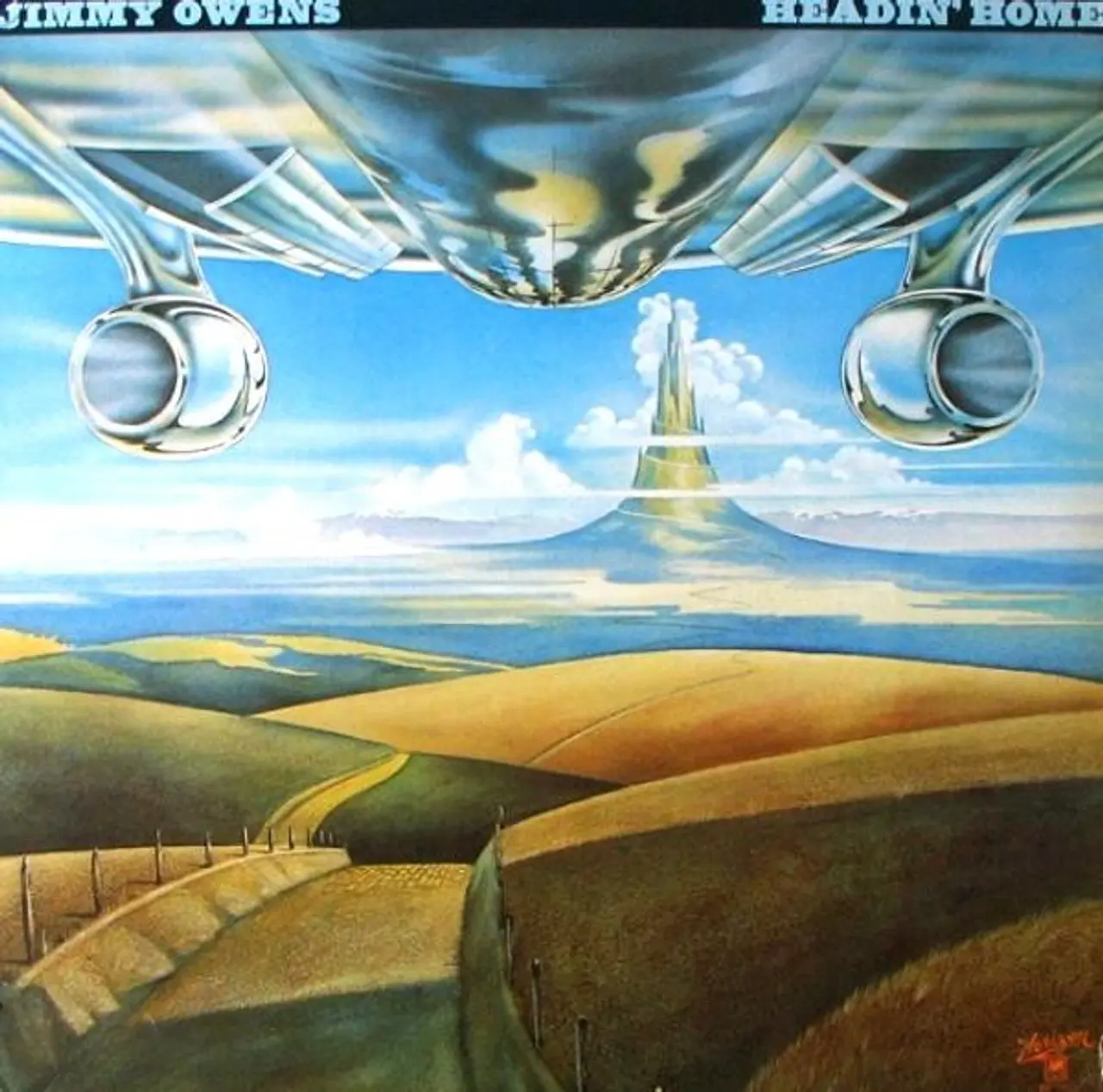 Jimmy Owens released his third solo album, Headin’ Home, in 1978 on Horizon.
Headin’ Home contains three Coleridge-Taylor Perkinson pieces plus Charlie Smalls (“Home”) and three band-linked titles. Perkinson supplies the principal album arrangements.
Returning players Barron, White, George Davis, and Brake appear with guitarists Carlos Alomar and Mantwila Nyomo, keyboardist Stanley Cowell, bassist Gary King, drummer Billy Cobham, and percussionist Erroll “Crusher” Bennett.
“Exercise (Dis’go, Dis’way)” expands into a large horn arrangement, with brass and reeds stacked around Owens’s lead.
A1. “Home” (5:53) – Smalls
A2. “New Tune” (5:47) – Perkinson
A3. “Dreaming My Life Away” (5:45) – Owens, Jordan
A4. “Never Subject to Change” (5:34) – Owens
B1. “B. S.” (6:51) – Perkinson
B2. “Sweet Love” (9:42) – Barron, White
B3. “Exercise (Dis’go, Dis’way)” (6:21) – Perkinson
Coleridge-Taylor Perkinson produced the album and arranged “Home,” “New Tune,” “B. S.,” and “Exercise (Dis’go, Dis’way).” Jimmy Owens arranged “Dreaming My Life Away,” and Kenny Barron arranged “Never Subject to Change” and “Sweet Love.” Gary Roth and Michael Repp engineered the sessions, and Ed Rice mixed the album.
Headin’ Home appeared in a Horizon sleeve with Roland Young art direction, Chuck Beeson design, Bill King photography, and Jim Barrett illustration.
Discography:
- You Had Better Listen (1968 • The Jimmy Owens – Kenny Barron Quintet)
- No Escaping It!!! (1970)
- Jimmy Owens (1976)
- Headin’ Home (1978)
- Monk Project (2012)
Sources:
- Discogs: Jimmy Owens
- JazzMusicArchives: Jimmy Owens
- RYM: Jimmy Owens
- MusicBrainz: Jimmy Owens
- Zaragon: Directory of Jazz-funk Albums
Artist/Album Pages:
Sugar Minott — aka Lincoln Barrington Minott (May 25, 1956 – July 10, 2010) — was a Jamaican regga...
James Brown (May 3, 1933 — December 25, 2006) was an American soul singer who was active as a perf...
Schtüng was a New Zealander symphonic-rock band behind a 1977 self-titled album on Polydor. M...
Quatermass was an English hard-rock trio behind a 1970 self-titled album on Harvest. They were an of...
Phantom was an American hard-rock/psych band from Detroit that released the album Phantom's Divin...
Mick Ronson (May 26, 1946 — April 29, 1993) was an English guitarist and producer who rose to prom...
Daughters of Albion were an American vocal-pop/psych duo from Los Angeles that released a 1968 al...
Carolyne Mas is an American rock singer and songwriter from New York who released three Mercury al...
Boston are an American symphonic/hard-rock band that released two albums on Epic between 1976 and ...
Lou Reed (March 2, 1942 — Oct. 27, 2013) was an American singer, musician, and songwriter from Bro...
Jerry Butler (December 8, 1939 — February 19, 2025) was an American soul singer who first fronted ...
Ecstasy, Passion & Pain was an American soul-funk band from NYC that released a 1974 self-tit...