

Edwin Starr (Jan. 21, 1942 — April 2, 2003) was an American soul singer from Nashville who released a string of 1965–67 singles on Detroit soul-press Ric-Tic Records. After Motown’s purchase of that label, he issued four proper albums and assorted singles on Tamla and Gordy, hitting big with the 1970 anti-war shouter “War.”
Background
Edwin Starr was born Charles Edwin Hatcher on January 21, 1942, in Nashville, Tennessee. His family settled in Cleveland, where younger brother Angelo Hatcher and cousins Roger and Willie Hatcher also pursued singing careers. Hatcher attended Kennard Junior High School and East Technical High School, where he sang with classmates and received voice guidance from Metrotones leader Sonny Turner.
In 1957, he formed The Futuretones, a Cleveland singing group that played school shows, talent contests, parties, and local stages. The Futuretones cut the 1959 Tress Records single “Roll On” (b/w “I Know”) while Hatcher remained a student at East Technical High School. The record drew local notice, but Hatcher entered the US Army in 1960 and sang for servicemen in the United States and Germany.
After his discharge, Hatcher returned to Cleveland and resumed work with The Futuretones In 1963, he joined the live revue of organist-bandleader Bill Doggett, who gave Hatcher his first sustained professional road work. In 1964, he appeared under his given name as percussionist on Doggett’s ABC-Paramount album Wow!, recorded at Bell Sound in New York during October and November sessions.
Non-Album Ric-Tic Singles, June 1965–1967
Edwin Starr released six stock singles and one promo-only single on Ric-Tic between the June 1965 issue “Agent Double-O-Soul” and the September 1966 issue “It’s My Turn Now.”
The run contains six titles credited to Charles Hatcher or Edwin Starr across fourteen side placements. The outside and co-writers are Bill Sharpley, Albert Hamilton, Richard Morris, J. Harris, J. Greer, W. Hopson, G. McGregor, C. Black, N. Toney, J. Barnes, and Terry Lane. The credited arrangers are Sonny Sanders, Starr, Mike Terry, Dale Warren, and Joe Hunter.
In June 1965, Ric-Tic issued “Agent Double-O-Soul” (b/w “Agent Double-O-Soul (Instrumental)”). A Hitbound Production produced both Hatcher–Sharpley sides with arranger Sonny Sanders. “Agent Double-O-Soul” reached No. 21 on the Billboard Hot 100 and No. 8 on the Billboard R&B chart.
Starr followed in October 1965 with “Back Street” (b/w “Back Street (Instrumental)”). Richard Parker produced the title side, and Solid Hitbound Productions produced the instrumental side. Sanders and Starr arranged both Hatcher–Sharpley sides. “Back Street” reached No. 95 on the Billboard Hot 100 and No. 33 on the Billboard R&B chart.
Ric-Tic issued “Stop Her On Sight (S.O.S.)” (b/w “I Have Faith In You”) in January 1966. Al Kent and Richard Morris produced the Hamilton–Hatcher–Morris title side. Solid Hitbound Productions produced “I Have Faith In You,” a Harris–Greer–Hopson song. “Stop Her On Sight (S.O.S.)” reached No. 48 on the Billboard Hot 100 and No. 9 on the Billboard R&B chart in the US. In the UK, the Polydor issue reached No. 35 on the singles chart.
Ric-Tic also pressed the January 1966 promo-only single “Scott’s On Swingers (S.O.S.)” on RT-109-X. Starr wrote and produced the same title on both sides.
Ric-Tic issued “Headline News” (b/w “Harlem”) in April 1966. Kent and Morris produced “Headline News,” a Hamilton–Hatcher–Morris song arranged by Mike Terry. Solid Hitbound Productions produced “Harlem,” which G. McGregor and C. Black wrote. “Headline News” reached No. 84 on the Billboard Hot 100 and No. 39 on the UK singles chart.
Ric-Tic paired “My Kind Of Woman” with “You’re My Mellow” in July 1966. Taylor and Williams produced the N. Toney title side with arrangements by Dale Warren and Sonny Sanders. Kent and Morris produced “You’re My Mellow,” a J. Barnes–Hamilton–Morris song arranged by Joe Hunter.
Starr closed the issued Ric-Tic run in September 1966 with “It’s My Turn Now” (b/w “Girls Are Getting Prettier”). Ed Wingate produced both songs. Sonny Sanders arranged the Terry Lane title side, and Mike Terry arranged the Hatcher B-side.
Ric-Tic assigned the 1967 number RT-126 to “Meet Me Halfway” (b/w “Throw In The Towel”), an unreleased Starr single.
Soul Master
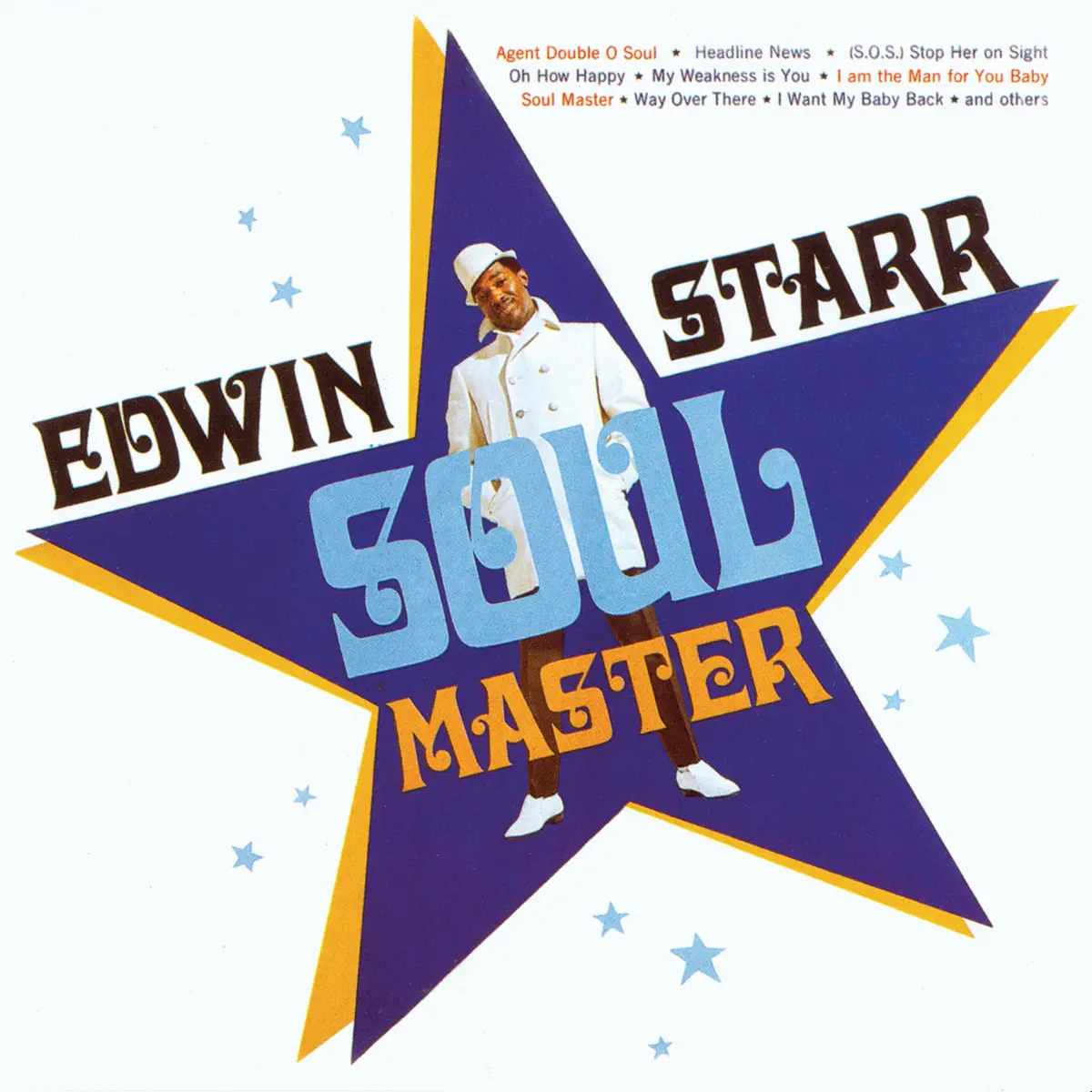 Edwin Starr released his debut album, Soul Master, in fall 1968 on Gordy.
The album compiles three Ric-Tic-era Starr sides with Gordy material by Motown writers and producers. Starr wrote or co-wrote five of the twelve songs: “Agent Double-O-Soul,” “Stop Her On Sight (S.O.S.),” “Oh How Happy,” “Headline News,” and “Love Is My Destination.” The remaining program contains songs by Smokey Robinson, Norman Whitfield, Stanley McMullen, Cornelius Grant, Eddie Kendricks, Nickolas Ashford, Valerie Simpson, James Dean, William Weatherspoon, and Stephen Bowden.
“Agent Double-O-Soul” struts through spy-theme wordplay, sharp brass hits, and a crisp backbeat. “Stop Her on Sight (S.O.S.)” rings on coded title phrases, female replies, and a Morse-like keyboard figure under Starr’s lead. “I Am the Man for You Baby” saunters through a Sunday-afternoon tempo with group replies tucked close behind Starr. “Oh How Happy” brightens the set with lighter ensemble motion and a clean refrain. “Headline News” stamps out a firm opening pattern and clipped vamp beneath Starr’s raspier shout.
A1. “Agent Double-O-Soul” (2:37) – Sharpley, Starr
A2. “I Am the Man For You Baby” (2:40) – Dean, Weatherspoon, Bowden
A3. “Stop Her on Sight (S.O.S.)” (2:17) – Starr, Hamilton, Morris
A4. “Oh How Happy” (2:33) – Starr
A5. “Way Over There” (2:42) – Robinson
A6. “My Weakness Is You” (2:32) – Whitfield, McMullen
B1. “Headline News” (2:30) – Starr, Hamilton, Morris
B2. “Soul Master” (3:05) – Morris
B3. “I Want My Baby Back” (2:30) – Whitfield, Grant, Kendricks
B4. “Love Is My Destination” (2:50) – Cosby, Starr
B5. “I Am Your Man” (2:59) – Ashford, Simpson
B6. “Time Is Passin’ By” (2:50) – Dean, Weatherspoon
Motown assembled Soul Master from Ric-Tic masters and newer Gordy sessions. James Dean and William Weatherspoon produced “I Am The Man For You Baby.” Norman Whitfield produced “I Want My Baby Back” and “My Weakness Is You.” He also produced “Way Over There,” the October 1968 Gordy follow-up.
Gordy issued “I Want My Baby Back” in October 1967 (b/w “Gonna Keep On Tryin’ Till I Win Your Love”). “I Am The Man For You Baby” followed in March 1968 (b/w “My Weakness Is You”) and reached No. 45 on the Billboard R&B chart. “Way Over There” appeared in October 1968 (b/w “If My Heart Could Tell The Story”) and reached No. 119 on Billboard’s pop listing.
25 Miles
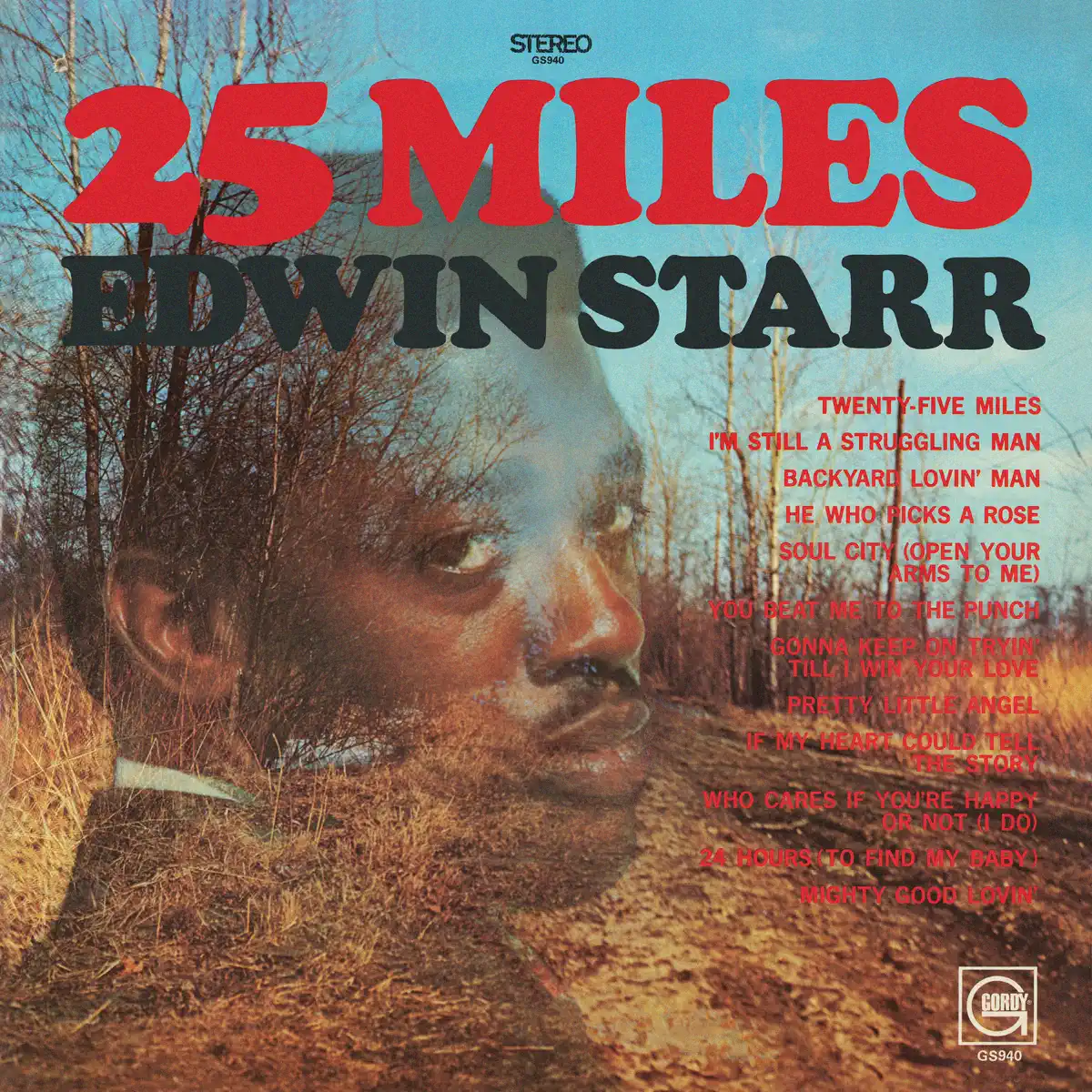 Edwin Starr released his second album, 25 Miles, in April 1969 on Gordy.
The album carries the hard-accented title single into a program of Motown writer-producer material and catalog repertory. Starr wrote or co-wrote two of the twelve songs: “Twenty-Five Miles” and “24 Hours (To Find My Baby).” The album also includes songs popularized by Mary Wells (“You Beat Me to the Punch”) and The Miracles (“Mighty Good Lovin’”).
“Twenty-Five Miles” marches through counted-distance lines, footsore callouts, and a heavy, club-ready backbeat. “I’m Still a Struggling Man” pleads through glossy verses before the chorus roughens with thicker ensemble response. “Soul City (Open Your Arms to Me)” glides through silvery chorus lift and soft-edged replies.
A1. “Twenty-Five Miles” (2:59) – Bristol, Fuqua, Starr
A2. “I’m Still a Struggling Man” (2:25) – McNeil, Bristol
A3. “Backyard Lovin’ Man” (2:28) – Richards, Dean
A4. “He Who Picks a Rose” (2:28) – Whitfield, Holland, Smiley
A5. “Soul City (Open Your Arms To Me)” (2:39) – Morris
A6. “You Beat Me to the Punch” (2:31) – Robinson, White
B1. “Gonna Keep on Tryin’ Till I Win Your Love” (2:48) – Whitfield, Strong
B2. “Pretty Little Angel” (2:15) – Paul, Wonder, Valvano
B3. “If My Heart Could Tell the Story” (2:28) – Dean, Weatherspoon
B4. “Who Cares If You’re Happy or Not (I Do)” (2:46) – Dean, Weatherspoon, Holland
B5. “24 Hours (To Find My Baby)” (2:40) – Starr
B6. “Mighty Good Lovin’” (2:44) – Robinson
Motown built the album around the January 1969 title single, which Johnny Bristol and Harvey Fuqua produced. Bristol produced the follow-up “I’m Still a Struggling Man,” and Henry Cosby produced its B-side, “Pretty Little Angel.”
Gordy lifted “Twenty-Five Miles” as a January 1969 single (b/w “Love Is My Destination”), which reached No. 6 on the Billboard Hot 100 chart, No. 6 on the Billboard R&B chart, and No. 36 on the UK singles chart. “I’m Still A Struggling Man” followed in May 1969 (b/w “Pretty Little Angel”) and reached No. 80 on the Billboard Hot 100 chart and No. 27 on the Billboard R&B chart.
25 Miles reached No. 73 on the Billboard Top LPs chart and No. 9 on the Billboard R&B LPs chart.
Just We Two
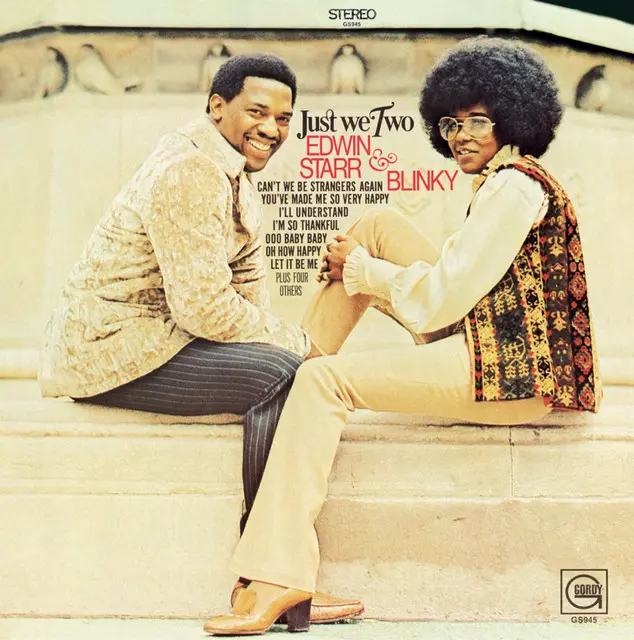 Edwin Starr and Blinky released the duet album Just We Two in September 1969 on Gordy.
The album presents Starr and Blinky in duet settings, with alternating lead lines, close-harmony replies, and mid-tempo ballad material. The program draws from recent Motown repertory, Stax songwriting, and earlier pop sources. Starr revisits “Oh How Happy,” first cut as a 1966 hit by the Shades of Blue. The pair recasts the ubiquitous “You’ve Made Me So Very Happy” and songs associated with Gilbert Bécaud, the Everly Brothers, the Miracles, and the Soul Children.
“You’ve Made Me So Very Happy” settles into a compact duet ballad, with Starr’s grainier lead entries answered by Blinky’s brighter line and both voices climbing into the title refrain. “Oh How Happy” brightens the pair through sugar-bright refrain motion and a light step. “I’m Glad You Belong to Me” lopes over rhythm-guitar accents while the two leads answer across fuller backing. “I’ll Understand” tightens the exchange into shorter call-and-reply phrases. “Ooo Baby Baby” softens the close with velvet-edged phrasing and a two-voice contour around the title line.
A1. “You’ve Made Me So Very Happy” (2:59) – Gordy, B. Holloway, P. Holloway, Wilson; originated by Brenda Holloway as a 1967 Tamla single and popularized by Blood, Sweat & Tears during 1969
A2. “I’m So Thankful” (3:00) – Gordon, Wilson
A3. “Oh How Happy” (2:39) – Hatcher
A4. “Let It Be Me” (2:58) – Bécaud, Curtis, Delanoë
A5. “I’m Glad You Belong to Me” (2:56) – Christiansen, Grant, Morris, Penzabene
A6. “I’ll Understand” (2:12) – Hayes, Porter
B1. “We’ll Find A Way” (2:40) – Hunter, Verdi
B2. “Sweet Joy Of Life” (2:16) – Dean, Lussier
B3. “Can’t We Be Strangers Again” (2:27) – H. Lewis, K. Lewis
B4. “I See a Rainbow” (2:23) – H. Lewis, K. Lewis
B5. “Ooo Baby Baby” (2:35) – Moore, Robinson
Frank Wilson produced the album. The Funk Brothers provide the instrumentation, with James Jamerson named on bass.
Curtis McNair directed the cover package. Ken Kim designed the album, with photography by Jerry Dempnock. The sleeve shows Starr and Blinky seated on steps as both look toward the camera.
Gordy issued “Oh How Happy” in July 1969 (b/w “Ooo Baby Baby”), which reached No. 96 on the Billboard Hot 100 chart.
War & Peace
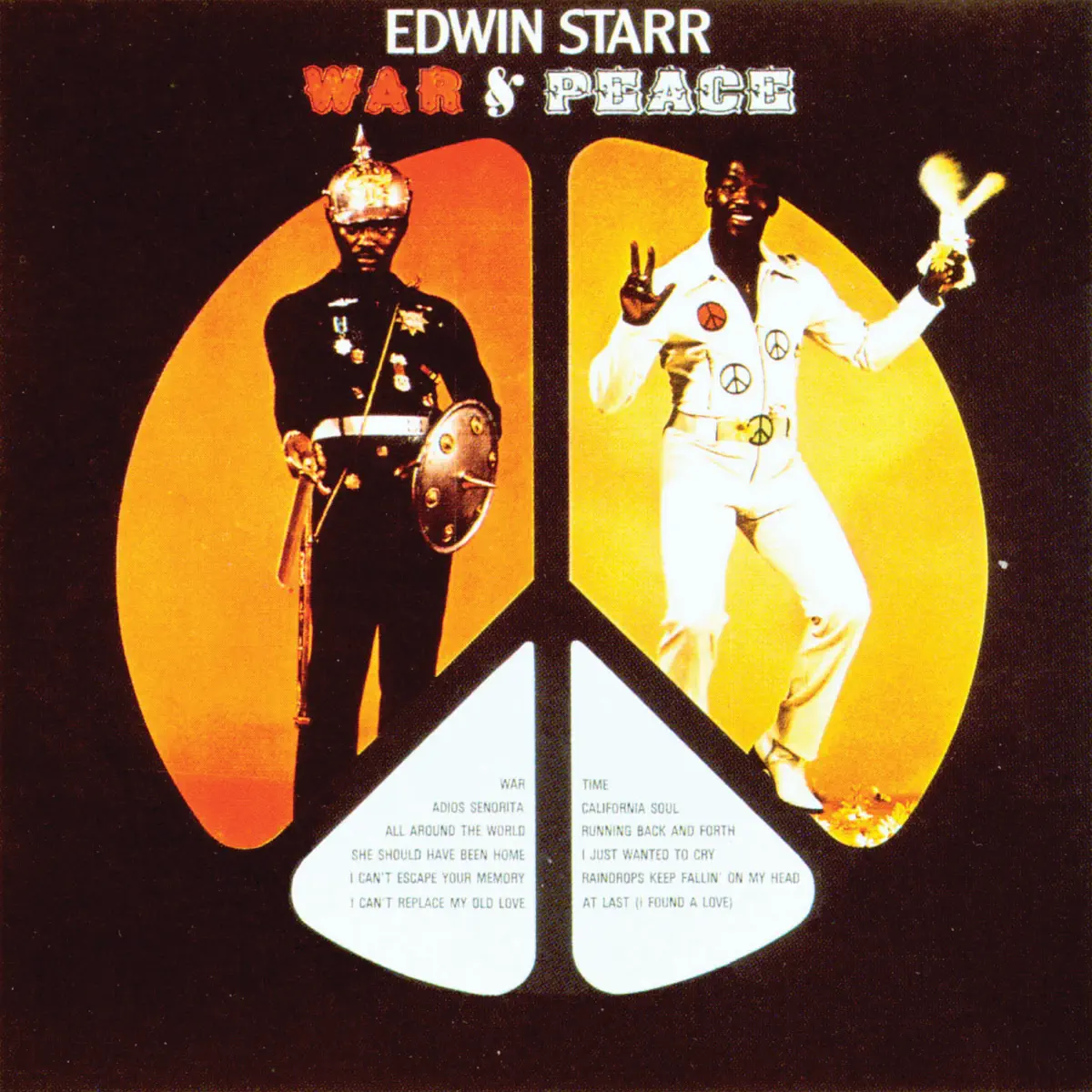 Edwin Starr released his third solo album, War & Peace, in August 1970 on Gordy.
The album carries the title theme through twelve Motown-cut tracks split between hard-accented single material, mid-tempo songs, and outside repertory. Starr wrote or co-wrote “Running Back And Forth,” “I Just Wanted To Cry,” and “Time.” The album also contains songs by Norman Whitfield and Barrett Strong (“War”), Burt Bacharach and Hal David (“Raindrops Keep Fallin’ On My Head”), and Nickolas Ashford and Valerie Simpson (“California Soul”).
“War” barks through shouted title replies, brassy punctuation, and a hard backbeat under Starr’s raw lead. “Running Back and Forth” stomps through quick romantic complaints with short refrain returns and compact Motown-era drive. “Adios Senorita” glides on a lighter Latin-touched sway, with Starr easing the farewell line into a brighter chorus. “All Around the World” circles around a buzzing keyboard figure and brassy accents. “Time” races through impatient lead phrases, a hyperactive low-end line, and a speeding saxophone break. “California Soul” broadens the chorus with polished ensemble lift and a smoother late-sixties cadence.
A1. “War” (3:20) – Whitfield, Strong
A2. “Running Back and Forth” (2:46) – Starr, Wylie
A3. “Adios Senorita” (2:31) – Cosby, Moy
A4. “All Around the World” (3:10) – Turner
A5. “I Can’t Escape Your Memory” (2:59) – Hunter, Goga
A6. “At Last (I Found a Love)” (2:48) – M. Gaye, A. Gaye, Stover
B1. “I Just Wanted to Cry” (3:10) – Starr, Bristol
B2. “Raindrops Keep Fallin’ On My Head” (3:29) – Bacharach, David
B3. “Time” (2:54) – Starr, Wylie
B4. “California Soul” (4:03) – Ashford, Simpson
B5. “I Can’t Replace My Old Love” (4:17) – Fuqua, Scott, Williams
B6. “She Should Have Been Home” (3:07) – Bristol, McNeil
The album continues Starr’s multi-producer Gordy period, with productions by Starr, Johnny Bristol, Harvey Fuqua, Henry Cosby, Norman Whitfield, and Ivy Jo Hunter. Whitfield produced “War” after first cutting the song with the Temptations for Psychedelic Shack. The arrangements involve David Van DePitte, Henry Cosby, Paul Riser, Wade Marcus, and Willie Shorter.
Curtis McNair directed and designed the cover package. The front sleeve splits Starr between a dark military costume and a white suit with peace-symbol patches, with the two figures placed inside a large peace-sign frame.
Gordy issued “Time” in February 1970 (b/w “Running Back And Forth”), which reached No. 117 on Billboard’s Bubbling Under the Hot 100 chart and No. 39 on the Billboard R&B chart. “War” followed in June 1970 (b/w “He Who Picks A Rose”) and reached No. 1 on the Billboard Hot 100, No. 3 on the Billboard R&B chart, and No. 3 on the UK singles chart.
War & Peace reached No. 52 on the Billboard 200 and No. 9 on the Billboard R&B Albums chart.
Involved
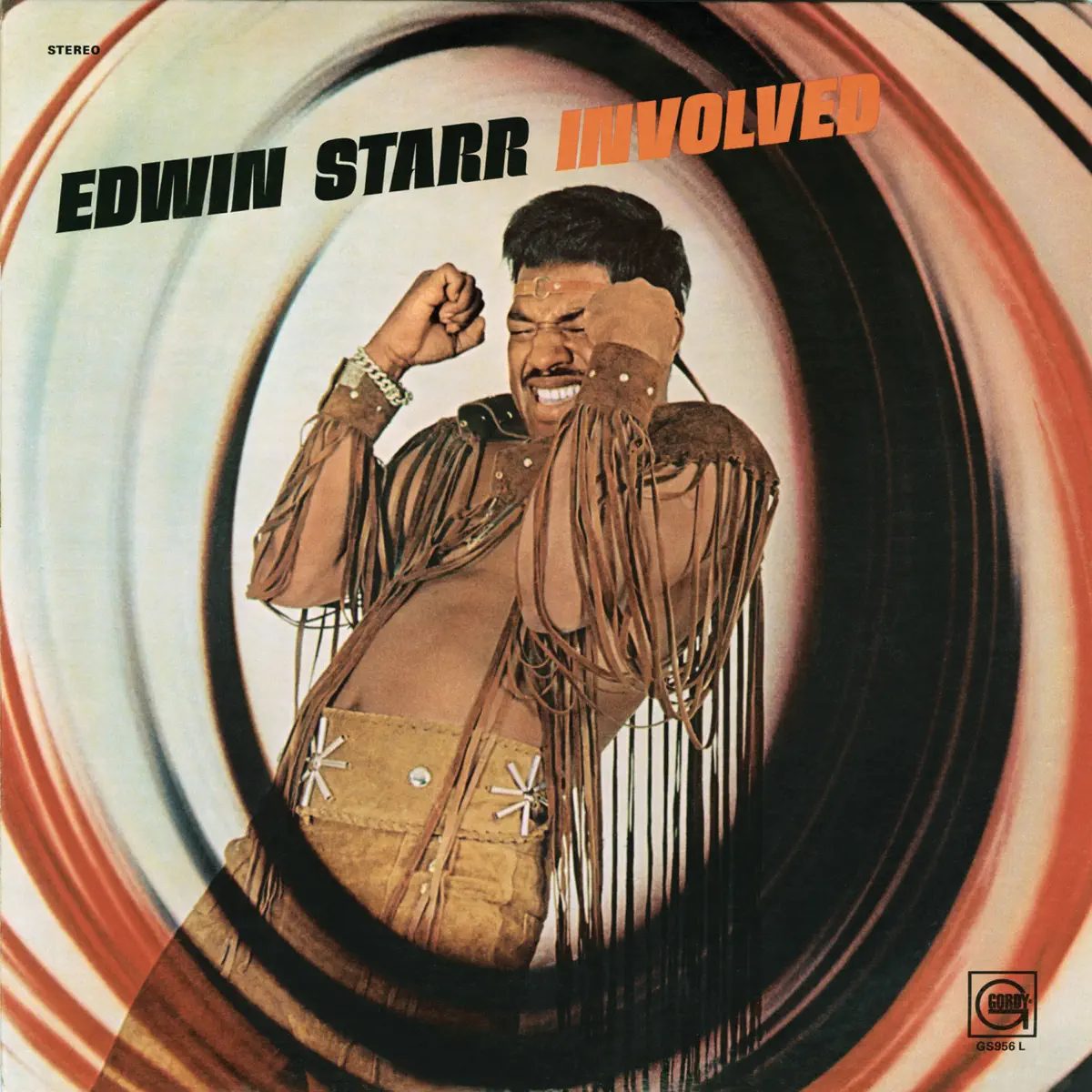 Edwin Starr released his fourth solo album, Involved, in 1971 on Gordy.
The album centers on Norman Whitfield and Barrett Strong material, with five Whitfield–Strong songs across eight tracks. Starr reprises “War,” extends “Ball of Confusion (That’s What The World Is Today)” into a side-length statement, and pairs “Stop The War” with songs popularized by the Temptations, the Miracles, Sly and the Family Stone, and George Harrison.
“War” erupts through call-and-response shouts, hard brass accents, and Starr’s most forceful declamatory lead. “Ball of Confusion (That’s What the World Is Today)” unspools into an extended protest suite, with spoken fragments, ensemble chants, and long vamp sections. “Funky Music Sho Nuff Turns Me On” lunges through clipped title calls and quick response phrases.
“Stop the War Now” testifies through a repeated command, with Starr driving each return harder into the chorus. “Cloud Nine” pushes social-report lines through a churning arrangement and sharp group replies. “Stand” chants its title as a communal command over a firm, handclap-ready backbeat. “Way Over There” settles into a slower plea with rounded chorus answers. “My Sweet Lord” cools the close into mellow devotional pacing, with Starr lowering the force of the lead line around repeated title phrases.
A1. “War” (3:12) – Whitfield, Strong
A2. “Ball of Confusion (That’s What the World Is Today)” (12:45) – Whitfield, Strong
A3. “Funky Music Sho Nuff Turns Me On” (2:59) – Whitfield, Strong
B1. “Stop The War” (3:24) – Whitfield, Strong
B2. “Cloud Nine” (3:24) – Whitfield, Strong
B3. “Stand” (3:20) – Stewart
B4. “Way Over There” (2:42) – Robinson
B5. “My Sweet Lord” (3:50) – Harrison
Whitfield produced Involved as a full-album extension of the social-theme material around “War” and “Stop The War Now.” Van DePitte and Riser returned as arrangers, giving the album a narrower production profile than War & Peace.
Curtis McNair directed the cover package with cover photography by Jim Hendin. The sleeve places Starr inside concentric circular bands, dressed in a brown fringed outfit with his right fist raised.
Gordy issued “Stop The War Now” in November 1970 (b/w “Gonna Keep On Tryin’ Till I Win Your Love”), which reached No. 26 on the Billboard Hot 100, No. 5 on the Billboard R&B chart, and No. 33 on the UK singles chart. “Funky Music Sho Nuff Turns Me On” followed in March 1971 (b/w “Cloud Nine”) and reached No. 64 on the Billboard Hot 100 and No. 6 on the Billboard R&B chart.
Involved reached No. 178 on the Billboard 200 and No. 45 on the Billboard R&B Albums chart.
Hell Up in Harlem
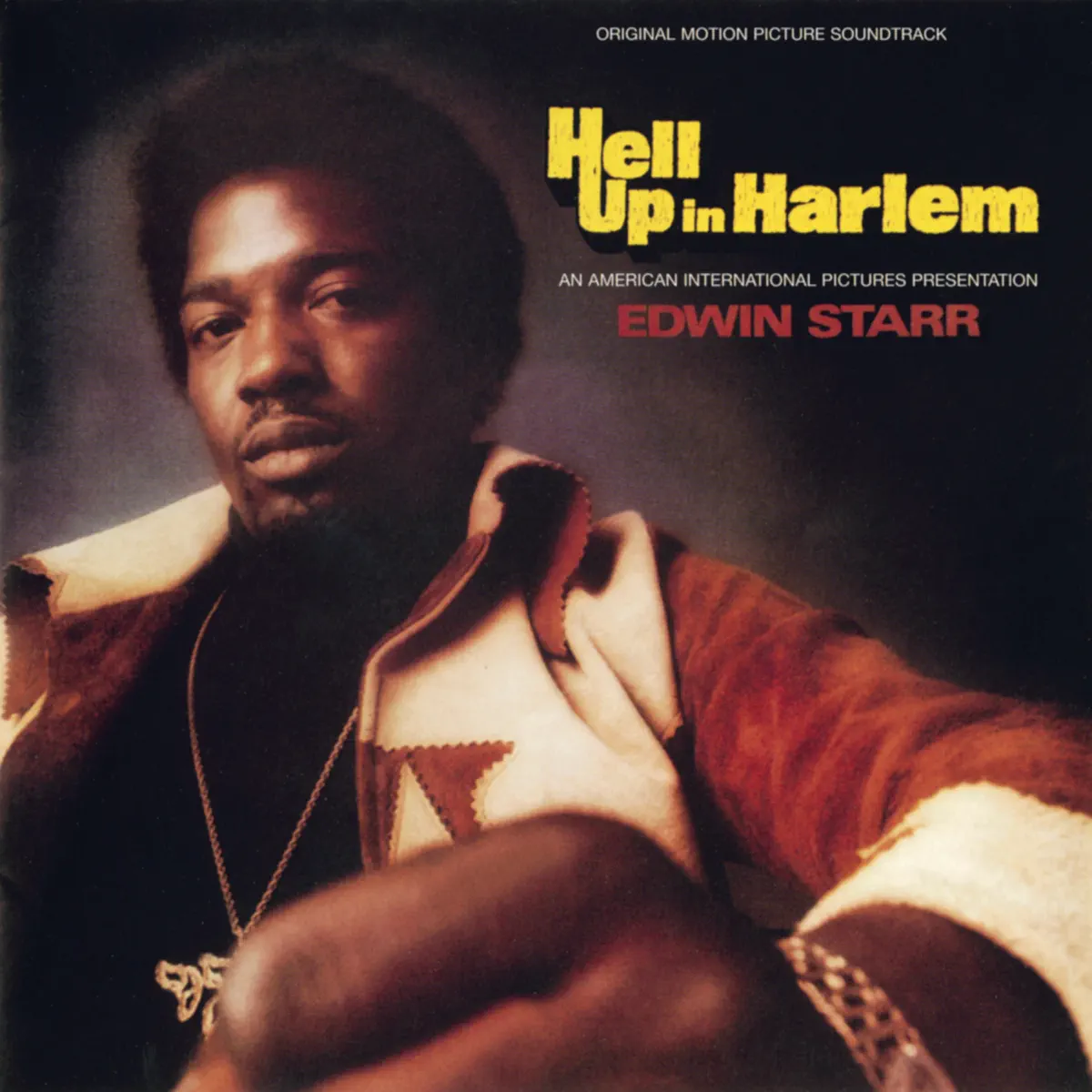 In January 1974, Motown issued Hell Up in Harlem, a soundtrack album by Edwin Starr for director Larry Cohen’s American International Pictures film starring Fred Williamson, Julius W. Harris, Gloria Hendry, Margaret Avery, and D’Urville Martin.
Hell Up in Harlem was composed, arranged, conducted, and produced by Fonce Mizell and Freddie Perren. The album divides between Starr vocal tracks and instrumental cues tied to character themes, chase scenes, and transitional action. The title song, “Easin’ In,” “Big Papa,” “Don’t It Feel Good To Be Free,” “Runnin’,” “Mama Should Be Here Too,” and “Like We Used To Do” carry Starr’s lead line across clipped rhythm tracks and brass-lined refrains, while “Jennifer’s Love Theme” and “Airport Chase” place the score’s cue material in shorter instrumental form. The closing instrumental reprise returns the title theme without Starr’s voice.
“Ain’t It Hell Up in Harlem” prowls through a raw-edged title chant, short brass punches, and Starr’s clipped street-report lead. “Easin’ In” coasts from its break into low-slung instrumental motion, with the main figure held tight for chase-scene traction. “Big Papa” struts through a blunt character theme, with Starr’s shouted address set against hard ensemble punctuation. “Love Never Dies (Helen’s Love Theme)” sighs through slower strings and a softened lead line. “Don’t It Feel Good to Be Free” lifts its title question into a brighter chorus with clean release after the verse. “Runnin’” chases a clipped action cue with short repeated figures and tense forward motion. “Airport Chase” tightens the soundtrack material into brisk instrumental pursuit. “Like We Used to Do” settles into a lower-lit memory piece, with Starr easing the line into a restrained refrain.
A1. “Ain’t It Hell Up In Harlem” (2:39) — Freddie Perren
A2. “Easin’ In” (3:14) — Freddie Perren
A3. “Big Papa” (2:55) — Freddie Perren
A4. “Love Never Dies (Helen’s Love Theme)” (3:34) — Christine Yarian, Freddie Perren
A5. “Don’t It Feel Good to Be Free” (2:43) — Freddie Perren
B1. “Runnin’” (2:41) — Fonce Mizell, Freddie Perren
B2. “Jennifer’s Love Theme” (3:04) — Fonce Mizell
B3. “Airport Chase” (2:36) — Fonce Mizell, Freddie Perren
B4. “Mama Should Be Here Too” (3:06) — Fonce Mizell
B5. “Like We Used to Do” (2:54) — Fonce Mizell
B6. “Ain’t It Hell Up In Harlem (Instrumental)” (3:05) — Freddie Perren
Fonce Mizell and Freddie Perren recorded and remixed the album at Motown/Hitsville U.S.A. Recording Studios with engineer Art Stewart. The sessions include Starr with bassists Chuck Rainey, James Jamerson, and Jim Hughart; drummer Ed Greene; guitarists Dennis Coffey, Greg Poree, and Jay Graydon; keyboardists Jerry Peters, Joe Sample, and Mike Melvoin; harpist Larry Mizell; conga player Joe Clayton; and percussionists Jack Arnold, Gary Coleman, Sandra Crouch, and Gene Estes.
Jim Britt designed and photographed the cover package. The front sleeve uses a film-still montage with Starr’s name and the album title set above action images from the picture.
Cohen wrote, produced, and directed Hell Up in Harlem as the sequel to the 1973 film Black Caesar. The story resumes after Tommy Gibbs survives the attempt on his life and regains the ledgers that document payments to corrupt police and political figures. Papa Gibbs helps Tommy escape from Harlem Hospital, and Tommy rebuilds his operation while he uses the ledgers against District Attorney James DiAngelo. The plot shifts through Harlem drug-war scenes, the death of Helen Bradley, Tommy’s break with Papa, and a Los Angeles interlude with Sister Jennifer. After Zach kills Papa and DiAngelo’s men kidnap Tommy’s son, Tommy returns to New York and then Los Angeles for the final killings, while Reverend Rufus dies during the last confrontation with DiAngelo.
Motown issued “Ain’t It Hell Up In Harlem” as a December 1973 single (b/w “Don’t It Feel Good To Be Free”). In April 1974, “Big Papa” became the second US single (b/w “Like We Used To Do”).
Free to Be Myself
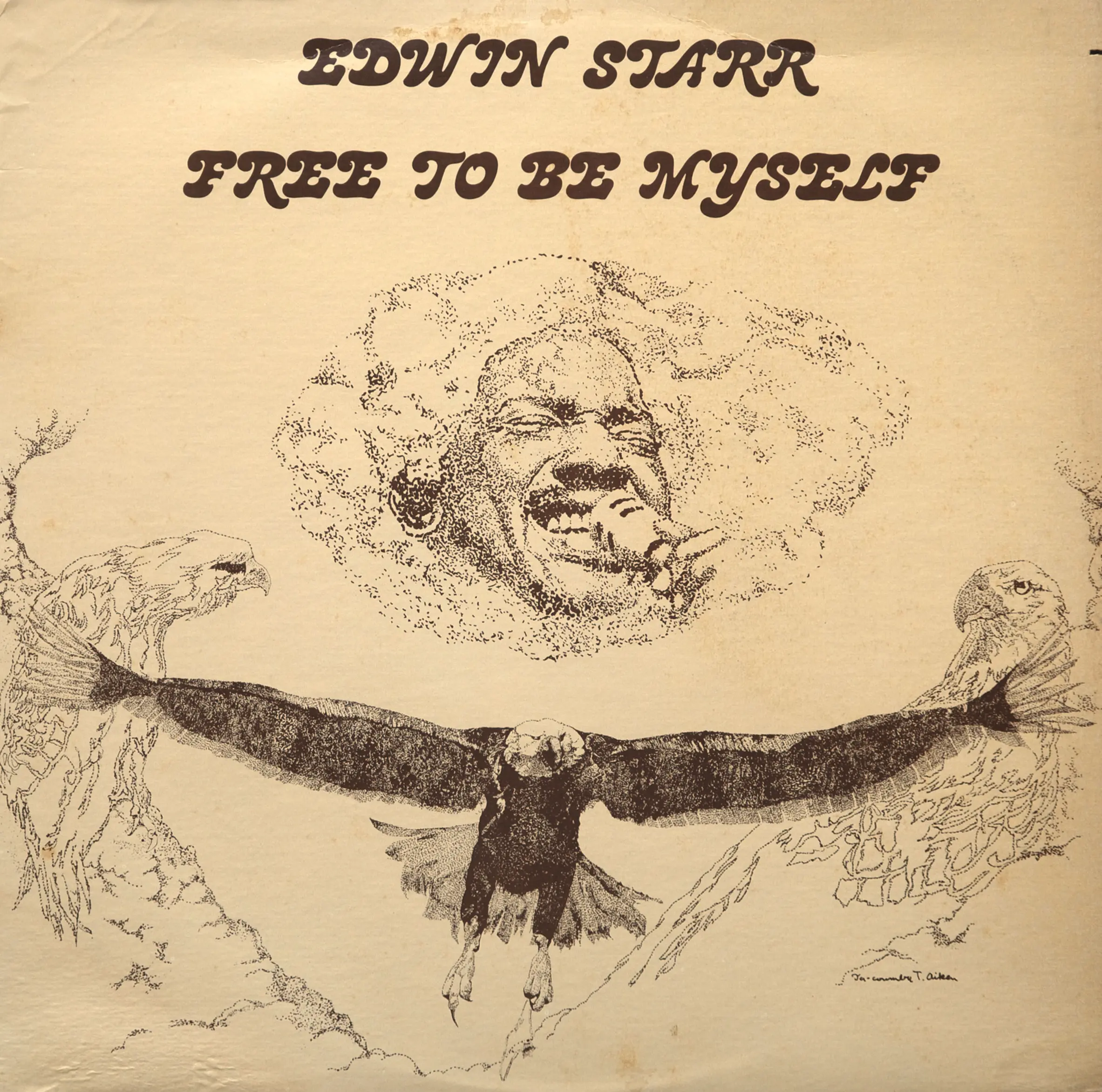 Edwin Starr released Free to Be Myself in 1975 on Granite.
The album presents Starr as writer, producer, and arranger across a self-contained soul-funk program with the Dynamic Concept and backing-vocal trio Splendeur. Starr wrote nine of the ten songs, with Steve Stone joining him on “Another Song For You.”
“Stay With Me” leans into Starr’s rough-voiced plea, with short refrain returns and a compact backbeat. “Abyssinia Jones” prowls through a swampy chant pattern, with the counted backing reply setting up Starr’s comic answer. “Toys” brightens the sequence with a tighter refrain and lighter ensemble punctuation. “Best of My Past” sways through blues-edged guitar phrases and a lower-lit lead line. “Beginning” curls Latin-tinged accents around a warmer chorus shape. “Pain” breaks the title into clipped calls and strained replies.
A1. “Stay With Me” (2:45) – Starr
A2. “Abyssinia Jones” (5:58) – Starr
A3. “Toys” (2:37) – Starr
A4. “Drunk Annie” (3:24) – Starr
A5. “Rainbow” (2:28) – Starr
B1. “Another Song for You” (3:27) – Starr, Stone
B2. “Best of My Past” (6:54) – Starr
B3. “Beginning” (4:34) – Starr
B4. “Pain” (2:35) – Starr
B5. “Party” (2:38) – Starr
Starr produced and arranged Free to Be Myself at Total Experience Studios with engineer Larry Miles and assistant Steve Pouliot. Steve Stone co-produced “Another Song For You,” and Larry Muhoberac arranged the song. Muhoberac also arranged strings for “Stay With Me” and “Abyssinia Jones,” with horn arrangements on “Drunk Annie” and “Rainbow.”
The Dynamic Concept features bassist Rick Soo, drummer-percussionist William Reed, guitarist Arthur Biggs Woodard, reedists Ronald Jackson and Sonny Johnson, and trumpeters Gregory Davis and Samuel James. Splendeur consists of Mary Stapleton, Narvelan Hunt, and Phyllis Stapleton.
Free to Be Myself appeared in a cover package directed and illustrated by Ta-coumba T. Aiken.
Granite issued “Pain” as a May 1975 single (b/w “I’ll Never Forget You”), which reached No. 25 on the Billboard R&B chart. “Stay With Me” followed in September 1975 (b/w “Party”) and reached No. 51 on the Billboard R&B chart. “Abyssinia Jones” appeared in December 1975 (b/w “Beginning”) and reached No. 98 on the Billboard Hot 100 and No. 25 on the Billboard R&B chart.
Free to Be Myself reached No. 43 on the Billboard R&B Albums chart.
Afternoon Sunshine / Edwin Starr
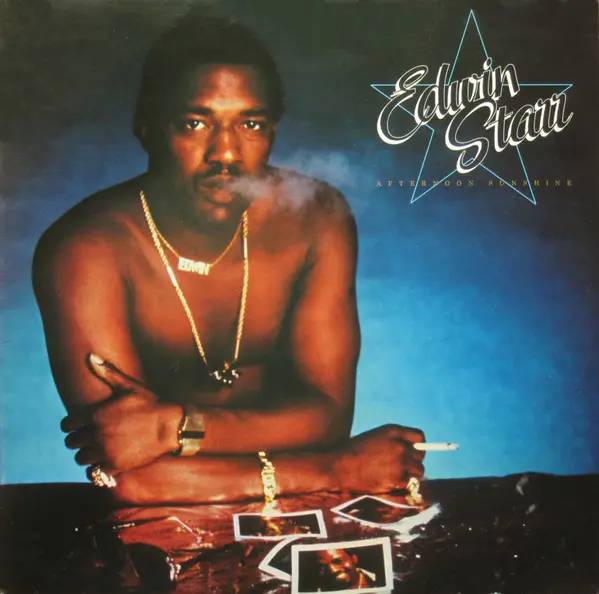 Edwin Starr released Afternoon Sunshine in 1976 on GTO.
The album places Starr in a UK-cut setting with arranged rhythm sections, percussion layers, and orchestral additions around his lead line. The program contains eight Starr songs, the Pip Williams title sequence, and the Starr–Pete Wingfield song “Not Having You.” In 1977, 20th Century issued the same album in the US as Edwin Starr, with the same running order and a retitled sleeve.
“Overture: Afternoon Sunshine / Afternoon Sunshine” eases from a formal opening into a sunlit title refrain with Starr placed in a smoother register. “Pretty Girl” coasts on clipped verse phrasing and a clean chorus return. “Ruby Begonia” struts through a brighter comic line and crisp backing replies. “Eavesdropper” shadows its title with lower-lit verses and tighter response phrases. “I Just Wanna Do My Thing” rides an extended dance-floor backbeat, with Starr repeating the title as a blunt self-declaration. “Not Having You” settles into a slower plea with a rounded refrain.
A1a. “Overture: Afternoon Sunshine” (2:29) – Williams
A1b. “Afternoon Sunshine” (4:51) – Williams
A2. “Pretty Girl” (3:34) – Starr
A3. “Ruby Begonia” (4:04) – Starr
A4. “Eavesdropper” (3:45) – Starr
A5. “I Just Wanna Do My Thing” (5:17) – Starr
B1. “Mr. Davenport And Mr. James” (4:05) – Starr
B2. “Not Having You” (5:24) – Starr, Wingfield
B3. “Accident” (3:14) – Starr
B4. “Everybody Needs Love” (4:12) – Starr
B5. “Edge of Insanity” (3:17) – Starr
Starr and Mike Vernon produced Afternoon Sunshine with Pip Williams arranging and conducting the sessions. Engineers Barry Hammond and Dave Grinsted worked with John Eden on the recording and remixing. The album lists Chipping Norton, Marquee, and Cherokee among its recording and mixing studios.
The sessions include bassist Delisle Harper, drummers Simon Phillips and Steve Ferrone, drummer-percussionist Glenn Lefleur, guitarists Chuck Middleton and Pip Williams, keyboardists Pete Wingfield and Geoff Westley, percussionists Richard Bailey and Frank Ricotti, percussionist Brother James, fiddler Graham Preskett, and backing singers George Chandler, Jacquie Sullivan, and Joy Yates.
Norman Moore designed the cover package with photography by Paddy Eckersley. The 20th Century Edwin Starr issue reused the Moore/Eckersley credit profile for its US presentation.
GTO issued “Accident” as an August 1976 UK single (b/w “Eavesdropper”). In 1977, 20th Century lifted “I Just Wanna Do My Thing” as a US single (b/w “Mr. Davenport And Mr. James”), which reached No. 94 on the Billboard R&B chart and No. 28 on the Billboard Dance chart.
Clean
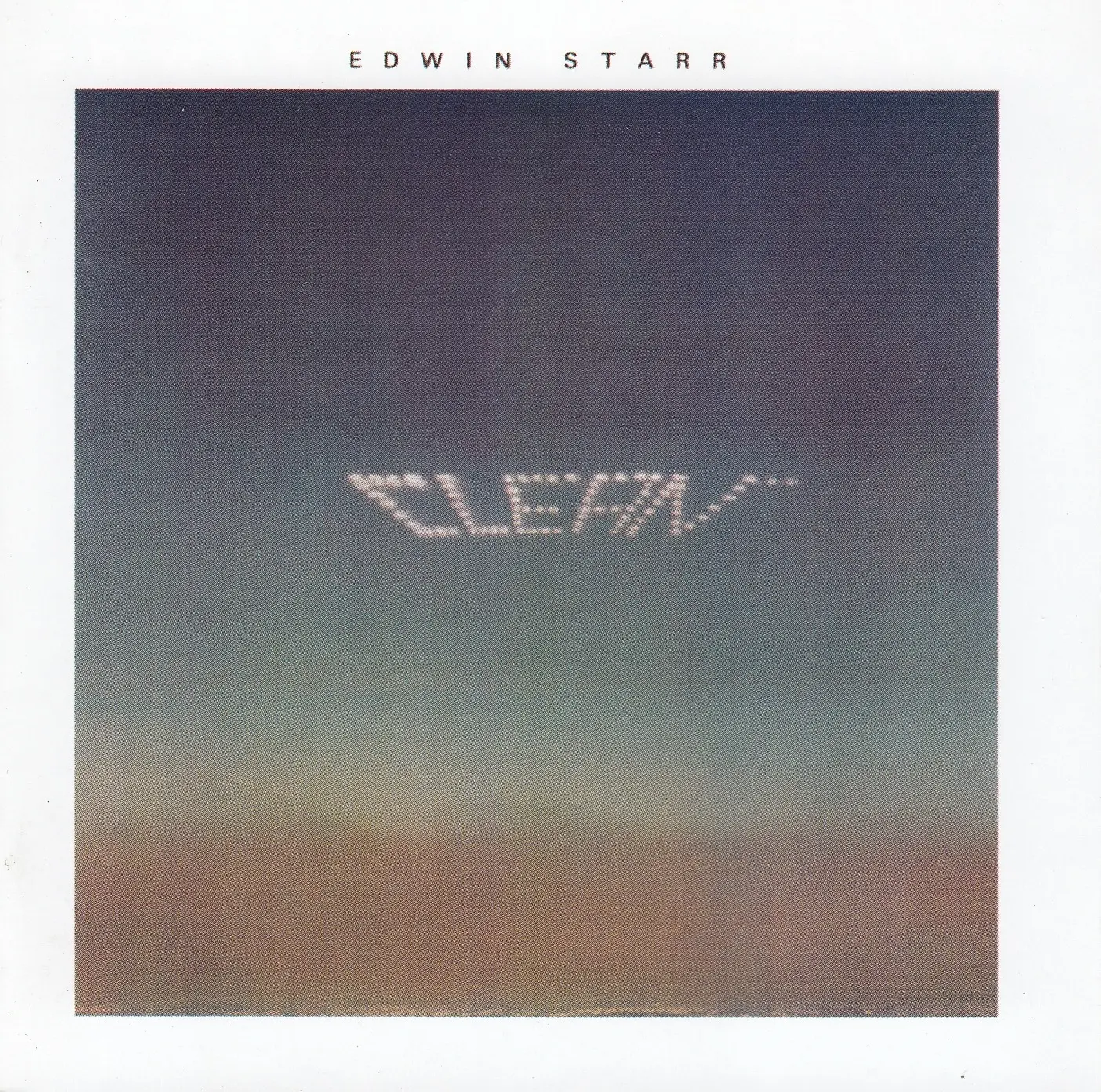 Edwin Starr released Clean in 1978 on 20th Century Fox.
The album pairs Starr with Lamont Dozier across seven extended 20th Century tracks. Starr wrote or co-wrote six songs, while Dozier wrote “Storm Clouds On The Way” and co-wrote “Jealous” with Starr and Lester Higgins.
“I’m So Into You” glides through a sleek dance backbeat, with brass accents giving Starr’s lead line a sharper edge. “Jealous” smolders at a lower temperature, with the verse phrasing pulled closer to late-night confession. “Contact” locks into an extended club vamp, with the title phrase returning as a repeated body-to-body command. “Storm Clouds on the Way” warns through relationship lines and a darker chorus turn. “Don’t Waste Your Time” pleads over a broad mid-tempo ballad cadence. “Working Song” pounds harder, with Starr pushing the relationship lyric through strident horn punctuation and a forceful final chorus.
A1. “I’m So Into You” (4:28) – Starr
A2. “Jealous” (4:04) – Starr, Dozier, Higgins
A3. “Contact” (7:12) – Starr, Puhan, Dickerson
B1. “Storm Clouds On The Way” (4:22) – Dozier
B2. “Don’t Waste Your Time” (3:59) – Starr, Roberts
B3. “Music Brings Out The Beast In Me” (4:26) – Starr, Kyle
B4. “Working Song” (7:31) – Starr, Puhan, Dickerson
Starr produced “I’m So Into You,” “Contact,” and “Working Song.” Dozier produced the remaining four tracks and shared rhythm-arrangement duties with Ronald Coleman. Bob D’Orleans and Rik Pekkonen engineered the album. Rick Hart and Rick Gianatos mixed the Starr-produced tracks.
The sessions include bassist Ed Watkins, drummer James Gadson, guitarists Charles Fearing, David T. Walker, and Greg Poree, keyboardists John Barnes and Ronald Coleman, and percussionists Gary Coleman, Paulinho Da Costa, and Shonda Akiem.
Joey Reynolds directed the sleeve art, and George Goad designed the cover. The front cover places the album title in dotted white type inside a blue-gray square frame.
20th Century Fox issued “I’m So Into You” in 1978 (b/w “Don’t Waste Your Time”). “Contact” followed in December 1978 (b/w “Don’t Waste Your Time”) and reached No. 65 on the Billboard Hot 100, No. 13 on the Billboard R&B chart, No. 1 on the Billboard Disco chart, and No. 6 on the UK singles chart.
Clean reached No. 80 on the Billboard 200 and No. 22 on the Billboard R&B Albums chart.
H.A.P.P.Y. Radio
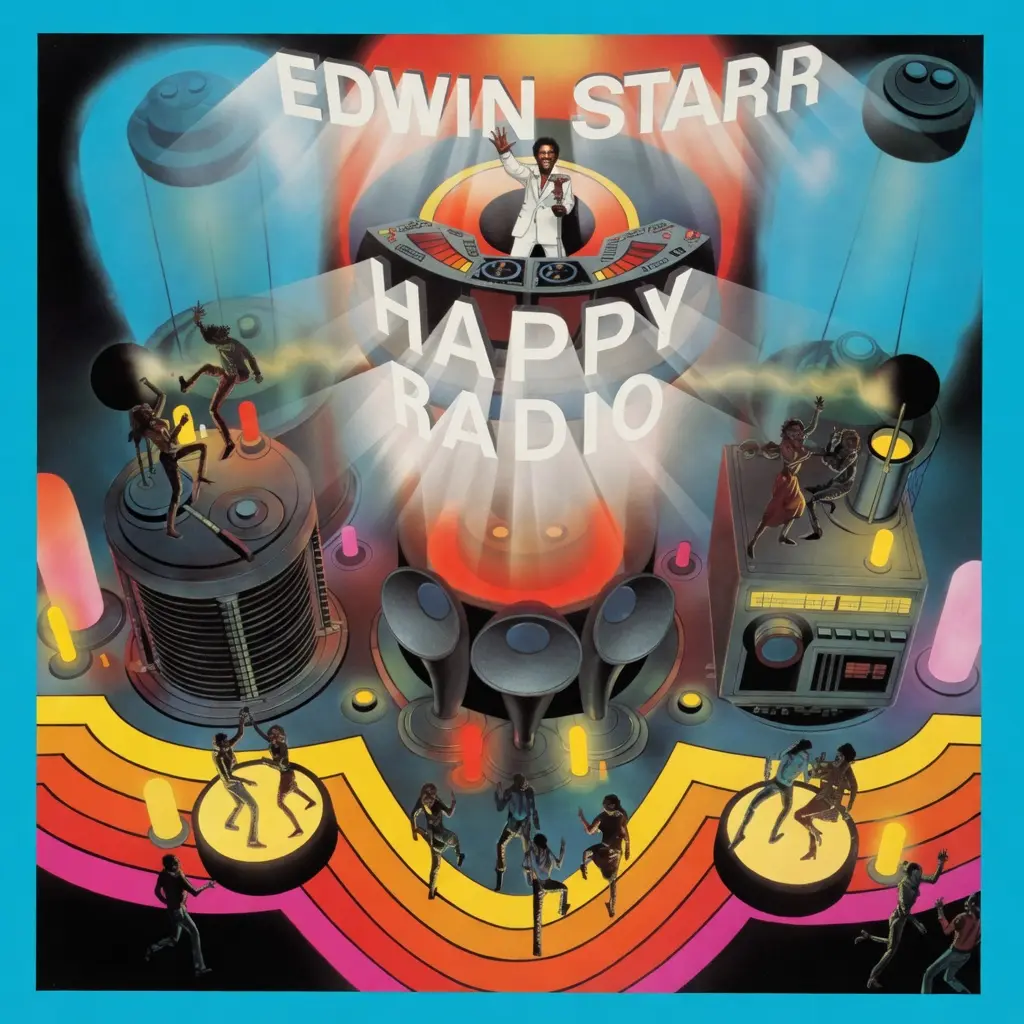 Edwin Starr released H.A.P.P.Y. Radio in 1979 on 20th Century Fox.
The album continues Starr’s self-produced 20th Century run with seven songs across two LP sides. Starr wrote six songs and co-wrote “It’s Called The Rock” with Spike Edney.
“H.A.P.P.Y. Radio” beams through spelled title chants, bright replies, and a steady dance backbeat under Starr’s open-throated lead. “Rip Me Off” clips the complaint into short verse phrases and blunt chorus returns. “It’s Called the Rock” struts from an Afro-dance opening into a steadier rock-steady pattern, with Starr set against female backing replies. “I’d Rather Fight Than Switch” locks into a firm backbeat while Starr hammers the title phrase as a stubborn declaration. “Drown My Heart” sways through a lower-lit plea and a rounded refrain. “Patiently” resolves the set with warmer pacing, softer line endings, and a measured chorus lift.
A1. “H.A.P.P.Y. Radio” (6:45) – Starr
A2. “Rip Me Off” (4:13) – Starr
A3. “It’s Called The Rock” (7:25) – Starr, Edney
B1. “I’d Rather Fight Than Switch” (4:12) – Starr
B2. “Drown My Heart” (3:34) – Starr
B3. “My Friend” (3:56) – Starr
B4. “Patiently” (4:34) – Starr
Starr produced and arranged the album. David Stout arranged horns on “H.A.P.P.Y. Radio,” “Drown My Heart,” “My Friend,” and “Patiently.” Bob D’Orleans engineered five tracks, and Ty Blair engineered “Rip Me Off” and “I’d Rather Fight Than Switch.” Rick Gianatos, Jack Rouben, and Brian Malouf handled the mixes.
The sessions include bassist J. Roberts, drummers Mark Singer and R. Reed, guitarist L. Middleton, reed and horn players David Stout, Harry Kim, Hush Preston, Joel Peskin, E. Hill, Andy Hamilton, Curt Sletten, and Kevin Peachy, percussionists Ed Fletcher and Singer, and backing singers the Waters.
Glen Christensen directed and designed the cover package. The front sleeve places Starr on a raised radio-console set, with dancers, spotlights, and large speaker forms around the title frame.
20th Century Fox lifted “H.A.P.P.Y. Radio” as a May 1979 single (b/w “My Friend”), which reached No. 79 on the Billboard Hot 100, No. 28 on the Billboard R&B chart, No. 7 on the Billboard Disco chart, and No. 9 on the UK singles chart. “It’s Called The Rock” followed in September 1979 (b/w “Patiently”).
H.A.P.P.Y. Radio reached No. 115 on the Billboard 200 and No. 44 on the Billboard R&B Albums chart.
Stronger Than You Think I Am
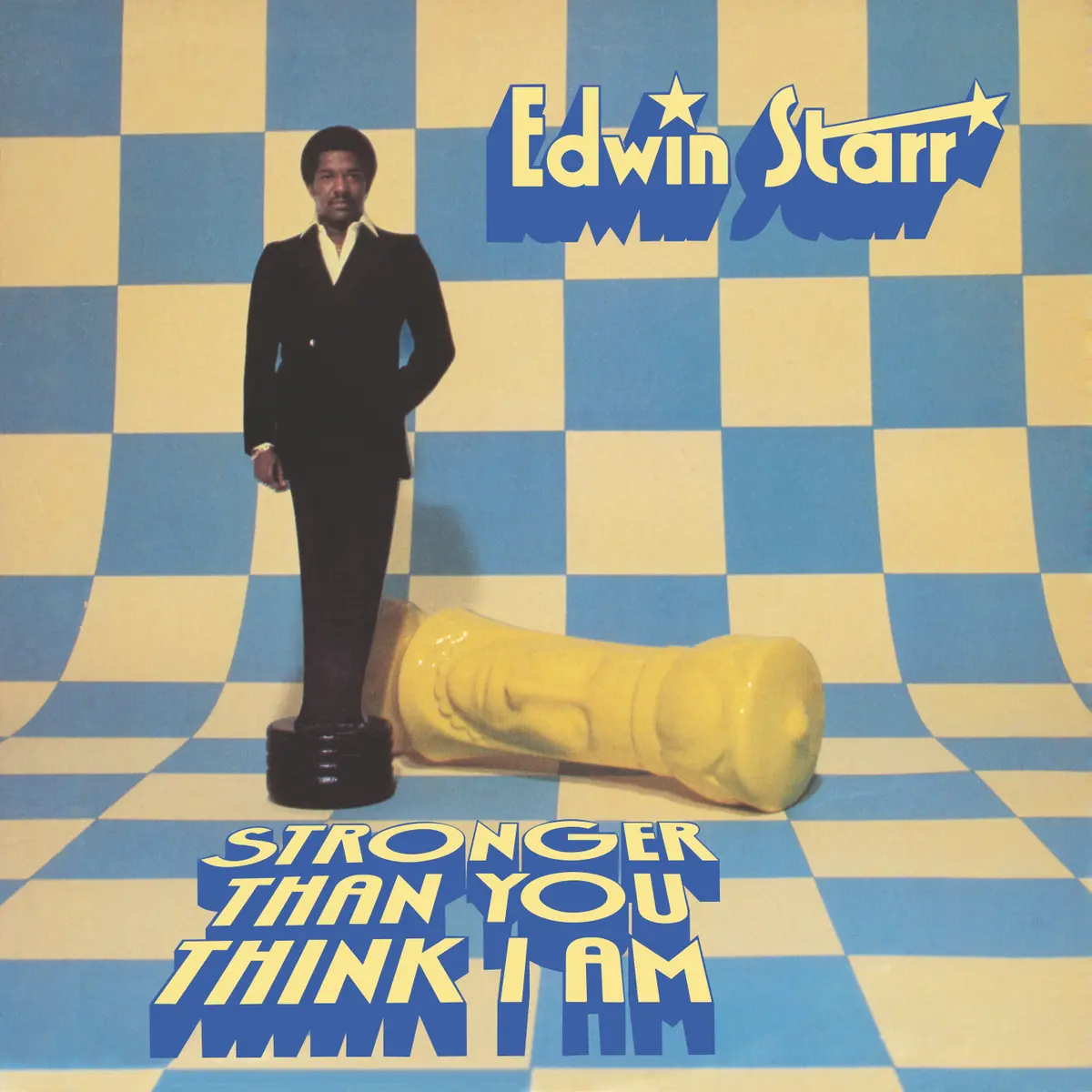 Edwin Starr released Stronger Than You Think I Am in 1980 on 20th Century Fox.
The album contains eight Starr compositions, with five compact side-one tracks and two extended side-two pieces before the closing “Boop Boop Song.” The title track extends Starr’s late-1970s single format into a longer side-two arrangement.
“Never Turn My Back on You” pleads through lively ballad pacing, with Starr’s throaty line rising into a broad-chorused promise. “Tell-a-Star” brightens the tempo with clipped title calls and quick ensemble replies. “Sweet” glides through a smoother courtship line and a softened refrain. “Upside of Down” bends its phrase shape around a playful title conceit and polished chorus return.
“Bigger and Better” punches its self-renewal line through a brisk, compact arrangement. “Stronger Than You Think I Am” expands into a longer declaration, with Starr working the title as reassurance and command. “Get Up-Whirlpool” whirls through an extended club vamp and repeated lift-off calls. “Boop Boop Song” chirps its nonsense syllables into a light, clipped refrain.
A1. “Never Turn My Back On You” (3:32) – Starr
A2. “Tell-A-Star” (3:30) – Starr
A3. “Sweet” (4:21) – Starr
A4. “Upside Of Down” (4:05) – Starr
A5. “Bigger And Better” (3:10) – Starr
B1. “Stronger Than You Think I Am” (6:10) – Starr
B2. “Get Up-Whirlpool” (8:20) – Starr
B3. “Boop Boop Song” (3:40) – Starr
Starr produced the album, with Michael Stewart producing “Tell-A-Star.” Starr and David Stout arranged the rhythm tracks for “Never Turn My Back On You,” “Upside Of Down,” and “Get Up-Whirlpool.” David Blumberg arranged rhythm parts for “Sweet,” “Bigger And Better,” and the title track. Patrick McDonald, Randy Tominaga, Rick Hart, and Rick Ruggieri engineered the sessions.
Walker and Gadson return from Clean, with Buzzy Feiten, Glenn Jones, and Ralph Hammer also on guitars. The album also includes bassists David Shields and Jimmy McAfee, drummer Melvin Webb, keyboardists Larry Farrow, Earl Van Dyke, Rick McAfee, and Ronald Coleman, synthesist Clark Spangler, percussionists Eddie Brown and Luke Metoyer, and backing singers Clifton Curtis, Maurice Young, Monroe Wright, the Waters, and William Clark.
Joe LaRusso designed and photographed the cover package with Starr. The front sleeve places Starr in a black suit on a chess piece above a blue-white checkerboard floor.
20th Century Fox issued “Stronger (Than You Think I Am)” as a January 1980 UK single (b/w “Stronger (Than You Think I Am) Instrumental”). The label issued “Tell-A-Star” in May 1980 (b/w “Boop Boop Song”) and “Get Up Whirlpool” in June 1980 (b/w “Stronger Than You Think I Am”).
For Sale
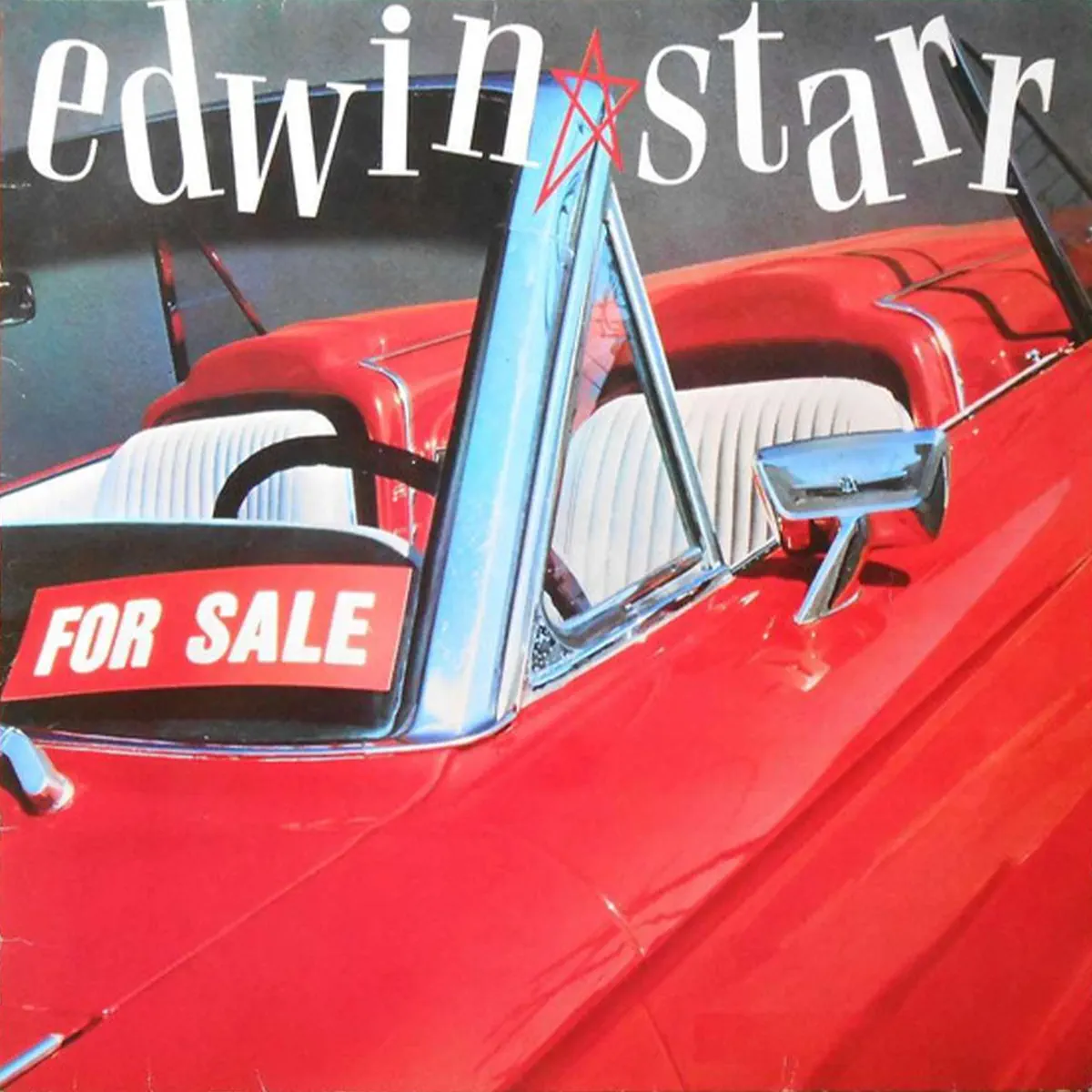 Edwin Starr released For Sale in 1983 on Avatar Communications.
The album presents eight self-produced tracks after Starr’s 20th Century period. Starr wrote or co-wrote the program, with Wayne Stallings and B. Macking credited on “Treat Her Right.”
“I Wanna Take You Home” charges through a brisk machine-set backbeat, with Starr pushing the title line as direct invitation. “Sweetest Thing” sweetens the tone into a shorter mid-tempo pledge and a clean refrain. “Crazy About You” leans into a faster courtship chant with clipped chorus returns. “Hit Me With Your Love” flashes a harder club pattern beneath Starr’s repeated command.
“You Hit the Nail on the Head” crawls through a slow-burning title phrase and stretched response lines. “Treat Her Right” snaps back to a brisker pace with blunt advice phrasing and tight refrain turns. “Shy” hesitates around a lower-volume confession and a softened chorus edge. “Over and Over” recedes into the slowest close, with Starr repeating the title as a low-lit after-hours plea.
A1. “I Wanna Take You Home” (5:09) – Starr
A2. “Sweetest Thing” (2:56) – Starr
A3. “Crazy About You” (3:59) – Starr
A4. “Hit Me With Your Love” (5:23) – Starr
B1. “You Hit The Nail On The Head” (5:31) – Starr
B2. “Treat Her Right” (4:01) – Starr, Stallings, Macking
B3. “Shy” (3:51) – Starr
B4. “Over And Over” (5:38) – Starr
Starr produced and arranged For Sale. Bob Miles, Joel Soyffer, and Mike Claussen engineered the album. John Horton mixed the album, with Rick Gianatos mixing “You Hit The Nail On The Head.” Hense Powell appears on strings.
Richard G. Mann designed the sleeve with photography by Joe LaRusso. The front cover shows a red convertible with a “For Sale” sign below Starr’s name.
Avatar issued “I Wanna Take You Home” as a February 1983 UK single (b/w “You Hit The Nail On The Head”). The 12-inch issue paired “I Wanna Take You Home” with “Hit Me With Your Love.”
Discography:
- Soul Master (1968)
- 25 Miles (1969)
- Just We Two (1969 • Edwin Starr & Blinky)
- War & Peace (1970)
- Involved (1971)
- Hell Up in Harlem (OST, 1974)
- Afternoon Sunshine (1976)
- Free to Be Myself (1976)
- Edwin Starr (1977)
- Clean (1978)
- H.A.P.P.Y. Radio (1979)
- Stronger Than You Think I Am (1980)
- For Sale (1983)
- Through the Grapevine (1990)
Sources:
Artist/Album Pages:
Indexi was a Yugoslav pop-rock and later post-psych band from Sarajevo, Bosnia-Herzegovina, that c...
Al Green is an American soul singer who released thirteen albums between 1967 and 1978. His caree...
Rose Banks is an American soul singer who harmonized with her brother Sly Stone as a member of his...
Cleves was a New Zealander psych-rock band that released a self-titled album on Festival-subsidiary ...
The Sex Pistols were an English rock band that spearheaded the London punk scene in the summer of 19...
Inner Vision was an American jazz-rock band behind a 1975 self-titled album recorded at CBS Studio...
Blops were a Chilean post-psych/folk band that released three albums. Formed in 1964, they underwe...
Cynara was an American post-psych rock band from Boston that released a 1970 self-titled album on...
Trader Horne was an English/Irish folk-psych duo that released a standalone single and the album M...
Changó was an American Latin-rock/funk band from Brooklyn that released a self-titled album on ABC...
Cat Stevens (born July 21, 1948) is an English singer/songwriter who was primarily active as a recor...
Robben Ford is an American jazz and blues guitarist whose career spans work with Joni Mitchell, Mi...