

Nancy Wilson (Feb. 20, 1937 — Dec. 13, 2018) was an American soul and jazz singer who released thirty albums between 1960 and 1980 on Capitol Records. She landed twenty-one songs on the Billboard R&B Top 100, including “Save Your Love for Me” (with Cannonball Adderley), “Tell Me the Truth,” “You’re as Right as Rain,” “Can’t Take My Eyes Off You,” “Now I’m a Woman,” and her two biggest crossover hits: “(You Don’t Know) How Glad I Am” and “Face It Girl, It’s Over.”
Background
She was born Nancy Sue Wilson on February 20, 1937, in Chillicothe, Ohio, the eldest of six children borne to iron welder Olden Wilson and housemaid Lillian Ryan. Olden, a record collector, exposed young Nancy to the voices of Nat King Cole, Billy Eckstine, Dinah Washington, Ruth Brown, LaVerne Baker, Little Esther, and Jimmy Scott. As a child, she sang in church choirs and performed at her grandmother’s house during visits. From an early age, she knew she wanted to be a singer.
At age 15, Wilson won a talent contest sponsored by ABC affiliate WTVN, earning a spot on the twice weekly entertainment show Skyline Melodies. During the next two years, while attending high school by day, she sang at east- and north-side Columbus nightclubs. In 1956, she embarked on a two-year stint with Rusty Bryant’s Carolyn Club Big Band, touring Canada and the Midwest.
In 1959, Wilson moved to New York City at the encouragement of saxophonist Julian “Cannonball” Adderley. Within a month of her arrival, she was called to fill in for singer Irene Reid at The Blue Morocco, which gave Wilson a four-nights-weekly residency. Jazz bassist John Levy sent four of her demos to Capitol, which signed Wilson in 1960.
Like in Love
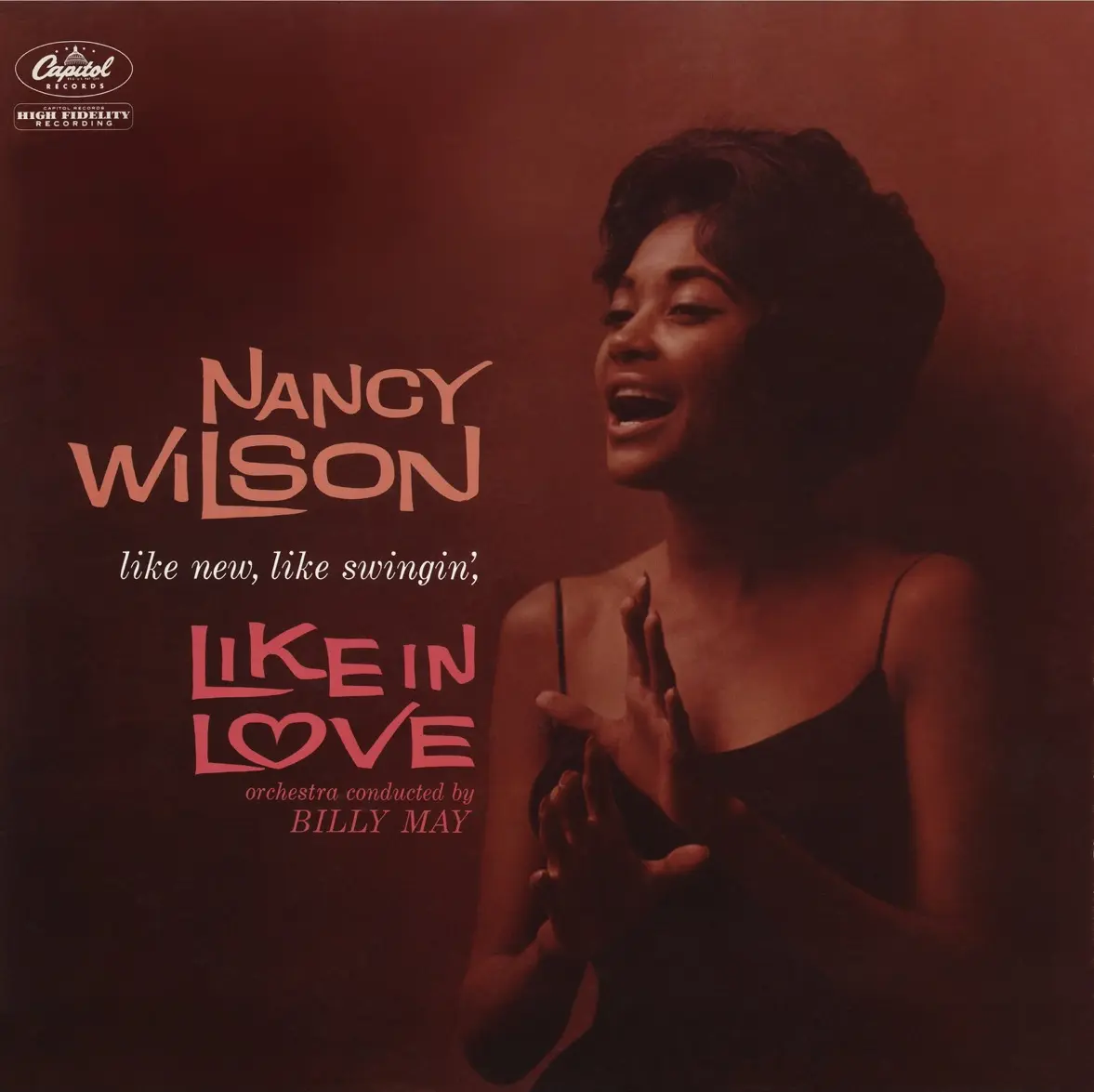 Nancy Wilson released her debut album, Like in Love, in April 1960 on Capitol.
Like in Love introduces Wilson at twenty-two alongside arranger and conductor Billy May, whose big-band charts provide the album’s structural backbone. The ensemble draws on a rotating cast of saxophonists — including alto saxophonists Willie Smith and Benny Carter — with trombone, guitar, piano, bass, and drums varying by session date. May’s backings lean toward an Ellingtonian warmth on the ballads while keeping the uptempo numbers brisk and swinging. Wilson moves between standards and show tunes throughout the set, her baritone-tinged mezzo already settled into a delivery that draws from blues, gospel, and bop phrasing equally.
The album runs through its twelve tracks at a compact pace, most under three minutes. “Fly Me to the Moon” gives Wilson the longest runway at just under three minutes, the arrangement spacious enough for the vocal to extend and settle. “Passion Flower,” the Billy Strayhorn composition, takes a slower, more reflective approach, Smith’s alto saxophone contributing a prominent solo. “On the Street Where You Live” and “Almost Like Being in Love” — both from Lerner and Loewe’s My Fair Lady and Brigadoon respectively — open and close the first side with a bright, forward-moving swing.
A1. “On the Street Where You Live” (1:42) — Alan Jay Lerner, Frederick Loewe
A2. “Night Mist” (2:34) — Ahmad Jamal
A3. “You Leave Me Breathless” (2:27) — Ralph Freed, Frederick Hollander
A4. “The More I See You” (2:11) — Mack Gordon, Harry Warren
A5. “I Want to Be Loved” (2:19) — Johnny Green, Edward Heyman, Billy Rose
A6. “Almost Like Being in Love” (1:46) — Lerner, Loewe
B1. “People Will Say We’re in Love” (1:57) — Oscar Hammerstein II, Richard Rodgers
B2. “Passion Flower” (2:23) — Billy Strayhorn
B3. “Sometimes I’m Happy” (1:46) — Irving Caesar, Vincent Youmans
B4. “Fly Me to the Moon” (2:52) — Bart Howard
B5. “All of You” (1:49) — Cole Porter
B6. “If It’s the Last Thing I Do” (2:07) — Sammy Cahn, Saul Chaplin
Wilson recorded Like in Love at Capitol Studios in Hollywood on December 5, 7, and 8, 1959, with producers Dave Cavanaugh and Tom “Tippy” Morgan, arranged and conducted by Billy May.
Something Wonderful
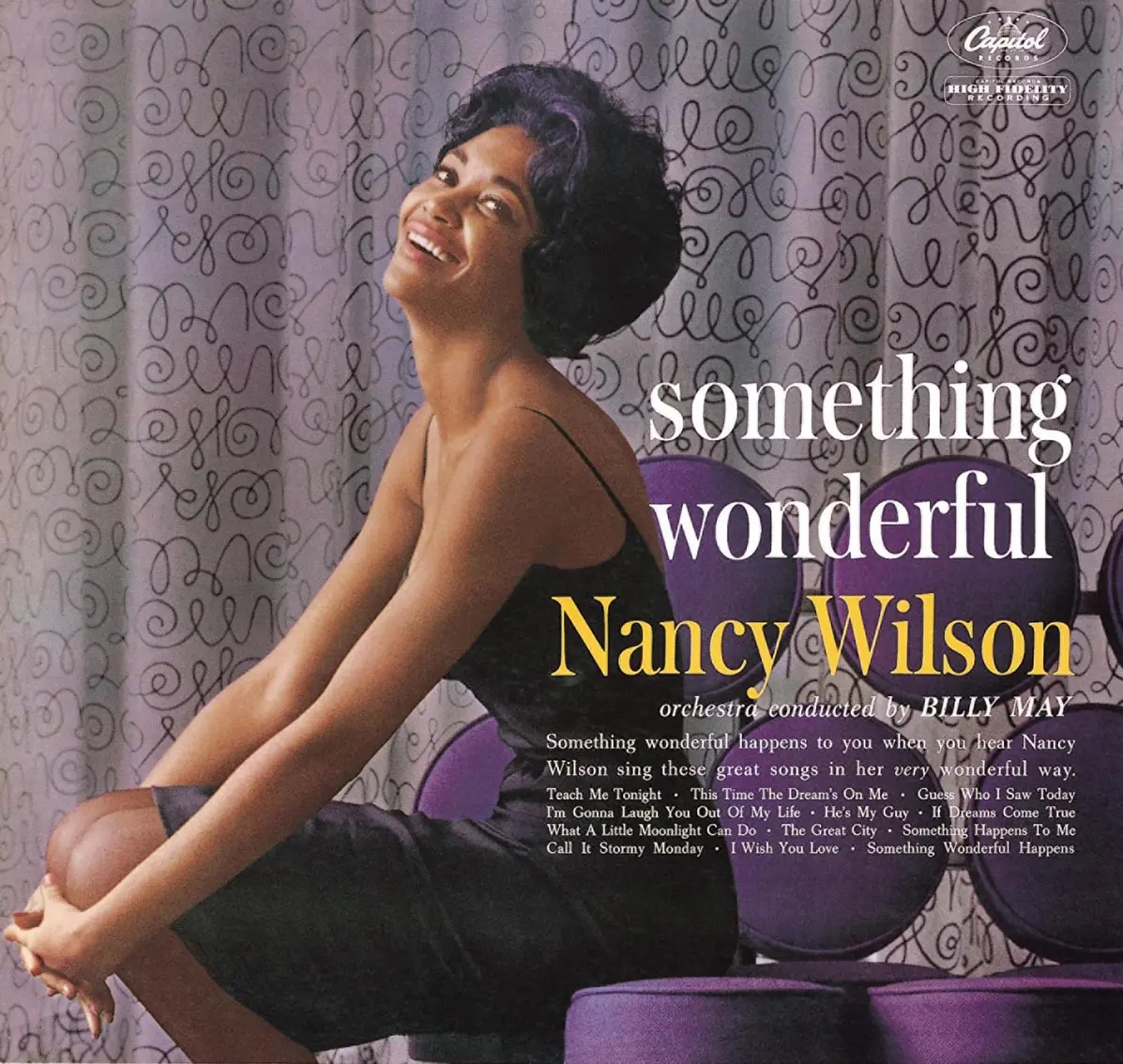 Nancy Wilson released her second album, Something Wonderful, in October 1960 on Capitol.
Something Wonderful pairs Wilson again with arranger and conductor Billy May, but the ensemble here is smaller and more selective than on her debut, with the orchestrations accenting swing without the heavier brass weight May was better known for elsewhere. Tenor saxophonist Ben Webster contributes solo work on several tracks, his large, breathy tone standing as a distinct color against the lighter ensemble. Pianist Milt Raskin, guitarist Jack Marshall, bassist Joe Comfort, and drummer Shelly Manne provide the rhythm foundation. Wilson, now twenty-three, brings a more settled interpretive confidence to the material, the blues and gospel content of her voice applied with greater specificity to individual lyrics.
“Guess Who I Saw Today,” a narrative song built around a single dramatic revelation, takes Wilson through a slow, sustained arc that culminates in a pointed final phrase. “What a Little Moonlight Can Do” — a song strongly associated with Billie Holiday — moves at a lighter, more playful pace, Wilson keeping the delivery wry and unforced. “Call It Stormy Monday (But Tuesday Is Just as Bad)” shifts the register toward blues, the T-Bone Walker number given a small-group jazz treatment that allows Webster room to extend. “The Great City” and “Something Happens to Me” stay closer to the intimate end of the album’s range, the arrangements spare and the vocal lines unadorned.
A1. “Teach Me Tonight” (2:51) — Gene de Paul, Sammy Cahn
A2. “This Time the Dream’s on Me” (2:19) — Johnny Mercer, Harold Arlen
A3. “I’m Gonna Laugh You Out of My Life” (2:40) — Cy Coleman, Joseph Allen McCarthy
A4. “I Wish You Love” (2:00) — Léo Chauliac, Charles Trenet
A5. “Guess Who I Saw Today” (3:27) — Murray Grand, Elisse Boyd
A6. “If Dreams Come True” (1:49) — Edgar Sampson, Benny Goodman
B1. “What a Little Moonlight Can Do” (2:27) — Harry M. Woods
B2. “The Great City” (2:43) — Curtis Lewis
B3. “He’s My Guy” (2:28) — Gene de Paul, Don Raye
B4. “Something Happens to Me” (1:58) — Marvin Fisher, Jack Segal
B5. “Call It Stormy Monday (But Tuesday Is Just as Bad)” (2:28) — T-Bone Walker
B6. “Something Wonderful Happens” (2:47) — Del Guerico, Gamse, Thorn
Wilson recorded Something Wonderful at Capitol Studios in Hollywood in May 1960 with producers Dave Cavanaugh and Tom “Tippy” Morgan, arranged and conducted by Billy May.
The Swingin’s Mutual (w/ The George Shearing Quintet)
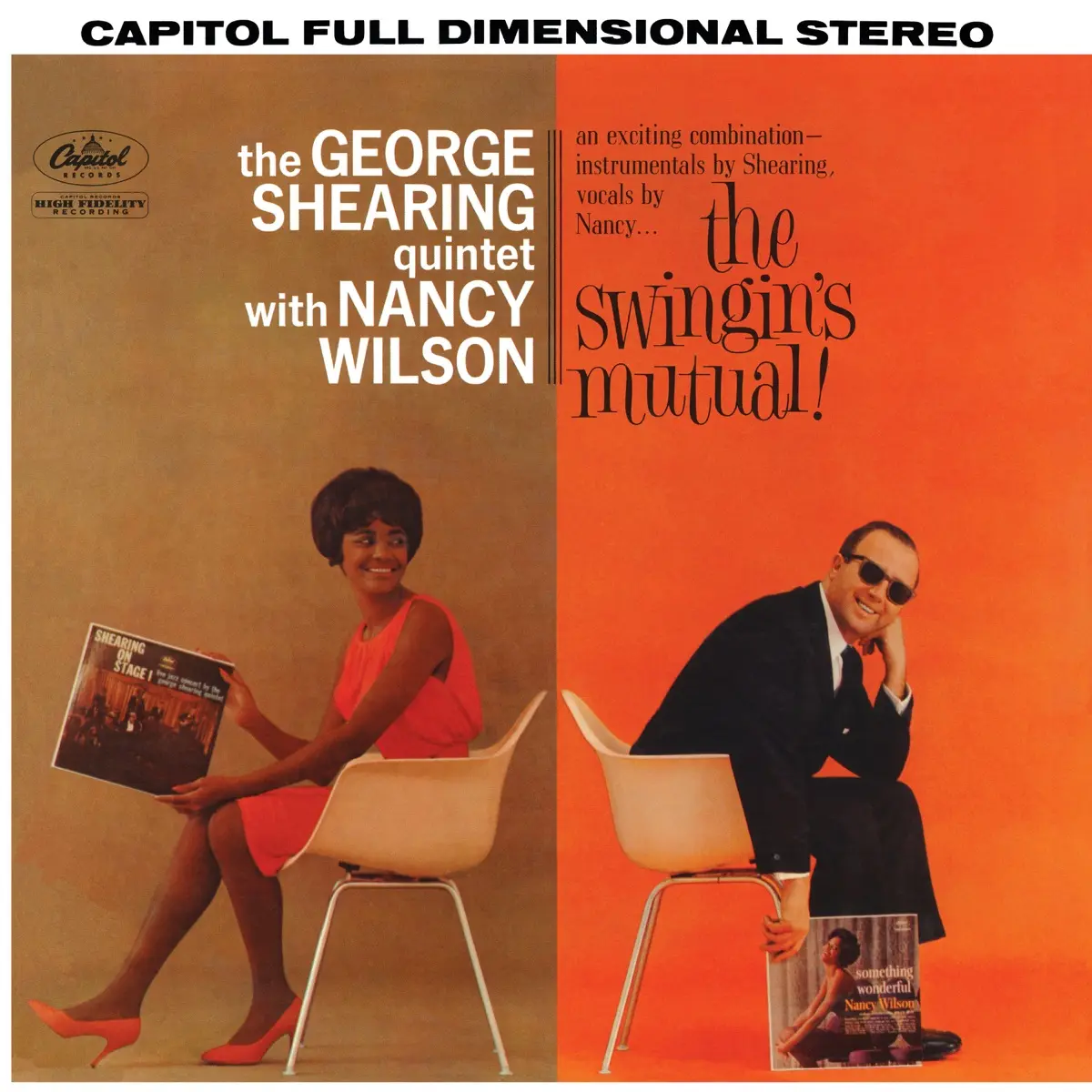 Nancy Wilson and the George Shearing Quintet released a collaborative album, The Swingin’s Mutual, in March 1961 on Capitol.
The Swingin’s Mutual brings Wilson together with the George Shearing Quintet for a set in which Wilson takes the vocal lead on six of the twelve LP tracks, leaving the remainder to Shearing’s instrumental group. The quintet — Shearing at the piano, with guitar, vibraphone, bass, drums, and percussion rotating among Dick Garcia, Warren Chiasson or Eddie Costa, Ralph Peña or George Duvivier, Vernel Fournier or Walter Bolden, and Armando Peraza — moves with the contained, precise swing that defined Shearing’s small-group approach. Wilson’s voice sits with ease in the quintet setting, the lighter ensemble placing more of the interpretive weight on the vocal line than her big-band recordings demanded.
“The Nearness of You” and “The Things We Did Last Summer” take standards at a measured, unhurried pace, Wilson’s phrasing close and detailed against the spare quintet texture. “Born to Be Blue” moves more slowly, the harmonically subdued setting giving the lyric considerable weight. “On Green Dolphin Street” and “Let’s Live Again” carry a brighter, more swinging feel, while “Lullaby of Birdland” — a Shearing original — appears as an instrumental showcase for the quintet.
A1. “On Green Dolphin Street” (2:24) — Bronisław Kaper, Ned Washington
A2. “Oh! Look at Me Now” (2:09) — Joe Bushkin, John DeVries
A3. “The Nearness of You” (2:55) — Hoagy Carmichael, Ned Washington
A4. “You Are There” (2:06) — Cy Walter, Chilton Ryan
A5. “Born to Be Blue” (2:10) — Mel Tormé, Robert Wells
A6. “Blue Lou” (2:13) — Irving Mills, Edgar Sampson
B1. “Lullaby of Birdland” (2:23) — George Shearing, George David Weiss
B2. “All Night Long” (3:12) — Curtis Reginald Lewis
B3. “Inspiration” (2:14) — George Shearing
B4. “The Things We Did Last Summer” (2:40) — Sammy Cahn, Jule Styne
B5. “Don’t Call Me” (2:45) — Marjorie Ericsson
B6. “Let’s Live Again” (2:19) — Milt Raskin, George Shearing
Wilson and the George Shearing Quintet recorded The Swingin’s Mutual in Los Angeles. Pete Welding produced.
Nancy Wilson / Cannonball Adderley
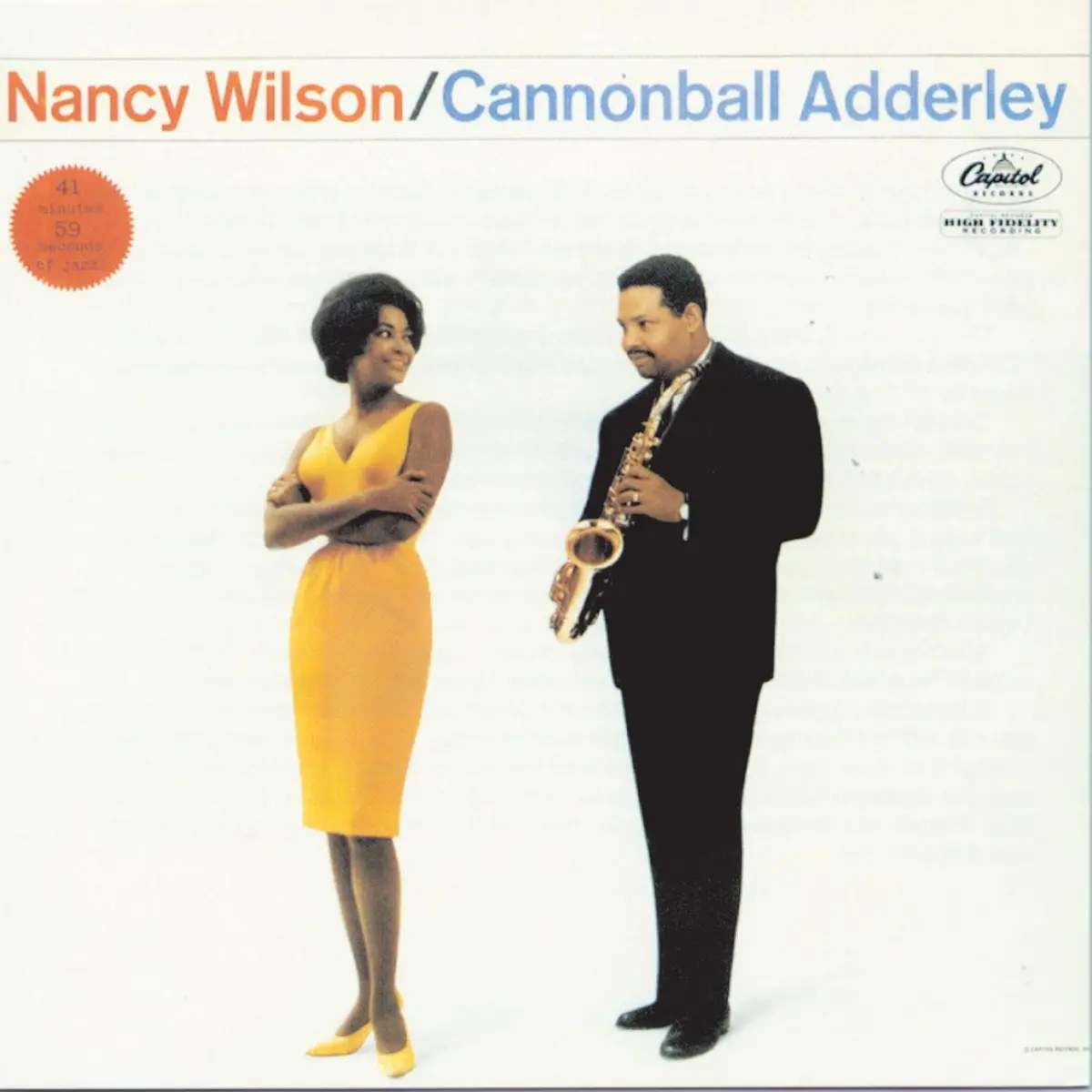 Nancy Wilson and Cannonball Adderley released a collaborative in February 1962 on Capitol.
Nancy Wilson / Cannonball Adderley draws on Wilson’s voice as a front-line voice within the Adderley quintet rather than foregrounding her over a conventional backing ensemble. Five of the eleven LP tracks are instrumentals. The working group — alto saxophonist Cannonball Adderley, cornetist Nat Adderley, pianist Joe Zawinul, bassist Sam Jones, and drummer Louis Hayes — surrounds Wilson’s vocal lines with a hard bop directness that pulls closer to ensemble interplay than to standard accompaniment. Wilson described her role as “a sort of easy-going third horn.”
“Save Your Love for Me” opens the album with Nat Adderley’s cornet woven close behind the vocal, his tone muted and conversational. “Never Will I Marry” moves at a quicker pace with Cannonball’s alto prominent. “The Old Country” — a Nat Adderley composition with a folk-like simplicity — takes a slow, searching approach, the cornet again in close dialogue with Wilson. Zawinul’s piano frames “The Masquerade Is Over” with sensitive economy. “A Sleepin’ Bee” closes the vocal portion of the LP at a quiet, intimate tempo. On the instrumental side, “Teaneck” and “One Man’s Dream” give the full quintet extended space to develop, while “I Can’t Get Started” takes the Vernon Duke–Ira Gershwin standard at a slow tempo with Cannonball carrying a lyrical, unhurried alto lead. “Unit 7,” the album’s longest track at just over six minutes, moves on a blues-with-a-bridge framework.
A1. “Save Your Love for Me” (2:38) — Buddy Johnson
A2. “Teaneck” (4:30) — Nat Adderley
A3. “Never Will I Marry” (2:16) — Frank Loesser
A4. “I Can’t Get Started” (4:55) — Vernon Duke, Ira Gershwin
A5. “The Old Country” (2:57) — Nat Adderley, Curtis Lewis
A6. “One Man’s Dream” (5:09) — Joe Zawinul, Charles Wright
B1. “Happy Talk” (2:21) — Richard Rodgers, Oscar Hammerstein II
B2. “Never Say Yes” (3:57) — Nat Adderley
B3. “The Masquerade Is Over” (4:15) — Herb Magidson, Allie Wrubel
B4. “Unit 7” (6:04) — Sam Jones
B5. “A Sleepin’ Bee” (2:32) — Harold Arlen, Truman Capote
Wilson recorded her vocal tracks in New York City on June 27 and 29, 1961. The instrumental tracks were recorded on August 23 and 24, 1961. Tom Morgan produced.
Today, Tomorrow, Forever
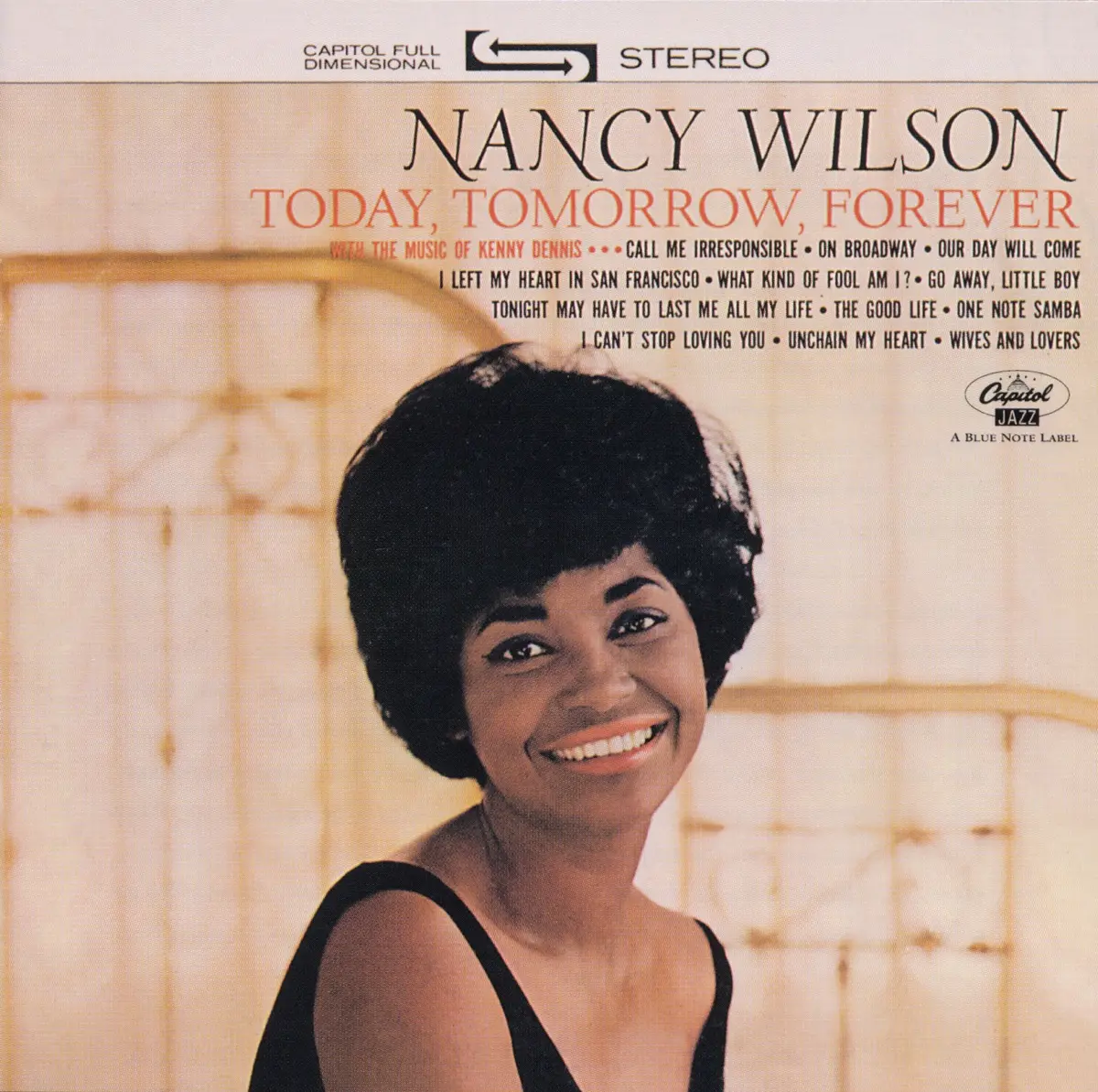 Nancy Wilson released her seventh solo album, Today, Tomorrow, Forever, in May 1964 on Capitol.
Today, Tomorrow, Forever places Wilson in a small-group setting arranged and conducted by her husband Kenny Dennis, whose configurations favor a flexible mix of piano, electric organ, guitar, bass, drums, trombone, and tenor saxophone. The ensemble stays lean and unobtrusive for most of the program, with Dennis varying texture between tracks. The twelve songs are all drawn from the popular catalog of the period, spanning bossa nova, film theme material, and upbeat singles. Wilson’s voice navigates the shorter track lengths — most running between two and two-and-a-half minutes — with a lightness and rhythmic flexibility that suits the compact settings.
“One Note Samba” opens the album with Wilson bending her phrasing to the song’s syncopated pulse. “Wives and Lovers” moves with a lilting swing, the vocal playing across the beat. “Unchain My Heart” drives harder on the uptempo end, the rhythm section more assertive. “Tonight May Have to Last Me All My Life,” a Johnny Mercer collaboration, closes the album at a slower, more resigned pace.
A1. “One Note Samba” (2:00) — Antonio Carlos Jobim, Newton Mendonça, Jon Hendricks
A2. “Go Away Little Boy” (2:51) — Gerry Goffin, Carole King
A3. “Unchain My Heart” (2:07) — Bobby Sharp
A4. “I Left My Heart in San Francisco” (2:23) — George Cory, Douglass Cross
A5. “Wives and Lovers” (2:02) — Burt Bacharach, Hal David
A6. “The Good Life” (2:29) — Sacha Distel, Jack Reardon
B1. “What Kind of Fool Am I?” (2:11) — Leslie Bricusse, Anthony Newley
B2. “I Can’t Stop Loving You” (2:37) — Don Gibson
B3. “On Broadway” (1:49) — Barry Mann, Cynthia Weil, Jerry Leiber, Mike Stoller
B4. “Our Day Will Come” (2:16) — Mort Garson, Bob Hilliard
B5. “Call Me Irresponsible” (2:29) — Jimmy Van Heusen, Sammy Cahn
B6. “Tonight May Have to Last Me All My Life” (2:53) — Donald Borzage, Johnny Mercer
Wilson recorded Today, Tomorrow, Forever in 1964 with producer Dave Cavanaugh.
Just for Now
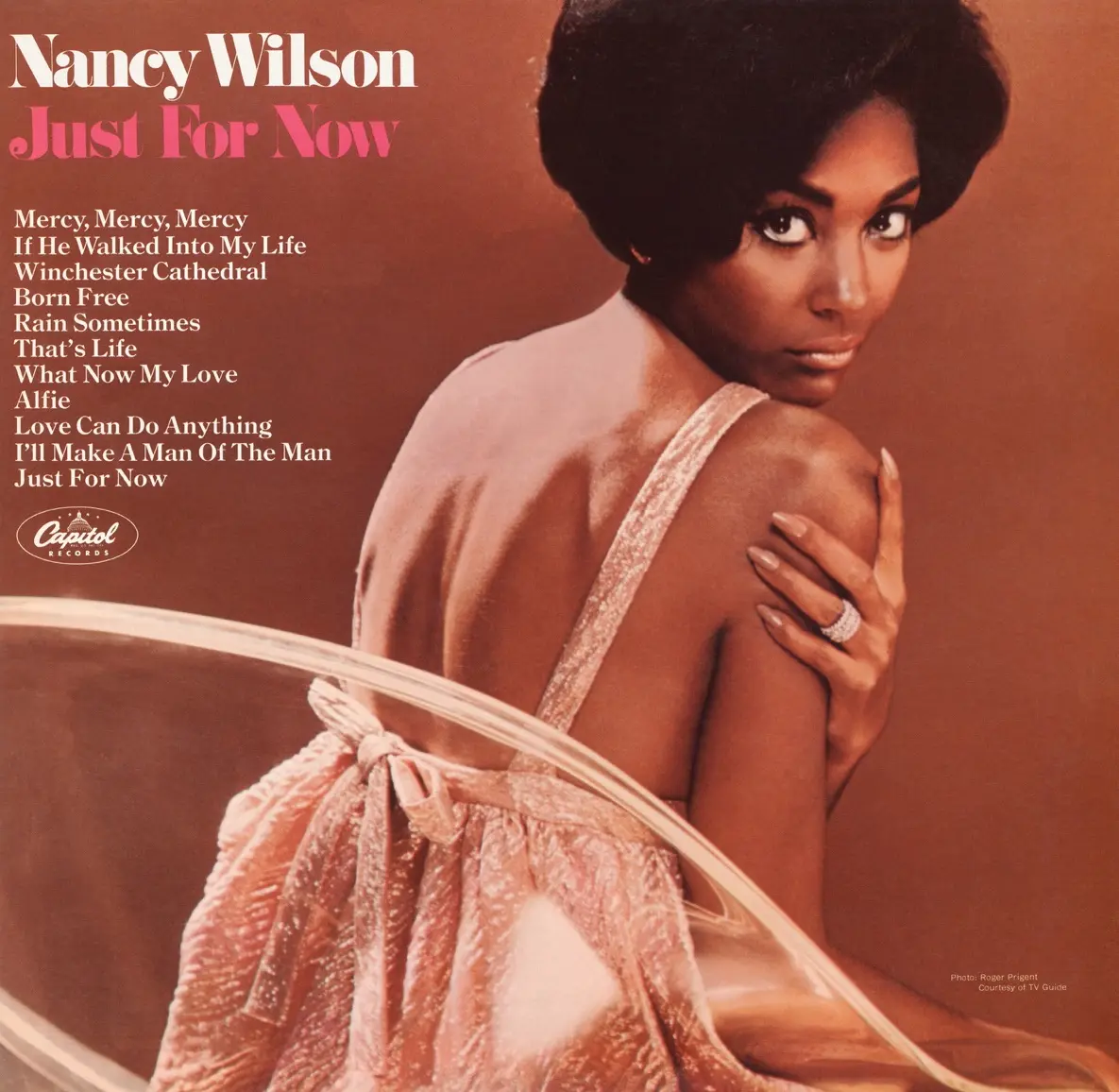 Nancy Wilson released her seventeenth album, Just for Now, in May 1967 on Capitol.
Just for Now divides its arranging duties among three collaborators: Billy May handles the majority of the program with eight tracks, Oliver Nelson takes two, and Sid Feller one. The result shifts in character across the album — May’s charts carry a fuller, more brassy orchestral weight on the uptempo and anthem-style material, while Nelson’s contributions pull toward a darker, more soul-inflected arrangement sensibility. The ensemble includes trumpet, tenor saxophone, piano, organ, guitar, bass, and drums, with Earl Palmer contributing percussion, bells, and Latin percussion in addition to the drum chair. The program draws heavily on 1966–67 film themes and contemporary pop-oriented material.
“Mercy, Mercy, Mercy,” Joe Zawinul’s composition drawn from Cannonball Adderley’s recent hit, extends to three-and-a-half minutes under May’s arrangement, Wilson driving the gospel-edged material with an outward, sustained delivery. “Alfie” takes the Bacharach-David film theme at a deliberate pace. “Born Free” and “That’s Life” open the album on a large, orchestral scale. “If He Walked Into My Life,” the second-side opener, runs almost four minutes — the set’s longest track — with May’s strings and brass building to a concentrated climax.
A1. “Born Free” (2:04) — Don Black, John Barry
A2. “That’s Life” (2:35) — Dean Kay, Kelly Gordon
A3. “What Now, My Love” (2:25) — Pierre Delanoë, Carl Sigman, Gilbert Bécaud
A4. “Rain Sometimes” (2:16) — Arthur Hamilton
A5. “Alfie” (3:01) — Burt Bacharach, Hal David
A6. “Mercy, Mercy, Mercy” (3:26) — Joe Zawinul, Gail Levy, Vincent Levy
B1. “Winchester Cathedral” (2:33) — Geoff Stephens
B2. “If He Walked Into My Life” (3:49) — Jerry Herman
B3. “Love Can Do Anything” (2:34) — Gene Di Novi, Mary Ann Maurer
B4. “Just for Now” (2:16) — Dick Winograde
B5. “I’ll Make a Man of the Man” (2:44) — Jimmy Van Heusen, Sammy Cahn
Wilson recorded Just for Now on March 16–17, 1966, and February 18 and 20, 1967, with producer David Cavanaugh. Billy May arranged and conducted tracks A1–A3, A5–A6, B1–B2, and B4; Oliver Nelson arranged and conducted A4 and B3; Sid Feller arranged and conducted B5.
Welcome to My Love
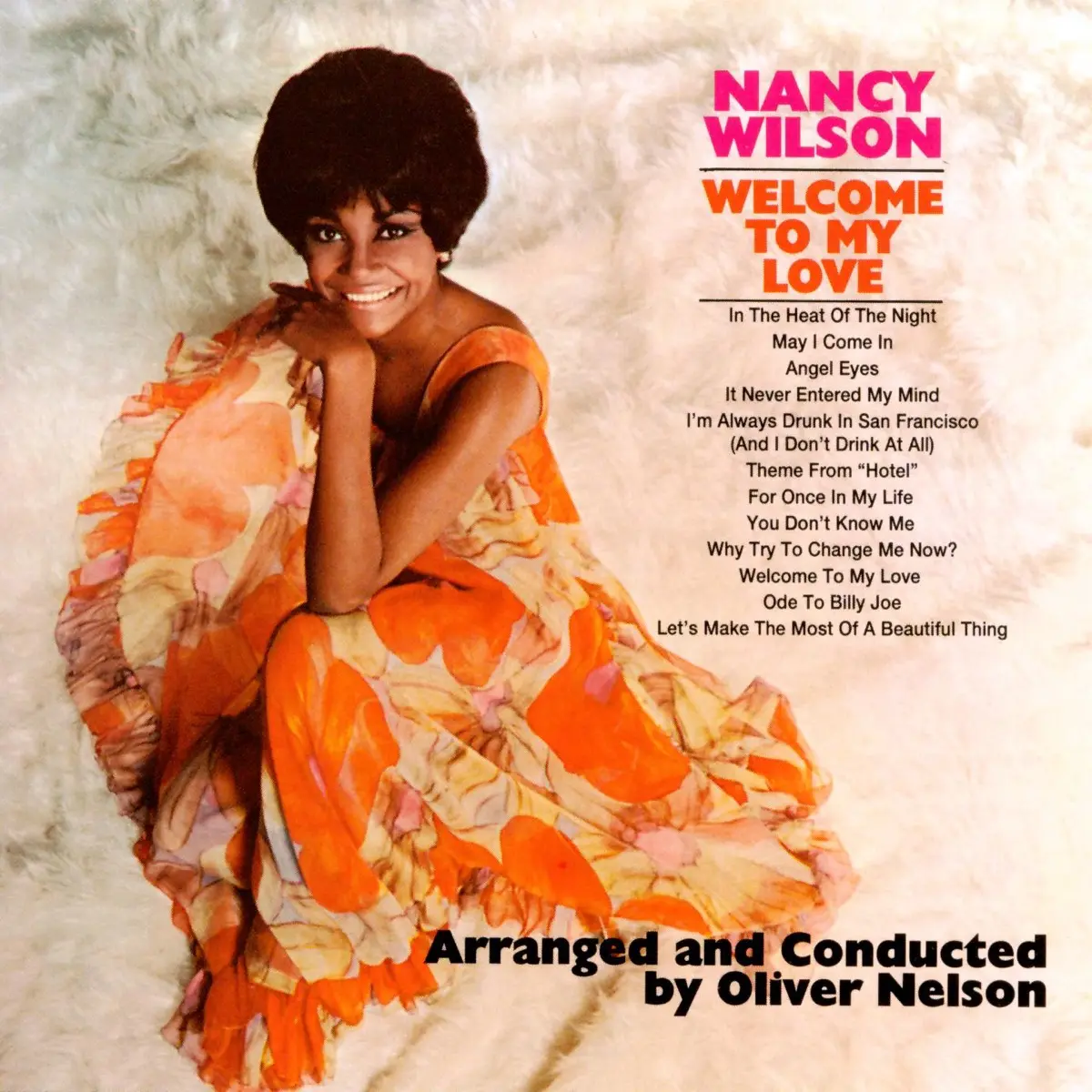 Nancy Wilson released her nineteenth album, Welcome to My Love, in January 1968 on Capitol.
Welcome to My Love places Wilson entirely under the direction of arranger and conductor Oliver Nelson, whose settings run between restrained, dark-hued string charts on the ballads and a more assertive, bluesy big-band framework on the uptempo material. The core rhythm section of bassist Buster Williams, drummer Shelly Manne, and percussionist Larry Bunker provides a consistent, driving foundation throughout. Tenor saxophonist Eddie “Lockjaw” Davis contributes solo work positioned back in the mix, most prominently on the album’s extended final track.
The first side opens with “In the Heat of the Night,” Nelson’s brass and rhythm arrangement pushing with a directness that contrasts with the more subdued tracks that follow. “Angel Eyes” and “It Never Entered My Mind” take the standard ballad material at a slow, hushed pace, Wilson’s delivery close and introverted against Nelson’s restrained string settings. On the second side, “Ode to Billie Joe” closes the album across five minutes — the set’s longest track by more than two minutes — in a funk-inflected arrangement that departs significantly from Bobbie Gentry’s original folk-country recording, Wilson’s delivery at full, outward intensity with Davis’s tenor burning through the back end of the track. “For Once in My Life” and “You Don’t Know Me” hold closer to the album’s more contained register, Manne and Williams carrying the rhythm with a focused, driving energy.
A1. “In the Heat of the Night” (2:32) — Alan Bergman, Marilyn Bergman, Quincy Jones
A2. “May I Come In?” (2:35) — Marvin Fisher, Jack Segal
A3. “Angel Eyes” (2:48) — Earl Brent, Matt Dennis
A4. “It Never Entered My Mind” (2:49) — Richard Rodgers, Lorenz Hart
A5. “I’m Always Drunk in San Francisco (and I Don’t Drink at All)” (2:29) — Tommy Wolf
A6. “Theme from ‘Hotel'” (2:36) — Johnny Keating, Robert Quine
B1. “For Once in My Life” (3:05) — Ron Miller, Orlando Murden
B2. “You Don’t Know Me” (2:27) — Eddy Arnold, Cindy Walker
B3. “Why Try to Change Me Now?” (3:14) — Cy Coleman, Joseph McCarthy
B4. “Welcome to My Love” (2:35) — Sammy Cahn, Bill Schluger
B5. “Ode to Billie Joe” (5:18) — Bobbie Gentry
Wilson recorded Welcome to My Love in 1967 with producer David Cavanaugh, arranged and conducted throughout by Oliver Nelson.
Now I’m a Woman
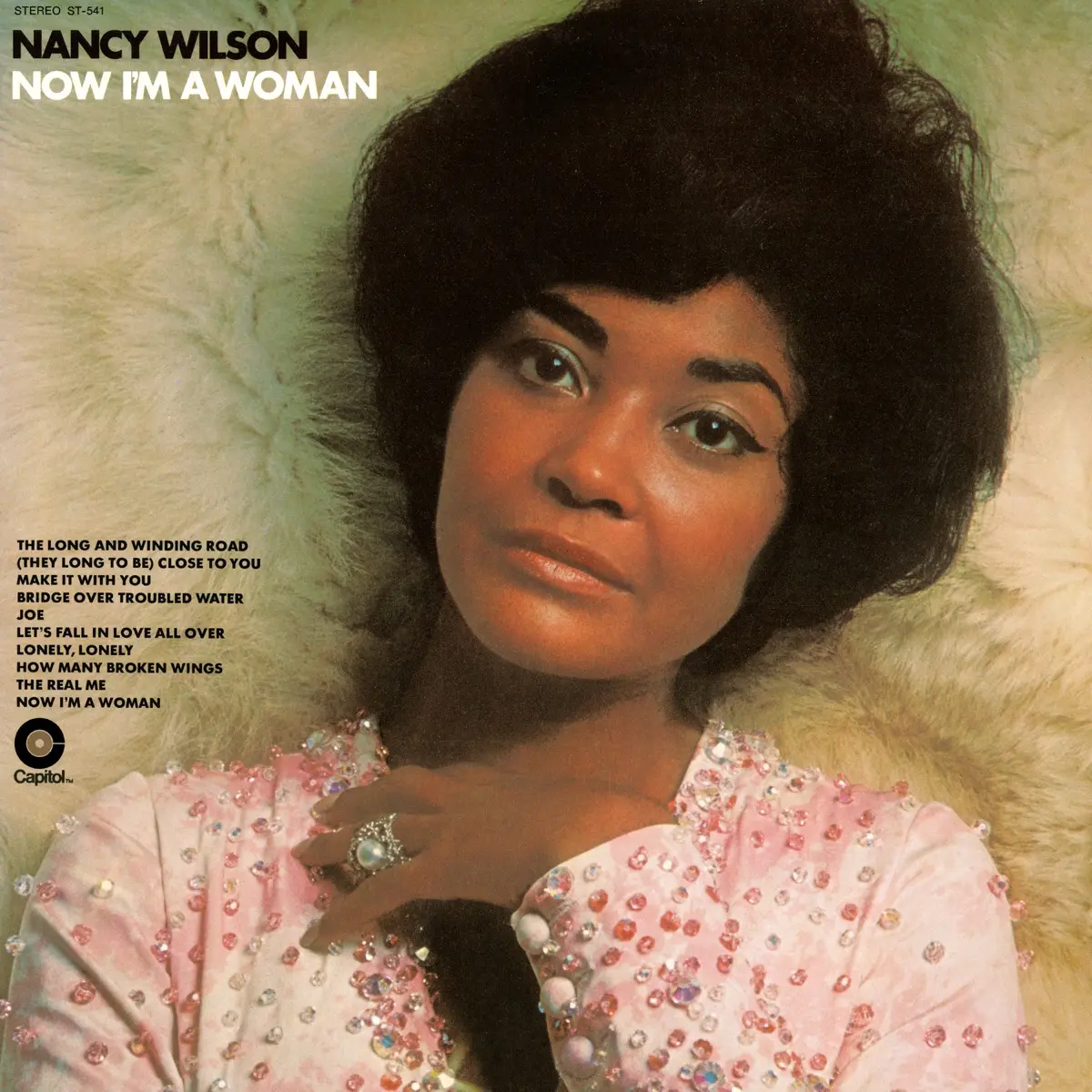 Nancy Wilson released her 24th solo album, Now I’m a Woman, in July 1970 on Capitol.
Now I’m a Woman marks Wilson’s first working relationship with the Gamble-Huff production operation, with Kenny Gamble and Leon Huff contributing original songs and their staff arrangers — Bobby Martin, Thom Bell, and Lenny Pakula — shaping the sessions. David Cavanaugh, Wilson’s Capitol producer since her debut, served as executive producer. Martin and Bell bring the full Philly instrumental palette to the sessions: prominent strings, active brass, precise rhythm. The program mixes Gamble-Huff originals with contemporary covers, dividing the set between the two halves.
The title track opens with a direct, brass-forward arrangement, Wilson’s delivery assertive and forward-leaning. “Joe,” produced by Bell, takes a quieter, more emotionally sustained approach; Wilson’s phrasing reaches a particularly concentrated intensity in the song’s later phrases. “Lonely, Lonely” moves with Martin’s characteristic sweeping string and brass weight behind a full-voiced Wilson performance. “Let’s Fall in Love All Over Again” carries a warm, ebullient energy, the arrangement opening outward in the final stretch. Among the cover selections, “The Long and Winding Road” takes the Beatles composition into a soul-inflected frame that builds to an unexpectedly forceful vocal break roughly two-thirds through.
A1. “Now I’m a Woman” (2:50) — Kenny Gamble, Leon Huff
A2. “Joe” (2:23) — Allan Felder, Kenny Gamble, Norman Harris
A3. “(They Long to Be) Close to You” (3:30) — Burt Bacharach, Hal David
A4. “The Long and Winding Road” (2:28) — John Lennon, Paul McCartney
A5. “Bridge over Troubled Water” (5:00) — Paul Simon
B1. “Let’s Fall in Love All Over” (3:12) — Bobby Martin
B2. “Lonely, Lonely” (2:58) — Gamble, Huff
B3. “How Many Broken Wings” (3:13) — Helen Lewis, Kay Lewis
B4. “The Real Me” (2:50) — Gamble, Huff
B5. “Make It with You” (3:01) — David Gates
Wilson recorded Now I’m a Woman in Los Angeles in 1970 with Gamble-Huff Productions, arranged by Bobby Martin, Thom Bell, and Lenny Pakula; David Cavanaugh served as executive producer; Jay Ranellucci engineered.
Kaleidoscope
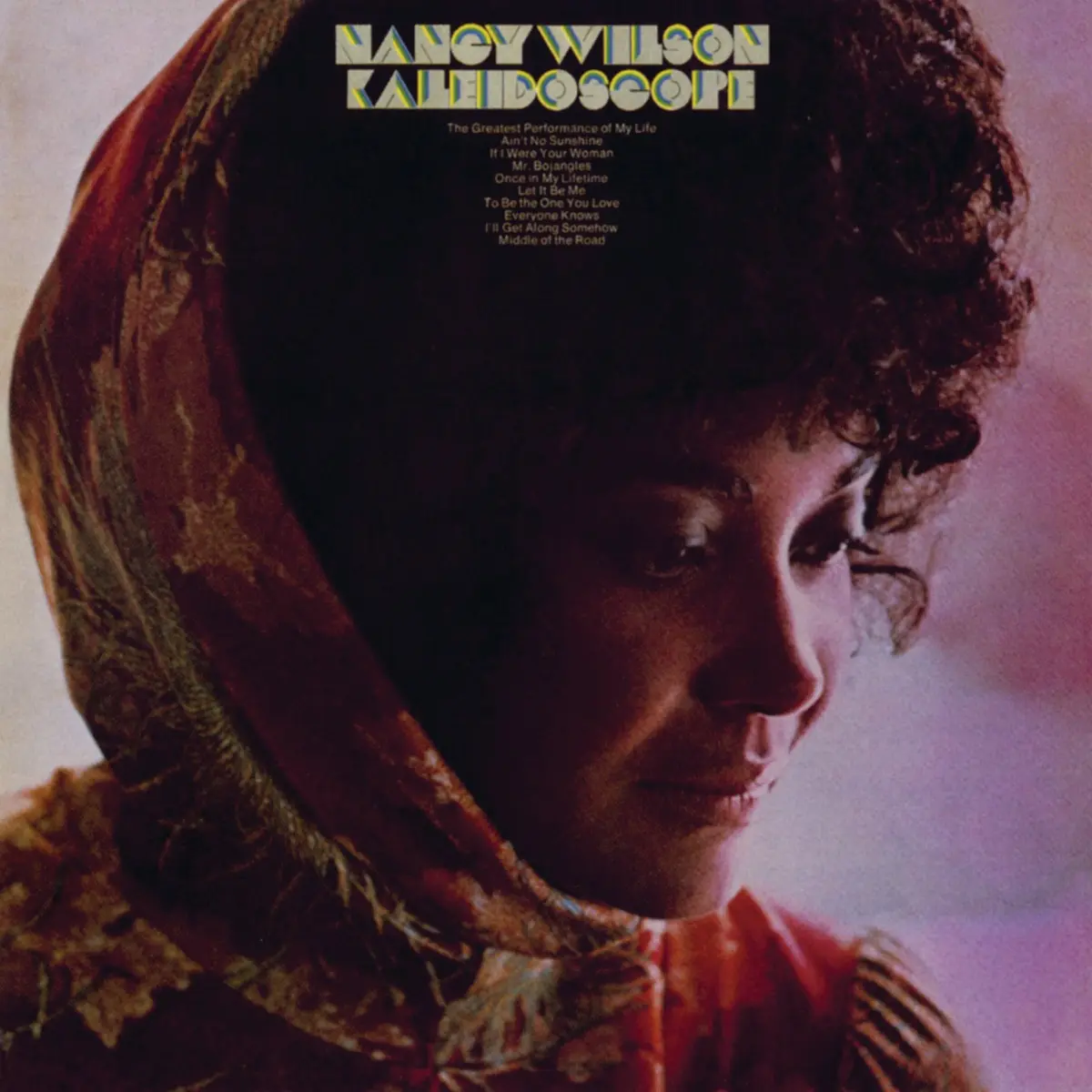 Nancy Wilson released her 26th album, Kaleidoscope, in November 1971 on Capitol.
Kaleidoscope divides its arrangements between two conductors with contrasting approaches: James Mack handles eight tracks with lush, orchestrally dense settings, while Phil Wright takes three with a leaner, more direct soul configuration. The split creates a program that shifts character from track to track rather than maintaining a consistent sonic environment. Wilson serves as associate producer alongside Dave Cavanaugh. The material blends contemporary compositions with a few standards-adjacent items, running longer on average than Wilson’s earlier Capitol records — “I’ll Get Along Somehow” extends past five minutes and “Mr. Bojangles” past six.
“If I Were Your Woman” — the Gladys Knight and the Pips hit from the year prior — takes a quieter, more reflective approach under Wright’s spare arrangement, Wilson’s delivery measured and controlled. “Ain’t No Sunshine” holds to a short, two-minute frame that keeps the performance concentrated. “Mr. Bojangles” takes the Jerry Jeff Walker composition across its full length, the Mack arrangement building in waves around Wilson’s sustained reading of the lyric. “I’ll Get Along Somehow” opens with a full-orchestra swell before settling into a long, ballad arc.
A1. “The Greatest Performance of My Life” (3:19) — S. Anderle, R.E. Allen
A2. “If I Were Your Woman” (3:04) — C. McMurray, L. Ware, P. Sawyer
A3. “I’ll Get Along Somehow” (5:28) — B. Fields, G. Marks
A4. “Middle of the Road” (2:18) — Reuben Brown
A5. “Let It Be Me” (4:29) — G. Becaud, M. Curtis, P. Delanoe
B1. “To Be the One You Love” (2:15) — N. Newell, S. Cipriani
B2. “Mr. Bojangles” (6:06) — Jerry Jeff Walker
B3. “Ain’t No Sunshine” (2:19) — Bill Withers
B4. “Everyone Knows” (2:20) — Reuben Brown
B5. “Once in My Lifetime” (4:02) — J. Sharpe, L. Henrique
Wilson recorded Kaleidoscope in 1971 with producer Dave Cavanaugh. James Mack conducted tracks A1, A3, A4, A5, B1, B2, B4, and B5; Phil Wright conducted A2 and B3.
I Know I Love Him
 Nancy Wilson released her 27th album, I Know I Love Him, in February 1973 on Capitol.
I Know I Love Him places Wilson alongside the core rhythm section of The Crusaders — pianist Joe Sample, bassist Wilton Felder, and drummer Stix Hooper — with guitarist Arthur Adams and David Cohen rounding out the ensemble. Don Sebesky arranged and conducted throughout. The combination of Wilson’s mezzo and the Crusaders’ rhythm-section interplay produces a lighter-handed, late-night character that distinguishes the record from Wilson’s earlier Capitol orchestrations. Sebesky’s arrangements stay measured and unobtrusive, keeping the ensemble frame open enough to allow both the vocal and Sample’s keyboard work considerable expressive space.
“We Can Make It Baby,” a Marvin Gaye composition, opens the album at an easy mid-tempo, Wilson’s phrasing relaxed and unhurried. “Morning in Your Eyes” extends to four minutes — the set’s longest — with Sebesky’s arrangement building gradually behind the vocal. “Don’t Misunderstand,” a Gordon Parks song originally written for the Shaft’s Big Score! soundtrack, takes a darker, more sustained approach with Wilson’s tone dropping lower in the register. “Easy Evil” moves at a slightly more driven pace on the second side, and the brief closing title track — under two minutes — ends the album on a quiet, almost parlor-song scale.
A1. “We Can Make It Baby” (2:57) — James Nyx, Marvin Gaye
A2. “Morning in Your Eyes” (3:59) — John Lehman, Ouida Lehman
A3. “Don’t Misunderstand” (3:07) — Gordon Parks
A4. “Are We Losin’ Touch” (2:51) — Mark James
A5. “I Was Telling Him about You” (3:24) — Don George, Morris Charlap
B1. “Easy Evil” (2:48) — Alan O’Day
B2. “The Laughter and the Tears” (2:49) — Randy Edelman
B3. “Can I” (3:10) — Hal Davis, Herman Griffith
B4. “I Heard You Singing Your Song” (2:29) — Barry Mann
B5. “I Know I Love Him” (1:13) — Bodie Chandler
Wilson recorded I Know I Love Him in 1973 with producer David D. Cavanaugh, arranged and conducted by Don Sebesky.
All in Love Is Fair
 Nancy Wilson released her 28th album, All in Love Is Fair, in August 1974 on Capitol.
All in Love Is Fair marks Wilson’s first collaboration with producer Gene Page, who also serves as arranger and conductor throughout. The ensemble draws on an extensive cast of Los Angeles session musicians including guitarists Ray Parker Jr., David T. Walker, Wah Wah Watson, and David Cohen; multiple keyboard players; bassist Scott Edwards; drummer Eddie Greene; and saxophonist, flautist, and soprano saxophonist Tom Scott, whose woodwind work appears across the set in varied solo contexts. George Bohanon provides trombone solos and Gene Cirpiano English horn solos on selected tracks. The album includes one Wilson co-composition, “Tell the Truth,” written with Tennyson Stevens.
Page’s string-heavy, slow-burn arrangements move the material into an R&B-oriented zone without pulling Wilson far from her jazz-informed phrasing. “You’re Right as Rain,” a Thom Bell–Linda Creed composition, opens with billowing strings and a measured vocal delivery. “Try It, You’ll Like It,” the Johnny “Guitar” Watson song, runs nearly five minutes — the set’s longest track — with a more assertive rhythmic footing. “All in Love Is Fair” takes Stevie Wonder’s composition at a slow, deliberate pace, Wilson’s tone sustained and full across the long vocal lines. “Streetrunner” moves on a tighter, more forward-leaning rhythm, and “To Make It Easier on You,” a Jimmy Webb song, extends past four minutes with Page’s strings particularly prominent.
A1. “You’re Right as Rain” (3:04) — Linda Creed, Thom Bell
A2. “Try It, You’ll Like It” (4:46) — Johnny “Guitar” Watson
A3. “There’ll Always Be Forever” (3:00) — Dee Ervin, DeeDee McNeil
A4. “All in Love Is Fair” (4:03) — Stevie Wonder
A5. “Streetrunner” (3:22) — Billy Page, Gene Page
B1. “Ocean of Love” (3:06) — Ray Parker Jr.
B2. “To Make It Easier on You” (4:14) — Jimmy Webb
B3. “Tell the Truth” (3:23) — Nancy Wilson, Tennyson Stevens
B4. “My Love” (3:38) — Paul McCartney
Wilson recorded All in Love Is Fair at The Sound Factory in Hollywood in 1974 with producer Gene Page, co-produced by Billy Page; Larkin Arnold served as executive producer; David Hassinger engineered.
Come Get to This
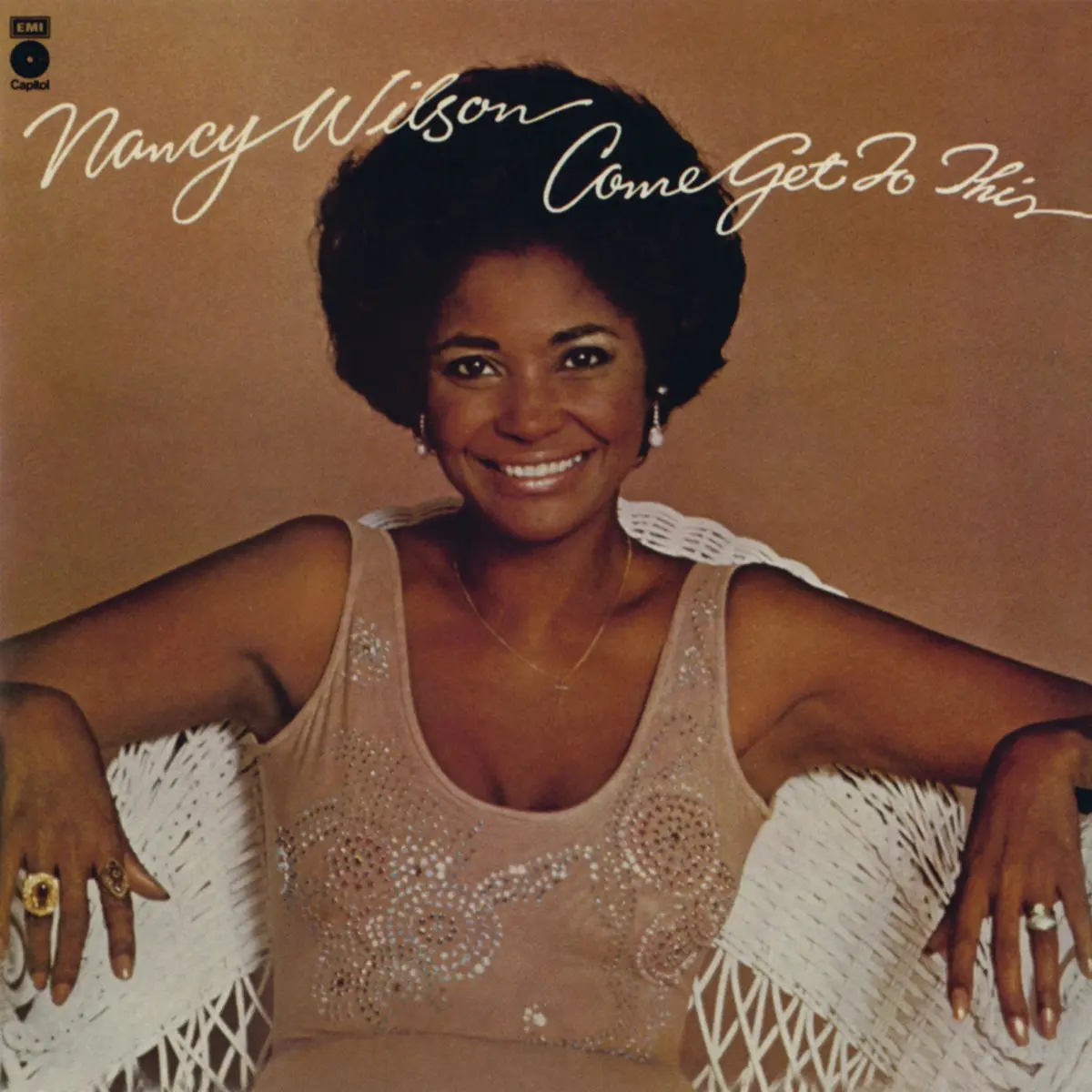 Nancy Wilson released her 29th album, Come Get to This, in June 1975 on Capitol.
Come Get to This continues Wilson’s working relationship with Gene Page, who produced, arranged, and conducted alongside his brother Billy Page. The ensemble overlaps with Wilson’s previous Page collaboration — Ray Parker Jr. appears again on guitar alongside Don Peake, Melvin Ragin, and David T. Walker; Joe Sample returns on keyboards; and Wilton Felder anchors the bass. Ernie Watts contributes tenor saxophone and flute solos, Bud Brisbois trumpet solos, George Bohanon trombone solos, and Gene Cirpiano English horn solos on specific tracks. A background vocal group featuring Marti McCall, Jackie Ward, Carolyn Willis, and others adds depth to several arrangements.
The program opens with the Marvin Gaye title track, which Wilson delivers at a lighter, more conversational pace than some of the heavier ballad settings that follow. “If I Ever Lose This Heaven,” a Leon Ware–Pam Sawyer composition, extends past four minutes with a slowly building arrangement. “Don’t Let Me Be Lonely Tonight” takes the James Taylor song at a measured pace. “Happy Tears” moves with a fuller orchestral weight in Page’s string-prominent arrangement. On the second side, “This Time Last Summer,” a Jimmy Webb composition, opens quietly before expanding, and “He Called Me Baby” gives Wilson a more stripped-down, country-soul footing that contrasts with the set’s more lavishly orchestrated tracks.
A1. “Come Get to This” (3:00) — Marvin Gaye
A2. “All My Love Comes Down” (4:03) — Billy Page, Gene Page
A3. “Don’t Let Me Be Lonely Tonight” (3:21) — James Taylor
A4. “If I Ever Lose This Heaven” (4:35) — Leon Ware, Pam Sawyer
A5. “Happy Tears” (4:06) — Billy Page, Gene Page
B1. “Houdini of the Midnite Hour” (3:27) — Billy Page, Gene Page
B2. “This Time Last Summer” (4:00) — Jimmy Webb
B3. “He Called Me Baby” (3:51) — Harlan Howard
B4. “Like a Circle Never Stops” (3:30) — Billy Page, Gene Page
B5. “Boogeyin’ All the Way” (3:22) — Billy Page, Gene Page
Wilson recorded Come Get to This at The Sound Factory in Hollywood in 1975 with producers Gene Page and Billy Page; Larkin Arnold served as executive producer; David Hassinger engineered.
This Mother’s Daughter
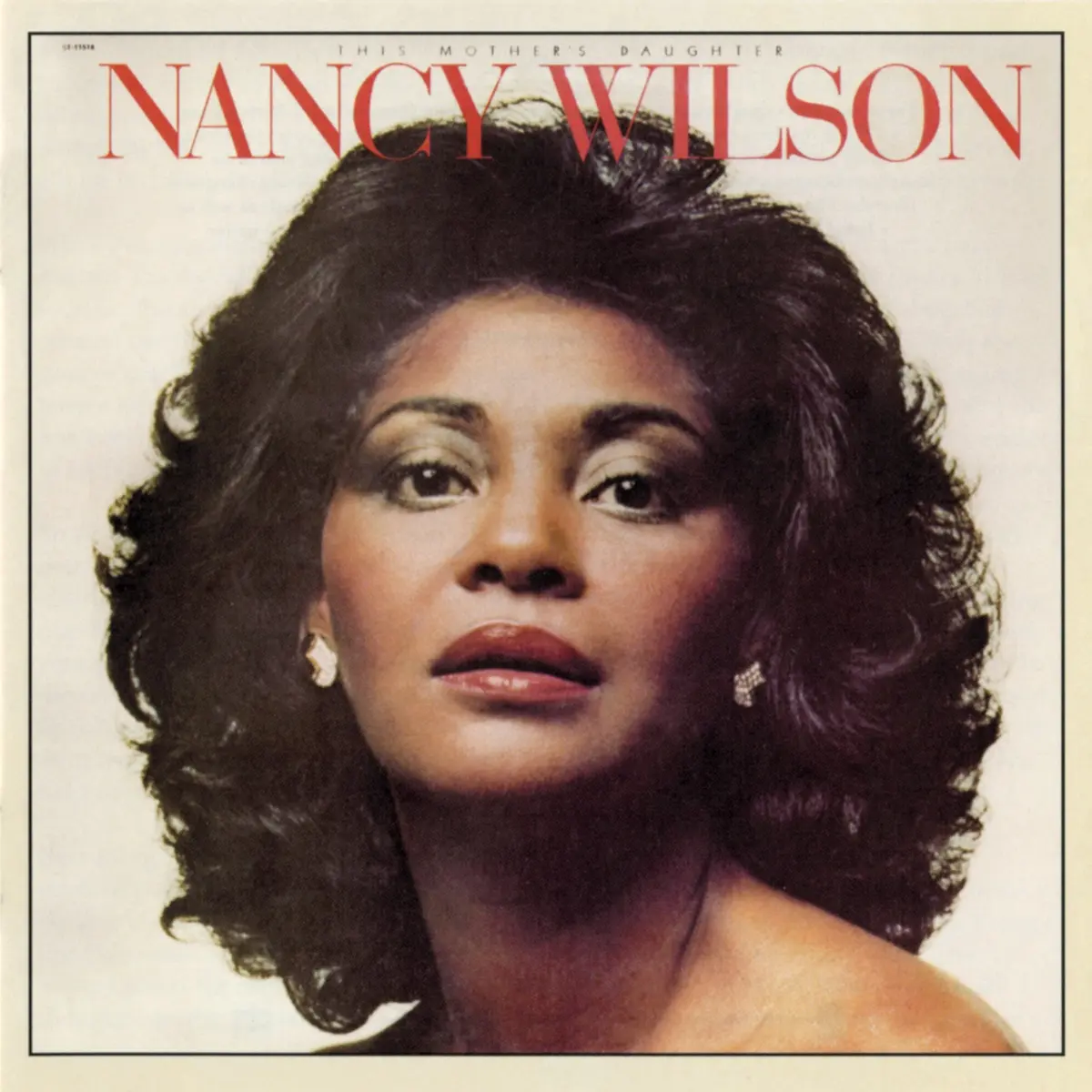 Nancy Wilson released her thirtieth album, This Mother’s Daughter, in June 1976 on Capitol.
This Mother’s Daughter marks Wilson’s first album composed entirely of original songs, all ten tracks written for the session, with Rachel Perry contributing the majority of the compositions individually and in collaboration. Producer Eugene McDaniels assembled an ensemble centered on pianists Dave Grusin and George Duke — both contributing Fender Rhodes alongside acoustic piano — with guitarist Hugh McCracken, bassist Chuck Rainey, and drummer Steve Gadd forming the primary rhythm core. Grusin arranged most of the album, with Duke handling “China” and McCracken arranging “When We Were One.” Blue Mitchell plays flugelhorn on a solo featured track. Larkin Arnold served as executive producer.
The album moves between jazz-funk and more intimate soul-inflected settings with McDaniels’ production keeping the arrangements lean and the rhythm section forward. “Tree of Life” and “Stay Tuned,” both McDaniels compositions, carry the set’s most outward rhythmic energy — Gadd’s drumming particularly active in these tracks. “Now,” which opens the second side, extends past four-and-a-half minutes as the set’s longest track, with a sustained build in the later passages. “From You to Me to You” and “Love Has Smiled on Us” open the album with a warmer, more melodic character, while “China” turns toward a harder, more percussive frame under Duke’s arrangement.
A1. “From You to Me to You” (3:54) — Rachel Perry
A2. “Love Has Smiled on Us” (3:48) — Jon Mayer, Rachel Perry
A3. “I Don’t Want a Sometimes Man” (3:48) — Rachel Perry
A4. “Tree of Life” (4:19) — Eugene McDaniels
A5. “China” (3:40) — Dennis Collins Johnson, Eugene McDaniels, John Wood
B1. “Now” (4:54) — Jon Mayer, Marcia Hillman
B2. “This Mother’s Daughter” (3:55) — Eugene McDaniels
B3. “He Never Had It So Good” (3:10) — Jon Mayer, Rachel Perry
B4. “When We Were One” (3:55) — Jon Mayer, Leida Snow
B5. “Stay Tuned” (4:35) — Eugene McDaniels, Rachel Perry
Wilson recorded This Mother’s Daughter at Record Plant in Los Angeles in 1976 with producer Eugene McDaniels; Larkin Arnold served as executive producer; Dave Grusin served as primary arranger, with George Duke arranging “China” and Hugh McCracken arranging “When We Were One.”
I’ve Never Been to Me
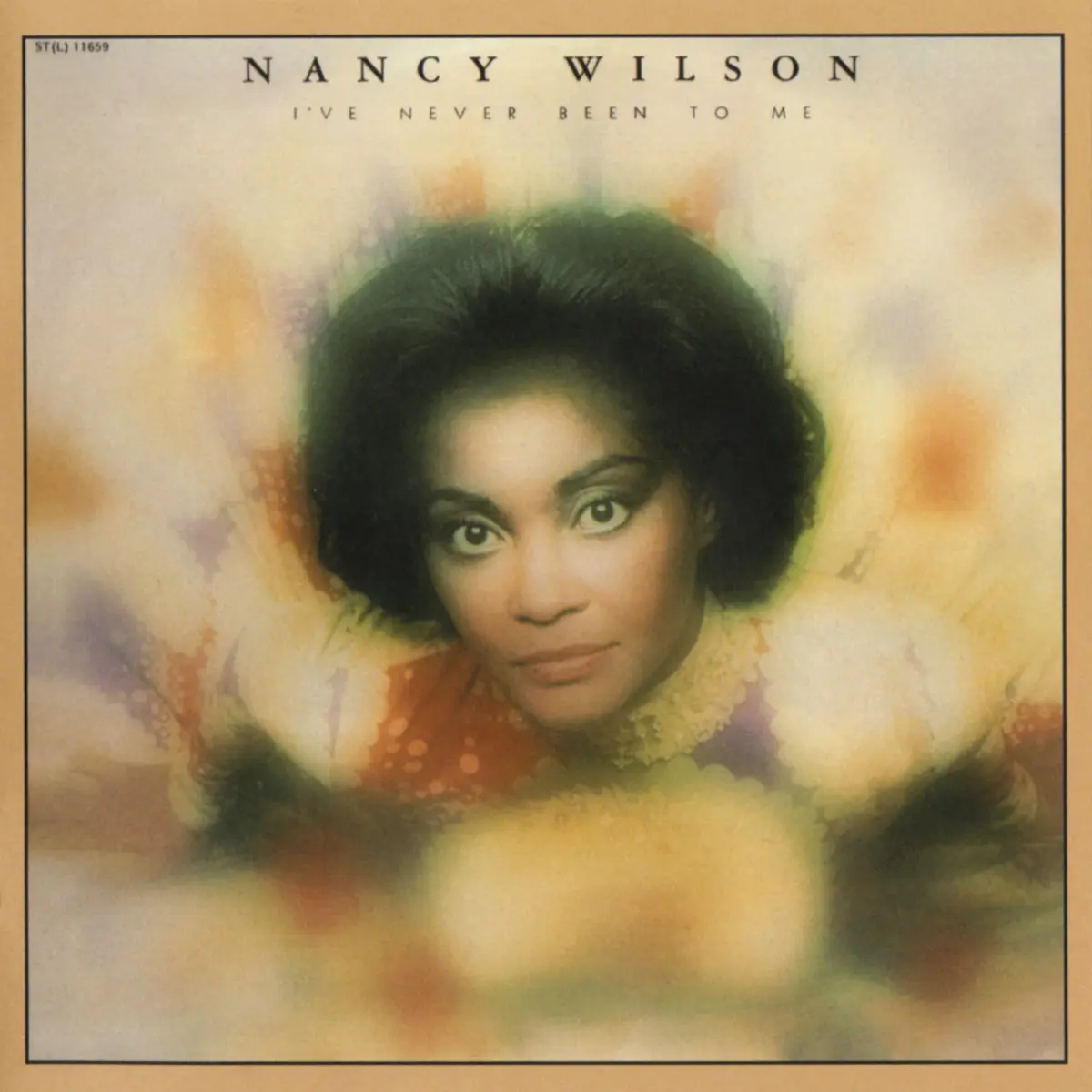 Nancy Wilson released her 31st album, I’ve Never Been to Me, in June 1977 on Capitol.
I’ve Never Been to Me returns Wilson to producers Gene and Billy Page for a set split between their production on six tracks and Garry Sherman’s production on four. Page arranged and conducted his tracks; Sherman arranged his own. The ensemble includes guitarists Ray Parker Jr., David T. Walker, and Jay Graydon; bassists Henry Davis and Wilton Felder; drummer James Gadson; and a wind section featuring Plas Johnson on flute, Ernie Watts on soprano saxophone, and Gene Cirpiano on English horn. A background vocal ensemble adds texture to several tracks. Larkin Arnold served as executive producer.
The Page-produced tracks favor a lush, string-weighted sound that runs more placid in texture than his earlier work with Wilson. Sherman’s four tracks — “All by Myself,” “Changes,” “Here It Comes,” and “Moments” — pull in a slightly more direct direction, the arrangements less ornate. The title track, a Ken Hirsch–Ron Miller composition, takes a slow, spare approach with Wilson’s delivery controlled and unadorned against a minimal accompaniment. “Patience My Child,” co-written by Wilson and Billy Page, runs past five minutes — the set’s longest — with a gradual dynamic build. “Love Is Alive,” the Gary Wright song, and “Car of Love” carry a more driven, forward-moving feel in Page’s arrangements.
A1. “Flying High” (3:48) — Lamont Dozier
A2. “All by Myself” (2:35) — T. Robinson, S. Schreer
A3. “Love Is Alive” (3:57) — Gary Wright
A4. “Car of Love” (4:12) — Ray Parker Jr.
A5. “I’ve Never Been to Me” (3:48) — Ken Hirsch, Ron Miller
B1. “Changes” (2:38) — C. Palmard, J. Levine
B2. “Patience My Child” (5:18) — Billy Page, Nancy Wilson
B3. “Nobody” (4:05) — A. Paris, R. Tener
B4. “Here It Comes” (3:10) — Elgin, Loeffler, Schreer
B5. “Moments” (4:15) — Elgin, Sherman, Loeffler
Wilson recorded I’ve Never Been to Me in Los Angeles in 1977. Gene Page and Billy Page produced tracks A1, A3–A5, B2, and B3; Garry Sherman produced tracks A2, B1, B4, and B5; Larkin Arnold served as executive producer; Greg Venable and Reggie Dozier engineered the Page tracks, Gary Chester the Sherman tracks.
Discography:
- Like in Love (1960)
- Something Wonderful (1960)
- The Swingin’s Mutual (1961 • The George Shearing Quintet With Nancy Wilson)
- Nancy Wilson / Cannonball Adderley (1962 • Nancy Wilson & Cannonball Adderley)
- Hello, Young Lovers (1962)
- Broadway – My Way (1963)
- Hollywood – My Way (1963)
- Yesterday’s Love Songs · Today’s Blues (1963)
- Today, Tomorrow, Forever (1964)
- How Glad I Am (1964)
- Today My Way (1965)
- Gentle Is My Love (1965)
- A Touch of Today (1966)
- Tender Loving Care (1966)
- Nancy – Naturally (1966)
- Just for Now (1967)
- Lush Life (1967)
- Welcome to My Love (1968)
- Easy (1968)
- Son of a Preacher Man (1969)
- But Beautiful (1970)
- Now I’m a Woman (1970)
- Kaleidoscope (1971)
- I Know I Love Him (1973)
- All in Love Is Fair (1974)
- Come Get to This (1975)
- This Mother’s Daughter (1976)
- I’ve Never Been to Me (1977)
- Life, Love and Harmony (1979)
- I’ll Be a Song (1983)
- The Two of Us (1984 • Ramsey Lewis & Nancy Wilson)
- Keep You Satisfied (1985)
- Forbidden Lover (1987)
- Nancy Now! (1988)
Sources:
- Discogs: Nancy Wilson
- 45worlds: Nancy Wilson
- 45cat: Nancy Wilson
- RYM: Nancy Wilson
- MusicBrainz: Nancy Wilson
Artist/Album Pages:
Whitesnake was an English hard-rock band formed in 1978 after David Coverdale left Deep Purple at ...
Störung was a Dutch coldwave duo that released the album This Is Future in 1982 on Clogsontronics,...
Déjà-Vu was a Norwegian symphonic-rock band that self-released the 1976 album Between the Leaves. ...
American Flyer was an American rustic-folk/pop band that made two albums in 1976/77 on United Art...
Ramatam was an American hard-rock band that released two albums on Atlantic: Ramatam (1972) and In...
The Middle-Earth Band was a Finnish jazz-rock band behind the 1980 EMI album The Thoughtful Bride....
Shot in the Dark was an English-American melodic-rock band that made a 1981 self-titled album on ...
10cc are an English art-pop band that released two albums on UK Records in 1973/74, followed by se...
The Main Ingredient was an American soul-funk/psych group from Manhattan that first recorded as Th...
Saturnalia was an English folk-psych band that released the album Magical Love on Matrix in 1973. ...
Teri DeSario (born Nov. 27, 1951) is an American pop vocalist from Miami who emerged on Casablanca...
Cuban Heels were a Scottish new wave band that debuted with a 1978 standalone single on self-press...