

Lou Courtney (1943–2021) was an American soul singer and songwriter who scored R&B hits with the 1967 singles “Skate Now” and “Do the Thing.” He co-wrote songs for soul and rock artists (Mary Wells, The McCoys) and released multiple singles before his 1974 Epic release I’m In Need of Love, followed by the 1976 RCA soul-funk classic Buffalo Smoke.
Background
Lou Courtney was born Louis Russell Pegues on August 15, 1943, in Buffalo, New York. Courtney attended Hutchinson-Central Technical School in Buffalo, where he studied Building Design and Construction. He graduated in June 1962 from the school’s Building Design and Construction program.
Courtney entered the recording business after graduation with the Imperial single “The Man With the Cigar” (b/w “Come On Home”). Imperial issued the single in November 1963 under the Lew Courtney credit. New York arranger-producer Alan Lorber arranged both sides, and FGG Productions—the team of Bob Feldman, Jerry Goldstein, and Richard Gottehrer—produced the single.
Early Songwriting Credits
Imperial used the Lou Courtney credit on “Professional Lover” (b/w “Little Old Love Maker”) in June 1964 for Courtney’s second Imperial single. Courtney wrote both sides under the L. Pegues credit, Bassett Hand arranged the date, and FGG Productions produced the session. Philips issued “I Watched You Slowly Slip Away” (b/w “I’ll Cry If I Want To”) in April 1965 as Courtney’s next single. Courtney wrote the A-side as L. Pegues II and wrote the B-side with Dennis Lambert.
Courtney also placed songs with outside acts under birth-name credits during the same period. Mary Wells recorded “Ain’t It the Truth,” a Louis Pegues title, in 1964 for 20th Century-Fox.
The Nashville Teens, a Weybridge rhythm-and-blues group, recorded the Dennis Lambert–Louis Pegues song “Find My Way Back Home” in 1965 for London. Freddie and the Dreamers, a Manchester beat group, recorded the Lambert–Courtney song “Do the Freddie” in 1965 for Mercury. The McCoys, an Indiana rock group led by Rick Derringer, recorded the Lambert–Pegues song “Up and Down” in 1966 for Bang. The Spotlights recorded “Batman and Robin” — a Pegues, Leon Russell, and Snuff Garrett novelty title — in 1966 for Smash.
Courtney also worked as a studio lead vocalist with the Packers, the studio group known for the 1965 Pure Soul single “Hole in the Wall” (b/w “Go ’Head On”). Mercury employed Courtney on its Manhattan staff, where he served as recording director for Philadelphia singer Lorraine Ellison’s early Mercury sessions. Courtney also produced “The Cellar,” an early single by singer and model Betty Mabry.
Courtney signed with Riverside Records, a New York jazz label founded in the early 1950s, for his next recording phase. Riverside paired Courtney with Robert Bateman, a former Motown singer, writer, producer, and “Please Mr. Postman” co-producer.
Skate Now Shing-A-Ling
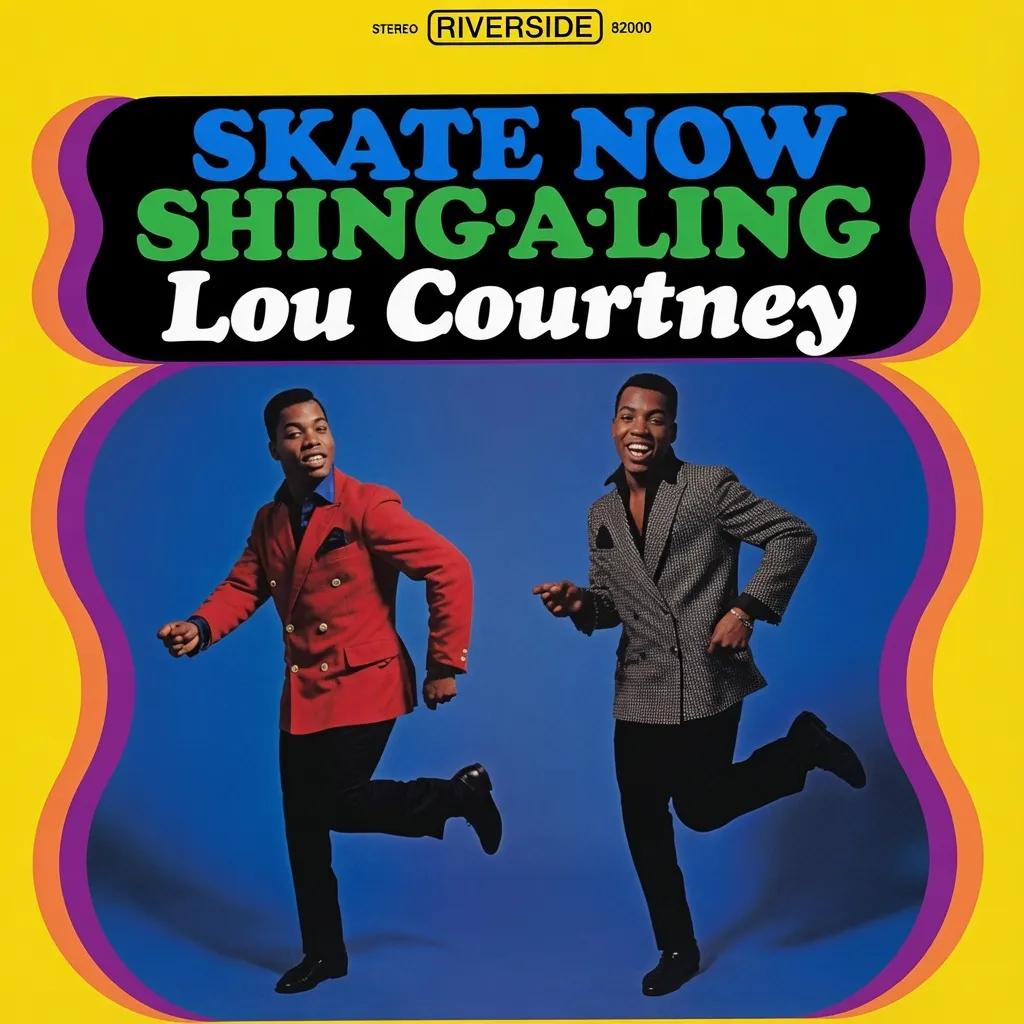 Lou Courtney released his debut album, Skate Now Shing-A-Ling, in 1967 on Riverside.
The album collects ten Riverside titles cut under Robert Bateman’s supervision after the chart run of “Skate Now” and “Do the Thing.” Courtney and Bateman carry the dance-cycle material through skate and boogaloo titles, then add shing-a-ling language on the second side.
Shing-A-Ling pairs named dance records with compact soul ballads. “Another’n Like the Other’n” snaps from a brief half-speed break into an uptempo dance cut after a compact roll. “Me and You Doin’ the Boogaloo” charges as a hard-edged Riverside dance cut.
A1. “Skate Now” (3:00) – Courtney, Bateman
A2. “I’ve Got Just the Thing” (2:40) – Courtney
A3. “The Man Is Lonely” (3:16) – Courtney
A4. “Another’n Like the Other’n” (2:50) – Courtney
A5. “Me and You (Doin’ the Boogaloo)” (2:55) – Courtney, Bateman
B1. “Do the Thing (Parts I & II)” (4:00) – Courtney
B2. “Psychedelic Shing-A-Ling” (2:35) – Courtney
B3. “I Need You Now” (2:49) – Bateman, Courtney
B4. “I Can Always Tell” (2:18) – Courtney, Bateman
B5. “I Don’t Wanna Leave You” (2:40) – Courtney
Courtney recorded Skate Now Shing-A-Ling under Bateman’s supervision. The sleeve credits Sam Alexander for design, Will Faller for color photography, and S.C. Bhug for liner photography.
Riverside issued “Skate Now” in October 1966 (b/w “I Can Always Tell”), which reached No. 13 on the Billboard R&B chart and No. 71 on the Billboard Hot 100 chart. “Do the Thing” followed in March 1967 (b/w “The Man Is Lonely”) and reached No. 17 on the Billboard R&B chart and No. 80 on the Billboard Hot 100 chart.
1967–71 Singles
In June 1967, Riverside issued “You Ain’t Ready” (b/w “I’ve Got Just the Thing”) as Courtney’s next single. “You Ain’t Ready” reached No. 46 on the Billboard R&B chart. In October, Pop-Side issued “Hey Joyce” (b/w “I’m Mad About You”) through the Riverside offshoot.
Pop-Side issued Lou’s February 1968 single “It’s Love Now,” a Courtney–Bateman production backed with “If the Shoe Fits,” which Bateman co-wrote with James Wicker.
Verve issued “Do the Horse” (b/w “Rubber Neckin’ (Chick Check’n)”) from an April 23, 1968, Courtney–Bateman New York session.
Verve followed in December 1968 with the Drifters cover “Please Stay,” an early hit for songwriters Burt Bacharach and Bob Hilliard. Bateman wrote the b-side, “You Can Give Your Love to Me,” another Courtney co-production.
On Buddah, Courtney lone-write and arranged the June 1969 single “Let Me Turn You On” (b/w “Tryin’ to Find My Woman”), an Emalou Production.
In 1971, Hurdy-Gurdy issued “Hot Butter ’n All – Part 1” (b/w “Part 2”). The flip carries the Mr. C. and Funck Junction artist credit. Courtney wrote both parts, and Mr. C. produced the vocal side.
I’m in Need of Love
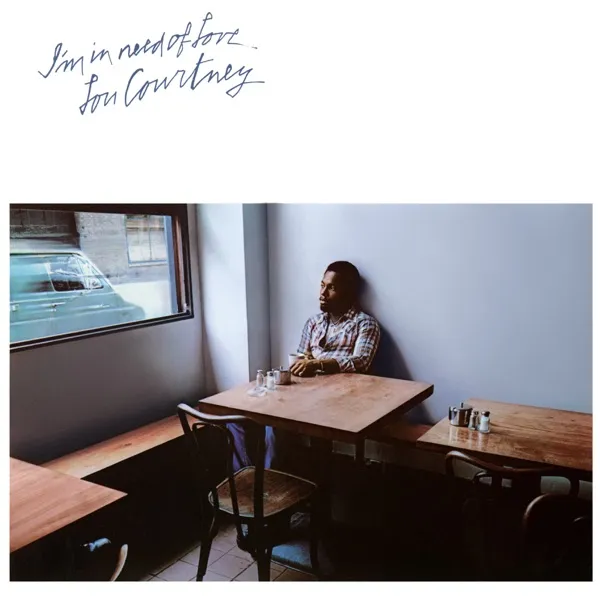 Lou Courtney released his second album, I’m in Need of Love, on May 24, 1974, on Epic.
The album contains ten Courtney originals and places his Epic material inside the Jerry Ragovoy Productions orbit. The session features bassist Bob Babbitt, drummer Andrew Smith, keyboardist Leon Pendarvis, guitarists David Spinozza and Glen Goins, and background vocalists Carl Hall, Peggi Blu, and Natalie Venable.
David Carey adds vibraphone and timpani on selected titles; Arthur Jenkins and Ralph MacDonald divide the percussion credits. Pendarvis arranged four full titles and three rhythm parts, while Ragovoy and Larry Wilcox divide the horn-and-string credits.
“The Common Broken Heart” lingers in a bittersweet setting with vibraphone and timpani tones beside the lead vocal. “What Do You Want Me to Do” tightens around percussion and backing replies by Carl Hall. “I’m Serious About Lovin’ You” softens the tempo with strings and horns around a reserved vocal plea. “I Don’t Need Nobody Else” locks into a lean dance pace. “Just to Let Him Break Your Heart” settles into a downcast slow setting with backing voices behind the lead. “I’m in Need of Love” leans on rhythm charts beneath the vocal line.
A1. “The Common Broken Heart” (5:36)
A2. “Since I First Laid Eyes on You” (3:46)
A3. “What Do You Want Me to Do” (2:52)
A4. “The Best Thing a Man Can Ever Do for His Woman” (5:09)
A5. “I Will, If You Will” (4:43)
B1. “Somebody New Is Lovin’ on You” (5:26)
B2. “I’m Serious About Lovin’ You” (4:54)
B3. “I Don’t Need Nobody Else” (3:32)
B4. “Just to Let Him Break Your Heart” (4:28)
B5. “I’m in Need of Love” (4:17)
Courtney co-produced I’m in Need of Love with Jerry Ragovoy for Jerry Ragovoy Productions. Bruce Tergesen, Harry Maslin, and Jim McCurdy engineered the album, assisted by Blaze, David Carey, and Tom Heid.
CBS/Epic designer Ed Lee built the I’m In Need of Love sleeve around a wide café photograph, with Courtney seated alone at a wooden table beside a street-facing window. The cream border leaves the title and artist credit in loose handwritten script above the image. Courtney posed at the table for Fred Lombardi, an Epic photographer with credits on earlier albums by Sly & The Family Stone (Stand!) and Beck, Bogert & Appice.
Epic issued “What Do You Want Me to Do” on October 24, 1973 (b/w “Beware”), which reached No. 48 on the Billboard R&B chart. “I Don’t Need Nobody Else” followed on February 1, 1974 (b/w “Why”) and reached No. 67 on the Billboard R&B chart.
“The Best Thing a Man Can Ever Do for His Woman” appeared in November 1974 (b/w “I’m Serious About Lovin’ You”), followed by “Somebody New Is Lovin’ on You” in February 1975 (b/w “Just to Let Him Break Your Heart”).
Buffalo Smoke
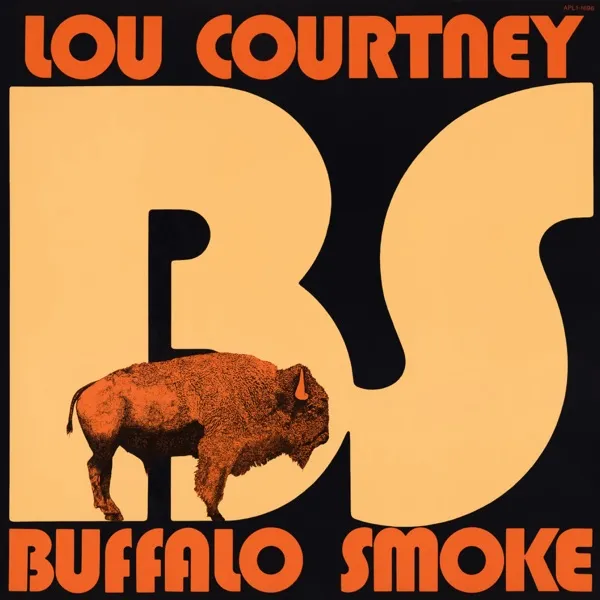 Lou Courtney released his third album, Buffalo Smoke, in 1976 on RCA Victor.
RCA billed the record to Lou Courtney and Buffalo Smoke. The album uses an expanded keyboard-and-horn roster with a separate percussion group.
Returning guitarists Glen Goins and Jerry Friedman join guitarist Jeff Mironov, bassists Anthony Jackson and Will Lee, drummers Gary Mure and Steve Gadd, keyboardists Harry Whitaker and Leon Pendarvis, and percussionists Errol “Crusher” Bennett, Arthur Jenkins, and Carlos Martin. Alfred Brown supervised horns by Alan Raph, George Young, Howard Johnson, John Frosk, and Jon Faddis.
“Call the Police” and “911” display heady group interplay with fretboard gravity. “Danger (Watch Your Step)” jabs through a Leon Pendarvis chart. “Amen for Good Music” lifts through a gospel-lined arrangement. “Don’t Stop the Box” glides on polished electric-piano figures.
A1. “Call the Police” (3:41) – Courtney
A2. “911” (6:45) – Courtney
A3. “Danger (Watch Your Step)” (3:50) – Pendarvis, Willis
A4. “Love Is a Joker” (4:06) – Courtney
B1. “Amen for Good Music” (6:43) – Courtney
B2. “Don’t Stop the Box” (3:10) – Courtney
B3. “To the Bone” (4:45) – Courtney
B4. “Come to Me” (3:31) – Courtney
Courtney produced Buffalo Smoke and arranged six of the eight titles. Pendarvis arranged “Danger (Watch Your Step)” and “Amen for Good Music”; Courtney plays Clavinet on “Call the Police” and “911,” while Whitaker and Pendarvis add ARP synthesizer to selected titles.
Sessions occurred at The Hit Factory and Electric Lady in New York City with engineers Dave Wittman, Jim McCurdy, Joe Ferla, Michael Frondelli, and Ted Spencer.
RCA art director Dick Smith supervised the Buffalo Smoke package. J. Sally Rocco designed the orange-and-green sleeve around a large buffalo silhouette, with the album title and Courtney’s name in heavy block type. Frequent RCA photographer Nick Sangiamo supplied the cover image.
RCA Victor lifted “Call the Police” (b/w “911”).
Postlude
In December 1976, Lou Courtney released the post-album RCA single “Stubborn Kind of Fella,” a Marvin Gaye cover backed with the Buffalo Smoke track “Don’t Stop the Box.” Gaye wrote the 1962 song with William “Mickey” Stevenson and George Gordy. “Stubborn” appears on The Best Disco In Town, a 1977 Tee Vee double-LP with cuts by Candi Staton, Crown Heights Affair, Donna Summer, Faith Hope & Charity, Marilyn Chambers, The Rimshots, and Salsoul Orchestra.
Courtney next entered a latter-day iteration of the 5th Dimension, the Los Angeles vocal group then recording for Motown. In 1978, he replaced Danny Beard and joined a revised lineup with Florence LaRue, Lamonte McLemore, Terri Bryant, and Mic Bell. Motown issued their 1978/79 albums Star Dancing and High On Sunshine. The latter features his lead vocals on “Skyway,” an Ashford & Simpson title arranged by Art Wright and produced by Hal Davis.
In 1980, Norman Connors cut “I Don’t Need Nobody Else” for the Arista album Take It to the Limit, with Al Johnson on lead and backing vocals.
Courtney died on June 25, 2021 in New York, aged 77.
Discography:
- Skate Now Shing-A-Ling (1967)
- I’m in Need of Love (1974)
- Buffalo Smoke (1976)
Sources:
- Discogs: Lou Courtney
- Discogs: Lou Courtney — I’m in Need of Love
- Discogs: Lou Courtney / Buffalo Smoke
- RYM: Lou Courtney
- 45cat: Lou Courtney
- 45cat: Lew Courtney
- Soulwalking: Lou Courtney
- Funky16Corners: Lou Courtney
- Sessiondays: Lou Courtney
Artist/Album Pages:
Troyka was a Canadian blues-psych trio that released a self-titled album on Cotillion in 1970. Me...
Vivian Reed (born June 6, 1947) is an American soul and stage singer from Pittsburgh who released...
Chaka Khan (born March 23, 1953) is an American soul singer who first emerged as the featured voca...
Blue Magic was an American soul group from Philadelphia that released five albums on ATCO between ...
Jellyroll was an American brass-rock band from Cincinnati that released a 1970 self-titled album on ...
Bohemia was a Czech symphonic/jazz-rock spinoff of Modry Efekt and Flamengo. They made the 1978 Pa...
Aalon was an American soul-funk band behind the 1977 Arista album Cream City. Namesake frontman/g...
Yellowstone & Voice were an English chamber-pop duo behind a 1972 self-titled album on Regal Z...
Penetration was an English rock band that cut the 1977 Virgin single "Don't Dictate" and the 1978 ...
Rayuela was an Argentine jazz-rock/folk band that released a 1977 self-titled album on Orfeo. Memb...
Hyldemor was a Danish psych-rock band behind the 1978 CBS album Glem det Hele. They evolved from ...
Jimmy Ponder (May 10, 1946 — Sept. 16, 2013) was an American jazz guitarist from Pittsburgh who em...