

Arco Iris are an Argentine folk-rock/art-rock quartet with a prolific 1970s output and a sporadic body of subsequent work. The band released six studio albums between 1970 and 1977, including the ambitious double-LPs Sudamérica o el Regreso a la Aurora and Agitor Lucens V. Mastering the chromatic fluidity and epic grandeur of symphonic jazz-rock, the band made their ultimate artistic statement with 1977’s Los Elementales.
Members: Ara Tokatlián (wind instruments, keyboards, vocals), Guillermo Bordarampé (bass), Gustavo Santaolalla (guitar, vocals), Alberto Cascino (drums, 1969-70), Horacio Gianello (drums, percussion, 1971-?)
Background
Arco Iris (Spanish for Rainbow) formed in late-1960s Buenos Aires when guitarist Gustavo Santaolalla, woodwinds player Ara Tokatlián, and bassist Guillermo Bordarampé transitioned from playing English-language beat covers in bands like The Crows to composing original Spanish-language material. After recording a three-song demo, they secured the support of producer Ricardo Kleinman, who agreed to launch the group under the condition they adopt a Spanish name. Rebranded as “Arco Iris,” they released two early singles on RCA, followed by a third—“Blues de Dana”—inspired by Danais Wynnycka, a former model who became their spiritual mentor and moved in with the group as part of a communal lifestyle.
Arco Iris
 Arco Iris released their self-titled debut album in May 1970 on RCA.
The album merges Latin American folk elements with psychedelia and early art rock structure, unfolding across vocal harmonies, woodwind textures, and acoustic-electric interplay. Guitarist Gustavo Santaolalla trades rhythmic and melodic space with flutist/saxophonist Ara Tokatlián, whose woodwinds wrap around Santaolalla’s phrasing in alternating sections. Guillermo Bordarampé anchors the material with deep-toned basslines and percussive accents on maracas, while drummer Alberto Cascino maintains a light, flowing backbeat that underpins the acoustic structures. Santaolalla wrote and arranged all nine tracks.
Arco Iris unfolds as a multi-part journey structured around acoustic frameworks, clay-flute accents, and abrupt contrasts between restrained vocal passages and intensified instrumental breaks. “Quiero Llegar” transitions from softly layered, bossa-styled rhythm and breathy vocals into a backbeat-driven jam with clipped, early-60s guitar phrasing that sharpens in its final minute into a dense, wah-ed solo. “Hoy Te Miré” places fragile harmonies over an acoustic pulse that briefly surges with electric guitar interjections before settling into zither-toned resonance. “Camino” alternates between flute-guided, lyrical pacing and a sudden final minute marked by blues phrasing and heavier textures.
“Te Quiero, Te Espero” centers on suspended electric guitar patterns and interwoven vocals that swell beneath a widening arrangement, joined near the end by piano lines that draw the cadence downward. “Canción De Cuna Para El Niño Astronauta” floats over a hollowed soundstage, pairing strummed classical guitar with ambient percussion and electric guitar streaks that shift the tone into a dreamlike haze. “Tiempo” balances forceful vocals against a sax-led, rhythm-heavy sequence that mutates across several breaks—one marked by percussive outbursts and wah-wah guitar figures, another concluding in a sparse piano–flute fade. “Y Ahora Soy” moves through seven discrete phases, each defined by motif changes in tone and instrumentation—from an ominous bass–sax intro to an electric-blues stretch, a flute–citarina bridge, and a closing Latin rhythm section that cycles sax, percussion, and distorted guitar solos across its extended coda.
A1. “Quiero Llegar” [I Want to Arrive] (3:51)
A2. “Hoy Te Miré” [Today I Looked at You] (2:21)
A3. “Camino” [Path] (3:57)
A4. “Coral” (1:16)
A5. “Te Quiero, Te Espero” [I Love You, I Wait for You] (2:36)
A6. “Luli” (0:41)
A7. “Canción de Cuna Para un Niño Astronauta” [Lullaby for an Astronaut Child] (4:02)
B1. “Y Una Flor (El Pastito)” [And a Flower (The Little Pasture)] (1:57)
B2. “Tiempo” [Time] (5:42)
B3. “Y Ahora Soy” [And Now I Am] (11:59)
Arco Iris recorded the album between September and December 1969 at Estudios T.N.T. with engineers Alejandro Torres and Salvador Barresi. Gustavo Santaolalla produced the sessions with executive producers Ricardo Kleinman and Fernando Falcón overseeing the project. RCA S.A.I.C. handled the original release under license from RCA Corporation.
Suite Nº 1
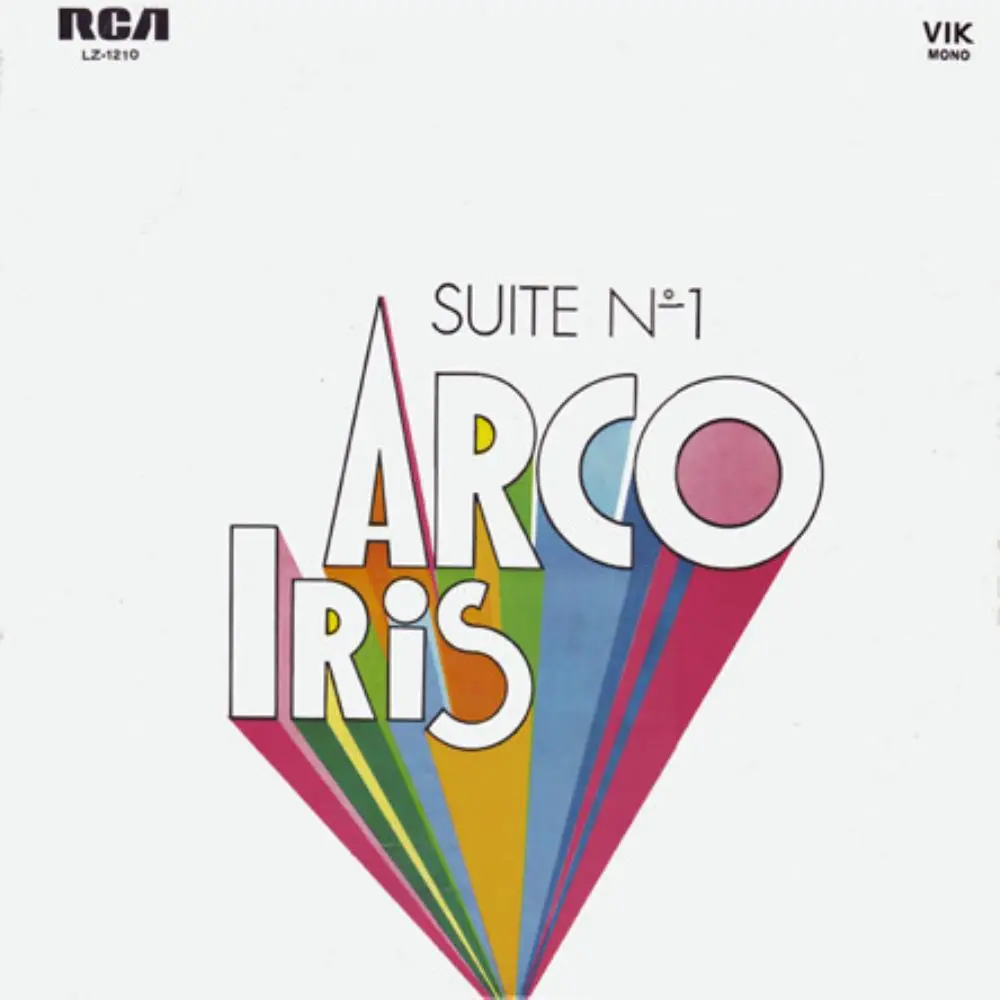 In 1971, Arco Iris released Suite Nº 1, a compilation of early singles and reworked material from their debut sessions, issued on RCA Vik in Argentina.
The album captures the group’s formative blend of Argentine folk phrasing and late-60s blues-inflected psychedelia, framed through modal guitar passages and pastoral vocal arrangements. Guitarist Gustavo Santaolalla trades acoustic figures and organ motifs with flutist Ara Tokatlián, who alternates between lyrical saxophone lines and airy flute overlays. Guillermo Bordarampé supports the ensemble with grounding bass figures and subtle accents, while Alberto Cascino’s light backbeat underscores the shifting acoustic-electric textures. Santaolalla wrote all six tracks.
Suite Nº 1 unfolds as a sequence of carefully balanced contrasts between acoustic introspection and slow-building ensemble interplay. The opening title piece stretches across multiple movements that cycle between sparse acoustic guitar passages and interludes built on layered flute, restrained percussion, and soft vocal phrases. After an initial pause, a section with spoken English text leads into broader instrumental expansion before eventually folding back into subdued textures.
“Y Yo Quiero” opens with abrupt percussion and a more urgent bass foundation, then alternates between percussive episodes and intensified guitar–sax call-and-response. Its central section escalates with a vocal line that builds toward a clipped instrumental climax, driven by sharper electric phrasing and a layered rhythmic finish.
A1. “Suite Nº 1” (13:42)
A2. “Luly” (3:03)
A3. “Camino” [Path] (2:57)
B1. “Zamba” (3:38)
B2. “Mujer” [Woman] (3:12)
B3. “Y Yo Quiero” [And I Want] (11:58)
Arco Iris assembled Suite Nº 1 from recordings made during 1969–70 at Estudios T.N.T., including alternate English-language versions of selected material. RCA S.A.I.C. issued the compilation under license from RCA Corporation within the Serie Acuario line, pressed in mono on the orange RCA Vik label. In 1976, Suite Nº 1 reappeared in the RCA Gold series with the two longest tracks inact but the shorter tracks replaced with two new cuts:
A2. “Solo Tengo Amor” [I Only Have Love] (3:22)
B1. “Una Tarde Más” [One More Afternoon] (5:45)
“Solo Tengo Amor” introduces a lighter pace anchored by brief harmonic shifts and a central break where guitar lines diverge with sharpened phrasing. “Una Tarde Más” moves patiently through a quiet first half before the rhythm section emerges, giving weight to the saxophone accents and shifting the focus toward a jazz-oriented frame.
Tiempo de Resurrección
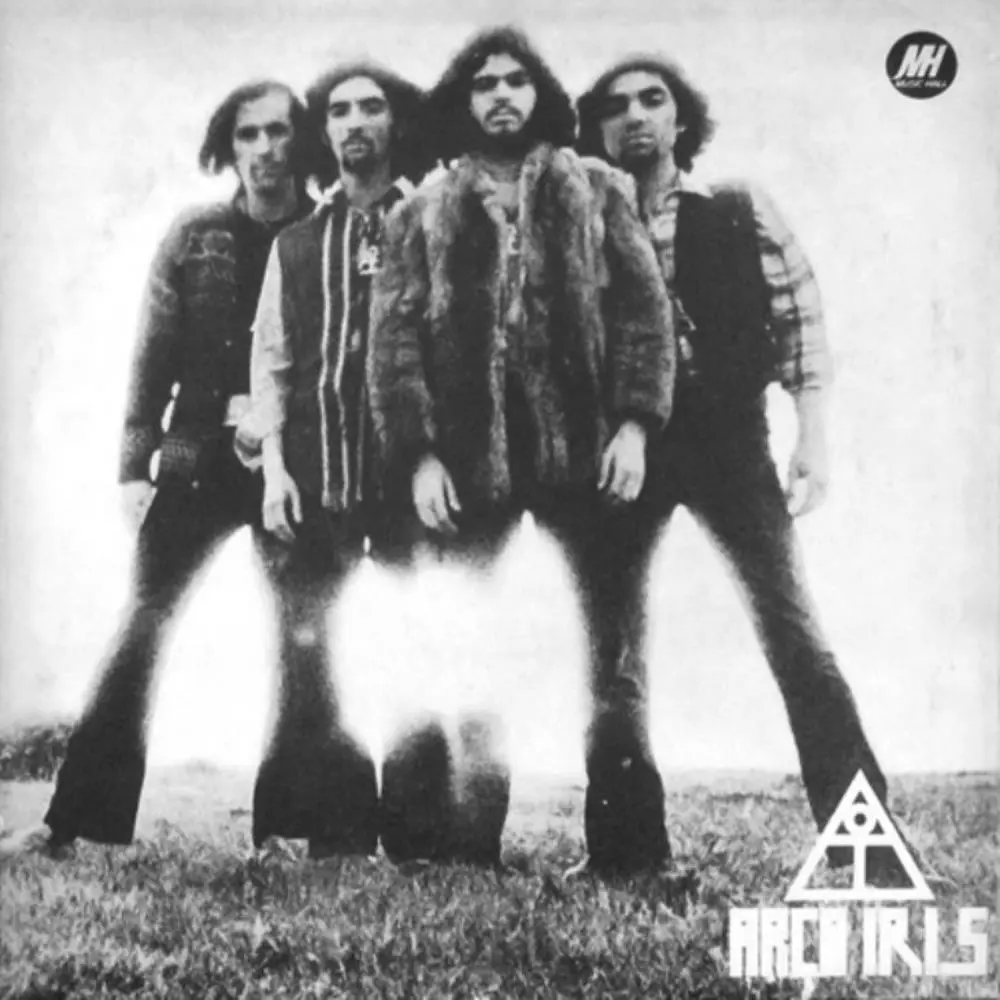 Arco Iris released their second studio album, Tiempo de Resurrección, in January 1972 on Music Hall.
The album expands the band’s stylistic reach into folk-symphonic structures with extended instrumental passages framed by lyrical woodwinds and electric-acoustic contrasts. Guitarist Gustavo Santaolalla introduces sharpened phrasing and more assertive leads, counterbalanced by Ara Tokatlián’s layered flute and saxophone textures. Guillermo Bordarampé underpins the material with fluid basslines and grounded rhythmic movement, reinforced by Horacio Gianello’s evolving percussion patterns. Santaolalla wrote all tracks except “Garza Celeste,” composed by Dana.
Tiempo de Resurrección moves between compact instrumental bursts and expansive acoustic introspection, unified by clipped rhythmic pivots and Santaolalla’s sharply contoured vocal phrasing. “Negro y Blanco” opens the album with abrupt rhythmic turns that alternate between ascending ensemble phrases and moments of restraint, guided by mid-tempo percussion and interlocked saxophone–guitar accents. “Vasudeva” shifts into a subdued register, driven by cyclical acoustic figures and breath-lengthened pauses that stretch across the vocal lines.
“Hombre de Madera” builds momentum in stages, starting from a sparse blues pattern before layering extended instrumental interplay, where the guitar carves angular paths over a swelling low-end. “Mañana Campestre” centers on calm instrumental pacing, with layered acoustic textures and slow, swaying rhythmic undercurrent. The re-recorded “Blues de Dana” amplifies its emotional thrust through compact phrasing and layered instrumental figures that gradually intensify without breaking the tempo’s steady pulse. Throughout, Ara Tokatlian’s reedwork and woodwinds add percussive punctuation or widened tonal color, often shifting between short interjections and full melodic extensions. Each track links through transition, maintaining fluidity across sharp changes in texture and pacing.
A1. “Negro y Blanco” [Black and White] (5:38)
A2. “Vasudeva” (2:50)
A3. “Hombre de Madera” [Wooden Man] (5:27)
A4. “Nuestro Amanecer” [Our Dawn] (3:34)
A5. “Blues de Dana” [Dana’s Blues] (6:00)
B1. “Tiempo de Resurrección” [Time of Resurrection] (5:20)
B2. “Mañana Campestre” [Country Morning] (2:46)
B3. “Garza Celeste” [Celestial Heron] (5:41)
B4. “Ígnea, Aérea y Marina” [Fiery, Aerial, and Marine] (3:50)
B5. “Busca la Estrella Elegida” [Seek the Chosen Star] (3:28)
Arco Iris recorded the album at Estudios Sound Center de Buenos Aires under the production direction of Gustavo Santaolalla. José Rodrigues Netto served as executive producer on behalf of the label Sicamericana S.A.C.I.F.I. Dana acted as the group’s spiritual guide throughout the sessions, which mark the band’s transition into more expansive conceptual material.
Sudamérica o el Regreso a la Aurora
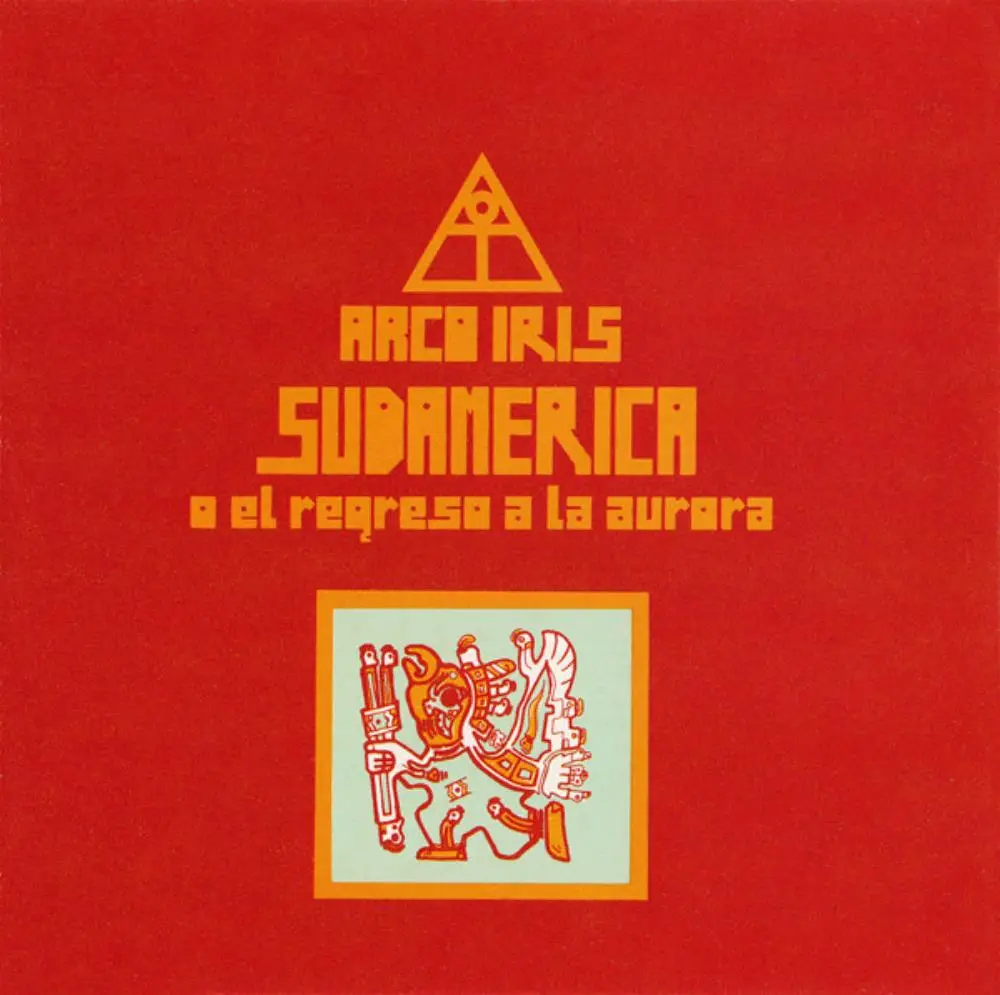 Arco Iris released their fourth album, Sudamérica o el Regreso a la Aurora, in December 1972 on Music Hall. The title translates as South America or the Return to Dawn.
This conceptual double album blends folk instrumentation with symphonic jazz elements and extended narrative motifs rooted in Andean spirituality and pacifist allegory. Guitarist Gustavo Santaolalla alternates between twelve-string and charango voicings, shaping tonal counterpoints to Ara Tokatlián’s modal keyboard passages and layered wind lines on flute, tenor, and alto saxophone. Guillermo Bordarampé reinforces the tonal shifts with deep-register phrasing on electric and double bass, while Horacio Gianello provides a shifting, percussive backbone that adapts across acoustic and electric settings. Santaolalla wrote all numbered tracks.
Sudamérica o el Regreso a la Aurora unfolds across two long suites built from acoustic frameworks, ritual percussion, and episodic instrumental sequences that shift fluidly between contemplative passages and densely layered climaxes. The opening “Obertura” stretches across twelve minutes, alternating between acoustic guitar motifs and clustered ensemble outbursts; flute and sax trace overlapping figures while percussion underscores each shift with clipped emphasis. “La canción de Nahuel” lowers the pace into a dirge-like procession, its central theme carried by sparse phrasing and restrained vocals.
“Canto del pájaro dorado” begins in suspended silence, gradually introducing flute and guitar in echoing layers before pivoting mid-piece into fast ornamental phrases patterned around Andean modal scales. “Viaje astral” spirals outward from arpeggiated electric guitar, layering flutes, synth tones, and percussion before dissolving into a brief vocal-led rhythm change. “Tema del Maestro” and “Iluminación” act as linked miniatures that reprise and extend melodic ideas through subtle woodwind and sax overlays, bridged by acoustic figures. “Hoy he visto al rey (Gira)” introduces vocal harmonies with upper-register phrases nested into gently repeating acoustic cycles.
On Acto Segundo, the 17-minute “Busco a Dios en Mí y en el Sol” opens with elongated saxophone tones and slow organ surges before snapping into a brisk blues vamp, interjected by vocal refrains and alternating solos—first electric guitar, then organ—followed by a five-minute percussion break where each rhythmic voice enters and exits independently. The final section returns to a tightened instrumental figure that escalates in volume and accelerates toward collapse.
“Persecución de los peregrinos” opens with brass fanfare and descends into fragmented electric-guitar counterpoint and layered sax phrases over a slow three-chord churn. “Viaje por las galerías subterráneas” and “Salida al inmenso lago” compress flute, bowed bass, and charango into compact narrative episodes that shift without repetition. “Epílogo: Sudamérica” closes with amplified rhythmic pacing, vocal layers climbing in intensity across overlapping ensemble figures. The entire album follows an internal momentum where recurring motifs and instrumentation evolve gradually, binding the story’s arc to an ever-shifting acoustic core.
Acto Primero
A1. “Obertura” [Overture] (12:52)
A2. “La Canción de Nahuel” [Nahuel’s Song] (5:53)
A3. “Canto del Pájaro Dorado” [Song of the Golden Bird] (3:30)
A4. “Viaje Astral” [Astral Journey] (2:25)
B1. “Tema del Maestro” [Theme of the Master] (2:52)
B2. “Iluminación” [Illumination] (1:59)
B3. “Hoy He Visto al Rey (Gira)” [Today I Have Seen the King (Tour)] (3:29)
B4. “Sígueme” [Follow Me] (1:48)
B5. “El Negro” [The Black One] (1:54)
B6. “Los Campesinos y el Viajero” [The Peasants and the Traveler] (2:18)
B7. “El Estudioso” [The Scholar] (2:28)
B8. “Oración de la Partida” [Prayer of Departure] (2:53)
B9. “Epílogo: Sálvense Ya” [Epilogue: Save Yourselves Now] (3:02)
Acto Segundo
C1. “Recuerdo de Mi Ser” [Memory of My Being] (3:43)
C2. “Canción de los Peregrinos” [Song of the Pilgrims] (2:34)
C3. “Amancay” (2:09)
C4. “Busco a Dios en Mí y en el Sol (Hombre)” [I Seek God in Myself and in the Sun (Man)] (17:10)
D1. “Deserción del Viajero” [Desertion of the Traveler] (3:00)
D2. “La Duda de los Campesinos” [The Doubt of the Peasants] (3:14)
D3. “El Aliento de Dios” [The Breath of God] (2:17)
D4. “El Viajero Delata a los Peregrinos” [The Traveler Betrays the Pilgrims] (6:52)
D5. “Persecución de los Peregrinos” [Persecution of the Pilgrims] (2:43)
D6. “Viaje por las Galerías Subterráneas” [Journey Through the Underground Galleries] (1:29)
D7. “Salida al Inmenso Lago – Iluminación” [Exit to the Immense Lake – Illumination] (2:35)
D8. “Reencuentro con Amancay – Oremos” [Reunion with Amancay – Let Us Pray] (0:23)
D9. “Las Colinas y el Maestro / Epílogo: Sudamérica” [The Hills and the Master / Epilogue: South America] (3:28)
Arco Iris recorded Sudamérica at Estudios Sound Center in Buenos Aires with Juan Carlos Manojas as engineer. Santaolalla produced the album with José Rodrigues Netto serving as executive producer on behalf of Sudamericana S.A.C.I.F.I. Danais voiced the character Amancay, while José Ferrari illustrated the cover and voiced the Maestro. Early editions appeared in a fold-out sleeve and deluxe boxset under the same catalog number.
Inti Raymi
 Arco Iris released their fifth album, Inti Raymi, in October 1973 on Music Hall.
The album continues the band’s fusion of Andean folklore and extended instrumental forms, centering on layered acoustic-electric dialogues and wind-based counterpoint. Guitarist Gustavo Santaolalla alternates between charango and electric voicings while flutist–reedist Ara Tokatlián shifts timbres across quena, clarion, soprano and tenor saxophone, and organ. Guillermo Bordarampé provides a resonant underpin on bass and contrabass, with Horacio Gianello reinforcing the modal framework through a percussion-heavy backbeat and shifting vocal accents. Santaolalla wrote all tracks except “Maritimaria” and “La Pastora de los Peces,” which are credited to Dana.
Inti-Raymi flows through acoustic-led sequences, rhythmic ensemble passages, and vocal-centered interludes shaped around ceremonial pacing and ritual repetition. The opening track unfolds as a slow immersion, anchored by cycling guitar figures and subdued charrango patterns layered beneath breathy harmonies. “En Nuestra Frente” pivots into clipped sax phrasing over a staggered percussive pulse, breaking mid-piece for a rising electric guitar solo that folds into the closing vocal refrains. “Maritimaria” swings with upward pacing and vocal syncopation, riding bright chordal shifts and congas through a midtempo dance structure.
“La Pastoral de los Peces” centers on flute lines and layered female vocals over softened organ and acoustic guitar, sustaining a pastoral cadence without break or climax. “Abran los Ojos” accelerates into brisk electric guitar patterns and Hammond flourishes, each exchange punched forward by staccato percussion. “Solo Como el Cardón” pares everything back to voice and guitar, phrased in even intervals and framed by long rests. “No Quiero Mirar Atrás” moves with tightened dynamic contrast, setting drifting instrumental textures against sudden rhythm surges, peaking during a distorted sax solo that folds into a slower pulse. The final track restates the opening motif in softened variation, closing the suite with reduced instrumentation and a lowered tempo.
A1. “Inti-Raymi” [Festival of the Sun] (3:49)
A2. “En Nuestra Frente” [On Our Forehead] (5:57)
A3. “Maritimaria” (6:52)
A4. “La Pastora de los Peces” [The Shepherdess of the Fish] (3:24)
B1. “Abran los Ojos” [Open Your Eyes] (4:15)
B2. “Adónde Irás, Camalotal” [Where Will You Go, Camalotal] (5:53)
B3. “Solo Como el Cardón” [Alone Like the Cardón Cactus] (1:50)
B4. “No Quiero Mirar Atrás” [I Don’t Want to Look Back] (5:31)
B5. “Inti-Raymi” [Festival of the Sun] (2:47)
Arco Iris recorded Inti Raymi with engineer Juan Carlos Manojas at Estudios Sound Center, Buenos Aires. Santaolalla produced the sessions with executive oversight by José Rodrigues Netto for Sicamericana S.A.C.I.F.I., which also handled manufacturing and distribution. The album includes a printed inner sleeve featuring a band portrait and a poetic inscription aligned with the group’s spiritual and mythological themes.
Agitor Lucens V
 Arco Iris released their sixth album, Agitor Lucens V, in March 1975 on Music Hall.
This extended concept work spans cosmic allegory and esoteric narrative through shifting instrumental forms that merge Andean folk textures with electric jazz phrasing and sparse symphonic elements. Guitarist Gustavo Santaolalla exchanges tonal fragments and structural leads with reedist–keyboardist Ara Tokatlian, who moves between flute, organ, quena, and soprano and tenor saxophone voicings. Guillermo Bordarampé establishes low-end contrast with resonant double bass and flexible electric patterns, underpinned by Horacio Gianello’s dynamic, polyrhythmic pulse. Santaolalla composed the majority of the material, with contributions from Dana, Tokatlian, Bordarampé, and Gianello.
Agitor Lucens V (Driver Shining V) unfolds as a two-LP ceremonial cycle, structured around ascending instrumental passages, acoustic invocations, and extended episodes that contrast sharp ensemble peaks with suspended, ambient intervals. The album opens with “Intro – La Divina Madre,” a slow-form emergence built on pipe organ swells and staggered guitar phrasing that expands and contracts in long arcs. “Lucero Andino” carries this energy into earthbound terrain with voice-led zamba rhythm and strummed chord cycles, before “Vientos Celestiales” lifts back into aerial motion—flute and quena sketching layered refrains over percussive signals and ambient guitar bursts.
The linked sequence of “Bas-Bus,” “Si el Señor Me Dio Estas Manos,” and the reprise intensifies the pace with sharp instrumental breaks, harmonica-led sections, and jazz-inflected saxophone lines that pivot across brisk transitions. “Príncipe del Alba” reorients the arc with a ceremonial waltz that descends gradually into “Las Luces Eternas,” a 14-minute centerpiece that shifts midstream from compact vocal layering into an extended instrumental plane: guitar and sax alternate open phrasing over a shifting 6/8 rhythm that dissolves into layered, modal resolution.
On the second disc, “El Regreso del Pájaro Dorado” accelerates into staccato chordwork and layered organ drones, eventually giving way to freeform winds and hand percussion. “La Nave Madre” drops into slow pulse interplay where flute, bass, and keyboard sketch suspended textures. “El Arcángel Miguel” and “Agitor” lower the dynamic range with devotional vocal layers, minor modal harmonies, and inserted wind motifs that rise and vanish across long-held tones. “Sendero de Marcahuasi” merges charango and flute in ritual alternation, while “Paraíso Sideral” moves between slow-burning harmonic sequences and phrased ensemble breaks where Gilmour-like phrasing expands across rising chords.
“Un Tiempo y Tiempos y la Mitad de un Tiempo” builds gradually from circular 6/8 phrasing, accelerating mid-piece into clipped bursts driven by layered synths and a long drum solo over shifting rhythmic undercurrents. The final suite, “Lucens V,” opens with Dana’s voice suspended over sparse flute and fingerpicked guitar, then sharpens across Part II with interwoven sax, percussion, and ambient guitar that builds into a freeform surge. Part III erupts in pipe organ dissonance, held tones and wordless chanting that close into an almost liturgical cadence. After a rupture of free-jazz in “Las Huestes de Orión,” the album ends with “Salmo a Cristo,” a final invocation led by pipe organ and recited verse that frames the project’s spiritual fracture—shifting its vision from terrestrial myth to celestial confrontation.
A1. “Intro (La Divina Madre)” [Intro (The Divine Mother)] (5:14)
A2. “Lucero Andino” [Andean Morning Star] (3:29)
A3. “Vientos Celestiales” [Celestial Winds] (3:45)
A4a. “Bas-Bus” (1:12)
A4b. “Si el Señor Me Dio Estas Manos” [If the Lord Gave Me These Hands] (3:11)
A5. “Bas-Bus” (0:40)
B1. “Príncipe del Alba (Aurora Borealis)” [Prince of the Dawn (Aurora Borealis)] (4:56)
B2. “Las Luces Eternas” [The Eternal Lights] (14:26)
C1. “El Regreso del Pájaro Dorado” [The Return of the Golden Bird] (6:42)
C2. “La Nave Madre” [The Mother Ship] (3:14)
C3. “El Arcángel Miguel” [The Archangel Michael] (2:13)
C4. “Agitor” (1:10)
C5. “Sendero de Marcahuasi” [Path of Marcahuasi] (4:38)
C6. “Paraíso Sideral” [Sidereal Paradise] (6:10)
D1. “Un Tiempo y Tiempos y la Mitad de un Tiempo” [A Time and Times and Half a Time] (7:25)
D2. “Lucens V” (4:14)
D3. “Las Huestes de Orión” [The Hosts of Orion] (6:53)
D4. “Salmo a Cristo (El Sublime Peregrino)” [Psalm to Christ (The Sublime Pilgrim)] (7:15)
Arco Iris recorded Agitor Lucens V at multiple locations including the Basilica del Santísimo Rosario in Lima, Peru, where Héctor Zeoli tracked the pipe organ heard on “Salmo a Cristo.” Jorge Da Silva handled production, engineering, and mixdown, with additional engineering by Teddy Goldman and auxiliary sound by Ubaldo Bertrán. Raúl Galán contributed photography, including the front cover UFO image captured in Mar del Plata on April 10 at 13:30h. Juan Carlos López painted and designed the sleeve, issued in a fold-out format on Music Hall’s magenta label.
Los Elementales
 Arco Iris released their seventh album, Los Elementales, in May 1977 on Cabal.
Structured as a suite in four elemental acts, the album integrates jazz fusion instrumentation with metaphysical themes and native Andean tonalities. Keyboardist Ara Tokatlian modulates between Mini Moog, PS-3000, Fender Rhodes, and acoustic piano while doubling on flute and saxophones, in interplay with guitarist Ignacio Elisavetsky’s electric phrasings and harmonic patterns. Guillermo Bordarampé reinforces the lower framework on bass and bandura, providing a flexible underpin to the shifting arrangements, while José Luis Pérez maintains pulse and contrast through layered percussion and tambora. All themes originate from group arrangements composed by Tokatlian, Dana, and Guillermo Daragui.
Los Elementales opens with layered polyrhythms and escalates into a high-velocity sequence of ensemble exchanges and contrasting instrumental vignettes, structured around the symbolic progression of the classical elements. “Gob” enters with cross-patterned percussion and sharp syncopation, pushing tenor sax through spiraling intervals and clustered phrasing while electric piano outlines brief harmonic anchor points. “Destilando el Perfume de los Minerales” drops into open chord figures and subdued melodic lines, its vocal phrasing floating across piano and synth layers before the section coils back into a denser refrain. “Cristalizando los Rayos del Sol” accelerates with quick unison breaks and alternating voice-led motifs, framed by sustained synth phrases and electric guitar, then resets for layered sax and keyboard overlays in the final stretch.
“Djin” alternates between short bursts of bombast and quieter figures with piano, soprano sax, and flute trading prominence in a circular exchange. “Despertar de los Hijos de la Mañana” rides two-chord electric piano patterns that rise into ensemble surges and retreat into stripped-down flute–piano duets. “Necksa” builds over thick bass and muted rhythm guitar, locking into a slow-funk pace that gives way to sax-driven themes, call-and-response wind textures, and a section of layered choral voicings that resolve into instrumental ascent.
“Los Nacidos del Viento” returns to acoustic instrumentation, tracing ternary patterns through gently arpeggiated guitar while vocals blend into flute and filtered synth, moving without climax. “Paralda” closes with a multi-phase structure: first riding low-register sax phrasing against tightly pressed drums and electric bass, then shifting into fragmented rhythmic shifts with synth–guitar counterpoint that escalates into clustered bursts before folding back into controlled fade. The album sustains momentum through contrast—each passage balancing combustion and restraint through sudden pivots in meter, ensemble density, and tone.
Elemental de Tierra [Elemental of Earth]
A1. “Gob (Maestro-Mago de los Gnomos)” [Gob (Master-Mage of the Gnomes)] (6:01)
A2. “Destilando el Perfume de los Minerales” [Distilling the Perfume of the Minerals] (5:00)
Elemental de Fuego [Elemental of Fire]
A3a. “Cristalizando los Rayos del Sol” [Crystallizing the Rays of the Sun] (4:28)
A3b. “Djin (Maestro-Mago de las Salamandras)” [Djin (Master-Mage of the Salamanders)] (1:10)
Elemental de Agua [Elemental of Water]
A4. “Despertar de los Hijos de la Mañana” [Awakening of the Children of the Morning] (3:47)
B1. “Necksa (Maestro-Mago de las Ondinas)” [Necksa (Master-Mage of the Undines)] (8:10)
Elemental de Aire [Elemental of Air]
B2a. “Los Nacidos del Viento” [The Ones Born of the Wind] (3:59)
B2b. “Paralda (Maestro-Mago de los Silfos)” [Paralda (Master-Mage of the Sylphs)] (8:12)
Arco Iris recorded Los Elementales at Estudios Audión in April 1977 with engineer Roberto Aldonis. The album was issued in a gatefold sleeve with artwork and illustration by Juan Carlos López and photography by José Luis Perotta. A printed inner sleeve outlined the album’s conceptual alignment with the classical four elements. Cabal released the LP with light blue labels, marking the group’s transition into a new phase of spiritualized instrumental work.
Faisán Azul
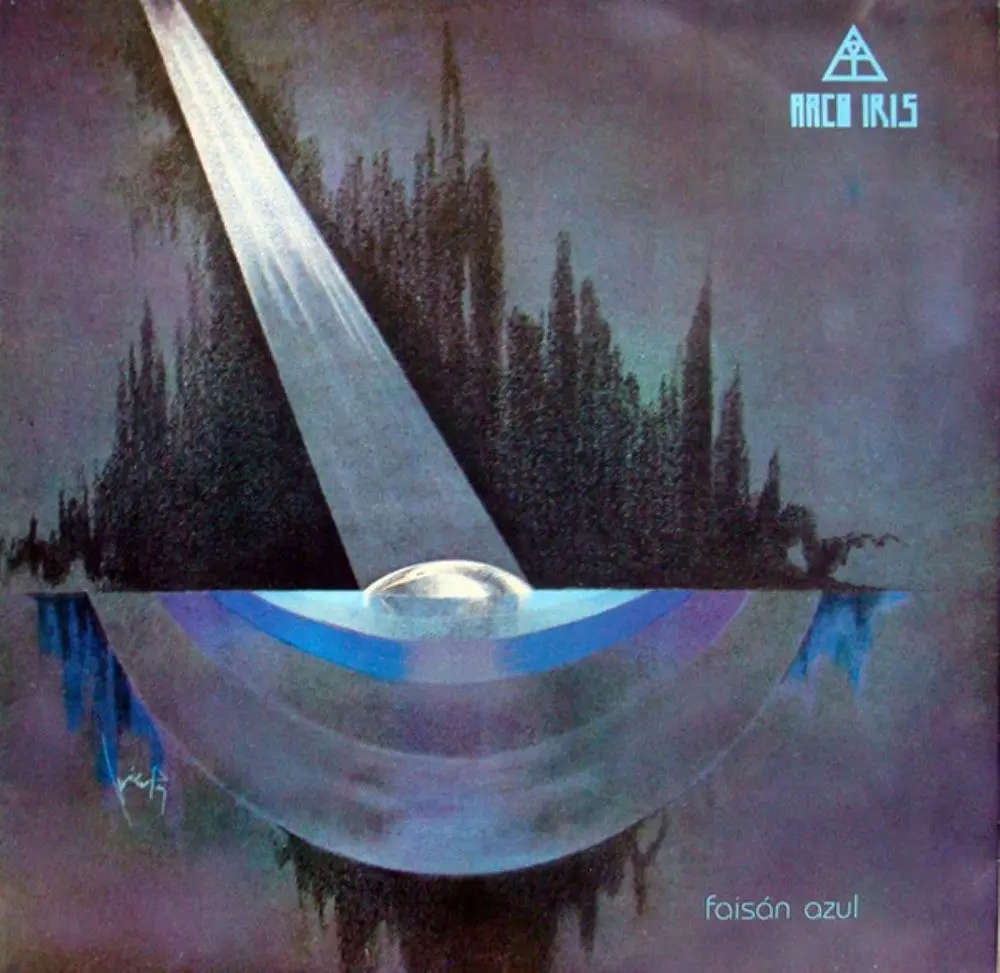 Arco Iris released their eighth vinyl album, Faisán Azul, in 1983 on CBS.
The album integrates Latin American folk traditions with elements of jazz fusion and chamber instrumentation, built around modal wind passages and percussive interplay. Ara Tokatlian blends tenor and soprano saxophones with flute, quena, and Andean aerophones, while guitarist John Chiodini alternates nylon-string and electric textures in dialogue with Milcho Leviev’s Fender Rhodes lines and melodica phrases. Danais Wynnycka reinforces the thematic center with vocal ornamentation and ocarina, while Julio Ledezma anchors the material with layered rhythmic pulses on drum kit and bombo legüero, alongside Hartt Stearns’ auxiliary percussion. Tokatlian and Wynnycka composed most tracks, with “Gob” credited to Guillermo Daragui.
Faisán Azul centers on extended acoustic landscapes shaped by gradual crescendos, ritual percussion, and flute-led thematic arcs that unfold with unhurried pacing. “Aconcagua (Amanecer)” opens with pan flute tones and wordless vocal textures that expand into lightly electrified accompaniment, sustaining a bright, spacious atmosphere. “Chacarera Dance” stretches across ten minutes of cyclical rhythmic motion, where buoyant vocal lines and agile flute figures ride persistent percussion and shifting harmonic turns.
“Danais” lowers the dynamic field into nocturnal stillness, guided by resonant female voice and sparse instrumental framing that deepens the surrounding hush. The title track rises slowly from this calm, layering flute, voice, and rhythm into a long-form ascent that gathers force near its close. “Gob” redirects the mood toward festive procession through animated rhythmic accents and denser ensemble interplay, before “Aconcagua (Atardecer)” resolves the sequence with a brief, playful coda that releases the accumulated tension into quiet closure.
A1. “Aconcagua (Amanecer)” [Aconcagua (Dawn)] (6:22)
A2. “Chacarera Dance” (3:31)
A3. “Danais” (8:48)
B1. “Faisán Azul” [Blue Pheasant] (5:52)
B2. “Gob” (7:03)
B3. “Aconcagua (Atardecer)” [Aconcagua (Dusk)] (3:54)
Arco Iris recorded Faisán Azul with full self-production and arrangement duties, issuing the album through Discos CBS S.A.I.C.F. Maximo Paz designed the sleeve artwork, and Hartt Stearns contributed additional digital elements. The instrumentation emphasizes acoustic and traditional timbres across a suite-like structure, reflecting the group’s continued exploration of nature-based themes and pan-Latin folk idioms through a refined, spacious soundscape.
Discography:
- Arco Iris (1970)
- Sudamérica o el Regreso a la Aurora (1972)
- Tiempo de Resurrección (1972)
- Inti Raymi (1973)
- Agitor Lucens V (1975)
- Los Elementales (1977)
- Faisán Azul (1983)
- Peace Pipes (1988)
Sources:
Artist/Album Pages:
The Surprise Sisters were an Australian vocal group that first recorded as The Cliffmores. After mov...
A Foot in Coldwater (AFIC) was a Canadian hard-rock band from Toronto that released three Daffodi...
People's Choice was an American soul-funk band from Philadelphia. They reached the R&B chart i...
Los Shakers were an Uruguayan beat quartet, formed by brothers Hugo and Osvaldo Fattoruso amid Monte...
John Blair (Nov. 8, 1943 — June 3, 2006) was an American violinist and guitarist from Toledo, Ohio...
Spice was an American soul group from the Bronx that cut multiple tracks released without their kn...
Bram Stoker was an English post-psych band that released the album Heavy Rock Spectacular on Windm...
Fantasia was a Finnish symphonic-rock band that issued a 1975 self-titled album on Hi-Hat. Membe...
Steel Mill was an English post-psych hard rock band that released the 1972 album Green Eyed God on...
Ron and Shirley were an American folk-pop duo behind the 1977 album Rock and Scroll on Christian ...
Eric Clapton (born March 30, 1945) is an English guitarist, singer, and songwriter who emerged as ...
Pat Rebillot (born April 21, 1935) is an American keyboardist, arranger, and producer who played ...