

Cosmic Overdose was a Swedish space-rock/minimal-wave combo that released two singles and the 1980/81 albums Dada Koko and 4668 on Silence Records. The final lineup continued as Twice a Man.
Members: Dan Söderqvist (guitar, vocals), Karl Gasleben [Ingemar Ljungström] (synthesizer, vocals), Regnmakaren [Kjell Karlgren] (drums, 1979-80), Jimmy Cyklon [Thomas Andersson] (guitar, synthesizer, vocals, 1980-81)
Background
Cosmic Overdose formed in Gothenburg in 1978 when guitarist Dan Söderqvist teamed with synthesizer player Ingemar Ljungström.
Söderqvist hailed from Älgarnas Trädgård, a space-rock combo that released a classic 1972 album and cut a long-vaulted second. Ljungström recorded the 1977 electronic album as part of the trio Anna Själv Tredje, a Swedish purveyor of the Berlin sound. For Cosmic Overdose, he adopted the name Karl Gasleben. Their project started as a duo but expanded to a five-piece for their first single.
“Observation Galen”
Silence issued “Observation Galen” as a 7-inch single in 1979.
Cosmic Overdose built “Observation Galen” on a short, blunt rush with clipped phrasing and a rough, pared-down attack. “Isolatorer” slows the pace and opens more space around the electronic figures.
A. “Observation Galen” (1:50) — Söderqvist
B. “Isolatorer” (3:12) — Gasleben
Silence issued “Observation Galen” as a 7-inch single in 1979 with “Isolatorer” on the flip side.
Söderqvist and Gasleben recorded the single with drummer Kjell “Regnmakaren” Karlgren and two further members, Peter Bryngelsson and Thomas Wiegert. That lineup soon narrowed to Söderqvist, Gasleben, and Karlgren.
Dada Koko
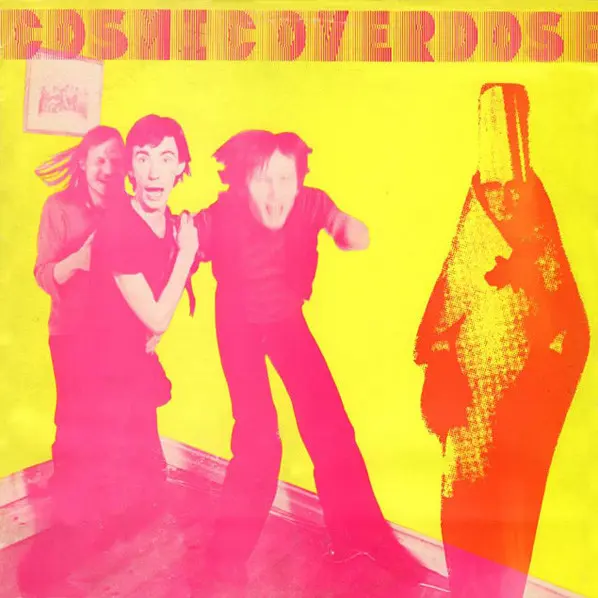 Cosmic Overdose released their first album, Dada Koko, in February 1980 on Silence.
Dada Koko rides on dry synthesizer lines, rigid percussion, wiry guitar figures, and vocals that alternate between deadpan chant and terse interjection. Söderqvist and Gasleben supply the album’s sharpest tonal contrasts, while Regnmakaren locks the material to a stiff, physical backbeat.
“Investera” opens with windy drones and pivots to lurching patterns with metronomic pulsation. “Puppan” slithers upward with biting notes against a frantic two-note bass-line. “Saknaden (Av Trans)” slows amid distant sax and icy, trebly synth foundations. “Moderna Dadaister” and “1980-30” extend the group’s method into longer spans built from repeated figures, clipped accents, and incremental shifts in weight. “Vit Yta,” “Tanten,” and “Råttan” cut in shorter shapes, and “Turs” gives Regnmakaren the clearest authorial stamp on the album’s stripped, percussive design.
A1. “Investera” [Invest] (4:42) — Söderqvist
A2. “Puppan” [The Doll] (3:57) — Ljungström
A3. “Moderna Dadaister” [Modern Dadaists] (5:55) — Söderqvist
A4. “Saknaden (Av Trans)” [The Absence (of Trance)] (4:32) — Gasleben
B1. “1980-30” (5:51) — Söderqvist
B2. “Vit Yta” [White Surface] (3:02) — Söderqvist
B3. “Tanten” [The Lady] (2:38) — Gasleben, Regnmakaren
B4. “Turs” (4:27) — Regnmakaren
B5. “Råttan” [The Rat] (3:18) — Söderqvist
Cosmic Overdose recorded Dada Koko at Silence Studio with Anders Lind and Göran Andersson, then mixed the album with Lind.
Göran Andersson shot the cover photo and designed the sleeve.
“To Night”
In June 1980, 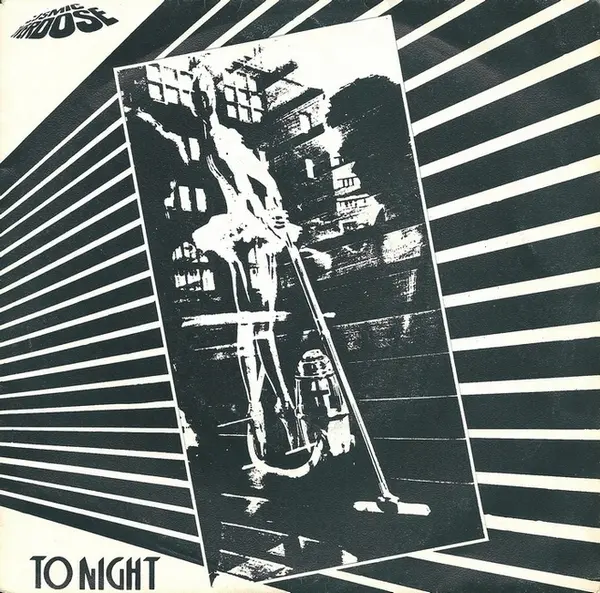 Cosmic Overdose released “To Night,” a standalone single backed with “Dead.”
“To Night” tightens the group’s attack into a cleaner, more controlled shape with a firmer pulse and a straighter vocal line. “Dead” lowers the temperature and holds to a darker, slower drift.
A. “To Night” (3:02) — Söderqvist
B. “Dead” (2:57) — Söderqvist, Gasleben
Silence issued “To Night” in a two-tone picture sleeve with xeroxed reflection imagery.
Karlgren left later that year. Thomas Andersson, who used the name Jimmy Cyklon, joined for the next lineup, which carried Cosmic Overdose through its two final releases.
4668
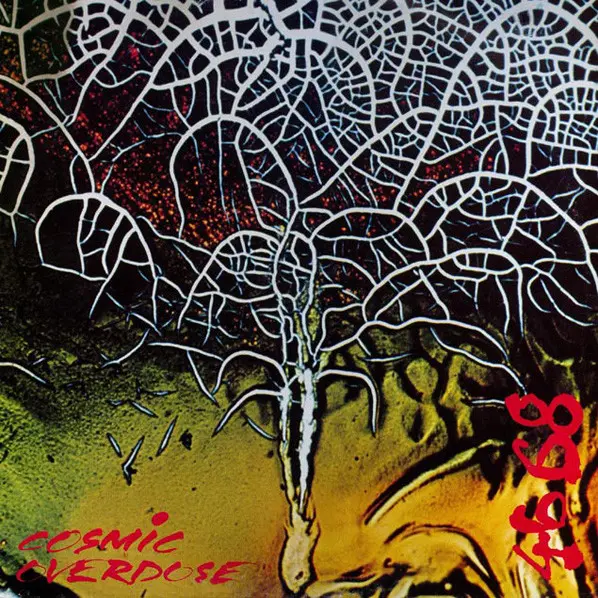 Cosmic Overdose released their second album, 4668, in 1981 on Silence.
4668 tightens around colder synthesizer textures, lean rhythmic patterns, and more measured vocal placement. Söderqvist, Gasleben, and Jimmy Cyklon reduce the earlier album’s clutter and hold the music to cleaner outlines where guitar, synthesizer, and pulse interlock with more control. Söderqvist, Cyklon, and Gasleben jointly wrote all eight tracks.
“Bomber,” “En Av Dom,” and “Android” move in short, compact bursts. “Nina Fontanell” and “Hissen” widen the space and let the trio sit longer inside repeated figures. “Oktoberfragment” and “Liten Storsint” keep the mood taut and inward, and “Genomskärning” closes the album in a nine-minute stretch built on gradual accumulation, tonal drift, and sustained repetition.
A1. “Bomber” (2:21)
A2. “En Av Dom” [One of Them] (2:31)
A3. “Android” (3:06)
A4. “Nina Fontanell” (4:06)
A5. “Oktoberfragment” [October Fragment] (4:35)
B1. “Hissen” [The Elevator] (4:15)
B2. “Liten Storsint” [Small Magnanimous] (3:25)
B3. “Genomskärning” [Cross-Section] (9:05)
Cosmic Overdose recorded 4668 with Anders Lind and Göran Andersson.
Arne Henriksson and Cosmic Overdose designed the cover.
Final Koko
Xenophone International issued Final Koko as a cassette album in 1982.
Cosmic Overdose presents Final Koko through a looser studio configuration than 4668. Söderqvist and Gasleben remain at the center, Göran Andersson joins the main performer credit, and Jimmy Cyklon, Regnmakarn, and Lars Falk appear on selected tracks. Söderqvist and Gasleben wrote most of the program, Cyklon shared credit on “Missiles,” “Strip-Tease,” and “October,” and Falk shared credit on “Care.”
A1. “Missiles” (2:17)
A2. “Modern DaDa” (6:24)
A3. “Romantic” (5:37)
A4. “Strip-Tease” (2:45)
B1. “Care” (2:34)
B2. “80-30” (5:39)
B3. “Mainline” (2:36)
B4. “October” (4:58)
Cosmic Overdose recorded Final Koko at Silence Studio with Anders Lind and co-produced the cassette with Fly By Night Production.
Discography:
- “Observation Galen” / “Isolatorer” (1980)
- “Tonight” / “Dead” (1980)
- Dada Koko (1980)
- 4668 (1981)
Sources:
Artist/Album Pages:
Hard Corps were an English coldwave/synthpop band from London that released a standalone single o...
Baltik was a Swedish supergroup behind a 1973 self-titled album on CBS. They featured two jazz-rock ...
T-Connection was a funk band from Nassau, Bahamas. They made four albums circa 1977–79 on the T.K....
Archimedes Badkar was a Swedish ethno/jazz-rock big band that was active for eight years, starting...
Magnum was an English hard-rock band from Birmingham that released four studio albums and a live d...
O'Bryan is an American soul singer who scored an R&B hit with "The Gigolo" from his 1982 debut...
Ian Dury (May 12, 1942 — March 27, 2000) was an English singer, lyricist, and bandleader who emerg...
Bruford was an English jazz-rock supergroup that released four albums on Polydor/EG between 1978 a...
Status Quo was an English hard-rock/boogie band from London that initially cut three beat singles ...
Ultravox was an English new wave band, first fronted by John Foxx on the 1977–78 Island releases Ult...
Iko was a Québécois coldwave trio that released the album '83 on Manhattan-Formula in 1982. Memb...
Agathorn was a Danish art-rock band behind a 1981 self-tilted album on Telefunken, followed by a...