

Midnight Oil are an Australian rock band that released two 1978–79 albums on Powderworks, followed by five albums between 1981 and 1990 on CBS. Their 1982 fourth album 10, 9, 8, 7, 6, 5, 4, 3, 2, 1 marked their debut in the Northern hemisphere, which they conquered with the 1984–87 albums Red Sails in the Sunset and Diesel and Dust and the hit “Beds Are Burning.”
Musically, they evolved from post-punk hard rock to hybrids of art rock, folk, ethno, and strident Big Music. Their lyrics tackle the environment, the plight of workers, and the rights of natives.
Members: Jim Moginie (guitar, keyboards), Rob Hirst (drums, 1972–2026), Andrew “Bear” James (bass, 1972-80), Peter Garrett (vocals, 1975-2002), Martin Rotsey (guitar, 1976-2002), Peter “Giffo” Gifford (bass, 1980-87), Bones Hillman [Wayne Stevens] (bass, 1987-2002)
Background
Midnight Oil evolved from the power-trio Farm, formed in 1972 by Sydney teenagers Rob Hirst (drums), Andrew James (bass), and Jim Moginie (guitar, keyboards). In 1973, they hired singer Peter Garrett (b. 1953), then enrolled at the Australian National University in Canberra. They gigged part-time for the East Coast surf community with a set comprised of Cream and Led Zeppelin covers.
In 1976, while Garrett studied law at the University of New South Wales, the band went professional under a new name, Midnight Oil, inspired by the Jimi Hendrix song “Burning of the Midnight Lamp,” itself inspired by the idiom “burn the midnight oil” (to read, work, or study late into the night, typically with a deadline or test the next day). The following year, they added guitarist Martin Rotsey and signed to Powderworks.
Midnight Oil
 Midnight Oil released their self-titled debut album in November 1978 on Powderworks.
Guitarist–keyboardist Jim Moginie wrote the epic album-closer “Nothing Lost – Nothing Gained” and co-wrote “Used and Abused” with drummer Rob Hirst. Together, they wrote songs with additional input by guitarist Martin Rotsey (“Head Over Heels,” “Run By Night”) and bassist Andrew James, the fourth writer on “Powderworks.”
Singer Peter Garrett penned lyrics to Hirst–Moginie’s “Dust” and the group-written anthem “Surfing with a Spoon.”
“Powderworks” darts from a broad guitar figure into a mid-song break. “Head Over Heels” tightens around winding lines and a hard title landing. “Dust” states an octave-spaced bass figure over organ and a sharp lead break. “Used and Abused” snaps through a key change into the title line. “Surfing With a Spoon” lurks through darker keyboard color and a solo-organ break. “Run By Night” barrels through a compact riff and tight rhythmic drive. “Nothing Lost – Nothing Gained” slows into a drawn-out instrumental duel.
A1. “Powderworks” (5:35) – frames public life as pressure, threat, and fraud, with Garrett pushing back against campaign language, intimidation, and enforced compliance. A telling line imagines powerful men setting the tune, then turns the song toward refusal after too much time as someone else’s target.
A2. “Head Over Heels” (4:08) – starts as romantic pursuit but quickly shifts into suspicion, imbalance, and money loss. Garrett undercuts the love-song surface by making the partner a taker of both cash and affection.
A3. “Dust” (3:21) – places the narrator in Town Hall Station at night and morning, where drunks, black walls, commuters, fear, and emptiness flatten the city into one continuous trap. He moves from specific station details to a wider image of people present but spiritually absent.
A4. “Used and Abused” (3:13) – the narrator gets hauled in after a demonstration, denies the charge, then folds police pressure into broader economic pressure. The sharpest line says he stays too occupied earning a living to make money, reducing work to exhaustion without security.
B1. “Surfing with a Spoon” (5:23) – ties a failed relationship to urban routine: office hours, highway traffic, and the need to leave for the coast. Traffic becomes the breaking point, with coastal movement serving as both romantic exit and workday escape.
B2. “Run by Night” (3:59) – uses flight, alcohol, winter motion, party light, and danger to stage a nocturnal escape with no clear destination. Garrett abandons certainty for defiance, even as the surrounding images suggest panic and motion sickness.
B6. “Nothing Lost – Nothing Gained” (8:31) – widens into fatalism: freedom becomes a one-way ticket, distraction replaces action, and the platform offers no arrival. Garrett advises turning up the television and ignoring the animal at the door, making apathy the song’s central danger.
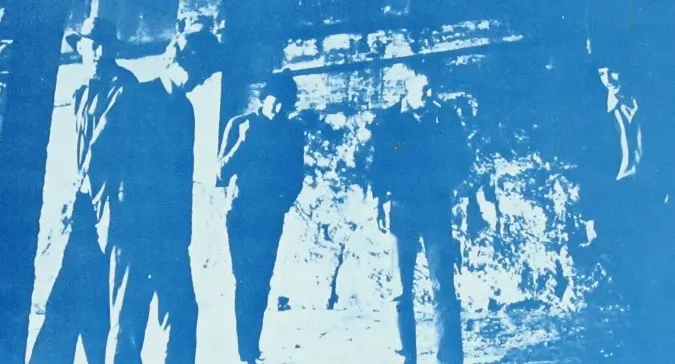 Sessions took place in June 1978 at Sydney’s Albert Studios on King Street, where 2JJ radio personality Keith Walker produced and engineered Midnight Oil in sequence with the debut Cold Chisel EP You’re Thirteen, You’re Beautiful and You’re Mine.
The album appeared in a band-designed sleeve with back-cover photography by Jan Paul.
Midnight Oil lifted “Run by Night” (b/w “Dust”) as their first single, accompanied with a studio-performance video.
Head Injuries
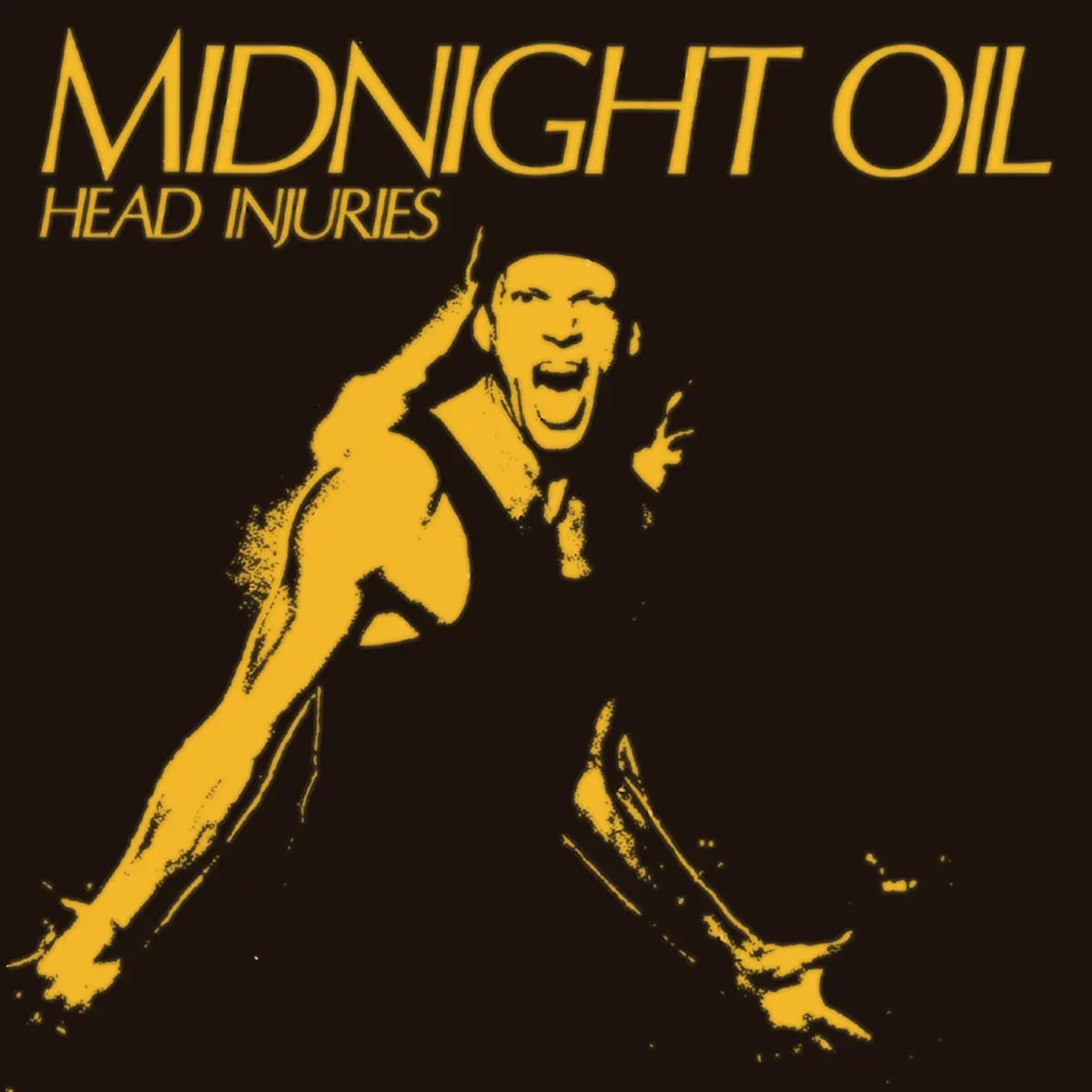 Midnight Oil released their second album, Head Injuries, in October 1979 on Powderworks.
Drummer Rob Hirst and guitarist–keyboardist Jim Moginie co-wrote the opener “Cold Cold Change” and collaborated with guitarist Martin Rotsey on “Naked Flame,” “No Reaction,” and “Profiteers.”
The trio wrote two songs (“Section 5 (Bus to Bondi),” “Stand in Line”) with words by singer Peter Garrett, who also lyricized tunes by Moginie (“Is It Now?”), Hirst (“Back on the Borderline,” the only co-write by bassist Andrew James), and the epic Side One closer “Koala Sprint,” a Moginie–Rotsey composition.
“Cold Cold Change” marches through harmonized guitar figures and bass-led passages. “Section 5 (Bus to Bondi)” jabs a staccato line doubled by keyboard before frantic vocal runs and a denser title section. “Naked Flame” snaps from cowbell and falsetto into a late key change. “Back on the Borderline” launches with a drum solo, then locks into a steadier attack and blunt title line. “Koala Sprint” opens on spoken words against choppy keys. A quiet instrumental prelude gives way to Garrett’s scream before the helicopter-like figure returns.
“No Reaction” runs on four-beat attack and a spidery mid-song solo. “Stand in Line” stretches an arpeggiated passage into an extended break and a high scream. “Profiteers” sways from triple meter to four-count march, with pay-phone vocal distance and a closing snare cadence. “Is It Now?” swells toward a mid-song crest, where dissonant leads cut under Garrett’s shriek.
A1. “Cold Cold Change” (3:29) – treats change as a failed promise: invitation, excitement, winter, and exclusion replace any real transformation. The sharp image comes when the weather “freezing” the water also closes the mind.
A2. “Section 5 (Bus to Bondi)” (3:04) – turns a dead car, a beach bus, and consumer fixtures into a Sydney escape plan with a sour edge. The clearest detail leaves the car as scrap for cats, then moves toward Bondi as a substitute for stalled ambition.
A3. “Naked Flame” (3:27) – stages a volatile public interior: a mad house, a minister, a party collapse, and a leader waiting for ignition. Its strongest turn places the speaker under the table with a foot in the door, half-hidden and half-committed.
A4. “Back on the Borderline” (3:09) – builds a nightlife scene from bars, bedrooms, neon, mirrors, and cheap surface materials. The central image puts the narrator “swimming” in neon, which makes the setting feel both physical and unstable.
A5. “Koala Sprint” (5:12) – moves from urban enclosure toward the long coast road, with Chatswood, Brisbane, caravans, farms, and surf-side heat marking the route. The strongest detail sets concrete cabins against the sky, then lets frangipani and ocean color pull the song out of the suburbs.
B1. “No Reaction” (2:59) – reduces politics and social choice to paired oppositions: winners or losers, beggars or choosers, talkers or doers. Its bluntest question asks what anyone would say if the decision finally belonged to them.
B2. “Stand in Line” (4:48) – attacks middle-class comfort, dole politics, aging authority, and forced obedience. The sharpest social detail names the “middle class Holden mass,” then turns the car-owning crowd into a managed queue.
B3. “Profiteers” (3:46) – compresses violence, recruitment, and public disorder into a short protest scene. Its hardest image places a bomber above a golden street while the crowd below falls underfoot.
B4. “Is It Now?” (4:20) – shifts into surveillance and dread, with a suited figure, loaded dice, fences, red eyes, and failed speech. The final movement breaks conversation into floor, door, engine, blindfold, and stairs, leaving the question unresolved.
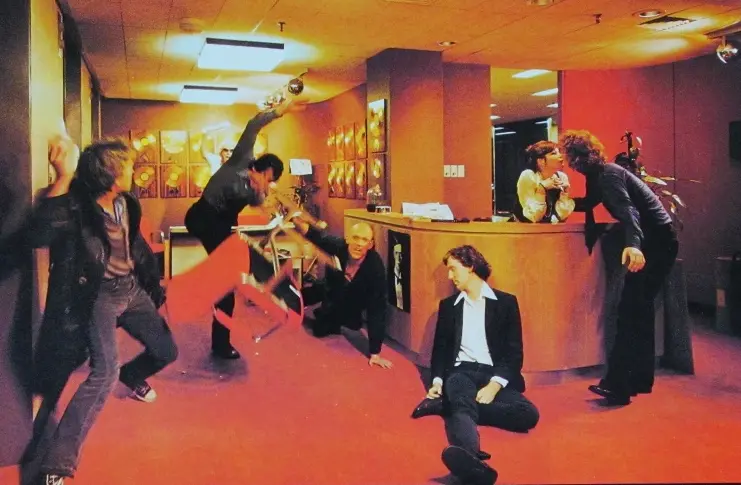 Sessions took place in July–August 1979 at Sydney’s Trafalgar Studios, where Head Injuries became the first full-length production credit for Leszek J. Karski, the former guitarist for the Liverpool R&B octet Supercharge and a recent participant in the Vanda–Young studio project Flash and the Pan. Local soundman Peter J. Walker engineered Head Injuries in sequence with 1978–79 Aussie albums by Air Supply, Cold Chisel, and Skyhooks.
Midnight Oil lifted “Cold Cold Change” as their second single, backed with the prior album’s “Used and Abused.” In February 1979, they released “Back on the Borderline” as the second Head Injuries single (b/w “Section 5 (Bus to Bondi)”).
After Head Injuries, a road-weary James cleared out for bassist Peter Gifford. The lineup of Garrett, Moginie, Rotsey, Hirst, and Gifford lasted ten years and created two EPs and four studio albums.
Bird Noises
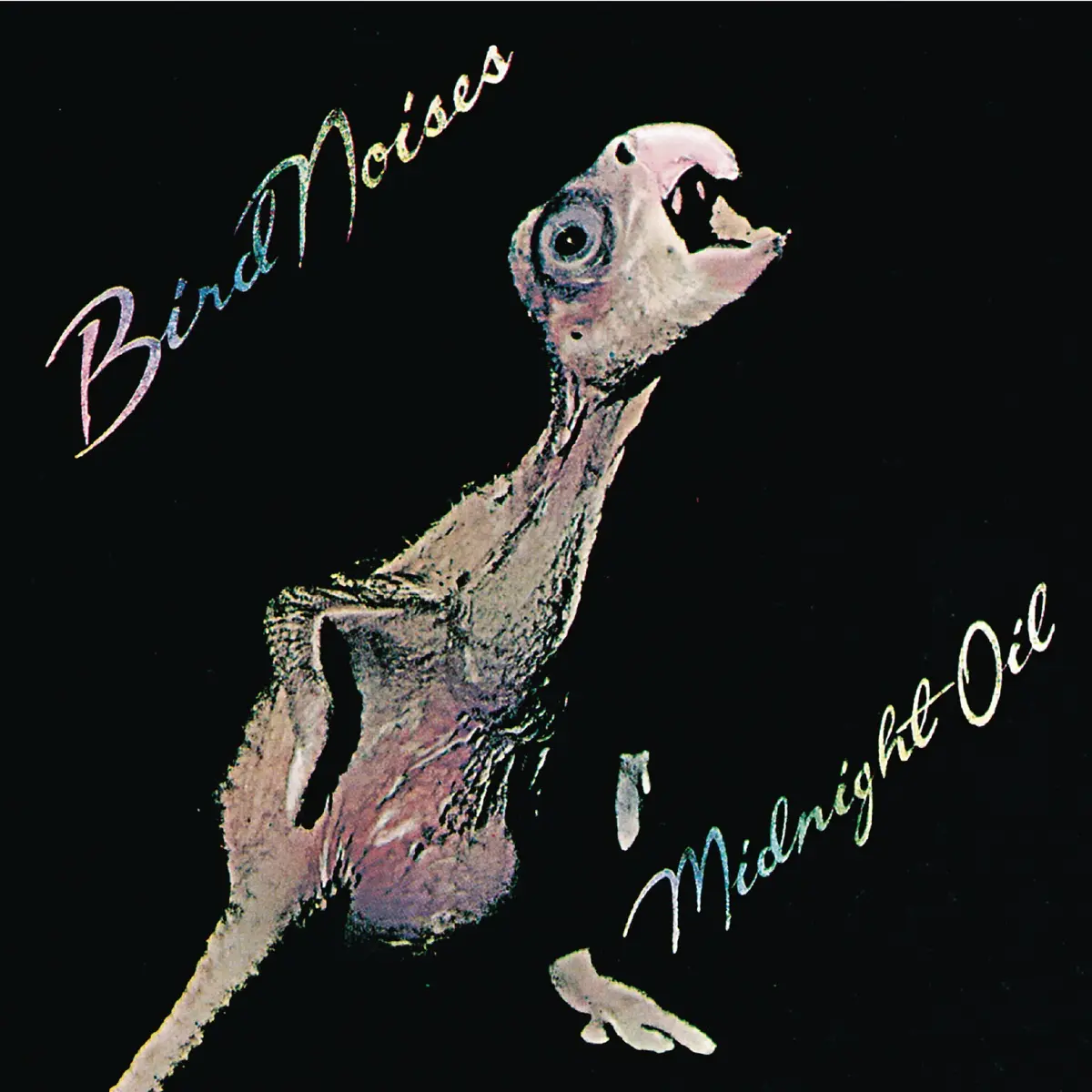 On November 24, 1980, Midnight Oil released Bird Noises, a four-song extended-play single on Powderworks.
The EP features one song (“I’m the Cure”) lone-written by guitarist–keyboardist Jim Moginie, who co-wrote one song with drummer Rob Hirst (“No Time for Games”) and two with guitarist Martin Rotsey: “Wedding Cake Island” and “Knife’s Edge,” the latter with lyrics by singer–harpist Peter Garrett. Hirst provides vocal backing along with new bassist Peter Gifford.
A1. “No Time for Games” (4:34) – attacks childhood shaped by career sorting, national utility, organized competition, and wasted instruction. Its clearest phrase, “modern child,” points to a young person treated as a social product before any private instinct can form.
A2. “Knife’s Edge” (3:39) – places the narrator in a fixed, hostile environment: empty public speech, night rain, weapons, a hotel room, and official deceit. The strongest image puts escape on a “merry-go-round,” making motion circular instead of liberating.
B1. “Wedding Cake Island” (3:16) – instrumental breaks from the political lyric pieces with a surf-lined guitar figure and a steadier coastal atmosphere. Since the track has no words, its reference point comes through the title’s Coogee Beach location and the arrangement’s open space.
B2. “I’m the Cure” (3:48) – turns relief into a speaker who offers calm, avoidance, and dependence under pressure. The lyric lands hardest in the promise of “instant relief,” then darkens through the pressure image in the finger and the divine presence reduced to a teacup.
Midnight Oil recorded Bird Noises at The Music Farm, Byron Bay, on July 21–22, 1980, with producer Leszek Karski and engineer Ross Cockle. Karski mixed the EP at Studios 301, Sydney, with engineer Christo Curtis.
The EP appeared in a black sleeve with a pale skeletal bird figure and cursive title script.
Bird Noises reached No. 28 on the Australian Kent Music Report.
Place Without a Postcard
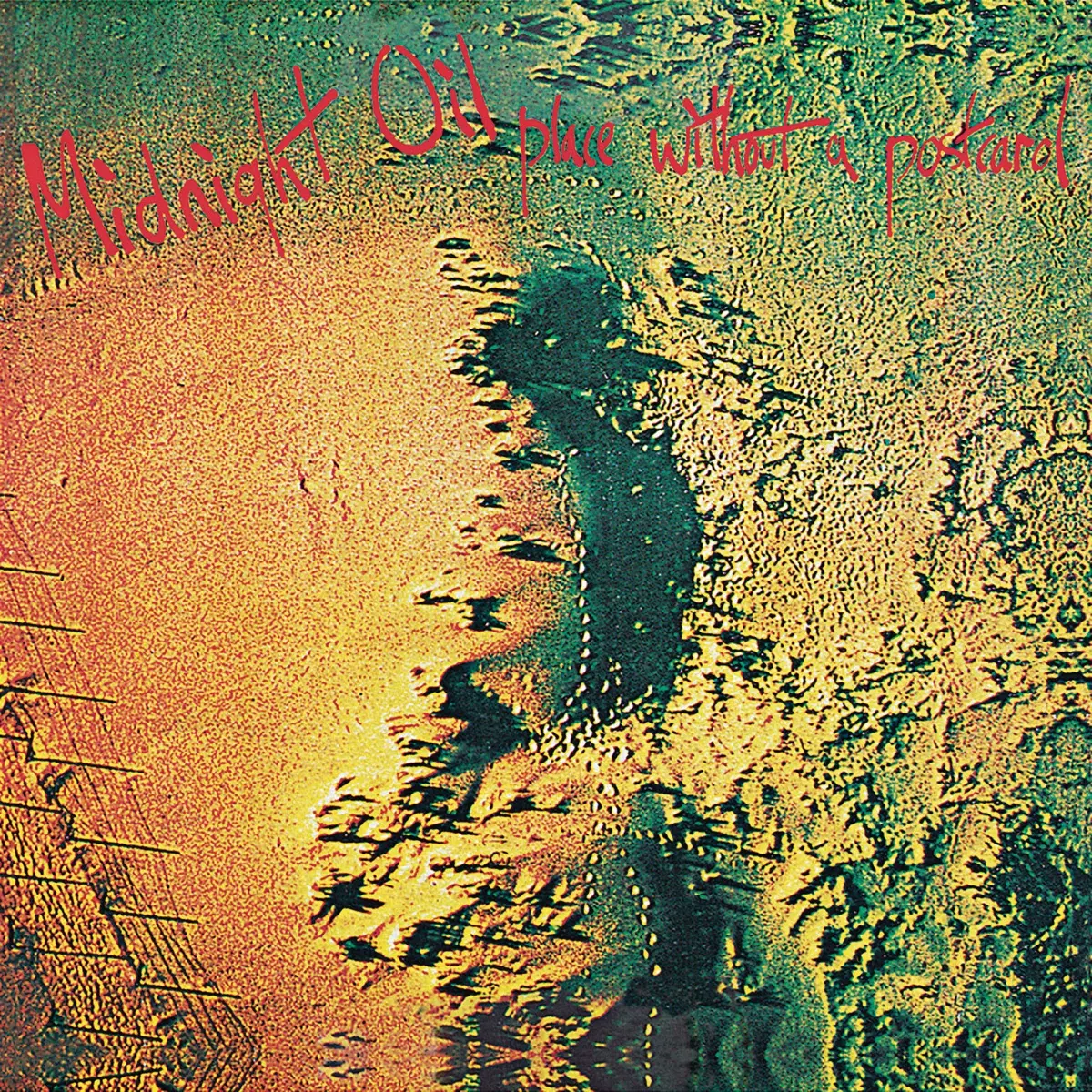 Midnight Oil released their third album, Place Without a Postcard, in November 1981 on CBS.
Singer Peter Garrett wrote the lyrics to all but two songs: “Armistice Day” and “Written in the Heart,” both joint-written between drummer Rob Hirst and guitarists Jim Moginie and Martin Rotsey. The three joint-composed the lead single “Don’t Wanna Be the One” and the album-closer “Lucky Country.”
Postcard contains four-songs (“Brave Faces,” “Burnie,” “Quinella Holiday,” “If Ned Kelly Was King”) with music by Moginie, who co-composed “Someone Else to Blame” with Hirst and “Basement Flat” with Rotsey, who lone-composed “Loves on Sale.”
“Don’t Wanna Be the One” bolts through jarring keys and Garrett’s rapid vocal attack. “Brave Faces” slows into time changes, falsetto touches, and open breaks. “Armistice Day” smolders from a single piano note into a short solo and large crest. “Someone Else to Blame” grinds through sludgy riffing. “Basement Flat” drags the vocal line through sludgy passages and a brighter title answer.
“Written in the Heart” charges through ferocious riffing. “Burnie” slows through a moody riff and an awkward turn into the title line. “Quinella Holiday” bounces into the linked sequence. “Loves on Sale” darts through whammy streaks and an impassioned title line. “If Ned Kelly Was King” stampedes through disconnected riff blocks with reference to the 19th-century Australian bushranger. “Lucky Country” widens through acoustic breaks and a broad vocal lift.
A1. “Don’t Wanna Be the One” (3:04) – rejects domestic success, corporate spectacle, and forced ambition; the narrator stands outside the upward path and cuts off the available options. The vivid detail puts ordinary people in home units with a brick-wall outlook, reducing aspiration to boxed housing and television images.
A2. “Brave Faces” (4:48) – moves through street faces, political talk, media lies, boardroom defeat, and closed exits. One sharp image places defeated boardroom figures against oak-stained walls, then shifts the song from public poise to private collapse.
A3. “Armistice Day” (4:31) – turns a war commemoration into a mediated spectacle, with watchers, reporters, fixers, papers, and locals replacing direct action. The clearest turn comes when the narrator seeks a war and finds guns unused in anger, exposing distance between rhetoric and lived violence.
A4. “Someone Else to Blame” (2:49) – joins bodily pressure, dockyard unrest, union conflict, right-wing street violence, and the cost of speaking out. Its hardest detail stretches the body against a table and wall before the song transfers pain into workplace and political blame.
A5. “Basement Flat” (4:37) – traps the narrator in a rented interior of leaking fixtures, cramped writing, upstairs noise, rules, and escape plans. The central image gives the rats the victory in the flat, making the room a failed shelter and a social cage.
B1. “Written in the Heart” (3:15) – frames war memory through riflemen, children in wreckage, religious ritual, presidential violence, elders, sabotage, and slogans. Its strongest shift moves public words from walls into the body, changing political graffiti into internal damage.
B2. “Burnie” (4:50) – sets a coastal home against industrial future, with ships, docks, storm drains, children, factories, and the pull of departure. The key line refuses to let factories repaint the sea, turning place into both inheritance and contested ground.
B3. “Quinella Holiday“(2:35) – follows a gambler from crowded afternoon bar to spent wages, empty tickets, and another deferred escape. The sharpest image leaves the losing slips scattered across asphalt, flattening hope into street litter after the race.
B4. “Loves on Sale” (2:22) – attacks consumer choice by making love, life, ease, and identity available through payment and credit. Its clearest phrase offers a rented life, reducing feeling and selfhood to a purchase plan with hidden cost.
B5. “If Ned Kelly Was King” (3:41) – uses outback tourism, development, race, machinery, and extractive business to recast national myth as judgment on modern looters. The strongest detail asks what remains after developers leave a quarry, turning the landscape into the final evidence.
B6. “Lucky Country” (4:55) – compresses work routine, suburban heat, debt, backyard ease, atomic dread, media spectacle, and road distance into a national self-portrait. The most pointed detail places nuclear secrecy inside the backyard, making domestic space part of the wider political threat.
Midnight Oil recorded the album in June–July 1981 at Turn Up-Down Studios, a converted barn in Surrey, England, owned by studio veteran Glyn Johns, a soundman on The Easybeats global breakthrough hit “Friday On My Mind” and seventies titles by The Eagles, Faces, Joan Armatrading, and The Who. Johns produced and engineered Place Without a Postcard amid titles by Chris De Burgh, Nine Below Zero, and ex-Squeeze keyboardist Jools Holland.
Postcard appeared in a sleeved designed and photographed by Robert Butcher, whose image depicts a gradient-tinted areal view of a sandy dune.
 In October 1981, CBS lifted “Don’t Wanna Be the One” as the advance single, backed with “Written in the Heart.” The 1981 video places the band in a stark performance setup, with Garrett’s front-line movement set against hard light and clipped ensemble shots. “Don’t Wanna Be the One” reached No. 40 on the Australian Kent Music Report.
In May 1982, “Armistice Day” became the second single, backed with a live version of the Head Injuries track “Stand in Line.” David Bradbury’s video uses 1982 live footage at Wanda Beach, with the band set against sand, surf, and open-air crowd shots. “Armistice Day” reached No. 31 on the Australian Kent Music Report.
Place Without a Postcard reached No. 12 on the Australian Kent Music Report.
10, 9, 8, 7, 6, 5, 4, 3, 2, 1
 Midnight Oil released their fourth album, 10, 9, 8, 7, 6, 5, 4, 3, 2, 1, in November 1982 on Columbia.
The album starts their Nick Launay production run and places Gifford inside the main studio lineup for the first time on a Midnight Oil album. Moginie lone-wrote “Outside World,” co-wrote six songs with Garrett and/or Hirst, and shared “Scream in Blue” and “Tin Legs and Tin Mines” with Rotsey and Garrett. Gisele Scales adds violin; Gary Barnacle, Peter Thoms, and Luke Tunney appear as the brass section on “Power and the Passion.”
“Outside World” pulses on wobbly single-note figures, four-note low-end patterns, electronic swoops, and distorted background voices. “Only the Strong” tumbles from a damaged segue into a tremolo guitar figure and manic Garrett lead. “Short Memory” staggers through 6/8 arpeggios and dense recitation. “Read About It” detonates after static and low-volume strum, then cuts through 7/4, 4/4, and 6/4 turns. “Scream in Blue” fractures from an abrasive instrumental opening into a quiet second half and Garrett’s final howl.
“US Forces” snaps through stop-start cuts and bright foot-stomping motion. “Power and the Passion” pivots on spare bass, tinny electronic hits, unison vocal lines, a drum solo, and brass in the outro. “Maralinga” lopes through an off-kilter figure while the vocal sinks beneath the band. “Tin Legs and Tin Mines” sways from subtle piano into a sudden 1950s-styled break. “Somebody’s Trying to Tell Me Something” spirals from tension-building lines into unison voices, a hard instrumental passage, and a sustained runout hold.
A1. “Outside World” (4:24) – Moginie; places the narrator between a nocturnal Australian landscape and a controlled social order, with bosses, cards, exclusion, and escape all held in view. Its clearest image sets ghost gums, a mourning mopoke, and racketeers in the same night scene before the lyric shifts toward the promise of a world beyond the present enclosure.
A2. “Only the Strong” (4:31) – Hirst, Moginie; compresses anxiety into a locked room, where eating, sleeping, speech, and return all become forms of pressure. The strongest turn comes when the speaker asks to be seen and heard while standing at the edge of collapse.
A3. “Short Memory” (3:52) – Garrett, Hirst, Moginie; lists conquest, colonial rule, racial violence, nuclear destruction, and covert intervention as one repeated historical pattern. The sharpest detail shifts from empire’s old violence to hotel comfort by the Nile, where running water becomes part of the same moral amnesia.
A4. “Read About It” (3:52) – Garrett, Hirst, Moginie; ties class division, pollution, revolution, workplace authority, arms stockpiles, and news control into a public crisis reduced to spectacle. Its most pointed contrast gives the rich insulation while the poor receive the evidence.
A5. “Scream in Blue” (6:22) – Garrett, Moginie, Rotsey; withdraws from public argument into secrecy, intimacy, night, and a final-hour decision. The central image gives the sheets private knowledge, turning the room into a place of concealment and danger.
B1. “US Forces” (4:06) – Garrett, Moginie; attacks American military power, intelligence control, market rule, nuclear dread, and political paralysis. Its hardest image puts business deals in parking lots beside children and war dogs, joining commerce to militarized risk.
B2. “Power and the Passion” (5:39) – Garrett, Hirst, Moginie; satirizes Australian comfort through beach life, television, junk food, football culture, political memory, and American strategic presence. The clearest detail places Pine Gap inside the domestic sphere, then sets it beside fast-food shorthand and suburban routine.
B3. “Maralinga” (4:44) – Garrett, Moginie; turns open country into a poisoned test site, with heat, ashes, blackened sky, graveyard sleep, and damaged bodies replacing the opening image of peace. Its strongest passage changes grass into stone and a bed into a burial ground, making the landscape carry the blast.
B4. “Tin Legs and Tin Mines” (4:28) – Garrett, Moginie, Rotsey; frames Cold War pressure as waiting, scripted fear, machinery, surveillance, and delayed action. The sharpest phrase folds Poland, Disneyland, computer control, and contraband into one absurd political image.
B5. “Somebody’s Trying to Tell Me Something” (3:58) – Garrett, Gifford, Hirst, Moginie, Rotsey; track reduces communication to breakdown: noises, voices, a blistering phone, threatening silence, deafening weather, and pressure at the limit. The lyric lands hardest when listening itself becomes a form of death, turning contact into overload.
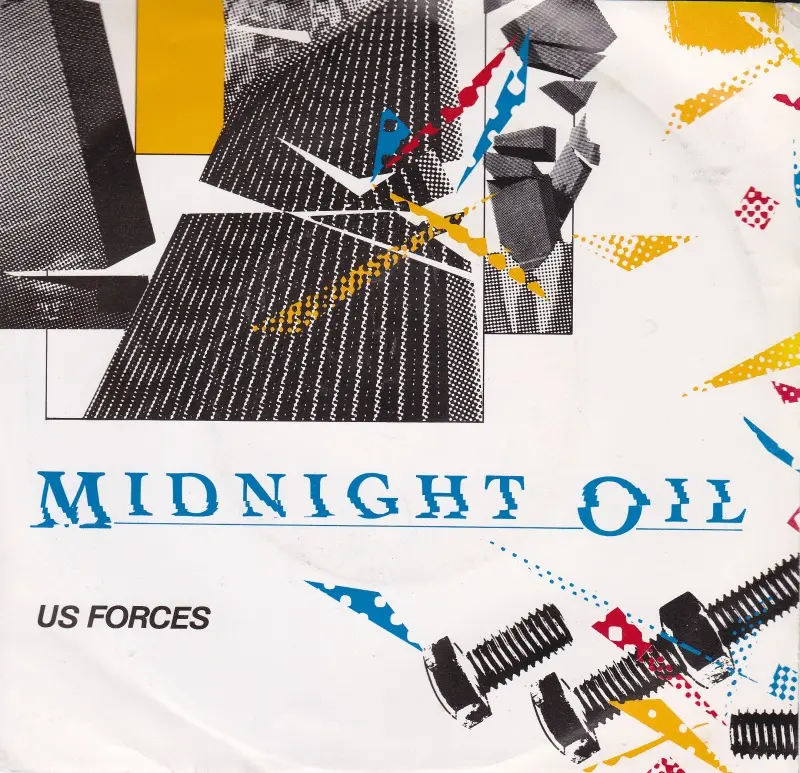 Midnight Oil recorded 10, 9, 8, 7, 6, 5, 4, 3, 2, 1 at The Townhouse, London, in September 1982. Nick Launay co-produced the album with the band and handled engineering and the mix. Launay had recent studio credits on Public Image Ltd (The Flowers of Romance), Killing Joke (What’s THIS For…!), and The Birthday Party (Junkyard).
10, 9, 8, 7, 6, 5, 4, 3, 2, 1 appeared in a sleeve conceived and designed by Phil Ellett. The cover combines monochrome architectural fragments, dotted pattern fields, diagram marks, and red/blue/yellow accents on a white ground.
CBS lifted “US Forces” in November 1982, backed with an instrumental version of “Outside World.” Tony Stevens’ video places the band at Vales Point Power Station near Mannering Park, with performance footage framed by concrete interiors and industrial structures. “US Forces” reached No. 20 on the Australian Kent Music Report.
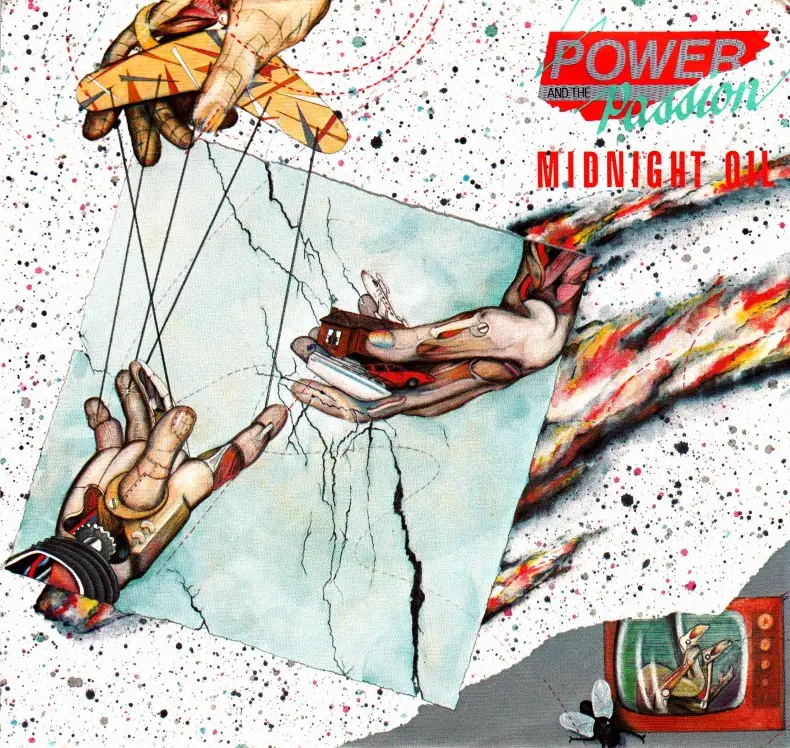 In March 1983, “Power and the Passion” became the second single, backed on Australian and New Zealand copies with a dub version. UK CBS copies paired the song with “Glitch Baby Glitch.” Ray Argall’s video places the band around Sydney’s Woolloomooloo Mural Project, with Garrett’s street-level performance set against painted wall panels and passing urban traffic. “Power and the Passion” reached No. 8 on the Australian Kent Music Report.
New Zealand CBS issued “Read About It” as a 1983 promo single, backed with “Short Memory.” The video places the band in a cave setting, with Garrett and the players lit against rock walls and narrow interior passages.
10, 9, 8, 7, 6, 5, 4, 3, 2, 1 reached No. 3 on the Australian Kent Music Report and No. 178 on the Billboard 200.
Red Sails in the Sunset
 Midnight Oil released their fifth album, Red Sails in the Sunset, in October 1984 on Columbia.
The album retains the Gifford lineup at Victor Aoyama Studio and adds arranged brass, strings, and didgeridoo to selected tracks. Hirst sings lead on “When the Generals Talk” and “Kosciusko.” Moginie shares string and brass arrangement with Kazufumi Ohhama; Charlie McMahon adds didgeridoo to “Helps Me Helps You.”
“When the Generals Talk” jabs Rob Hirst’s spoken lead across a square beat, tape edits, and remixed vocal cuts. “Best of Both Worlds” slams horn-augmented riff blocks into a broad title lift. “Sleep” threads acoustic interplay through the chorus. “Minutes to Midnight” strums through an awkward group-sing turn. “Jimmy Sharman’s Boxers” broods on sparse chords before a martial entrance and synth-built close. “Bakerman” parades as a brief marching-band miniature.
“Who Can Stand in the Way” glints through chiming lines, a verse bassline, and a bluegrass-style breakdown. “Kosciusko” surges through layered riffing and a string fade. “Helps Me Help You” shuffles from didgeridoo into buzzing drive and lead breaks. “Bells and Horns in the Back of Beyond” opens on bell-and-accordion color before a surf-styled instrumental coda. “Shipyards of New Zealand” jumps through disconnected sections before a larger final climb.
A1. “When the Generals Talk” (3:32) – Garrett, Hirst, Moginie; turns a military-political speech into crowd management: the leader performs certainty, the audience responds, and the message stays withheld. Its sharpest final image reduces class order to large predators pushing smaller ones around.
A2. “Best of Both Worlds” (4:05) – Hirst, Moginie; rejects national self-satisfaction by contrasting protected distance with an outside world that has grown unstable. The strongest line places the testing ground near the small world, cutting through the promise of safety.
A3. “Sleep” (5:09) – Garrett, Hirst, Moginie; moves through night streets, station graffiti, state checkpoints, radio noise, a cell, bodily injury, heat, sweat, and exhausted collapse. One vivid sequence links a plug, cord, dislocated shoulder, and isolation, making sleep feel like retreat after coercion.
A4. “Minutes to Midnight” (3:20) – Garrett, Moginie; frames nuclear dread through clock imagery, submarines, aircraft, ICBMs, SS-20s, and a child’s memory of journey and hope. The clearest image puts gunsights in H. G. Wells’s backyard, joining science-fiction prophecy to Cold War machinery.
A5. “Jimmy Sharman’s Boxers” (7:10) – Hirst, Moginie; describes touring tent fighters as spectacle, labor, racial exploitation, and public appetite for damage. Its hardest line makes the paying crowd complicit when the fighter falls to the floor like blast debris.
A6. “Bakerman” (0:52) – Hirst; reed-based Dixieland instrumental.
B1. “Who Can Stand in the Way” (4:33) – Garrett, Moginie; ties Sydney traffic, talk radio, colonial arrival, print excess, real-estate expansion, television spectacle, and environmental damage to the logic of profit. The central image asks why brick boxes block the sun, reducing development to physical enclosure.
B2. “Kosciusko” (4:47) – Hirst, Moginie; sets older land against settlement, mining, forced movement, hostility, and ultimatum politics. The strongest movement runs from homelands to cyclone-like celebration and rising fires, turning resistance into accumulated weather.
B3. “Helps Me Helps You” (3:44) – Hirst, Moginie; gives hypocrisy the voice of policy: property, generosity, conspiracy, democracy, and ideology all serve self-interest under a public-service mask. Its sharpest reversal changes shared ownership into private possession, exposing the bargain as extraction.
B4. “Harrisburg” (3:46) – Moginie, Kevans; turns nuclear contamination into an invisible substance that cannot be tasted, seen, smelled, or removed. The strongest detail contrasts company assurance with government doubt, leaving the town inside a failure no one can fully measure.
B5. “Bells and Horns in the Back of Beyond” (3:30) – Midnight Oil; moves from Central Station and the Southern Aurora to surf towns, real estate, suburbia, and lost open space. Its clearest landscape detail places a carpark where bindis used to grow, compressing coastal change into one replaced patch of ground.
B6. “Shipyards of New Zealand” (5:53) – Garrett, Moginie; follows migration, factory security, disappearing dreams, searchlights, misplaced certainty, and the wish to rise above the heap. The key line makes the walls of the heart a brace against collapse, turning private resolve into a fragile structure.
Midnight Oil recorded Red Sails in the Sunset at Victor Aoyama Studio, Tokyo, between June and August 1984. Nick Launay co-produced the album with the band and handled the mix. Gary Fox and Launay engineered the sessions with assistant engineers Shigeo Miyamoto and Yoshiyuki Kaneko.
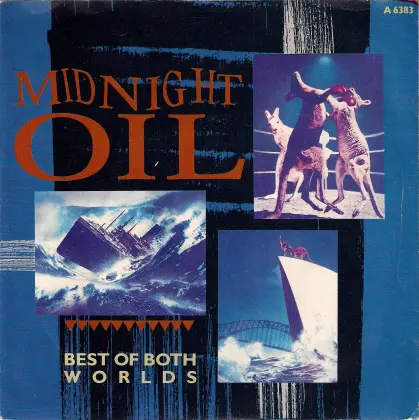 Red Sails in the Sunset appeared in a sleeve with cover artwork by Tsunehisa Kimura and graphic design by Yasutaka Kato. Kimura’s image recasts Sydney Harbour as a cratered orange landscape with the Opera House and Harbour Bridge inside a blast-scarred scene.
Columbia promoted “When the Generals Talk” in 1984; UK CBS later issued the song as a September 1985 single, backed with “Who Can Stand in the Way.”
In July 1985, “Best of Both Worlds” appeared as a UK CBS single, backed with “Kosciusko.” John Whitteron’s video cuts studio performance footage with graphic inserts and the band’s angular stage movement.
Red Sails in the Sunset reached No. 1 on the Australian Kent Music Report.
Species Deceases
 On November 26, 1985, Midnight Oil released Species Deceases, their second standalone EP.
The EP contains four originals by the Gifford lineup and links the 1985 Hiroshima anniversary theme to the group’s peace-and-planet trust. Garrett adds harmonica across the session. François Kevorkian joins the band in the producer credit after his remix work on “Power and the Passion.”
A1. “Progress” (3:57) – Garrett, Moginie; rejects development defined by pesticides, corporate food chains, disappearing jobs, military policy, and high-rise urban expansion. The sharpest image puts “junk in the stratosphere” above hemispheric safety, turning progress into contamination beyond national borders.
A2. “Hercules” (4:38) – Garrett, Hirst, Moginie; frames anti-nuclear survival as a private right and a Pacific responsibility, with aircraft, submarines, and radioactive threat closing around the speaker. Its clearest place marker, “Hiroshima park,” connects the warning to historical memory before the song returns to South Pacific exposure.
B1. “Blossom and Blood” (4:35) – Hirst, Moginie; addresses mothers, soldiers, and public advocates of peace while setting war memory against civilian loss. The central image of “sidewalk silhouettes” makes destruction persist on the street surface, not in abstract commemoration.
B2. “Pictures” (3:12) – Midnight Oil; attacks passive spectatorship, broken political promises, nuclear anxiety, and the need for collective action. Its final turn toward “critical mass” changes watching into pressure for movement, with silence treated as complicity.
Midnight Oil recorded Species Deceases at Paradise Studios, Darlinghurst, over five days in September 1985. The band co-produced the EP with François Kevorkian; David Price engineered and mixed with assistance by Tom Colley.
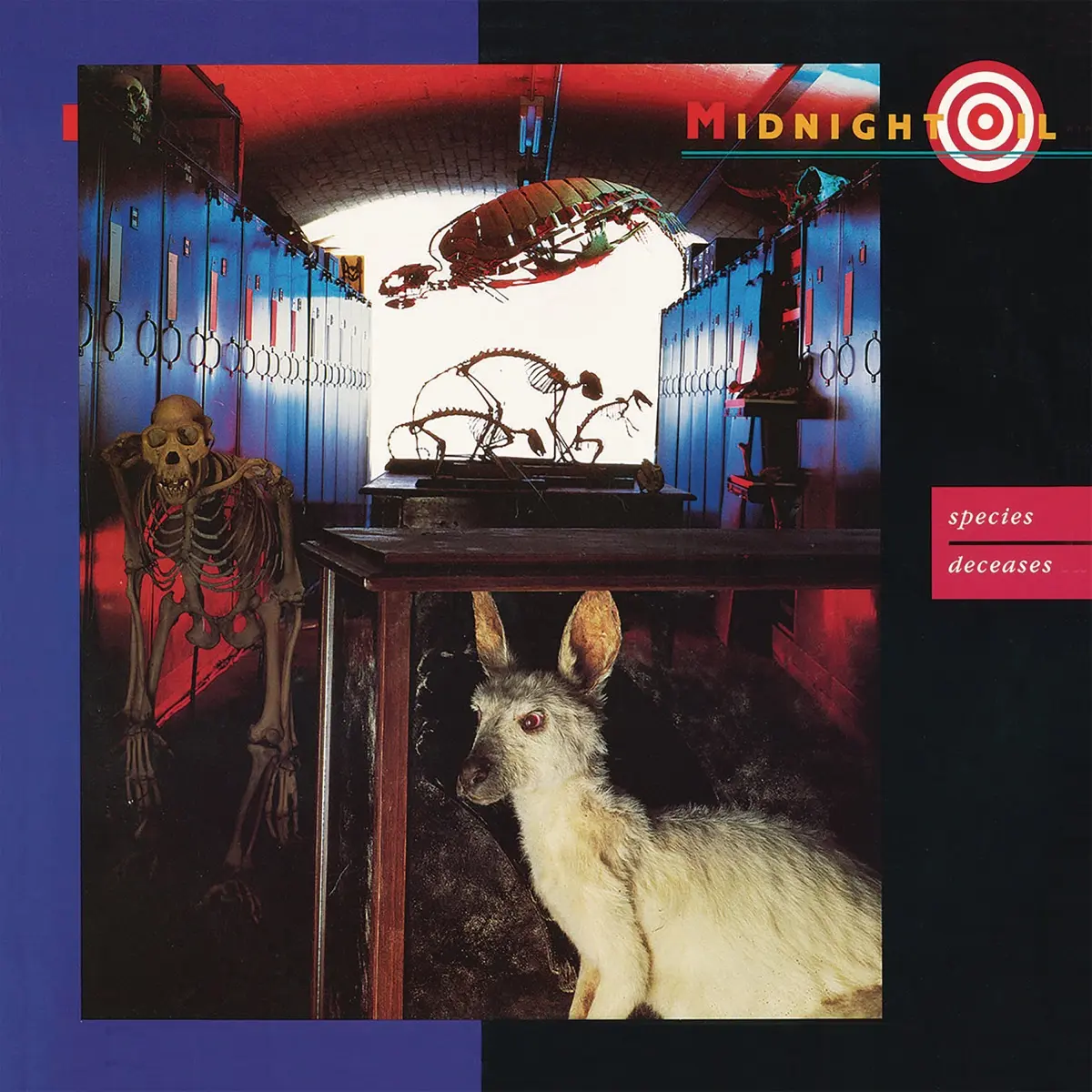
Species Deceases appeared in a sleeve conceived by Midnight Oil and Philip Ellett. The cover shows a museum storeroom with cabinets, skeletal specimens, and a white taxidermy animal under red and blue light.
Species Deceases reached No. 1 on the Australian Kent Music Report.
“The Dead Heart”
 In August 1986, Midnight Oil released “The Dead Heart,” an acoustic group-written rocker about the Stolen Generations of Aboriginal children by the Australian government. Its release coincided with the return of Uluru (then known as Ayers Rock) to the Pitjantjatjara: the native people of Australia’s Northern Territory.
“The Dead Heart” appeared as a standard 7″ (b/w the Red Sails cut “Kosciusko”) and a 12″ backed with songs by the Aboriginal groups Warumpi Band (“Blackfella / Whitefella”) and Coloured Stone (“This Land”).
“The Dead Heart” reached No. 4 on the Australian Kent Music Report and No. 11 on the Billboard Top Albums Tracks chart. The song reappeared the following summer on their next studio album.
Diesel and Dust
 Midnight Oil released their sixth album, Diesel and Dust, on August 2, 1987, on Columbia.
The album follows the Blackfella/Whitefella Tour through remote Aboriginal communities and contains songs tied to land rights, mining, militarism, and settlement history. Most tracks credit Garrett, Hirst, and Moginie; the full Gifford lineup shares “The Dead Heart” and “Gunbarrel Highway.” Additional color comes from trombonist Glad Reed, cellist John Ockwell, and French horn player Jeremy Smith.
“Beds Are Burning” slams three power-chord shots with horns, reverse-treated crescendos, chugging low-end, and Garrett’s lowered bridge line. “Put Down That Weapon” drops Garrett to a semi-whisper against cold electronics before the loud title calls. “Dreamworld” charges through primary riffing, arpeggiated runs, and end/fall vocal replies. “Arctic World” slows around piano and string arrangement. “Warakurna” locks call-and-response voices to tight rhythm and ambient electronic traces.
“The Dead Heart” locks a crisp three-chord acoustic riff to wordless voices as Garrett addresses Aboriginal loss and return, culminating with a harmonized call to solidarity. “Whoah” twists an acoustic chord pattern through unsettled turns before Garrett’s final chorus rises into a group chant. “Bullroarer” rises from a recorded bullroarer into steady 4/4 and group homeward calls. “Sometimes” charges through a driving beat and repeated title returns. “Gunbarrel Highway” swings on guitar drive and a lean vocal line.
 A1. “Beds Are Burning” (4:14) – places land-rights restitution in desert heat, broken vehicles, bloodwood, desert oak, and a direct demand to return what was taken. The strongest detail gives the scene “forty five degrees,” where heat, machinery, and living country frame the political claim.
A2. “Put Down That Weapon” (4:38) – treats nuclear danger as a global emergency, moving from waterline imagery to harbour towns and grey ships. Its sharpest image puts the listener under “torchlight,” where no one can hide from the consequence of escalation.
A3. “Dreamworld” (3:36) – attacks development through the sale of Brisbane landmarks, lost pines, rented fantasy, and the collapse of civic memory. The clearest phrase makes the last square mile of “terra firma” an item under the auction hammer.
A4. “Arctic World” (4:21) – Garrett, Moginie; refuses emotional growth, memorial speech, institutional air, and industrial consumption, then turns sterility into a political condition. The central image of “Smithsonian air” gives the song a museum atmosphere, where culture survives as display instead of life.
A5. “Warakurna” (4:38) – Moginie; contrasts Redfern, Alice Springs, crown land, brown land, court fines, water tanks, and red brick flats to map unequal life across shared territory. Its bluntest contrast places people in “water tanks” against urban flats, reducing policy failure to housing conditions.
B1. “The Dead Heart” (5:10) – Midnight Oil; speaks from dispossession toward cultural endurance, opposing country, king, language, companies, land rights, and inherited memory. Its strongest phrase carries “true country” in the heart, staking a continuity that law and extraction cannot remove.
B2. “Whoah” (3:50) – Garrett, Moginie; turns religious language, property rates, domestic rebuke, dead stars, political atmosphere, and military schooling into a fractured authority scene. The sharpest image compares the speaker to an “unopened letter,” making silence and exclusion the song’s central condition.
B3. “Bullroarer” (4:59) – sets desert heat, overland telegraph line, storm pressure, wild dogs, bleached bones, tin roofs, and homeland pull inside one dry-country sequence. Its most vivid weather detail reaches “a hundred and ten,” then lets radio crackle and roof shake extend the pressure.
B4. “Sell My Soul” (3:35) – Garrett, Moginie; frames refusal through skin, mechanized cities, dead farmers, freight travel, American obedience, rubble, and crawling survival. The key image puts the speaker face down in a “goods train,” turning escape into exposed transit through rain.
B5. “Sometimes” (3:53) – pushes against empire, steel, floodgates, suited cannibals, altar violence, and the danger of internal surrender. Its clearest social image gives the predators “smart suits,” turning institutional power into a dressed form of appetite.
CD11. “Gunbarrel Highway” (3:38) – Midnight Oil; follows a desert road through burned cars, burned trees, ash, radio distance, Kakadu, dust storms, satellites, and cultural collision. The strongest road image makes the “corrugated road” feel endless, then lets road trains and hard-blown dust carry the song outward.
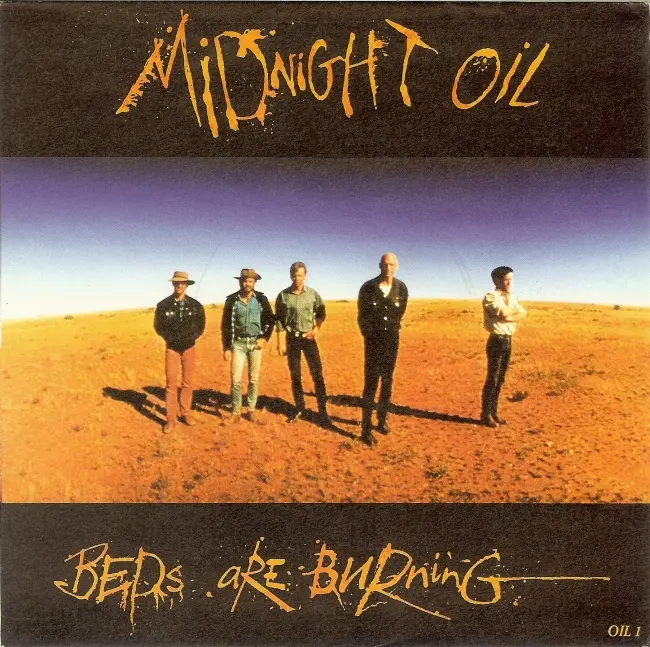 Midnight Oil recorded Diesel and Dust at Alberts Studios, Sydney, between January and April 1987. Warne Livesey co-produced the album with the band and added keyboards; Guy Gray engineered the sessions. Nick Launay mixed “The Dead Heart” with engineer Greg Henderson.
Diesel and Dust appeared in a sleeve by photographer Ken Duncan and visual artist Wart (Jen Waterhouse). The cover shows the Burra Homestead stone cottage isolated in a dry South Australian field.
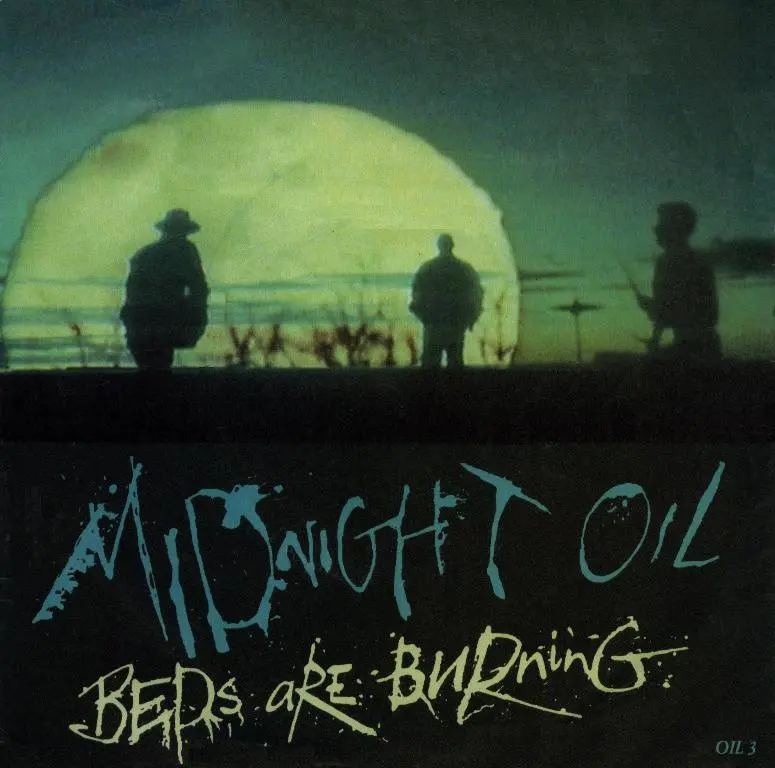
In August 1987, Columbia lifted “Beds Are Burning,” backed with “Gunbarrel Highway.” Andrew de Groot’s video intercuts band performance with desert-road travel, outback settlement images, and black-background silhouette shots of Garrett.
“Beds Are Burning” reached No. 1 in Canada, New Zealand, and South Africa. It also reached No. 6 in Australia and the UK and No. 17 on the Billboard Hot 100.
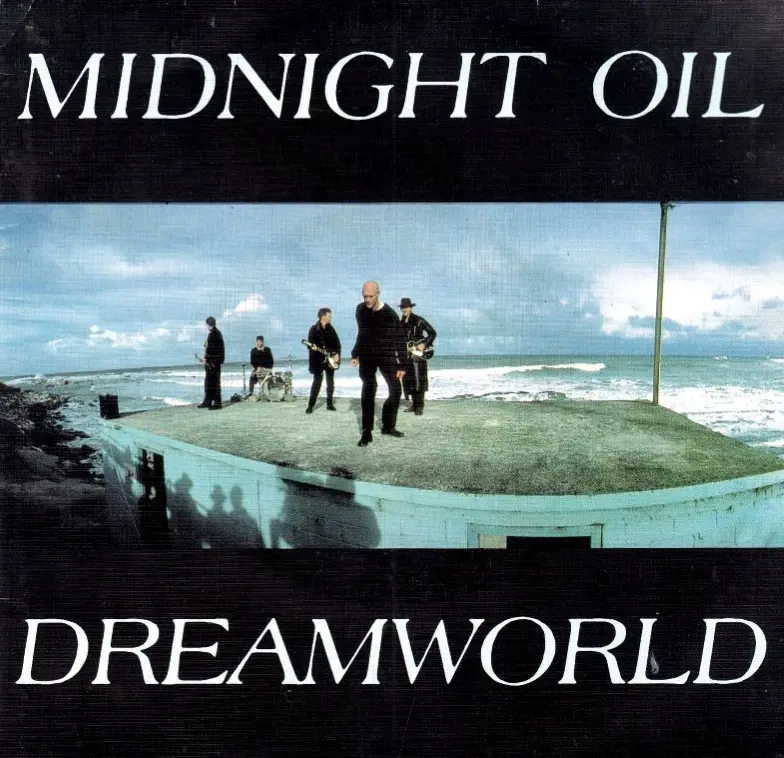 On December 7, Columbia issued “Put Down That Weapon” in Australia, backed with a cover of the Nick Lowe classic “(What’s So Funny ’Bout) Peace, Love, and Understanding,” first recorded by Brinsley Schwarz and popularized by Elvis Costello.
The single reached No. 32 on the Kent Music Report. The Martin Stauce–John Wilkinson video places the band on a coastal concrete platform above surf under a grey sky.
In 1988, “Dreamworld” appeared as a single, backed with “Short Memory.” It reached No. 16 on Billboard Modern Rock Tracks and No. 37 on Billboard Mainstream Rock Tracks. The Andrew de Groot–Paul Elliott video intercuts performance footage with Dreamworld theme-park signage and demolition images tied to Queensland heritage loss.
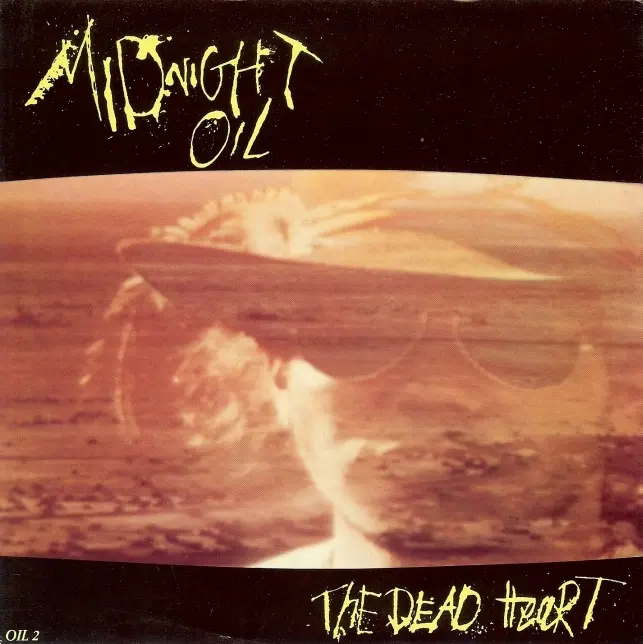 In July 1988, Columbia promoted “The Dead Heart” in the United States, where it reached No. 11 on Billboard Top Albums Tracks and No. 53 on the Billboard Hot 100. Ray Argall’s video places the band in desert performance footage and uses red-earth landscape imagery tied to the song’s Uluru context.
Diesel and Dust reached No. 1 in Australia, Canada, and New Zealand. The album reached No. 19 on the UK Albums Chart and No. 21 on the Billboard 200.
Midnight Oil promoted Diesel and Dust through 1988 American television, radio, press, and concert work as “Beds Are Burning” crossed from rock radio into the Hot 100. The U.S. campaign extended into the Return to Big Mountain tour, where the group shared bills with Aboriginal band Yothu Yindi and Native American support acts, including Graffiti Man and John Trudell.
Blue Sky Mining
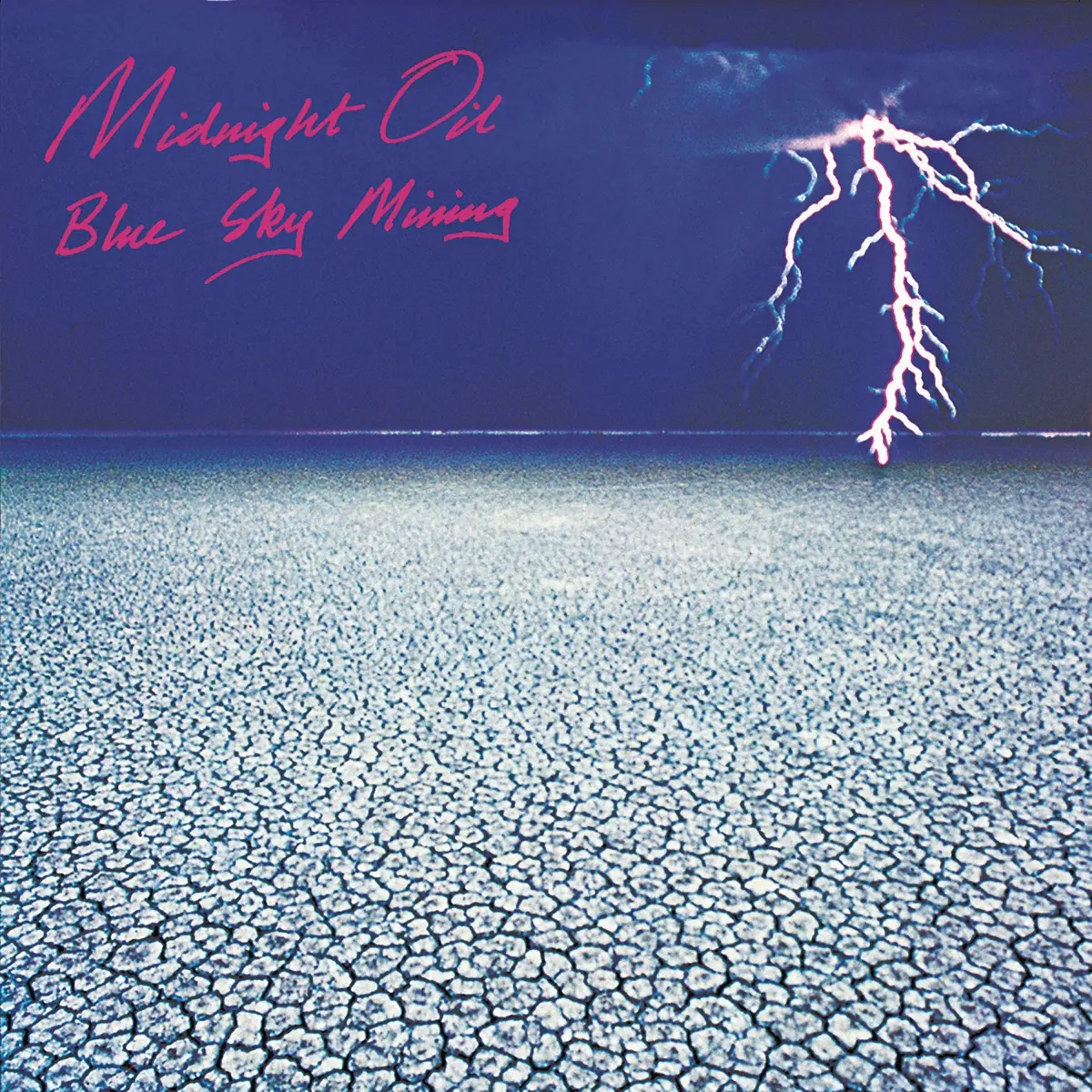 Midnight Oil released their seventh album, Blue Sky Mining, on February 9, 1990, on Columbia.
The album marks the first Midnight Oil studio album with ex-Swingers bassist–singers Bones Hillman and continues the Warne Livesey production team. Hirst contributed “Bedlam Bridge” and “Mountains of Burma” and co-wrote five songs with Moginie. The full Hillman lineup shares the lead track.
“Blue Sky Mine” drives on sampled quarter-snare hits and a fast, danceable rhythm. “Stars of Warburton” settles into a slower jangly figure and solid rhythm. “Bedlam Bridge” opens on echoing trumpet before a crooked entry and street-sound segue. “Forgotten Years” tightens a tension build with a driving beat and fierce guitar attack. “Mountains of Burma” broods through full-orchestra color.
“King of the Mountain” hurtles through counterpoint backing voices and Garrett’s ad-libbed end run. “River Runs Red” slows around interlocked lead lines and layered arrangement. “Shakers and Movers” climbs from a driving beat into a hard peak. “One Country” folds acoustic focus into multiplied snare rolls. “Antarctica” broods through string swells.
A1. “Blue Sky Mine” (4:18) – Midnight Oil; frames mine labor as bodily damage, withheld medicine, corporate evasion, and household dependence on unsafe work. Its sharpest image links a worker’s broken body to a company balance sheet that tears open the sky.
A2. “Stars of Warburton” (4:43) – Garrett, Moginie; moves from machines, media collapse, shopping-mall climate control, and American cultural residue toward desert memory and inland distance. The strongest passage leaves the city for ironbark, wallaby stew, reefs, cliffs, and soil blown eastward.
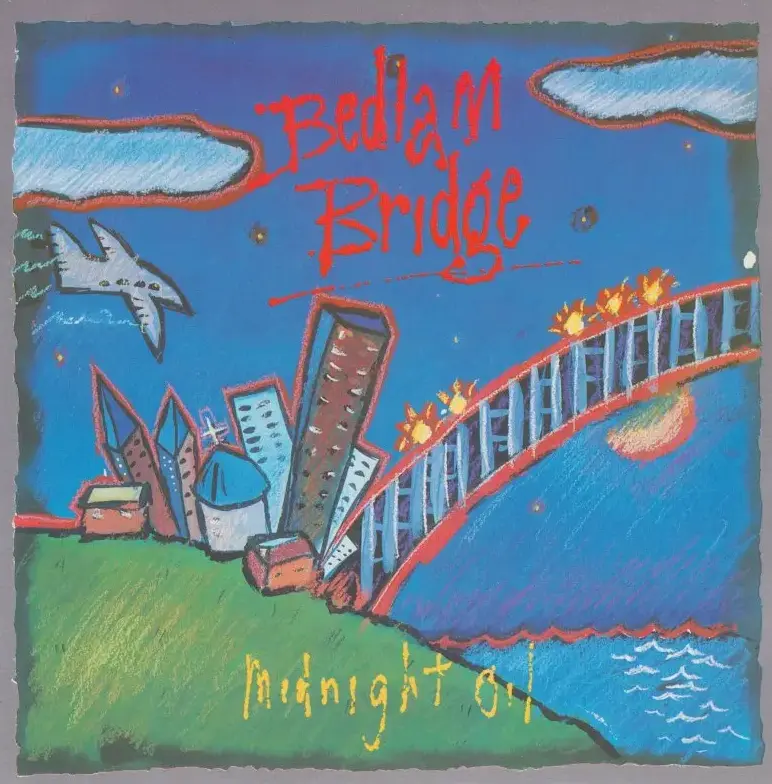 A3. “Bedlam Bridge” (4:25) – Hirst; builds a city out of missing footpaths, empty buildings, gun decisions, locked neighborhoods, and official cowardice. Its clearest turn asks whether the city still stands on a winter night, then lets the urban enclosure close around the head.
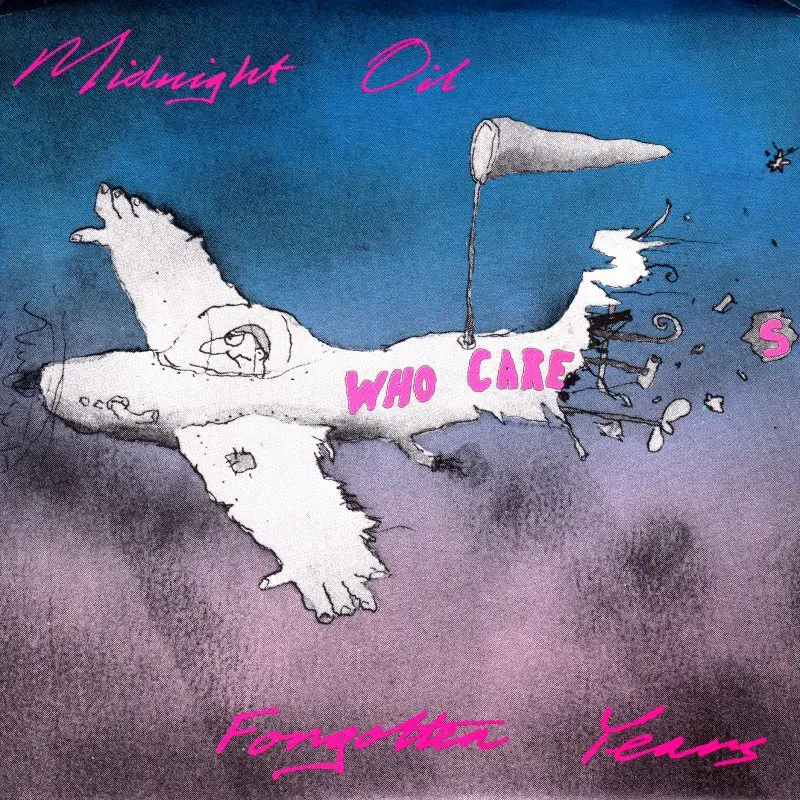
A4. “Forgotten Years” (4:21) – Hirst, Moginie; treats wartime memory as a duty inherited through contracts, signatures, hard-won calm, and political residue. The central detail makes old agreements visibly damaged, with tears staining the written record.
A5. “Mountains of Burma” (4:50) – Hirst; links Australian labor history, social movements, militarized trade, scorched earth, and distant battlefields into one global indictment. Its most pointed image gives the elected government axes for eyes, turning policy into visible cutting force.
B1. “King of the Mountain” (3:58) – Hirst, Moginie; starts in high dry grass, red rock, sugar trains, cane fields, storm pressure, and mountain refuge. The strongest detail puts a yellow-bellied black snake asleep on red rock, fixing the song in a dry-country scene before the broader pursuit begins.
B2. “River Runs Red” (5:28) – Hirst, Moginie; condemns extraction through felled trees, poisoned sky, poisoned sea, depleted ground, and dollar-driven damage. The clearest line-image turns ecological ruin into a blood-colored river and black rain across injured land.
B3. “Shakers and Movers” (4:32) – Garrett, Moginie; shifts between barren ground, development, coastline loss, storm warnings, Lawson’s dispossessed figures, and late-stage hope. Its strongest detail gives tomorrow’s child concrete footsteps, making development a bodily imprint on the next generation.
B4. “One Country” (5:56) – Garrett, Moginie; questions rights, labor, ambition, compromise, unity, and national language through a long sequence of civic tests. The key phrase-list reduces the country to one landmass, one ocean, one policy, and one fragile line of defense.
B5. “Antarctica” (4:22) – Garrett, Hirst, Moginie, Rotsey; track imagines a last clean refuge through snow, storm cloud, mountains, sea, breathable skin, solitude, and distance. Its strongest turn makes untouched place a physical need, where clean water and breathable air become the measure of survival.
Bonus. “You May Not Be Released” (3:38) – Moginie; frames confinement as both social and psychological: plans fail, the speaker stands under a bridge and at the edge, and public talk yields little action. Its sharpest image turns stone into feeling — “The rock is a heart” — before the lyric returns to love as a force that does not guarantee escape.
Midnight Oil recorded Blue Sky Mining at Rhinoceros Studios, Sydney, between June and September 1989. Warne Livesey co-produced the album with the band and added keyboards; David Nicholas engineered with assistant Brendan Morley. Felix Kendall remixed “Stars of Warburton,” “Mountains of Burma,” and “Shakers and Movers.”
 Blue Sky Mining features additional parts by French horn player Jeremy Smith and string leader Phillip Hartl. The sleeve credits Midnight Oil with the cover concept, Livingstone Clark with cover design, and Andrew Richardson with logo design. Gunther Deichmann shot the front-cover photograph, which shows cracked earth under a blue horizon and a lightning strike. North Sullivan supplied the back-cover photograph.
Columbia lifted “Blue Sky Mine” on January 29, 1990, backed on 7″ formats with “You May Not Be Released.” The 12″ adds “Wedding Cake Island” and “Blossom and Blood.” Claudia Castle’s video places the band in red-earth outdoor performance footage, with Garrett in black hat and acoustic guitar against arid terrain.
“Blue Sky Mine” reached No. 1 on Billboard Mainstream Rock and Modern Rock Tracks. It also reached No. 2 in New Zealand, No. 7 in Canada, No. 8 in Australia and Norway, No. 11 in Switzerland, No. 25 in France, and No. 47 on the Billboard Hot 100.
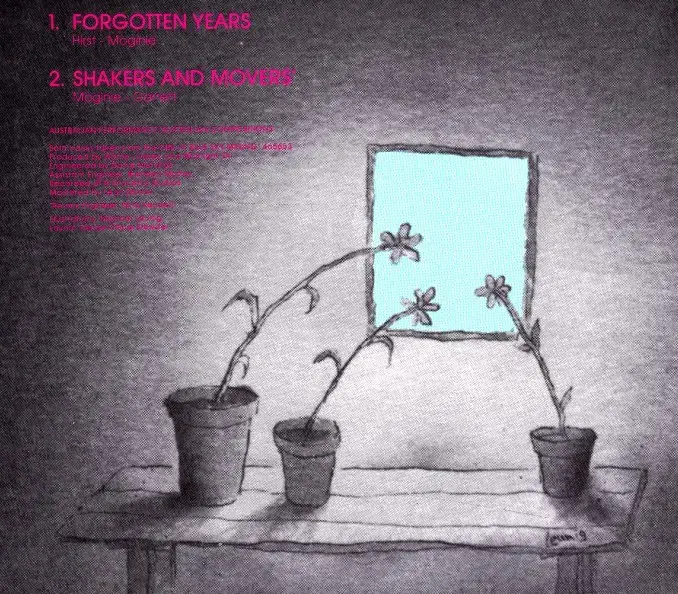 On April 16, “Forgotten Years” became the second single. Australian 7″ copies pair the song with “Shakers and Movers,” while UK 7″ copies use the CD bonus “You May Not Be Released.” Castle’s video places the band at the Douaumont Ossuary in France, with Garrett among white crosses and black-and-white war footage.
“Forgotten Years” reached No. 1 on Billboard Modern Rock Tracks and No. 11 on Billboard Mainstream Rock. It also reached No. 24 in New Zealand, No. 26 in Australia, No. 36 in Canada, No. 44 in France, and No. 97 on the UK Singles Chart.
“King of the Mountain” followed on July 23, backed with a live cover of John Lennon’s “Instant Karma!” John Diaz and Larry Jordan’s video draws from Midnight Oil’s May 30 flatbed protest outside the Exxon Building in Manhattan, where the band performed under a banner that linked the company to the Exxon Valdez spill.
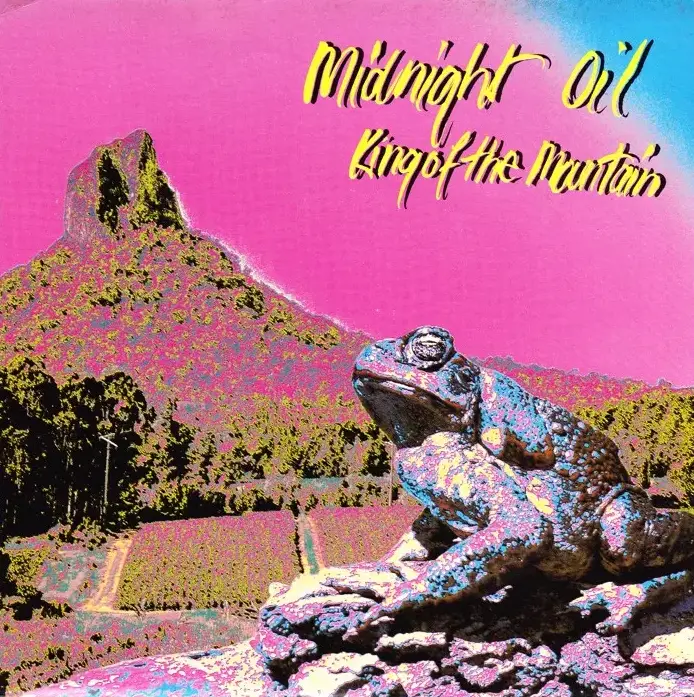 “King of the Mountain” reached No. 3 on Billboard Modern Rock Tracks, No. 20 on Billboard Mainstream Rock, No. 25 in Australia, and No. 76 in Canada.
In October, “Bedlam Bridge” appeared as the fourth single, backed with “Progress.” Castle’s video intercuts band performance with urban-life footage and hand-drawn city-and-bridge graphics. The single reached No. 46 on the ARIA Singles Chart.
“One Country” appeared in April 1991, backed with “River Runs Red.” Ken Duncan’s video places Garrett performance footage against panoramic Australian landscape imagery drawn from Duncan’s photography. The single reached No. 51 on the ARIA Singles Chart.
Blue Sky Mining reached No. 1 in Australia and New Zealand. It also reached No. 20 on the Billboard 200.
Earth and Sun and Moon
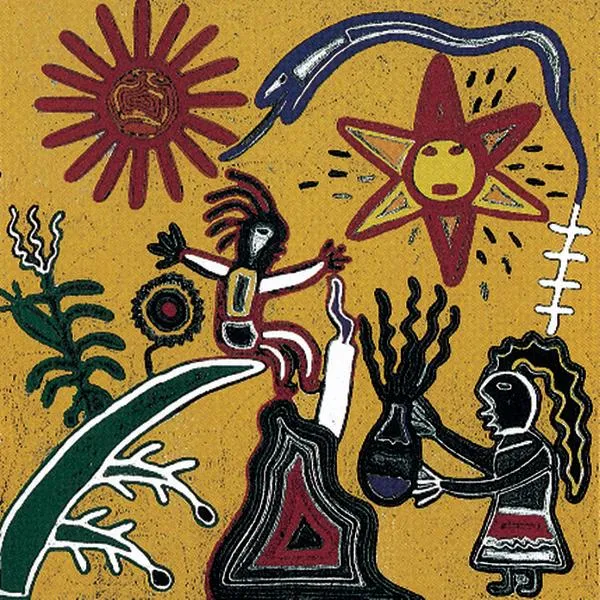 Midnight Oil released their eighth album, Earth and Sun and Moon, in April 1993 on Sprint/Columbia.
The album reunites the band with Nick Launay and retains the Hillman lineup. Hirst wrote “My Country” and “Outbreak of Love,” while Moginie contributed the title track. Garrett and Moginie share five credits. Violinist Wayne Goodwin appears on “In the Valley,” and the Tongan Family Band appears as a credited guest.
“Feeding Frenzy” climbs from a low-end figure into swirling organ and Mellotron color. “My Country” bursts from the opener with Hirst’s lead vocal at the front. “Earth and Sun and Moon” glides through muted jangle and gentle layers. “Truganini” drives a harmonica line through a layered band entry. “Bushfire” slows around an acoustic backbone and campfire group feel. “Drums of Heaven” snaps through spiky guitar figures. “Outbreak of Love” paces a stately gait through lush arrangement. “In the Valley” whirls through arpeggiated figures. “Now or Never Land” runs on a low-end line.
1. “Feeding Frenzy” (5:08) – Garrett, Moginie; atalogs institutions, waste, commerce, religion, medicine, and generational churn as one crowded social pen. Its sharpest image places “cyclone fences” around a cybernetic orchard, turning technological growth into enclosure.
2. “My Country” (4:51) – Hirst; attacks patriotic reflex through fear, deception, failed warning, shelters, and civic self-excuse. The hardest phrase-list — “black holes, pocket holes, soul holes” — makes national error moral, financial, and spiritual at once.
3. “Renaissance Man” (4:42) – Garrett, Moginie, Rotsey; opposes ecological warning and spiritual renewal to cheque-book culture, machinery, calculation, and future uncertainty. The strongest turn places a new world order between the “cheque book” and “the dawn,” locating rebirth inside economic pressure.
4. “Earth and Sun and Moon” (4:33) – Moginie; looks at the planet from above, where mountains, deserts, hurricanes, river sediment, oil spills, smoke, and national borders lose their usual scale. Its clearest image puts “oil spills” in the water where Columbus sailed, tying exploration myth to planetary damage.
5. “Truganini” (5:11) – Hirst, Moginie; links drought, broken roads, rural debt, monarchy, flag politics, Albert Namatjira, and Aboriginal dispossession. The opening image of a “road train going nowhere” fixes the song in blocked movement before the historical indictment widens.
6. “Bushfire” (4:37) – Garrett, Moginie; turns land, weather, home, renewal, and sale into a cycle of loss and recovery. Its central natural sequence gives wind, sun, and rain direct work to do, then asks why life has become so cold.
7. “Drums of Heaven” (5:31) – Garrett, Hirst, Moginie; moves through apocalyptic signs: falling flowers, rusted alleys, collapsing cities, burning empires, mountain ice, desert sails, and prophetic noise. The strongest detail makes “kidney bone cities” crumble, reducing civilization to bodily remains.
8. “Outbreak of Love” (5:14) – Hirst; casts love as catastrophe and release, with the world falling in, walls closing, stars dropping, sharks feeding, and divers surfacing for air. Its clearest reversal calls the crisis an “outbreak,” making intimacy spread like an uncontrolled event.
9. “In the Valley” (4:42) – Garrett, Hirst, Moginie; moves through family history, wartime death, Sydney refuge, suburban childhood, political memory, parental loss, and the search for moral inheritance. The most concrete opening detail sends the grandfather down with the Montevideo, turning private grief into wartime record.
10. “Tell Me the Truth” (4:07) – Garrett, Moginie; demands honesty while moving through migration, aerials, media sensation, banking violence, cameras, stories, lies, and wasted time. Its sharpest image drowns an anchorman in “a sea of sensation,” making broadcast authority part of the deception.
11. “Now or Never Land” (5:22) – Garrett, Moginie; treats the South Pacific as refuge and warning, with needles in sand, ozone in eucalyptus, rising seas, stock exchange prayer, and anti-nostalgic resolve. The key phrase “lost islands of hope” turns geography into a disappearing political possibility.
Midnight Oil recorded Earth and Sun and Moon at Megaphon Studios, Sydney, between October 1992 and January 1993. Nick Launay co-produced the album with the band and mixed the sessions. Brent Clark and Launay handled the recording; Tony Cousins mastered the album.
Earth and Sun and Moon appeared in artwork compiled and designed by Kevin Wilkins, Patricia Ansell, and Craig Simmons in cooperation with Midnight Oil. David Lavender supplied the front-cover photograph, credited through Chloe Sayer from the Huichai Indigenous People of South Mexico. The sleeve uses ochre fields, red sun forms, black contour figures, and hand-drawn circular marks.
Columbia issued “Truganini” as the advance single in March 1993. It reached No. 10 on the ARIA Singles Chart, No. 4 in New Zealand, No. 4 on Billboard Modern Rock Tracks, No. 10 on Billboard Mainstream Rock Tracks, and No. 29 on the UK Singles Chart. “My Country,” “Outbreak of Love,” and “In the Valley” followed as further singles.
Earth and Sun and Moon reached No. 2 on the ARIA Albums Chart.
Discography:
- Midnight Oil (1978)
- Head Injuries (1979)
- Place Without a Postcard (1981)
- 10, 9, 8, 7, 6, 5, 4, 3, 2, 1 (1982)
- Red Sails in the Sunset (1984)
- Diesel and Dust (1987)
- Blue Sky Mining (1990)
- Earth and Sun and Moon (1993)
- Breathe (1996)
- Redneck Wonderland (1998)
- Capricornia (2002)
Sources:
Artist/Album Pages:
Didier Lockwood (Feb. 11, 1956 — Feb. 18, 2018) was a French violinist with Seventies stints in Ma...
The Reluctant Stereotypes were an English new wave band from Coventry that released a three-song 1...
In Spe was an Estonian symphonic-rock band that released two self-titled albums between 1983 and 1...
The Reddings were an American funk trio from Macon, Ga., that included two sons of soul legend Oti...
Chakra was an American symphonic-rock band that made a 1979 self-titled album on Brother Studio. ...
Oddelek 8 was a Yugoslav ethno-jazz sextet behind the 1979 album Quartar on Helidon. Members: Be...
Asia Minor was a French-Turkish symphonic-rock band that released the 1979 album Crossing the Line...
Tanzbär was a German folk-rock band behind the 1977–79 albums Tanzbär and Missethaten, both releas...
Combo 8 was a Swedish jazz-rock band behind the 1976 album Vibrationer on Levande Improviserad Musik...
Rouge Ciel was a Québécois avant-rock quartet from Montreal, formed in 1996 around violinist Guido...
Heldon was a French avant-garde/electronic band that released three albums in 1974/75 on Disjunct...
Deniece Williams is an American soul singer and songwriter with a musical career that dates back to ...